Ling-3.2-air: open-weight 124B MoE with 5.5B active parameters
- Source
- x.com
- Date

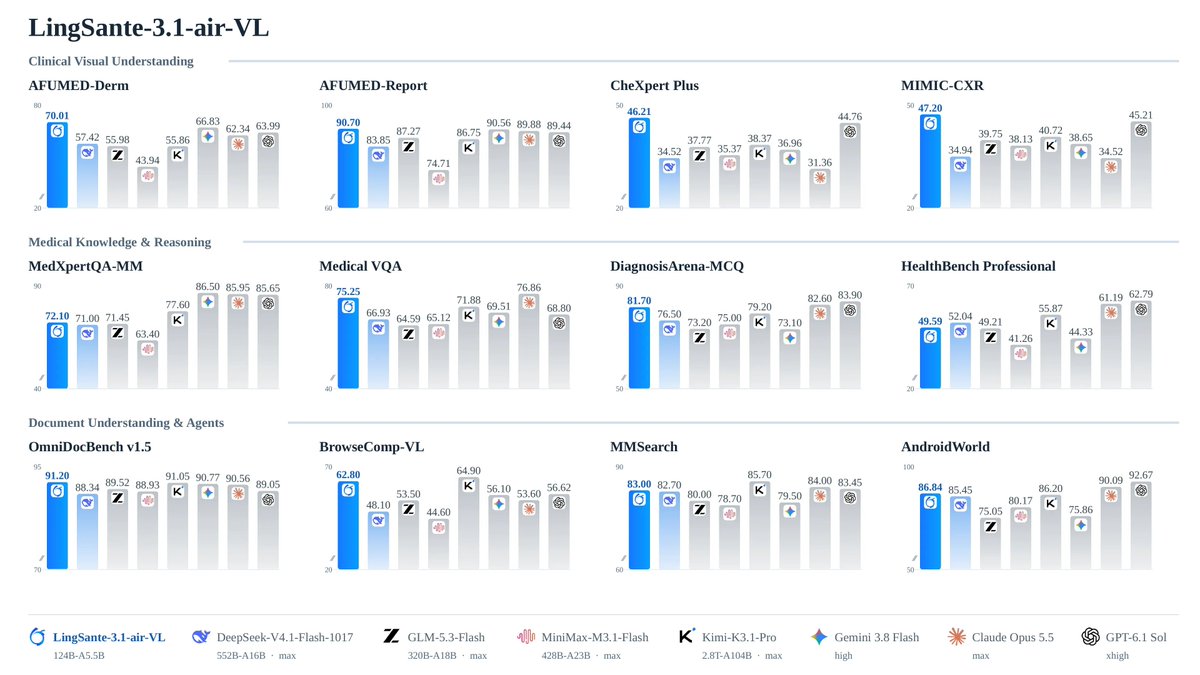
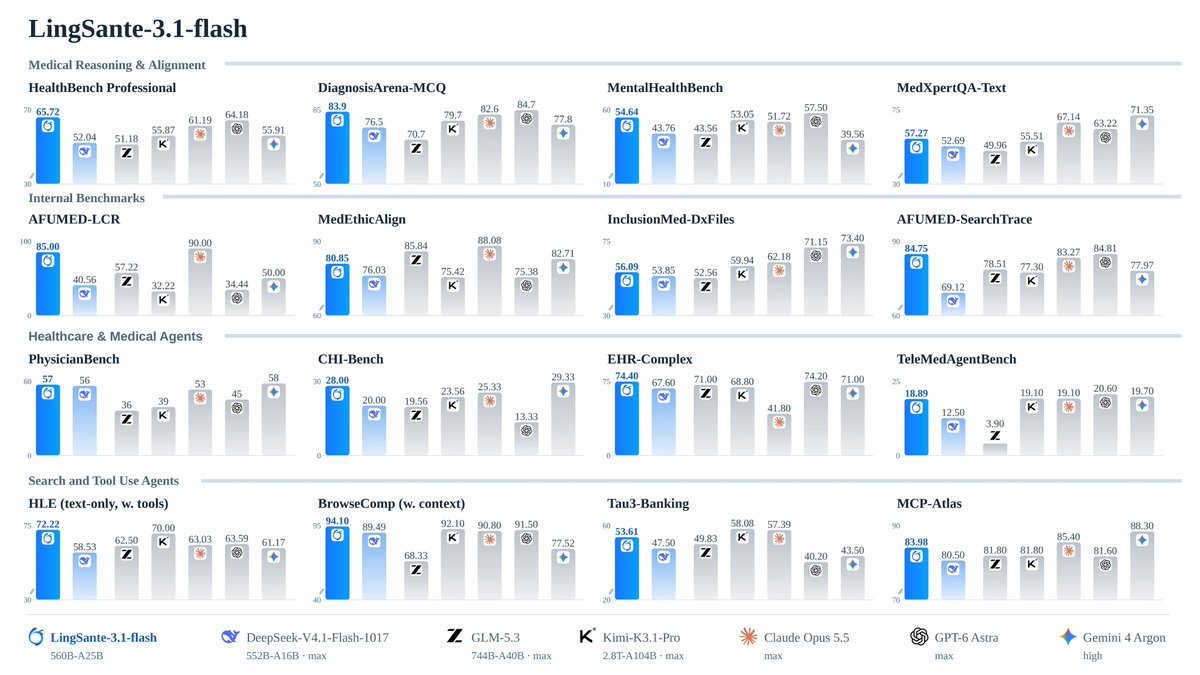
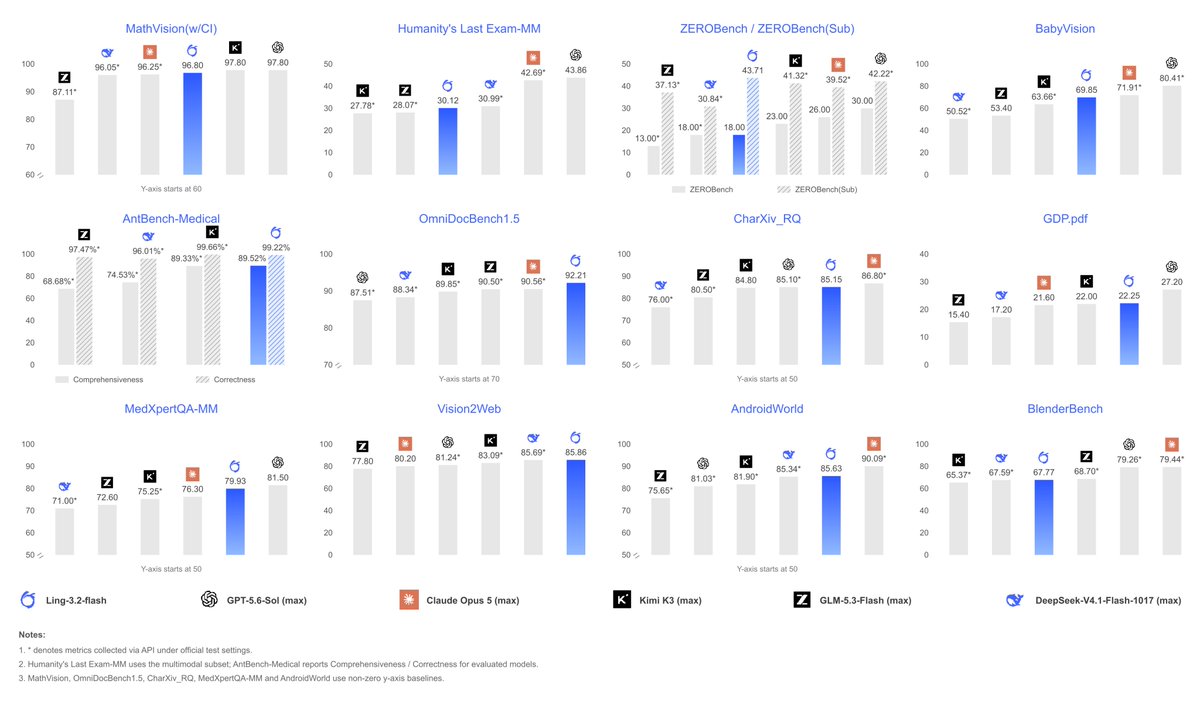
Introducing Ling-3.2-air, an open-weight model that shares Ling-3.0-flash-VL’s native multimodal architecture. 124B total, 5.5B active. Stronger workflow automation and professional document reasoning. AutomationBench-AA rises from 15.7% to 61%. Full benchmark results below.

Context
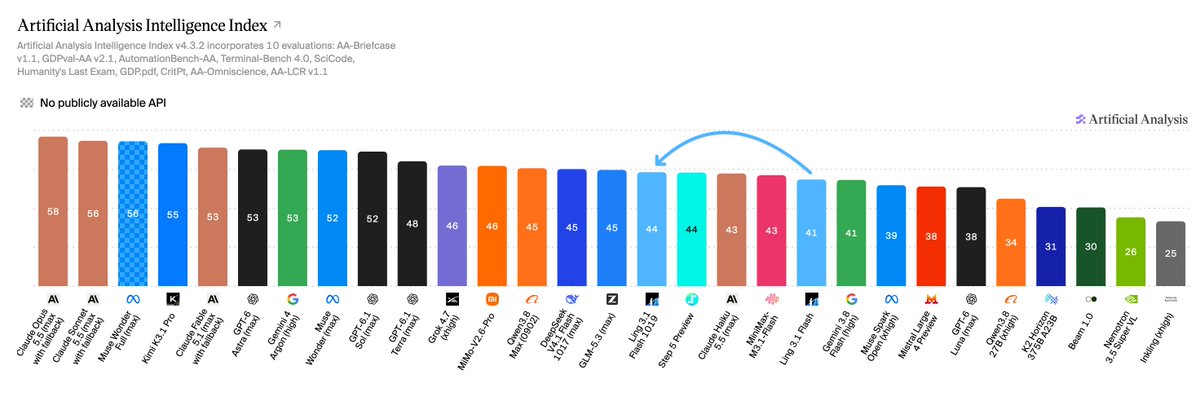
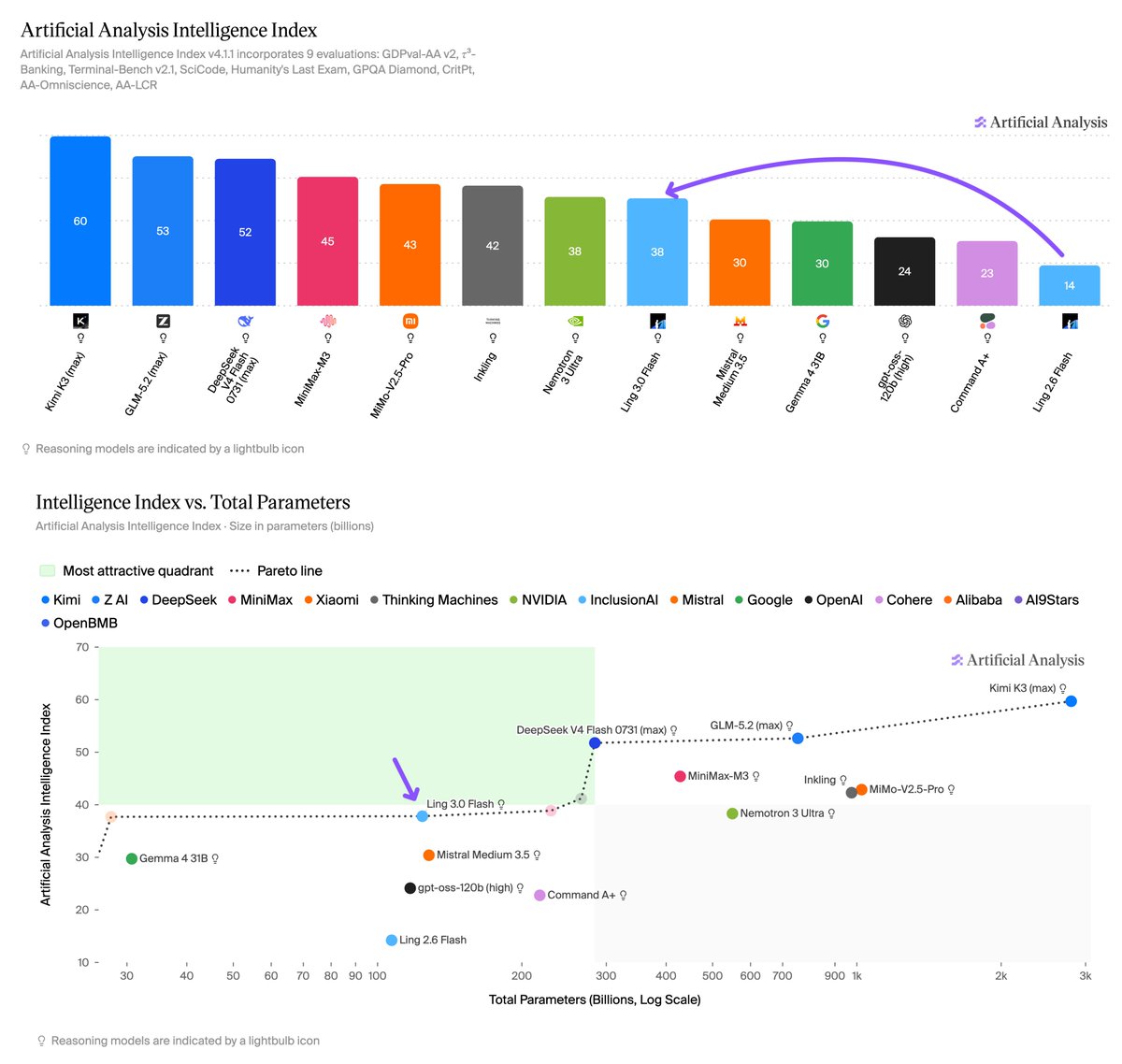
Ant Ling, Ant Group's Ling model team, has released Ling-3.2-air as under an MIT license, and the result it leads with is a jump in workflow automation. According to the model card, the model's AutomationBench-AA score rises from 15.7% to 61% compared with its predecessor. The card does not name that predecessor. Ling-3.2-air shares the native multimodal architecture of Ling-3.0-flash-VL, and the starting figures match Artificial Analysis's September evaluation of that model, which scored it 16% on AutomationBench-AA and 0% on Terminal-Bench v4.0. Artificial Analysis describes AutomationBench-AA as a test of completing workflows across business apps while respecting .
The model is built to be cheap to run for its size. It is a model: its 124 billion parameters are split into many smaller expert networks, and only some of them run for each token it processes. The card lists 512 routed experts and one shared expert, with 8 activated per token, for 5.5 billion active parameters. It accepts images and video as well as text. Ant's recommended recipe serves it with a 256K-token on four GPUs of the H200 class, or eight 80GB cards such as the H100.
The other agent results follow the same pattern. On Terminal-Bench 4.0, the card's pass rate on terminal-based tasks rises from 0% to 27%. Its legal results show how much remains. On Harvey LAB-AA v1.1, which the card presents as a legal-work evaluation, the model earns an 87.7% criterion pass rate but an all-pass rate of only 8.3%, which falls to 0.8% after a check for material hallucinations. Every Ling-3.2-air figure here comes from Ant's model card. The detailed results sit in a chart on the card, and none of the sources available here includes an independent run of the new model. What the published numbers support is that the predecessor's weak spot on business-workflow automation, measured independently in September, is where Ant reports its largest gain.
- Open weights — A model whose learned parameter values have been made available to download, under terms the publisher sets.
- guardrails — The checks around a model that block bad inputs and outputs — filters, validators, and permission rules the model itself can't override.
- mixture-of-experts — A model built from many specialist sub-networks where only a few activate per token, giving big-model capability at small-model running cost.
- Context and context window — Context is the information available for a generation; the context window is the capacity available to hold it.

Checking sign-in…
Loading comments…