Devin Adds Claude Opus 5.5, Tops FrontierCode Benchmark
- Source
- x.com
- Date

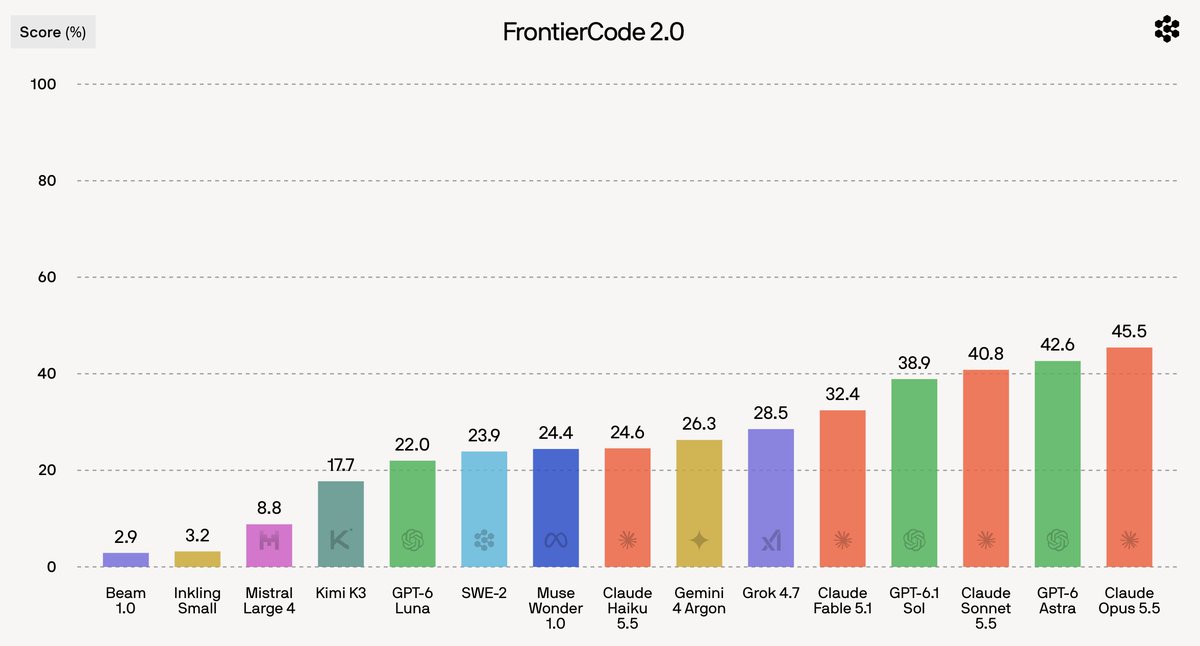
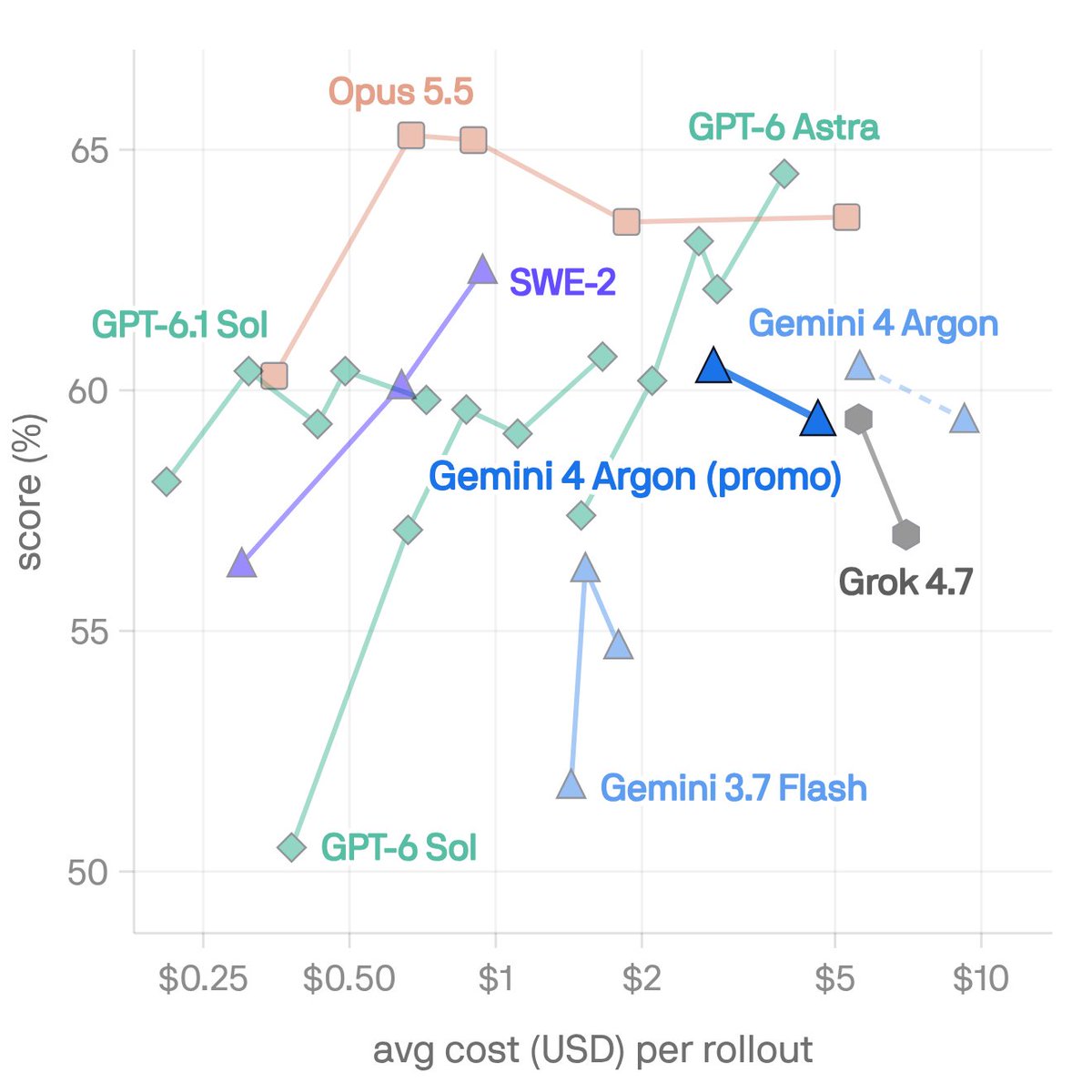
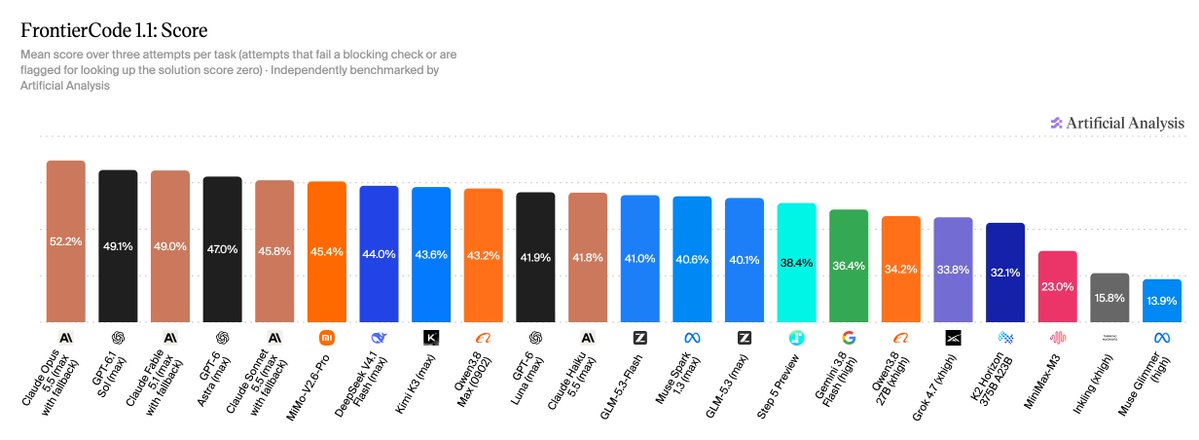
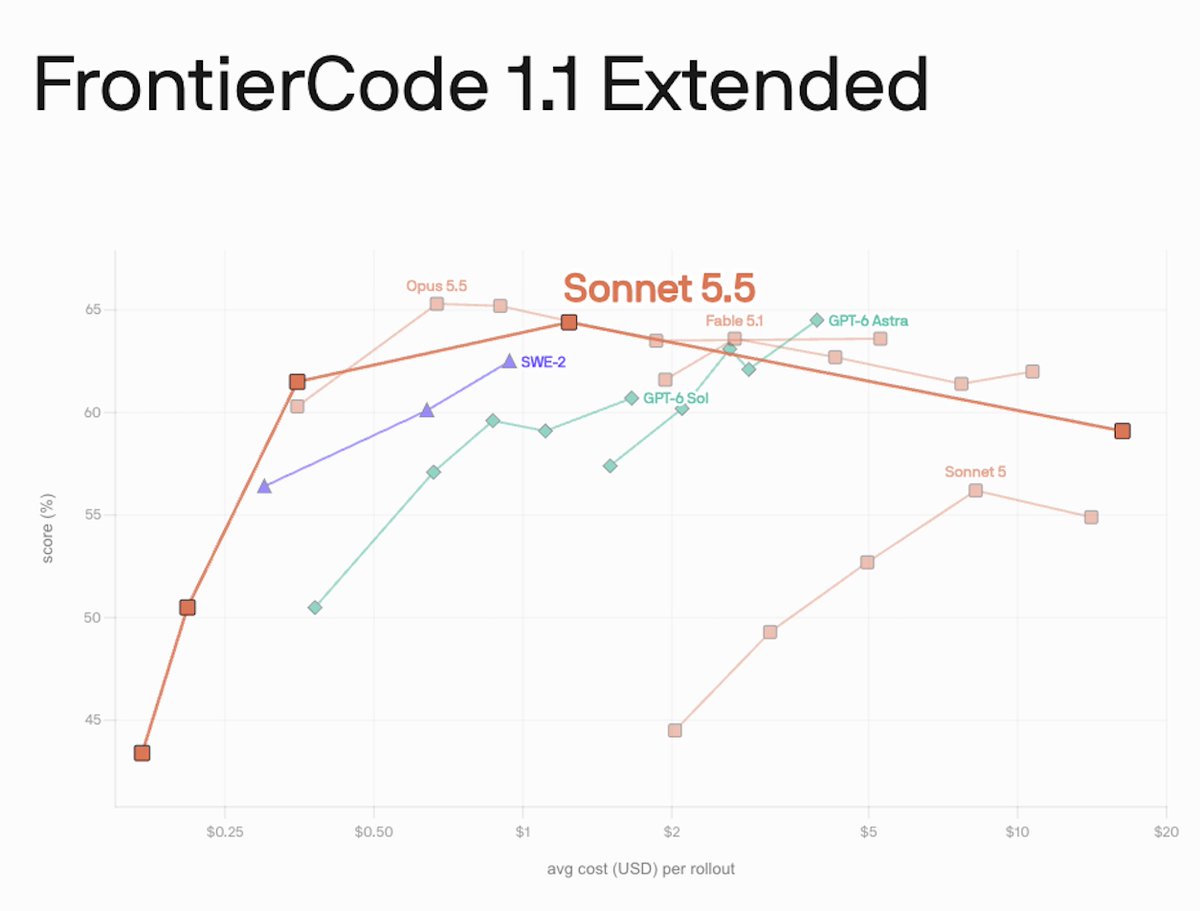
Claude Opus 5.5 is now available in Devin. On FrontierCode 1.1, Opus 5.5 takes the #1 sport from Fable 5 at a fraction of the cost.

Context
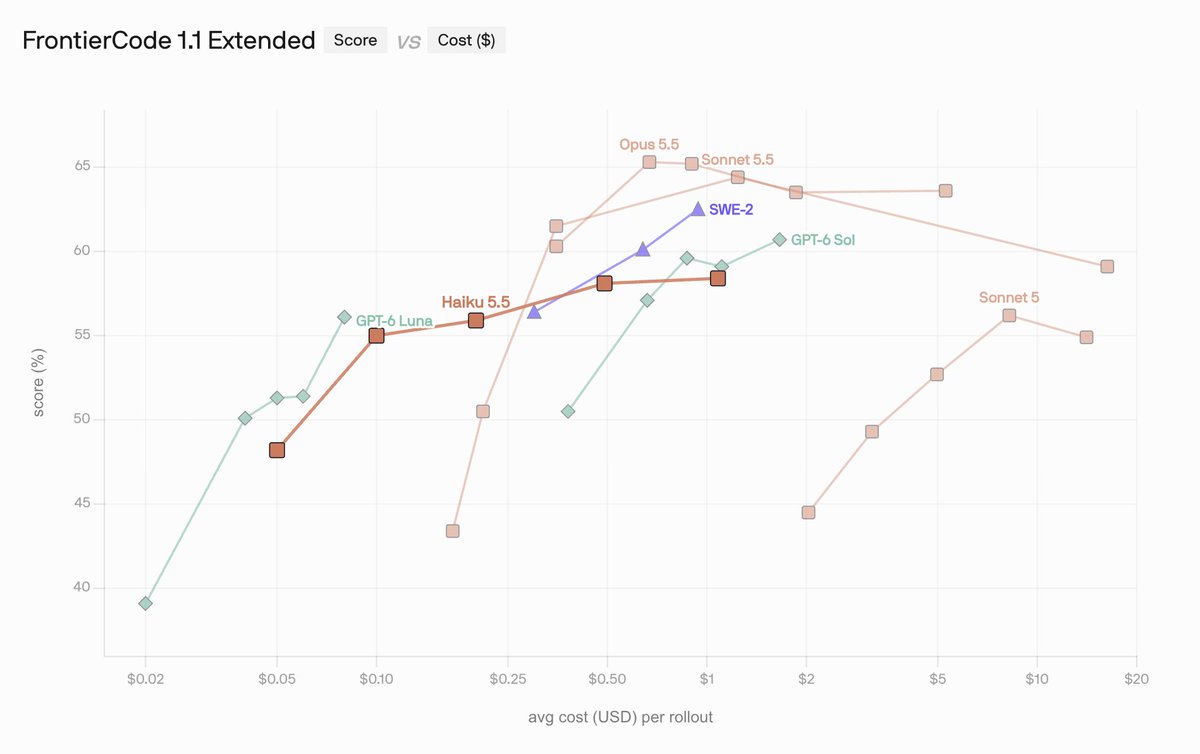
Cognition, the company behind the Devin coding , announced on September 22 that Devin now offers Anthropic's Claude Opus 5.5, and that on its FrontierCode 1.1 Opus 5.5 takes first place from Fable 5, another Anthropic model, at a fraction of the cost. The post's text gives no scores or prices. Any figures are in an attached chart that was not read for this explanation, so the ranking and the cost comparison stand as Cognition's claims.
FrontierCode is Cognition's own benchmark, and it asks a stricter question than whether tests pass. According to Artificial Analysis, which later added it as a standalone leaderboard, Cognition built the tasks with maintainers of 36 open-source repositories, who spent more than 40 hours on each. Every task asks an agent to change a real repository, and the change is graded against what that project's maintainers would require to merge it: hidden tests, limits on which files and how much code it touches, and a review by a against the maintainers' criteria. Failing any blocking check scores zero, and passing them all scores between 70% and 100%. The tasks are kept private so models cannot have seen them in training.
That later independent run supports the ranking but does not test the cost claim as stated. In Artificial Analysis's launch article, dated October 12 and run in its own rather than inside Devin, Opus 5.5 led with an average score of 52% and passed every blocking check in 58% of attempts, ahead of Claude Fable 5.1 at 49%. That comparison uses Fable 5.1, not the Fable 5 named in Cognition's post. Opus 5.5 cost $10.15 per task there against $12.00 for Fable 5.1, while OpenAI's GPT-6.1 Sol matched Fable 5.1's 49% at $0.81 per task. In that run Opus 5.5 was the strongest model on this merge-quality test and somewhat cheaper than Fable 5.1, but it was still among the most expensive models measured, so its cost advantage holds against Fable 5.1 rather than against the field.
- AI agent — An AI system that doesn't just answer once but works toward a goal in a loop — taking actions, reading the results, and deciding what to do next.
- benchmark — A standard public test set for comparing AI models — the shared scoreboards behind every "model X beats model Y" claim.
- LLM — A large language model — the neural network behind tools like Claude and ChatGPT, trained on huge amounts of text to predict what comes next.
- agent harness — The scaffolding around a model that turns it into a working agent — the loop, the tools it can call, and the rules for when to stop.

Checking sign-in…
Loading comments…