Epoch AI: Cost per Capability Falling About 47% a Quarter
- Source
- x.com
- Date
Epoch AI's updated analysis measures what it costs to reach a fixed level of benchmark performance over time, rather than tracking list prices for individual models. Across 222 models and 11 benchmarks, the price of a given result has dropped roughly 47% each quarter since 2023. The decline is steepest for state-of-the-art results and for math tasks, which suggests the frontier itself is where efficiency gains land first. Epoch compares the rate to past transformative technologies and finds it faster than DNA sequencing, general compute, or batteries at their steepest. For teams budgeting agent workloads, the implication is that a capability too expensive today may cost a fraction of that within a year, so fixed long-term assumptions about model spend age quickly. This week's same-day price cuts from Anthropic and OpenAI are a single data point consistent with that trend.

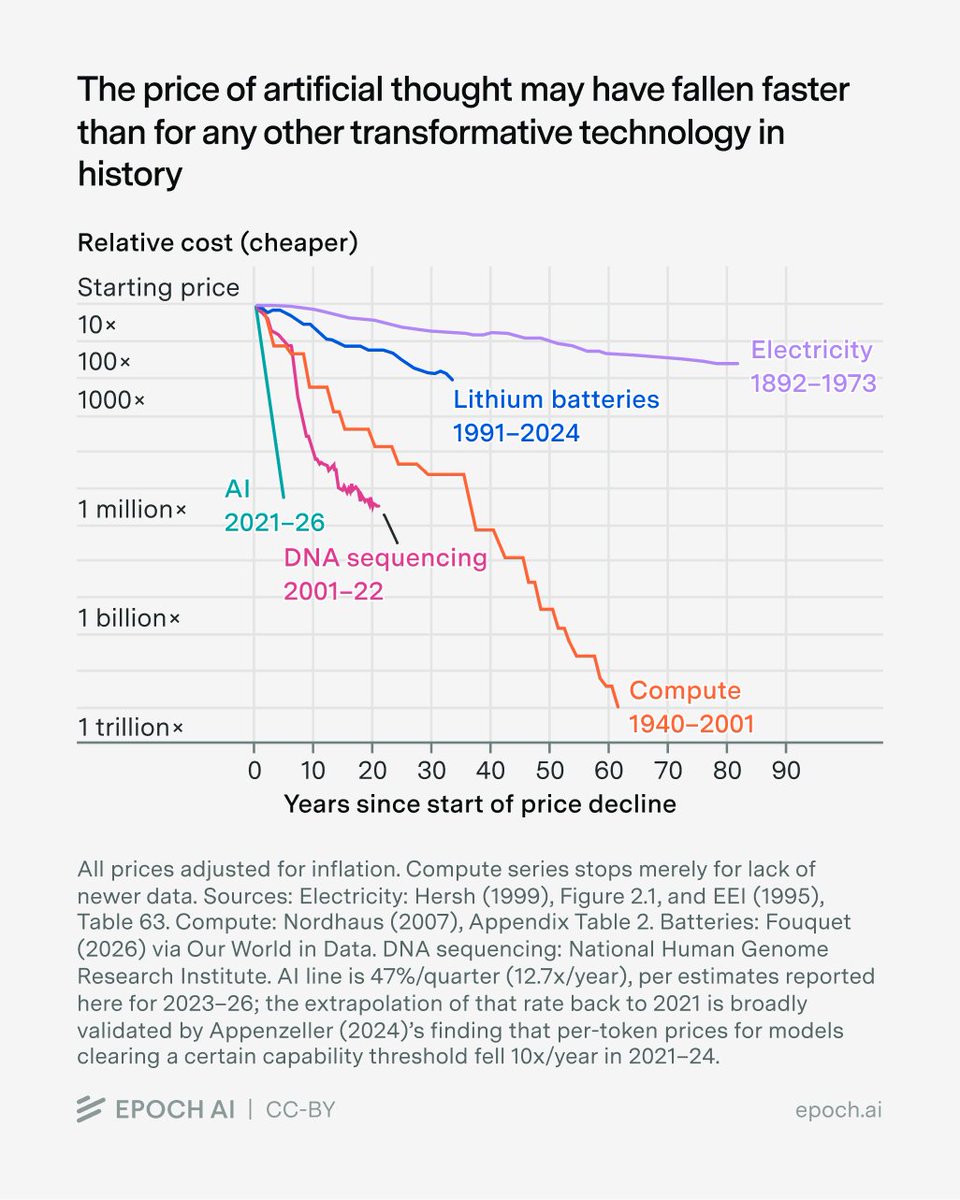
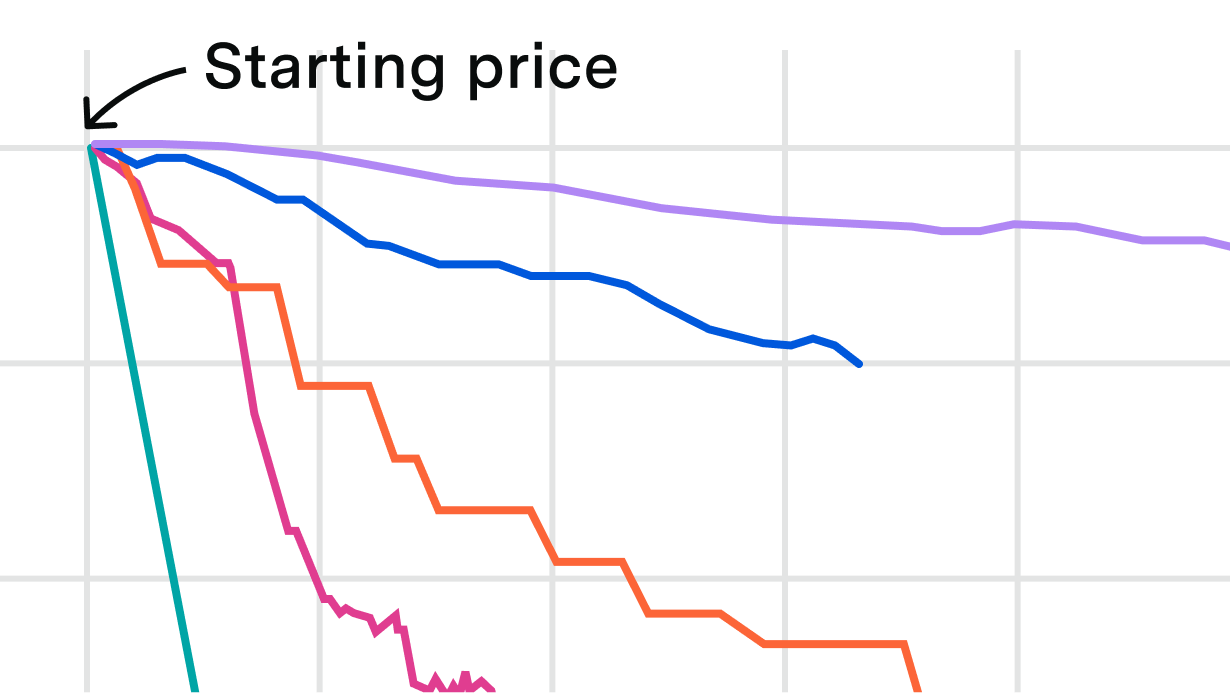
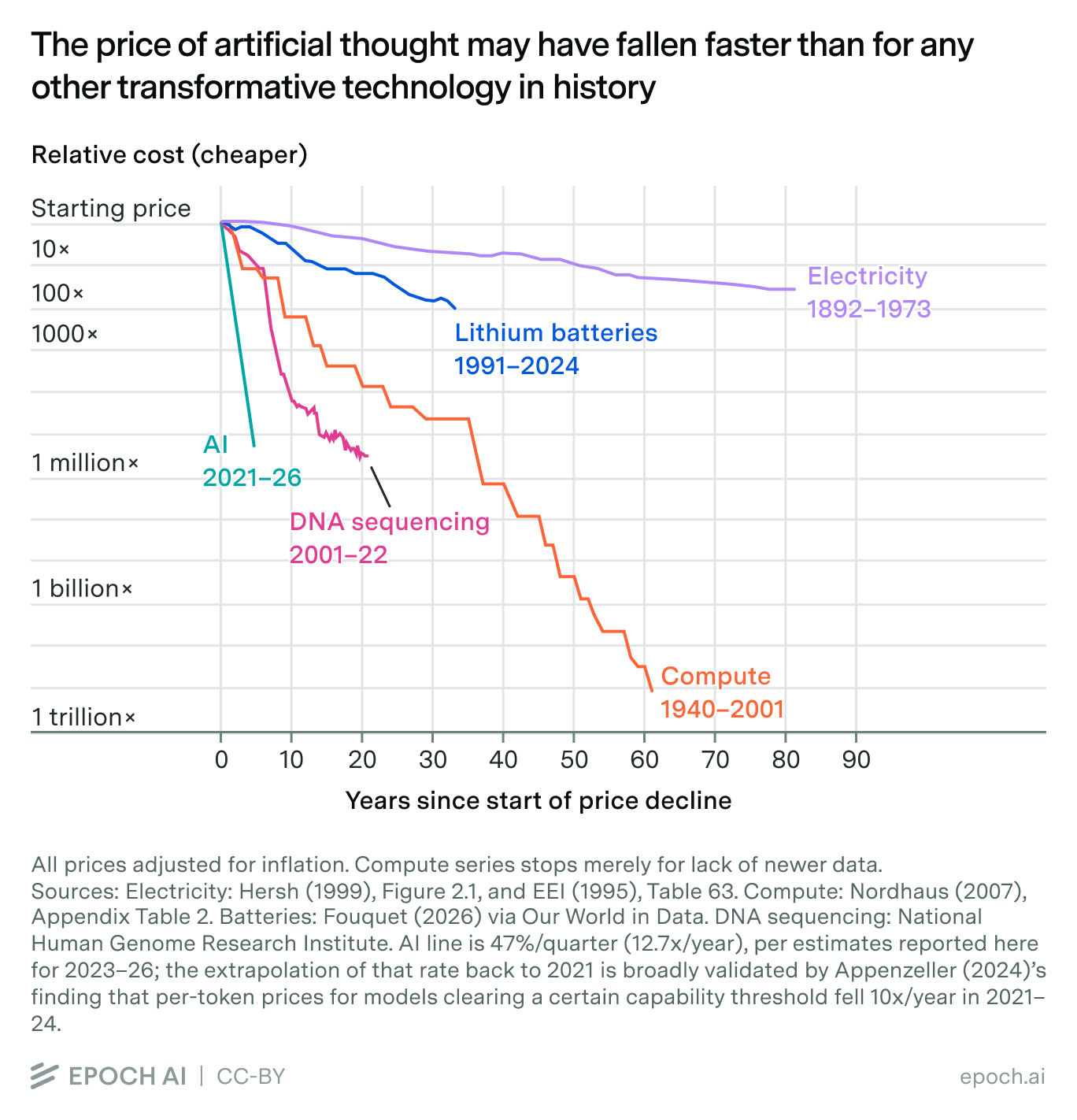
AI is getting cheaper more quickly than any other transformative tech in history. At a given level of performance, cost has fallen ~47%/quarter since 2023. That’s 4× faster than DNA sequencing, 6× faster than compute, 18× faster than lithium batteries, and (up to 1973) 54× faster than electricity.
Context
Epoch AI, a research group that tracks trends in AI, estimates that reaching any fixed level of AI performance has become about 47% cheaper every quarter since 2023, or roughly 13 times cheaper a year (Epoch AI on X). In the full report, Epoch finds, for each benchmark score, the lowest cost per question at which any available model reaches it, then measures how fast that floor drops. Its example: OpenAI's o3, released in January 2025, reached 75% on GPQA Diamond, a multiple-choice exam of PhD-level science questions, at about 30 cents a question by Epoch's estimate. GPT-5.6 Luna matched that score less than 18 months later for $0.0004 a question, a 725-fold drop.
That rate is the basis for Epoch's claim that AI is getting cheaper faster than any earlier transformative technology: four times faster than DNA sequencing, six times faster than computing, 18 times faster than lithium batteries and, in the century up to 1973, 54 times faster than electricity. Those older series follow the price of a product or service, such as battery storage or household electricity, rather than the cost of hitting a test score, and Epoch acknowledges the comparisons are imperfect.
The average hides patterns that matter more to anyone paying for AI. Costs fall fastest right after a score first becomes state of the art: averaged across Epoch's five main benchmarks, the cost of newly reached performance drops 66% a quarter, slowing to 32% a quarter two years later. The rate also varies by task, from 39 to 43% a quarter on game-based puzzles to 50 to 52% on math. Epoch lists limits that narrow what the headline means in practice. Benchmark scores are imperfect stand-ins for useful work, models may be trained toward known benchmarks, and the estimate assumes users always move to the cheapest model that reaches a score. Real users switch less often, so most will capture less of the decline than the headline rate implies.
- benchmark — A standard public test set for comparing AI models — the shared scoreboards behind every "model X beats model Y" claim.

Checking sign-in…
Loading comments…