QwQ-32B: Embracing the Power of Reinforcement Learning
- Source
- qwenlm.github.io
- Author
- Qwen Team
- Date
Context
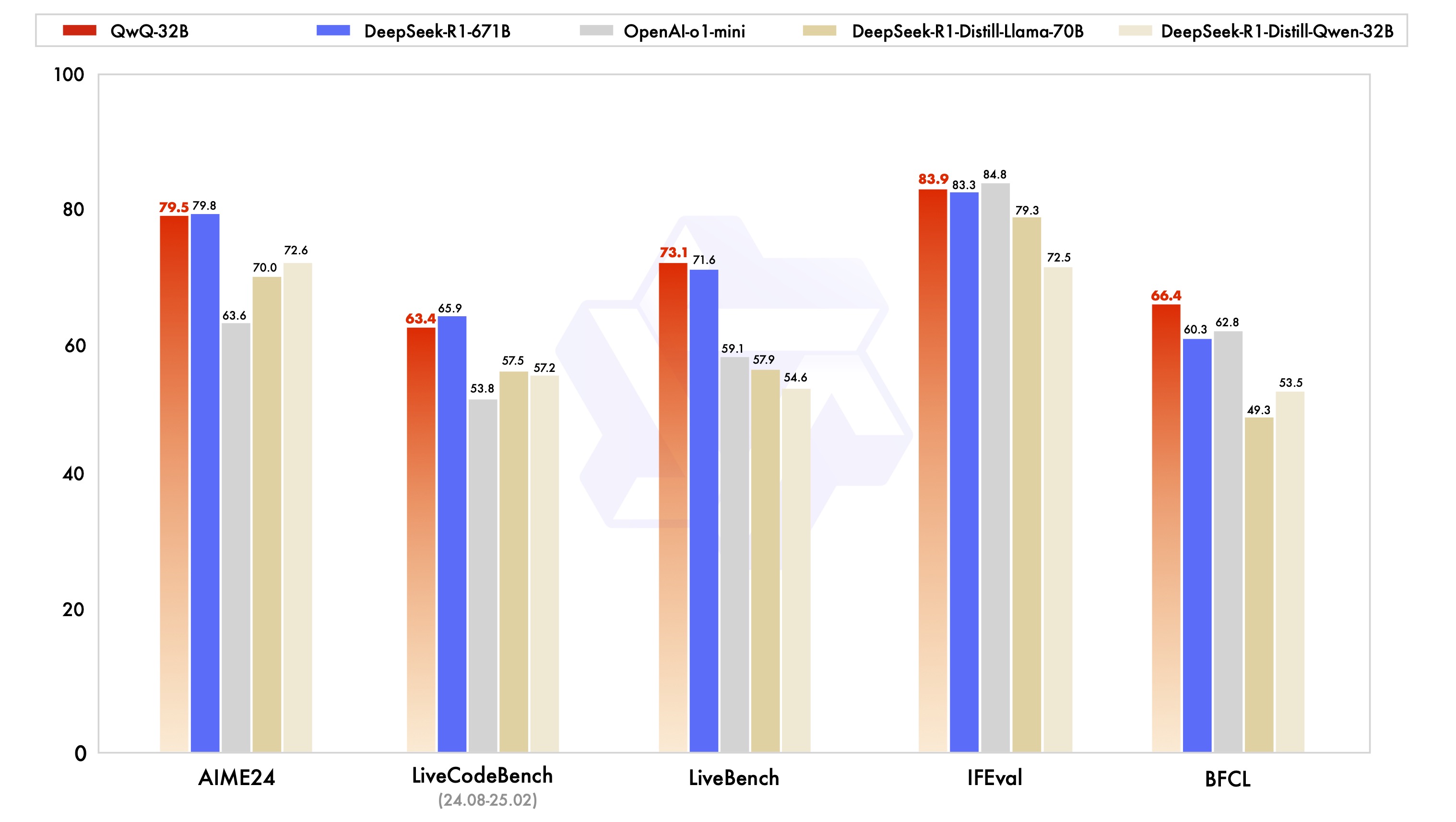
QwQ-32B's training rewarded answers using checks tied to the task. Qwen used an answer verifier for mathematics and executed generated code against predefined tests. The team reports that performance improved as this reward-based training continued. A subsequent stage added rewards for broader capabilities, including following instructions. The training account explains how verifiable outcomes supplied feedback for improving a .
Those checks target final results. Qwen's separate step-checking research examines whether intermediate reasoning contains errors. The two approaches answer different questions: whether an attempt succeeds under the available checks, and whether its derivation is valid. A correct outcome does not by itself settle the second question.
- reasoning model — A model trained to think — generating extended internal reasoning before answering — trading time and tokens for accuracy on hard problems.
- pretraining — The first, biggest phase of building a model: training it on enormous amounts of text so it learns language, facts, and reasoning in general.
“Scaling Reinforcement Learning (RL) has the potential to enhance model performance beyond conventional pretraining and post-training methods.”
“For instance, DeepSeek R1 has achieved state-of-the-art performance by integrating cold-start data and multi-stage training, enabling deep thinking and complex reasoning.”
Checking sign-in…
Loading comments…