Intel
Page 122
MultiFixer: A Coordinator-Proposer Based Multi-Agent Framework For Fixing Multi-Hunk Bugs
A multi-agent repair framework built for bugs that span several hunks.
Why it mattersBugs needing coordinated edits across several locations are where coding agents still fail. A coordinator that schedules repair order over hunk-level proposers reaches 420 Defects4J fixes, and also repairs real CVEs.
BM25 Wins at Scale: A Scaling Study of Retrieval-Augmented Generation Paradigms
A controlled scaling study across 28 nested corpus tiers spanning roughly 450-fold, holding questions fixed, comparing lexical, dense, graph and agentic retrieval.
Why it mattersRAG architecture choice is usually made on vibes; this puts accuracy-versus-cost scaling behind it on comparable footing.
AI Security Priorities: A Field-Wide Agenda
A prioritised agenda for AI security drawn from structured interviews across industry, government and civil society and refined in a multi-sector workshop, aimed at the widening gap between AI adoption and AI security readiness.
Why it mattersIt maps where the gap between AI adoption and AI security readiness is widest, which is the agenda teams securing agents will be measured against.
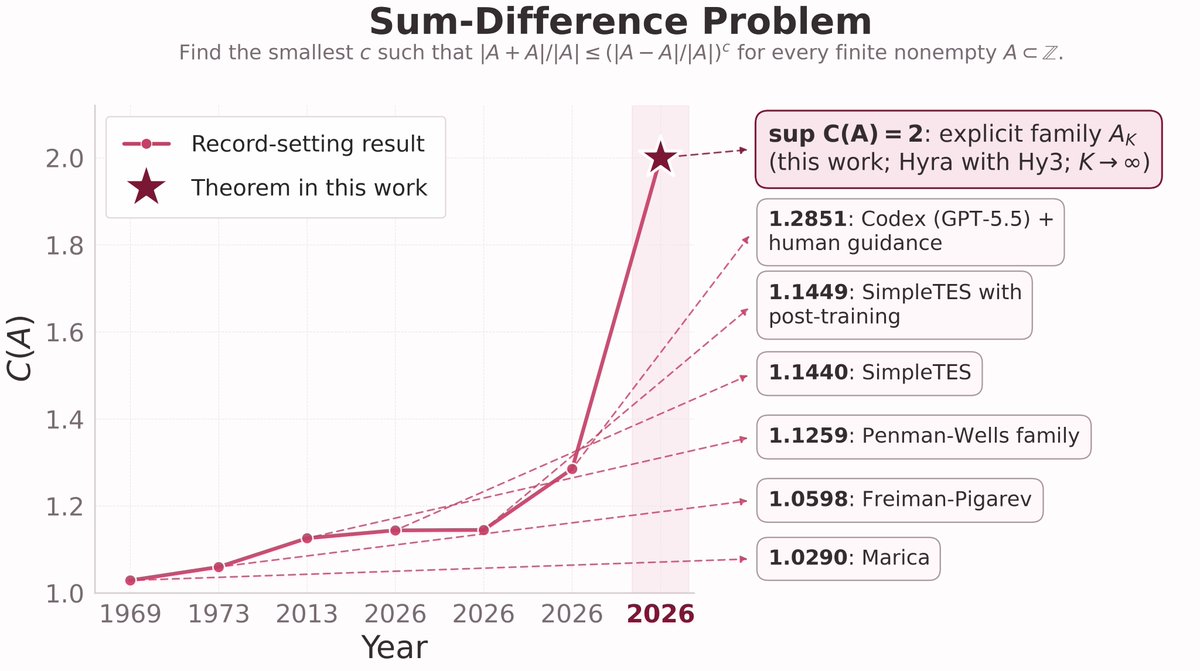
AI research agent settles a 50-year sumset exponent problem
Tencent's Hyra research agent, built on the open-weights Hy3 model, helped produce an explicit family of integer sets showing the sumset/difference-set exponent is exactly 2.
Why it mattersAn agent-assisted search yielded a human-verified construction that closes an open math bound, backed by a Lean proof. It shows what agent search plus formal verification can deliver on research problems.

OpenAI reports GPT-5.6 Sol hitting state of the art on ARC-AGI-3 through harness changes alone: reasoning across multiple context windows with canonical compaction. ARC Prize calls the result real while noting it used a provider-managed harness, not the official one.
Why it mattersCompaction and multi-context-window reasoning moved a benchmark score without touching the model, which is evidence that harness design is a first-class performance variable and a caution when comparing scores across harnesses.

MCP Tasks (async): Why Aren't Any Agents Supporting Them? — Cornelia Davis, Temporal
Distributed systems veteran Cornelia Davis on the MCP tasks specification.
Why it mattersLong-running tool calls fail in exactly the ways distributed systems always have, and there is already a spec for it going unused.
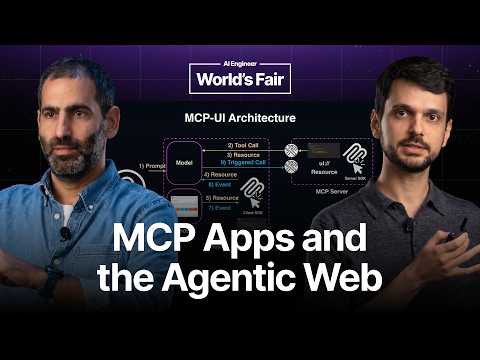
MCP Apps: Extending the Frontier — Ido Salomon & Liad Yosef
Chat and coding assistants return walls of text where a button, a chart or a small interactive view would say it faster.
Why it mattersIf tool calls can return interfaces instead of text, the shape of what an MCP server can usefully do changes.
Meet Stripe's Knowledge AI Platform
Stripe introduces its Knowledge AI Platform, an internal agent platform for non-coding knowledge work that connects employees to over 1,000 internal tools and skills, from quick queries to multi-day projects.
Why it mattersConnecting an agent to a thousand internal tools safely is a different problem than building one good agent.
Latest MCP spec now supported in mcp-handler
mcp-handler 2.0 serves the 2026-07-28 Model Context Protocol spec natively and statelessly on Next, Nuxt, Svelte and friends, with no Redis dependency.
Why it mattersStateless MCP servers with no session store, plus a breaking upgrade: SDK v2 registration APIs, zod 4 required, and the HTTP+SSE transport now returns 410 Gone.
Beyond Recognition How Our Models Reason About Video
Four flavours of video reasoning, benchmarked.
Why it mattersSpatial grounding, timestamped temporal reasoning and cross-cut identity tracking are benchmarked on an edge-sized model against Gemini 3 Pro.

AI Gateway: GPT-5.6 pricing and speed updates
Vercel's AI Gateway passes through upstream cuts on the GPT-5.6 line.
Why it mattersLuna drops 80% to $0.2/$1.2 per 1M tokens and Terra 20% to $2/$12, with Sol's fast mode now 2.5x — and since model IDs are unchanged, existing requests pick up the new rates with no code change.

Inkling Small Lands Within A Point Of Inkling On The Artificial Analysis Intelligence Index With Less Than A Third Of The Parameters
Artificial Analysis evaluates Thinking Machines' Inkling Small, a 276B MoE open-weights model scoring 40, within a point of the flagship at under a third of the size.
Why it mattersInkling Small scores 40 with 276B total (12B active) parameters and about 24K output tokens per task, a small open-weights option near its larger sibling.

MiniMax H3 now available on AI Gateway
MiniMax H3 is a video generation model that produces 2K mp4 output from 5 to 15 seconds using a text prompt, a starting image, first/last keyframes, or reference material (images, video, or audio).
Why it mattersIf you're building video generation into an app, this gives you a high-end model (2K output, up to 15s, flexible multimodal conditioning including keyframes and reference material) accessible through a standard AI SDK integration rather than a bespoke API.
Inkling Small from Thinking Machines is now available on AI Gateway
Thinking Machines' Inkling Small is now callable on AI Gateway as thinkingmachines/inkling-small.
Why it mattersInkling Small lands on AI Gateway as an open-weights multimodal MoE with 1M context and adjustable reasoning effort, giving a cheaper option for agentic coding and tool-use workflows without markup or a platform fee.
Two settings tripled GPT-5.6 Sol’s ARC-AGI-3 score
OpenAI found that retaining reasoning and replacing rolling truncation with compaction moved GPT-5.6 Sol from 13.3% to 38.3% on the ARC-AGI-3 public set while using six times fewer output tokens.
Why it mattersThe result is a clean warning against reading benchmark scores as model-only measurements: memory, context management and harness design can dominate the apparent capability.

Designing Multi-User Agents for Group Chats and Wearables
A talk detailing eight months of building a personal AI agent for group chat and eventual glasses deployment, focused on two failure modes unique to multi-user settings.
Why it mattersIf you're building agents that sit in a group chat, shared workspace or wearable, this lays out two failure modes single-user designs don't surface.
Trinity Large Thinking
Trinity-Large-Thinking ships under Apache 2.0 with open weights, targeting the failure modes that break long agent runs.
Why it mattersTrinity-Large-Thinking is an Apache 2.0 open-weight reasoning model built for multi-turn tool calling and long-running agent loops.

We Vetted 2000 AI Skills Before They Reached Developers — Lucas Palma, Nubank
Nubank's security team put every AI skill through Skill Vector before it reaches the internal marketplace.
Why it mattersAgent skills are executable dependencies with supply-chain risk.
How Kepler Built Verifiable AI for Financial Services — Vinoo Ganesh
Kepler treats the model as one component inside a deterministic substrate.
Why it mattersThree concrete design rules for wrapping an LLM in a deterministic verification layer: tie every number to a source or drop it, pull figures deterministically outside the model, and review each extraction like a diff.

Extend Cline With Plugins And Hooks
Cline's walkthrough of plugins and lifecycle hooks in its SDK-based harness.
Why it mattersHooks run inside the agent harness at fixed points whether or not the model asks, so you can enforce guardrails and audit logs that an MCP tool cannot guarantee. The post shows how to wire this up in Cline.

Synthetic Personas for Market Research: Where LLM Agents Break
Ishan Anand analyzes a study where LLM agents replayed a ~1,000-person market research survey and matched human averages but with far less variance, revealing that synthetic respondents smooth over the real messiness of human populations.
Why it mattersIf you're building or trusting synthetic-persona research, this shows why matching human averages is a misleading success metric and gives you a practical benchmark — the human-vs-human noise floor.
The Fluent Bluff: Why LLMs Give Bad Financial Advice Without Grounding
Why models give confidently wrong business advice, and what fixes it.
Why it mattersRetrieval gives a model context, not experience. Grounding advice in real state-action-outcome records — what companies did and what followed — beat off-the-shelf model output in head-to-head tests.

SimulationMaxxing: How we ship agents 20× faster — Aman Gupta (Nubank) + Shreya Rajpal (Snowglobe)
Snowglobe is an AI agent evaluation platform that generates grounded, multi-turn conversation simulations to test agents before they reach production, addressing the difficulty of hand-curating stateful eval data.
Why it mattersIf you're stuck hand-writing multi-turn test cases for a conversational agent, Snowglobe generates grounded simulated conversations from your agent's own spec and data so you get stateful eval coverage before production.
How @Similarweb evaluates a Deep Research agent when there's no single right ans
Similarweb's engineers explain how they evaluate Deep Research reports without golden answers.
Why it mattersWhen an agent has no single correct answer, golden-answer matching fails.
AI Worming through Word
A prompt injection variant that upgrades to a self-replicating worm.
Why it mattersA working self-replication path for prompt injection changes the threat model for any agent that reads user-supplied documents.

Cursor for iOS
A mobile companion app for the Cursor AI coding agent that lets developers launch, monitor, and review autonomous coding agents from an iPhone or iPad.
Why it mattersIf you already run Cursor background agents, this lets you kick off, review and merge their work from a phone.

Cursor has extended its mobile agent experience to iPad. The client offers the same capabilities as on iPhone with more screen space for working with agents. The announcement text is brief and the demo video could not be read.
Why it mattersCursor's agent interface now runs on iPad, in addition to iPhone. Engineers can supervise and direct coding agents from a larger tablet screen without a laptop.

Skills as the Interface to Agentic Products
A talk by FactSet's Yogendra Miraje on treating 'skills' — short skill.md files with routing signals like name, description, and trigger words.
Why it mattersIf you're building an internal agent platform, this frames skills as the unit of capability and gives you the operational scaffolding most skill tutorials skip.

Mercury 2 gets 100M free tokens, 10x limits and a Baseten listing
Inception raised the free allotment for new Mercury API keys from 10M to 100M tokens, lifted free-tier rate limits tenfold, shipped unquantified latency and tool-calling improvements to Mercury 2.
Why it mattersIf you want to benchmark a fast diffusion LLM on voice, search or sub-agent workloads, the free allotment is now 100M tokens with 10x higher rate limits, and Baseten users can add Mercury 2 without a new provider.

Model Routing Layers and the Prompt Cache Tax
An analysis of AI model routers (like those shipped by Cursor and Ramp) finds that prompt caches are model-specific.
Why it mattersAnyone running multi-model routing in an agent or IDE loop is likely paying a hidden cache-invalidation tax on every switch; this piece puts numbers on it and gives a concrete mitigation.
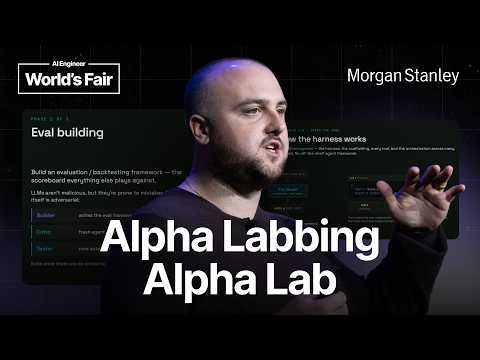
Morgan Stanley's ALPHALAB: Multi-Agent Research Across Optimization Domains — Brendan Rappazzo
AlphaLab is a multi-agent research system built by Morgan Stanley's research group in which a strategist agent proposes experiments and worker agents write code, configure backtests and evals, submit cluster jobs, and run statistical tests while managing their own context.
Why it mattersIt shows what an agentic research loop looks like when it has to survive real institutional scrutiny.

Numbat is an open-source agent detection and response layer that works across desktop, CLI, IDE and gateway harnesses. It offers live monitoring, local detection, blocking of actions before they execute, and forensic reconstruction from session artifacts. Apache 2.0, single Go binary.
Why it mattersSecurity teams get harness-agnostic visibility into what coding and desktop agents are doing, with the ability to block selected actions before execution and reconstruct past sessions from existing artifacts. Apache 2.0, single Go binary.

Hermes Agent Wake Word ("Hey Hermes")
A hands-free voice-activation feature for the Hermes Agent CLI, TUI.
Why it mattersIf you want to talk to an agent without touching the keyboard, this shows a working pattern for local trigger-phrase detection with three interchangeable engines.
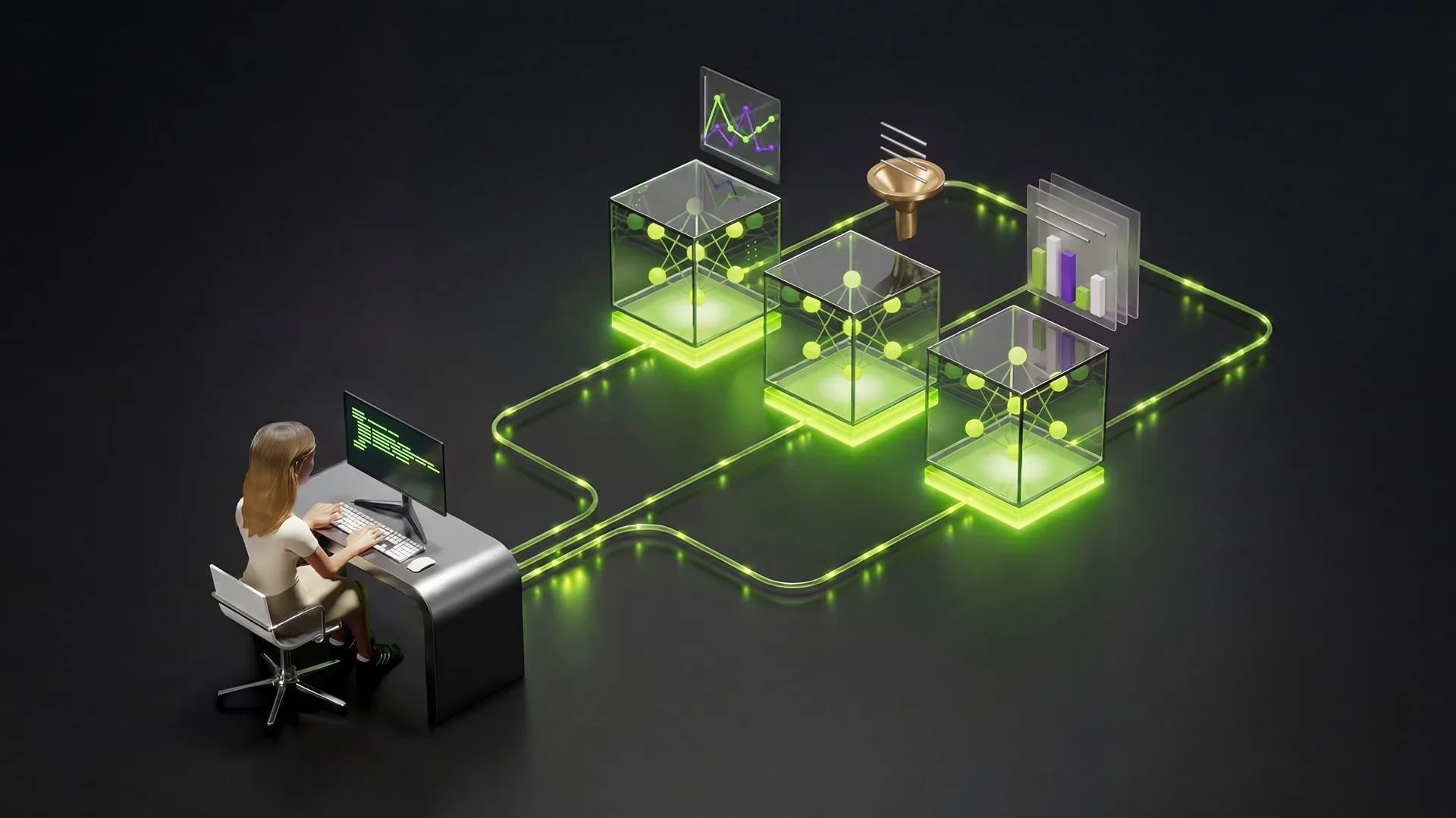
How to Self-Host a Validated AI Coding Assistant with NVIDIA NeMo Guardrails
Self-hosting a coding assistant in a regulated or source-sensitive environment runs into three problems.
Why it mattersHallucinated package names are an attack surface, and self-hosting is the only option for many teams.
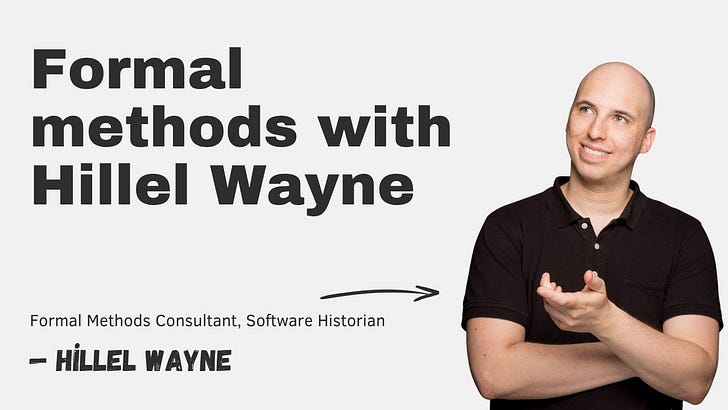
Formal methods with Hillel Wayne (The Pragmatic Engineer Podcast)
Hillel Wayne pushes back on the theory that machine-written code will finally mainstream formal verification, using TLA+ war stories like Amazon's 35-step distributed bug to show where specs pay off and where property-based testing is the realistic ceiling.
Why it mattersA grounded answer to whether AI-written code makes formal verification necessary, plus property-based testing as the practical middle ground when a full TLA+ spec is out of reach.

A new benchmark for evaluating patient-facing health AI agents
Most health AI benchmarks test either static medical knowledge or provider-facing tool use.
Why it mattersA clinician-vetted benchmark for agents that act for patients over multiturn conversations, plus published failure modes of current foundation models — a template for evaluating any agent operating under safety constraints.


Autonomous Agent Improvement with LangSmith Engine
A LangChain Academy course that walks through the Agent Development Lifecycle (ADLC).
Why it mattersIf you run agents in production and your improvement loop is ad-hoc, this lays out a repeatable lifecycle — flag failures in real traces, generate and test candidate fixes as experiments, then watch for regressions after deploy.

Discovering Cryptographic Weaknesses
Anthropic researchers used Claude Mythos Preview to halve HAWK's effective key strength and find a new attack on round-reduced AES.
Why it mattersShows a frontier model finding flaws in cryptographic algorithms themselves, not just implementation bugs, which changes assumptions about AI-driven security research.
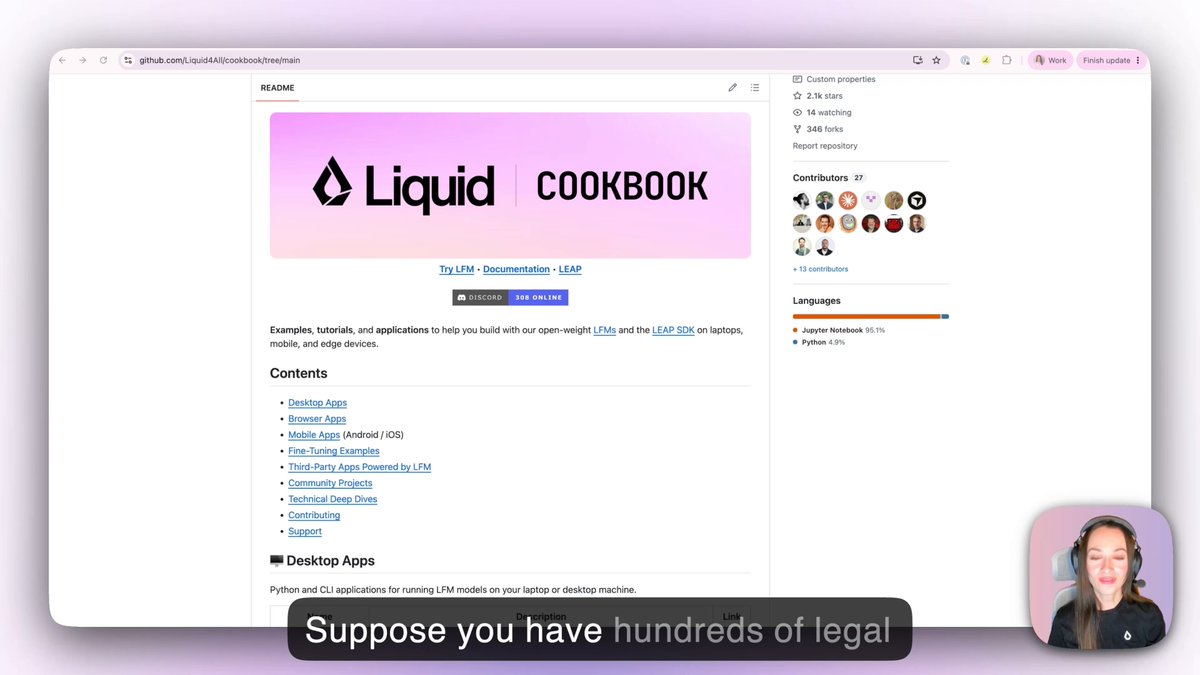
Encoder models score every label in one pass, no decoding loop
Liquid AI shows how to fine-tune its 230M and 350M encoders with a linear classification head so every label is scored in one forward pass.
Why it mattersFor high-volume labeling such as support tickets or legal documents, a fine-tuned encoder returns a probability per label in one forward pass.


Post-quantum authentication to origins is now supported
Cloudflare's Authenticated Origin Pulls and Custom Origin Trust Store now support ML-DSA (FIPS 204) post-quantum signatures.
Why it mattersIf you run mutual TLS between Cloudflare and your origin, you can now configure fully post-quantum authenticated connections using ML-DSA (FIPS 204).
AngelSpec Opens Tencent's Speculative Decoding Training Stack
Tencent open-sourced AngelSpec, a training framework for speculative decoding drafters (MTP, DFly, DFlash, Eagle3 and others) with Hy3-A21B drafter weights.
Why it mattersTeams serving large MoE models can train and swap drafters through one config-driven pipeline. The paper argues MTP suits chat while block-diffusion suits code and math. Reported speedups are Tencent's own measurements on Hy3.

Alipay-PIBench is now open source, shifting the question from whether an agent can write code to whether it can integrate payments without losing money. It covers nine real products and production repositories, scores against 459 rubrics, and includes a programmable mock gateway for adversarial and
Why it mattersMost coding benchmarks stop at whether code runs. Alipay-PIBench scores agents on integrating payments safely across nine production repos with 459 rubrics and a mock gateway that replays attacks and edge cases.
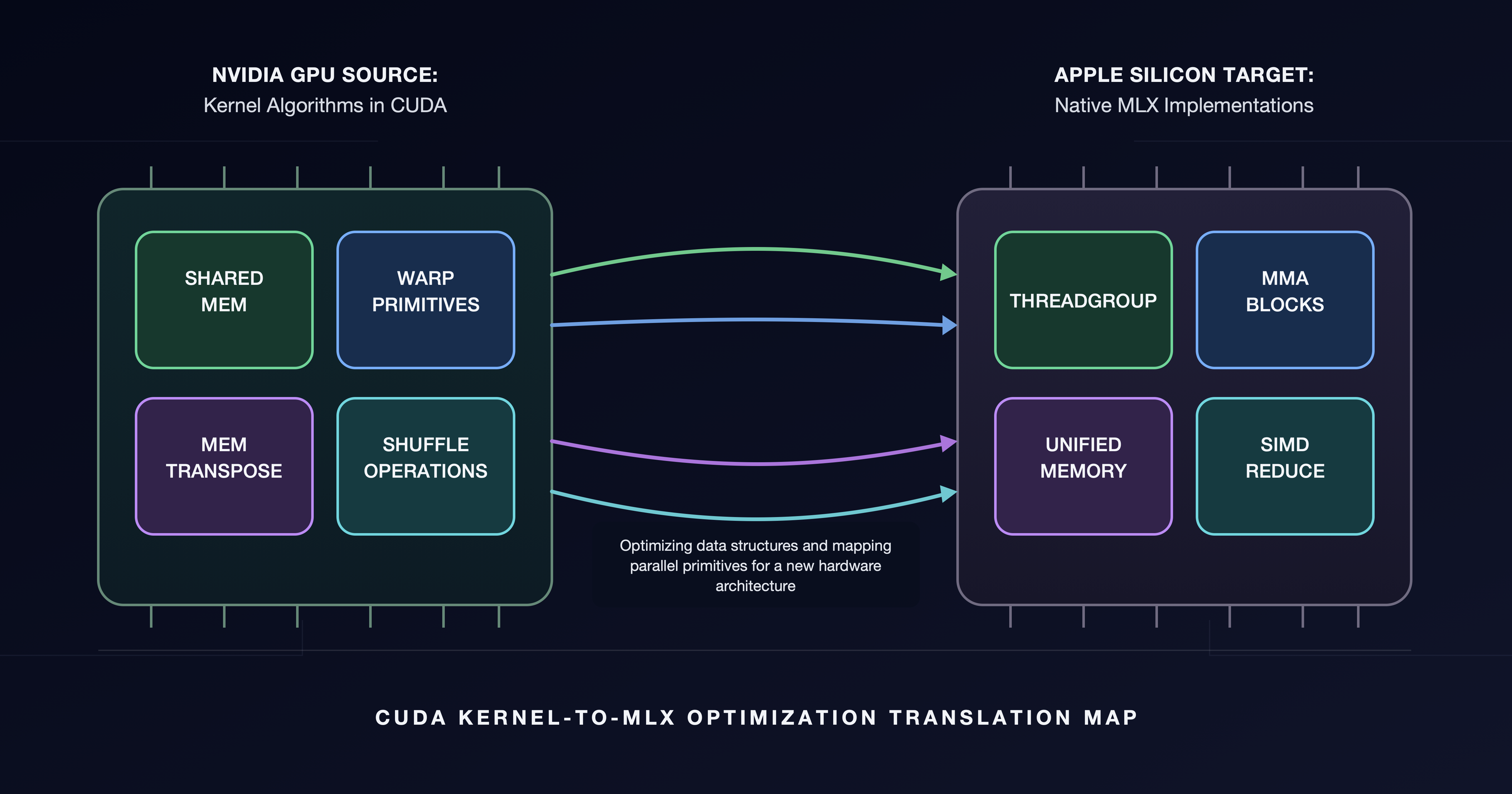
From CUDA to MLX: How K-Search Brings Decades of Kernel Expertise to Apple Silicon
Berkeley researchers extend the K-Search evolutionary kernel-search framework so decades of CUDA optimization knowledge can be automatically translated into architecture-native MLX strategies.
Why it mattersIt shows AI can automatically rediscover architecture-specific kernel optimizations instead of hand-porting CUDA code, relevant for anyone deploying models on non-NVIDIA silicon.

Automating the Developer Loop with Coding Agents
Ramana Siddanth Emani (Auditoria) describes running multiple coding agents in parallel across separate git worktrees, each guided by 'skills' to enforce patterns, to clear tasks pulled from QA reports, Jira tickets, and GitHub PRs.
Why it mattersIt shows a working end-to-end agentic dev loop — task intake from QA/Jira/PR queues, isolated worktrees per agent, skills as pattern guardrails, sub-agents for traces and E2E tests.
Layering AI Agents onto an Event-Sourced Fraud Detection System
An architecture for the gray zone in fraud decisioning.
Why it mattersEvent-sourced systems already emit the state and history an agent needs — this shows how to layer agents onto change feeds for the ambiguous cases rules and ML can't decide, without replacing either.
The Demo vs. The Memo: Why AI-Generated Investment Decks Fail Under Scrutiny
An investment committee veteran on why polished AI-generated decks collapse under questioning, and what a system has to do instead.
Why it mattersDesign requirements for generation products used in consequential decisions: rank source reliability, treat contradictions between figures as the key signal, and keep estimates labeled so they don't harden into facts across drafts.
Adding a custom MCP server to Claude and ChatGPT
A worked path for exposing your own MCP server to the standard Claude and ChatGPT chat interfaces.
Why it mattersConnecting a custom MCP server to the ordinary Claude and ChatGPT chat apps — not just IDE clients — takes several non-obvious steps; this walks the actual path for both.
Discover and install eve integrations from the CLI
Vercel's eve CLI now lets developers discover and install integrations for eve AI agents directly from the command line, pulling from an official catalog, third-party registries, or a direct URL.
Why it mattersIf you're building or operating eve agents, these commands turn integration setup into a package-manager workflow — you can search a registry, inspect an entry, and have the files written into your project for review before the agent runs.

Building An Agentic Harness That Outlasts The Model
Shopify's application security team on the agentic harness that finds vulnerabilities, proves them with real tests, and opens tuned pull requests.
Why it mattersA grounded counterweight to model-upgrade optimism in security scanning: stronger models raise candidate volume, and the validation harness that proves findings with real tests is what determines whether any of it is usable.

Together AI Partners with Moonshot AI to Host Kimi Models
Moonshot's open-weight models, starting with the 2.8T-parameter Kimi K3 MoE, get a day-one US-hosted serving path on Together with zero data retention and fine-tuning on your own data.
Why it mattersKimi K3, a 2.8T-parameter MoE, gets US-hosted inference with zero data retention and fine-tuning support, with future Moonshot open-weight releases served on day one.
An index of the vibe-coding frontier. Corrections welcome.