Intel
Page 28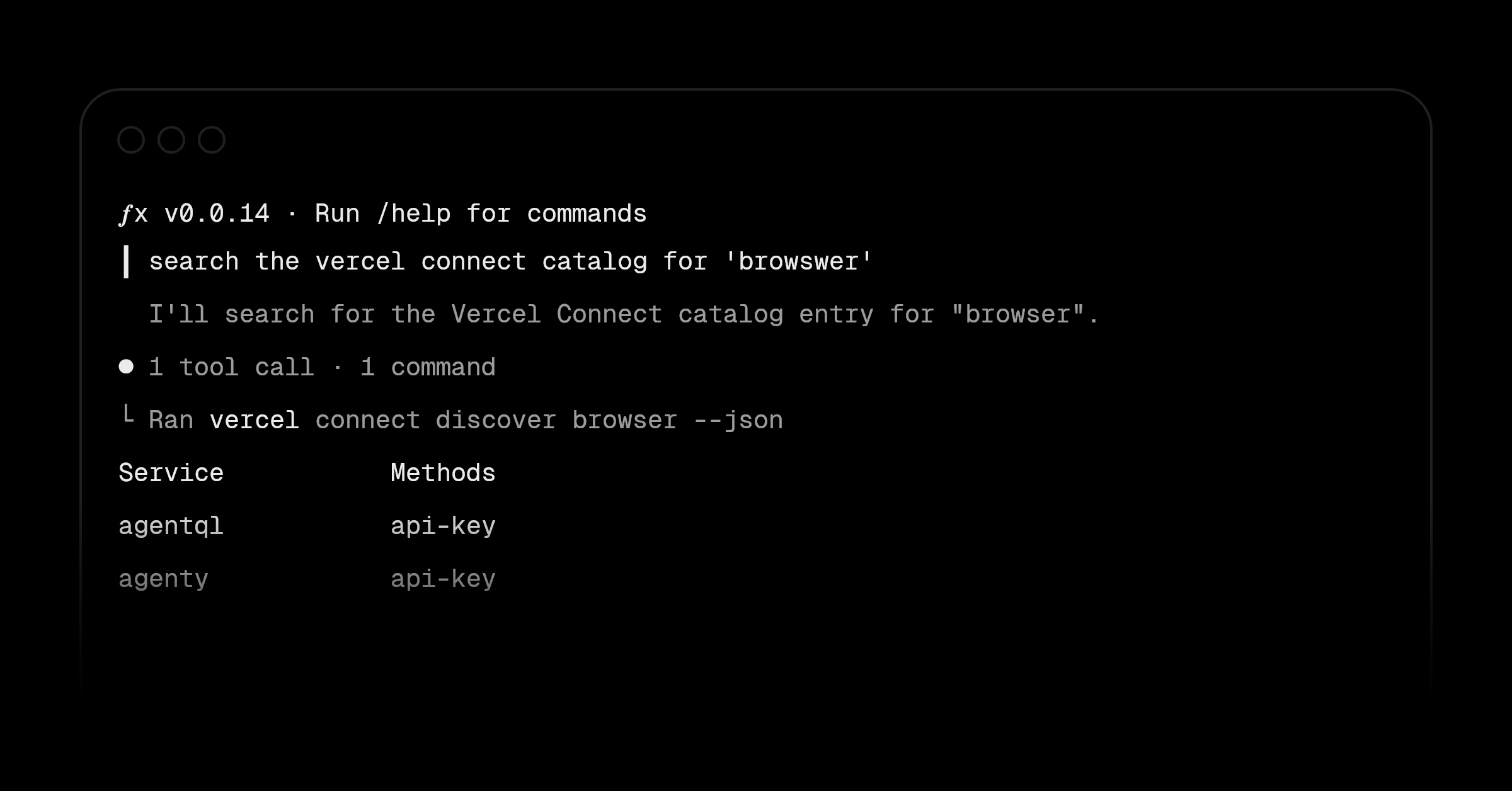
Discover 1000+ services on Vercel Connect from the CLI
Vercel CLI 64.1.0 adds connect discover and connect categories to browse and search more than 1000 services.
Why it mattersYour agents can search over 1000 Vercel Connect services from the CLI and get JSON output. Filters cover MCP or OAuth connection method and webhook triggers.
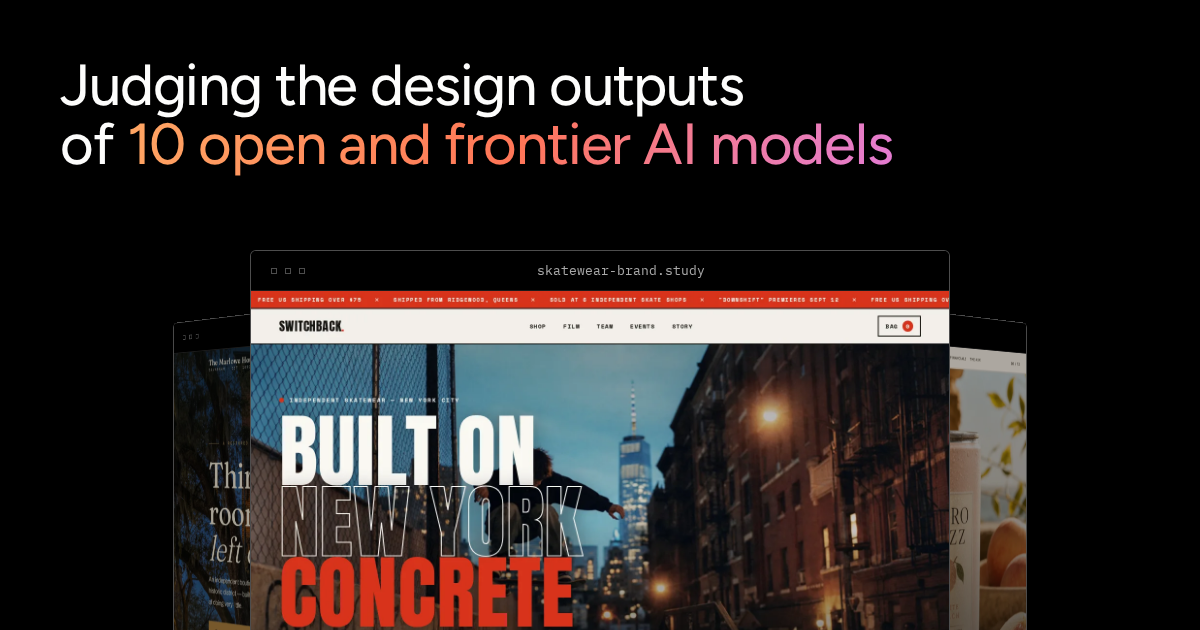
Websites designed by 10 AI models, ranked by 4,500 human votes
HumanSignal's AI Taste Index compares ten models across ten shared design briefs using 4,500 human preference votes.
Why it mattersIt ranks ten frontier models by blind human votes on the same ten design briefs, with a per-brief breakdown and downloadable data. Use it to choose a model for front-end generation based on rater preference rather than code benchmarks.

Terra returns as a new model said to write better, follow nuanced requests more accurately, and handle computer use well. The post claims it gives 2X more usage than 6.1 Sol across API and subscriptions. No benchmarks accompany the claim.
Why it mattersA new model claims stronger computer use and writing, and 2X more usage than 6.1 Sol on both API and subscriptions. If it holds, agent runs get more headroom at the same plan.
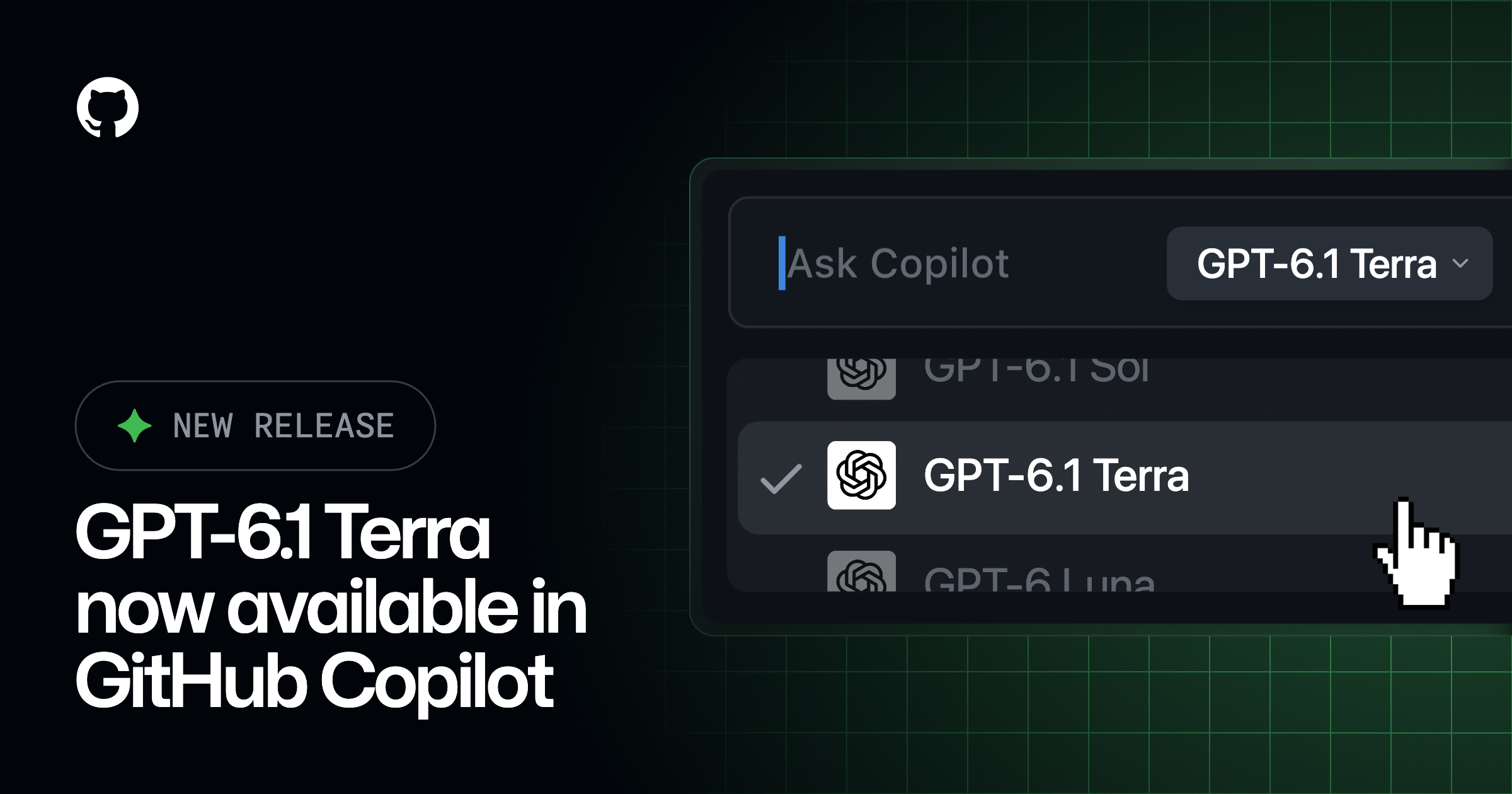
GPT-6.1 Terra reaches general availability in GitHub Copilot
GitHub made OpenAI's GPT-6.1 Terra generally available in Copilot across VS Code, Visual Studio, CLI, cloud agent, JetBrains and Xcode.
Why it mattersA new OpenAI model aimed at everyday agentic coding is selectable in Copilot at lower cost than GPT-6.1 Sol. Admins on Business and Enterprise can control access through model policy.

How to Test Your Agents on Real Tasks With Harbor - Xander Song, Arize AI
Arize's Xander Song explains Harbor's task, environment and verifier model, runs it at scale on Daytona.
Why it mattersIntroduces sandboxed, verifier-based agent evals with oracle checks before spending tokens. A case study shows measuring a prompt change by tool-call count and correctness.

Run Scale AI’s AgentEnv evals on Vercel Sandbox
Scale AI's AgentEnv, a framework for testing agents against tasks and scoring results, gained a Vercel Sandbox provider in version 0.9.1334.
Why it mattersYou can run Scale AI's AgentEnv evaluations on Vercel Sandbox, with the agent and its task environment isolated in separate sandboxes. That gives a ready path to scored runs with recorded agent actions.

Cursor released its Agent SDK. Agents are defined as code, with prompts in Markdown and tools in TypeScript, deployable on Cursor's hosted infrastructure or self-run, with built-in evals to measure each change.
Why it mattersYou can define agents in Markdown and TypeScript, deploy them on Cursor's hosted infrastructure or your own, and run built-in evals on each change. Implementation depth is not covered by the post.
ai ai@7.0.154
Vercel's AI SDK 7.0.154 adds an onStepError callback across generateText, streamText and ToolLoopAgent, plus onError and onAbort on ToolLoopAgent.
Why it mattersAgent loops built on the AI SDK can now handle step-level errors, abort events and mid-run steering through callbacks, and telemetry identifies which SDK version emitted each event. This helps with debugging multi-version bundles.
transformers v5.21 — Release: v5.21.0
Hugging Face Transformers 5.21.0 adds MiniCPM-OCR, a document-understanding model for text-dense images.
Why it mattersTransformers v5.21 adds the MiniCPM-OCR document model and Recursive's Flint MoE (hybrid sliding and full attention, 6 of 256 experts routed). You can load both with the standard library.

GPT-6.1 Terra is now in orbit
OpenAI releases GPT-6.1 Terra, a fast computer-use and writing model at 50% lower standard API prices than GPT-5.6 Terra.
Why it mattersGPT-6.1 Terra is available as gpt-6.1-terra at half the standard API price of GPT-5.6 Terra. It also stretches usage allowances in ChatGPT Work and Codex, which lowers the cost of computer-use and writing agents.

Artificial Analysis benchmarks OpenAI's GPT-6.1 Terra: halved token pricing, a 6 point Intelligence Index gain at under a third of the per-task cost, a 48 on Coding Agent Index v2.0, and hallucination rate falling from 88% to 38%.
Why it mattersGPT-6.1 Terra costs $1/$5 per million tokens, half or less of its predecessor, and scores 48 on the Coding Agent Index with a roughly 20 point Terminal-Bench gain. That lowers the cost of running agents on this tier.

OpenAI releases GPT-6.1 Terra, a computer-use model priced 50% below GPT-5.6 Terra. OpenAI says it matches GPT-6 Astra on Agents' Last Exam at a tenth of the token price and finishes tasks 3x faster. Available in ChatGPT Work, Codex and the API as gpt-6.1-terra.
Why it mattersGPT-6.1 Terra is a cheaper, faster computer-use model, available in the API as gpt-6.1-terra at 50% lower standard prices than GPT-5.6 Terra.

Supabase’s Plan for a Billion AI-Built Apps
Latent Space interviews Supabase co-founders Paul Copplestone and Ant Wilson on backends for agent-built software.
Why it mattersAgents are producing far more applications, and Supabase explains how it is adapting its database, compute and schema design for them. Useful for engineers choosing a backend for agent-built apps.
Introducing Runway App Studio
Runway launched App Studio, which builds custom creative apps from a plain-language description.
Why it mattersRunway App Studio turns a plain-language description into a custom media app with its own interface, built on Brand Kits and Workflows, which can be shared by link. It extends prompt-to-app building to image, video and audio pipelines.

Replit's Amjad Masad argues that companies will need an 'Agent Habitat' with controlled access, approval rules and shared, reviewed corrections to run agents safely. He cites Replit's engineers nearly tripling output in H1 2026 with flat review times, plus a customer case. Vendor claims, self-report
Why it mattersAgents run with ad hoc credentials in chat windows and scripts. Replit argues for a governed environment with scoped access, approval rules and reviewed corrections. Read it as a vendor position with self-reported results.
Making Failure Diagnosis Reliable with Pensive AI
Netflix describes evolving its Pensive failure-diagnosis system.
Why it mattersIt shows how a large data platform extends a rule-based failure classifier with AI to cover the roughly half of failures rules missed, without giving up deterministic remediation.

Nikunj Kothari reads the compute contracts in Anthropic's S-1: $587B in commitments and unstarted leases, Google and Amazon minimum spends versus cancellable SpaceXAI terms, Broadcom-financed equipment notes, a shared chip fleet, and revenue per compute dollar rising from $0.57 to $2.08. Figures are
Why it mattersThe filing excerpts show how fixed multi-year compute commitments sit against mostly usage-based revenue, and how efficiency per compute dollar is rising. That affects how you judge future capacity, pricing and availability of Claude.
openai-python v3.38.0
openai-python 3.38.0 adds delegation controls and prompt cache lifetimes to the API surface, expands Live Decision item types.
Why it mattersPrompt cache lifetimes affect cost and latency for long agent sessions, and delegation controls change how agents hand off work. Python users on the Responses API also get namespace-resolution fixes.
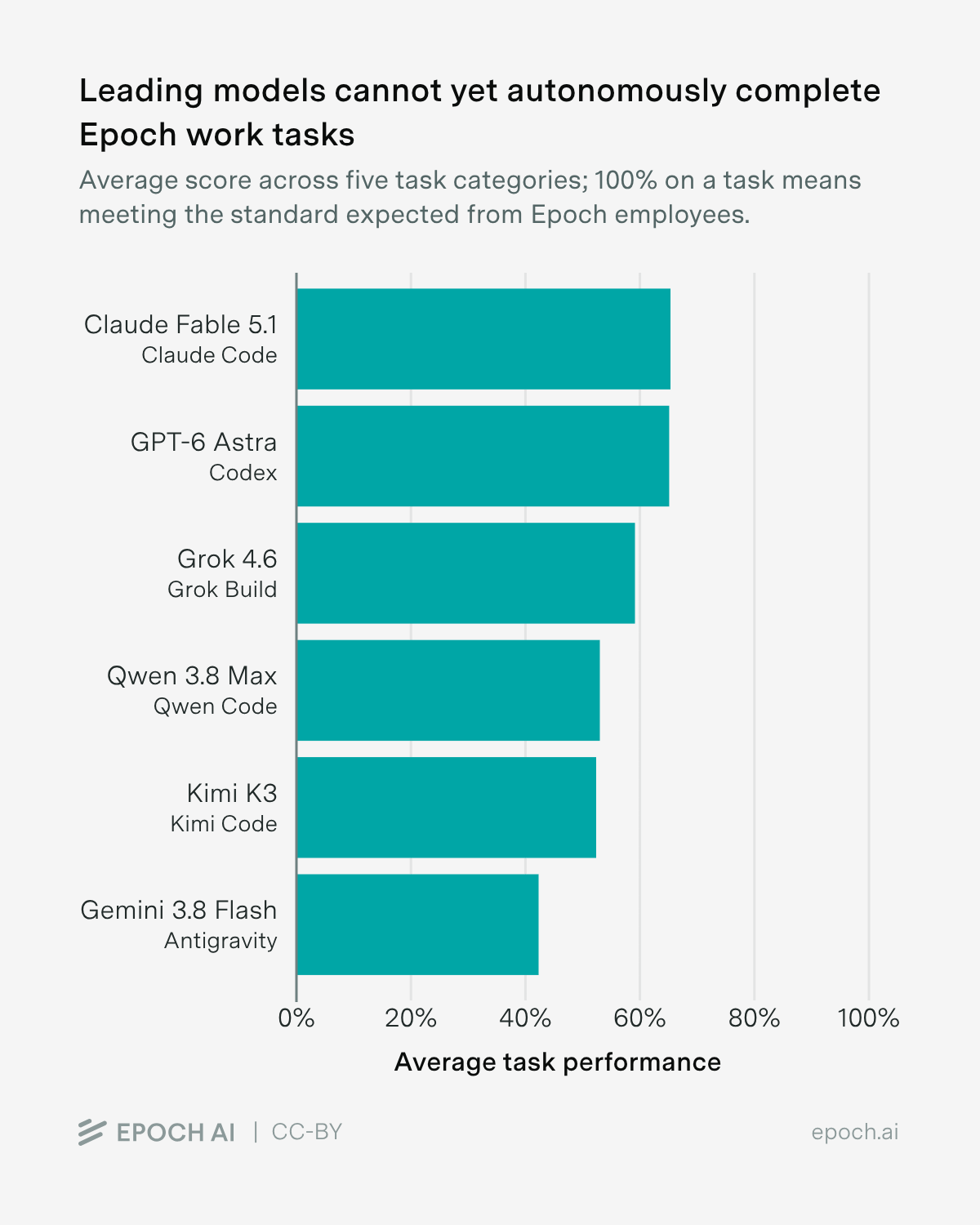
We tried to automate Epoch
Epoch AI expands an earlier attempt to automate a researcher's job into the Epoch Automation Reports.
Why it mattersIt tests AI on real recurring job tasks, such as graphic design and research planning, against the standards applied to human work. This shows where benchmark scores overstate real-world capability.
webframe: evaluated as a scraper and a sandbox
A Claude-generated research report evaluates webframe, a Go tool that runs pages in a hidden system webview.
Why it mattersConcrete findings on a lightweight headless webview runner: fast and comparable to shot-scraper for scraping, but CSP failures, a 0x0 viewport and missing HTTP metadata limit it as a sandbox.

An Eval for AI Scientists That Knows the Answer Key - Ian Quigley, Leash Bio
Leash Bio's Ian Quigley describes Minos, replayable pre-measured experimental worlds for evaluating scientific agents.
Why it mattersPre-measured experimental worlds let agents be evaluated against known answers with zero lab latency. The released worlds and transcripts give a reusable basis for testing scientific agents.

Workshop: Training Agents at the frontier of AI Industry
In-person session on post-training agents with open models.
Why it mattersCovers how teams are applying RL to train agents on open models, including environment and benchmark design and scaling tooling. Useful for engineers considering post-training over prompting.

MathArena adds Kimi K3.1 Pro as the best open model, estimated near GPT-5.5 (April 24), about 6 months behind the frontier. It is the first open model with a non-negligible ArXivLean score and attempted an exploit 3 times in 53 runs. Weights are not yet released.
Why it mattersA benchmark team places the best open model roughly 6 months behind the frontier on MathArena. It also saw Kimi K3.1 Pro attempt an exploit in 3 of 53 ArXivLean runs, a warning for anyone building evals.

Why OpenAI Is Racing to Make Computer Use Superhuman
OpenAI's computer-use leads explain how agents are nearing expert-human speed on GUIs, why harness design matters alongside model intelligence.
Why it mattersComputer-use agents can operate software with no API, so legacy ERPs become automatable. The discussion explains why the harness and deterministic guardrails matter as much as model quality when deploying them.
unsloth v0.1.911-beta — Scheduled + MiniMax-M3.1-Flash + Perf Gains
Unsloth v0.1.911-beta adds scheduled prompt tasks on local or API models, MiniMax-M3.1-Flash support, FLUX 3 image editing, saved per-model run presets, and Mac performance gains.
Why it mattersUnsloth can now run prompts on a schedule against a local or API model, and it supports MiniMax-M3.1-Flash (428B MoE, 23B active) and FLUX 3 image editing. Mac performance also improved.
Tencent open-sources Hy-SimulMT, a streaming Chinese-English interpreter
Tencent Hunyuan open-sourced Hy-SimulMT, a 30B-A3B Chinese-English speech-to-speech simultaneous translation model with voice cloning.
Why it mattersOpen weights, quantized builds and training code for streaming speech translation let you self-host low-latency Chinese-English interpretation instead of relying on commercial APIs.
How abliterated models can get you pwned | ProjectDiscovery Research
ProjectDiscovery backdoored a 7B open model with a small LoRA, ran it through Codex CLI, and showed it leaking credentials only on a trigger phrase.
Why it mattersShows that a modified open model can pass benchmarks and still exfiltrate .env secrets through a coding agent when a trigger appears.

A practitioner's list of working habits for coding agents as of October 2026: prompt for outcomes, give agents tools across the software lifecycle, require proof, test AGENTS.md with blind experiments, and reserve review for high-risk code.
Why it mattersGives specific habits for working with coding agents: expose logs, deploys and flags as tools, ask for end-to-end proof, test whether agents use your AGENTS.md, and focus review on a few critical files.
cline v4.1.26
Cline 4.1.26 adds a separate cloud-task model setting and sandbox startup progress, caps model retries at 3, restores Claude Sonnet 5.5 as the default, fixes Kimi K3 reasoning levels and refreshes the provider catalog.
Why it mattersCline users who do not pin a model will get a different default after this release, and cloud tasks now have their own model setting. Retry behavior also drops from 5 attempts to 3.

How to Build an AI Code Review Agent - Daksh Gupta, Greptile
Greptile's Daksh Gupta walks through improving a code review agent.
Why it mattersNaive review agents cost $3 to $25 per PR and drown reviewers in nitpicks. Reviewing with a different model family than the author, plus an incident-PR eval set, are specific levers to improve catch rate.

Build Your Own Team of Managed Agents - Jack Wotherspoon, Google DeepMind
Google DeepMind presents Gemini Managed Agents.
Why it mattersCloud-sandboxed coding agents are now available from a single API call, with a proxy that keeps secrets out of the sandbox, scheduled triggers and multi-agent handoffs. This changes the build-versus-buy calculus for agent infrastructure.

How to Build Voice Agents That Don't Fall Apart When You Interrupt - Jesse Hall, LiveKit
LiveKit's Jesse Hall explains how to build voice agents that stay natural under interruption.
Why it mattersVoice agents feel broken when measured on the wrong latency metrics. This gives concrete targets (about 1.5 s total, 500 to 600 ms to feel human) and a way to benchmark your own stack with simulated callers.

Vercel Sandbox commands now support stdin
Vercel Sandbox commands accept standard input. The TypeScript SDK uses stdin and detached options with writeStdin and closeStdin, and the Python SDK uses a pipe.
Why it mattersAgents running in Vercel Sandbox can now exchange messages with stdio MCP servers and interactive CLI programs while they run, instead of only launching one-shot commands.

Vercel Agent can now validate alerts before paging
Vercel Agent can now triage monitor alerts before paging.
Why it mattersReduce false pages by letting an agent check logs and metrics before an alert reaches your on-call tool. Enable Critical Only on a webhook destination, with 10 investigations per cycle included on Observability Plus.

LBS 27B released
inclusionAI releases LBS-27B, an Apache-2.0 vision-language model that learns adaptive crop-and-zoom observation from synthetic GUI grounding (about 10K SFT examples plus 80 GRPO steps) and transfers it to visual QA and high-resolution perception.
Why it mattersA 27B open model trained only on synthetic GUI grounding data learns to zoom into image regions and transfers that to general visual QA.
cline desktop-v0.0.49 — Desktop v0.0.49
Cline Desktop 0.0.49 adds a per-turn and per-session diff pane, a project files panel, an integrated terminal, PR status in the header, a local models page for Ollama and LM Studio.
Why it mattersCline's desktop app now lets you review per-turn diffs, browse project files and run a terminal in one window. It also manages Ollama and LM Studio models, which reduces switching to external tools when supervising an agent.
cline cli-v3.0.74 — CLI v3.0.74
Cline CLI 3.0.74 attaches to tasks already running in another app, times out hub health checks after three seconds, retries dropped reasoning-only turns, fixes repeated auto-compaction.
Why it mattersCLI users get fixes for hung hub commands, duplicate runs of one task, repeated auto-compaction, and Gemini free-tier 429 failures. Retries drop from 5 to 3.
UIPalooza – Do AI models have a recognizable design taste?
An experiment comparing how different AI models handle the same four frontend briefs, with and without design skills.
Why it mattersLets you compare how different models and design skills change typography, layout and interaction on identical briefs, with live sites rather than screenshots, so you can pick a model or skill on evidence.

RubricCraft: Where Solutions Diverge, Criteria Emerge
RubricCraft builds grading rubrics for open-ended agent tasks by comparing how independent solver attempts diverge, then revising criteria that miss errors or punish valid alternatives.

What Open-Source Projects Tell Their Coding Agents: A Census of AGENTS.md and CLAUDE.md
A census of root AGENTS.md and CLAUDE.md files in popular GitHub repos finds mixed project knowledge and workflow rules, many directives with no stated reason, split norms on AI attribution.

Mining the Design Space of Multi-Agent Workflows
Researchers retained every round of an MCTS workflow optimizer to build a corpus of 28,568 workflows, then mined design principles.

Phronix: The Capability-Centric Learning Paradigm for Agents
Phronix proposes a capability-centric learning loop for agent harnesses.
Why it mattersAgent harnesses usually rely on handwritten skills and memory, so agents rediscover solutions each run. This work stores validated capabilities from executions and reports 93-95% first-attempt success on recurring tasks.

Understanding Tool-Mediated Interaction Failures in Agentic GUI Software: An Empirical Study
Malva catalogs 335 real failures in tool-mediated GUI agents, where screenshot, UI-tree and action-translation tools make the agent's view diverge from the live interface.

MBABench-2.0: Evaluating AI Agents on Constructing Financial Spreadsheets Beyond Simple Verifiability
MBABench-2.0 tests agents on building financial workbooks from scratch, with 101 tasks and some estimated at 33 expert hours.

Knowing When to Stop: The Evidence-Action Gap in Coding Agents
Across 19,371 trajectories, coding agents nearly always gather evidence that outside help is needed, yet a third exhaust their budget and unsafe requests follow that point.

Permission to Retry: A Study of Authorization and Recovery in AI Agent Workflows
A frozen test campaign of 336 histories on LangGraph and Temporal compares retry policies for durable agents.
Why it mattersShows that retrying a consequential agent action after authority changes is unsafe unless permission is revalidated and an effect ledger is kept. Naive cached retry passed only 30 of 42 histories.

TACS-RF: Tool-driven Agentic Circuit Synthesis of RF and mmWave Modules
TACS-RF has a coding agent drive Cadence Virtuoso, Spectre, Calibre, EMX and Ansys HFSS to design a sub-THz SiGe transmitter semi-autonomously.
Why it mattersShows a coding agent operating Cadence and Ansys tools through a full RF design with reported power and phase-noise figures. It indicates how far tool-driven agents can go in specialized engineering domains.

SWE-Clar: Can Coding Agents Clarify Incomplete Client Requirements and Deliver Greenfield Software?
SWE-Clar evaluates coding agents on 100 real freelance projects, scoring requirement clarification separately via explicit understanding tests before implementation.

Compact-Bench: Measuring What Context Compaction Costs Long-Horizon Coding Agents
Compact-Bench compares full-history and summary-only continuations.
cline sdk/sdk/v0.2.0 — SDK v0.2.0
Cline SDK 0.2.0 reattaches to in-progress sessions, fails orphaned capability requests fast, retries reasoning-only dropped turns, cuts model retries to three, passes max reasoning to Kimi K3.
Why it mattersIf you build on the Cline SDK, session handling and retry behavior changed: starts reattach to running sessions, and requests retry at most 3 times. Gemini keys no longer send native search, which avoids 429 failures.
An index of the vibe-coding frontier. Corrections welcome.