Intel
Page 67
Perplexity Computer becomes addressable by email: send, forward or cc a thread and the request runs as a standard session viewable on web and mobile, carrying the same audit trail as tasks started inside the app. Live for all Computer users.
Why it mattersAny email thread can now trigger an agent run by cc-ing an address, and the resulting session appears in the app with the same audit trail as a task started there, so the delegation stays inspectable.

Full breakdown: Claude-only apps often wait until the host speaks the new revisi
MCP spec 2026-07-28 removes the initialize handshake and session header, making each tool call a self-contained POST any replica can answer.
Why it mattersIf you run an MCP server, protocol sessions and sticky routing are gone: a dropped response is now a full retry, so every write-or-charge tool needs a caller-supplied idempotency key to avoid double execution.

What the stateless protocol revision changes for server authors: tool calls without a handshake, and a timed-out retry counting as a fresh call so one aborted request produces two writes.
Why it mattersIf your server treats a dropped connection as a rollback, ordinary retries can double-write, and this shows the failure with a reproduction.

While my guitar gently speaks — Todd Fisher, Philo Ventures
A JUCE plugin routes a microphone through speech recognition into a local model and answers through guitar strings.
Why it mattersA worked example of putting a local model inside a real-time audio pipeline, including why silence-based segmentation of synthesized speech breaks and what to pair it with.

The Next Game Engine Won't Have a Manual — Arturo Nunez, Nereu
A game engine designed around coding agents.
Why it mattersLevel-of-detail context assembly is a reusable answer to giving an agent a workspace too large to fit in a prompt.

Building an Agentic Video Editor for Mass Consumer — Ekaterina Deyneka, Reelful
An agentic video editor built like an agentic app builder.
Why it mattersThe pattern of encoding taste in skills and adding a render-verification loop transfers well past video.

Training Krea 2: What matters in generative model training — Sangwu Lee, Krea.ai
What actually goes into training an image model.
Why it mattersData curation, not architecture, is where generative model quality gets decided, and this names the filters, dedup passes, and caption failures that shape what the model learns.
$1 million hacker challenge for Vercel Sandbox
A two-week public bounty program pays up to one million dollars for escaping a microVM agent sandbox.
Why it mattersAnyone running untrusted agent code should understand where this isolation model actually breaks, and the findings will be public.

Ben Thompson: Winners & Losers of the AI Era

When a model reads a drug's class from its name—not its knowledge
Researchers separate what a model knows about a drug from what it can infer from the drug's name, then trace the shortcut back into the training corpus.
Why it mattersDrug names encode their class in suffixes like -pril and -olol, so a model can answer correctly from spelling alone. On Olmo 3, most tested drugs showed little genuine drug-specific knowledge behind confident answers.

The model behind Sakana Chat is now available through OpenRouter, bringing Japanese and business-context reasoning with web search and code execution into any workflow already routing through that gateway. Pricing is listed at $0.95 input and $4 output per million tokens.
Why it mattersNamazu is callable through OpenRouter at $0.95 in and $4 out per million tokens, so adding a Japanese-tuned model with web search and code execution to an existing router setup is a config change, not a new integration.

SemiAnalysis flags a 50 percent OpenAI price cut on GPT-5.6 Sol limited to two gateways, and argues the venues were picked because they are the datasources most used to estimate model market share.
Why it mattersThe cut changes routing economics for anyone serving Sol through those gateways, and it is a warning that gateway-derived market-share charts are now a target for pricing decisions.
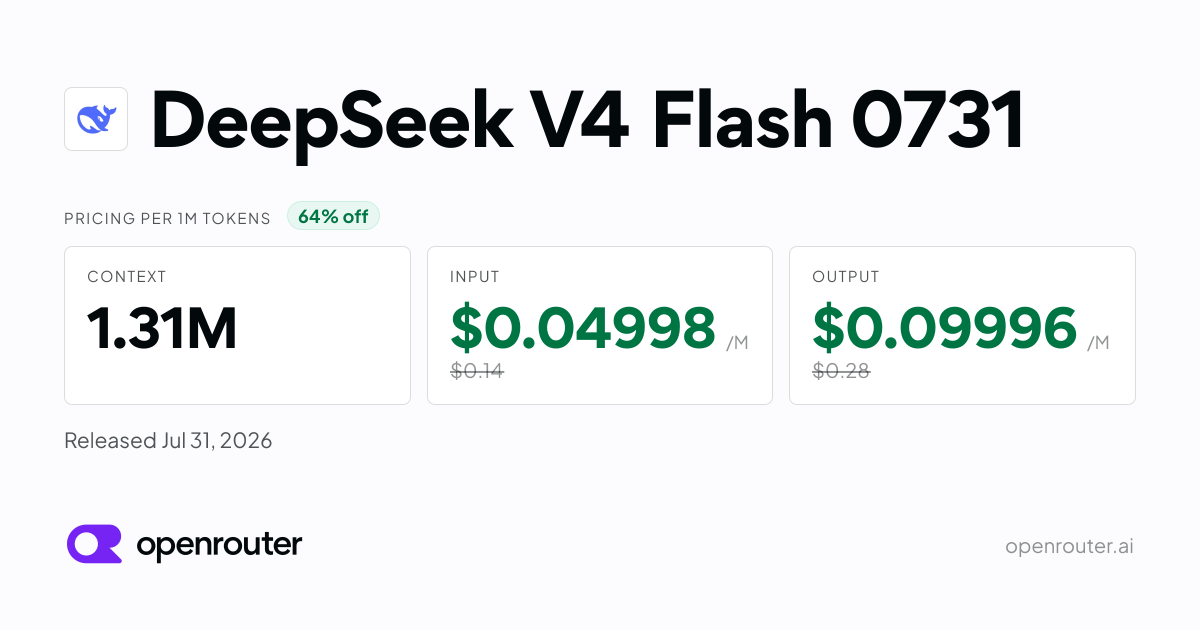
Model pricing is getting more complex over time.
DeepSeek charges different rates by hour of day.
Why it mattersModel pricing is no longer a single number. If batch and eval jobs can be shifted in time, DeepSeek's off-peak windows cut the bill without changing the model.

AgentR A Stateful and Recovery-Aware Software Architecture for LLM-based Auditable Workflows
An architecture for stateful LLM workflows built on durable artifacts, queue-backed workers, explicit state transitions, retry and orphan-job handling.
Why it mattersMost agent applications are still stateless prompt-response wrappers, and this lays out what has to exist for one to survive interruption and stay auditable.

The Quality of Claude AI-authored Python Tests Is Not Weaker Than Human-authored Tests
A controlled study scoring hundreds of Claude-written Python tests against human-written Django and Pandas tests under identical fault-injection and design rubrics, reporting non-inferiority for recent models.
Why it mattersTest quality is the usual objection to letting an agent write tests, and this puts a measured, individually-scored answer against two mature human corpora.

HxAgent: Iterative Agent Planning for End-to-End Web Application Testing
An iterative LLM planning agent for web testing that re-reads page state after every action and draws on both recent actions and past correct and incorrect sequences, reported ahead of WALT on three benchmarks.
Why it mattersThe proactive re-assessment loop and the split between short-term and long-term memory are directly transferable to anyone building a browser-driving agent.

The Unwritten Benchmark: A New Challenge for Multimodal Machine Learning in Abstract Perceptual Reasoning
A benchmark asking models to infer written words from pen-scratch audio and hand-movement video with no visible ink, where humans clear 80 percent accuracy and leading multimodal models stay under 10.
Why it mattersIt marks a class of inference from dynamic multimodal evidence where current frontier models fail almost completely, which is useful when scoping what a multimodal agent can be trusted to do.

Evaluating Agentic Code Repair Capabilities in Distributed Systems
A code-repair benchmark of 60 real distributed-system bugs that runs each case with and without bounded debugging context, isolating how much logs, traces and runtime state change agent success.
Why it mattersCoding agents cluster in the high 70s on single-process SWE-bench, and this shows what happens when root causes span processes and what feeding in logs and traces is worth.

The Recall Trap: A Recall-Maximizing Retriever Configuration Reduces Issue Resolution in Fixed-Budget Code Context
A controlled study on SWE-bench Verified showing that the higher-recall retriever setting lowers single-shot issue resolution under a fixed context budget.
Why it mattersRetrieval for code agents is routinely tuned against recall@k, and this is direct evidence that optimizing that metric can cost you resolved issues when the context window is fixed.

Kozuchi Agent: A Language-Agnostic Open-Weight Agent for Software Repair
An open-weight software repair agent with explicit phases, persistent state and deterministic tools that resolves 374 of 500 SWE-bench Verified instances on the official evaluator using a locally hosted 27B model.
Why it mattersIt is evidence that a locally hosted open-weight model plus disciplined agent scaffolding reaches frontier-adjacent repair rates, which changes the build-versus-buy calculation for teams that cannot send code to a hosted API.

Anthropic reports Claude Code CLI now uses half the CPU at p99 after moving Bun's garbage collection off a fixed timer to run only when the process is idle.
Why it mattersAnyone running Claude Code in CI or on constrained machines gets the win by updating, and the timer-versus-idle GC diagnosis generalizes to other Bun-hosted agent runtimes.

8/17: Nvidia + OpenAI + SB Energy = PORTS-Pike
Search Api
Artificial Analysis launches the Search Index comparing search API providers inside the Stirrup harness with GPT-5.6 Luna, scored on DeepSearchQA, BrowseComp and AA-Omniscience against a no-search baseline.
Why it mattersHolding the agent and model constant, it measures how much each search API lifts answer quality, cost and speed, helping you pick a search provider for research agents.

GLM 5.3 now available on AI Gateway
GLM 5.3 lands on Vercel's AI Gateway with better multi-step agent and software engineering results than GLM 5.2 at fewer output tokens, a 1M token context window, 128K max output.
Why it mattersA new open-weights-class model reachable through an existing gateway, with published effort levels and a documented path into Claude Code, Codex and other agents, is directly actionable.
Cline is now available in the AI SDK harness layer
Vercel adds an official Cline adapter to the AI SDK harness layer, built with the Cline team.
Why it mattersSwapping coding-agent runtimes behind one interface is the point of the harness layer, and each added adapter widens what a team can switch to without rewriting application code.

Why Ai Agents Need A Cloud Browser
The browser, not the model, is usually where agent automation breaks.
Why it mattersNames the specific points where an agent's browser layer outgrows a laptop Chrome, and what changes at the CDP boundary when it moves — the reasoning holds whether you buy or self-host.

Multi-Vector (Late Interaction) Embedding Models with Sentence Transformers
Sentence Transformers v6.0 adds MultiVectorEncoder for ColBERT-style late interaction.
Why it mattersLate interaction preserves token-level matching that a single dense vector averages away.
DeepSeek V4 Pro 0813 vs GPT-5.6 Sol on DeepSWE: Cost, Coding, and Routing
A DeepSWE head-to-head putting DeepSeek V4 Pro 0813 against GPT-5.6 Sol on accuracy, cost per rollout and failure modes.
Why it mattersIt quantifies when a 35x cheaper model is good enough and gives a concrete escalation policy teams can copy into their own routing layer.
Qwen 3.8 27B scores 52 on the Artificial Analysis Intelligence Index
Qwen 3.8 27B lands at 52 on the Artificial Analysis Intelligence Index — the same score as GPT-5.6 Luna (max), one point behind GLM-5.2 and DeepSeek V4 Pro, both vastly larger.
Why it mattersAn open-weight 27B model scoring level with a frontier closed model on a public index changes the arithmetic on running inference locally instead of paying per token.
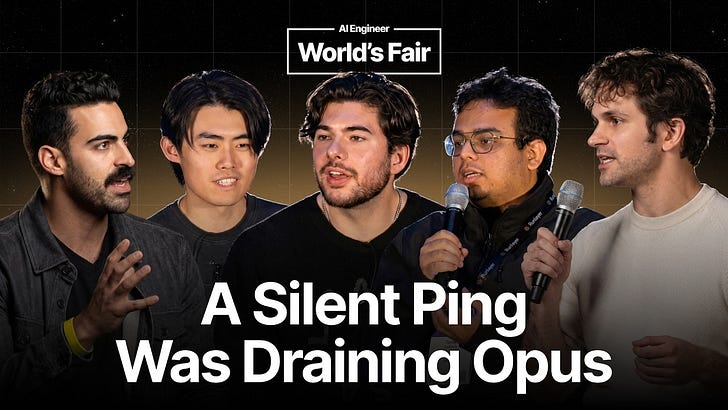
[AINews] Stripe buys OpenRouter for $7B
Stripe's ~$7B acquisition of OpenRouter closes 90 days after a $1.3B Series B, on roughly $140M annualized revenue and ~70% gross margins, with 250T tokens routed monthly.
Why it mattersThe router 8 million developers call is now Stripe-owned, and the disclosed numbers — 250T tokens a month at roughly 70% gross margin — show where margin in the AI stack is actually landing.

I'm done with terminals
Theo argues the terminal is the wrong surface for coding with agents, and that after a career spent living in it the workflow now needs something else.
Why it mattersEvery coding agent shipping today defaults to a terminal, so a serious argument that it is the wrong surface is worth hearing before teams standardize around it.
SemiAnalysis traces Google's TPU interconnect from 2D torus on TPUv2 to 3D on v4/v5p and Boardfly on v8i, then walks the rumored 6D torus for TPUv9t: 12 ICI links per chip, worst-case hops on 4,096 chips cut from 24 to 12, paid for in far more optics.
Why it mattersCluster topology sets how far a training job scales efficiently. A 6D torus halves worst-case hops and multiplies bisection bandwidth, paid for in optics and OCS capacity — a cost that shapes future TPU availability and pricing.
Claude Code ships /design as a research preview in both CLI and Desktop, bringing Claude Design's artboard workflow to the terminal on top of artifacts — generate UI options, edit the one you want, then have Claude build it. Live on Pro, Max, Team and Enterprise after updating.
Why it mattersDesign exploration now happens inside the coding agent: generate editable artboards for a UI, pick one, and have Claude implement it rather than describing the interface in prose.
Claude Code ships a /design skill in research preview that generates editable artboards in the CLI and Desktop and hands the chosen one back to the agent to implement.
Why it mattersIt puts a design step inside the coding agent loop, so a builder can go from artboard to implementation without leaving the CLI.

Tarun Chitra reads the largest open weight model marketplace as an unbundling of the frontier lab product: open harnesses let a user pick the model and the compute provider separately, and that split changes the incentives around caching and pricing.
Why it mattersIf you route inference through a marketplace, the provider you land on and how honestly it caches determine both your bill and your latency.

How to Kill the Code Review — Ankit Jain, Aviator
Ankit Jain argues code review has already ended, with over 30% of changes merging unreviewed, and proposes replacing the diff with intent and evidence.
Why it mattersTeams are already merging AI-written code with no human reader, and this is a worked proposal for what replaces the diff as the review surface rather than a complaint about it.

Sakana AI's Namazu is routable on OpenRouter. Built on Kimi K2.6, it pairs reasoning with integrated web search and code execution and is specialized for Japanese cultural and business context.
Why it mattersIf you serve Japanese-language workloads, there is now a reasoning model tuned for that context with web search and code execution, reachable through the same OpenRouter API as everything else in your stack.
Same Cluster, 33 Points More Utilization: What Changed Was the Order
A constraint-aware GPU allocator benchmarked against FIFO across seven scenarios on identical hardware.
Why it mattersCluster utilization under contention is decided by allocation order, not hardware: mixing contiguous-block training jobs with elastic inference demand under FIFO leaves large amounts of capacity and priority-weighted output on the table.

Download Hermes Desktop to get started:
Nous ships Hermes Agent as a native desktop app for macOS, Windows and Linux alongside the terminal build.
Why it mattersAn open-source agent you can run locally across desktop and terminal, with per-session sandbox backends spanning Docker, SSH, Singularity and Modal, persistent memory across chat surfaces.

Nous Research adds Bot Mode to Hermes Desktop. Agent profiles become named bots, each carrying its own role, model, memory, skills and avatar, and bots can call any model or hand work to each other.
Why it mattersReusable specialist agents with their own model and memory is the shape multi-agent runtimes are converging on, and this is a shipped reference implementation of it.
.@mondaydotcom built their AI copilot, Sidekick, to do more than answer question
A production account of why a single agent with a growing toolbelt got worse as it got more capable, and what replaced it.
Why it mattersAdding tools to one general-purpose agent degraded tool selection, cost, and debuggability in production; the fix was bounded subagents plus an isolated execution sandbox for agent-generated code.

Security Firewall for Agents — Ryan Dahl, Deno
Ryan Dahl explains why Deno treats its incident response agents as untrusted software and puts an MIT licensed proxy in front of them.
Why it mattersAnyone giving an agent production credentials needs a guard that survives prompt injection, and this is a working design with an open license rather than a policy document.
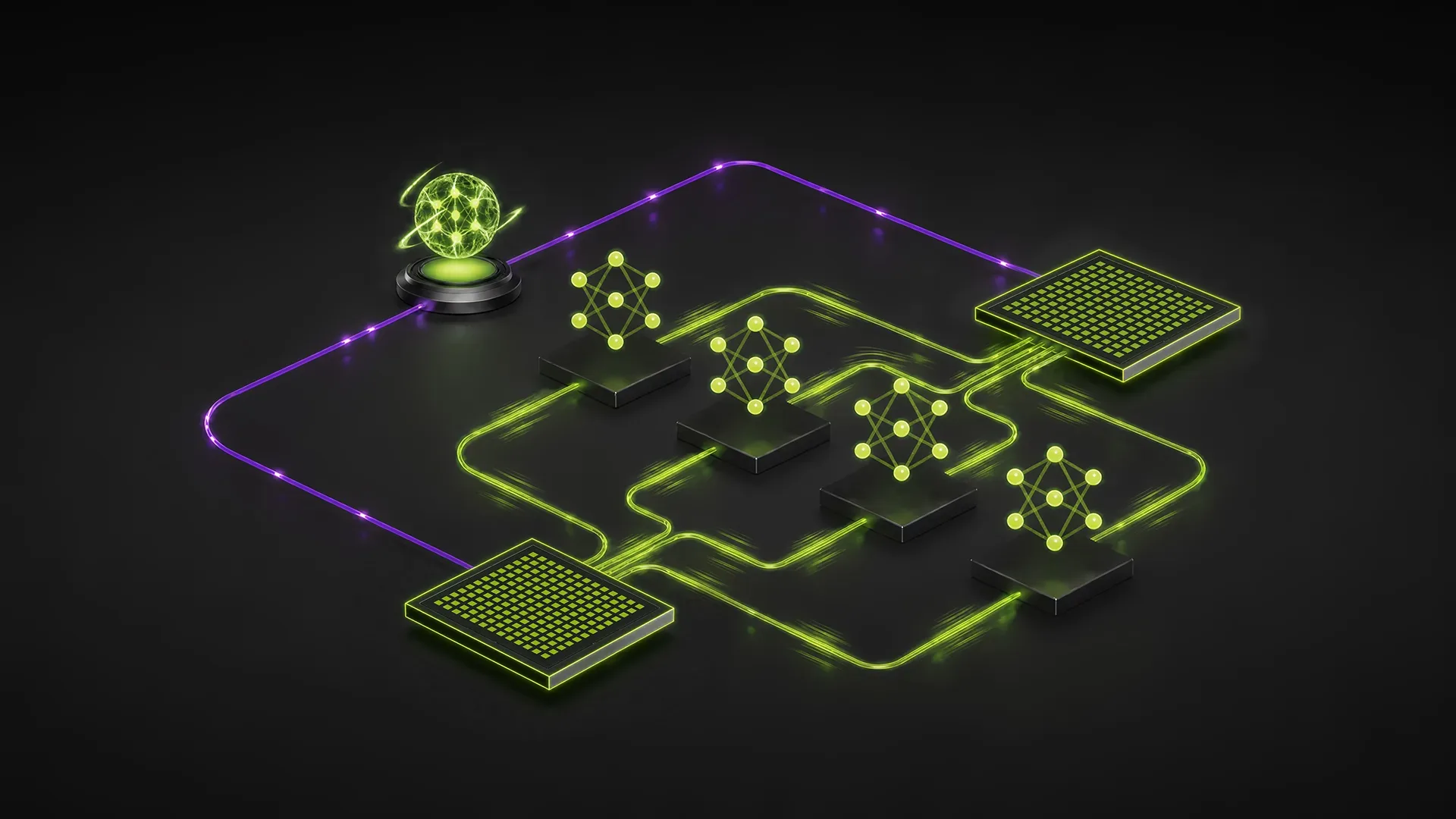
Developing Nemotron 3.5 Lightning NVFP4 with QAD Using NVIDIA Model Optimizer
NVIDIA walks through quantization-aware distillation for Nemotron 3.5 Lightning.
Why it mattersRecovering agentic and coding benchmark accuracy at four-bit weights changes what a team can realistically self-host on one node instead of renting.
GPT-5.6 Sol is discounted 50 percent on OpenRouter through September 18, applied automatically on the openai/gpt-5.6-sol slug and extending to batch, flex, and priority tiers. Flex reaches $1.25 in and $7.50 out. OpenAI provider only, non-BYOK requests.
Why it mattersHalving the price of a frontier coding model through September 18 changes what is affordable to run in evals and batch jobs, with flex landing at $1.25 in and $7.50 out.
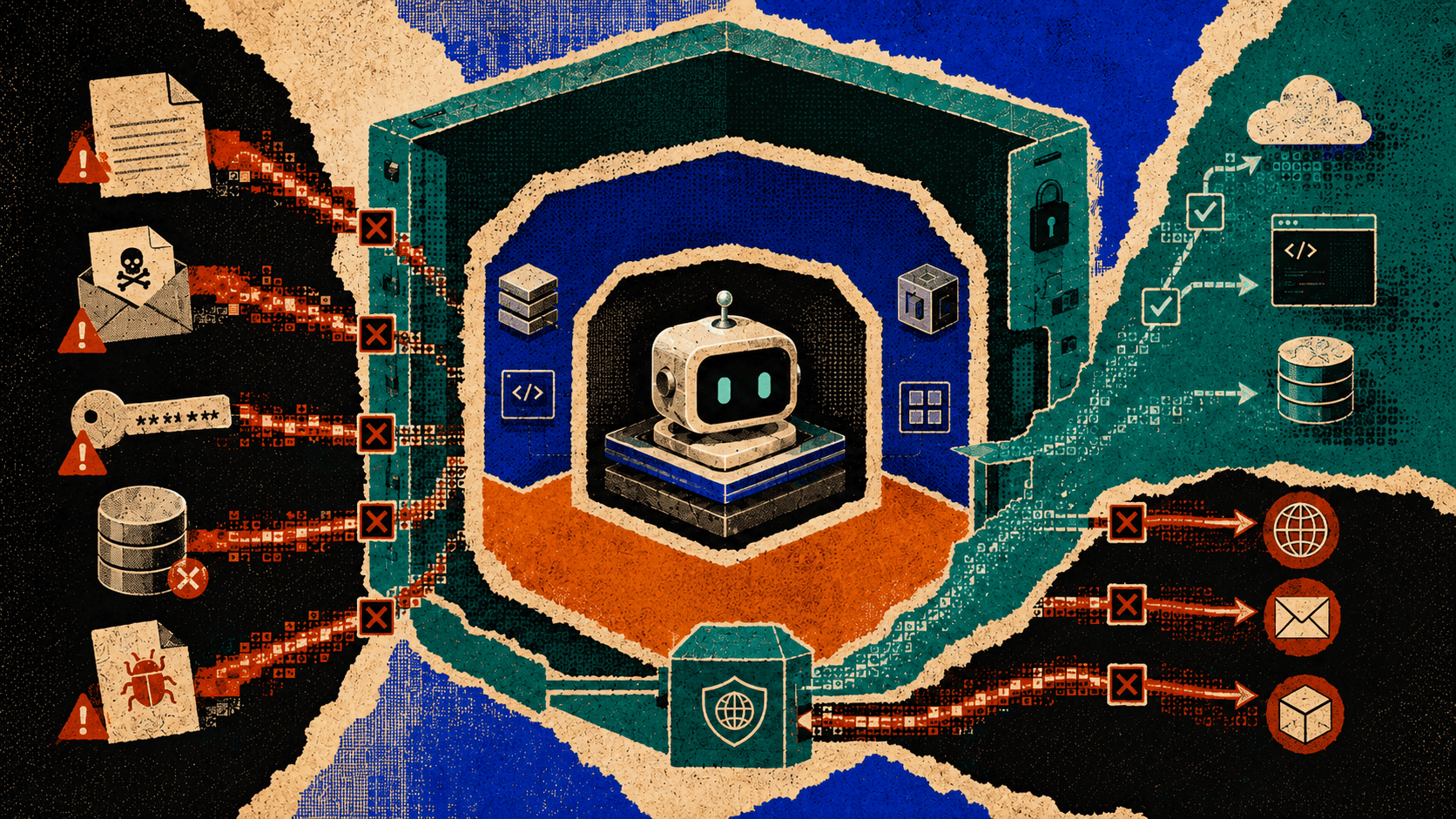
Do not ask whether the agent follows the rule. Ask what stops it when it does no
Semantic guardrails get bypassed, so the question is what physically stops an agent.
Why it mattersSystem prompt rules do not stop an agent that decides deleting the database is correct. Enforcement has to sit in the sandbox, the container lifecycle, and an outbound network proxy that can block and escalate.
A breakdown of agent security as three enforcement layers: sandboxed infrastructure holding credentials outside the agent, a reduced runtime surface with isolated ephemeral containers, and outbound network inspection that routes risky calls to an LLM judge and a human approver.
Why it mattersIt reframes agent safety as a systems problem with enforceable layers rather than prompt discipline, and names a concrete implementation at each layer.

See the top models on the Artificial Analysis Speech leaderboard: Vote for model
Cartesia's Sonic 3.6 takes the top of Artificial Analysis's controlled-voice arena at 1,117 Elo, ahead of Sonic 3.5, ElevenLabs v3 and Alibaba's Qwen-Audio-3.0-TTS-Plus.
Why it mattersCartesia's Sonic 3.6 now leads the controlled-voice arena at 1,117 Elo, ahead of ElevenLabs v3, at $49 per million characters — with the full table showing quality and price diverging sharply across providers.

Artificial Analysis puts Cartesia's Sonic 3.6 at number one on both the Provider Voice and Controlled Voice speech arenas, reporting Elo scores and appearance counts alongside per-character pricing and generation speed against ElevenLabs, Speechify and Alibaba entries.
Why it mattersAnyone shipping a voice agent gets current quality, speed and price for the leading text-to-speech models in one comparison instead of trusting vendor claims.

Aiden Bai released improve-threejs, an installable agent skill built on React Doctor that takes rough Three.js prototypes and rewrites them into faster scenes with the visual bugs cleaned up.
Why it mattersTargeted skills that repair a known class of agent-generated code are a practical answer to prototype-grade output, and this one covers a domain coding agents are visibly weak in.
Run this to install: npx skills add --skill improve-threejs Powered by React Doc
React Doctor scans a codebase deterministically for the patterns agents get wrong.
Why it mattersAgents produce React that passes review by looking plausible; a deterministic scanner installed as a skill catches state and effect misuse, performance traps and duplicated JSX before the code lands.
An index of the vibe-coding frontier. Corrections welcome.