Intel
Page 86Nous Research adds Bot Mode to Hermes Desktop. Agent profiles become named Bots, each with its own role, model, memory, skills and avatar. Bots can run on any model and message each other. Coverage is limited to the announcement thread, since the site and video were unreadable.
Why it mattersBot Mode lets you define persistent specialist agents with separate roles, models, memory and skills, and have them talk to each other. That is a multi-agent setup inside a desktop app. Details beyond the announcement are unverified.

Nous Research adds Bot Mode to Hermes Desktop. Agent profiles become named Bots with their own role, model, memory, skills and avatar. Bots can use any model and communicate with each other. The announcement does not detail how that communication works.
Why it mattersHermes Desktop can now keep persistent specialist agents, each with its own model, memory and skills, that can talk to each other. This supports multi-agent setups without hand-building the orchestration layer.
.@mondaydotcom built their AI copilot, Sidekick, to do more than answer question
A production account of why a single agent with a growing toolbelt got worse as it got more capable, and what replaced it.
Why it mattersAdding tools made monday.com's agent worse in production. They fixed it with tiered tool activation, subagents with narrow toolsets, and sandboxes that keep intermediate files out of model context.

Security Firewall for Agents — Ryan Dahl, Deno
Ryan Dahl explains why Deno treats its incident response agents as untrusted software and puts an MIT licensed proxy in front of them.
Why it mattersAnyone giving an agent production credentials needs a guard that survives prompt injection, and this is a working design with an open license rather than a policy document.
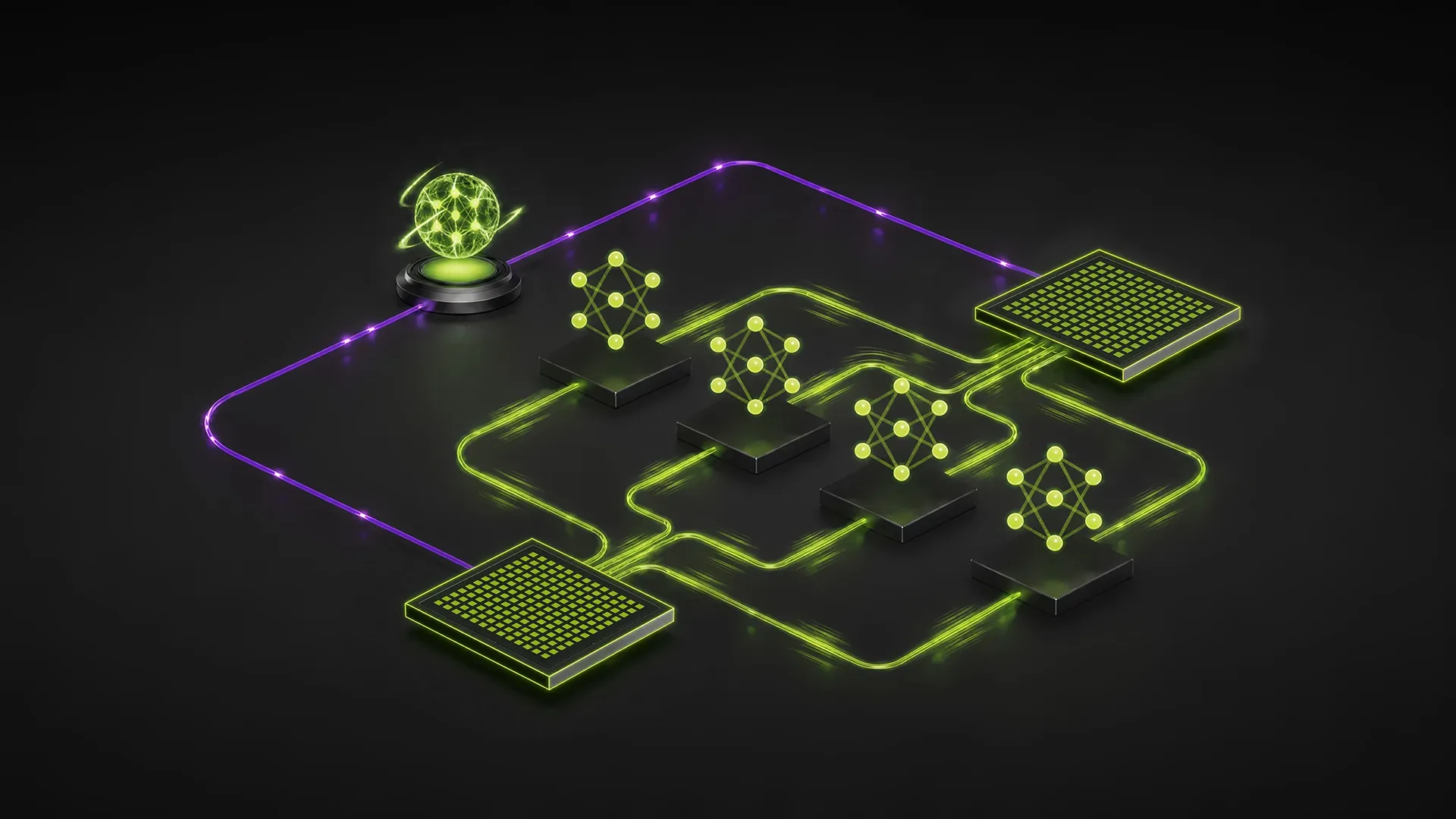
Developing Nemotron 3.5 Lightning NVFP4 with QAD Using NVIDIA Model Optimizer
NVIDIA walks through quantization-aware distillation for Nemotron 3.5 Lightning.
Why it mattersRecovering agentic and coding benchmark accuracy at four-bit weights changes what a team can realistically self-host on one node instead of renting.

OpenRouter discounted GPT-5.6 Sol by 50 percent through September 18, applied automatically on the openai/gpt-5.6-sol slug and covering batch, flex and priority tiers. Flex reached $1.25 in and $7.50 out. Limited to the OpenAI provider and non-BYOK requests.
Why it mattersFlex pricing dropped to $1.25 input and $7.50 output per million tokens, applied automatically on the openai/gpt-5.6-sol slug. It excludes BYOK requests and non-OpenAI providers, and ran only through September 18.
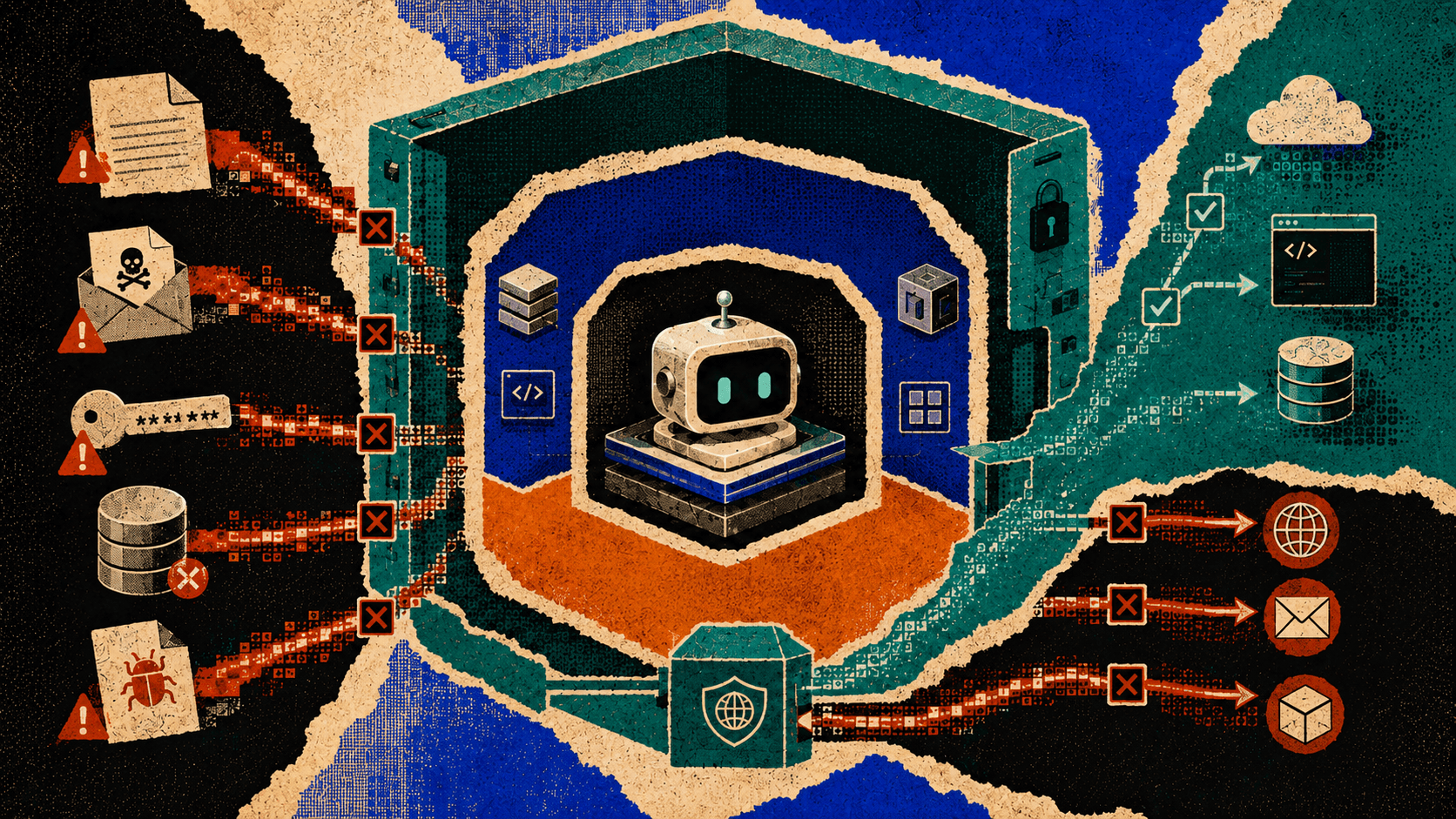
Do not ask whether the agent follows the rule. Ask what stops it when it does no
A defense-in-depth model for agents. Infrastructure: Landlock and seccomp sandboxes with keys injected only by a gateway.
Why it mattersTreats agent safety as enforcement rather than instruction: sandbox the host, keep API keys out of the agent, and inspect outbound calls with a judge and human approval. Useful as a checklist when deploying coding or personal agents.

A thread argues agent safety belongs in system controls, not prompts. It splits defenses into sandboxed infrastructure with credentials held outside the agent, minimal isolated runtimes, and egress inspection that escalates risky requests to an LLM judge and a human approver.
Why it mattersAgents can be harmful even when well intentioned. This lays out three places to enforce limits outside the prompt: sandbox with external credentials, per-session isolation, and an egress check that escalates risky calls to a judge or human.

See the top models on the Artificial Analysis Speech leaderboard: Vote for model
Artificial Analysis's Controlled Voice arena ranks TTS models on the same eight cloned voices.
Why it mattersVoice-agent builders can compare TTS models on blind-vote Elo and API price together. Current top entries range from $4 to $80 per million characters, so quality and cost trade-offs are visible side by side.

Artificial Analysis reports Cartesia's Sonic 3.6 at number one on both its Provider Voice and Controlled Voice speech arenas, with Elo scores, per-million-character pricing and generation speed compared against ElevenLabs, Speechify and Alibaba models.
Why it mattersIf you build voice agents, this gives the current arena ranking plus cost and speed tradeoffs: Sonic 3.6 leads quality but costs about 5x Simba 3.2 per character, and generates far faster than Eleven v3.

Aiden Bai released improve-threejs, an installable agent skill built on React Doctor that takes rough Three.js prototypes and rewrites them into faster scenes with the visual bugs cleaned up.
Why it mattersTargeted skills that repair a known class of agent-generated code are a practical answer to prototype-grade output, and this one covers a domain coding agents are visibly weak in.
Run this to install: npx skills add --skill improve-threejs Powered by React Doc
React Doctor scans a codebase deterministically for the patterns agents get wrong.
Why it mattersAgents produce React that passes review by looking plausible; a deterministic scanner installed as a skill catches state and effect misuse, performance traps and duplicated JSX before the code lands.

Cursor says its code hosting platform, Origin, is live. It is described as fast and deeply integrated with the editor, and teams can start by syncing existing repositories from GitHub. The announcement post gives no pricing or feature detail.
Why it mattersCursor now offers its own code hosting, with repos importable from GitHub. Teams using Cursor can evaluate hosting that is built into the editor instead of a separate forge. Feature depth and pricing are not stated in the post.

We're rolling out the beta starting today.
Cursor launches Origin in early beta on paid plans: hosted repos, pull requests, code browsing and two-way GitHub sync. Agents can answer questions, push branches and update PRs.
Why it mattersCursor now hosts repos and pull requests, with agents able to answer questions, push branches and update PRs in the same place. Teams can sync GitHub repos in both directions to try it without migrating.

Your agents can now pay for the APIs they use. We worked with AWS on the AgentCo
LangChain and AWS shipped AgentCore Payments middleware.
Why it mattersMachine-to-machine payment on the 402 path is the first credible answer to agents hitting metered APIs, and pairing it with a spend trace is the governance half teams get asked about.

Context Engineering in 2026 — Louis-François Bouchard, Omar Solano & Samridhi Vaid, Towards AI
Across 11 context presets measured on an open source AI tutor, sending the full history beat every compaction technique on recall, cost and latency at once, because rewriting context invalidates the prompt cache that serves most of the tokens.
Why it mattersCompaction is a default in most agent frameworks, and this gives a cost model and a recall number for leaving the history alone instead.

How canvases make agentic workflows visible, steerable, and cost-efficient
GitHub argues that chat is the wrong container for agent execution and describes canvases.
Why it mattersWhen agents produce changes faster than anyone can review them, chat transcripts stop being a usable record. Canvases give agent work a durable, steerable surface you can approve incrementally instead of auditing after the fact.

Numbers from OpenAI's GPT-5.6 builder guide: Luna held 98% of GPT-5.5's extraction accuracy at a eighteenth of the cost, programmatic tool calling cut one team's input tokens 21%, and retained reasoning plus compaction moved Sol from 13.3% to 38.3% on ARC-AGI-3 with roughly 6x fewer output tokens.
Why it mattersModel tiering, programmatic tool calling, and retained reasoning with compaction are producing order-of-magnitude cost differences on the same workloads — with published numbers you can check your own agent stack against.
Teaching Everyone to Fish for Tokens
Nathan Lambert compares open weight models to installed software versions rather than to Linux.
Why it mattersAnyone betting a product on open weights is choosing a dependency with a shelf life, and this frames what actually makes that ecosystem self sustaining.

Gemini 3.7 Flash Is HERE – Testing Google’s BEST Model Yet!
Bijan Bowen runs Gemini 3.7 Flash through practical coding and design tasks.
Why it mattersIndependent task by task footage of a new Flash tier model is the fastest way to see where it holds up on real coding work before you route traffic to it.
OpenRouter added a Cost per Session data layer: median real cost of tasks in each major harness over 30 days, which captures token efficiency that per-token pricing misses. Rankings are published and the data is queryable via a Dataset API under CC BY 4.0.
Why it mattersPrice per token hides how many tokens a model burns on a task. Cost per session gives median real task cost per harness over 30 days, queryable through a Dataset API, so you can compare models on actual spend.

From Ambient Documentation to Clinical Intelligence — Chaitanya Asawa, Abridge
Abridge's Chaitanya Asawa on why clinical AI evaluation resists a single correct answer.
Why it mattersRubric-based judging with independent authors and adjudication is a directly reusable pattern for anyone evaluating open-ended agent output where no single answer is correct.

200 Million Patient Interactions Later — Vivek Muppalla, Hippocratic AI
Hippocratic AI runs 31 models on every clinical call, one holding the thread and 30 specialists in parallel, because a single model is a single point of failure.
Why it mattersIt is a rare, concrete account of designing a multi-agent system where latency and safety genuinely conflict, and the evaluation arithmetic transfers to any high-volume agent deployment.

A practitioner guide to customizing the Codex CLI by asking the agent to modify its own compiled bundle, saving changes in a mods folder to reapply after updates. Covers example mods, the risk that OpenAI may lock this down, and auditing third-party mods.
Why it mattersShows how to have a coding agent patch its own compiled client and reapply the patches after each update from a mods folder. It also warns to audit shared mods, since they get read/write access to your machine.

Codex can be pushed to a 1M-token window on GPT-5.6 Sol, but OpenAI's Noam Brown argues against it: the shipped limit is tuned for performance and cost, and autocompaction is meant to carry long sessions instead.
Why it mattersCodex's context limit is a deliberate cost/performance setting, not a ceiling worth raising by default — autocompaction is the intended mechanism, and the 1M option is opt-in for a reason.

A Year in LLM Serving: Workload Evolution, Caching and Load-Balancing
A year-long production trace from a large inference provider, spanning popular and long-tail models, used to characterize how serving workloads evolve and what that implies for caching and load balancing.
Why it mattersAnyone sizing an inference tier or tuning prefix caching is currently guessing from short synthetic traces. A year of real production traffic, including long-tail models, gives that work an empirical baseline.

Rethinking Automated Program Repair: The Impact of Bug Complexity, Fault Localization, and LLM Cost-efficiency
An empirical pass over LLM-based program repair that pulls apart what actually drives outcomes.
Why it mattersRepair success is dominated by fault-localization precision and structural bug complexity, not model choice alone — and reasoning settings carry a cost that this study prices rather than assumes away.

Jais 2: A Family of Arabic-Centric Open Large Language Models
A second-generation family of Arabic-centric open large language models, released with a technical report covering the data, training recipe and evaluation behind the models.
Why it mattersArabic-centric open weights fill a real gap for teams serving non-English users where frontier models are weaker or unavailable. The training report also documents choices that transfer to other language-specific model efforts.

Inducing Reward-Free Judging Rubrics that Reduce Over-Crediting in Agent Evaluation
RubricForge evolves an agent-judging rubric against ground-truth-labeled trajectories rather than hand-writing it, targeting the tendency of automatic judges to credit fluent but unsuccessful runs as successes.
Why it mattersOver-crediting is the main way agent eval suites lie to their owners, and hand-written rubrics are where it enters. Grounding the rubric text in environment reward is a directly copyable fix.

Not All Tokens Are Equal: Inflation-Aware Routing for Agentic LLM Systems
Names token inflation, the gap between a model's per-call price and the true cost of a retrying agent workflow, measures it across model tiers and task types, then builds a router that prices on the corrected figure.
Why it mattersPer-token price is what most teams budget from, and it can understate real agent cost by more than double on hard tasks. Measuring inflation per tier turns model selection into an arithmetic decision instead of a guess.

Building AI-Intensive Software with AI: Early Results and a Cautionary Tale on Measuring Development Cost
A six-person team built a RAG-based onboarding assistant under pervasive AI assistance and priced it three ways.
Why it mattersAI cost-savings ratios are easy to construct wrongly: pricing tokens under a flat subscription and mispricing the human counterfactual doubled this team's claimed 19.4x down to 9.9x on recheck.

Does a Language Server Save Tokens for Coding Agents? A Measurement Methodology and Preliminary Study
Tests whether language-server retrieval actually saves a coding agent tokens compared with plain lexical search, proposing tokens-to-success as the metric and an ablation that isolates the difference at equal task success.
Why it mattersEvery coding agent has to decide between grep and a language server for retrieval, and the choice is currently made on intuition. A tokens-to-success framing makes that decision measurable.

AI Evaluation Should Work With Humans
A position paper arguing that measuring superhuman autonomous performance steers AI development toward replacing people.
Why it mattersMost agent benchmarks implicitly score replacement rather than collaboration, which shapes what gets optimized. Practitioners building evaluation harnesses should know the case against that default.

ATLAS: Discovering Agent Strategies through LLM-Guided Abstraction and Automata Learning
ATLAS learns interpretable state machines from agent execution traces, recovering the strategies an agent actually follows instead of reporting only task success and raw logs.
Why it mattersTrace dumps tell you what an agent did once; a learned automaton tells you what it tends to do. That is a practical handle for auditing agent behavior before trusting it with a task.

Breaking Models to Test the Judge: A Mutation Testing Approach for Semantic Evaluators of Domain Class Diagrams
Rather than asking humans whether an LLM judge is right, inject known semantic defects and see if it catches them.
Why it mattersIf you rely on an LLM judge, mutation testing gives you a way to measure whether it actually detects defects instead of trusting spot-checks: inject known faults, score detection, compare to human validation.

DepWareTrans: Dependency-Aware Incremental Repository Migration across Co-executable Languages
Traces repository-scale code translation failures to dependency inconsistency between files.
Why it mattersAnyone pointing an agent at a whole-repo migration hits fragmentation across inter-file dependencies. Naming dependency inconsistency as the root cause suggests where to spend orchestration effort.

Engineering Reliable Coding Agents: Evaluating and Operating the System Around the Model
A monograph on operating coding agents as systems rather than models, locating reliability in the harness, execution state, retrieval, memory, permissions and review surfaces that surround the model.
Why it mattersTeams debugging agent failures reach for a better model first, when the defect is usually in the surrounding system. This gives a structured place to look and a vocabulary for evaluating the harness itself.

GRPO Beyond English: A Large-Scale Study of GRPO in Non-English and Multilingual Settings
A large study of reinforcement learning with verifiable rewards outside English, sweeping base models, training languages and reasoning-language rewards.
Why it mattersTeams doing RLVR post-training outside English have been extrapolating from English-only results. This says the native-language reasoning penalty is small, which changes how those training runs get configured.

LegacyWorld: Atomicity-Aware Evaluation of GUI Agents for Legacy Workflows
An evaluation of graphical-interface agents on stateful legacy workflows that scores atomicity, counting the invalid changes a failed run leaves behind rather than only whether the task eventually succeeded.
Why it mattersMost agent benchmarks score the end state and ignore the wreckage of failed attempts. For anyone deploying computer-use agents against real records, partial-failure damage is the risk that actually matters.

Modular Cognitive Architecture Emerges in Large Language Models
Circuit analyses across 46 tasks in four cognitive domains find that language models develop specialized regions echoing human brain organization.
Why it mattersIf task families recruit distinct neuron populations, that is a handle for interpretability work, targeted editing, and reasoning about which capabilities interfere. It reframes model internals as modular rather than uniformly entangled.
Codex exposes an opt-in 1M-token context window for GPT-5.6 Sol, newly documented after repeated requests. OpenAI tuned the default lower on purpose and says autocompaction is near-seamless — its own researchers advise against raising the limit.
Why it mattersCodex now documents an opt-in 1M-token context for GPT-5.6 Sol, but OpenAI's own researchers say the tuned default with autocompaction wins on both performance and cost.
A/B test models in production
Together's endpoints can now split live traffic across a control and up to 20 model variants, ramp a winner via blue-green rollout.
Why it mattersModel A/B splits move from feature flags and hash-mod routing in your application to the endpoint itself, so you can expose a candidate model to a chosen slice of real users and unwind it with one call.
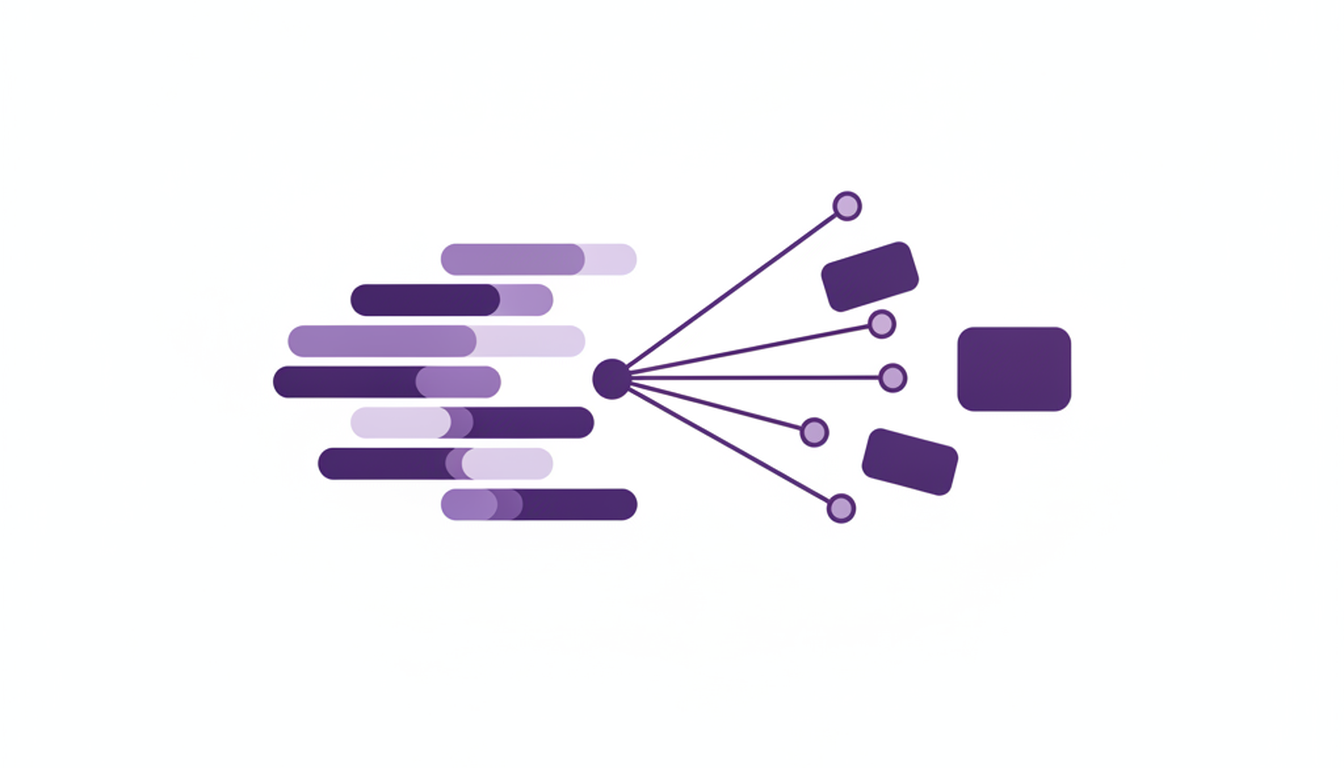
Activity Dashboard
Usage analytics for teams running agents.
Why it mattersPer-agent, per-model and per-request spend, cache hit rate and tail latency are now queryable and groupable.

Deploy Cursor Origin repositories with Vercel in public beta
Vercel opened public beta support for Cursor Origin repositories.
Why it mattersAnyone weighing Origin needs to know the deploy path already exists, and the speed of the wiring shows how fast the ecosystem is adapting to a week-old hosting platform.

GPT-5.6 Sol is 50% off on AI Gateway for the next month
Vercel is running GPT-5.6 Sol at half price on its AI Gateway through September 18, across every service tier including fast mode.
Why it mattersAnyone already sending Sol traffic through this gateway gets the lower rate with no code change, and the window closes September 18.

DeepSeek V4 Pro 0813 vs Claude Fable 5 on DeepSWE: Cost, Coding, and Routing
A DeepSWE comparison of DeepSeek V4 Pro 0813 and Claude Fable 5 that measures a 90x cost gap and an unusually low per-task correlation, the property that makes escalation routing between them worthwhile.
Why it mattersCross-model disagreement, not average accuracy, is what makes a cascade pay off, and this puts a number on it for two models at opposite ends of the price sheet.

$12B of US ratepayers' money wasted on a modeling mistake and PJM wants to do it again
SemiAnalysis rebuilt PJM's black-box Reserve Requirement Study and argues its methodology ignores winter efficiency gains and post-Elliott resilience, understating capacity by ~4GW.
Why it mattersPower in America's largest electricity market is procured off a model that understates existing supply by roughly 4GW, inflating capacity costs and squeezing the grid headroom datacenter expansion depends on.

Qwen 3.8 27B is excellent, but it defaults to wildly overthinking things
Hands-on notes on Qwen 3.8 27B, the Apache 2 licensed vision-capable release from Alibaba's Qwen lab, run in quantized form on a 128GB MacBook Pro and an NVIDIA DGX Spark.
Why it mattersA capable vision model in the 27B range runs on a well-specced laptop, but its default reasoning effort makes it impractical there; anyone trying it should turn that setting down before judging the model.

Guillermo Rauch on Vercel's Shift Toward Agentic Infrastructure
In this interview, Vercel founder Guillermo Rauch describes how the platform has evolved from deploying front-end websites to hosting AI coding agents and autonomous software, driven by models like Opus 4.5.
Why it mattersRauch argues platforms must shift from human-facing elastic compute to 'agentic infrastructure' that lets coding agents deploy, secure, and maintain software autonomously over hours or days.
awesome-claude-code
A curated, community-maintained list of resources for Claude Code, covering guides, skills, agents, status lines, developer tooling, plugins, and orchestration patterns.
Why it mattersIt aggregates guides, skills, agents, plugins, and observability tools for Claude Code in one continually updated place, saving practitioners from hunting across scattered repos and blog posts.
An index of the vibe-coding frontier. Corrections welcome.