Quantifies how export controls constrain Huawei's AI chip volume, informing expectations about non-US frontier capability and compute supply.
Key takeaways · AI-distilled
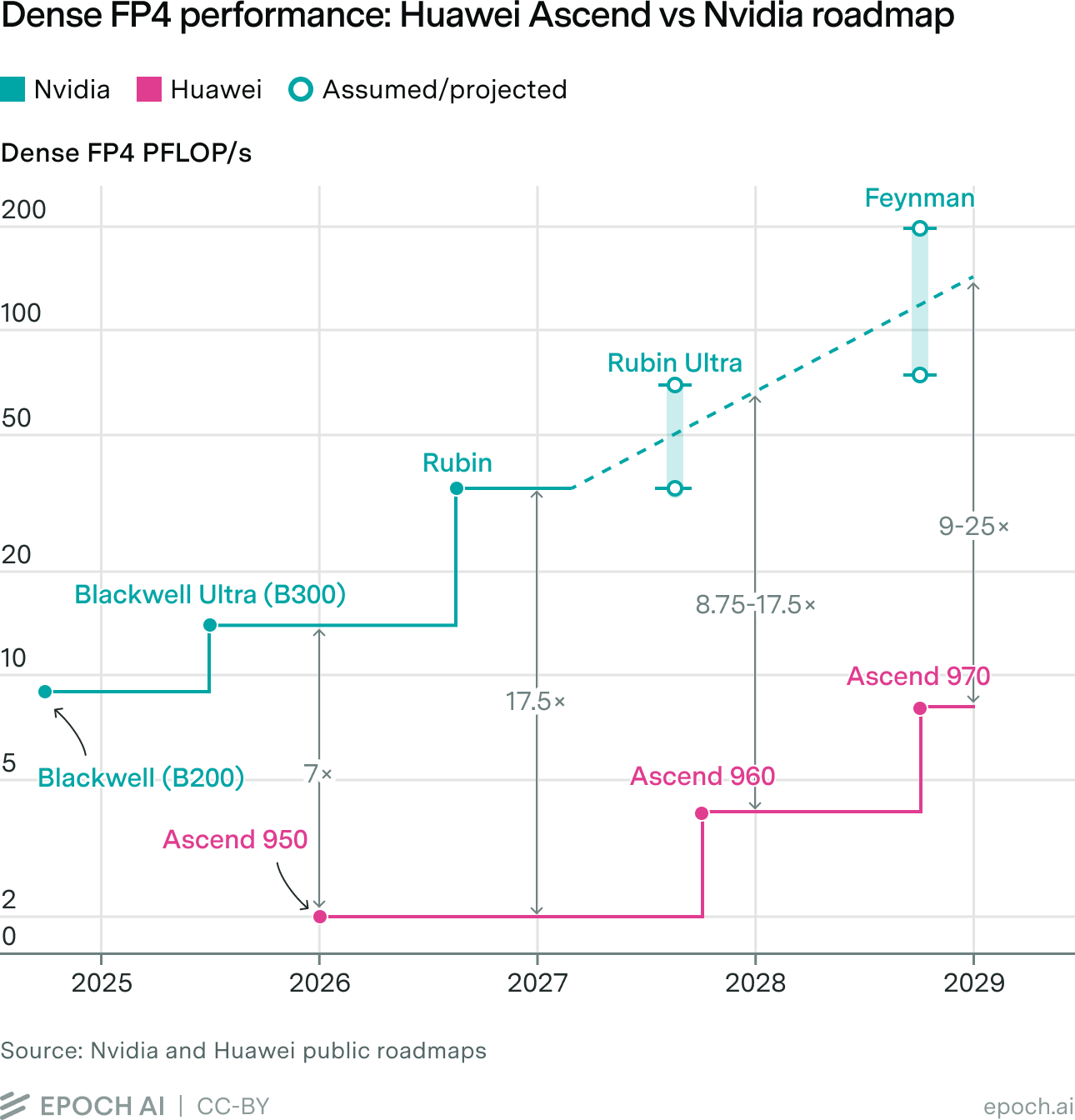
Epoch estimates Huawei's top chip, the Ascend 950, delivers roughly half the performance of Nvidia's H100 (shipping since 2022), and that Huawei will produce under 4% of Nvidia's compute output in 2026.
The report names high-bandwidth memory (HBM) as Huawei's binding constraint: using only Chinese-made HBM, its compute output could stay around 1% of Nvidia's through 2028.
Smuggling does not close the gap in Epoch's model: even with 10x its entire 2028 domestic supply of usable HBM, Huawei's output would be only about 16% of Nvidia's.
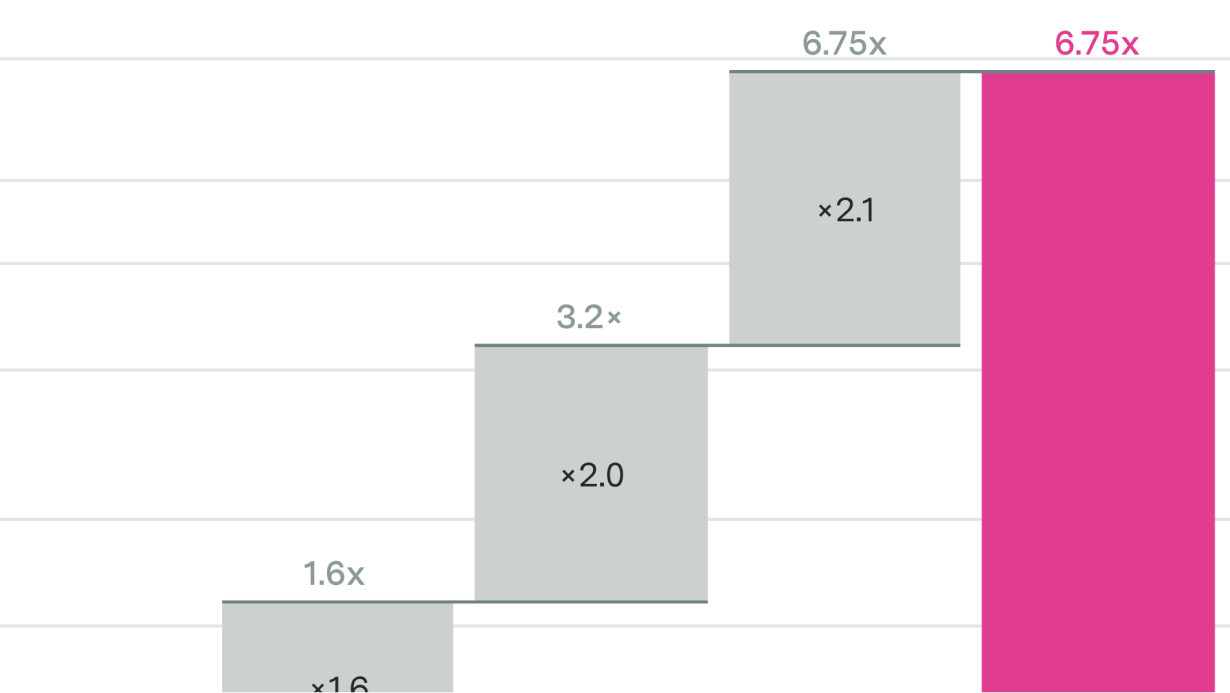
By 2028, Huawei's constraint starts to move from HBM supply toward per-chip performance: the usable-HBM gap narrows from 73x in 2026 to 11x in 2028 as domestic production ramps, while Nvidia's compute per GB of memory advantage grows from nearly 3x to 6x.
Huawei's long-term bet is LogicFolding, stacking logic vertically to raise density while stuck on 5-7 nm-class processes, but Epoch says the first Ascend chip using it won't arrive until 2030.