TensorRT Edge-LLM Completes the MLPerf Edge Agentic Benchmark 6.4x Faster on Jetson AGX Thor
- Source
- developer.nvidia.com
- Author
- Elizabeth Goodman
- Date
Context
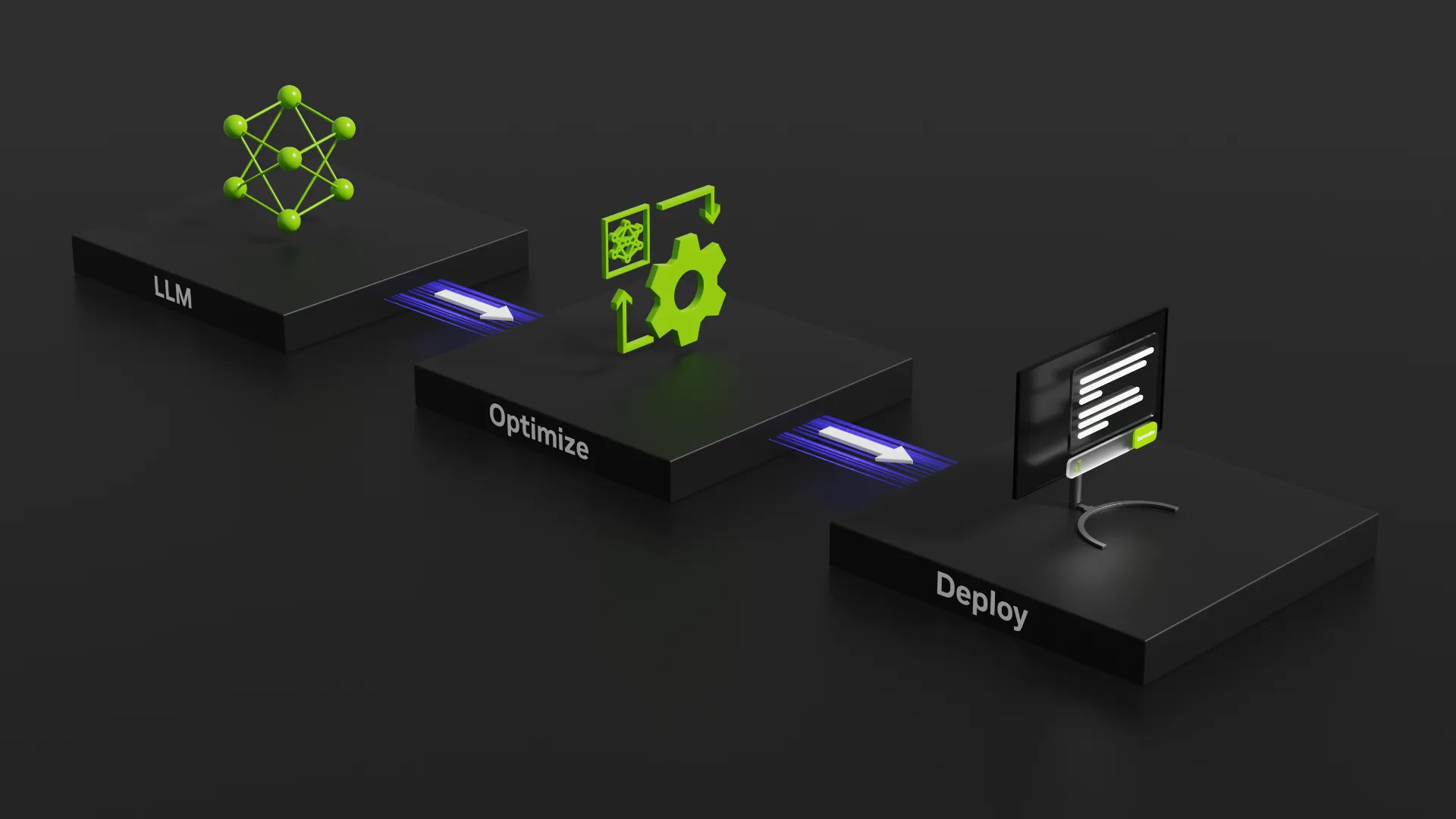
NVIDIA reports that its TensorRT Edge-LLM software completed the MLPerf Edge Agentic benchmark, which replays recorded software-engineering agent sessions, on a Jetson AGX Thor in 24 minutes 36 seconds, versus 2 hours 37 minutes for a llama.cpp reference run. Both ran the Qwen3.6-27B model from Qwen on the same hardware platform, with different formats. The 6.4-fold comparison covers 1,007 turns across 20 conversations.
One important mechanism is avoiding repeated processing of conversation history. The runtime restores cached state and processes the new suffix; roughly 96% of prompt tokens came from cache in this workload. Multi-token prediction separately proposes several continuations for the main model to verify together, reducing generation steps.
- KV-cache and recurrent-state reuse across agent turns served about 96% of prompt tokens from hot cache in NVIDIA's edge benchmark run, so the runtime only had to prefill roughly 0.5M of the 13.6M total prompt tokens across the trajectory.
- Tree-based multi-token prediction (8 draft steps, top-2 candidates, 16-node tree) beat linear multi-token prediction by about 40% on decoding speed for function-calling workloads, because tool names and JSON syntax are predictable enough to verify multiple branches in one pass.
- NVFP4 4-bit quantization of weights, activations, and even the language-model head, paired with FP8 for the , let a single Jetson AGX Thor edge device run Qwen3.6-27B at 52.33 tokens/sec while hitting 87.94% accuracy on the Berkeley Leaderboard.
- MLPerf's new Edge Agentic benchmark replays real agent trajectories (20 conversations, 1,007 turns, growing to ~23.5K tokens of ) instead of single prompts, to measure how systems handle the long, tool-calling conversations agents actually produce.
- quantization — Shrinking a model by storing its numbers less precisely — like rounding — so it runs faster and fits on smaller hardware, at a small quality cost.
- KV cache — The memory a model keeps about text it has already read, so generating each new token doesn't require reprocessing the whole conversation.
- tool use — A model's ability to call external functions — run code, search the web, edit files — instead of only generating text.
- context window — The maximum amount of text a model can consider at once — its working memory for the current conversation or task.
 articleHow NVIDIA OpenShell Reference Architecture Secures and Governs AI Agent Workloads at Scale
 articleCode, Test, and Deploy on One Machine with NVIDIA RTX Spark
 articleHow to Rewrite Apache Spark UDFs for GPU Acceleration with AI Agents
 articleLower the Cost of Building and Running Visual AI Agents with NVIDIA VSS Blueprint 3.3
 articleFrontier Reasoning Reaches the Edge: How to Deploy and Optimize Models on NVIDIA JetsonElizabeth Goodman
 articleNVIDIA Vera Rubin and Blackwell Set a New Standard for Agentic AI Performance per WattElizabeth Goodman
 articleExperiment with Qwen3.8-Flash-Next 176B Model on NVIDIA GB300 NVL72 for Agentic CodingMichelle Horton
Checking sign-in…
Loading comments…