Ant Ling Open-Sources Ling-3.1-flash-1019 and a Base Model
- Source
- x.com
- Date
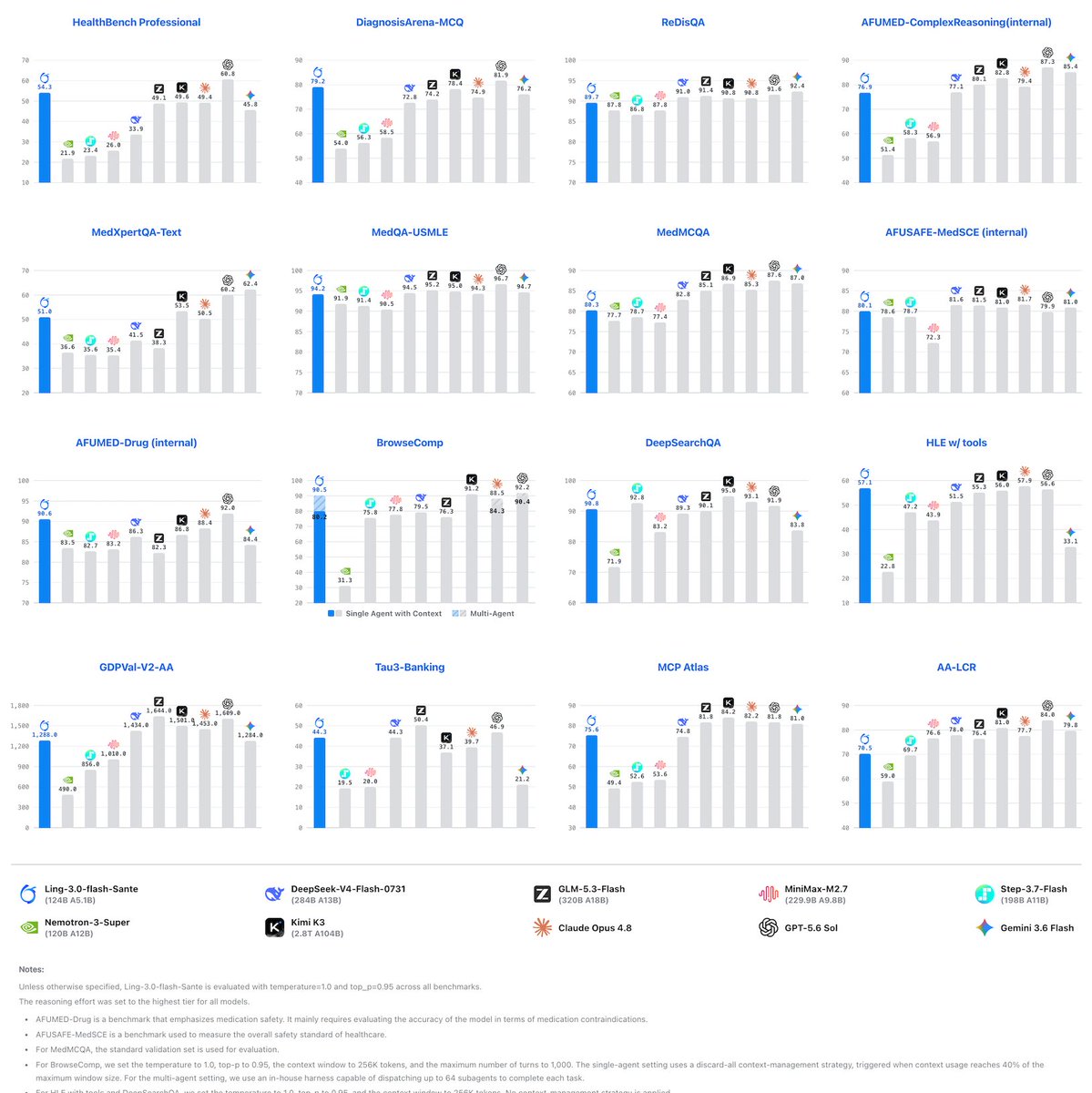
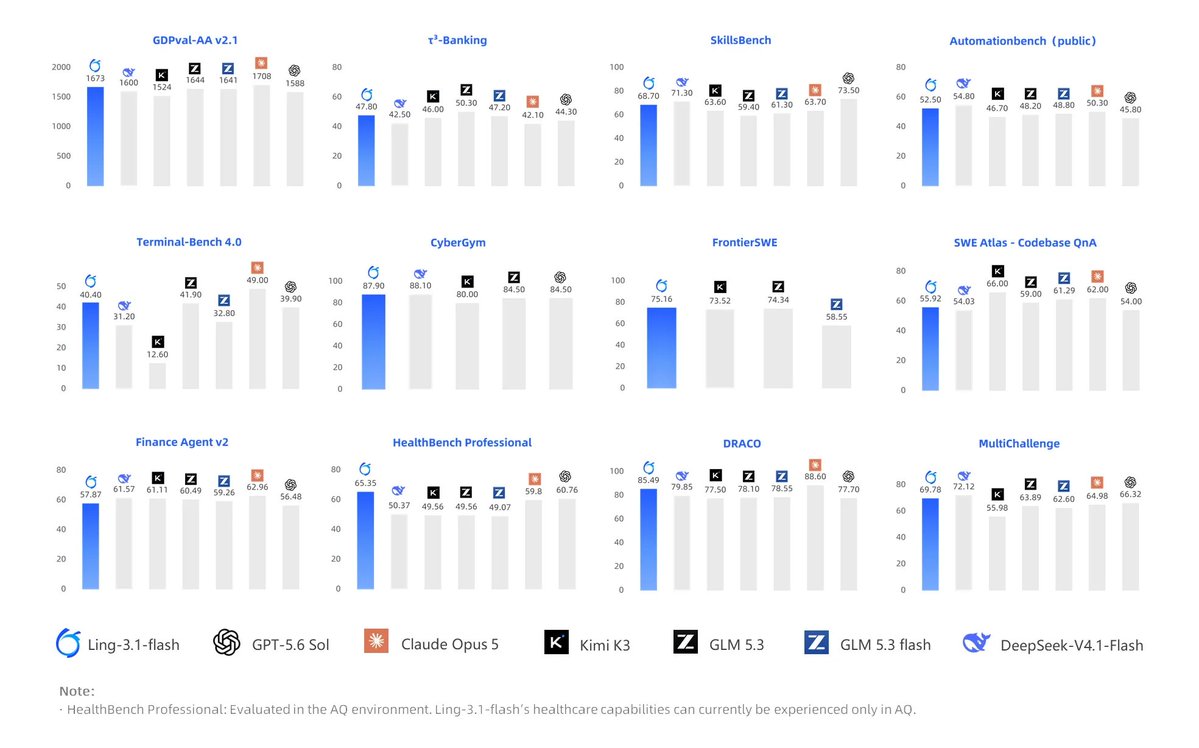
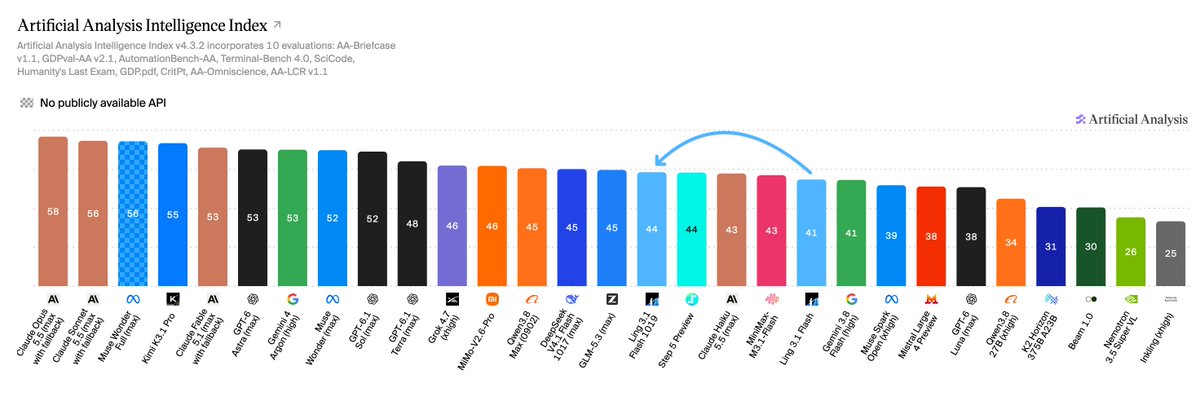
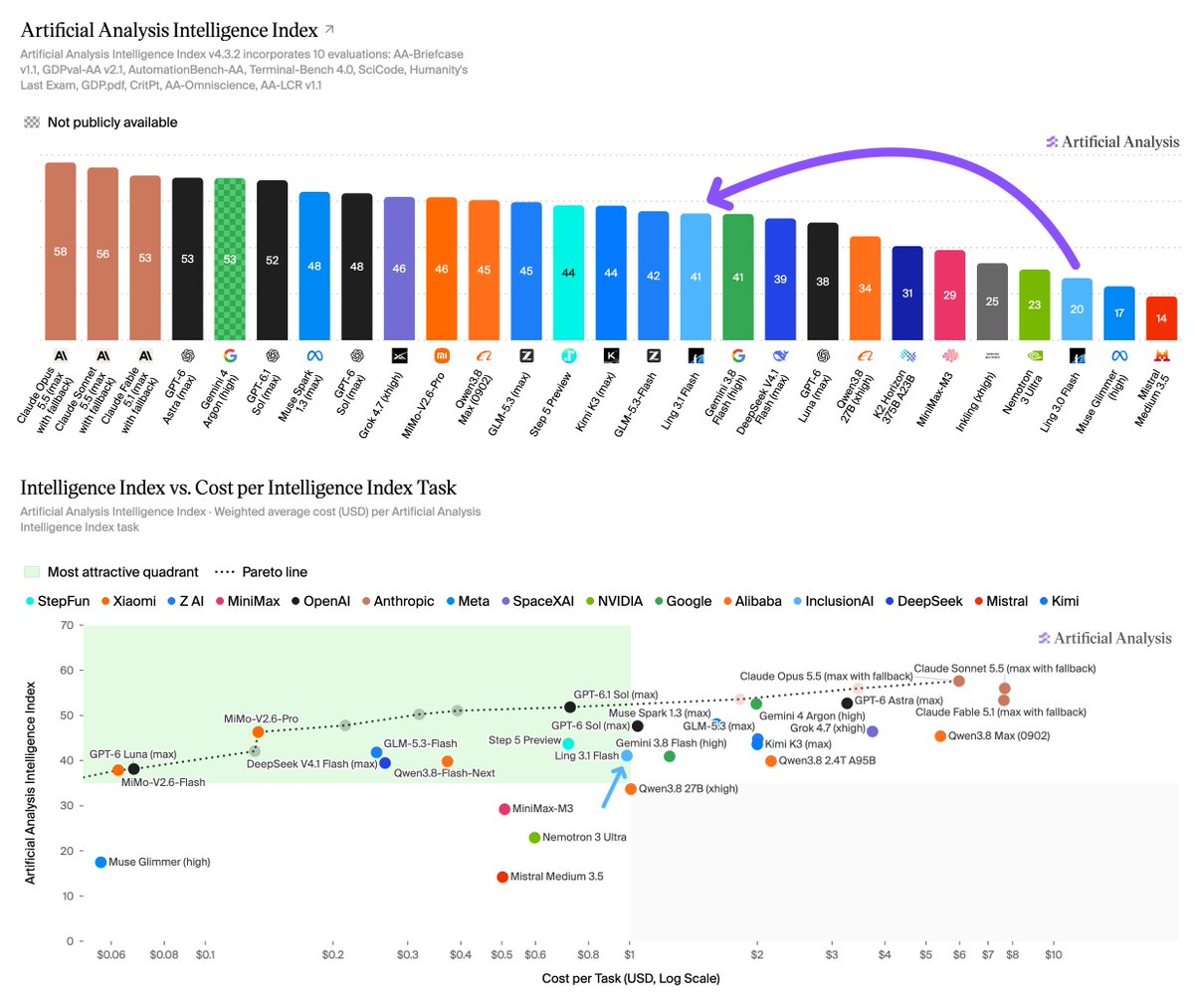
Ant Ling published open weights for Ling-3.1-flash-1019 on Hugging Face and ModelScope, along with a Ling-3.1-flash-base checkpoint for teams that want to run their own training. Artificial Analysis measured the model at 560B total parameters with 25B active, a 1M-token context window and an MIT license. It scores 44 on Intelligence Index v4.3, up from 41 for the prior version, with gains on AA-Briefcase, AutomationBench-AA, CritPt and SciCode. Those gains came with heavier output: the model uses 145k output tokens per task, about 40% more than before, for a measured cost of $1.49 per task. The per-token price is low, but the extra tokens offset part of it. For teams choosing a self-hosted agent model, the comparison that matters is cost per finished task against other open options, not the price list.

Now open source: Ling-3.1-flash-1019. 44 on the Artificial Analysis Intelligence Index v4.3.2, up from 41 for Ling-3.1-flash. Also releasing Ling-3.1-flash-base, an open foundation for further training.
Context
Ant Ling has open-sourced Ling-3.1-flash-1019, an update to its Ling-3.1-flash model, and its post gives one number for the change: 44 on the Artificial Analysis Intelligence Index v4.3.2, up from 41 for the earlier release. That index is run by Artificial Analysis, not by Ant Ling, and Artificial Analysis reported the same 44 against 41 in its own post on the update. There it describes the model as a with 560B total parameters, 25B of them active for each , and a 1M-token .
The second release, Ling-3.1-flash-base, is described as an open foundation for further training. It is meant for teams that want to train their own variant of the model rather than use the finished version as released.
Ant Ling's post does not say what changed in training or where the three points came from. The Artificial Analysis breakdown fills some of that in: it reports gains on agentic and scientific-reasoning tests, and also finds that the update writes more than 40% more output tokens per task than its predecessor, which raises its cost per task.
- reasoning model — A model trained to think — generating extended internal reasoning before answering — trading time and tokens for accuracy on hard problems.
- token — The chunk of text a model reads and writes in — roughly three-quarters of a word — and the unit AI usage is billed in.
- context window — The maximum amount of text a model can consider at once — its working memory for the current conversation or task.
Checking sign-in…
Loading comments…