Ai Systems Are Improving Rapidly At Slay The Spire And Its Sequel
Source
epoch.ai
Author
Epoch AI publications
Date
Why it matters
Documents rapid gains in long-horizon game play via computer use, a proxy for sequential decision-making by agents, along with caveats about remaining elicitation gaps.
Key takeaways · AI-distilled
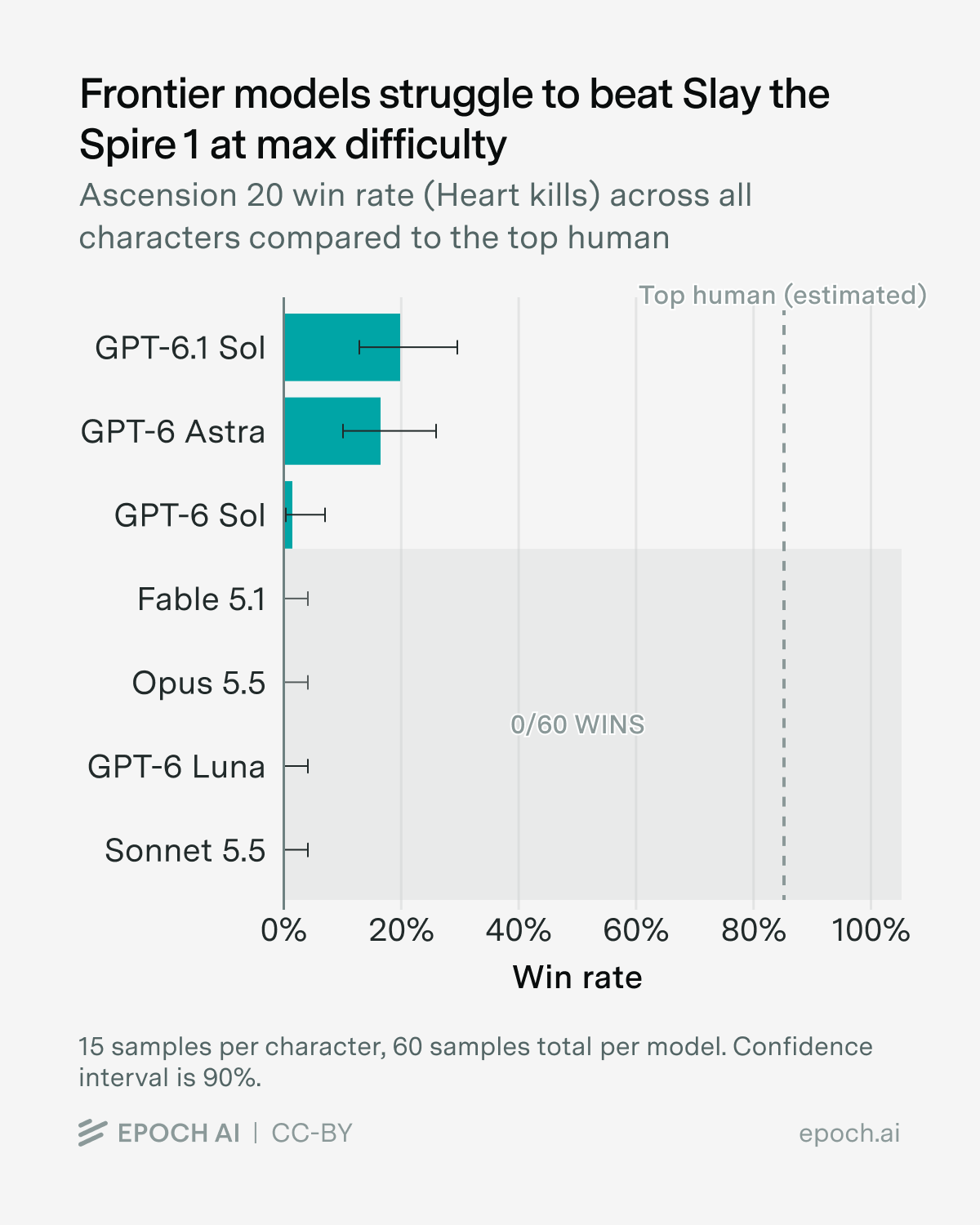
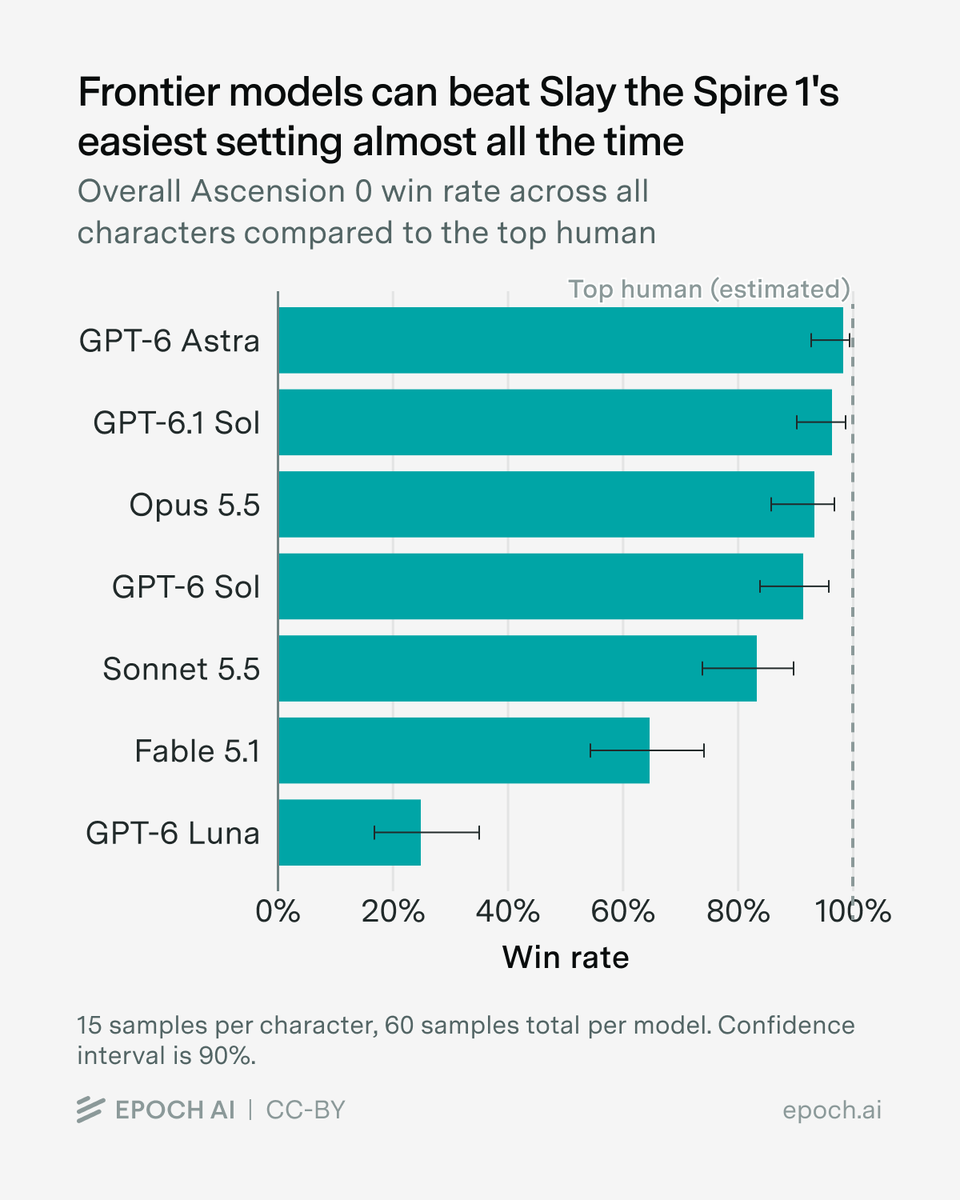
In Epoch's SpireClimb benchmarkA standard public test set for comparing AI models — the shared scoreboards behind every "model X beats model Y" claim.Full definition →, GPT-6.1 Sol won 20% and GPT-6 Astra 17% of Slay the Spire 1 runs at maximum difficulty (Ascension 20 Heart); Epoch says top human players regularly win at least 80% at maximum difficulty in both games.
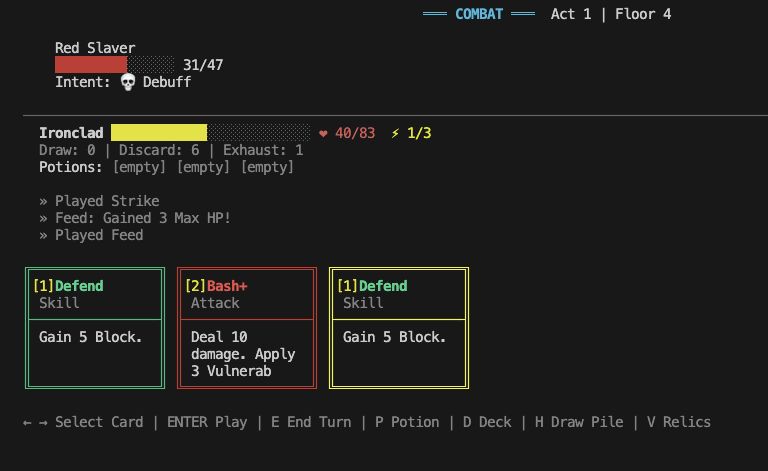
In June 2025 the Orak paper found Gemini 2.5 Pro with a text agent harnessThe scaffolding around a model that turns it into a working agent — the loop, the tools it can call, and the rules for when to stop.Full definition → could 'defeat the second boss in two out of three runs', which Epoch says likely corresponds to a 0% overall win rate.
Anthropic said in June 2026 that Claude Fable 5 reached Slay the Spire's final act three times more often than Claude Opus 4.8; Epoch reads that phrasing as indicating the model still could not reliably win games.
Frontier models exceeded 25% win rates at Slay the Spire 2's hardest setting, Ascension 10, doing better than at comparable tiers of the original; Epoch says this reflects the early-access sequel's lower overall difficulty.
Epoch calls earlier attempts to benchmark Slay the Spire with LLMs scattershot, with substantial variation among the harnesses used, affordances allowed and models tested.
Terms in this piece · Glossary
benchmark — A standard public test set for comparing AI models — the shared scoreboards behind every "model X beats model Y" claim.
agent harness — The scaffolding around a model that turns it into a working agent — the loop, the tools it can call, and the rules for when to stop.