Provides a transparent cost model for frontier training runs, helping gauge how many labs can afford frontier models and how that affects availability.
Key takeaways · AI-distilled
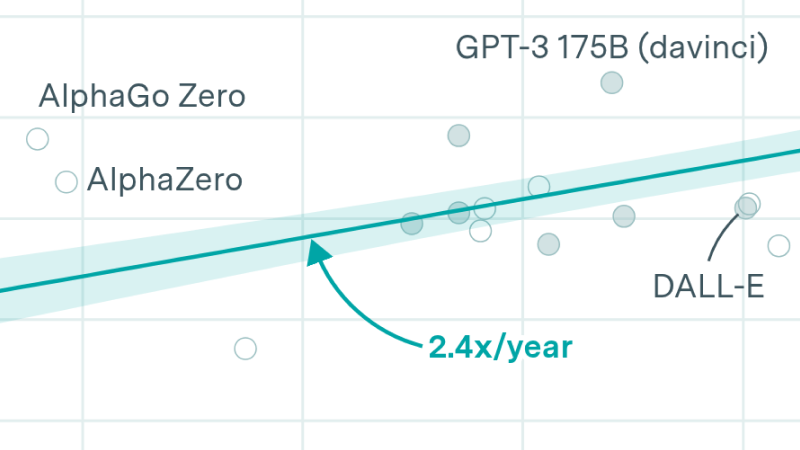
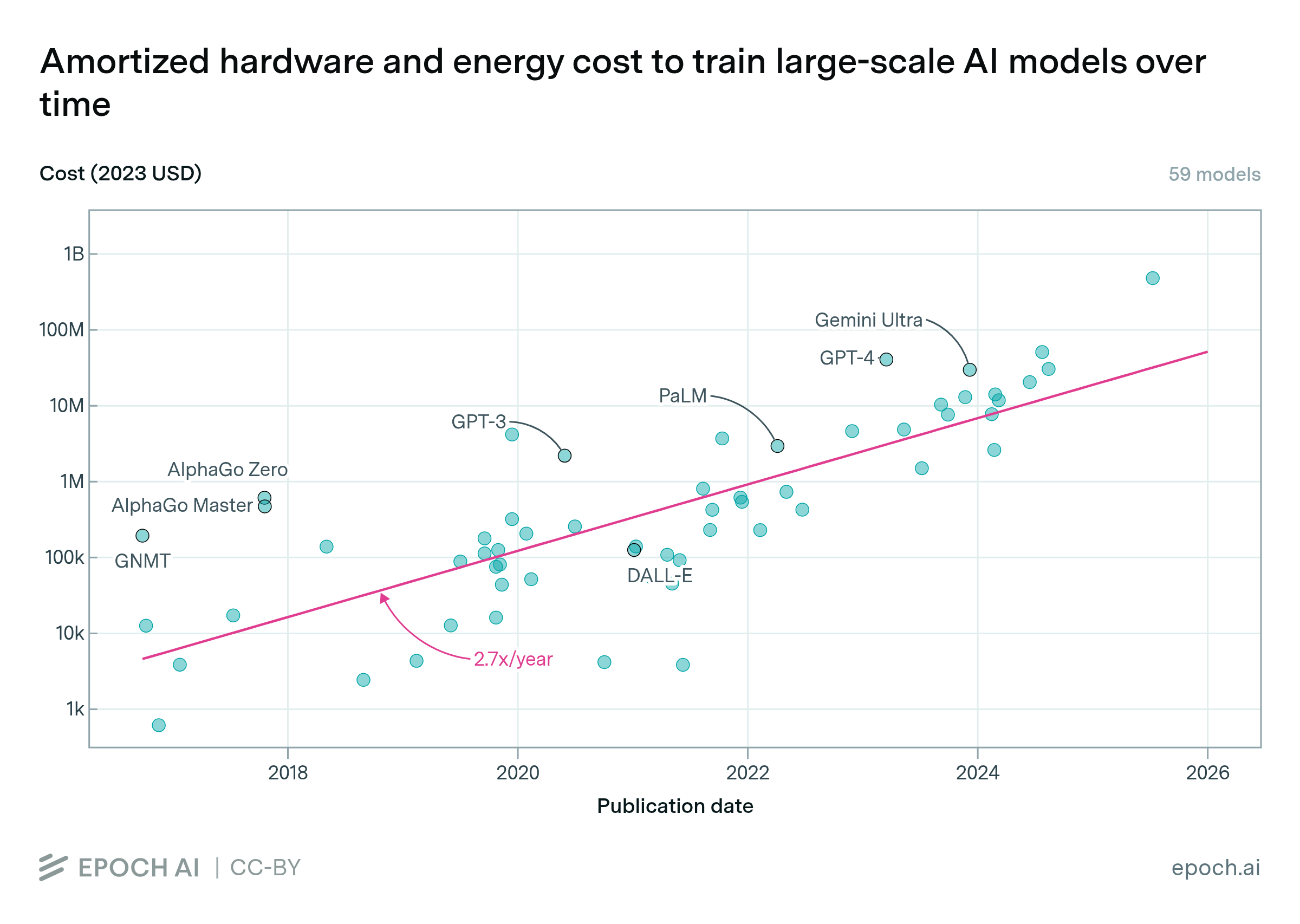
Epoch estimates the amortized hardware and energy cost of frontier models' final training runs has grown about 2.4x per year since 2016, where frontier means top 10 by training compute at release; a 2025 data correction left the growth rate unchanged to one decimal place.
For key frontier models such as GPT-4 and Gemini Ultra, hardware is 47–67% of development cost, R&D staff (including equity) 29–49%, and energy 2–6%; the authors call staff costs substantial.
The primary method calculates cost from hardware depreciation and energy consumption over the training run, with hardware covering accelerator chips (GPUs or TPUs), servers and interconnection hardware.
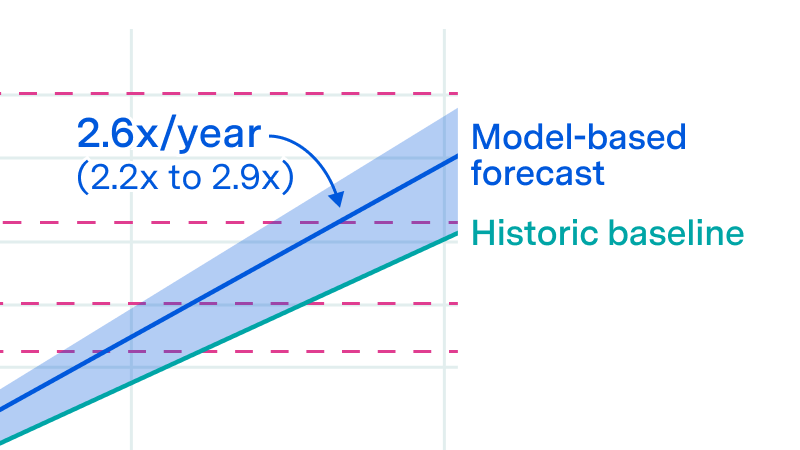
An alternative cloud-rental method gives a similar 2.6x/year growth rate but cost estimates around twice as high on average, and it overestimates costs for models trained on developer-owned hardware.
If the trend continues, the largest training runs will cost more than $1 billion by 2027, which the authors say suggests frontier training will be too expensive for all but the most well-funded organizations.