Offers a cross-validated finding that capability progress has sped up since reasoning models arrived, relevant when planning around how fast AI agentAn AI system that doesn't just answer once but works toward a goal in a loop — taking actions, reading the results, and deciding what to do next.Full definition → capabilities may improve.
Key takeaways · AI-distilled
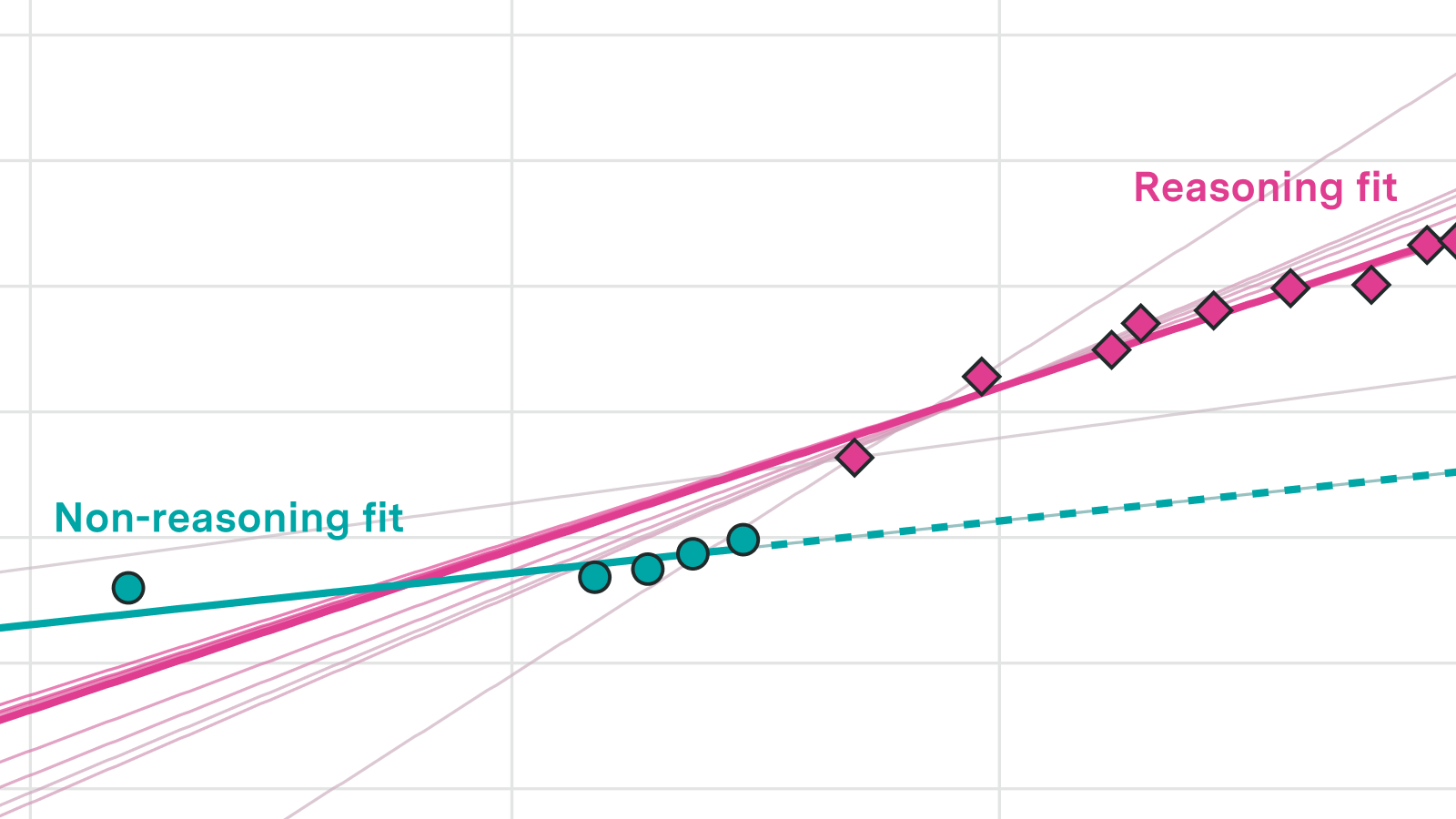
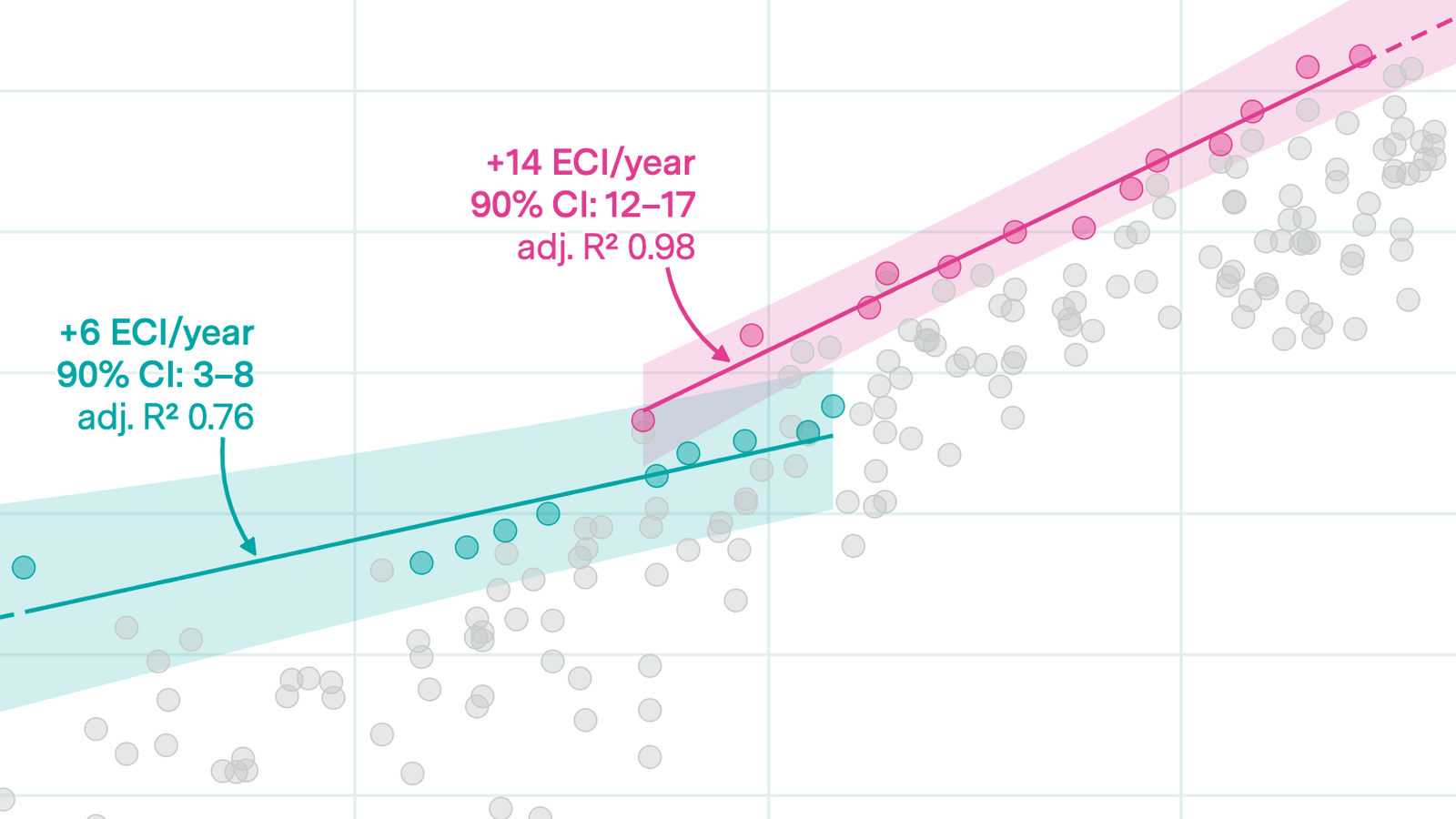
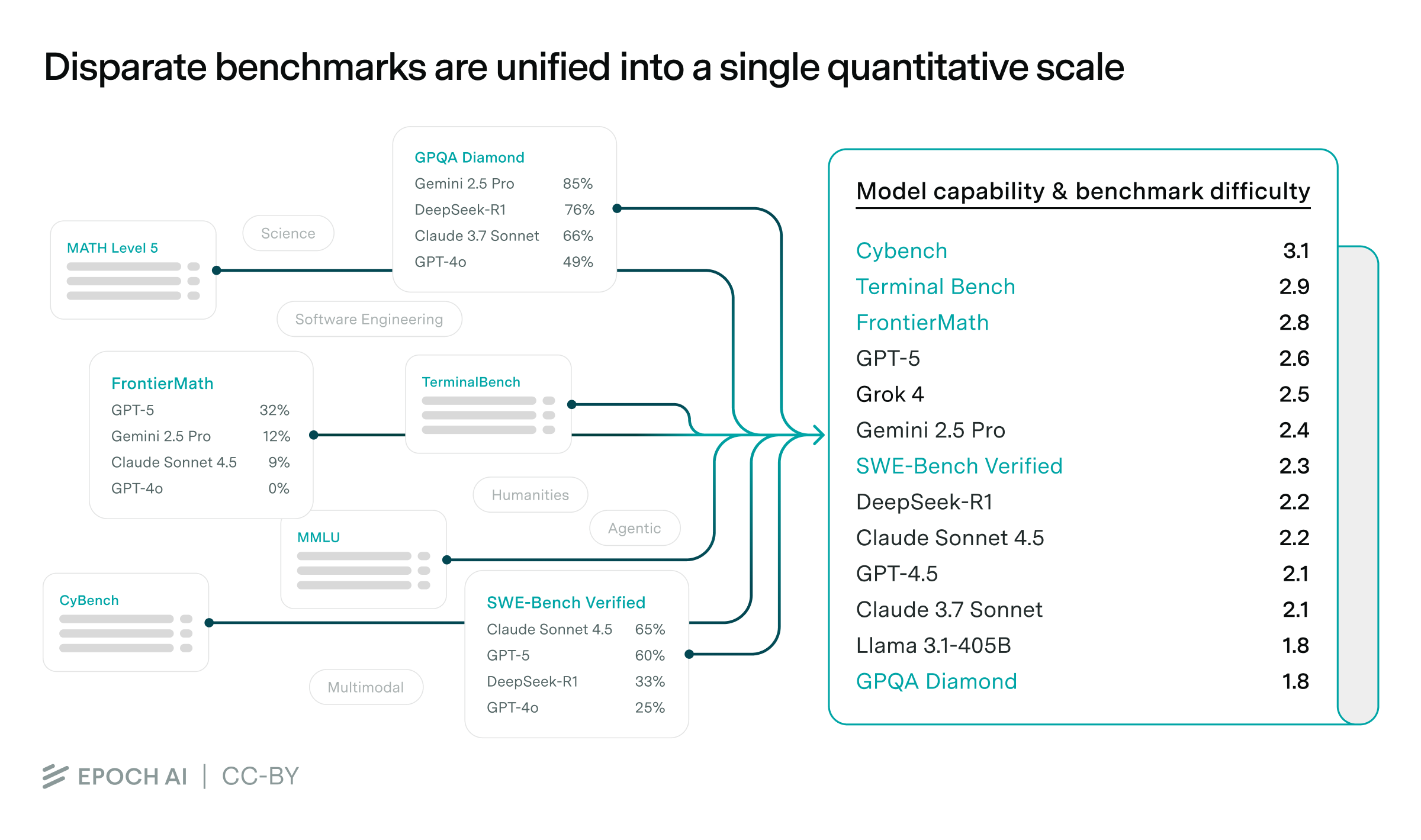
Epoch compared candidate curves by how well each predicts data it hasn't seen. Three of four metrics (ECI, log METR 50% time horizon, and a math index) showed strong evidence that progress sped up relative to a global linear trend fit to data from 2023 onward.
Across those three metrics, two independent linear trends fit best. Reasoning models show a one-off jump and roughly 2-3x faster trend than non-reasoning models, but other superlinear fits also perform well, preventing a precise growth-rate estimate.
The 'reasoning' label is not a clean dichotomy. It bundles correlated changes from the same few months: scaling inferenceRunning a trained model to get answers — the phase where AI is actually used, as opposed to trained.Full definition → compute, heavier RL in post-training, and models producing reasoning tokenThe chunk of text a model reads and writes in — roughly three-quarters of a word — and the unit AI usage is billed in.Full definition →.
A WeirdML V2 index showed no acceleration and was best fit by a single global linear trend. Epoch offers as one possible explanation its five-attempt, no-tools setup, which has not been a focus of recent RL training, and notes limited statistical power to detect a break.
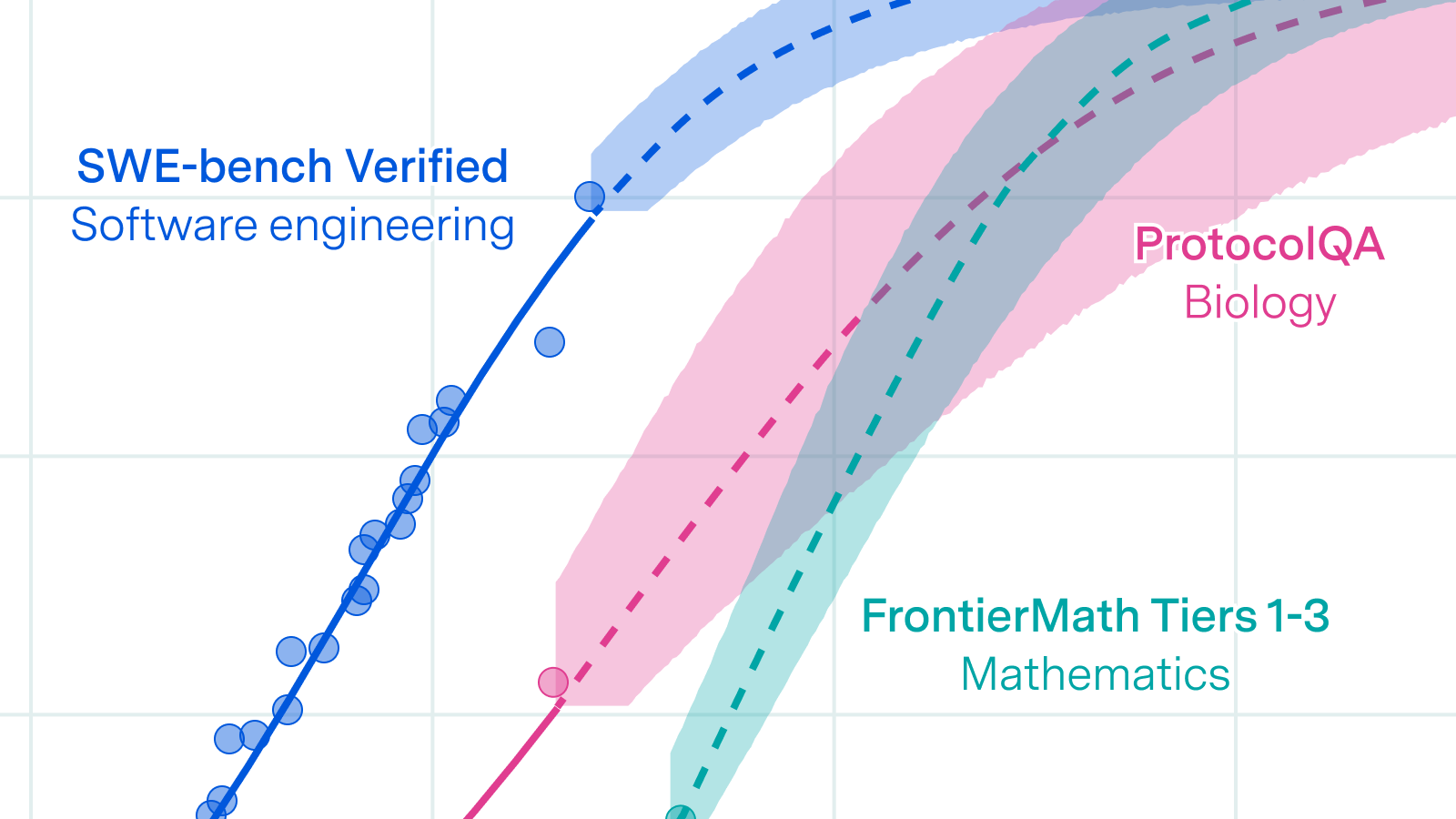
Epoch cautions that the three accelerating metrics are concentrated in programming and mathematics, where correctness is easy to verify automatically, so the acceleration may not be as general as the headline numbers suggest.
Terms in this piece · Glossary
AI agent — An AI system that doesn't just answer once but works toward a goal in a loop — taking actions, reading the results, and deciding what to do next.
inference — Running a trained model to get answers — the phase where AI is actually used, as opposed to trained.
token — The chunk of text a model reads and writes in — roughly three-quarters of a word — and the unit AI usage is billed in.