Vercel's Andrew Qu on why agents are a new kind of software
- Source
- latent.space
- Author
- Richard MacManus
- Date
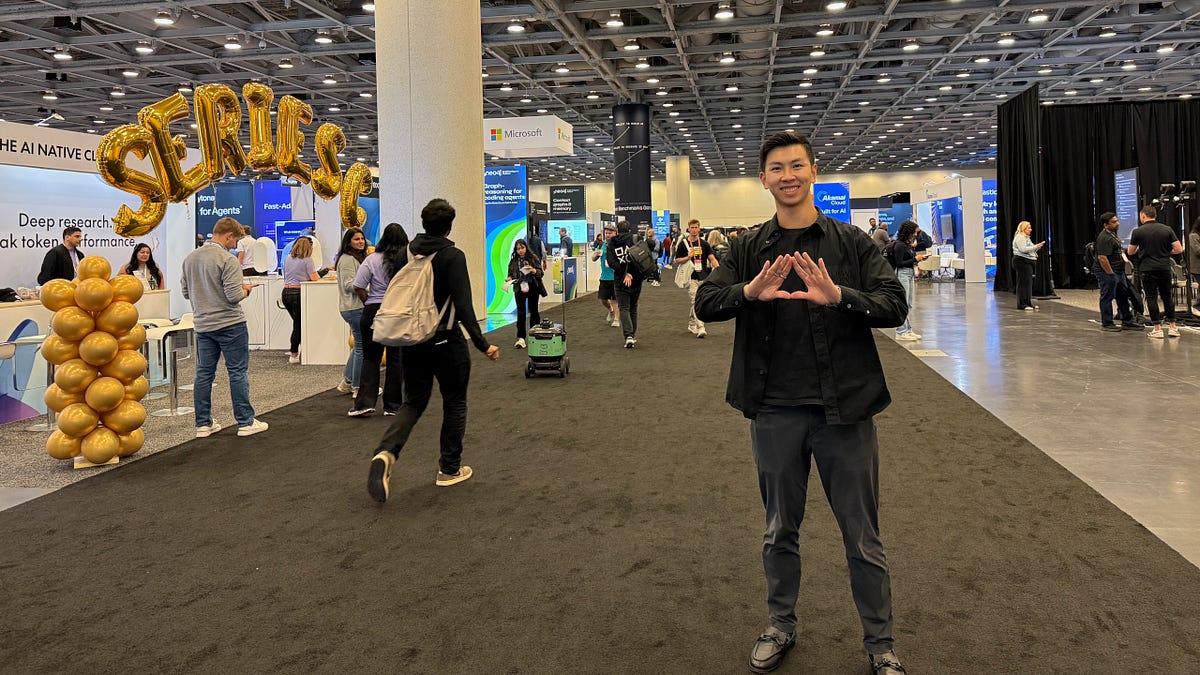
eve gives you prescriptive, Vercel-native primitives — , subagents, resumability, and filesystem agents — for building long-running agents that ship with built-in observability and rather than assembling those pieces yourself. The interview is worth reading for the thesis on how -native software and infrastructure (e.g. serving Markdown to bots) is starting to differ from the traditional web app stack.
- context window — The maximum amount of text a model can consider at once — its working memory for the current conversation or task.
- context compaction — Summarizing an agent's earlier conversation to free room in the context window so a long session can keep going.
- eval — A repeatable test for AI quality — a set of tasks plus scoring — used the way software teams use test suites, because model output is too variable to judge by eyeballing.
- AI agent — An AI system that doesn't just answer once but works toward a goal in a loop — taking actions, reading the results, and deciding what to do next.
“I think agents are a new type of software. They are not as predictable as web applications.”
Andrew Qu
“A good candidate is often a repetitive task that still requires some reasoning.”
Andrew Qu
“Until companies can audit and update every old piece of content, skills provide a way to forward-correct the model.”
Andrew Qu
“We have published reports showing bot traffic rising while human traffic is stagnant or declining, even as impressions increase, because agents and bots are hitting websites more frequently.”
Andrew Qu
“At Vercel, we already detect when an agent makes a request and serve Markdown directly.”
Andrew Qu



Checking sign-in…
Loading comments…