https://t.co/zBh8ck0Gbc
- Source
- x.com
- Publisher
- OpenAI
- Date

After evaluating one of our upcoming models, Astra, we're treating it as our first "critical" model for cybersecurity under our Preparedness Framework. This is a scenario we've planned for, and we're putting additional controls in place to ensure Astra's further development happens safely and securely. We're working hard to make Astra broadly available, and get its advanced cyber capabilities into the hands of defenders. https://t.co/9lMIvdeMMJ
https://t.co/zBh8ck0Gbc
Context
OpenAI said on August 7 that its upcoming Astra is the first it is treating as "critical" for cybersecurity under its Preparedness Framework, the framework it uses to assess dangerous capabilities before deciding how a model is released. In the announcement thread, OpenAI called this a scenario it had planned for and said it was adding controls so Astra's further development happens safely and securely. It also said it was working to make Astra broadly available and to put its advanced cyber capabilities in the hands of defenders. The classification was presented as a reason for additional controls on the model's development, not a decision to keep it back for good.
What the controls are, which evaluations led to the rating and when Astra would ship are not covered by the evidence here. The OpenAI article linked from the thread returned an access error when collected, the thread's second post is a bare link that was not resolved, and thread collection stopped early under a reading budget.
Later Intel fills in part of the sequence. About four hours after the announcement, Sam Altman wrote that OpenAI wanted Astra generally available and opposed keeping powerful models to a chosen few, but needed a little longer because of its cyber capabilities (Altman's post). OpenAI's Path to Astra post later described Astra as its first model to meet the Critical cybersecurity threshold, released with stronger safeguards, and Altman announced GPT-6 Astra on September 3 (launch post). The critical rating therefore preceded a public release by about four weeks rather than blocking one.
 articleGPT-6.2 designs lab-tested protein binders using reasoning and code
 articleOpenAI's Agent Pipeline Validated 948 Linux Kernel Root Exploits
 articleOpenAI and Cisco open-source Shirudo, agent-written eBPF shields for live Linux
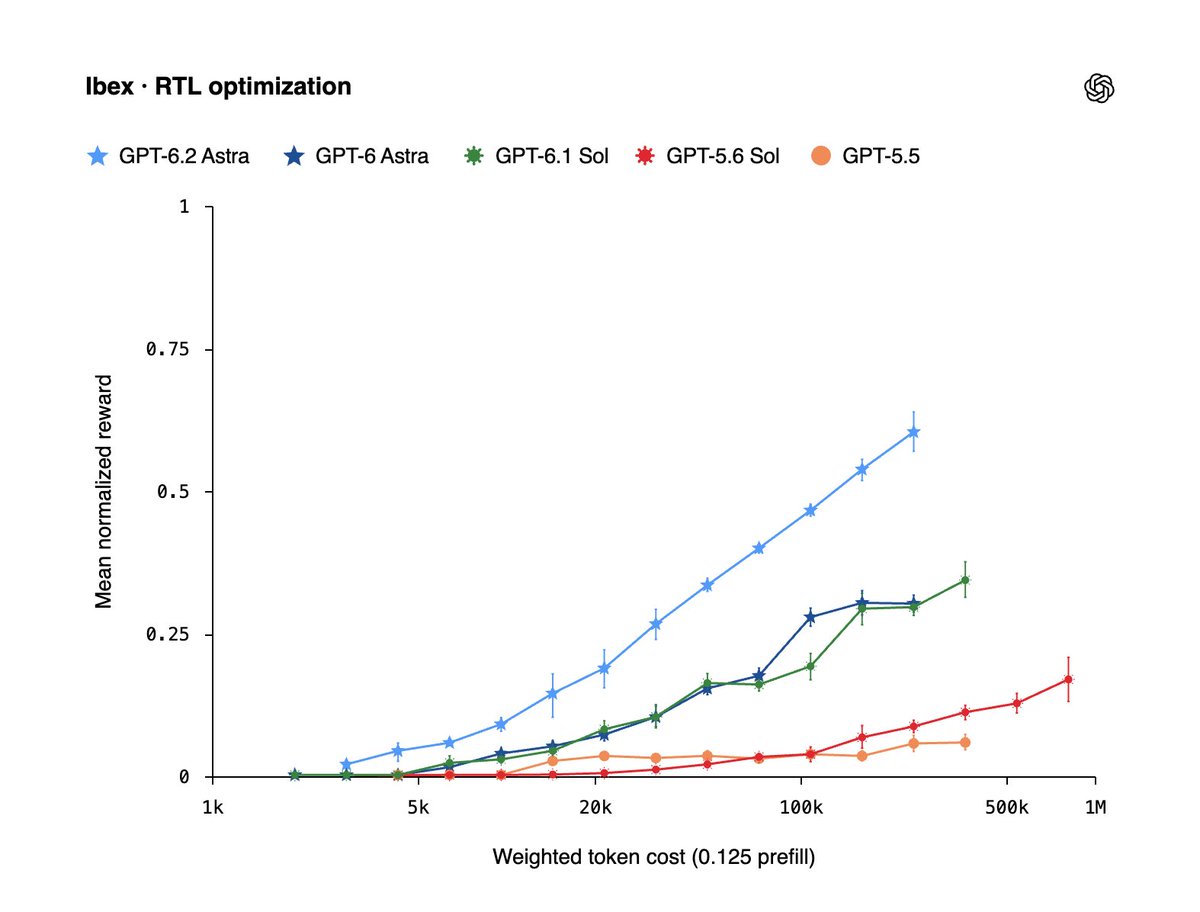 postOpenAI models cut up to 14% PPA on AMD GPU IP, verified on Jalapeño silicon