Intel
Page 12
We made claude.ai 3x faster in two weeks.
Anthropic breaks down the exact loop, per-thread benchmarks, steering.
Why it mattersAnthropic details the actual workflow, a single Slack channel with Claude driving measurement and fixes under human-set guardrails, that cut claude.ai load and interaction times by an average of 3.1x across 13 measured journeys.

OpenAI open-sourced MentalHealthBench, built with input from over 80 clinicians, to evaluate how frontier models handle mental health conversations across the full spectrum rather than just crisis scenarios, releasing the methodology for others to replicate.
Why it mattersGives practitioners a clinician-validated eval for a high-stakes conversational domain, useful for benchmarking safety and quality of AI mental health responses.

Artificial Analysis finds MiMo-V2.6-Pro, Claude Opus 5.5, GPT-6 Luna, and GPT-6 Sol together set eleven new points on the Intelligence Index cost/performance frontier, with Opus 5.5 now the top scorer at 58 for $5.98 per task.
Why it mattersMaps exactly where MiMo-V2.6-Pro, Claude Opus 5.5, GPT-6 Luna, and GPT-6 Sol land on the cost-versus-intelligence tradeoff, helping engineers pick the cheapest model clearing their required capability bar.
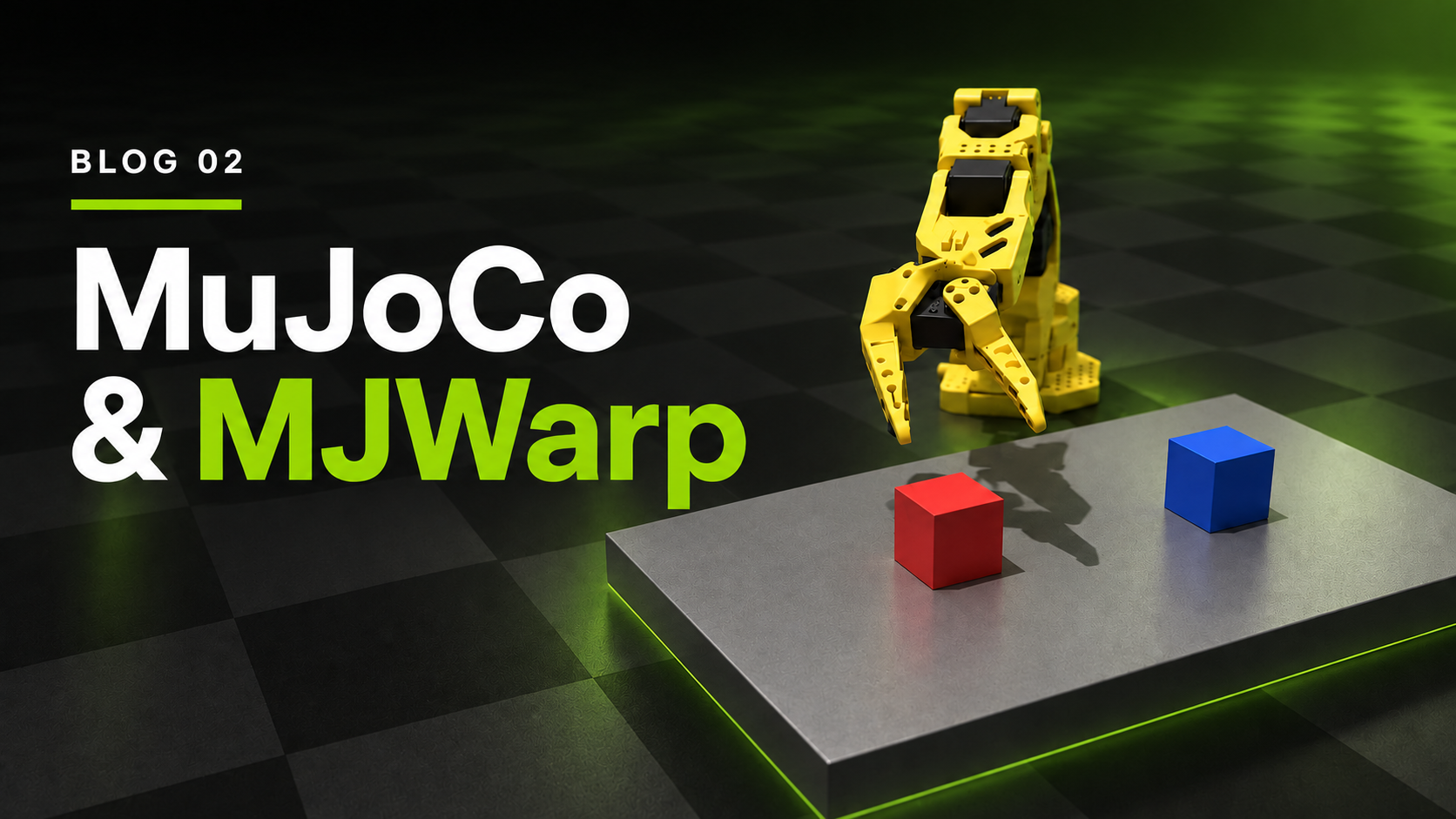
How to Use NVIDIA Warp and MjWarp to Accelerate Robotics Simulation and Learning Workflows
NVIDIA explains how to move a MuJoCo robot simulation workflow onto MJWarp, its GPU-accelerated physics engine built on NVIDIA Warp, scaling an SO-101 arm simulation to as many as 2,048 parallel environments for faster RL training.
Why it mattersShows practitioners how to move a MuJoCo robotics workflow from CPU-bound single-environment simulation to GPU-scale batched simulation via MJWarp, directly useful for anyone training robot-control policies at scale.

Rendering huge pull requests in the GitHub Copilot app
GitHub engineers detail how they rebuilt the Copilot app's PR viewer to stay responsive on a 2,200-file, million-line diff with over 400 inline comments, solving the hard problem of measuring variable-height markdown comments before render.
Why it mattersAs agents generate ever-larger diffs, review tooling needs to keep up; this explains the concrete architecture GitHub used to keep massive AI-scale PRs reviewable, including how it handles variable-height comment rendering.

Anthropic's new molecular biology lab reports Claude generated the hypothesis for a previously unknown, CRISPR-like enzyme system in bacteriophage DNA, which scientists then validated in the lab; its function is still unknown.
Why it mattersShows a working hypothesis-generation pipeline where Claude proposes candidate biological systems from data and literature for scientists to test in the lab, the same discovery pattern behind CRISPR-based medicine.

Recraft's V4.1 Flash model generates images in about 1.3 seconds and is now live through fal, giving builders a faster option for iterating on compositions and prompts mid-workflow.
Why it mattersV4.1 Flash cuts Recraft image generation to about 1.3 seconds, useful for rapid iteration loops in creative and product tooling.

Unlimited Vercel Blob stores on every plan
Vercel removed the 100/500/1,000-store caps on Blob storage across Hobby, Pro, and Enterprise, and now bills store creation as an Advanced Operation ($5/million on Pro).
Why it mattersRemoves a real architectural constraint for multi-tenant apps that want one Blob store per customer for isolation and easy per-tenant deletion.
How to Wire Meta's Muse Agent Into HeyGen via MCP
A walkthrough of connecting Meta's Muse Agent, a persistent cloud agent that schedules its own recurring cron jobs, to HeyGen's MCP server so it drafts scripts and generates avatar videos, gated behind a human approval step before each render.
Why it mattersShows a concrete pattern for a standing, self-scheduling agent that drafts autonomously but gates any costly action behind explicit human approval, via MCP.

Black Forest Labs open-sourced FLUX 3 Action, a 7B world-action model that tops the RoboLab benchmark using 56% fewer parameters and up to 3.95x the speed of the prior best open VLA, with weights, fine-tuning recipes, and NVIDIA/Hugging Face LeRobot integration.
Why it mattersGives roboticists and agent builders an open, fine-tunable model that jointly predicts video and actions with a stronger performance-per-compute tradeoff than existing open VLAs, plus a path to edge deployment.
Artificial Analysis finds Gemini 3.8 Flash TTS leads its Pronunciation Robustness benchmark at 89.5%, ahead of prior Gemini and SpaceXAI models, with particular strength on contextual disambiguation and shorthand expansion.
Why it mattersIdentifies which TTS model most reliably handles ambiguous real-world text like abbreviations and homographs, a common failure point for voice-agent and accessibility products.

Epoch AI's Furniture Assembly Benchmark tests whether models can spot mistakes in half-built furniture from a photo and the manual. Top accuracy jumped from 28% to 80% in ten months, though GPT-5.4 and Gemini 3.1 Pro fail in opposite directions and GPT-6 Astra leads on both speed and accuracy.
Why it mattersEpoch AI's Furniture Assembly Benchmark tracks how well vision models catch real build errors from photos: top accuracy went from 28% to 80% in 10 months, but models split into missing real mistakes or wrongly flagging correct builds.
Gemini 3.8 TTS Playground
Google released gemini-3.8-flash-tts and gemini-3.8-flash-lite-tts, offering over 2,000 voices, custom voice cloning from a 30-second sample.
Why it mattersNew TTS models with cheap custom voice cloning and multi-character conversation support open up production voice features without needing a dedicated voice-AI vendor.
ChatGPT Voice now supports plugins for email, calendar and Slack, runs on new GPT-6 Astra/Sol/Luna models, and works inside ChatGPT Work so users can create docs, decks, and spreadsheets by talking, rolling out globally in the latest app version.
Why it mattersTurns voice into a full agentic interface for office tasks, and confirms GPT-6 variant names (Astra, Sol, Luna) are now in production use.

Get Stuff Done with ChatGPT Voice
OpenAI rolls out a ChatGPT Voice update.
Why it mattersVoice can now call plugins and drive ChatGPT Work to produce docs, decks and sites. Builders of voice agents see which model tiers and tool integrations the platform now supports.
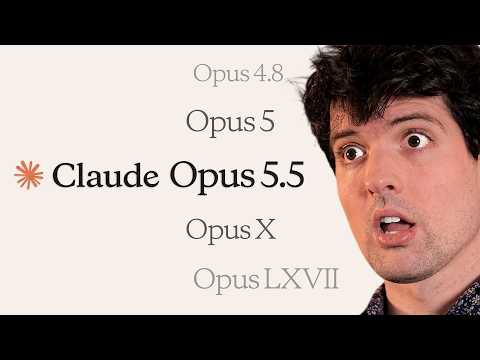
Anthropic Actually Fixed Opus
Theo (t3.gg) reports Opus 5.5 fixed the reliability problems that made Opus 5 unusable for real coding work, now completing a full day's tasks on about 20% of his weekly Claude usage.
Why it mattersOpus 5.5 reportedly delivers a full day of reliable coding work using about a fifth of the weekly Claude usage allotment compared to Opus 5, changing the practical cost calculus of relying on Opus for coding.

Fish Audio previewed Drama 3, a TTS model controllable via plain-language tone and pacing instructions, supporting mid-sentence voice shifts, multi-character scenes, and single-word corrections without audio tags.
Why it mattersDrama 3 lets developers control TTS output with natural-language direction instead of audio tags, and supports mid-utterance voice switching and multi-character scenes, useful for building narrated apps, games, or audio agents.

Vals AI's testing of nine models across 648 simulated 10-turn teen conversations found critical safety failures in 27.5% of chats, most surfacing only after the first reply, undercutting single-turn safety evaluation.
Why it mattersShows single-turn safety evaluation misses most real failures, since 62% of unsafe conversations only broke down after several turns, relevant to anyone evaluating conversational AI safety.

Cua released Cua-S1-4B-0.2, a multimodal decision model trained with RLOO on live computer-use tasks using task-completion rewards, reaching 92.9% on a frozen GUI-360 benchmark split versus 60.1% for the untrained base model, with Apache-2.0 adapters.
Why it mattersA concrete, reproducible RL recipe and open weights for training small models to make GUI decisions from raw screen state, without needing an accessibility tree.

Using Claude Opus 5.5 as your daily driver
Anthropic details Opus 5.5 for daily Claude Code use.
Why it mattersOpus 5.5 costs 20% less per token and plan limits go 25% further, with guidance on when medium effort suffices for daily Claude Code work.

From Scratch to SOTA: Training a 3B State-Space Vision Model — Krishna Prasad Srinivasan, Sarvam
Sarvam trained a 3B-parameter state-space vision-language model, not a transformer, for OCR in 22 Indian languages, using a four-stage curriculum ending in reinforcement learning with machine-checkable rewards.
Why it mattersShows a concrete architectural bet (SSM backbone for constant memory on long visual-token sequences) and a training recipe that let a small model outperform far larger competitors on a genuinely underserved OCR task.

From VLM/VLA's to Embodied Agents — Armen Aghajanyan, Perceptron AI
Perceptron AI's Armen Aghajanyan explains a perceptive training objective and sparse mixture-of-experts routing built to avoid wasting compute on video's mostly uninformative pixels, underlying a model he claims beats a frontier lab's embodied reasoning model at far lower cost.
Why it mattersIntroduces a specific scaling-law claim: joint training on perception, reasoning, and control lets 10x more video pretraining substitute for 10x less expensive teleoperation data, a concrete lever for cutting embodied-AI data costs.
How SWE-Serve Exposes the Gap Between Local Tests and Live Serving
NVIDIA's SWE-Serve benchmark evaluates coding agents on 53 real SGLang inference-engineering tasks, finding patches that pass conventional tests fail live-serving checks about a third of the time.
Why it mattersSWE-Serve quantifies an underappreciated failure mode: coding agents that pass unit tests still break when a service is actually running, directly relevant to anyone relying on agents to patch production systems.
Google DeepMind releases Gemini 3.8 Flash TTS and Flash-Lite TTS, debuting at #2 and #6 on Artificial Analysis's Provider Voice Arena and #1 on pronunciation robustness, processing 44.1 and 40.2 characters per second respectively.
Why it mattersAdds two new Google TTS models with measured Elo, speed, and pronunciation scores, giving engineers a concrete data point for choosing a voice provider.

You’re Not Thinking Big Enough: Rebuilding Food Systems with AI Agents — Cody Menefee, Firecrawl
A Firecrawl engineer pitches replacing manual pasture inspection with a language model that reads animal locations, drought data.
Why it mattersA concrete, unusual application of agentic AI to regenerative grazing decisions, naming specific technical blockers like no legal drone autonomy and locked-down GPS collar APIs, which builders in physical-world domains will recognize.

Google released Gemini 3.8 Flash TTS and Flash-Lite TTS: expressive voice models supporting 100+ languages, 2,000+ preset voices, line-by-line delivery control, and inline cues like <laughs>. Flash targets studio production, Flash-Lite targets real-time voice agents.
Why it mattersGives developers two API-accessible TTS tiers, one tuned for scripted studio-quality audio and one for cheap real-time voice agent responses, available now in Google AI Studio.
Gemini 3.8 text-to-speech says hello
Google DeepMind shipped Gemini 3.8 Flash and Flash-Lite text-to-speech models that build custom voices from prompts and let you direct emotion and pacing line by line, available across AI Studio, the Gemini API, Enterprise, Notebook.
Why it mattersGemini 3.8 TTS lets engineers generate custom character voices and direct pacing and emotion via natural-language prompts, with built-in watermarking, across Google's entire product surface for building voice agents or media.
Gemini 3.8 text-to-speech says hello
Why it mattersGoogle ships Gemini 3.8 Flash TTS and Flash-Lite TTS, expressive audio models for custom character voices and directed scene dialogue, available across AI Studio, the Gemini API, Enterprise, Notebook and Vids.
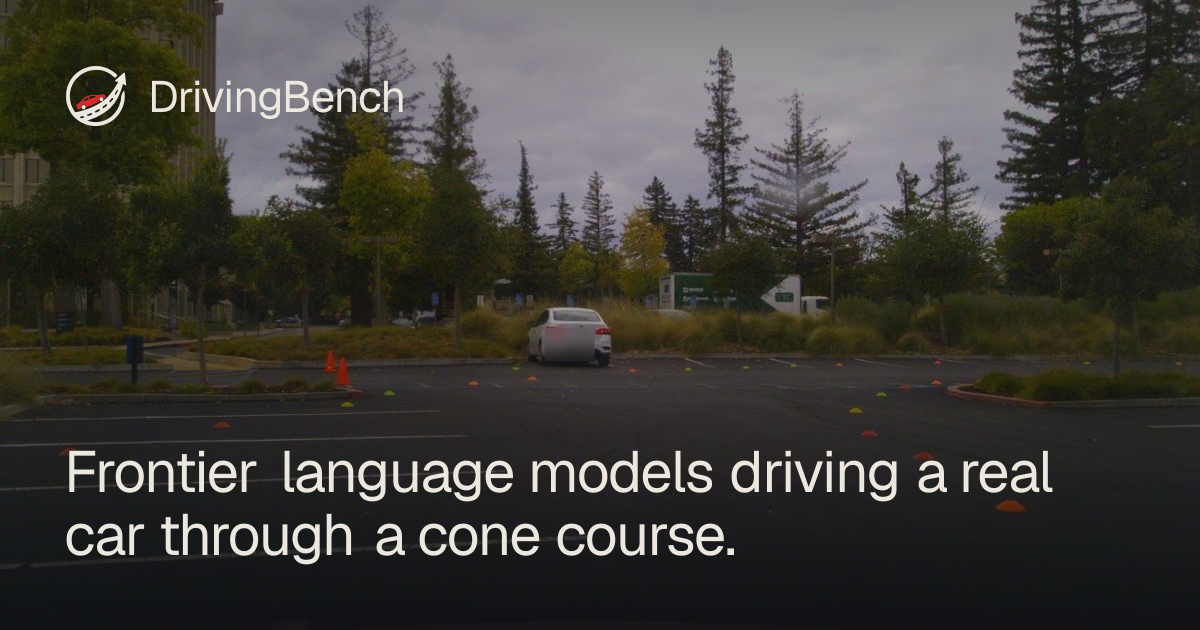
GPT-6 Astra has gained the ability to drive a car
DrivingBench puts frontier models in command of a real Toyota Corolla's steering, throttle, and brakes around a cone course.
Why it mattersDrivingBench is a physical-world agentic benchmark with full cost and token data per attempt.

From Ingestion to Agents: How AI Teams Build on Document Intelligence — Adit Abraham, Reducto
Reducto's Adit Abraham shares lessons from parsing billions of PDFs for agentic pipelines, including token-level OCR correction instead of regenerating pages, splitting table formats by complexity.
Why it mattersExplains specific, tested techniques for feeding agents reliable document data, where bad parses now compound across every agent step instead of costing one RAG answer, directly useful for anyone building document-processing agents.
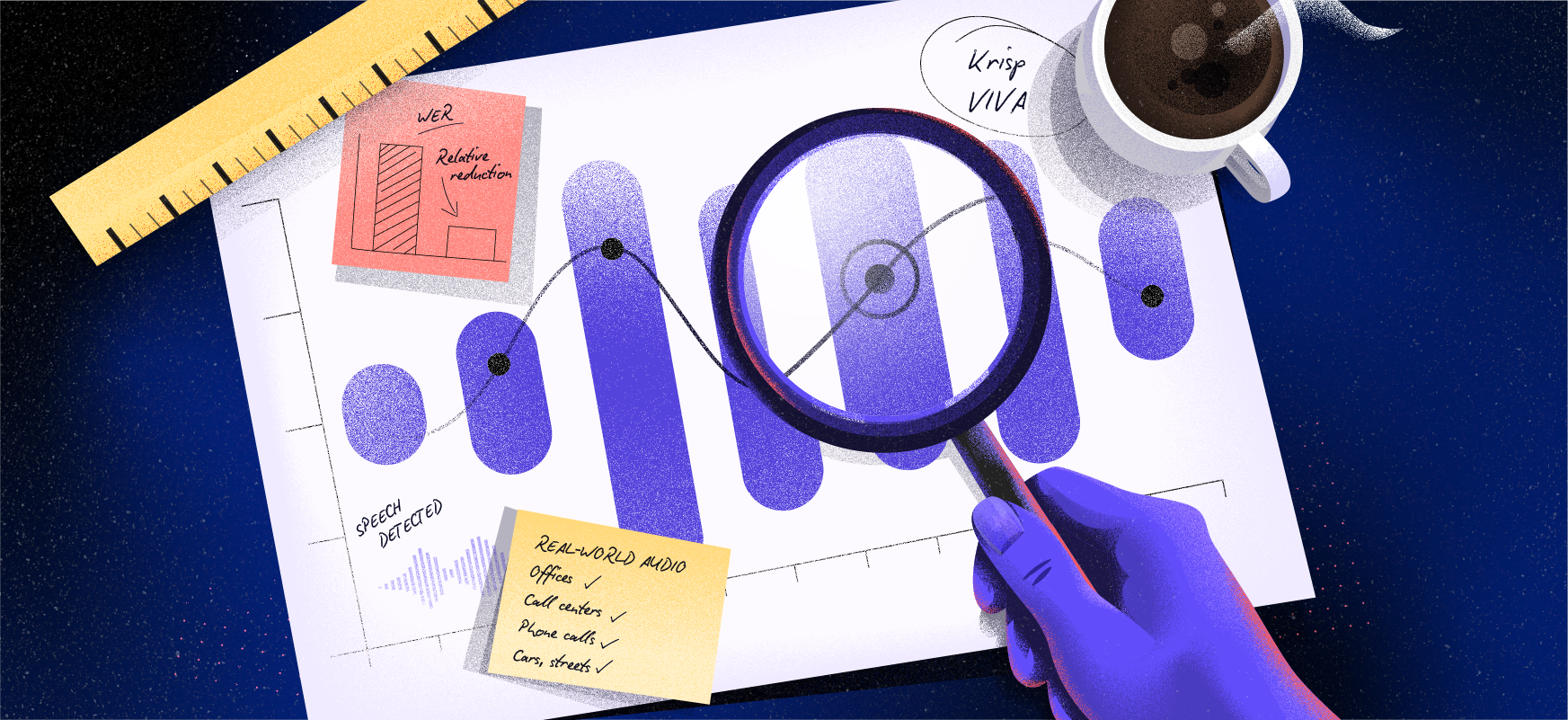
Open benchmark for STT when a second person is talking (265 recordings)
Why it mattersKrisp open-sources a 265-recording benchmark showing modern STT engines still garble transcripts when a second voice is present, with voice isolation cutting WER by up to 73% across 11 engines.
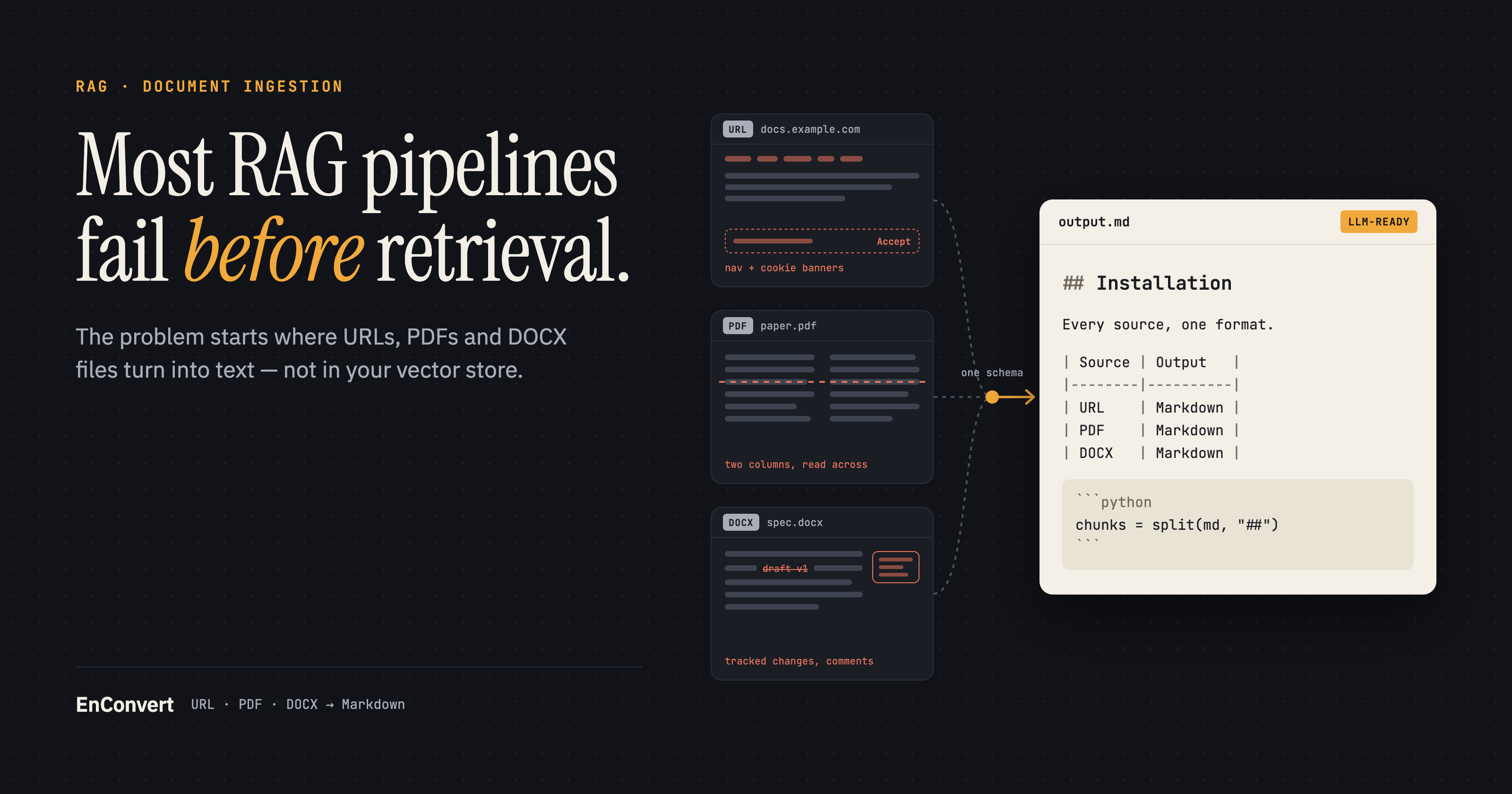
The RAG ingestion layer problem: what it takes to build one
Why it mattersA deep look at why RAG pipelines fail at ingestion, not retrieval: reconciling inconsistent output from URL scraping, PDF layout parsing, and DOCX XML into one clean Markdown schema.

Modality Misalignment and Originality Attribution in Short-Form Video — Aditya Gautam, Meta
Meta's Aditya Gautam explains a three-agent pipeline, perceiver, reviewer.
Why it mattersDescribes a concrete, production-scale multi-agent architecture, including training details like DPO loops with in-house LLM judges, for a hard, ambiguous classification problem operating at internet scale.

🔬Bio-security is an AI Arms Race - Eric Nguyen (CEO, Radical Numerics)
Radical Numerics CEO Eric Nguyen discusses the Omni genome model versus Evo 2, disease-variant prediction benchmarks, emergent biological structure.
Why it mattersExplains how biological design models gain emergent capability and why sequence-based biosecurity screening may fail against function-preserving redesigns.

Skill issue: stop deploying vision language models, use them with Skills — Merve Noyan, Hugging Face
Hugging Face's Merve Noyan lays out a toolkit that has a coding agent label images with an open VLM, reconcile two smaller VLM judges.
Why it mattersGives a reproducible, cheap ($3-4) recipe for turning a coding agent plus open VLMs into a trained, real-time object detector, plus concrete pitfalls like agent-introduced label bias for anyone automating dataset labeling.
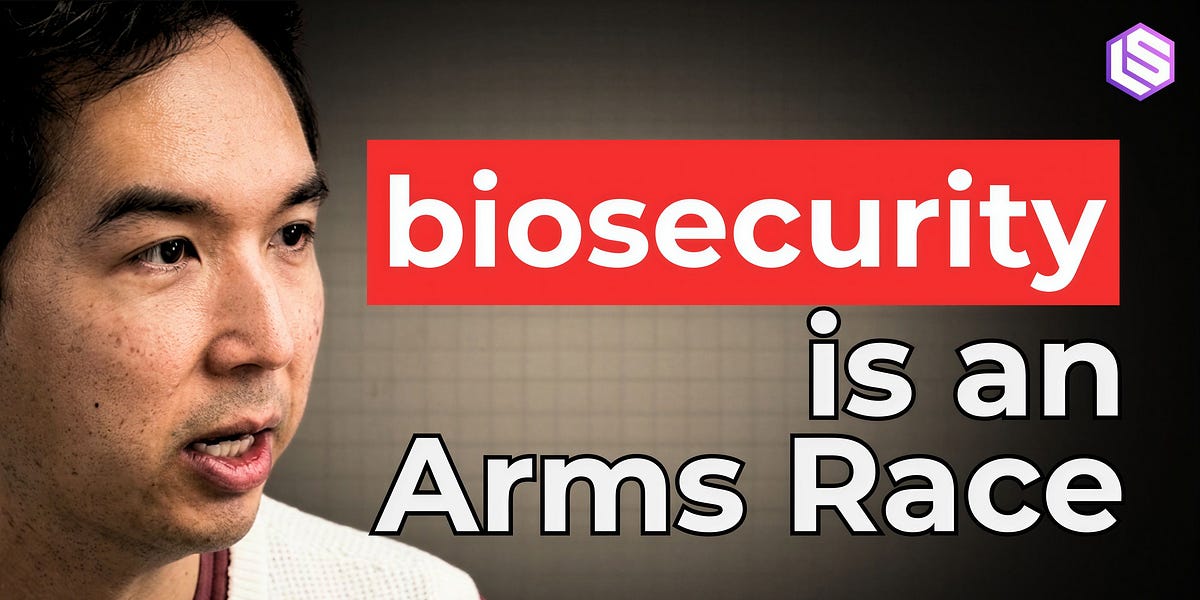
🔬Bio-security is an AI Arms Race - Eric Nguyen (CEO, Radical Numerics)
Radical Numerics' Eric Nguyen argues, citing the OpenAI-to-Hugging Face attack, that open-weight models are becoming essential defensive infrastructure against AI-enabled biological and cyber threats rather than just amplifying risk.
Why it mattersArgues, using the OpenAI-to-Hugging Face attack as a concrete case, that open model weights strengthen defenders' capabilities as fast as they raise attacker capability, a load-bearing claim for open-vs-closed model policy debates.
**Know Who Spoke When: Build Real-Time, Multi-Speaker AI with NVIDIA Nemotron 3 Diarization**
NVIDIA released Nemotron 3 Diarization, an open-weight 100M-parameter speaker-attribution model ranked #1 on VoiceArena's benchmark, supporting up to eight speakers in real-time streaming or offline modes.
Why it mattersAn open-weight, 100M-parameter diarization model with public benchmark results gives builders of voice agents and transcription pipelines a concrete, deployable option for speaker attribution.

Building the Document Context Layer for AI Agents — Jerry Liu, LlamaIndex
Jerry Liu explains why PDFs resist agent parsing and details LlamaIndex's document context layer.
Why it mattersOffers agent builders a specific framework (parsing, semantic storage, repeatable workflows) and a benchmarked way to choose between cheap and frontier parsing models for real document pipelines.
OpenAI extends cyber access to Ukraine for civilian defense
OpenAI is extending Daybreak, its AI-assisted cybersecurity program, to Ukraine's government to help defend civilian infrastructure, a concrete expansion of access to a security-focused AI capability.
Why it mattersOpenAI's Daybreak cyber-defense program is now available to Ukraine's government, extending AI-assisted defense tooling access for protecting civilian infrastructure.
Claude Code reads AGENTS.md only when telemetry is on
Testing shows Claude Code 2.1.277+ gates AGENTS.md loading behind a remote feature flag; disabling telemetry or nonessential traffic silently skips the file with no warning.
Why it mattersIf you disable telemetry in Claude Code, your AGENTS.md is silently ignored with no warning; a one-line `@AGENTS.md` CLAUDE.md restores it reliably regardless of the flag.

Alibaba's Qwen Intelligence bundles three mobile agents: a task-planning agent topping MobilePA-Bench, an API-first Mobile-Use agent hitting 90%+ end-to-end task success, and a creative agent generating images in 3 seconds. Four new benchmarks are open sourced.
Why it mattersGives engineers open benchmarks for mobile agent planning, cross-app execution, and safety, plus a reference API-first/GUI-fallback architecture for on-device task automation.
Tokens too cheap to meter
Argues.
Why it mattersReframes cost planning for AI-heavy products: if tokens keep getting cheaper faster than expected, architecture and pricing decisions built around per-token caution may become obsolete quickly.
Qwen's audio stack gets a full refresh: upgraded ASR, TTS and Realtime models plus two new ones, ASR-Next (multi-speaker, emotion-aware transcription) and TTS-Next (unified LM+diffusion voice/SFX generation). Prices drop up to 95% on ASR and 85% on Realtime.
Why it mattersCuts the cost of building voice agents and audio pipelines significantly while adding speaker-labeled transcription and single-pass voice-plus-sound-effects generation.

The next version of OpenClaw will use a small decision model to automatically choose whether to steer an in-progress agent turn or queue a new instruction, with support for local and ONNX-based decision models.
Why it mattersAutomates a fiddly agent-control decision (steer vs. queue) that currently requires manual judgment, using a lightweight local decision model instead of a full LLM call.

Jev in 25 Lines of Python
A tongue-in-cheek post strips the hype around a trendy classifier down to its actual mechanics.
Why it mattersShows how to build a fast, local classifier from any small LLM's token logits in about 25 lines, an alternative to calling a hosted classification API or training a dedicated model.

What Dropbox has learned from deploying AI at company scale
Dropbox describes what changed after rolling AI out company-wide.
Why it mattersA first-party account of what breaks when a company scales AI usage beyond pilots, useful for teams trying to translate raw model access into measurable productivity gains instead of just more output.

[AINews] Claude Opus 5.5, the new default model for AINews — and everybody cuts prices 40-50%
Latent Space's AINews team runs its own newsletter pipeline on both Claude Opus 5.5 and GPT-6 Sol, finding Opus 5.5's instruction-following and writing quality on long tasks decisive enough to migrate production use immediately.
Why it mattersA first-party, production-workload comparison of Opus 5.5 against GPT-6 Sol, showing a concrete case where writing quality and instruction-following differences were decisive enough to switch a live pipeline immediately.
Alisa's book of LLMs
Alisa Liu's public study notebook works through the modern LLM stack end to end.
Why it mattersAlisa Liu's public notebook derives the mechanics practitioners rely on, like the softmax+cross-entropy gradient, online-softmax numerics.
Qwen-Image-2.1 ranked #1 among open-source models in both the Image Edit and Text-to-Image Arenas, scoring 1367 points and landing just 3 points behind GPT-Image-1.5-high-fidelity overall.
Why it mattersSignals which open-weight image model currently leads community blind-vote benchmarks, useful for choosing a self-hostable image generation and editing backbone.
Vals AI's index now ranks Claude Opus 5.5 first, with Anthropic holding the top three spots; Opus 5.5 also became the first model to beat the reference score on the long-horizon agentic LM Training protocol.
Why it mattersGives an independent read on model rankings for agentic and coding-heavy work, including a first-of-its-kind benchmark result for long-horizon agentic training tasks.
An index of the vibe-coding frontier. Corrections welcome.