Intel
Page 13Anthropic's developer team shares a working playbook for Claude Opus 5.5: delegate full tasks with clear done-criteria, skip 'think carefully' since it always reasons first, and check in after long autonomous runs.
Shrewd – what I learned distilling LLM labels into local classifiers
A writeup on using GEPA to have LLMs generate training labels for small on-device classifiers, testing on public benchmark datasets and finding the approach helps more with weaker source models than with true frontier models.
Why it mattersIt reports a specific, counterintuitive finding on LLM-assisted label generation, that distillation quality gains shrink as the source model gets stronger, which matters for anyone building small task-specific classifiers.
Artificial Analysis extends its Controlled Voice Arena to 9 new languages, finding Cartesia's Sonic models lead most non-English leaderboards while Inworld's Realtime TTS-2 tops Mandarin.
StepFun's StepAudio 3 ASR tops Artificial Analysis's non-streaming speech-to-text leaderboard at 1.7% word error rate, though it transcribes slower and costs more per minute than several rivals.

Perplexity made GPT-6 Sol the default "Light" effort option in its Computer agent product, shifting which model handles low-effort agentic tasks by default.
Why it mattersMarks GPT-6 Sol as the new default lightweight model behind Perplexity Computer's low-effort tier, relevant to anyone relying on that product's default routing.
llm 0.36
The llm CLI's 0.36 release adds the newly launched gpt-6-sol and gpt-6-luna models, a supports_conversation flag for plugins that only handle single-turn prompts.
Why it mattersllm 0.36 adds gpt-6-sol and gpt-6-luna support and a supports_conversation flag that lets model plugins reject invalid multi-turn history, relevant to anyone building or using llm CLI plugins.

GitHub Copilot made OpenAI's GPT-6 Sol (balanced agentic coding model) and GPT-6 Luna (lightweight, lowest-cost tier) generally available across the Copilot app, CLI, and IDE.
Why it mattersAdds two new cost/capability tiers of GPT-6 to Copilot's model picker, giving developers a cheaper agentic-coding option and a lowest-cost small-task option.

OpenAI released GPT-6 Sol and Luna with broad quality gains and a permanent 50% cut to API pricing, plus a one-time banked usage reset for Plus, Pro, and Business subscribers.
Why it mattersOpenAI's GPT-6 Sol and Luna ship with a permanent 50% API price cut, materially changing the cost calculus for building on these models at scale.

Cognition added GPT-6 Sol and Luna to Devin. On FrontierCode 1.1, Sol matches GPT-5.6 Sol's score at 61% lower cost per task, and Luna beats GPT-5.6 Luna at about a quarter of the cost, under $0.10 per task.
Why it mattersConcrete cost-per-task and benchmark numbers help engineers pick cheaper models for coding-agent workloads without giving up accuracy.

A vibe-coded agent dashboard let an attacker extract its API key through an auth flaw, queuing and executing work even on rejected requests, burning about $600K in provider credits over three weeks; includes a concrete pre-deploy security checklist.
Why it mattersLays out a replicable failure pattern in agent dashboards, unauthenticated requests still queuing jobs a worker executes, and gives concrete checks to catch it before shipping.
Artificial Analysis benchmarks show GPT-6 Sol and Luna roughly halving cost per task versus GPT-5.6 while intelligence scores stay flat, with Sol improving and Luna regressing on the Coding Agent Index.
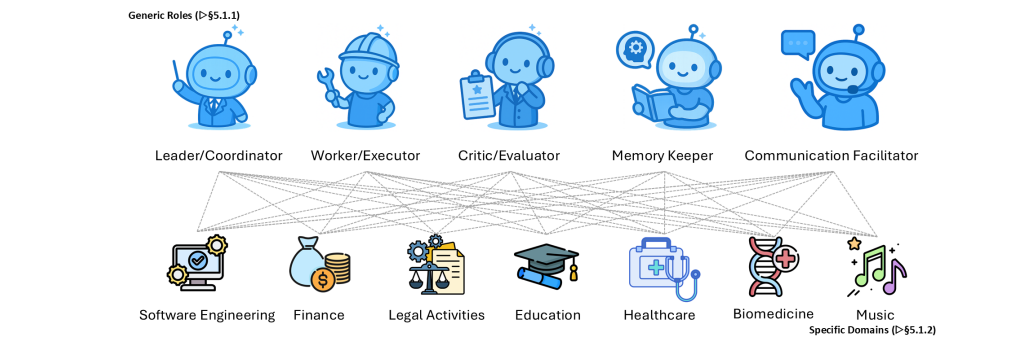
Notes on Agentic AI – A text-first guide for practicing engineers
A GitHub textbook pairing agentic-AI concept chapters with runnable, local-first Ollama code samples spanning tool-calling, RAG, memory.
Why it mattersIt's a structured, hands-on curriculum for building agents locally across the major frameworks, useful as a reference when picking between tool-calling, RAG, and multi-agent patterns.
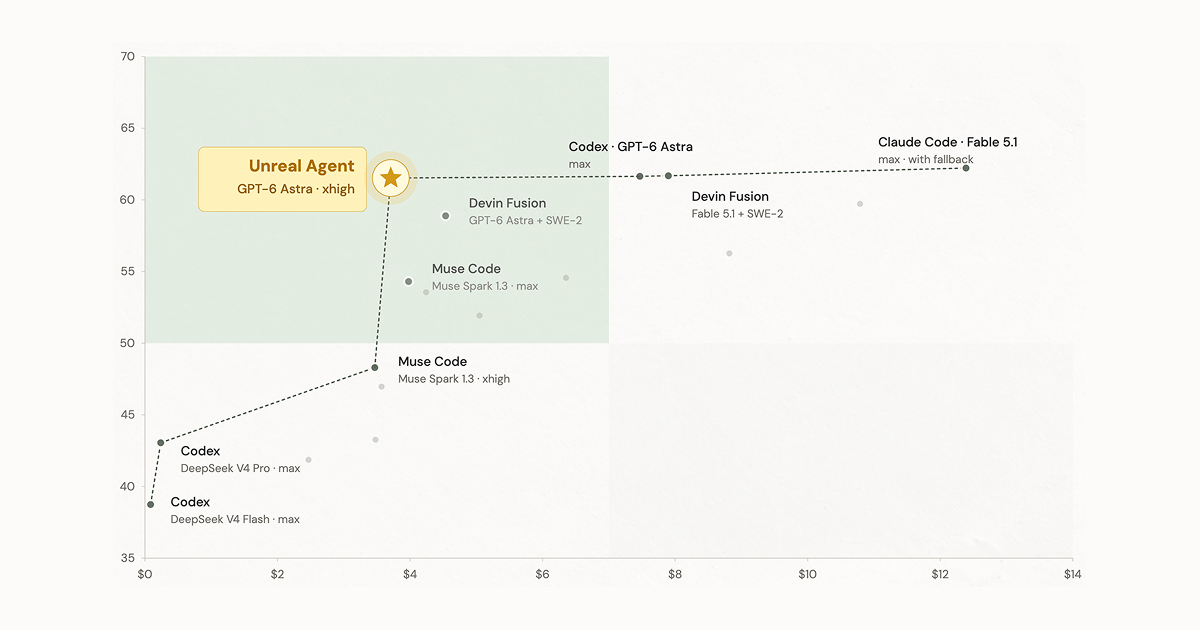
Unreal Agent
Unreal Labs details Unreal Agent, a harness that manages tool calls fully asynchronously so users can steer mid-task and the model can schedule overlapping work, claiming up to 40% lower cost than Codex on coding and science benchmarks.
Why it mattersDescribes a concrete harness architecture for cutting token overhead from tool-call bookkeeping and enabling non-blocking user steering, an alternative to CLI-first assumptions in SDKs like Claude's Agent SDK.
OpenAI Devs details GPT-6 Sol and Luna's benchmark results, showing near-parity with Claude Fable 5 on long-horizon coding tasks at far lower cost, plus rollout across Codex and ChatGPT Work.

OpenAI launches GPT-6 Sol and Luna, faster and cheaper models building on GPT-6 Astra's capabilities, with API prices 50% below GPT-5.6 promotional rates and improved caching efficiency.

StepFun's internal annotation and inspection tool is now public: correct a token and let the model continue, with token-probability views, decoding steering, and agent-trajectory labeling across text, image, audio and video.
Why it mattersonPanda gives teams a free, browser-based way to do token-level LLM data annotation and decoding-time debugging, a workflow StepFun says cuts annotation time roughly in half versus manual post-editing.

Ant Ling open-sourced the Ming-Image-0.1-Design family (6B parameters) plus two agent skills for UI design and image-to-editable-PPT conversion; the base model ranks #1 among open-weight models on Artificial Analysis's UI/UX Design leaderboard.
Why it mattersGives builders an open, benchmarked model plus ready-made agent skills for generating UI designs and converting images to editable presentations.
Cognition added Claude Opus 5.5 to Devin, where it now leads Cognition's FrontierCode 1.1 benchmark for mergeable, real-world engineering tasks at 65.3% on the Extended split, at a lower cost than the prior leader.
Why it mattersGives engineers a concrete benchmark and cost data point for choosing Opus 5.5 for autonomous coding-agent tasks over other frontier models.
Claude Opus 5.5 is now generally available in GitHub Copilot; GitHub's early testing found it matches Opus 5's task resolution using notably fewer steps and tokens, with faster recovery from errors on multistep tasks.
Why it mattersSuggests Opus 5.5 can match prior task performance at lower token/step cost with better multistep error recovery, relevant to teams budgeting agentic coding usage in Copilot.
Claude Opus 5 5
Anthropic's official Opus 5.5 release post.
Why it mattersClaude Opus 5.5 leads Anthropic's lineup on agentic coding and computer use, runs 40% cheaper and 30% faster than Opus 5, scores best-to-date on Anthropic's alignment audit, and comes with higher Claude Code usage limits.

Claude Opus 5.5 is now available in Cursor and tops CursorBench at 57.8% (Max) while costing 40% less per task than Opus 5, per Cursor's own benchmark data.
Why it mattersGives a direct comparison point for choosing a coding model in Cursor: better CursorBench score than Opus 5 at 40% lower per-task cost.
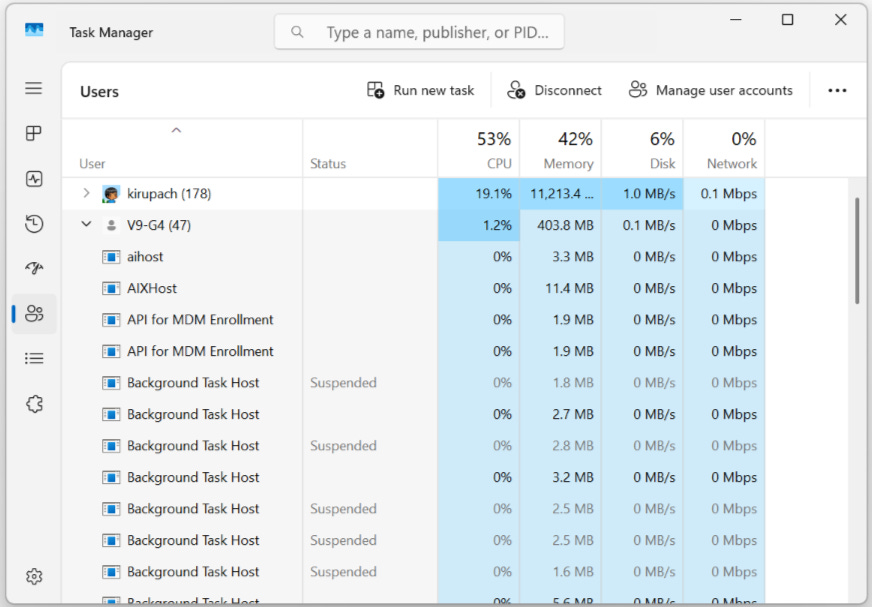
How will AI change operating systems? Part 2: Windows
Gergely Orosz interviews Microsoft's Windows team about native agent-identity primitives and a local MCP server registry planned for Windows.
Why it mattersWindows is building native agent-identity support and a centralized local MCP server registry directly into the OS, worth tracking for anyone choosing where to run agentic dev workflows.
llm-anthropic 0.29
The llm-anthropic plugin was updated to add support for Claude Opus 5.5, letting users of the llm command-line tool call the new model directly.
Why it mattersThe llm-anthropic plugin now supports Claude Opus 5.5, so users of Simon Willison's llm CLI can call it immediately with `llm -m claude-opus-5.5`.
Three researchers used AI models, including Claude Opus 5, to rediscover an unpatched image-processing bug lacking a CVE, reported it to OpenAI for a $6,500 bounty, and fixed in 14 hours, warning other companies on the same stack remain exposed.
Why it mattersResearchers used Claude Opus 5 to crack a HEIF-related bug that stumped an older model, netting a bounty from OpenAI.
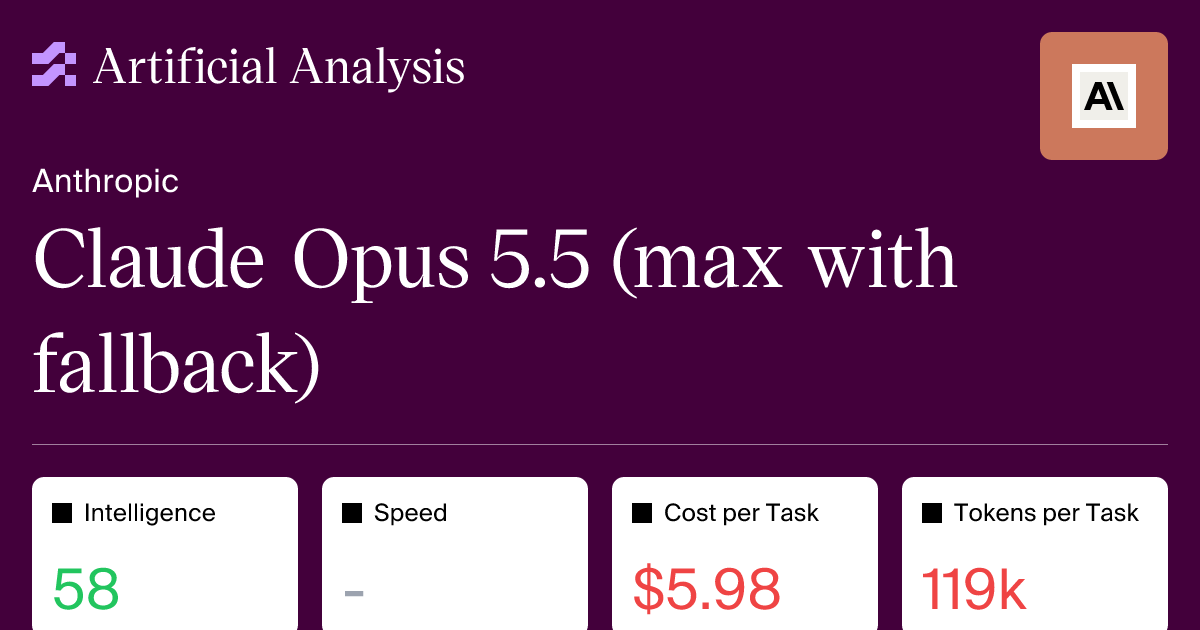
Claude Opus 5.5 Intelligence, Performance and Price Analysis (Max)
Artificial Analysis benchmarks Claude Opus 5.5 (max effort) at an Intelligence Index of 58, ranking near the top of 212 tracked models.
Why it mattersGives hard numbers on Claude Opus 5.5's benchmark score (58, near top of 212 models), cost per task ($5.98), and verbosity, helping engineers weigh its capability against its price for agentic workloads.
Grok 4.7 debuted on Mercor's APEX leaderboards at #5 on APEX-SWE (53.6%) and #13 on APEX-Agents (54.6%), matching the cost and latency tier of Gemini 3.7 Flash and GPT-5.6 Luna while leading them on software engineering tasks.
Why it mattersPlaces Grok 4.7 concretely against same-cost-tier competitors on independent SWE and agent benchmarks, useful for model selection at a given price point.
Perplexity Computer's Standard effort tier now runs Claude Opus 5.5, which edges out Claude Fable 5.1 on the WANDR benchmark while costing 67.6% less per task.
Why it mattersGives a concrete cost/performance data point for choosing agent effort tiers: Opus 5.5 now matches or beats the prior Standard model at roughly a third of the cost per task.
Artificial Analysis's independent benchmarking shows Claude Opus 5.5 topping its Intelligence Index at 58, matching GPT-6 Astra on Terminal-Bench 4.0, and leading agentic knowledge-work evals, alongside a 20% price cut and cheaper cache reads.
Why it mattersArtificial Analysis puts hard numbers on Opus 5.5: top Intelligence Index score, parity with GPT-6 Astra on Terminal-Bench 4.0, and a 20% price cut, giving engineers concrete grounds to compare frontier models.

Introducing Claude Opus 5.5
Anthropic ships Claude Opus 5.5, matching Fable 5.1 on most tasks, faster and more efficient than Opus 5, clearer in long sessions, generally available.
Why it mattersOpus 5.5 reaches roughly Fable 5.1 performance on most tasks while being faster than Opus 5, and usage limits rise on paid plans, changing which model suits long agent sessions.
StepFun's new open-source CLI runs the full coding loop, reading, editing, testing, shipping, from one interface, posting 80.9% on Terminal-Bench 2.1 and 73.3% on a 150-task long-horizon benchmark, plus one-command site publishing.
Why it mattersStep Code is a new open-source coding agent CLI with published long-horizon benchmark results, giving practitioners another MIT-licensed option to evaluate against Claude Code and Codex.
llm-typesafe 0.1a0
Simon Willison's new LLM CLI plugin wraps TypeSafe AI's Jev model to turn any prompt into a structured yes/no, multiple-choice, or scored answer.
Why it mattersllm-typesafe demonstrates getting reliable structured classification or scoring out of an LLM via the command line, useful for lightweight triage or routing pipelines.
I asked Meta’s Muse for its filesystem and it sent me 6.8GB
A researcher got Meta's Muse agent to archive and export a 6.8GB snapshot of its own runtime filesystem, including internal instruction files, memory logs, 113 subagent traces.
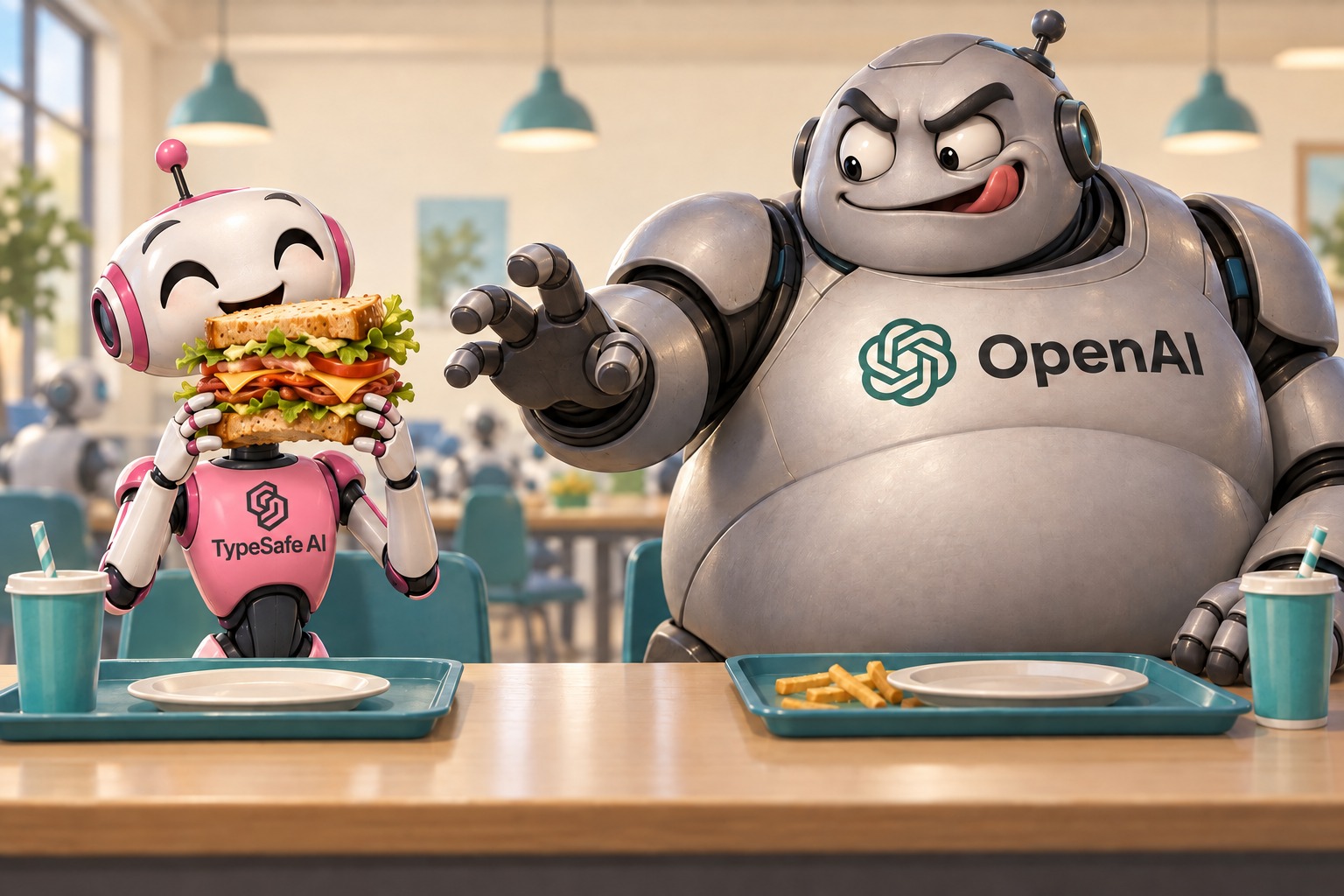
OpenAI is well positioned to fast-follow Jev
An analysis of TypeSafe's Jev, a classifier that reads calibrated logprob probabilities instead of generating text.
Why it mattersIt lays out concretely how logprob-based classifiers work and why a frontier lab folding that capability into its base models could undercut a standalone classifier product, a pattern worth watching for any tool built as a thin layer over model outputs.

Cloudflare now lets Cache Rules act on the Vary header directly: normalize known negotiation headers, forward exact values to origin, or bypass caching when variation is unpredictable, on every plan.
Why it mattersNew Cache Rules can normalize, pass through, or bypass caching based on the Vary header, giving finer control over cache correctness instead of debugging accidental cache fragmentation in production.
OpenAI GPT–6 Astra breaks Enigma message that has resisted solution since 2005
A researcher reports OpenAI's GPT-6 Astra autonomously broke WWII Enigma message MVUEH, unsolved since 2005, by writing its own Enigma simulator and Bombe software and finding a crib unaided.
Why it mattersAn AI model independently built Enigma-simulator and Bombe software and solved a cipher that had resisted cryptographers for two decades, a data point on autonomous long-horizon research capability.

Debating RSI, the US-China Gap, and Jaggedness with JS Denain of Epoch AI
Nathan Lambert and Epoch AI's JS Denain debate predictions for recursive self-improvement, the true size of the US-China capability gap, whether distillation explains it.
Why it mattersEpoch AI's JS Denain and Nathan Lambert debate predictions for recursive self-improvement, whether distillation explains the US-China model gap, and what current frontier post-training recipes actually involve.

The Best Models Still Reason Like Toddlers — Andrew Dai, Elorian
Elorian's Andrew Dai argues frontier multimodal models hallucinate spatial answers from memorized patterns rather than perceiving images.
Why it mattersPoints builders of vision-grounded agents to a concrete gap between model 'understanding' and true visual reasoning, and argues current benchmarks (low-res images, answerable-without-image exams) mask the problem.

Introducing Worker Previews: isolated preview environments for every change your agent makes
Cloudflare launched Worker Previews.
Why it mattersCloudflare's Worker Previews give every git branch its own production-like environment (config, state, observability, URL), letting coding agents test larger changes before they reach production without slowing them down.
Kimi's rebranded browser extension (formerly WebBridge) chats from your sidebar to navigate sites and fill forms, and lets you record repetitive tasks once as a reusable skill for the agent to replay.
Why it mattersKimi's browser extension turns one-off browsing tasks into reusable skills the agent can replay, useful for anyone automating repetitive web workflows with an LLM agent.

AI Has No Wisdom and Neither Will You
This essay argues that AI can't learn what makes code maintainable because reinforcement learning rewards are immediate while bad architecture's costs surface months or years later.
Why it mattersArgues concretely that AI models can't learn code maintainability because RL reward signals are immediate while bad architecture only shows its cost months or years later, a specific mechanism for why teams that stop reading AI-written code accumulate unmaintainable systems.
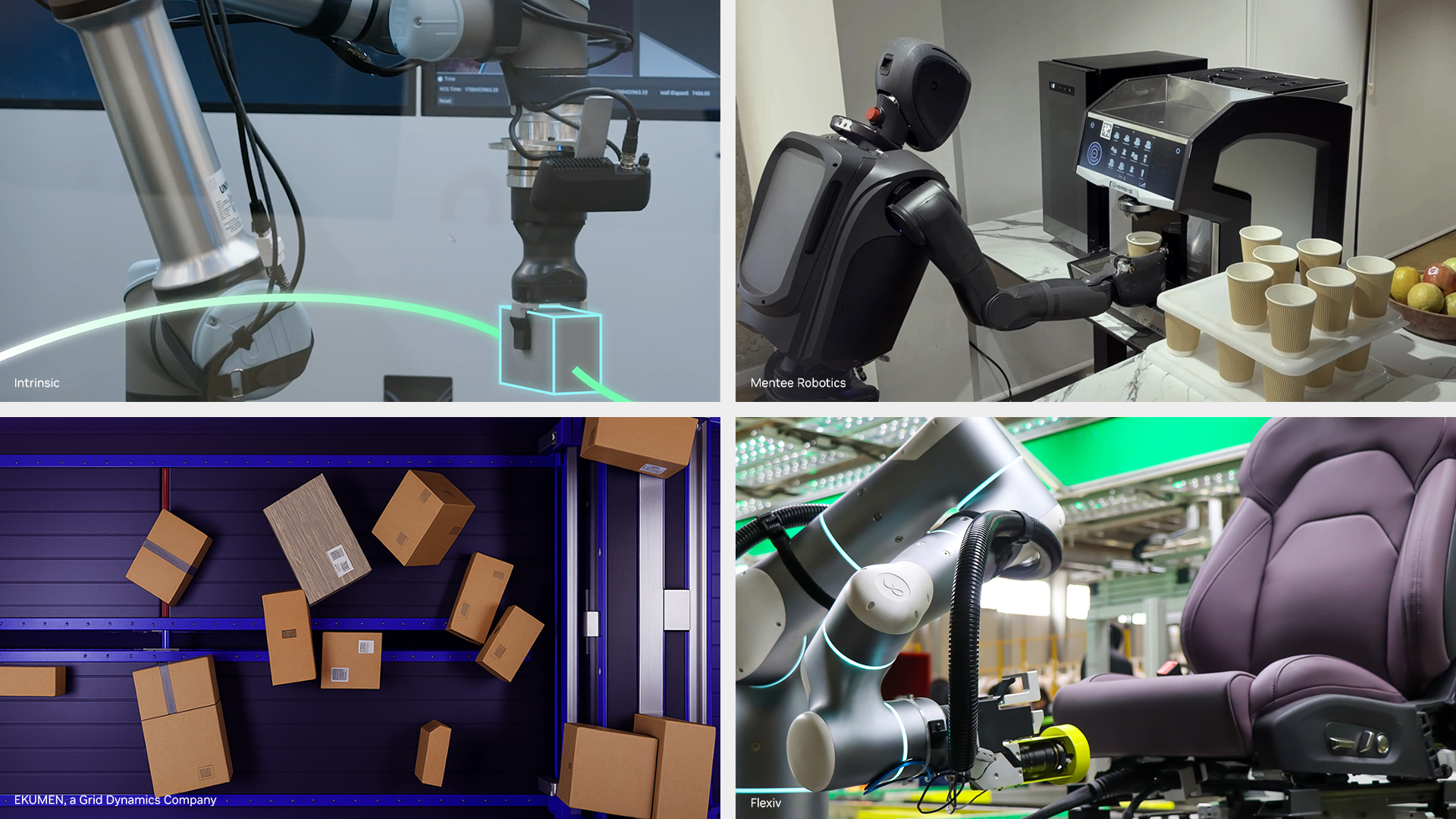
NVIDIA Isaac ROS 5.0 Advances Agentic, Open Source Robotics Development
NVIDIA's Isaac ROS 5.0, launched at ROSCon, adds agentic development workflows plus support for ROS Lyrical and Ubuntu 24.04, aiming to let AI agents and humans jointly build robotics applications.
Why it mattersIsaac ROS 5.0 adds agentic development workflows and updated platform support (ROS Lyrical, Ubuntu 24.04) for the ~1.3 million ROS developers, changing what AI-assisted robotics tooling is available today.

OpenRouter data shows a new model launch mainly cannibalized flash-tier models across labs, and nearly half of its users on the platform hadn't touched any model the week before its launch.
Why it mattersReal usage data showing a new model launch reactivated a large share of dormant OpenRouter users and displaced flash-tier competitors, useful for tracking market shifts in model choice.

Why OpenAI and Anthropic Won't Win Finance
Rogo cofounder Gabe Stengel on AI agents doing deal analysis, presentations, and transaction coordination in finance, how a vertical platform competes with OpenAI and Anthropic.
Why it mattersPresents the case that vertical agent products with deep domain context can beat general lab offerings, with details on fleets of agents and a company-wide knowledge layer.
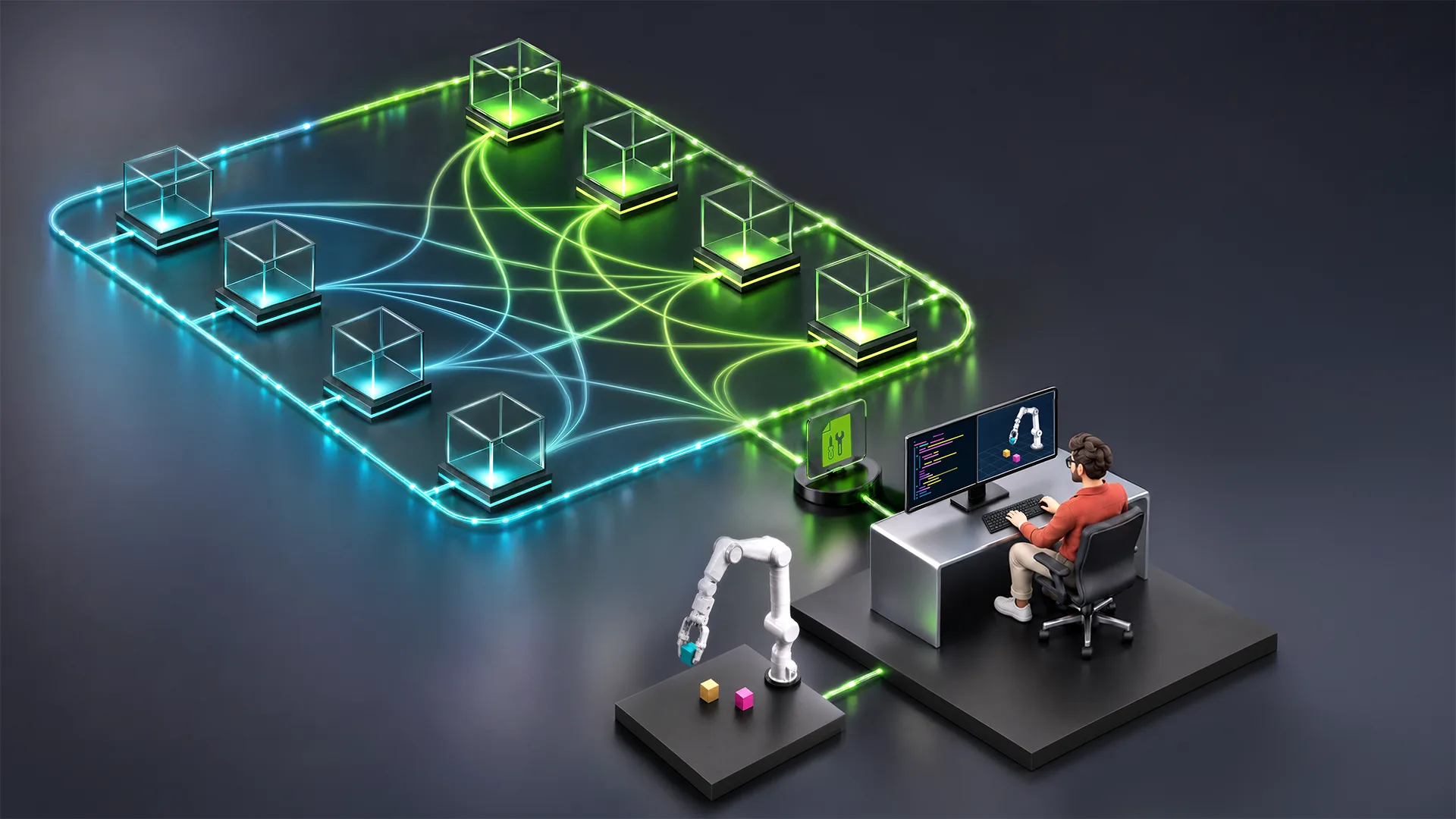
Accelerating a ROS 2 Node with an AI Agent and NVIDIA Isaac ROS
NVIDIA walks through using an AI coding agent with a custom 'skill' to migrate a ROS 2 node to CUDA-backed zero-copy buffers, then verifies the result with Nsight Systems traces.
Why it mattersShows a coding agent performing a nontrivial, verifiable systems-level refactor (adding zero-copy GPU transport) rather than boilerplate generation, using a skill-plus-profiler verification loop worth adapting to other codebases.
Kimi's browser extension (formerly WebBridge) lets you chat from the sidebar to navigate sites and fill forms, and record a workflow once to save as a reusable skill the agent replays later. Live now on Kimi's site and the Chrome Web Store.
Why it mattersA browser agent that can record a workflow once and replay it as a skill turns repetitive browser tasks into one-time setup work, extending agent automation beyond the terminal into everyday web use.

Tencent's Hy Image 3.5 preview adds text-to-image and image-to-image generation up to 2K resolution with a reported 30% human-eval win rate over 3.0, priced at $0.024 per image via its cloud API.
Why it mattersHy Image 3.5 gives builders a cheap ($0.024/image), API-accessible text-to-image and image-to-image model with a quantified quality jump, useful when evaluating options for image-generation pipelines.
Can gzip be a language model?
This piece builds a working toy language model entirely out of gzip's DEFLATE compressor and beam search.
Why it mattersBuilding a working beam-search text generator out of gzip's DEFLATE window makes the compression-prediction equivalence behind language modeling concrete: any compressor with a good probability model can generate plausible text.
Qwen-Image-2.1, Alibaba's unified image generation and editing checkpoint, ships with day-zero OpenVINO optimization from Intel, letting developers run it efficiently on Intel CPUs and NPUs right away.
Why it mattersDay-zero OpenVINO support means Qwen-Image-2.1 runs efficiently on Intel CPUs and NPUs immediately at release, so builders can deploy an open generation-and-editing model without waiting on a separate optimization pass.

A Governance-Aware Large Language Model Orchestrated Agentic Digital Twin for Transmission System Operator Control Room Decision Support
A governance layer for LLM-orchestrated grid-control agents that restricts models to whitelisted tools, enforces step budgets, requires operator approval for side-effecting actions.
Why it mattersA concrete pattern for constraining agent tool use in a high-stakes setting: whitelisting, step budgets, human approval gates, and audited number provenance, applicable to any agent that needs guardrails beyond prompting.

When Who You Are Can Change the Code You Get: A Study of Persona-Induced Bias in LLM Code Generation
A UBC-led study of 35,000+ LLM-generated programs across 18 demographic personas finds demographic markers leak into up to 65% of responses and 70% of reasoning traces.
Why it mattersShows persona or demographic cues in a coding prompt measurably change code quality and security outcomes even when irrelevant to the task, a concrete bias risk for any coding assistant that personalizes to user identity.
An index of the vibe-coding frontier. Corrections welcome.