Intel
Page 19
Register Bias in Complexity-Based Large Language Model Routing
An analysis of complexity-based LLM routing finds non-standard English registers (African American English, second-language writing) get sent to lower-capacity tiers because they read as shorter and simpler, not because the query is easier.
Why it mattersIf your product routes queries to cheaper models based on estimated complexity, this identifies a specific, measurable bias against non-standard English speakers baked into that routing signal.

NeMo Data Designer: An Extensible Framework for Multimodal Synthetic Data Generation
NVIDIA's NeMo Data Designer is an open-source framework for multimodal synthetic data generation with a declarative column-based config, plugin system.
Why it mattersGives teams building training or eval datasets a reusable, inspectable config format for generating text, code, structured, and image data instead of one-off scripts.

Not All Agents Are Equal: Code Quality and Post-Merge Maintenance Across Five Autonomous Coding Agents in the Wild
A study of 37,623 provenance-labeled pull requests from Codex, Devin, GitHub Copilot, Cursor, and Claude Code (plus a human baseline) finds code quality, revert rates.
Why it mattersGives concrete, vendor-specific numbers on coding-agent code quality and post-merge maintenance instead of treating 'AI-generated code' as a single category.

EvolveTrade: Experience-Driven Policy Refinement for Self-Evolving LLM Trading Agents
EvolveTrade treats an LLM trading agent's system prompt as a text policy that a separate Policy Agent rewrites after each interval using decision traces and portfolio outcomes, improving Sharpe ratio and returns over static-prompt baselines across market regimes and two LLM backbones.
Why it mattersDemonstrates a concrete self-evolution technique, refining the system prompt as an updatable policy from outcome feedback, that generalizes beyond trading to any tool-using agent needing to adapt strategy without retraining.

From Pixels to Pairs: A Comprehensive Benchmark of LLM-Based Key-Value Extraction in Noisy Document Settings
A benchmark tests open-source LLMs (Gemma, Mistral, Qwen2.5, LLaMA 3, DeepSeek) on key-value extraction from FUNSD, CORD.
Why it mattersShows LLM document-extraction quality holds up on clean text but degrades sharply once real OCR noise enters the pipeline, worth testing before shipping document AI features.

A Study on the Impact of Natural Language Differences in Prompts on Automatic Code Generation Using LLMs
Testing seven LLMs, including GPT-4o and GitHub Copilot, on AtCoder, LeetCode, and BigCodeBench problems posed in English, Japanese.
Why it mattersIf your team prompts coding models in a non-English language, this quantifies the accuracy cost of that choice across multiple model families and benchmarks.

A Large-Scale Empirical Study of Quality Assurance Practices and Gaps in AI Agents
A study of 157 open-source LLM agent projects finds QA coverage concentrates on basic functionality and high-risk actions while safeguards are applied inconsistently and multi-step tool-use failures go largely untested.
Why it mattersMaps out where current agent testing practices fall short, a useful checklist for deciding what to actually test before shipping an autonomous agent.

A Study of the Reliability of Agentic AI-Generated Programs
Fuzz-testing compares agentic-AI-rewritten versions of ten classic Linux utilities against current human-maintained code, finding the AI versions typically as reliable, or more reliable.
Why it mattersA concrete, adversarially tested data point against the assumption that AI-generated code is inherently less robust than human-written code, at least for well-scoped utility rewrites.

GraphEcho: Structural Redundancy and Evidence Provenance in LLM Graph Agents
GraphEcho benchmarks LLM graph agents on evidence use, finding they conflate repeated exploration paths with independent corroboration.
Why it mattersReveals a concrete failure mode in graph-based agent reasoning: agents can learn to stop repeating paths while still missing distinct evidence they need, relevant to anyone building RAG or multi-hop agent pipelines.

An Empirical Evaluation of Cost-Efficient Large Language Models on Algorithmic Programming Tasks
Testing three cost-efficient LLMs on 992 algorithmic Java Spring Boot tasks finds structural conformance near-ceiling but only 12.9% of returned answers were correct.
Why it mattersWarns against trusting cheap models for enterprise codegen based on 'it compiles and looks right' checks alone; correctness and structure diverge sharply here.
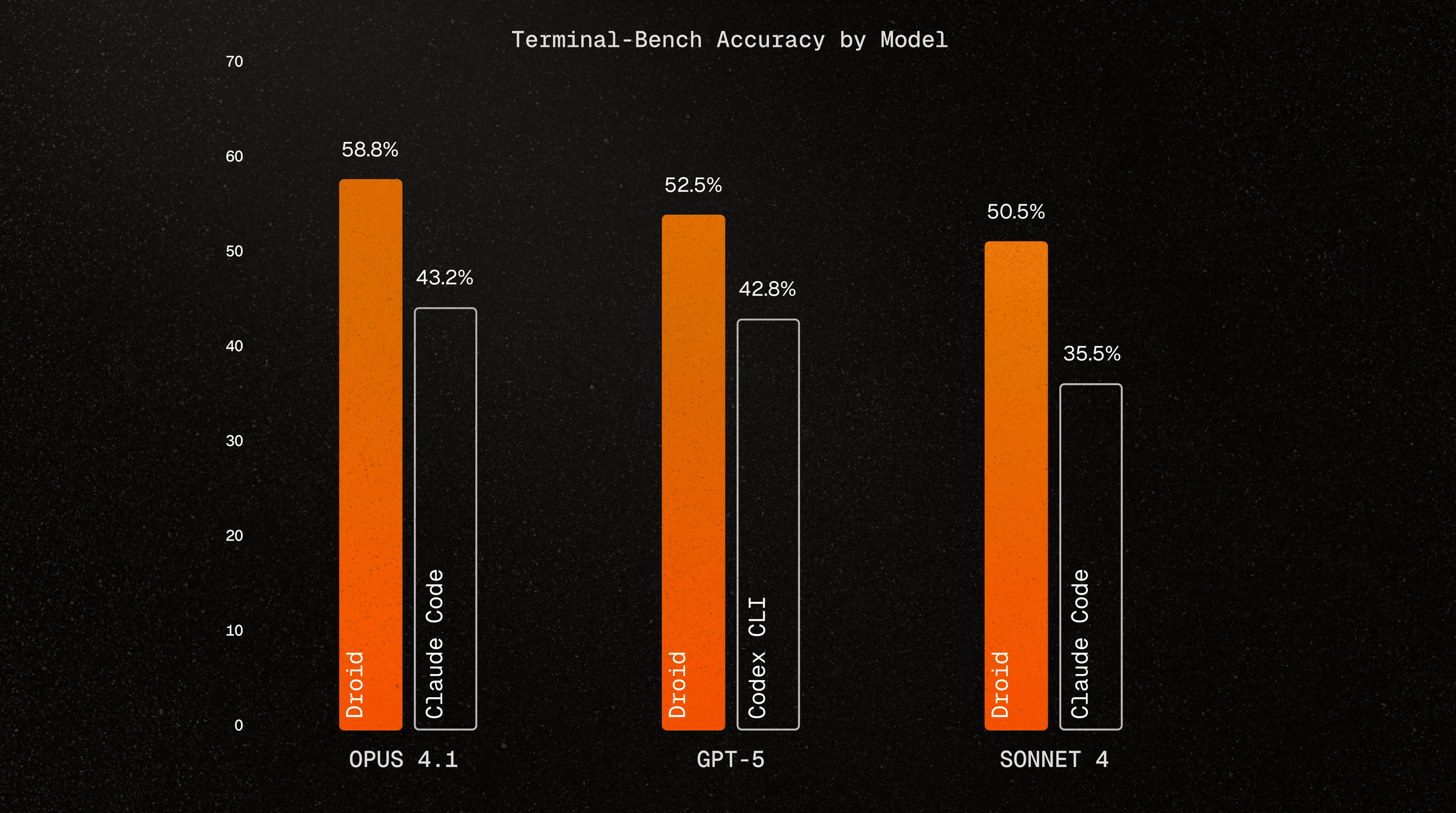
Terminal Bench
Factory's Droid benchmarks show its model-agnostic agent scaffolding beat labs' own CLIs on Terminal-Bench across every model tested.
Why it mattersSupports investing in agent harness quality over always reaching for the priciest model, since a well-designed scaffold on a cheaper model outperformed weaker scaffolds on more expensive ones.
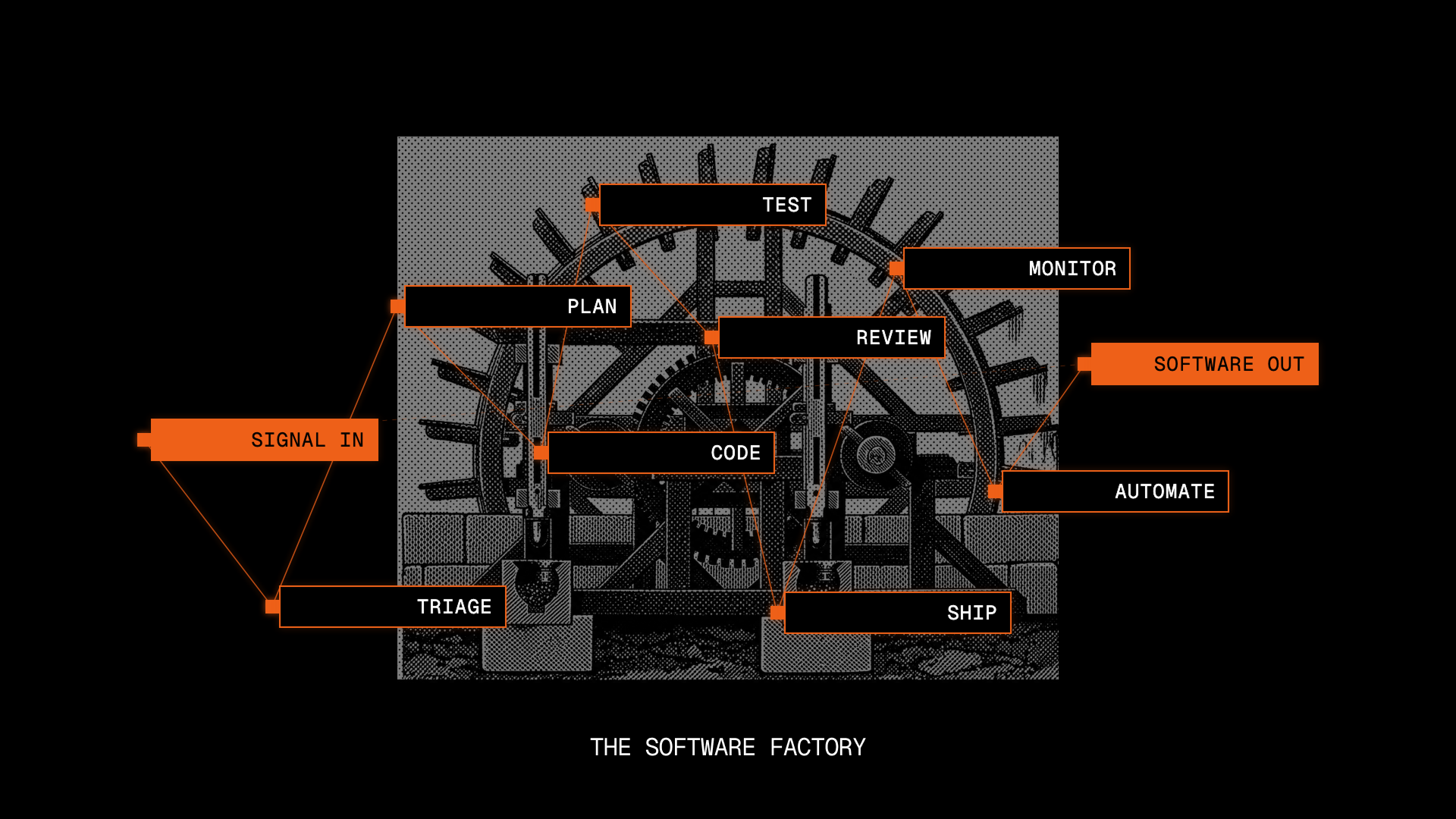
Software Factory
Factory describes its shift from single coding agents to 'software factories,' introducing Missions for long-horizon multi-agent workflows and Factory Desktop for full local-machine access, built around model-independent routing and self-improving feedback loops across the SDLC.
Why it mattersSignals coding-agent platforms moving from single-task assistants toward standing multi-agent systems that own more of the development lifecycle, which changes what teams should expect to delegate.

Wiki
Factory's AutoWiki generates and refreshes a structured, source-grounded wiki for a repository through a multi-agent pipeline (survey, plan, generate, capture, publish).
Why it mattersCuts onboarding time on unfamiliar codebases and gives coding agents a documentation layer generated directly from source rather than stale hand-written docs.

Using Linters To Direct Agents
Factory lays out a taxonomy of lint rules (grep-ability, glob-ability, architectural boundaries, security, testability, observability) meant specifically to give coding agents deterministic, machine-checkable feedback instead of vague natural-language conventions.
Why it mattersGives a concrete way to encode AGENTS.md conventions as enforceable, autofixable rules so agents can self-correct against CI instead of requiring constant human review.

Working With Droid In The Desktop App
Factory's Droid desktop app adds in-app previews for documents, live websites, and full diffs, plus a design mode for commenting directly on the element you want changed.
Why it mattersFactory's desktop app now lets you preview and comment directly on what Droid produces (documents, live sites, diffs) instead of switching tools, closing the review loop for delegated coding work.

What Droid Searches
Factory had its Droid agent analyze 780,000 of its own web search and fetch calls, finding three-quarters of queries are software-development related.
Why it mattersEmpirical data on what coding agents actually look up outside the codebase, useful for deciding what documentation or retrieval tools are worth investing in for agent workflows.
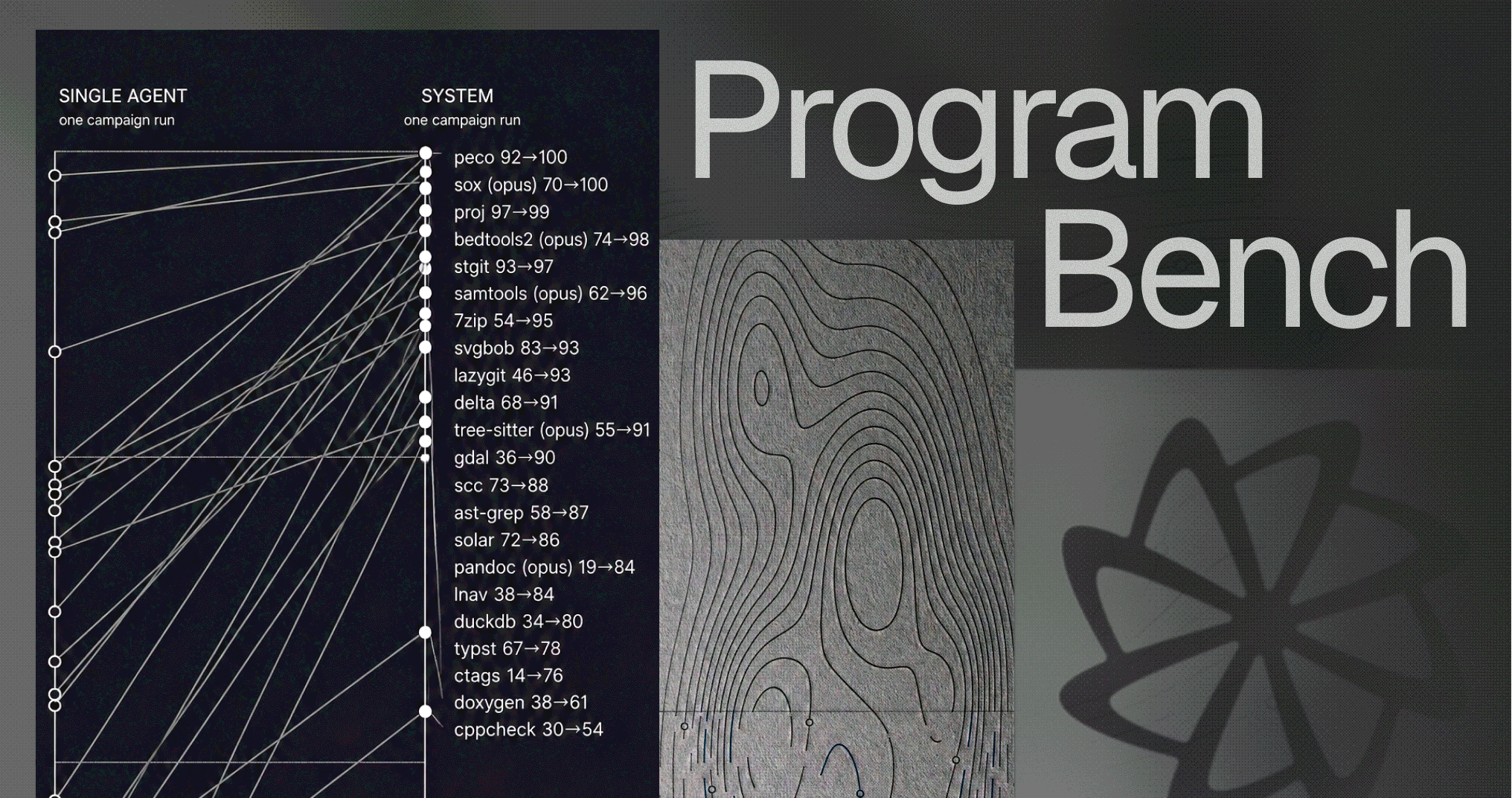
What It Takes For Coding Agents To Complete Large Software Tasks
Factory compared single-agent vs multi-role systems rebuilding programs like gdal and 7-Zip from black-box behavior alone.
Why it mattersShows a concrete architectural fix for the core failure mode of long-horizon agent tasks: agents quietly declaring victory without a rigorous, externally-defined measure of what 'done' means.

Migrating the GitHub Copilot runtime to Rust, using Copilot
GitHub Engineering details rewriting the Copilot agent runtime (800k+ lines) from TypeScript to Rust primarily with Copilot CLI and the Copilot app, landing across 128 incremental PRs and cutting the effort from a team-year to a few months for one engineer.
Why it mattersShows a concrete, large-scale case of coding agents handling a full production language migration incrementally in main, with measurable team-size and time reduction plus major runtime performance gains.
Jev is now available on the @vercel AI Gateway
TypeSafe AI's Jev, a small evaluation model built for structured yes/no and classification decisions inside software rather than chat, is now available through Vercel's AI Gateway at $0.04 per million input tokens.
Why it mattersA cheap, purpose-built model for boolean/classification decisions inside application logic offers an alternative to routing every structured judgment call through a full chat-tuned LLM.
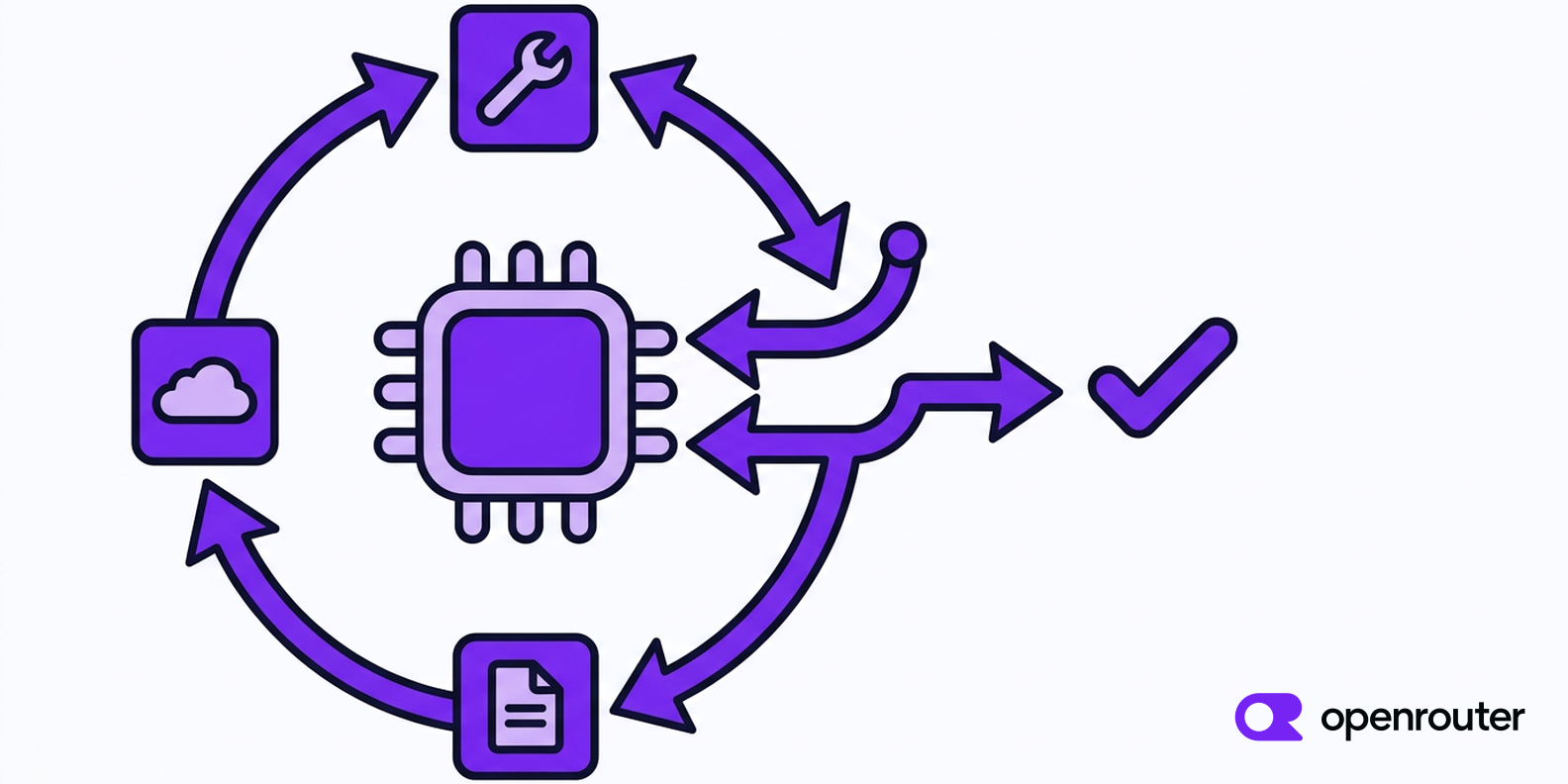
Build Tool Calling Agent Loop
A TypeScript walkthrough for building a tool-calling agent loop: executing tool calls by ID, capping iterations, handling repeated failed calls, and adding model fallback.
Why it mattersLays out the exact control-flow decisions (when to stop, how to cap repeated calls, how to attach fallback models) needed to build a reliable agent loop without a framework.
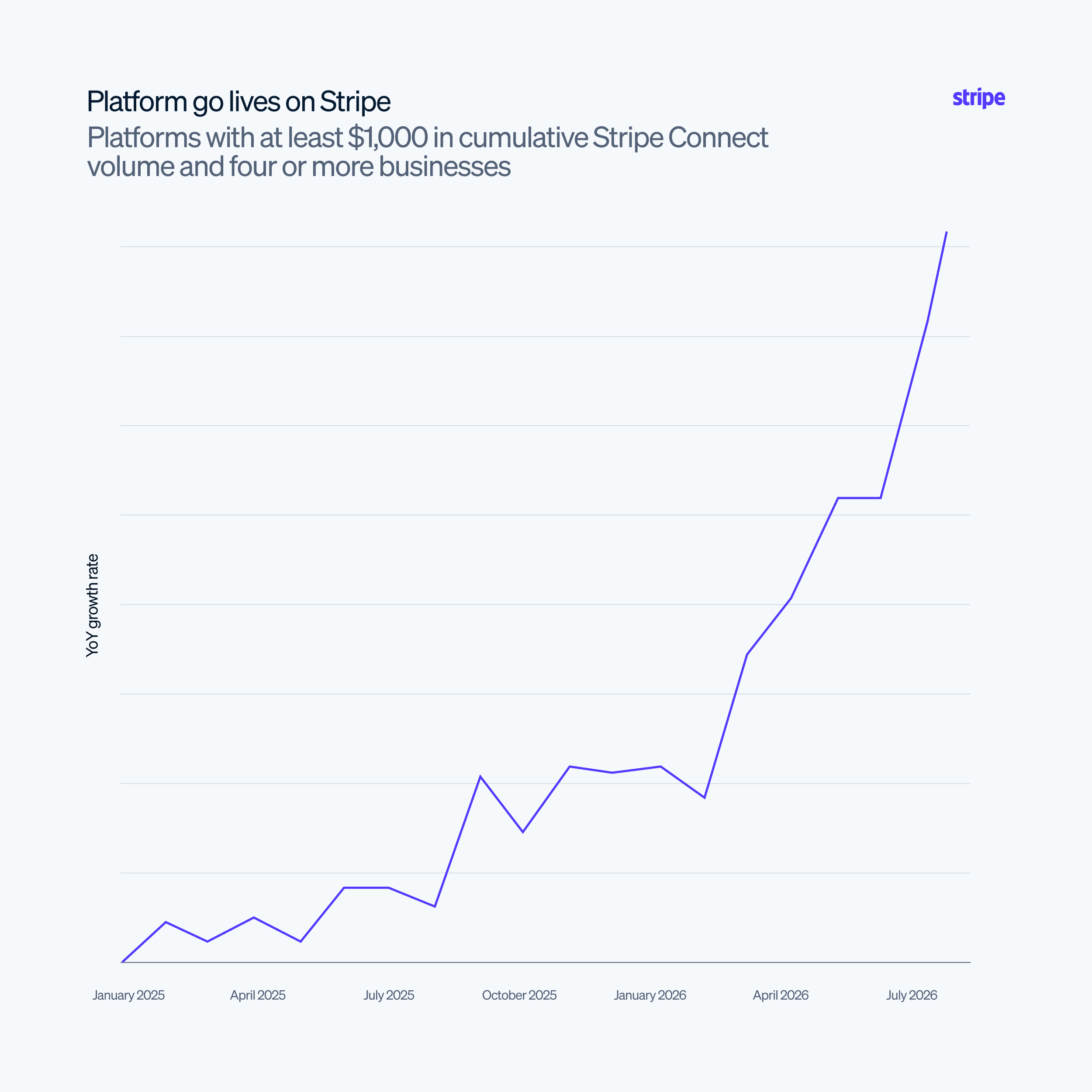
SaaS platforms are surging despite the SaaSpocalypse
Stripe's own payment data shows new SaaS platform businesses up over 180% year-over-year in the last three months, reaching $1M in volume faster than prior cohorts, countering the 'SaaSpocalypse' narrative around agentic AI.
Why it mattersStripe's payment data shows new SaaS platform businesses up over 180% year-over-year and reaching $1M in volume faster than before, real evidence against the theory that agentic AI is collapsing new software business formation.

GPT-Live 1 now available on AI Gateway
OpenAI's GPT-Live 1, a full-duplex voice model that can listen and speak simultaneously, is now on Vercel AI Gateway with client delegation to hand off reasoning to a separate text model mid-session.
Why it mattersFull-duplex audio removes turn-taking lag so users can interrupt naturally, and client delegation lets a lightweight voice session hand off complex reasoning to any text model on AI Gateway without breaking the conversation.
Helping agents break out of their sandboxes in a monitorable way
A write-up on an agent-sandbox monitoring service.
Why it mattersDescribes a concrete monitoring architecture (attested enclave + computational timelock) for detecting sandbox-escaping agent behavior, an approach distinct from honeypots that agents can learn to avoid, relevant to anyone building or securing agent sandboxes.

How to Use AI Agents to Prepare 3D Scenes for Simulation
NVIDIA details an agentic pipeline where Codex or Claude orchestrates specialized 'Hermes' subagents via NemoClaw to prep Blender scenes for robotics simulation.
Why it mattersThe pipeline shows a working pattern for a coordinator agent delegating to specialized tool-using subagents with a hard validation gate before handoff, a reusable architecture beyond just robotics scene prep.

Vals AI launched Terminal-Bench 4.0, 66 new terminal-based tasks (shipping a service, proving a theorem, training a GPU kernel) each estimated at 4 hours of expert work, graded strictly pass/fail via full verifier suites and averaged across three runs.
Why it mattersLonger, stricter terminal tasks with all-or-nothing verifier grading give a harder, more realistic signal of whether a coding agent can complete multi-hour real engineering work end to end.
HarnessTax: How Much Does the Harness Matter for Coding Agents?
HarnessTax benchmarks 21 model-harness pairs across Claude Code, Codex CLI.
Why it mattersQuantifies how much of a coding agent's benchmark score comes from the harness versus the underlying model, useful for anyone choosing or building an agent harness instead of assuming a specific one is required.
OpenAI published a framework setting criteria and timelines for disclosing model misalignment, even before behaviors are fully explained or fixed, alongside six initial reports from the last six months of training and evals.
Why it mattersOpenAI now commits to disclosing misalignment findings on a timeline even before they're fully explained or fixed, giving engineers a public trail of known failure modes to watch for in their own agent deployments.

Breaking the 1.58-bit Barrier for Ternary LLMs
Intel researchers found zeros make up to 51.5% of weights in ternary LLMs and built BITCOS, a bitmap-plus-sign-vector layout that beats standard five-trit packing on 26 of 29 tested models, yielding up to 1.27x faster GPU decode throughput.
Why it mattersOffers a concrete, hardware-validated technique for shrinking ternary LLM storage and speeding up inference on both CPUs and GPUs, directly useful for anyone deploying low-bit models.
DeepSeek V4.1 Flash NVFP4 released
NVIDIA released an NVFP4-quantized version of DeepSeek-V4.1-Flash, a multimodal Mixture-of-Experts model with 1M-token context.
Why it mattersA ready-made FP4 quantized checkpoint lowers the compute and memory cost of running DeepSeek's large multimodal MoE model, making it more practical to self-host at scale on current NVIDIA hardware.
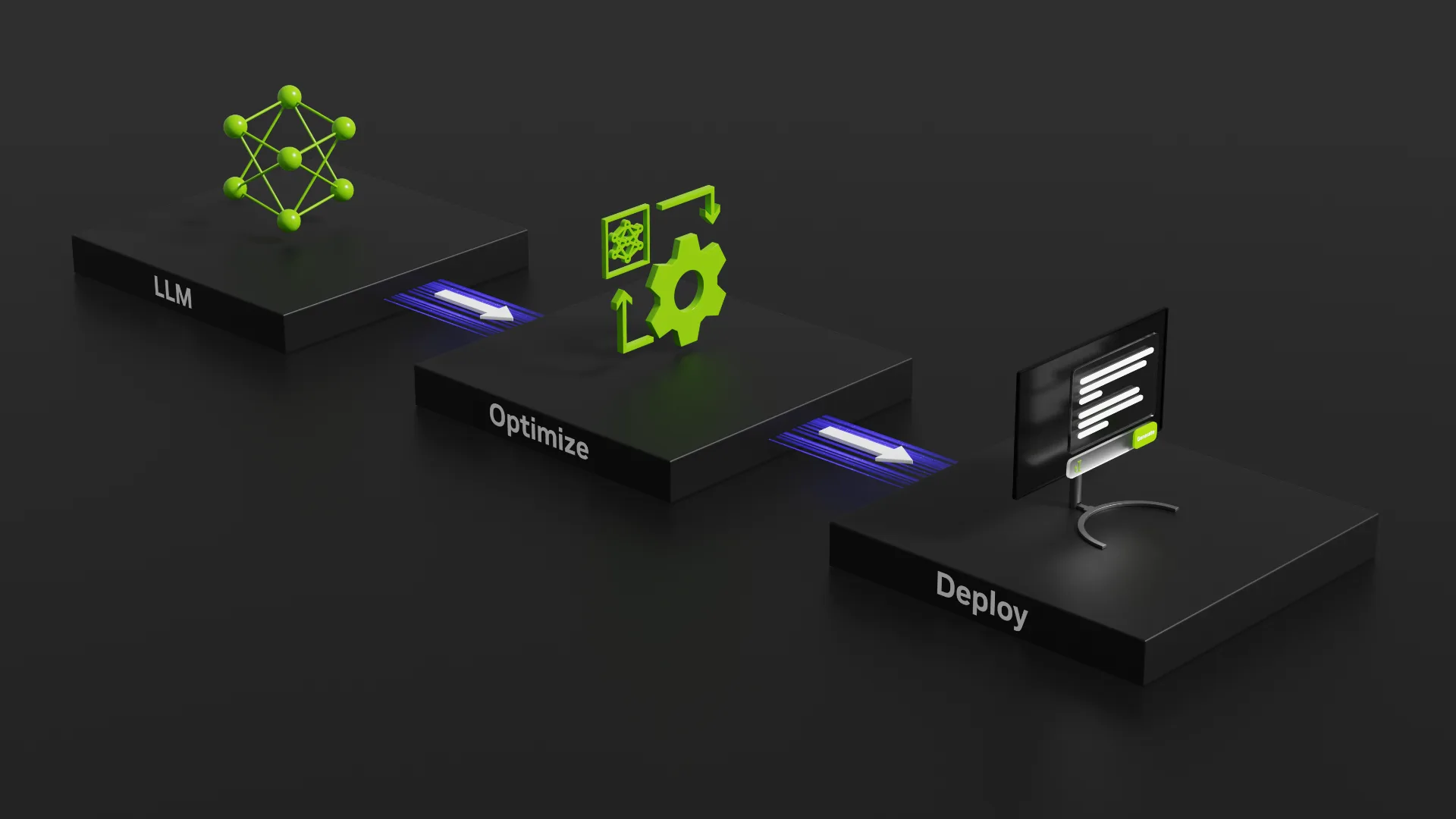
TensorRT Edge-LLM Completes the MLPerf Edge Agentic Benchmark 6.4x Faster on Jetson AGX Thor
Why it mattersNVIDIA's TensorRT Edge-LLM ran Qwen3.6-27B on a single Jetson AGX Thor at 52 tokens/sec, finishing MLPerf's Edge Agentic benchmark 6.4x faster than llama.cpp using NVFP4 quantization, FP8 KV cache and tree-based multi-token prediction.
Xiaomi Mimo 2.6 live post-training dashboard
Xiaomi's Mimo team is livestreaming training metrics from the reinforcement-learning runs behind mimo-v2.6-pro and mimo-v2.6-flash.
Why it mattersA frontier lab exposing live reinforcement-learning training curves in public lets practitioners observe real training dynamics (loss, reward trends) as a model is built, rather than only seeing a finished release.

When scanners miss the attack: how Cloudflare Client-Side Security protects storefronts
Cloudflare's Page Shield ML model caught all eight payloads across four live storefront-skimming campaigns, while VirusTotal missed seven and URLScan flagged none.
Why it mattersCloudflare's Page Shield ML model caught all eight payloads across four live storefront-skimming campaigns while VirusTotal missed seven and URLScan flagged none, showing why signature scanners lag behind live production e-commerce attacks.

AI Changed How Spotify Builds. What We Learned (and Fixed) About Quality at Higher Velocity
Spotify engineering breaks down how AI-accelerated development changed the failure modes across their 3,000-service platform and details the fixes, including eliminating silently-masked content processing failures.
Why it mattersSpotify engineers detail the concrete quality problems that surfaced as AI raised their development velocity across thousands of services, and the specific fixes (like eliminating silent processing failures) they shipped in response.
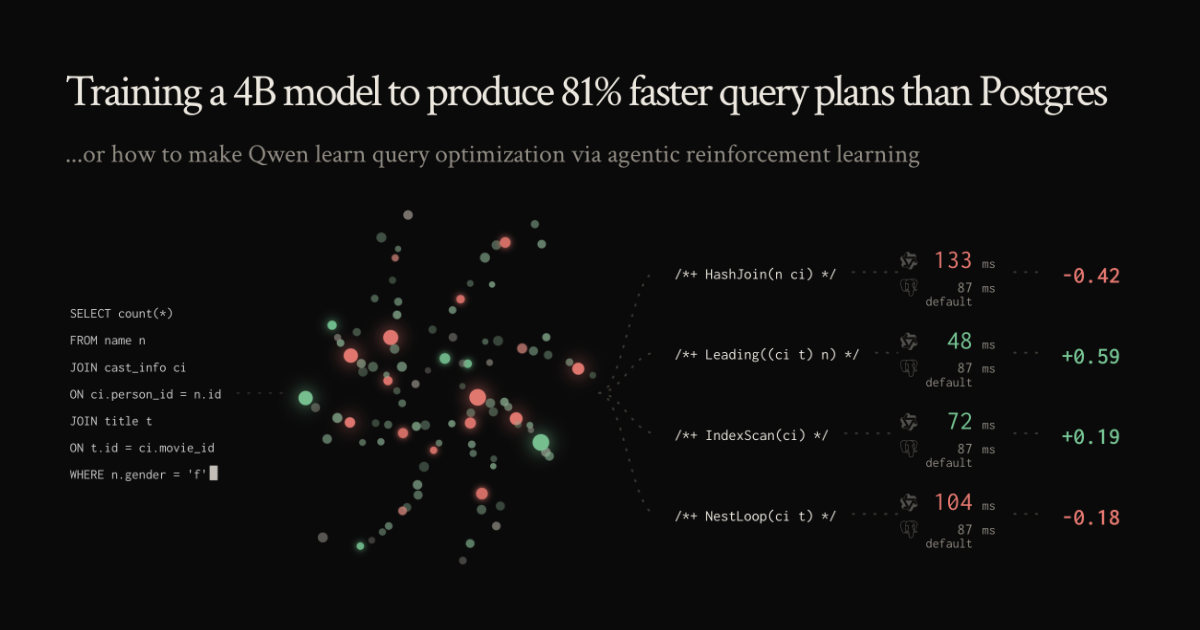
Training a 4B model to produce 81% faster query plans than Postgres
Why it mattersA 4B Qwen model trained via agentic RL against a live Postgres measurement rig learns query hints that beat Postgres's own planner, cutting latency by up to 44.7% across 113 join-heavy queries from the Join Order Benchmark.

QuiverAI shipped Arrow 2 and a deeper Arrow 2 Telos model for generating editable SVG vector graphics, alongside a combined generate/edit app and a new developer API platform for managing keys, usage, and billing.
Why it mattersGives developers an API for generating structurally editable SVGs rather than raster images described as vectors, plus a dedicated platform for managing credentials, usage, and billing.
Vals AI released MysteryMechanism, a benchmark testing whether agents can rediscover sealed mathematical mechanisms through bounded experiments; GPT-6 Astra scores roughly 20 percentage points above GPT-5.6 Sol.
Why it mattersA benchmark for experiment-driven scientific rediscovery, rather than static Q&A, gives a more direct read on whether an agent can drive real research workflows.
Claude Cowork and chat are now one Claude
Simon Willison notes Anthropic is merging Claude Cowork and chat into a single Claude experience that can pick up quick questions or long-running tasks and continue after you close your laptop, first for Pro/Max plans.
Why it mattersClaude Cowork and Claude chat are consolidating into one product that can take on long-running tasks after you close your laptop, rolling out first to Pro/Max users, reshaping which surface to build workflows around.
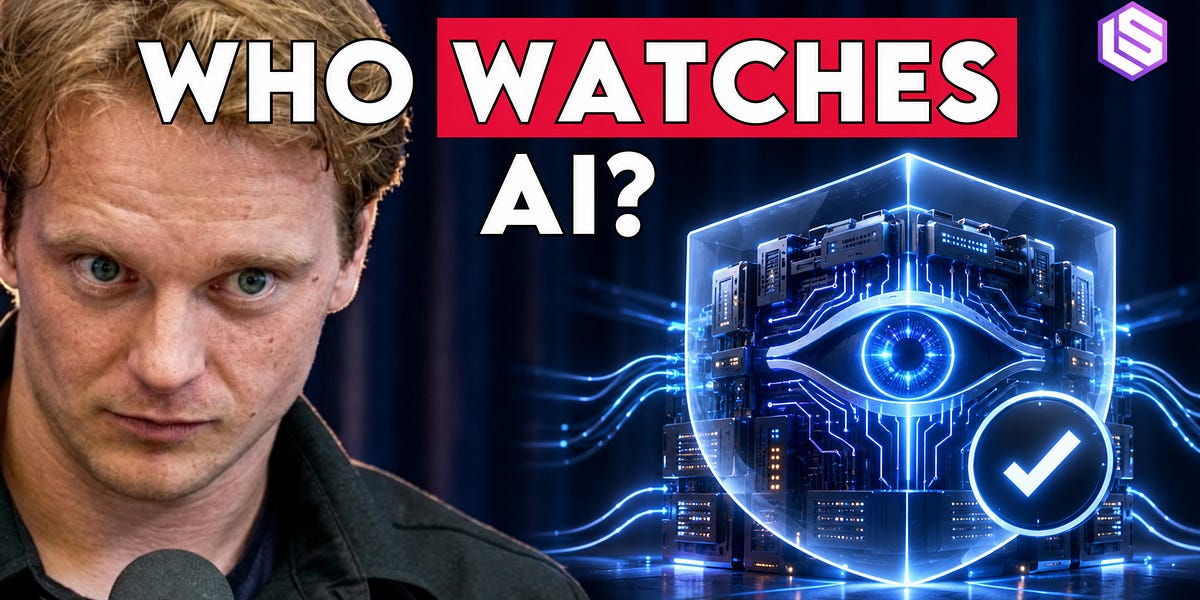
Underwriting Superintelligence: Backing Agents you can Sue — Rune Kvist, AIUC
Latent Space interviews AIUC cofounder Rune Kvist on AIUC-1, an emerging standard backed by real insurance for testing agent security, safety and reliability, following the company's $40M Series A used by Cursor, Harvey, Lovable and ElevenLabs.
Why it mattersAIUC cofounder Rune Kvist argues that agent liability and insurance, not raw capability, will become the binding constraint on deployment, and details how AIUC-1 stress-tests agents for jailbreaks, hallucinations and data leaks.

The Watchdogs of AGI — Rune Kvist of AI Underwriting Company
AIUC cofounder Rune Kvist covers the AIUC-1 agent standard, jailbreak and data-leak testing, liability when agents fail.
Why it mattersShows how standards, adversarial testing and insurance are emerging as the trust layer for deploying autonomous agents, which affects what enterprise buyers will require of agent products.
Hobby projects now retain fewer deployments to free up storage
Vercel now deletes old Hobby-tier deployments sooner to stay under the 10GB storage cap, keeping only the 3 most recent production and 3 most recent overall deployments per project.
Why it mattersAnyone deploying side projects on Vercel's free tier will now see old deployments pruned sooner, which can affect rollback options and CI history.

NVIDIA's Axolotl3D reconstructs occluded 3D geometry from images, camera data, and partial geometry, claiming state-of-the-art results on single- and multi-view 3D generation ahead of ECCV2026.
Why it mattersAxolotl3D combines images, camera data, and partial geometry to fill in unseen parts of an object, a capability relevant to anyone building 3D asset or robotics-perception pipelines.

OpenRouter added a hosted Linux sandbox tool (openrouter:shell) to its Responses API, letting any model on the platform write and execute code with results read back, without users hosting their own execution environment.
Why it mattersAdding one parameter now gives any model on OpenRouter a sandboxed code-execution loop, removing the need to stand up and secure your own execution environment for tool-using agents.

Stop Chunking Like It's 2022 — Yuval Belfer, AI21 Labs
AI21's Yuval Belfer shows optimal chunk size depends on the query, not the corpus.
Why it mattersIt's a reproducible technique for closing a measurable recall gap in RAG pipelines caused by choosing chunk size before you know the query.

Mem0 joins the Vercel Marketplace
Mem0 is now a native Vercel Marketplace integration, giving agents persistent cross-session memory with auto-provisioned API keys billed through your Vercel invoice.
Why it mattersMem0 on the Vercel Marketplace gives agent builders persistent cross-session memory with billing and key management handled automatically, lowering the setup cost for stateful agents.
Our framework for reporting model misalignment
OpenAI introduced a framework for tracking, investigating, and disclosing cases of model misalignment.
Why it mattersA documented process for surfacing and disclosing misalignment findings.
Secure Compute and Static IP builds start 64% faster
Vercel builds using Secure Compute or Static IPs now start 64% faster (6.7s to 2.4s) via prewarmed build containers with network configuration already attached.
Why it mattersTeams using Vercel's Secure Compute or Static IPs for network-gated deployments get materially faster build starts with zero config changes.

Where RL Will Take Search — Maximilian-David Rumpf, SID.ai
Maximilian-David Rumpf argues classical multi-stage retrieval can't fix agent search because every decision is frozen at design time.
Why it mattersIf search already eats 30-50% of an agent's token budget with fixed-pipeline retrieval, RL-trained search that adapts effort per query is a concrete lever for cutting that overhead.
A Coding Agent from Scratch
A developer built a local coding agent from scratch in a custom Rust-based ML DSL, inspired by (but not ported from) OpenCode, and published the repo, a demo video.
Why it mattersIt walks through building a local coding agent from first principles in a custom DSL, running against Ollama models, giving a from-scratch reference for how agent loops and tool use are actually implemented.

Translating CUDA Tile Operations from Python to Rust Using Agentic AI
An agentic pipeline in NVIDIA's TileGym repo automatically translates cuTile Python and Triton-TileIR GPU kernels into cuTile Rust, porting all 24 public operators at 99.5% of the original Python performance with machine-checked verification.
Why it mattersAn agentic pipeline in NVIDIA's TileGym repo automatically translates cuTile Python and Triton-TileIR GPU kernels into cuTile Rust, porting all 24 public operators at 99.5% of the original Python performance with machine-checked verification at each stage.

Anthropic's Boris Cherny says Claude's chat interface and its Cowork agentic-work product are merging into one experience that carries context across sessions, rolling out gradually.
Why it mattersMerging chat and Cowork into a single persistent-context Claude experience changes how practitioners will hand off both quick questions and multi-step work to the same interface.
An index of the vibe-coding frontier. Corrections welcome.