Intel
Page 20Anthropic is merging Claude Cowork and Claude chat into one product: hand off a task, close your laptop, and Claude keeps working, asking for clarification when needed. Claude Docs, Slides, and Design also now work inline. Rolling out to Pro/Max plans.
Why it mattersClaude now runs long-horizon tasks in the background from a single chat surface and can produce docs, slides, and designs inline, collapsing several separate surfaces into one workflow.
Round 1 of a vibe-coder ladder, judged by an LLM that only sees the UI
VIBELADDER ran a head-to-head between two AI-built notes apps, judged by an LLM that only interacts through the UI and never sees source code.
Why it mattersIt shows a concrete method for judging vibe-coded apps purely by interacting with the UI (no source access), with the full judge rationale published, an approach worth studying for anyone building AI-output evaluation pipelines.

Connect AI to Billions of Legal Documents — Simon Eskildsen, turbopuffer & Jacob Lauritzen, Legora
Legora and turbopuffer trace a real outage: sharding legal document chunks by count instead of by project caused dead projects to share partitions with live ones, thrashing cache.
Why it mattersIt's a specific, reproducible lesson on how to shard vector search data by usage pattern rather than raw count to avoid cache thrashing, plus how per-namespace isolation satisfies enterprise encryption requirements.

Your Agreements Are a Database You Can't Query — Hiral Shah, Docusign & Sean Sodha, NVIDIA
Docusign and NVIDIA built a roughly 900M-parameter vision-language model as a pure extractor, not generator, to solve why generic extraction destroys merged cells and nested tables in contracts, a problem behind an estimated $2 trillion in unread negotiated terms.
Why it mattersIt's a specific systems result showing a small, specialized extractor model can outperform generic extraction on the exact structure (merged cells, nested columns) that most document pipelines get wrong.

NVIDIA Vera Rubin NVL72 Delivers Leading Performance in MLPerf Inference v6.1 Debut
NVIDIA's MLPerf Inference v6.1 results show its new Vera Rubin NVL72 system delivering up to 3.7x the throughput of GB300 NVL72, a 288-GPU GB300 deployment hitting 99% scaling efficiency.
Why it mattersConcrete benchmark data shows Vera Rubin NVL72 delivering 3.7x the throughput of GB300 NVL72 and near-linear scaling across racks, numbers that matter for anyone forecasting inference cost and capacity.

If we want them to do Knowledge Work, design them as Knowledge Agents — Benjamin Clavié, Mixedbread
Benjamin Clavié argues coding agents succeeded because code has durable, greppable cues and narrow tasks.
Why it mattersIt gives a specific diagnostic for why retrieval agents built for contracts, docs, or other knowledge work underperform coding agents, and what tuned retrieval can close that gap.
Sakana Chatをアップデート:最新モデルに刷新、メモリー機能を追加
Sakana AI made its Fugu Max orchestrator model.
Why it mattersSakana's Fugu Max routes prompts across multiple open models rather than relying on one, and its new memory feature persists user preferences across chats, both concrete capability changes for anyone testing Sakana's models outside the API.

LangChain positions its Deep Agents framework around built-in context engineering: filesystems, subagents, and skills wired up specifically to keep long-running agent tasks from overloading the context window.
Why it mattersBundling filesystems, subagents, and skills as default context-management primitives gives agent builders a concrete pattern for keeping long-running tasks from blowing the context window, rather than reinventing it per project.

Moderation In Real Time
Runway details the synchronous moderation system built for real-time video generation.
Why it mattersStreaming generation removes the usual pre-display safety check, so Runway built sub-500ms frame moderation with a small MoE classifier; the same latency-versus-accuracy tradeoff applies to anyone shipping real-time generative output.

PS5 Linux lead quits: "a bunch of noobs using LLMs" that "they don't understand"
PS5 Linux lead Andy 'TheFlow0' Nguyen quit the scene after LLM-using contributors reported a live hypervisor exploit to Sony for a bounty rather than holding it for the community as agreed.
Why it mattersIt's a documented case of AI-assisted contributions straining trust and governance in a security-sensitive open-source project, a real second-order effect worth tracking as more contributors lean on LLMs.

Rebuilding the web for agents — Liad Yosef, MCP Apps
Testing agents against real sites, Liad Yosef found most ignore published llms.txt files entirely, going straight to docs or the homepage instead.
Why it mattersIt's direct evidence that llms.txt as currently deployed largely fails in practice, and introduces a concrete alternative for building richer, interactive agent-facing interfaces via MCP.
Swift-Qwen3.8-27B, -58.3% thinking, x1.95 speed, accuracy of xhigh
Ukisai post-trained Qwen3.8-27B to suppress tokens linked to reasoning 'overthinking' rather than just truncating chain-of-length, then recovered accuracy via on-policy distillation, yielding claimed 58% shorter outputs and ~2x speedup.
Why it mattersA reasoning model post-trained to cut overthinking tokens directly claims ~58% shorter chains-of-thought and ~2x throughput at near-unchanged accuracy, with open weights, GGUF quants and a free OpenAI-compatible API to test the claim.

The Search Engine for the Agentic Web — Will Bryk, Exa
Exa's Will Bryk says 2026 is the year machine-issued searches overtake human ones.
Why it mattersIt quantifies the shift toward agents as the dominant issuers of web search traffic and explains the cost curve that makes LLM-native search economically viable at scale.
Ant Group released Ling-3.0-flash-Fin, a finance-tuned open-weight model scoring 23 on Artificial Analysis's Intelligence Index and 24 on Finance & Accounting, matching MiniMax-M2.7 with roughly half the active parameters (5.1B vs 10B).
Why it mattersAnt Group's Ling-3.0-flash-Fin matches MiniMax-M2.7's intelligence score with about half the active parameters (5.1B vs 10B), showing a finance-specialized model can be competitive at lower inference cost.

The unreasonable effectiveness of BM25 for agentic search — Jo Kristian Bergum, Hornet.dev
Jo Kristian Bergum's benchmark of 830 questions over 100k documents shows reasoning isn't the bottleneck in agentic search, retrieval is.
Why it mattersIt's hard evidence that better query formulation and retrieval, not bigger models, is what limits agentic search accuracy today, and that classic lexical search is far from obsolete for agent-issued queries.
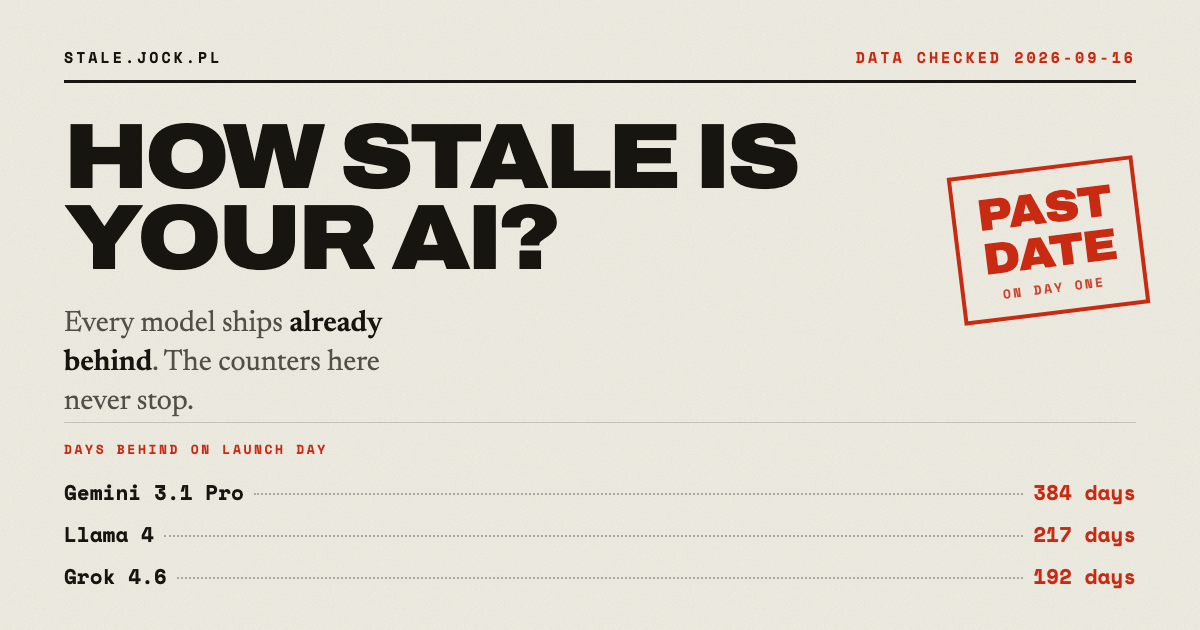
How Stale Is Your AI? Release age and training cutoff for 20 models
A live dashboard compares release dates against published training cutoffs for 20 current models across 8 labs, finding gaps as wide as five months and that only half the models have a lab-disclosed cutoff at all.
Why it mattersThe dashboard shows several current models ship with training cutoffs four to five months stale, and that most labs don't disclose cutoffs at all, a concrete reminder that browsing tools don't fix a model's underlying knowledge gap.

Pinecone 2.0 — Edo Liberty, Pinecone
Edo Liberty splits enterprise agent knowledge into general, specific, and tribal.
Why it mattersIt's a specific framework for why enterprise agents fail on 'tribal knowledge' and a concrete technique (writing and running code at query time) for keeping retrieval current against fast-changing facts.
Mistral and Mozilla are bringing open, private and multilingual AI to your web browser
Mistral models now power Firefox's Smart Window (beta), Mozilla's AI browsing assistant, rolling out first in France and North America with the UK and Germany to follow as the two companies partner on regional-language AI in the browser.
Why it mattersFirefox's Smart Window (beta) now runs on Mistral models for users in France and North America, with the UK and Germany to follow, giving engineers a new open-model-backed AI surface embedded directly in a mainstream browser.
MathArena's refreshed ArXivMath and BrokenArXiv benchmarks now run models inside their native coding harnesses (Astra via Codex, Fable via Claude Code) instead of raw API calls, with a $100/12-hour budget and revised grading; GPT-6 Astra leads at 88.6% and 81.94% respectively.
Why it mattersRunning models through their actual coding harness instead of raw API reveals cost and reliability gaps invisible to API-only benchmarks, a distinction that matters when picking a model for real agentic workloads.
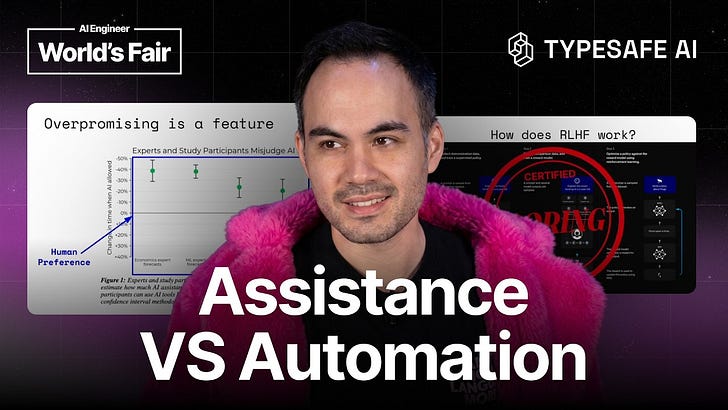
[AINews] Jev: a “System One Model” that only decides/classifies/routes/scores — >100x faster, >200x cheaper than small frontier LLMs
AINews covers TypeSafe's launch of Jev, a 'System One' model built only to decide, classify, route, and score, not to reason or generate code.
Why it mattersJev is a non-generative model built purely for fast, calibrated classification and routing decisions, claimed to run over 100x faster and 200x cheaper than small frontier LLMs, useful as a cheap decision layer in front of slower reasoning models.
Mistral AI and Mozilla announced a partnership to bring privacy-controlled AI browsing to users, aiming to give people more choice over how AI agents access and act on the web on their behalf.
Why it mattersMistral and Mozilla are building privacy-focused AI browsing tools together, opening an alternative path for developers building browsing agents outside the Chrome/OpenAI ecosystem.

Total Recall: Agent Memory and Harness Engineering — Ignacio Martinez, Oracle
A conference talk breaks agent harness engineering into seven layers.
Why it mattersThis talk gives a concrete seven-layer model for building agent harnesses, including why file-based memory needs git worktrees for parallel agents and how to structure a semantic memory layer, practical architecture guidance beyond a bigger context window.

The Functionalizer: Lossless Functional Decomposition for Subword Tokenization
A reversible pre-tokenizer factors casing, diacritics and character repetition into prefix opcodes rather than separate vocab entries, cutting required vocabulary slots by up to 16% across six corpora while staying fully lossless.
Why it mattersA reversible pre-tokenizer encodes casing, diacritics and repetition as prefix opcodes instead of separate vocabulary entries, shrinking required vocabulary slots by up to 16% across code and natural-language corpora without losing information.

Bias Audits Detect Bias but Disagree on Ranking: Evidence from Ten Instruments and Ten Frontier Models
Ten bias-audit tools run against ten frontier models all detect bias, but their rankings agree no better than chance (Kendall's W=0.07).
Why it mattersTen bias-audit tools run against the same ten frontier models all detect bias, but their rankings of which model is more biased agree no better than chance, a warning against using any single audit score to rank models for compliance.

AI Policies: Help or Hindrance? A Software Developer's Perspective
Interviews with 19 software developers reveal how organizational AI policies both help and hinder daily work.
Why it mattersInterviews with 19 developers show organizational AI policies frequently backfire when written without developer input, and the authors offer a developer-centric approach for managers rolling out AI usage rules.

ExecuCritic: Calibrated Critic Shaping for Code Generation with Verifiable Rewards
ExecuCritic trains a coder and critic together on shared execution rollouts, using the critic's calibrated verdict only when it agrees with the real test outcome, beating GRPO and prompted-reviewer baselines with fewer sandbox executions.
Why it mattersExecuCritic jointly trains a code-generation policy and a critic on the same execution rollouts, crediting the coder only when the critic's verdict matches the executor.

Latent Undertow: How Ordinary Typos Break Probes
Ordinary typos rotate a model's hidden-state readout enough to blind single-position prompt-injection probes, cutting detection by 12 points.
Why it mattersOrdinary typos rotate a model's hidden-state readout enough to blind single-position prompt-injection probes, cutting detection by 12 points; a short fixed suffix that lets the probe read downstream tokens closes 95% of that gap.

Few-Shot Degradation Is Not What It Seems: Behavioral Evidence, Representation Analysis, and a Random-Text Control Across 12 Models, 2 Tasks, and 2 Architectures
Few-shot prompting sometimes degrades models, and a length-matched random-text control shows why.
Why it mattersFew-shot prompting sometimes hurts model performance, and a length-matched random-text control reveals why.

Coaching Qwen3 Coder 30B to Think Like a CodeClash Arena Agent
Qwen3-Coder-30B ranks last among 8 commercial coding agents in the CodeClash arena benchmark.
Why it mattersQwen3-Coder-30B ranks last among 8 commercial coding agents in the CodeClash arena benchmark; distilling strategic reasoning from stronger agents fixes its syntax and protocol-breaking errors that plain instruction tuning can't reach.

Protocol-Preserving Context Trimming for Agentic Workflows: Benefits, Failure Regimes, and Budget Guardrails
Comparing five context-trimming strategies for long-running agents, protocol-aware trimming and adaptive budget guardrails beat naive recency/relevance approaches, reaching 96% task success and 1% cascading failure while still cutting 56% of tokens.
Why it mattersComparing five context-trimming strategies for agent workflows, protocol-aware trimming and adaptive budget guardrails beat naive recency/relevance trimming, hitting 96% task success and adherence while still cutting 56% of tokens.

An Exploratory Study of Dependabot Cooldown Adoption in Open-Source GitHub Projects
A study of GitHub's Dependabot cooldown supply-chain defense finds security concerns drove most adoption.
Why it mattersA study of GitHub's Dependabot cooldown feature finds security concerns, not convenience, drove most early adoption, and that 97% of projects that kept it simply used a general delay, mostly the 7-day default, over fine-grained rules.

Assurance Envelopes for Autonomous Coding Agents: Minimum-Cost Evidence for Software Change
A framework for coding agents computes the cheapest subset of prior evidence (tests, proofs, type checks) that still re-establishes a change's required properties, avoiding wasteful full re-verification on repository revisits.
Why it mattersA framework for coding agents computes the minimum subset of prior evidence (tests, type checks, proofs) needed to re-certify a change, avoiding wasteful full re-verification while catching when no valid evidence subset even exists.

FairLint-DL: An IDE-Native Tool for Fairness Debugging of Deep Learning Software
FairLint-DL is a VS Code extension that debugs fairness on tabular datasets before training begins, using entropy-based discrimination metrics, gradient-guided search and SHAP/LIME to localize bias to specific network layers.
Why it mattersFairLint-DL is a VS Code extension that runs fairness debugging on tabular datasets before training starts, using entropy-based discrimination metrics and gradient-guided search to localize bias to specific layers and neurons.

AgentGuard: Learning Execution Guardrails from Anomalous Coding-Agent Trajectories
AgentGuard learns instruction-level execution guardrails from 642 real coding-agent failure traces across 382 repositories, automatically flagging unrelated file edits, rewritten tests and unsafe commands without hand-written rules.
Why it mattersAgentGuard mines 642 documented coding-agent failure traces to auto-generate instruction-level guardrails against unrelated file edits, rewritten tests and unsafe commands, activating only the rules relevant to the current task.
WeVisDoc 4B released
Tencent's WeVisDoc-4B, fine-tuned from Qwen3-VL-4B, achieves the best reported scores among end-to-end document parsers on OmniDocBench v1.6 and PureDocBench, turning page images into Markdown with LaTeX formulas and HTML tables under Apache-2.0.
Why it mattersWeVisDoc-4B is now the top-scoring open end-to-end document parser on OmniDocBench and PureDocBench, giving teams building document-ingestion agents a stronger open alternative to closed OCR APIs.
WeVisDoc 2B released
Tencent released WeVisDoc-2B, an Apache-2.0 document parser fine-tuned from Qwen3-VL that converts page images into structured Markdown with LaTeX and HTML tables, topping OmniDocBench v1.6 and PureDocBench among compared end-to-end parsers.
Why it mattersA 2B-parameter open model now leads document parsing benchmarks (95.06 OmniDocBench, 73.86 PureDocBench avg), giving agent builders a cheap, deployable OCR/markdown-extraction backbone to replace larger parsers.

Is Agentic now tailors its audit by site type
Why it mattersVercel's Is Agentic audits now group checks by site type (docs, business, app, commerce), so a commerce site sees payment/checkout standards like x402 while an API surfaces auth and SDK checks, set via a single meta tag.

TypeSafe AI's Jev now available on AI Gateway
Vercel's AI Gateway and AI SDK now expose TypeSafe AI's Jev model through an experimental evaluate API, returning typed Choice, Score.
Why it mattersGives agent builders a documented, typed decision layer for routing, tool selection, and guardrail checks that skips token generation and parsing.
Deepseek V4 Vision
A model-by-model breakdown of which DeepSeek V4 variants accept images.
Why it mattersPrevents a costly integration mistake: only V4.1 Flash and the experimental Vision Exp checkpoint read images, while every other V4 slug (including the default alias) is text-only.
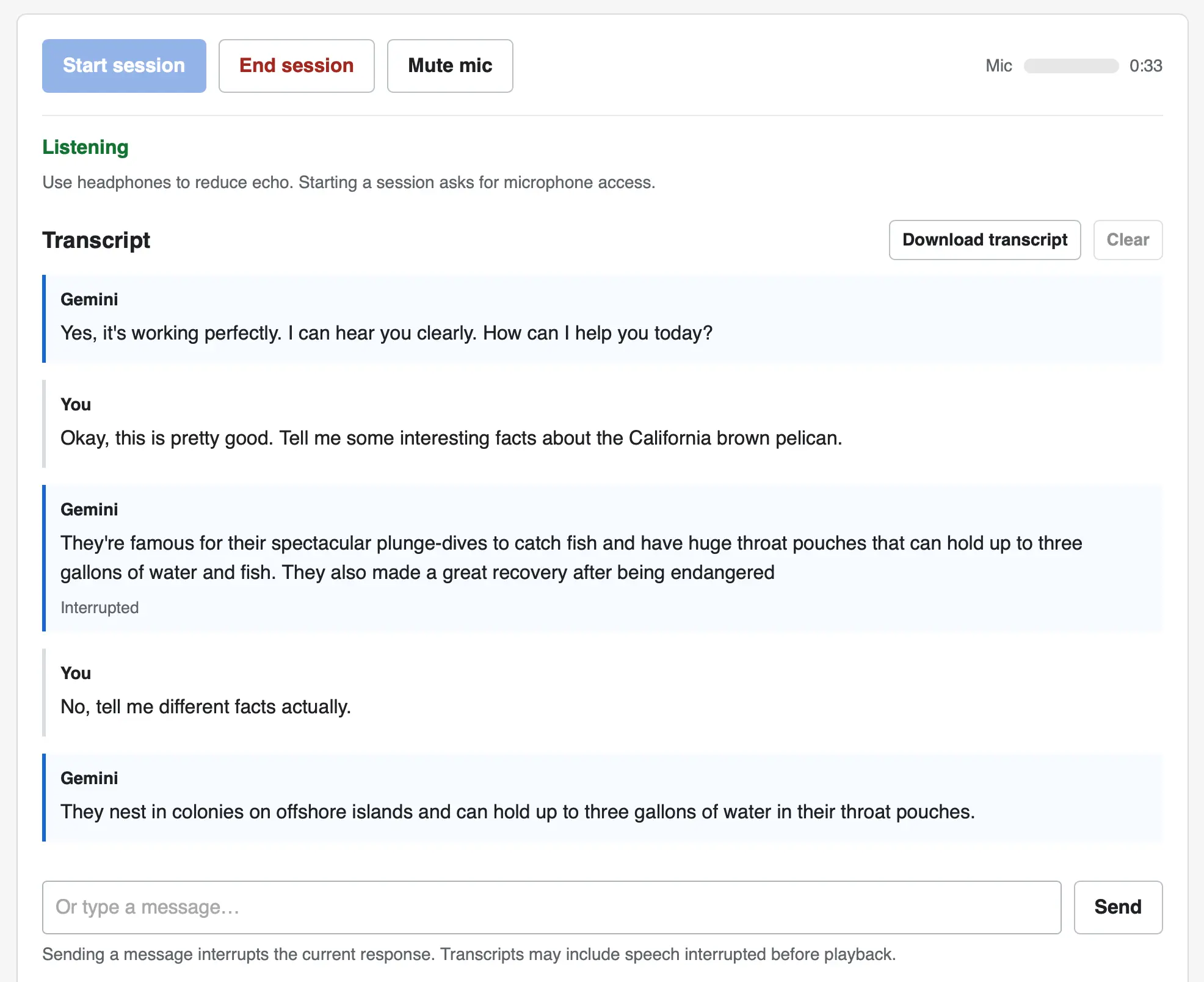
Gemini Live audio
Why it mattersGoogle shipped Gemini 3.8 Live and Live Extended Thinking, speech-to-speech models rivaling GPT-Live; Simon Willison built a no-dependency browser client against the raw BidiGenerateContent WebSocket API to try them.
Google DeepMind's Gemini 3.8 Live, successor to Gemini 3.1 Flash Live, tops Artificial Analysis's speech-to-speech benchmarks in both standard and Extended Thinking (configurable reasoning effort) variants.
Why it mattersGemini 3.8 Live Extended Thinking debuts #1 on the Speech to Speech Index (82.6) and Tau Voice agentic benchmark (68.6%), ahead of GPT-Live-1 and Grok Voice, while executing tool calls mid-conversation.
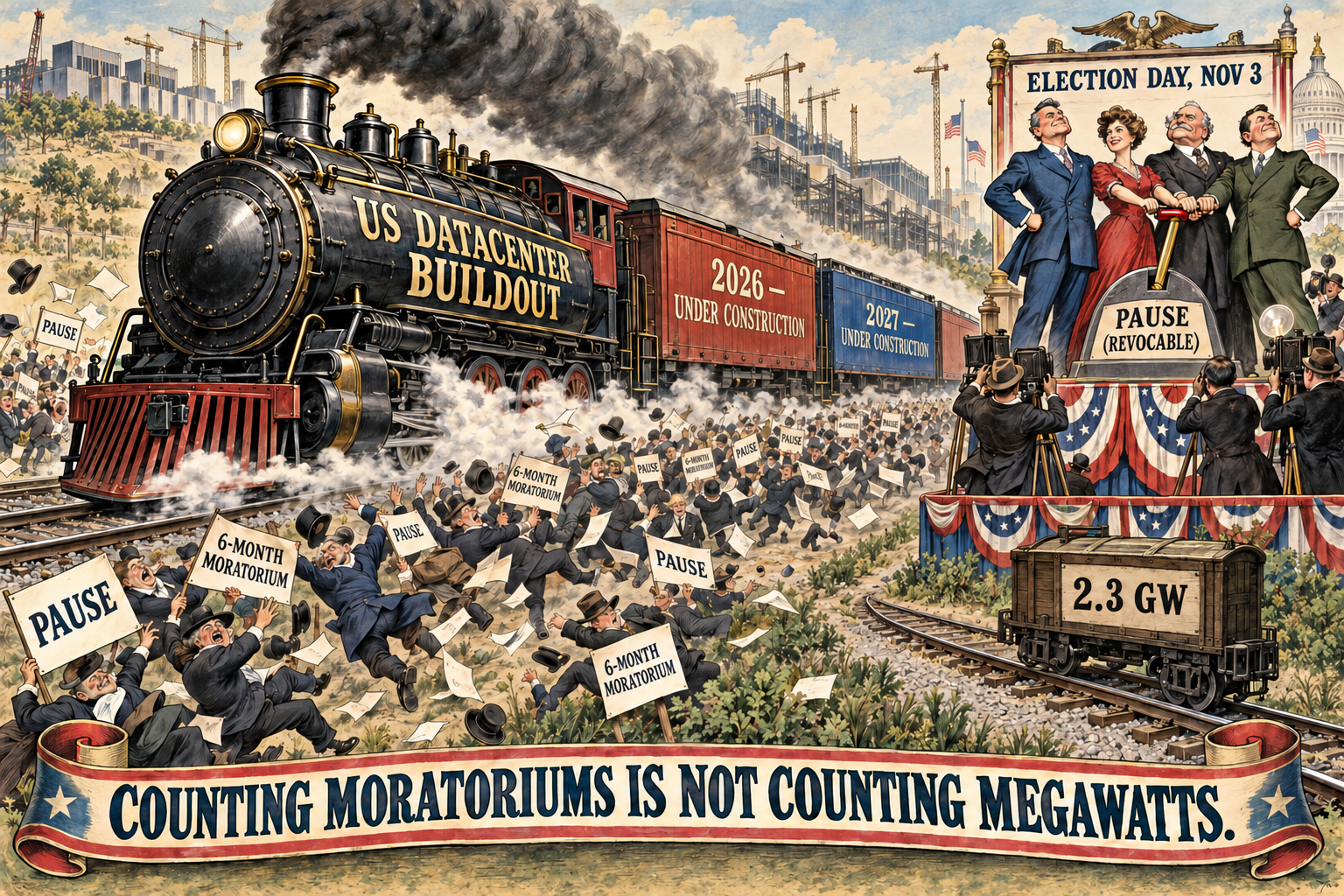
Everyone Says Datacenter Moratoriums Are Killing the US Buildout. We disagree
Why it mattersSemiAnalysis argues the narrative that state and local datacenter moratoriums are halting the US AI buildout is overstated, following its earlier debunking of water-use and cancelled-capacity myths.
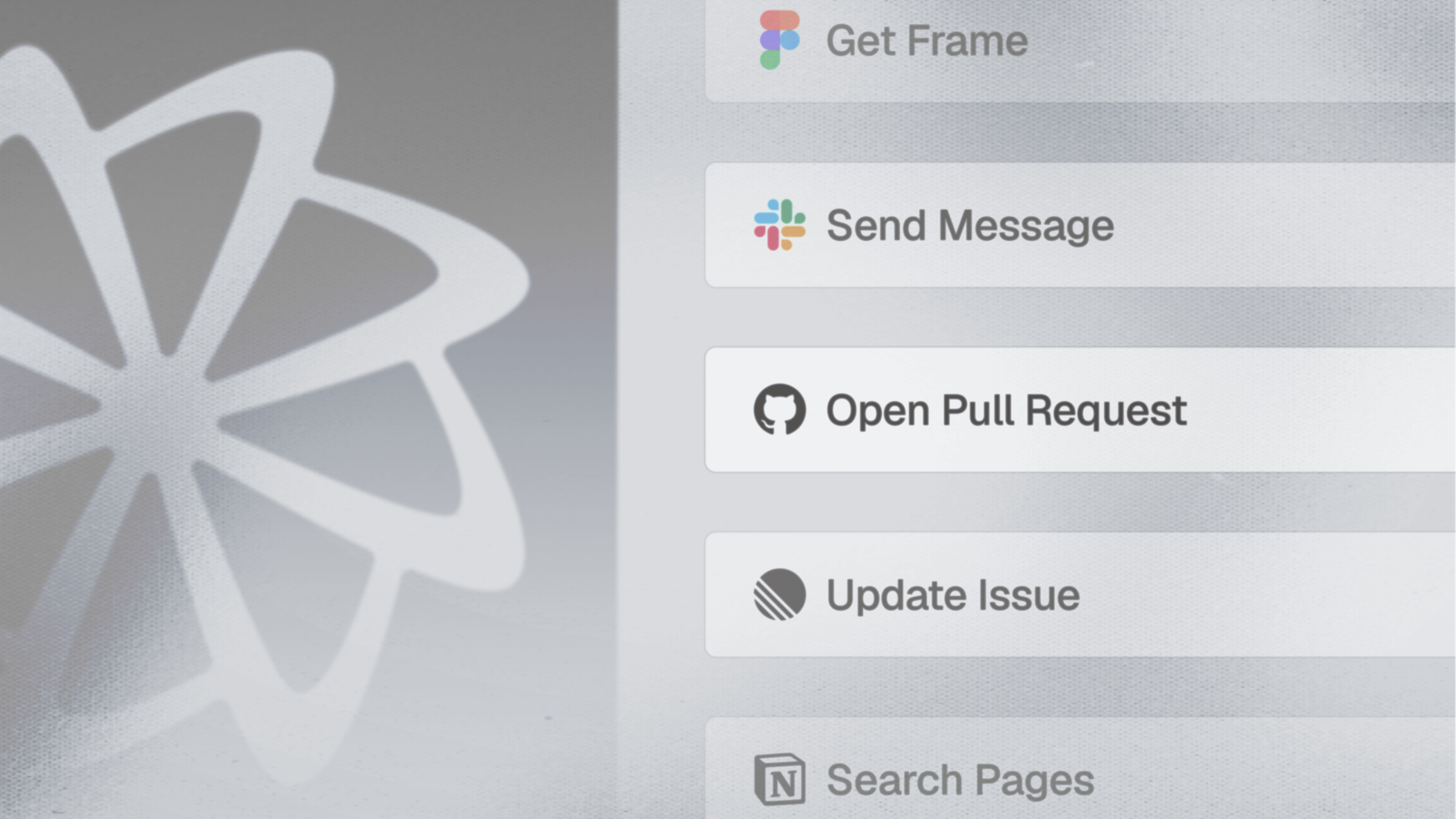
Personas And Connectors
Factory launched Connectors, managed no-config access to apps like Slack, Sentry, Salesforce, Notion, and Figma, alongside Personas.
Why it mattersAdds a managed, zero-config integration layer alongside MCP for common SaaS tools, cutting the setup work of wiring an agent into a team's existing Slack, Sentry, Salesforce, or Notion stack.
Missions
Factory's Missions breaks large multi-day projects into milestones and features, spawning fresh worker sessions per feature with clean context, coordinating handoffs through git.
Why it mattersOffers a concrete orchestration pattern, orchestrator, workers, and validators with milestone checkpoints, for keeping agents effective on multi-day projects instead of hitting single-session context degradation.

Missions Architecture
Factory explains the rationale behind Missions.
Why it mattersNames two specific failure modes in long agent sessions, context dilution and self-evaluation bias, and gives an architectural fix (independent validator roles) directly reusable in other multi-agent systems.
Model Routing Belongs In The Harness
Factory argues model routing belongs inside the agent harness, not the API gateway, since the harness has session history and cache state.
Why it mattersGives a specific architectural argument backed by production numbers for where to put model-selection logic in an agent system, directly useful for anyone building a cost-aware multi-model harness.

Factory Router
Factory launched Factory Router.
Why it mattersShows dynamic per-task model routing can cut inference cost 20-25% while holding onto nearly all of a frontier model's task success rate, a concrete data point for cost-aware agent design.
Nvidia Dgx Spark
Factory added support for running its agent platform against a local NVIDIA DGX Spark deployment of Nemotron 3.5 Lightning (a 30B MoE model, 3B active parameters).
Why it mattersGives regulated or security-sensitive teams a concrete path to run agentic coding workflows entirely on-premises against an open-weight model instead of a cloud API.
Factory Signals
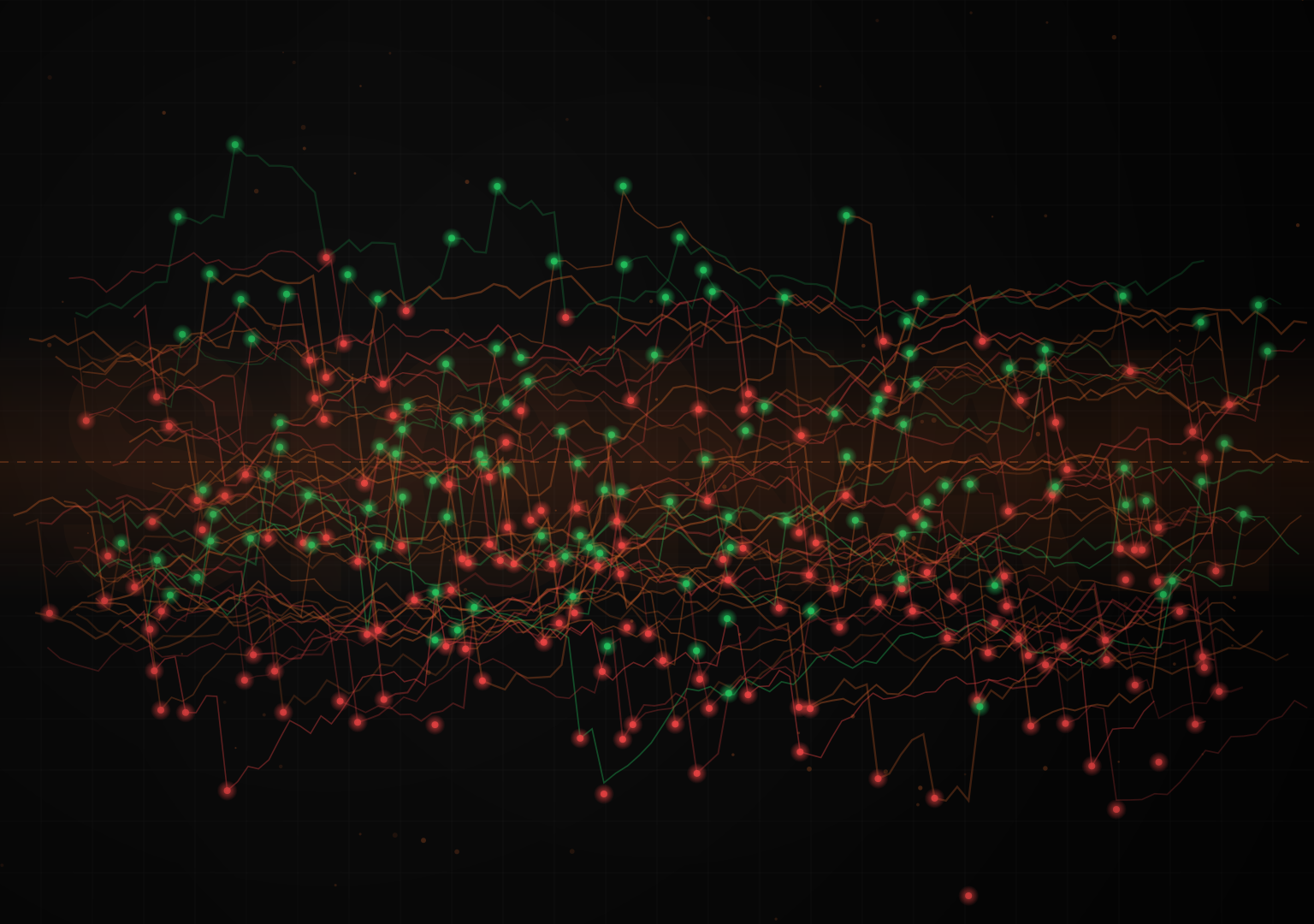
Factory built Signals.
Why it mattersOffers a concrete architecture for closing the loop between agent-behavior analytics and self-improvement, useful for measuring whether completed tasks actually went smoothly rather than just checking pass/fail.
Legacy Bench
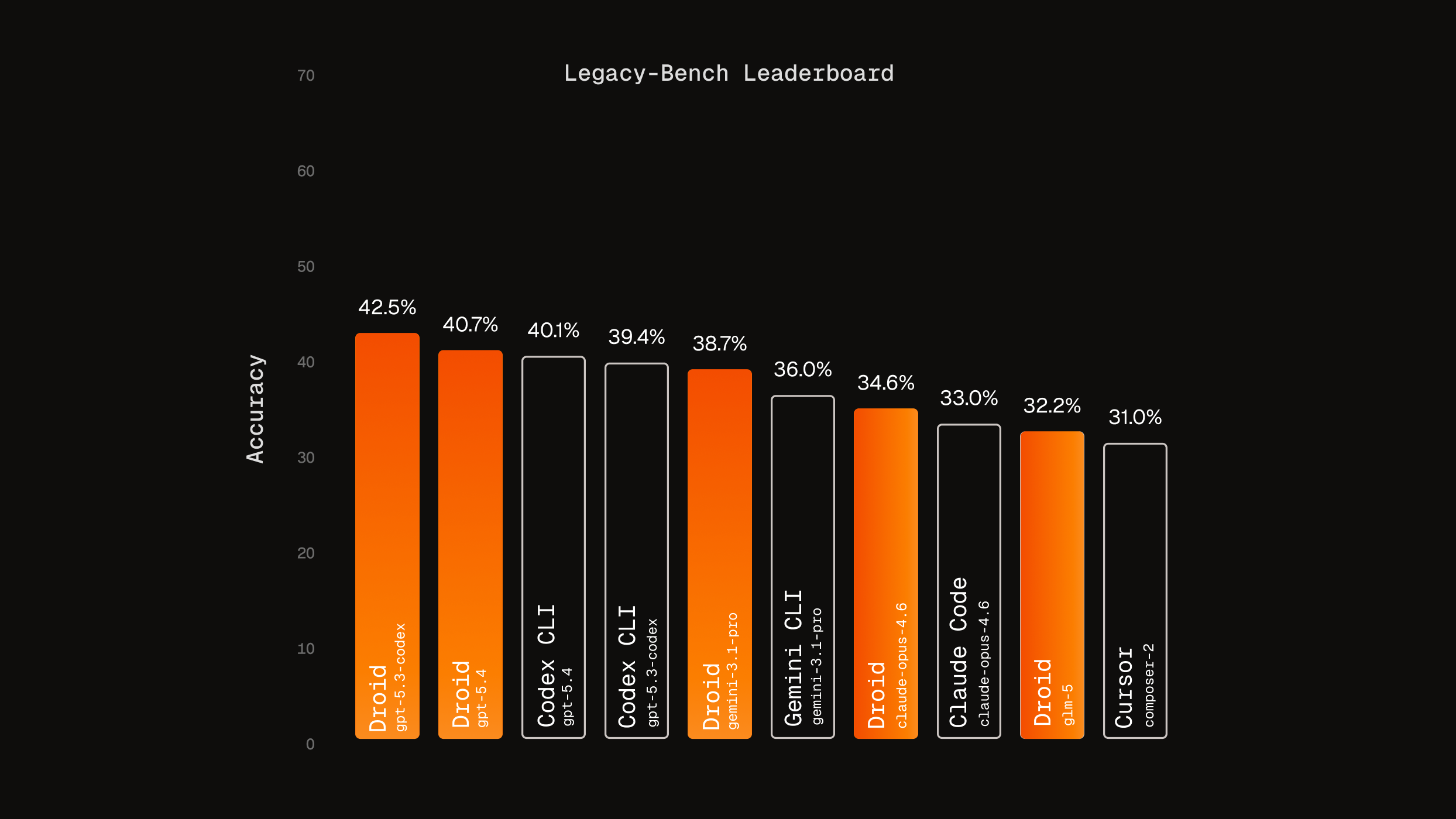
Factory's Legacy-Bench tests coding agents on COBOL, Java 7, Fortran, BASIC, C89, and Assembly tasks from real enterprise domains.
Why it mattersQuantifies a real gap: agents that ace SWE-bench and Terminal-Bench perform far worse on legacy enterprise languages, especially where failures are silent, a concrete signal for where agentic coding still needs work.
An index of the vibe-coding frontier. Corrections welcome.