Intel
Page 90
Hacktron's automated review found a high-severity NoSQL injection in Novu's codebase by tracing an unvalidated ID through an ingest controller, a type cast, and a sink service across three files.
Why it mattersHacktron's automated review caught a NoSQL injection in Novu by tracing an unvalidated event ID across three files, and fixed roughly half of flagged issues within 30 days with an 83% actionable rate.

SemiAnalysis lays out the cost case pulling hyperscalers to India: roughly $5M per MW of datacenter capex and power often under $0.10/kWh, cheap enough to put the country near 10GW by 2030 and among the four largest datacenter markets, with Microsoft alone committing $17.5B.
Why it mattersCompute capacity is migrating toward the cheapest power and capex, and India's sub-$0.10/kWh economics put it on track for roughly 10GW by 2030 — a factor in where inference gets served and what it costs.

Did you know Hermes Desktop can run against a Hermes Cloud agent? Point Hermes D
Nous Research shows Hermes Desktop connecting to a Hermes Cloud agent via Settings > Gateway.
Why it mattersHermes Desktop can now run against a hosted always-on Hermes agent, so long-running tasks and memory persist after the laptop closes. Billing is metered by uptime plus storage, with inference billed separately.

Qwen3.8 27B Is INSANE – This Is the BEST Local AI Model Yet!
A hands-on test of Qwen3.8 27B running locally, across browser workflows, C++ game creation, FPS development, 3D CAD modelling, multimodal coding and cinematic game generation.
Why it mattersTask-level results on a 27B model running locally give a practical read on where local inference is now good enough for coding work and where it still falls short.
Don't classify. Hallucinate!
Doug Turnbull's trick for tagging against a large vocabulary.
Why it mattersIt turns an oversized label set from a context problem into an embedding lookup, which is directly reusable by anyone classifying against a taxonomy too large to fit in a prompt.
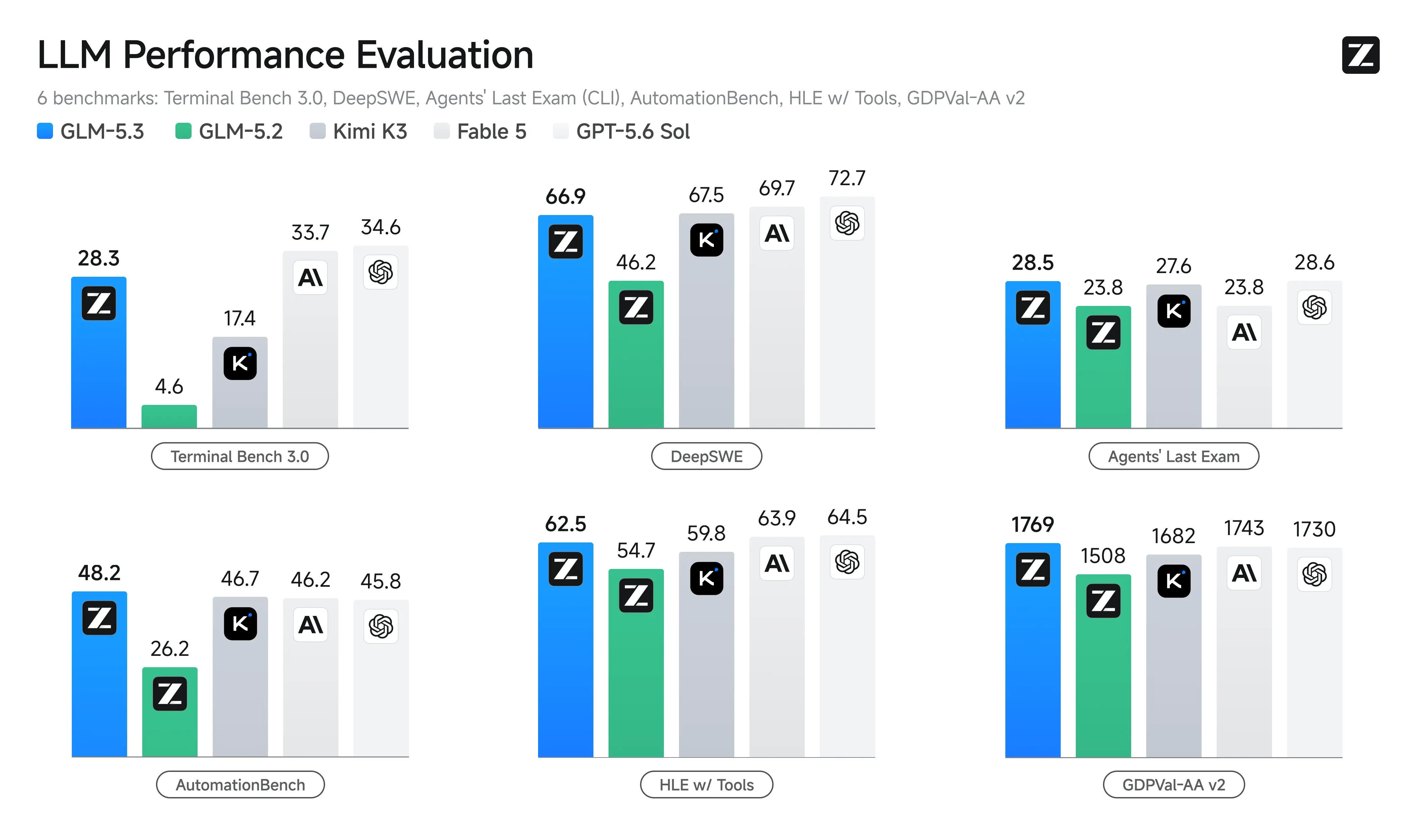
GLM-5.3: How Chinese labs keep stride with the frontier
Nathan Lambert on Z.ai's GLM-5.3.
Why it mattersA frontier-level agentic coding score reached purely through post-training on an existing base, at a third of a competitor's parameter count, resets what teams should assume about the cost of catching up.

Nous Research added a /loop slash command to Hermes. It re-runs a prompt at a set interval in the same session, or paces itself when no interval is given, checking often at first and backing off while nothing changes. It works in the CLI, desktop, and messaging channels.
Why it mattersHermes can now re-run a prompt on a timer inside one session, with adaptive backoff when nothing changes. That makes polling and monitoring tasks possible without an external scheduler.

https://t.co/w4CBckqLpR
Hermes adds /loop, which re-runs a prompt in the current session on a timer or self-paced with exponential backoff keyed to whether the reply digest changed.
Why it mattersShows a concrete pattern for polling agents: back off exponentially while replies are unchanged, snap back when they change, and cap runs to avoid unbounded token spend. Also clarifies when to choose loop, goal or cron.
SemiAnalysis on GLM-5.3 beating every American open model with gains that came entirely from post-training on the same base as GLM-5.2, and what that says about the Nemotron committee path.
Why it mattersIt puts a concrete stake in the open-weights comparison: if post-training alone produced the jump, the gap between American and Chinese open models is a process gap rather than a compute gap.

We’ve written an FAQ to answer some of the questions we've received about waterm
Anthropic's FAQ on watermarking Claude's text.
Why it mattersAnyone shipping model output into their own product now knows what watermarking does and does not change about that text, including that it costs no extra tokens and carries no per-user attribution.

A 17-minute tour of OpenWiki, LangChain's open-source self-maintaining wiki: how it works, why documentation built for agents looks nothing like documentation for humans, and the lessons from building it.
Why it mattersAgent-readable documentation is becoming a design surface of its own, and this gives builders a working open source reference for how those docs should be structured and kept current.
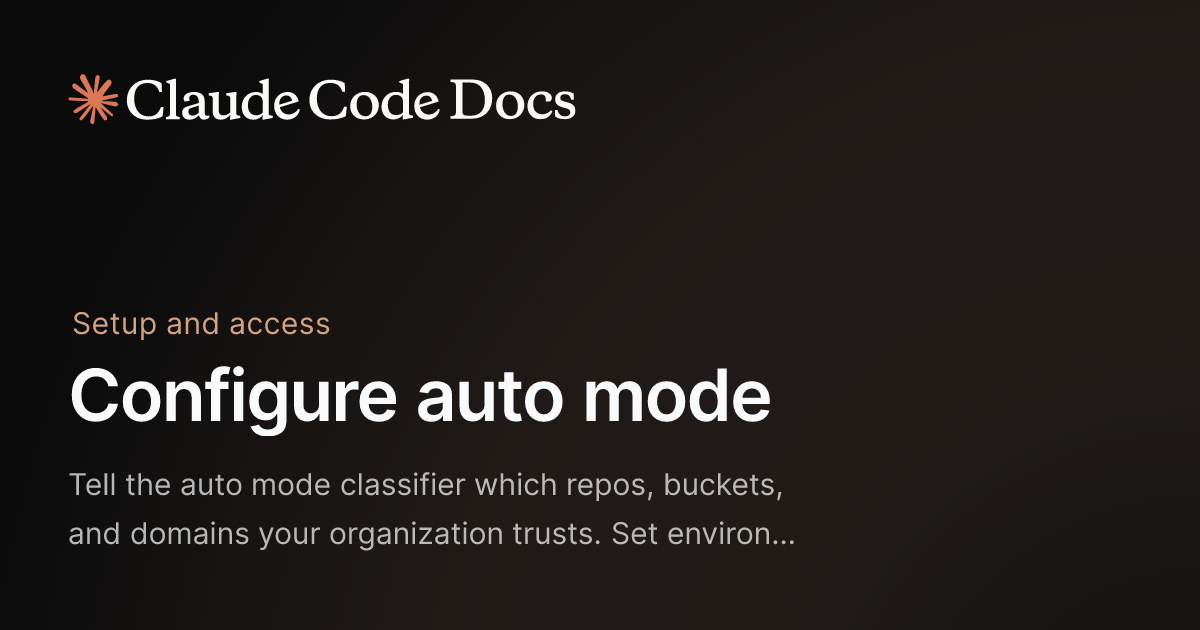
To configure auto mode for your environment, run /auto-mode-setup. Claude looks
Claude Code's /auto-mode-setup scans your repo and proposes trusted repositories and domains for review, sharpening the auto-mode classifier's line on what is safe to run in your environment.
Why it mattersPermission configuration is the main safety lever on an autonomous coding agent, and this documents exactly how the trusted-surface list is built and reviewed.

Anthropic is rolling out auto mode as the default permission mode in Claude Code for Pro, Max, and Team plans. Users with an existing default get a prompt before any change, and can switch with Shift+Tab or pin a mode via defaultMode in settings.
Why it mattersClaude Code's default permission mode is changing to auto mode, so sessions will stop prompting in the same places. Teams that rely on the old default can pin a mode with defaultMode in settings or switch with Shift+Tab.
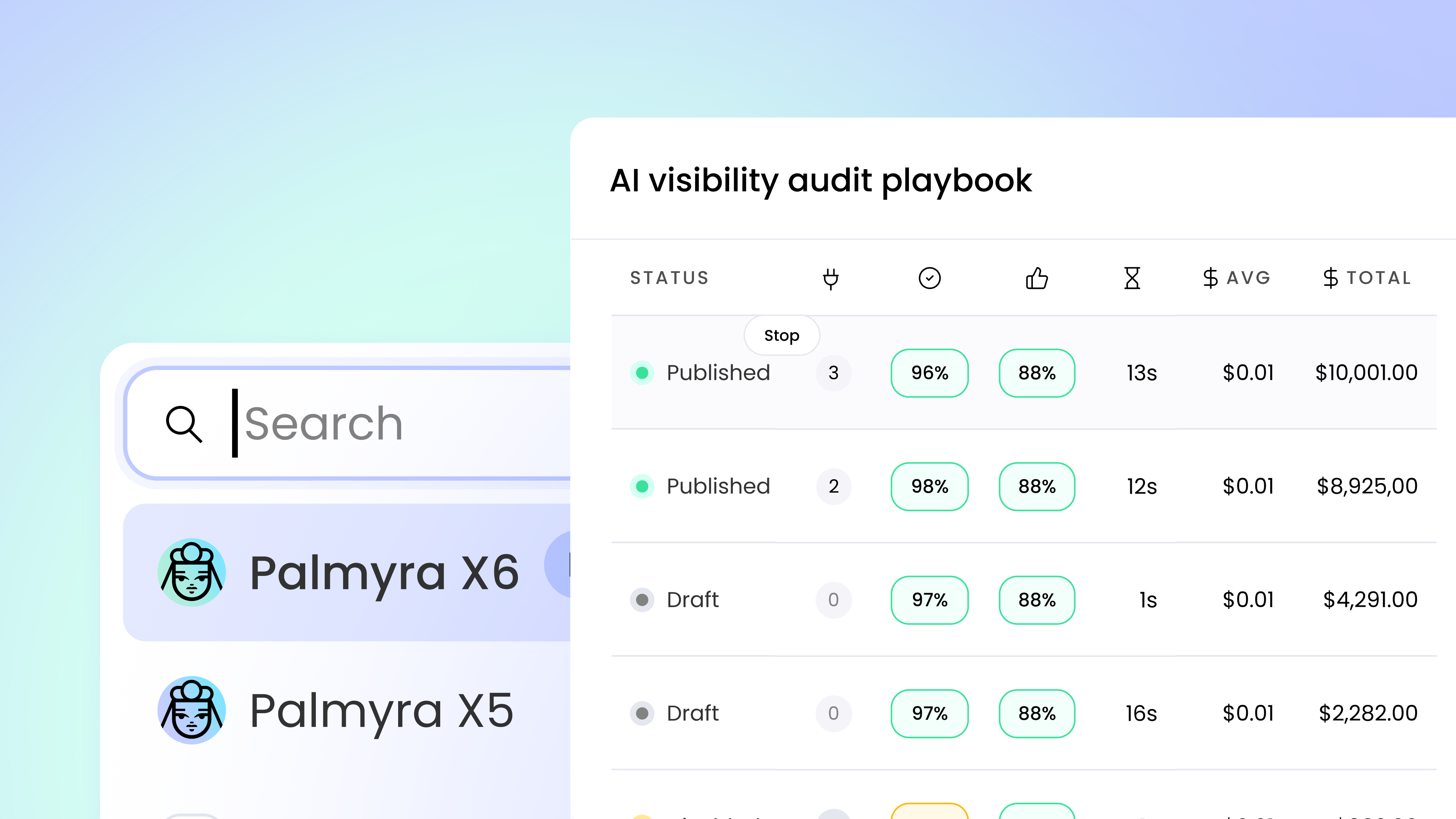
WRITER Makes Agentic AI Economically Sustainable at Enterprise Scale With Palmyra X6 Release and Major Harness Upgrades
WRITER ships Palmyra X6 plus harness upgrades built around token economics rather than benchmarks.
Why it mattersAgent workflows push cost per task orders of magnitude above chat. This release pairs a cheaper flagship model with harness changes and spend controls aimed at that gap, reported as 52% lower cost at 48% higher speed.

OpenRouter's Ori CLI now launches xAI's Grok Build in custom-endpoint mode with a run-scoped OpenRouter key. No browser login, Grok config untouched, model list drawn from your OpenRouter catalog, and xAI telemetry, error reporting and trace upload disabled.
Why it mattersYou can run Grok Build against any model in your OpenRouter catalog, including private endpoints, with one key and no xAI login. Telemetry and trace upload stay off for the run.
OpenRouter launched Ori DeepSeek Harness, a one-command setup that connects DeepSeek Harness to the full OpenRouter catalog. It installs the harness if missing, stores the key in the credential store, refreshes models at boot, and adds /fast and /zdr session controls.
Why it mattersIf you run DeepSeek Harness, you can point it at any OpenRouter model without hand-editing config, and restrict sessions to zero-retention providers with /zdr. The catalog refreshes on each boot, so new models appear automatically.
As part of our Responsible Scaling Policy, we publish regular Risk Reports. Thes
Anthropic's second RSP Risk Report covers misalignment, automated R&D and chem/bio risk for Mythos 5 and an unreleased model.
Why it mattersAnthropic discloses how it assesses misalignment, AI R&D acceleration and CB misuse risk for the models engineers build on, including a classifier coverage gap and saturated evals. This signals how safeguards and model access may change.
Ori now launches Prime Intellect's Agent on OpenRouter with one command, injecting the API key per run through an extension instead of editing auth.json or models.json, and stripping stray Anthropic and OpenAI keys so all requests route through OpenRouter.
Why it mattersStray provider keys in the environment can silently bypass your routing. Ori Prime strips them and injects the OpenRouter key per run without touching auth.json or models.json, so existing agent setups stay intact.

Alibaba's Qwen team announced that Qwen3.8-27B is available on Ollama, making the 27B model runnable locally with any coding harness that targets Ollama. The post gives no benchmarks or hardware requirements.
Why it mattersQwen3.8-27B can now be pulled and run locally through Ollama, so engineers using local coding harnesses can try it without custom conversion or hosting setup.

Learn how to turn one giant AI-generated pull request into a clean, reviewable s
GitHub on turning one giant AI-generated pull request into a clean, reviewable stack of changes, and keeping every layer in sync as review feedback lands.
Why it mattersReview throughput is the bottleneck once coding agents can produce thousand-line diffs, and stacking gives teams a repeatable way to keep each layer small enough to actually verify.

GitHub's prescription for the giant agent-authored pull request: break it into a stack of ordered PRs, one concern per layer, with CI validating each layer against the stack's base. The gh stack CLI creates, submits, rebases and syncs the stack; reviewers read top-down and validate bottom-up.
Why it mattersA concrete review workflow for AI-generated changes: layer the work into ordered PRs, run CI per layer against the stack base, read top-down and review bottom-up instead of facing one 1,700-line diff.
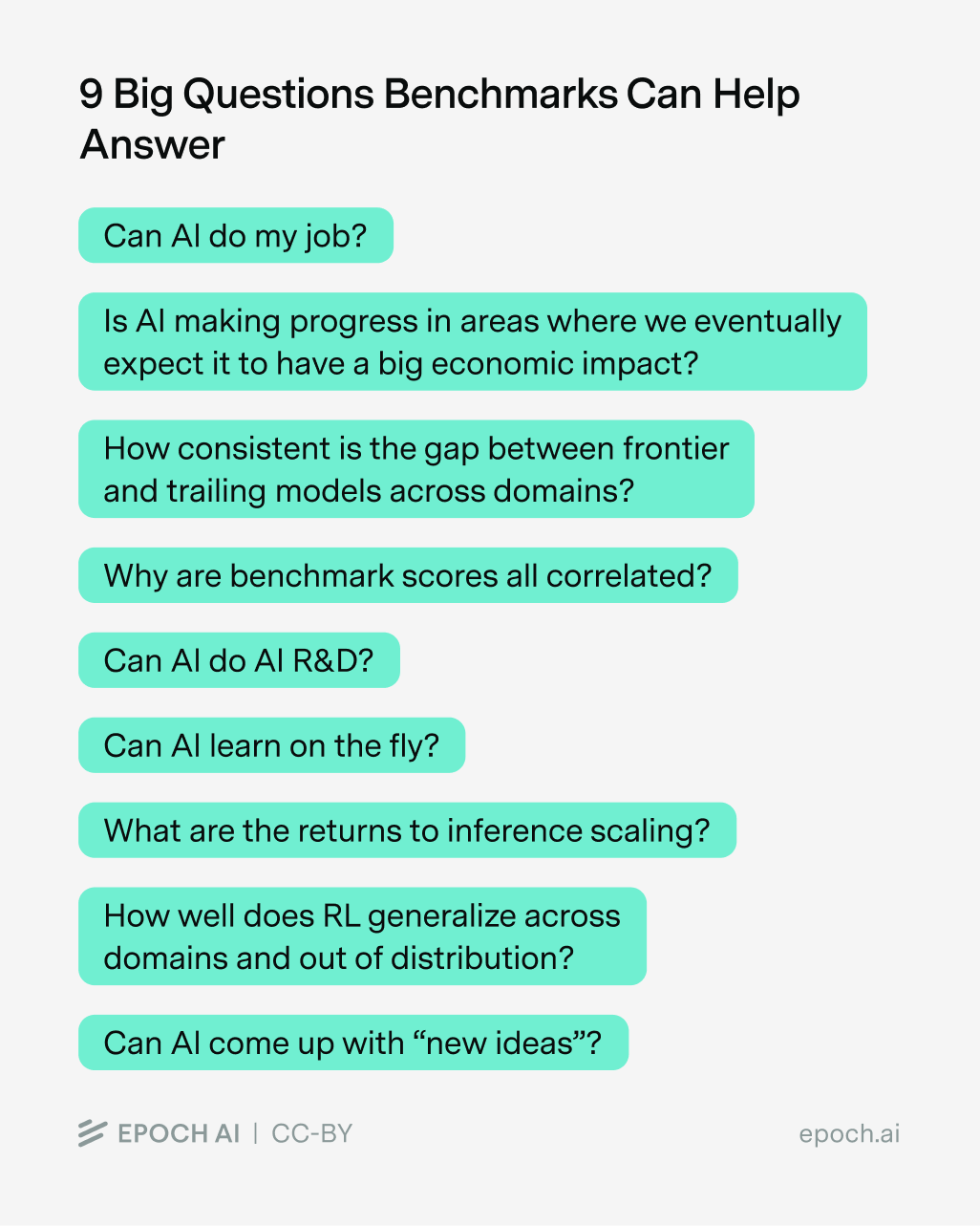
9 Big questions benchmarks can help answer
An Epoch researcher lists nine questions governing AI's impact, from narrow tasks versus messy jobs to learning from experience, and maps benchmark efforts to each.
Why it mattersNames which unresolved capability questions benchmarks should answer, helping engineers judge which evaluation results actually predict real-world agent usefulness.

How Web Data Infrastructure Powers the Next Generation of AI — Patricija Žemaitytė, Oxylabs
Oxylabs on rebuilding a search API from a four-second baseline to 550 milliseconds, and why something that works in development, something that passes tests.
Why it mattersThe load-testing observation, that instrumentation at high request volume distorts the measurement it is taking, is a failure mode teams hit when scaling any high-throughput data pipeline for AI.

The Rise of CaaS: Context-as-a-Service for Agentic AI — Omer Primor, Bright Data
Bright Data's Omer Primor puts the crossover at roughly 15,000 queries, past which building your own pipeline beats renting context.
Why it mattersIt gives a concrete break-even figure for the buy-versus-build decision on agent context data, which is otherwise argued on vibes.
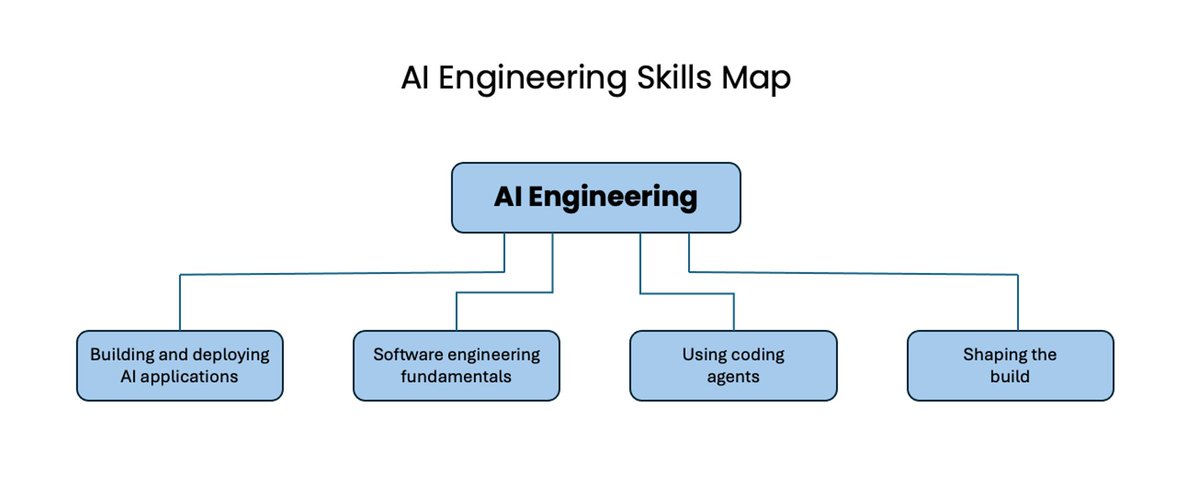
Four skills that define AI engineering, drawn from 10,000 job postings
Synthesized from job postings, expert interviews and surveys: four skills defining AI engineering.
Why it mattersA learning and hiring frame grounded in labor-market data, with "shaping the build" identified as the skill that shifts most as agents get better at delivering to a spec.

How to bring your software delivery workflow into GitHub with agent apps
GitHub agent apps let third-party services answer questions inside the pull request.
Why it mattersAnalytics, dependency risk, feature flags, and incident state can now be queried by agent from inside a pull request rather than four separate tools, using the same harness that backs the Copilot cloud agent.
Alibaba released Qwen3.8-27B as open weights with day-0 SGLang support: 206 tok/s decode on a single RTX 5090 using NVFP4 with DSpark, and 38 tok/s on a DGX Spark — a small dense model aimed squarely at running on hardware people already own.
Why it mattersA current-generation 27B dense model decoding at over 200 tokens per second on one consumer GPU puts local agent loops within reach without server hardware.
One GPU, 1M context, Day-0 ready. Big props to the vLLM team for the seamless in
The vLLM recipe for Qwen3.8-27B, a dense hybrid-attention model with linear attention on 48 of 64 layers and a built-in MTP draft head.
Why it mattersGives exact vLLM commands and measured numbers for serving Qwen3.8-27B on one or two consumer GPUs, including KV-cache capacity by quantization and MTP speculative-decoding acceptance, so you can pick a build without trial and error.

The Dark Arts of Web Automation: Teaching Agents to Use Websites Like Humans — Corey Gallon, Rexmore
Corey Gallon on driving a browser through the Chrome DevTools Protocol so an agent's clicks travel the same path as a human's, escalating from synthetic click to real CDP input event to a jittered mouse path only as far as the page forces.
Why it mattersIt explains why browser agents silently fail on real sites and gives a concrete escalation strategy and control split that anyone building web automation can apply directly.

GLM-5.3 posts large gains in cyber tasks (CyberGym 84.5%, ExploitBench 54.4%, more completed ExploitGym tasks than GLM-5.2) and will ship weights only after staged access to vetted security partners, backed by a public vulnerability disclosure ledger.
Why it mattersGLM-5.3 more than doubles ExploitBench over GLM-5.2, yet weights ship only after partner evaluation and API access.

Bringing agents onto the world wide web — Paul Klein IV, Browserbase
Browserbase's Paul Klein argues browser agents are limited by engineering rather than models.
Why it mattersIt reframes browser agent reliability as work any team can do now rather than a wait on the next model, and names the specific architecture choices that separate production systems from demos.
OpenRouter benchmarked Exa, Parallel, Perplexity and native search across four models and four depths. Raising the budget from 1 to 25 turns roughly doubled BrowseComp scores. Model choice shifted results about 15 points, engine about 10, and incorrect runs averaged 19.7 searches versus 10.3.
Why it mattersSearch turn budget moved BrowseComp scores more than engine choice, and wrong answers used about twice the searches. That helps you tune grounding cost and pick between native and third-party search.

Open Season

Liquid AI's LFM2.5 encoders detect and redact 40 PII types across 16 languages in a single pass, with the entity set selectable. They run inside your own pipeline, scrubbing text before it reaches a hosted model. Both 230M and 350M checkpoints are on Hugging Face.
Why it mattersRedaction runs locally in one forward pass with no generated output to parse, so confidential fields never leave your environment on the way to a hosted model.

Computer Use at the Edge of the Statistical Precipice — Pierluca D'Oro, Programma Labs
A sub-megabyte script that never looks at the screen, built by replaying one recorded trajectory per task, tops deterministic benchmarks like OSWorld.
Why it mattersAnyone reading computer-use benchmark numbers is likely reading an artifact of deterministic environments and undersized confidence intervals, and this gives both the proof and the environment design that fixes it.

How Cloudflare detects MCP traffic and helps secure it
Cloudflare on why agent traffic breaks the two assumptions behind human permissions, judgment and human speed, and the new controls it is shipping to detect and secure MCP traffic.
Why it mattersTeams running MCP servers get a way to see shadow MCP traffic and force agents through an approved path, which is the first practical control over what an agent can reach at machine speed.

Cursor confirmed its acquisition by SpaceX has closed. The team joins SpaceXAI to work on Grok, Grok Build, Grok Bot and the Grok API alongside Cursor itself, putting a widely used AI editor under the same roof as the Grok model line.
Why it mattersThe editor a lot of teams standardized on now shares ownership and engineering direction with a frontier model lab, which bears on model routing, data handling, and where Cursor's development attention goes.

Secure all your internal vibe-coded applications — in one click
Cloudflare adds one-click Access policies for Workers.
Why it mattersAnyone shipping internal apps built with coding agents can now make every preview and production deployment private by default with an account-level policy instead of trusting each builder to wire up auth.

Claude watermarks your code now
Anthropic is watermarking output from Claude models launched on or after 2 August, and this walks through how the marks work and why removing them already looks straightforward.
Why it mattersEngineers shipping Claude-generated code now carry a provenance marker they did not opt into, and the countermeasures are already public.
Have We Seen an Acceleration in Discoveries?
METR plots public discovery data across cyber vulnerabilities, math results and optimizations, looking for slope changes after January 2026.
Why it mattersPublic data shows vulnerability discovery accelerating sharply while optimization discoveries are not, which tells engineers where AI-driven discovery is already changing the threat and capability landscape.

GLM-5.3 is coming. focusing on coding. https://t.co/g10V8eJIwq
Why it mattersGLM-5.3 launches with post-training on a 743B-parameter base focused on coding and agentic tasks, plus what Z.ai calls a major leap in defensive cybersecurity capability among open-weight models.
GLM-5.3 is post-trained on the same 743B base as GLM-5.2 and targets agentic coding plus cyber defense, reportedly improving while emitting fewer output tokens. It ships through GLM Coding Plan and ZCode first, with API access and open weights staged behind safety evaluations.
Why it mattersBetter results at fewer output tokens changes the cost math on long agent runs, and the staged rollout means Coding Plan and ZCode are the only ways in at launch.

Ant Ling post-trained Ling-3.0-tiny with GSPO on one DGX Spark using the AReno framework. Over 400 steps on tic-tac-toe, mean reward rose from about -0.5 to 0.4 and responses shortened to about 850 tokens. The authors frame it as task adaptation, not a general capability gain.
Why it mattersIt shows a baseline, feedback, post-train, retest loop for tool-calling agents on a single node, with mean reward moving from about -0.5 to 0.4. The task is a toy and the tutorial was not reviewed, so treat it as a starting template.

Refine After Generation: Toward Correct and Concise Patches in LLM-based Program Repair
Automatic program repair is now good enough that agentic systems routinely close real repository-level issues, so this paper asks a question the field mostly skipped.
Why it mattersQuantifies that a passing test is not a proxy for a clean patch: agent diffs are consistently bloated, and minimality prompts do not fix it.

Memorization Diagnostics for Code LLMs Should be Scale-Aware
Researchers argue memorization probes for code LLMs are scale-dependent.
Why it mattersIf you use contamination probes to judge whether a code model memorized a benchmark, those probes likely fail on exactly the large models you ship — the methodology, not the model, is what breaks.

Specification-first convergence with an AI coding agent: a case study of dismantling a core architectural invariant across 189 files in a 717k-line codebase with no test oracle and no human code review
A single fully instrumented case study of a large-scale architectural refactoring carried out by an AI coding agent.
Why it mattersDocuments a specification-first protocol that carried an agent through a refactor the author judged infeasible incrementally, with enough instrumentation to check the claim.

Does It Render Everywhere? A Study of Cross-Environment Compatibility in MLLM-Generated Webpages
Evaluations of AI-generated webpages almost always score visual fidelity in one fixed browser and device configuration.
Why it mattersPuts a number on a failure mode most AI frontend evaluation misses entirely, since visual fidelity is usually scored in a single fixed browser.

Reading the signals: Helping your AI-built payment integration understand business intent
Stripe on giving an AI-built payment integration enough business context to read intent, rather than only calling the API correctly.
Why it mattersPayment code written by agents fails quietly when business intent is missing, and this is the payment provider's own account of how to supply it.

Challenges Healthcare Orgs Building Browser Agents
A field guide to browser agents against systems with no API.
Why it mattersDescribing what to extract instead of where it lives survives portal redesigns, and persisting authenticated session state avoids the slow, flag-prone cold login that sinks most portal automations.

State of Open Models: Summer 2026 Observations
Hugging Face's biannual open-model report.
Why it mattersConcrete distribution data on where open-weight capability now originates and how concentrated adoption really is — directly useful when picking a base-model family to standardize on.
An index of the vibe-coding frontier. Corrections welcome.