Intel
Page 91
In Session 4 of the GitHub Secure Open Source Fund, 50 open source projects upgr
Session 4 of the GitHub Secure Open Source Fund helped 50 open source projects upgrade their security posture through AI-assisted workflows, maintainer expertise and funding.
Why it mattersMaintainers now have a documented account of where AI-assisted security review helped and where it did not, across 50 real projects.

Voyage Code 4, a code retrieval embedding model from Voyage AI by MongoDB, is now offered on OpenRouter. It supports Matryoshka embeddings at 256, 512, 1024 and 2048 dimensions plus several quantization options. Pricing and benchmarks were not available in the source.
Why it mattersCoding agents building code search indexes can pick an embedding size from 256 to 2048 dimensions and trade retrieval quality against storage and latency, through the same OpenRouter API they may already use.

Claude Code desktop adds an auto-continue checkbox. When enabled, the session picks up where it left off once the usage limit resets. The announcement's video was not readable, so behavior beyond the post text is unconfirmed.
Why it mattersClaude Code desktop can now resume your session automatically when a usage limit resets, so long-running work no longer stalls until you return to restart it.
A weird experiment I've been trying the last few weeks is having Claude take ove
An experiment handing day-to-day app maintenance to Claude through a Slack channel, running daily routines across iOS, Android, desktop, web and CLI.
Why it mattersIt is a working blueprint for handing recurring codebase maintenance to scheduled agents, with real merge rates and the review gate that makes it safe.
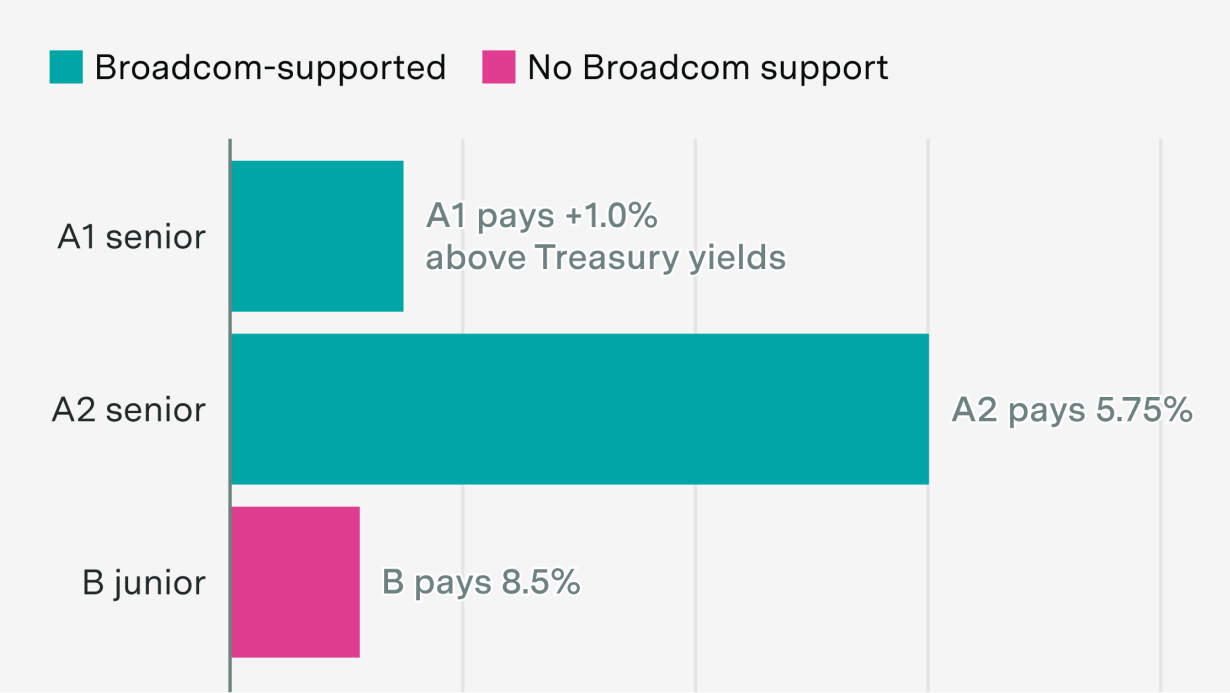
Will financing bottleneck AI compute? An Anthropic case study
Epoch examines nearly $50B of debt tied to Anthropic's buildout, including Google TPU leases and Fluidstack datacenters, to test whether financing will cap frontier compute scaling.
Why it mattersFrontier compute growth depends on capital markets. Evidence that lenders back future AI revenue shapes expectations for model capability and capacity.

MiniMax released Music 3 under open weights, with local ComfyUI support available at launch and a hosted cloud version still to come. The company restated its intent to keep releasing open models. It did not answer a public question about the training data.
Why it mattersAn open-weights music generation model that runs locally in ComfyUI today, removing the hosted API dependency for audio in a generation pipeline. Training data provenance remains undisclosed.
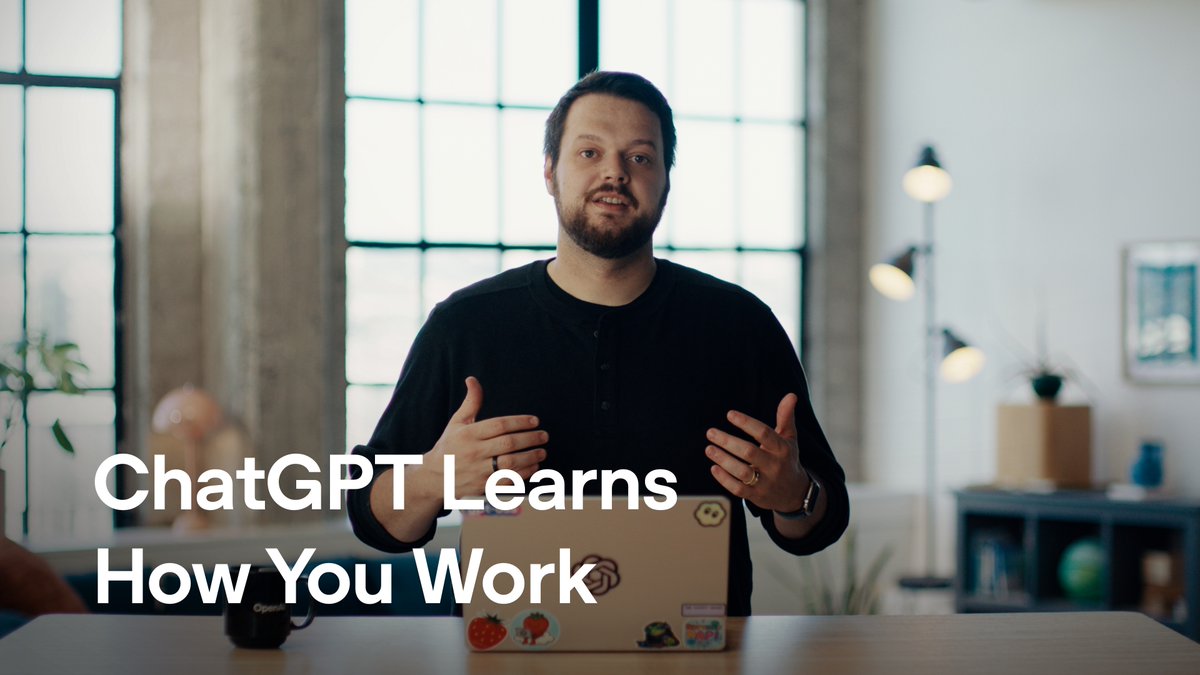
Codex and ChatGPT can now understand the context of your recent work. Opt into C
OpenAI added opt-in Computer History to the Mac desktop app for ChatGPT and Codex.
Why it mattersCodex and ChatGPT can now draw on a local record of clicks, typing and app switches to resume work and propose skills or scheduled tasks. Memories are inspectable files, with exclusions and deletion, which matters for privacy review.


Computer History builds on the Chronicle research preview with reduced token usa
OpenAI's Computer History builds on the Chronicle preview with lower token use and finer privacy controls.
Why it mattersDesktop-wide activity capture feeding ChatGPT and Codex changes what context an assistant has and what a developer is handing it, so the scoping controls matter.

Computer History lets the ChatGPT Mac app retain what you do across apps and websites as context, succeeding the Chronicle preview with reduced token usage and more controls: a timeline view, skills built from frequent tasks, and per-item clearing. Opt-in, Pro/Business/Enterprise.
Why it mattersAn opt-in, persistent record of desktop activity becomes ChatGPT context — cutting re-explanation while raising a concrete data-handling decision for anyone enabling it on a work machine.

🆕 @GoogleAI's Gemini 3.7 Flash is now generally available and rolling out in Gi
Gemini 3.7 Flash reaches general availability in GitHub Copilot, with early testing showing gains in web and app development, agentic coding, code quality and codebase research.
Why it mattersCopilot users get another frontier model option for agentic work without leaving their existing setup. Model choice inside the coding tool is one of the few knobs that changes agent behavior immediately.

llm-gemini 0.33
The first llm-gemini release in a while, adding same-day support for Gemini 3.7 Flash along with gemini-3.6-flash, gemini-3.5-flash-lite.
Why it mattersGives anyone on the llm CLI same-day access to the new Gemini models, with reasoning traces and server-side tool calls available through a documented flag.
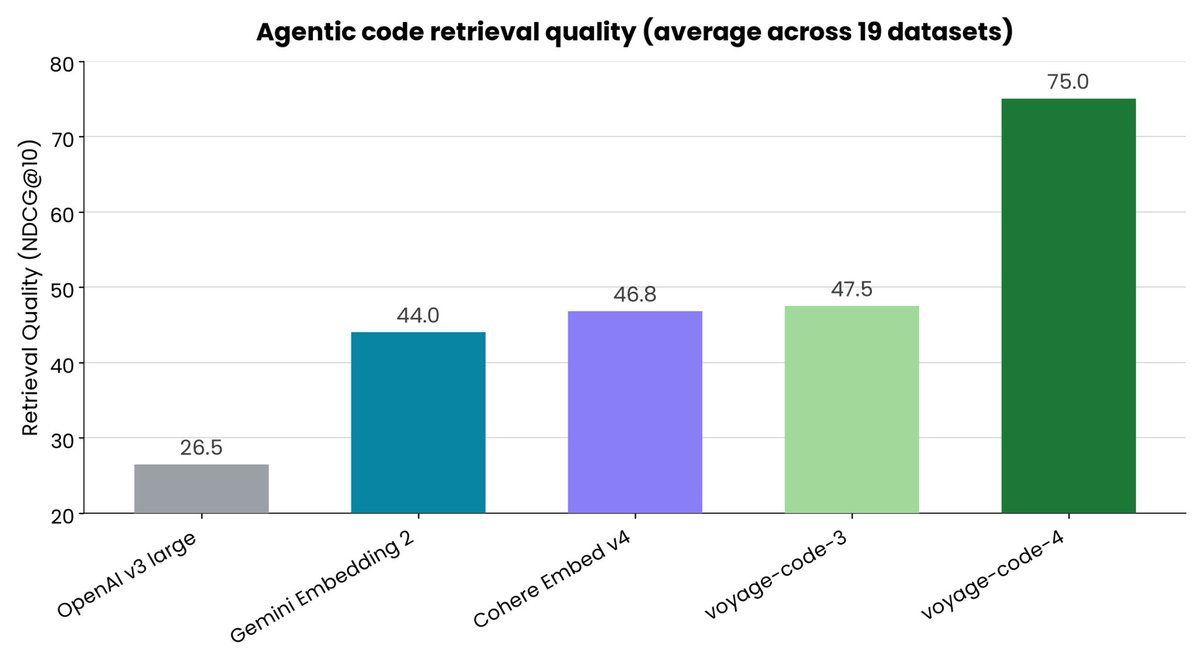
voyage-code-4 trains on how coding agents fetch context
Voyage AI releases voyage-code-4, a code embedding model trained on queries from issue-fixing pull requests.
Why it mattersCoding agents often fall back on grep.
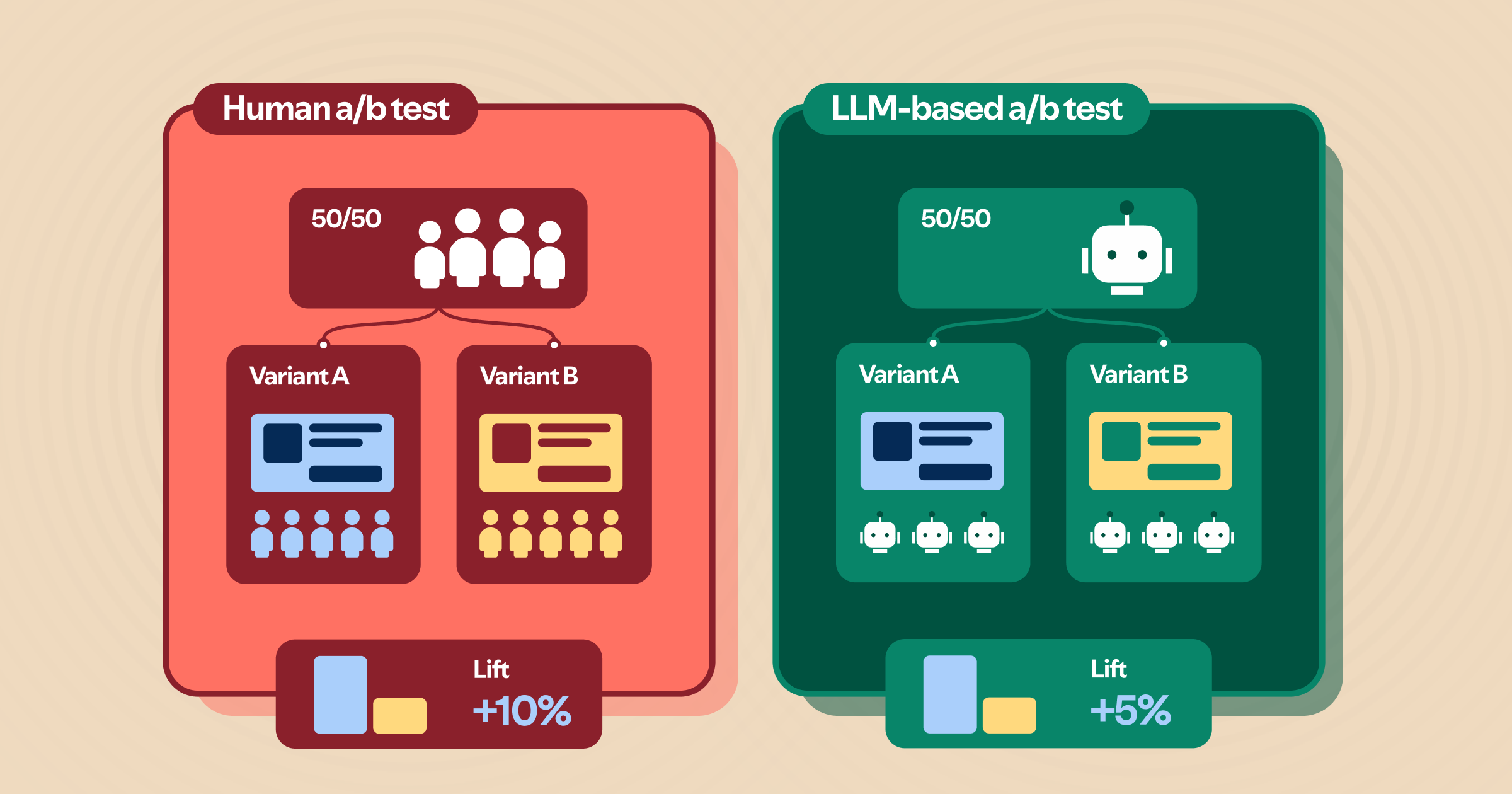
When Can LLMs Replace Humans in A/B Tests?
Simulated users are seductive: results in hours, no traffic spend.
Why it mattersSubstituting LLM predictions for user responses forfeits the randomization guarantee; identification then rests on unverifiable surrogacy assumptions that weaken as a treatment departs from past experiments.
Artificial Analysis benchmarked Gemini 3.7 Flash: 56 on its Intelligence Index (+4 over 3.6 Flash), about 340 tok/s, $0.75/$3.75 per 1M tokens under year-end discounted pricing, $0.40 per task, and top scores on AutomationBench-AA and AA-AnalystAgent.
Why it mattersIndependent numbers show a fast, cheap Flash model leading agentic benchmarks (AutomationBench-AA, AA-AnalystAgent). That helps you decide whether it fits latency- and cost-sensitive agent workloads.

Artificial Analysis benchmarks Gemini 3.7 Flash: 56 on its Intelligence Index (up 4), about 340 output tokens per second, a Pareto-frontier position on time per task, and leading scores on AutomationBench-AA and AA-AnalystAgent. Includes pricing and a 1M-token context window.
Why it mattersGemini 3.7 Flash scores 56 on the Intelligence Index at about 340 tokens per second, with $0.75/$3.75 per 1M token promotional pricing through year end. That makes it a strong speed and cost option for agentic workloads.

Factory launched Agent Effectiveness, which measures agent usage against cycle time, work priorities and shipped artifacts so teams can see what their AI spend produces. The announcement gives no further detail; the demo video was not readable.
Why it mattersTeams paying for coding agents can now connect usage in Factory to cycle time and shipped artifacts instead of tracking spend alone. Specifics were not visible in the post.

Perplexity added Grok 4.6 to its search product and Computer agent. By Perplexity's own WANDR evaluation, the model sits on the performance-efficiency frontier, matching Fable 5 results at more than 60% lower cost per task. The benchmark details are not included in the post.
Why it mattersGrok 4.6 is now selectable in Perplexity and Perplexity Computer. Perplexity reports it matches Fable 5 on its WANDR benchmark at over 60% lower cost per task, which matters when choosing a model for agentic research workloads.

LongCat-2.0 from @Meituan_LongCat is free in Nous Portal for one week. It is a 1
Meituan's LongCat-2.0, a 1.6T-parameter MoE with a million-token context built for agentic coding, is free in Nous Portal for a week.
Why it mattersA 70.8 on Terminal-Bench 2.1 puts LongCat-2.0 in serious contention for agentic coding work, and the free week is a real window to evaluate it against an existing stack.

Open Models Api Beta
Arcee's open models API beta widens past Trinity to serve DeepSeek-V4 Pro and Flash, GLM-5.2, Kimi-K3 and Thinking Machines' Inkling-Small.
Why it mattersOne endpoint now serves DeepSeek-V4, GLM-5.2, Kimi-K3, Inkling-Small and Trinity-Large-Thinking with published per-token pricing, giving a single billing path for comparing open models on long-running agent work.

Arcee open-sourced nac, an Apache 2.0 harness where an orchestrator dispatches isolated workers that exit and leave only summary episodes. It ships an MCP server and launched alongside an open models API beta with six hosted models and listed per-token pricing.
Why it mattersnac keeps long-running agent work from accumulating context noise by discarding each worker's raw context and keeping only a summary. Its MCP server lets Claude Code or Codex delegate background tasks to it.
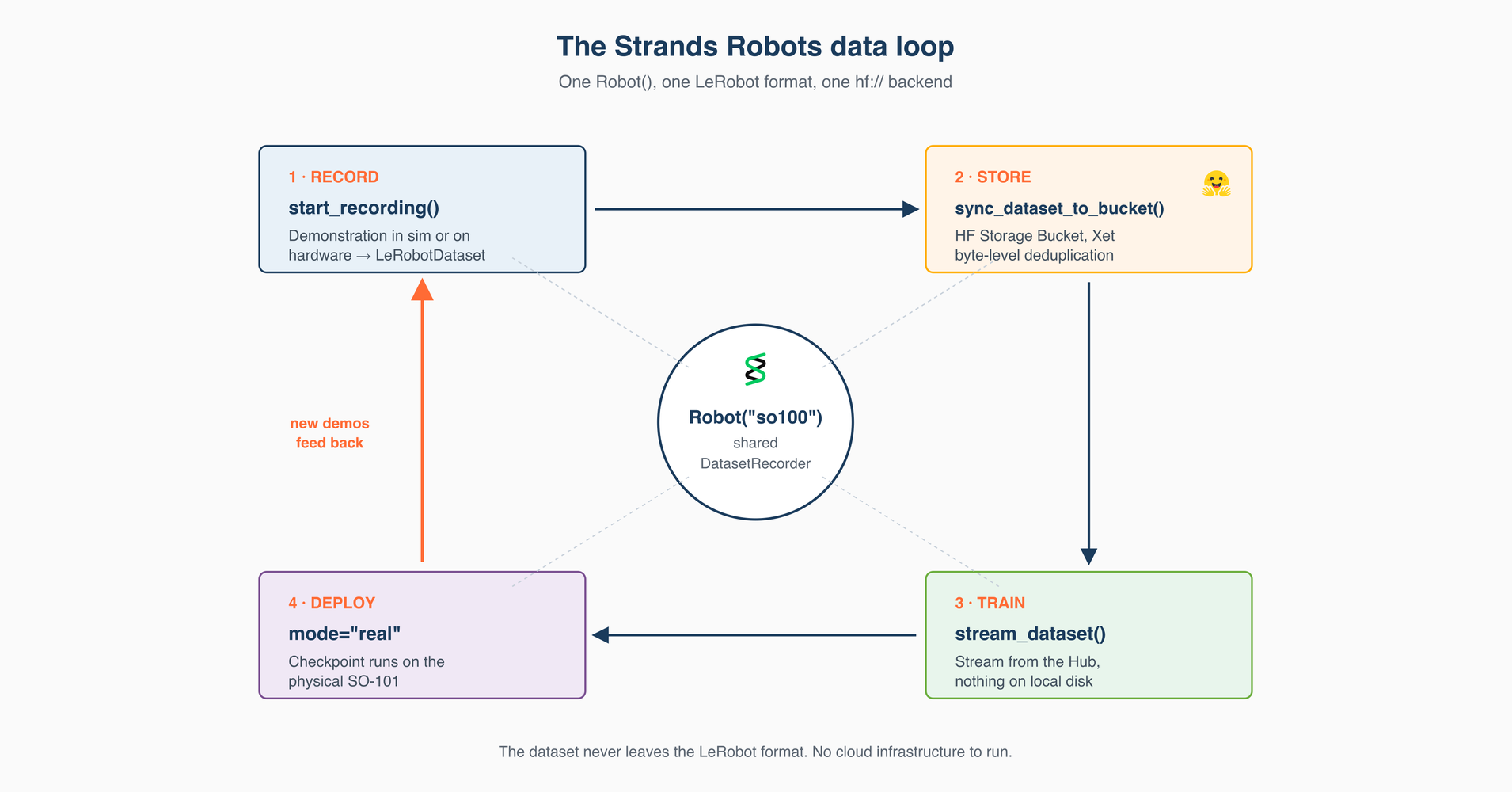
Record, train, and deploy from one place with Strands Agents, LeRobot, and Hugging Face Storage Buckets
AWS details Strands Robots.
Why it mattersA concrete pattern for a continuous record→train→deploy loop owned by one agent, using deduplicated bucket storage and streaming reads instead of re-copying the dataset on every training run.

Full Breakdown: When can a change ship unread? When something cheap and hard to
An argument that agent-written changes earn autonomy in proportion to how cheaply tests, types and mutation runs can fail them.
Why it mattersReviewing agent output is now the bottleneck, and this ties how much autonomy a change gets to how cheaply it can be failed automatically. It also marks paths like auth and billing that stay human-reviewed.

A thread citing GitLab and Sonar surveys on AI code review burden, then arguing that autonomy for agent changes should scale with how cheaply automated checks can fail them, using Uncle Bob's unread-code workflow as the example. The full breakdown was not collected.
Why it mattersIf reviewing AI code is the bottleneck, reading every diff makes you the queue. The thread argues for letting automated checks (unit, acceptance, mutation tests, quality metrics) decide which changes can ship unread.
Perplexity reports two batches of Search SDK updates in Computer raised agent execution reliability from 81.9% to 92.6% and cut per-task cost about 8-10%, arguing that SDK shape determines how well models use a tool. Specific changes are not detailed in the thread.
Why it mattersPerplexity reports that changing how an SDK is shaped, not the model, raised agent execution reliability from 81.9% to 92.6% and lowered cost per task. It is a data point for anyone designing tool interfaces for agents.

Google launches Gemini 3.7 Flash, aimed at coding and agent work with more deliberate planning and tool use. Introductory pricing is $0.75 per million input tokens and $3.75 per million output through year end. It is available in the Gemini API, AI Studio, Android Studio and Antigravity.
Why it mattersAgent builders get a model tuned for multi-step planning and tool calls at half the 3.6 Flash price, but the $0.75/$3.75 rate is introductory and runs only through the end of the year, so budget for the later price.
Nac
Arcee open-sources nac, an agent harness for tasks that run for hours or days.
Why it mattersSeparating the context needed for one action from the state needed to continue a workstream is a directly copyable answer to context rot on long-horizon tasks.

Introducing Gemini 3.7 Flash
Google introduces Gemini 3.7 Flash, its workhorse model for coding and agents, three weeks after 3.6 Flash and shaped by developer feedback and algorithmic changes the team expects to carry into later models.
Why it mattersA cheaper Flash model with materially better issue resolution changes the default choice for high-volume coding and agent workloads.
🔵 It shows strong gains over 3.6 Flash in key coding tasks like debugging and i
Google released Gemini 3.7 Flash three weeks after 3.6.
Why it mattersA new Flash model cuts price to half of 3.6 Flash ($0.75 input, $3.75 output per 1M tokens, introductory through year end) while raising coding scores, which lowers the cost per agentic task for anyone building on the Gemini API.
OpenAI previews Ultrafast mode for GPT-5.6 Sol, served on Cerebras hardware at up to 750 tokens per second, up to 14x faster. It launches first in the API for select customers, with wider access as capacity grows. Targets voice, support, coding and security response.
Why it mattersIf your agent or voice product is latency-bound, a frontier model at up to 750 tokens per second changes what is feasible. Access is limited to select API customers for now.
OpenAI is previewing Ultrafast mode for GPT-5.6 Sol, served on Cerebras at up to 750 output tokens per second — roughly 14x standard speed. API-only at launch, restricted to a selected group of customers, expanding as capacity grows.
Why it mattersFrontier-model latency drops to where interactive agent loops and per-keystroke tooling become viable — but access is capacity-gated to selected API customers, so plan for a waitlist rather than a general flag.
Introducing Gemini 3.7 Flash
Gemini 3.7 Flash arrived three weeks after 3.6 at half the introductory price per million tokens, with gains concentrated in coding and agent work.
Why it mattersA workhorse model with sizable coding and agent benchmark gains at half the prior price per million tokens shifts the default choice where cost per task matters. Note that 3.8 Flash has since shipped.

Cursor says cloud agents now start 3x faster, using prebuilt development environments it maintains in the background at no extra cost. Failed builds are never promoted, so agents continue on the last successful build while the failure is debugged separately.
Why it mattersCursor cloud agents start about 3x faster, which makes long-running delegated tasks more practical. A failed environment build no longer interrupts agents, since they stay on the last good build while you debug.
Cursor reports cloud agents now launch 3x faster. The gain comes from builds, ready-to-use development environments prepared continuously in the background at no added cost. The announcement's video was not readable, so details beyond the post are unconfirmed.
Why it mattersCursor cloud agents now start 3x faster because development environments (builds) are prepared continuously in the background at no extra cost, which cuts the wait before long-running delegated tasks begin.

MiniMax releases open-weights Music3 for full-length songs
MiniMax released Music3, an open-weights model that generates songs up to five minutes from lyrics and structured captions.
Why it mattersOpen weights for a 5-minute full-song music model with a speech-style HTTP API and a 24GB (or offloaded 8GB) VRAM path let you self-host music generation instead of depending on a vendor API.
AReno brings agentic RL post-training to a single DGX Spark
Ant's inclusionAI team released AReno, a self-contained single-node toolkit for RL post-training, serving and agentic RL.
Why it mattersAReno lets you run agentic RL (tool-call rollouts, reward functions, LoRA/QLoRA) on one machine such as a DGX Spark or Apple Silicon, without a cluster. That makes it practical to adapt a small model to your own agent task locally.

On ReactBench, the open-source frontend coding benchmark, Grok 4.6 ranks second at fixing React code and fifth across writing and fixing combined. The clearest improvement over 4.5 is effort separation, which now traces a usable cost-quality curve.
Why it mattersIf your agent workload is React repair, Grok 4.6 now sits second on an open-source frontend benchmark, and its effort levels trade cost against quality along a cleaner curve than 4.5.
Build and run your own benchmark today:
Artificial Analysis launched Optima, a GA platform for building custom benchmarks from your own files, traces or coding-agent context.
Why it mattersLets you test models on your own workload and see score, cost and time per task together, so you can find a cheaper model that holds quality. Supports importing traces and benchmarking your own agent over HTTP.
Palmyra X6 targets eight-hour unattended agent runs
WRITER released Palmyra X6 with an updated agent harness, claiming eight-hour unattended runs and about $0.12 per average task.
Why it mattersShows what a vendor ships for long-horizon agent runs: a new model paired with a harness built around cache-stable prompts and cheap compaction. It claims 40%+ cost cuts at quality parity. Results come from the vendor's own evals.
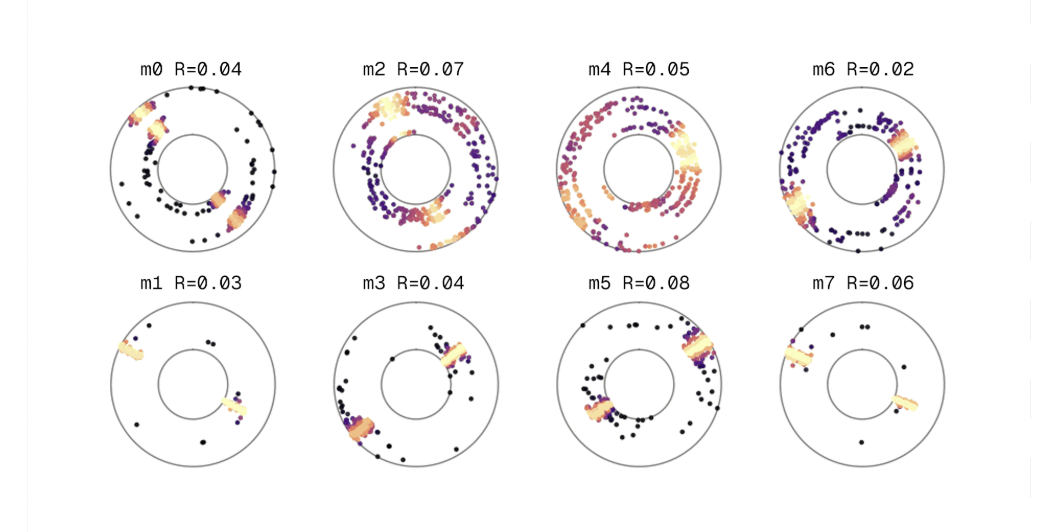
Less is More: Scaling Dynamics with Sparsity
Shows that sparsifying oscillator interactions in Unconventional AI's Un-0 model both solves a quadratic scaling problem and improves image-generation quality over the dense baseline.
A 90-minute SF challenge put roughly 130 engineers on one task: an agent that orders a real pizza with real money, no pre-written code. Checkout stopped nearly everyone; the winner used DoorDash's month-old CLI, second and third pushed orders through Brave's API.
Why it mattersIn a live autonomous-commerce test the wall wasn't reasoning or tool use but completing a real paid checkout — and merchant-supplied CLIs or Brave's API were what actually cleared it.

🧩 DeepSeek Harness v0.1 is now available in Developer Preview! 🔹 We’re opening
DeepSeek Harness v0.1 opens in developer preview under MIT, built on the Cordis meta-framework around one idea.
Why it mattersAn open-source, fully pluggable agent harness from a frontier lab gives builders another swappable foundation to compare against existing frameworks.
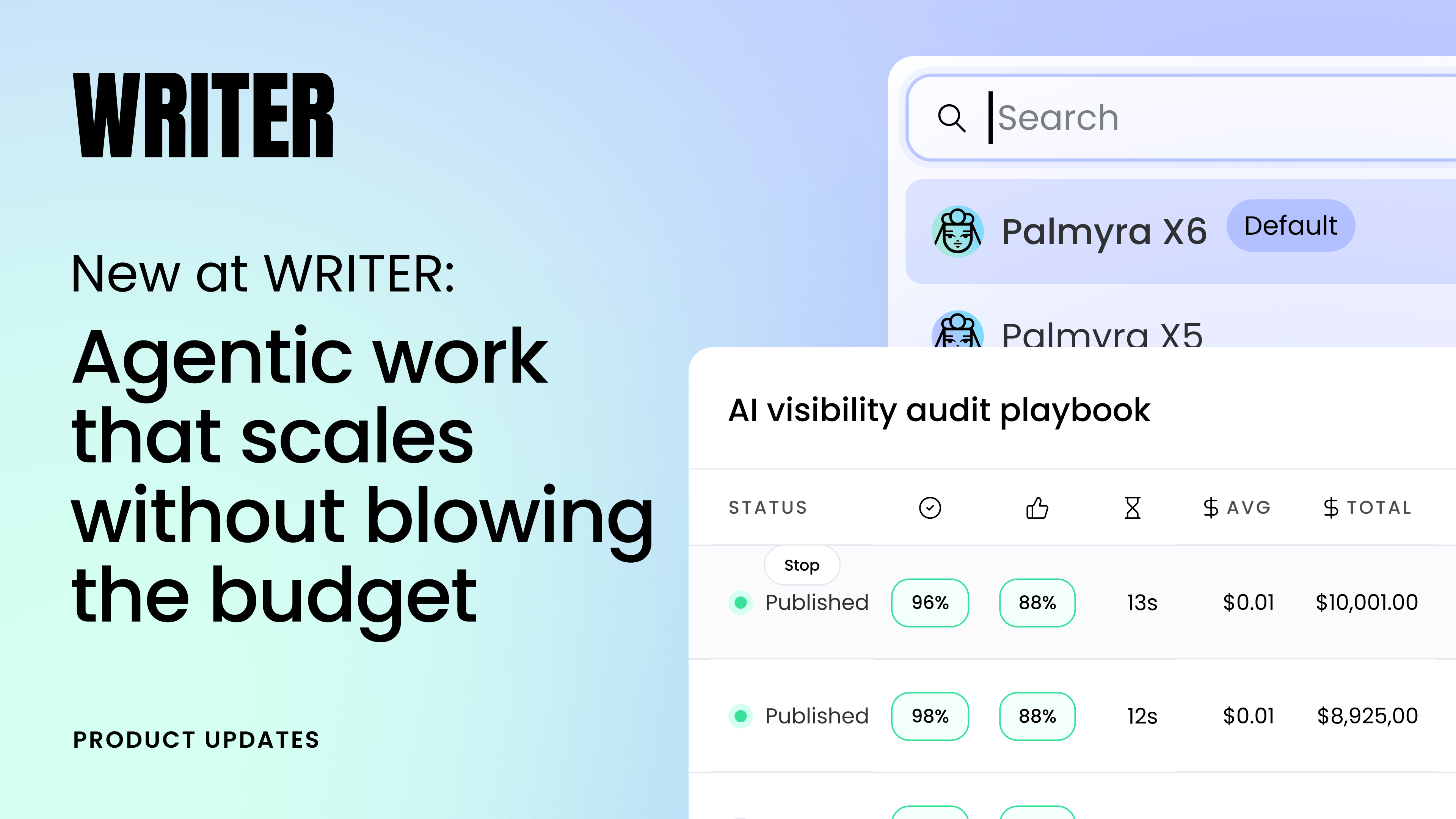
New at WRITER: Agentic work that scales without blowing the budget
WRITER ships Palmyra X6 for agentic workflows at lower cost.
Why it mattersA new flagship model shipped alongside per-model spend governance and usage reporting covers the operational half of running agents in production that most platforms still leave to the caller.

Grok 4.6 Is INSANE – Is THIS a Frontier Model?
A hands-on test of Grok 4.6 across browser workflows, C++ game development, 3D CAD modelling, frontend design and FPS generation, asking whether it reaches frontier level.
Why it mattersLets engineers see whether Grok 4.6 is competitive on agentic coding tasks against a consistent benchmark set.

xAI just caught up (Grok 4.6 is here)
Grok 4.6 gains five points on the Artificial Analysis Intelligence Index to reach 61, but burns 30% more tokens per run and nearly doubles in price.
Why it mattersHeadline benchmark gains can be paid for in tokens, and this puts numbers on that tradeoff for Grok 4.6. Model selection for agent loops is a cost decision as much as a capability one.

DeepSeek introduces peak and off-peak API pricing with the V4 lineup. Off-peak rates are 50% lower than peak, taking effect at 16:00 UTC on Aug 16, 2026, which rewards deferrable workloads.
Why it mattersDeepSeek V4 API pricing now has peak and off-peak tiers, with off-peak 50% cheaper from 16:00 UTC Aug 16, 2026. Batch and background agent workloads can cut cost by scheduling into off-peak windows.
DeepSeek launches V4-Pro with agent-focused upgrades, tunable reasoning effort across V4-Pro and V4-Flash, and native OpenAI Responses API support tuned for Codex. Available in the app and via API under unchanged model names.
Why it mattersDeepSeek V4-Pro adds low/high/max reasoning effort and native OpenAI Responses API support with Codex setup, so existing Responses-based agent harnesses can target it with less glue code.
The builder’s guide to GPT‑5.6
OpenAI's builder's guide to GPT-5.6: how startups use it for faster, more cost-efficient agents through smarter model selection and new Responses API capabilities.
Why it mattersModel selection and Responses API mechanics are the levers that decide what an agent costs to run, and this is the vendor's own account of them.
Previewing Ultrafast mode: GPT-5.6 Sol at up to 14X the speed
OpenAI previews Ultrafast, an API service tier running GPT-5.6 Sol up to 14 times faster, powered by Cerebras hardware and delivering up to 750 output tokens per second.
Why it mattersA frontier model at 750 tokens per second changes which agent loops and real-time flows are viable, and the tier is the access path to it.
The Devil Is in the Interface: Evaluating How Tool Architecture Shapes Coding Agent Behavior
A controlled study of tool architecture in coding agents.
Why it mattersSeparates what an agent can do from how its tools are shaped, and shows the shape itself changes behavior, which is the part most agent harnesses tune blind.
Better, Faster, Stronger: Programmatic Skill Learning Best Reduces Agent Cost
An argument that skills learned as programs cut agent cost most, because deterministic action sequences achieve cheaply what would otherwise take trial and error and risk degenerate behaviour over long horizons.
Why it mattersSkill design is usually argued on capability; this puts a cost frame on it and gives a concrete reason to prefer program-shaped skills over prose ones in long-horizon agents.
An index of the vibe-coding frontier. Corrections welcome.