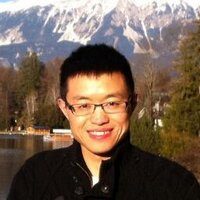
Jie Tang is a computer-science professor at Tsinghua University whose work spans academic search, graph representation learning and large language models. He helped develop AMiner and co-authored the GLM-130B model and NetMF research.[1][2]
Start with GLM-130B: An Open Bilingual Pre-trained Model →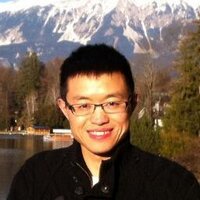
Education

Links
Faculty profile Website X
Professor of Computer Science · Tsinghua University
Director, Foundation Model Research Center · Tsinghua University
Background
Tang received his PhD in Computer Science and Technology from Tsinghua in 2006, the year its faculty directory says he joined the department. His institutional pages describe research in data mining, social networks and knowledge graphs, alongside later work on language models. A university announcement also names him director of Tsinghua’s Foundation Model Research Center.[1][6]
Career
A Tsinghua account of Wu Dao identifies Tang as its development lead and says he and his team created Zhipu.AI to develop applications. His work connects academic research on language models with a company developing products from that research.[5]
Contributions
Finding researchers through a scholarly graph
His group developed ArnetMiner, later called AMiner, as an academic search and mining system. It connects researcher profiles and publications to support tasks such as finding related scholars, recommending collaborations and analyzing communities. The research question extends beyond document search: how can relationships among people, topics and publications help someone navigate a field?[1]
A common explanation for graph embeddings
Tang co-authored the NetMF paper, which shows that several methods for turning network nodes into numerical vectors can be understood as matrix factorization. Those vectors preserve useful relationships for tasks such as classifying nodes or predicting links. The paper unifies DeepWalk, LINE, PTE and node2vec under that mathematical view and develops an explicit factorization method, making their connections easier to analyze.[4]
Opening the engineering of a large model
The GLM-130B paper reports an English-and-Chinese language model and explains the training choices and stability problems encountered while building it. The team released weights, code, logs and supporting tools so others could inspect the engineering, rather than receiving only a benchmark claim. Tang is one co-author in a large team. His homepage also links the group’s ChatGLM, image, video and code-generation projects.[2][3]
Tools, writing & talks
Writing, research & talks
Start here
A paper explaining a large bilingual model’s training process, stability challenges and released implementation artifacts.
Start with the abstract and training overview to understand the contribution and release scope. The technical sections assume familiarity with language-model pretraining and GPU training.
Co-author[3]Zhipu's Jie Tang describes how a GLM-5.3-powered Infra Agent took GLM-5.3-Flash from first run on new accelerators to full production serving in two weeks, tripling throughput by giving the agent layered 'dense feedback' instead of only slow, sparse end-to-end benchmarks.
Catalog workOriginal sourceZCode is offering GLM-5.3-Flash free for 10 hours a day from September 3 to 18, prioritizing Coding Plan subscribers, with new users receiving a one-time 100M free token allotment during the window.
Catalog workOriginal sourceZhipu says GLM-5.3 Flash scored 57 on the Artificial Analysis index at roughly 1/100th of frontier model pricing while running on domestically made chips, and became OpenRouter's top model by weekly token share.
Catalog workOriginal sourceA history of compute-optimal scaling from Kaplan's parameter-heavy exponents through Chinchilla's 20-tokens-per-parameter rule to today's deliberate over-training, driven by inference cost now dominating a model's lifetime spend rather than training cost alone.
Catalog workOriginal sourceArtificial Analysis Index = 60 https://t.co/ts3QfDtRmv
Catalog workOriginal sourceGLM-5.3 is coming. focusing on coding. https://t.co/g10V8eJIwq
Catalog workOriginal source1M users already https://t.co/lLKMytzbSk
Catalog workOriginal sourceZhipu researchers describe Single-rollout Asynchronous Optimization (SAO), a reinforcement-learning method that stays stable for a thousand training steps and outperforms GRPO and its variants on SWE-Bench Verified, BeyondAIME, and IMOAnswerBench.
Catalog workOriginal sourceInference providers are racing to serve GLM-5.2 faster, with reported throughput climbing from 280 to 318 tokens per second and Databricks later claiming 392, showing how much headroom remains in open-weight model serving.
Catalog workOriginal sourceGLM-5.2 debuts at the top of open-source rankings on the Artificial Analysis Intelligence Index (score 51, matching Claude Opus 4.8), ranks #2 on Code Arena, #1 on DesignArena, and #3 globally on the FrontierSWE engineering benchmark.
Catalog workOriginal sourceGLM-5.2 launches with a stable 1M-token context built for long-horizon coding-agent work, an IndexShare attention architecture cutting per-token FLOPs 2.9x at that context length, improved speculative decoding, and an MIT license with no regional restrictions.
Catalog workOriginal sourceZCode 3.0 launches optimized for GLM-5.2, adding stronger agentic task execution, better long-context coding, and a new Goal feature for managing multi-step development objectives end to end.
Catalog workOriginal sourceZhipu released GLM-5.2 as a fully open-weight model with a usable 1M-token context window, positioning it as its strongest coding model and framing the release as a response to sudden restrictions on frontier model access elsewhere.
Catalog workOriginal sourceZhipu is rolling out GLM-5.1-highspeed, a pricier variant running at 400 tokens per second aimed at agentic workloads that need much faster generation than standard inference.
Catalog workOriginal sourceZhipu's Jie Tang argues the next AI breakthrough is long-horizon agentic tasks, models running extended missions in agent environments, and outlines memory, continual learning, and self-judging as the unsolved pillars needed to get there.
Catalog workOriginal sourceThe NetMF paper connecting several graph-embedding approaches through matrix factorization.
Co-author[4]