Mercury 2 targets voice agents with a sub-300ms reasoning pass
- Source
- x.com
- Date

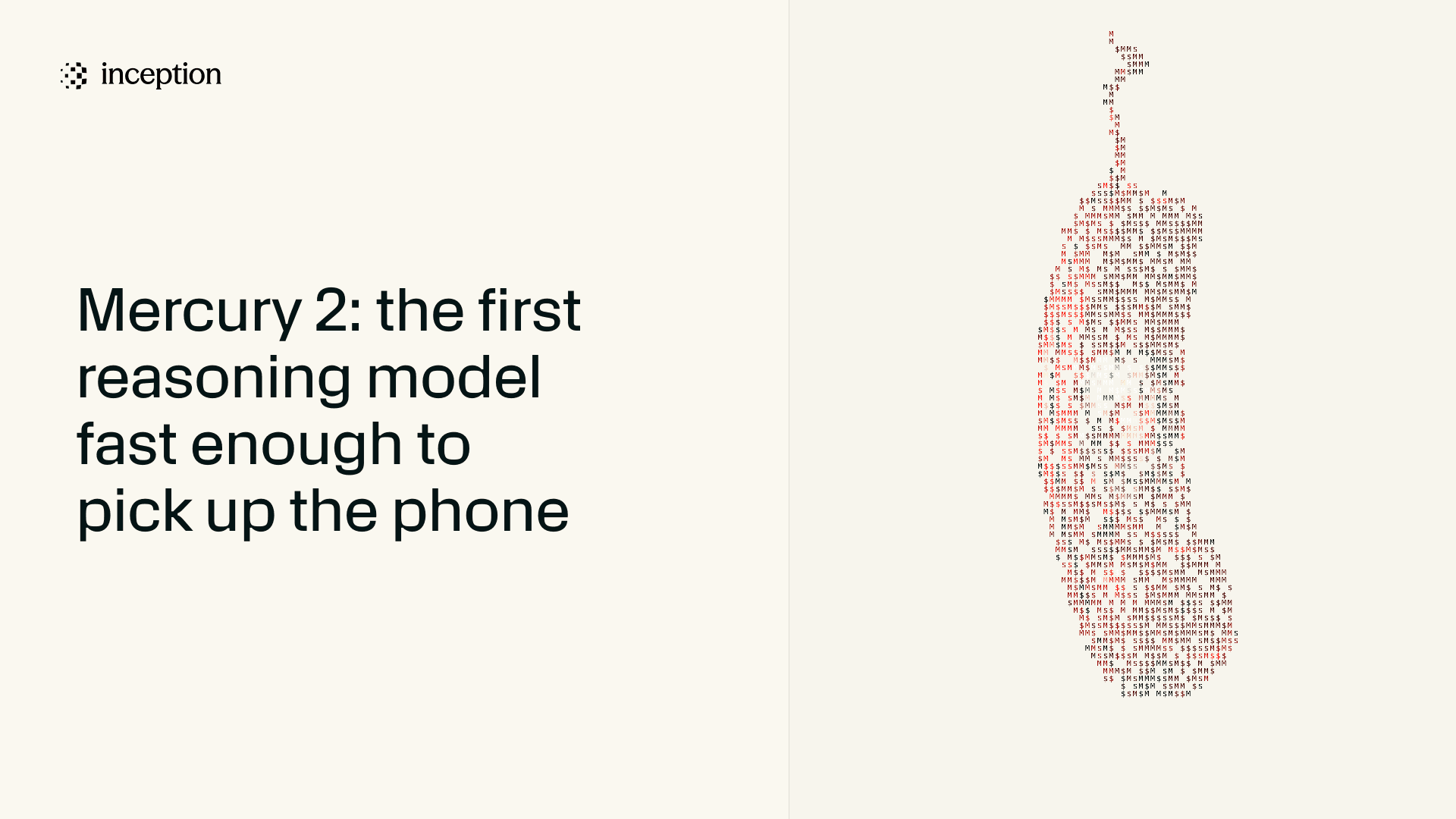
Smart enough to reason, fast enough for a phone call. On real voice agent prompts, nothing beats Mercury 2 on both. The world's first reasoning diffusion LLM: full reasoning pass in <300ms at 1000+ tok/s on standard NVIDIA GPUs. 💬"The reasoning quality we need without sacrificing the latency for a natural phone call." — Oliver Silverstein, CEO, @OpenCall_AI Read how it works 👉

Building voice agents? Get in touch with our team 👉 https://t.co/i1RLyI9Wlk
Context
Inception is positioning Mercury 2 as a way to give phone agents a short reasoning step without a long conversational pause. Its explanation rests on parallel text generation: at more than 1,000 text units, or , per second, a 300-token reasoning sequence takes under 300 milliseconds to generate. That is a calculation about the model's reasoning output, not the total time needed to hear a caller and deliver spoken audio. The company's voice- chart separately plots a tool-calling score against median time to first token, the wait before any text appears. Together, these describe where faster generation could reduce waiting within a voice system. Inception's explanation
- token — The chunk of text a model reads and writes in — roughly three-quarters of a word — and the unit AI usage is billed in.
- AI agent — An AI system that doesn't just answer once but works toward a goal in a loop — taking actions, reading the results, and deciding what to do next.
- benchmark — A standard public test set for comparing AI models — the shared scoreboards behind every "model X beats model Y" claim.
 postInception ships Mercury Decide update with ZDR and 66k context
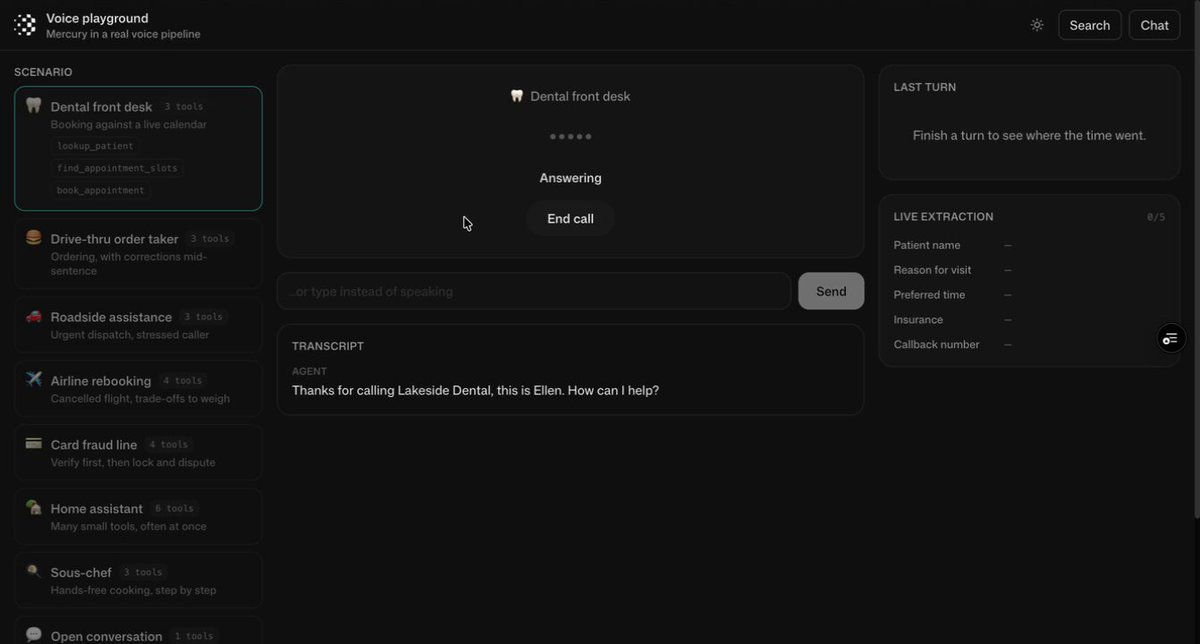 postInception launches Mercury Voice, a diffusion LLM for low-latency voice agents
 postToday, we’re introducing Mercury 2.5, the most capable diffusion LLM on the…
 postInception ships Mercury 2.5 Preview at roughly 1,100 tokens per second
Checking sign-in…
Loading comments…