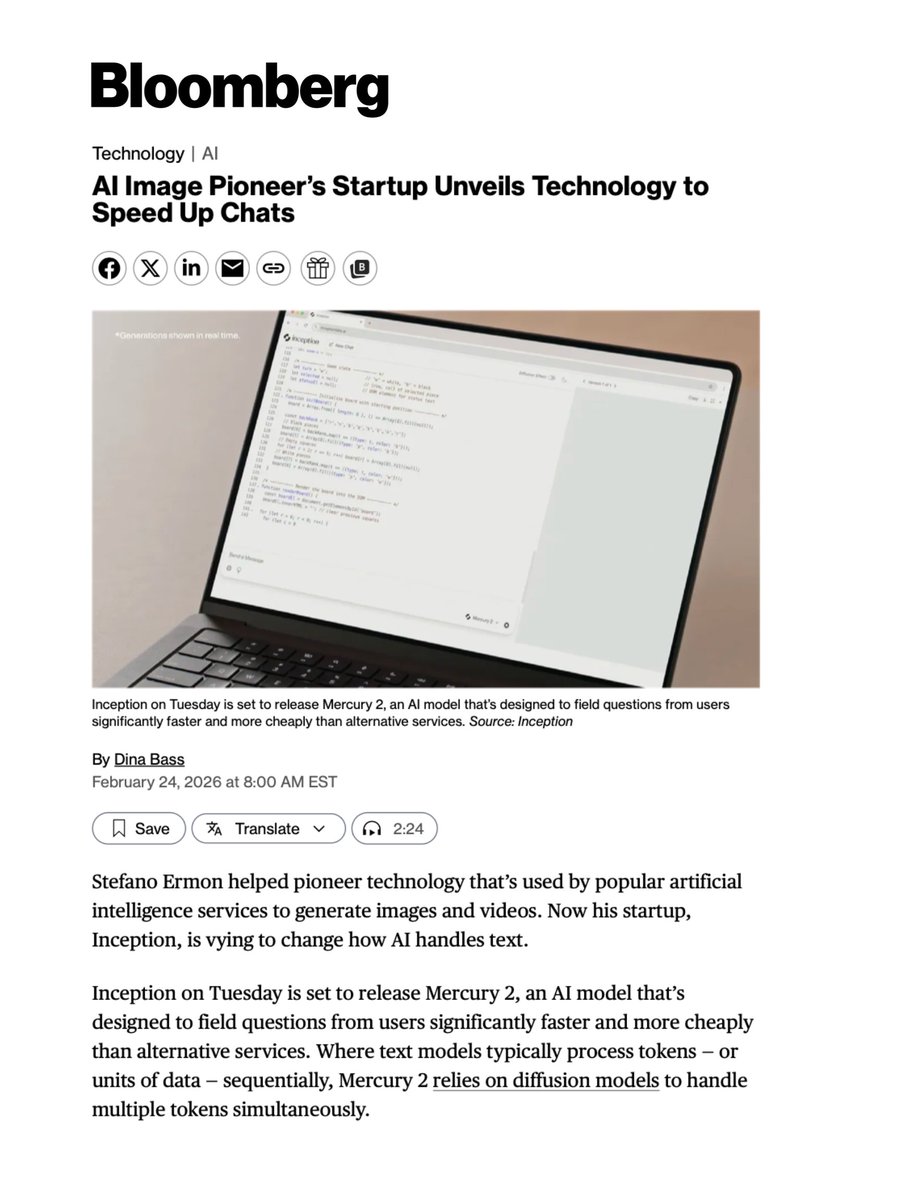
Inception's Mercury 2 account explains how its Mercury 2 Large language modelA model trained on large amounts of data to process and generate language.Full definition →, which generates text in parallel, could make reasoning more usable in voice agents. The model repeatedly refines a noisy sequence toward clean text, working on multiple positions in each pass instead of producing every TokenA piece of text, such as a word, part of a word or a punctuation mark, that a language model represents as numbers and handles as a unit.Full definition → sequentially.
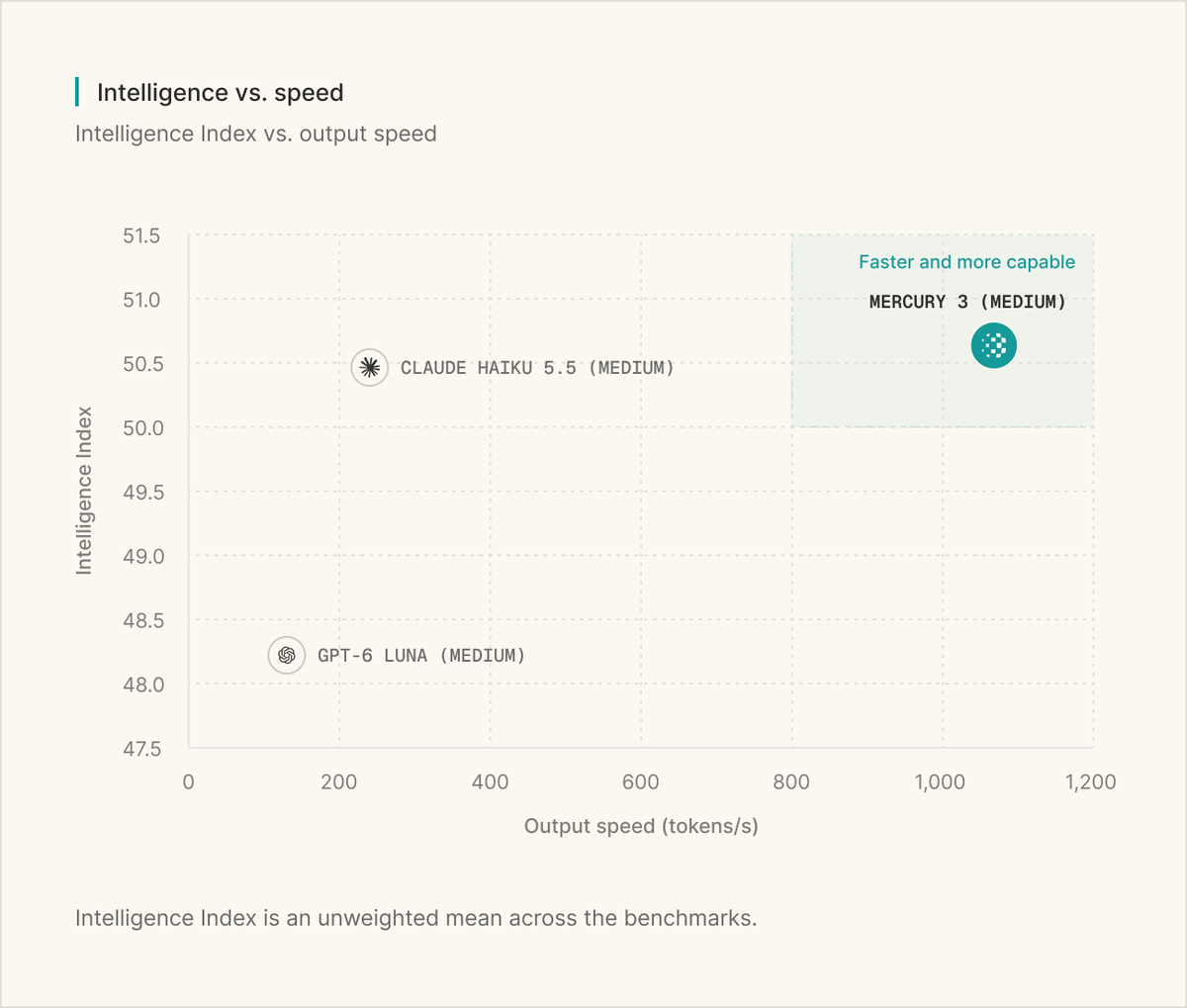
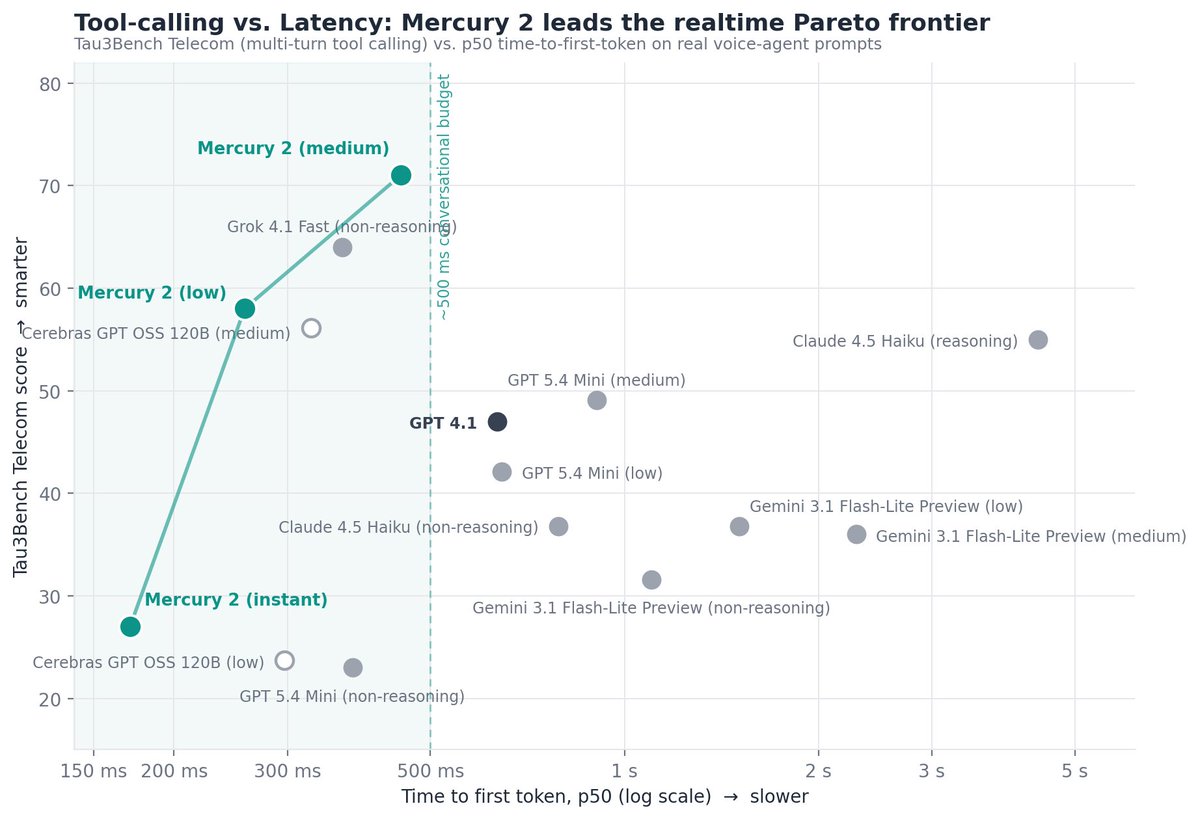
The company reports generation above 1,000 throughputHow much model output a provider can generate over time, commonly measured in output tokens per second.Full definition → and uses a 300-token reasoning trace to illustrate roughly 300 milliseconds of generation time. That calculation concerns the language-model portion of a call. A complete voice system also transcribes incoming speech and synthesizes the response, so this figure alone does not establish the delay a caller experiences.
Terms in this piece · Glossary
Large language model — A model trained on large amounts of data to process and generate language.
Token — A piece of text, such as a word, part of a word or a punctuation mark, that a language model represents as numbers and handles as a unit.
throughput — How much model output a provider can generate over time, commonly measured in output tokens per second.
Latency — The time between asking for a result and having it, including the model's generation time, tool calls, retries and any queueing.