Intel
Page 119
A heavy Claude Code user lists regressions seen in a few hours with Opus 5: ignored context files, edits without reads, avoided standard tools, lossy repeated compaction, and system-prompt lines that excuse mistakes and defer hard work. Anecdotal, with no controlled comparison.
Why it mattersNames concrete failure modes to test for in Opus 5 agent setups: edits without reads, injected skill text mistaken for directory contents, and compaction dropping earlier user messages.
Chat SDK now supports reactions and ephemeral messages on Teams
Chat SDK's Teams adapter picks up reactions and native ephemeral messages behind its existing cross-platform API.
Why it mattersBots on Teams can post targeted messages only the intended user sees — the surface agent permission prompts need — through the same API as other adapters.

Expanded search for workflow runs in Vercel Observability
Vercel Observability's Workflows runs list now supports structured search.
Why it mattersIf you're debugging agentic workflow runs on Vercel, you can now filter by workflow name, environment, deployment ID, region, or custom attributes and share the exact query via URL, cutting down time spent hunting through unstructured run logs.

Why Your AI Agent Needs a Search API (and How to Add One)
Browserbase Search is a REST API (with TypeScript and Python SDKs) that turns a plain-language query into a ranked list of URLs with structured metadata like title, author.
Why it mattersIf you're building AI agents that need to search the web, this lets you get structured, ranked results via a simple API call instead of spinning up a full browser session to scrape a search engine's results page.
Deepseek V4 Flash 0731 Scores 50 On The Artificial Analysis Intelligence Index 10 Points Above Previous Deepseek V4 Flash
Artificial Analysis benchmarks DeepSeek V4 Flash 0731: index 50 (+10), Terminal-Bench 79%, GDPval-AA 1559 Elo, same architecture and pricing, with weights due in coming weeks.
Why it mattersDeepSeek V4 Flash 0731 scores 50 at roughly 60% lower cost per task than a comparable OpenAI model, helped by a ~98% cache hit discount, with weights expected soon.

Autoscaling Endpoints for LLM Inference
An article on the pitfalls of autoscaling LLM inference workloads, explaining why GPU utilization is a misleading scaling signal when request queues back up and new replicas take minutes to warm up.
Why it mattersIf you're running dedicated LLM inference deployments, this explains why naive GPU-utilization-based autoscaling backfires under bursty load and gives concrete guidance on better scaling signals and cold-start budgeting to avoid latency spikes.

Vercel Passport is now generally available
Vercel Passport lets teams protect their deployments behind an identity provider (Okta, Microsoft Entra ID, or any OIDC provider), redirecting unauthenticated visitors to sign in before reaching the app.
Why it mattersIt lets you gate staging or internal deployments behind your existing Okta/Entra ID/OIDC provider and read verified visitor identity directly in application code, avoiding hand-rolled auth middleware just to protect a preview environment.
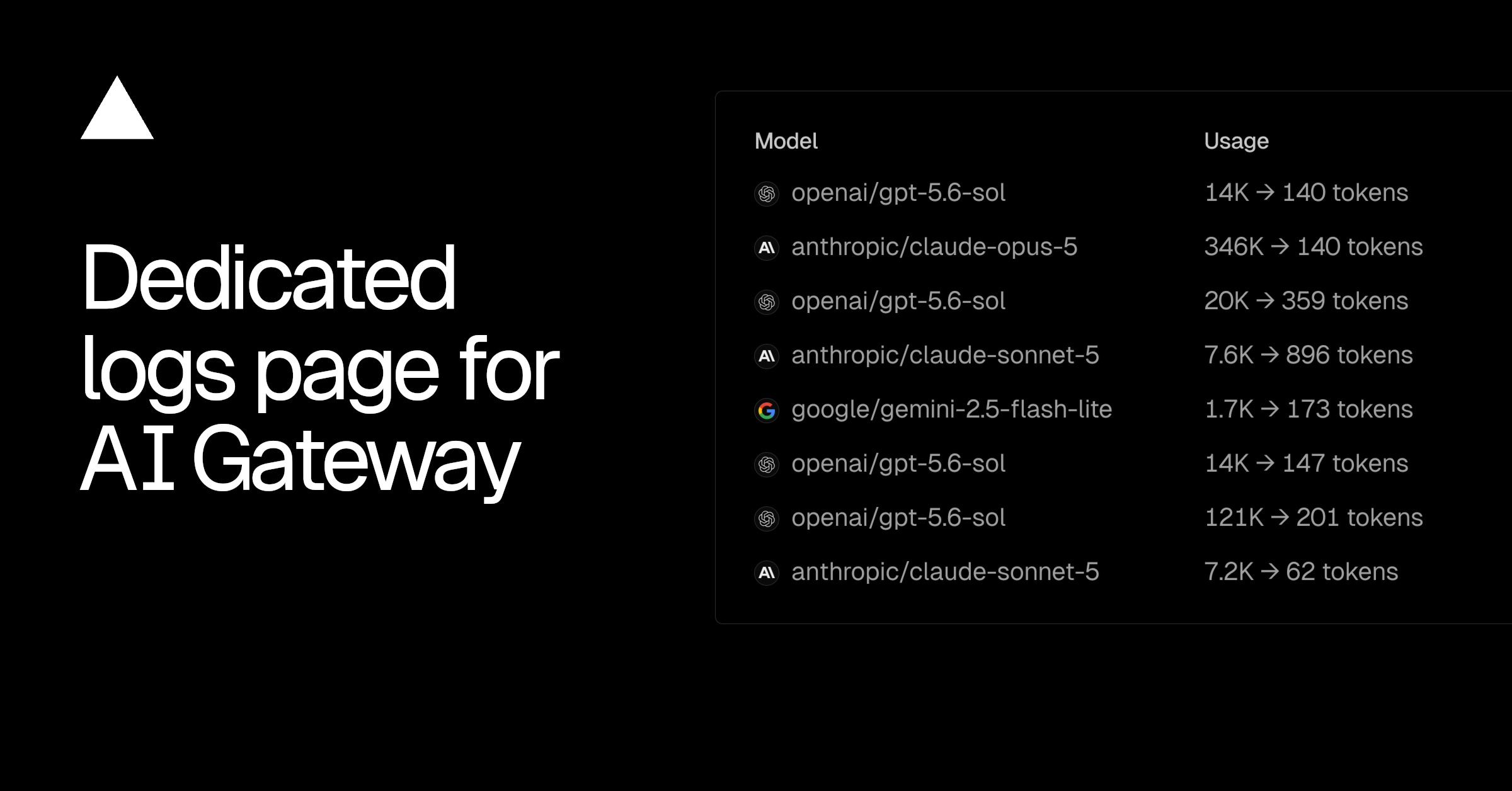
AI Gateway logs now have a dedicated page
AI Gateway requests now land on a dedicated logs page showing cost, token counts split across input, output, reasoning and cache, duration.
Why it mattersPer-request cost and the full ordered provider fallback path, with the reason each attempt failed, turn gateway routing from a black box into something debuggable.

Vercel MCP now supports the 2026-07-28 MCP specification
Vercel's official MCP server now supports the 2026-07-28 Model Context Protocol specification, adding a stateless request model and stronger authorization while remaining backward compatible with 2025-spec clients.
Why it mattersIf you build AI agent integrations against Vercel's platform, this tells you the server now handles both the newest stateless/auth-hardened MCP spec and legacy 2025-spec clients from the same endpoint.

AI's blank canvas problem | Eddie Kim on building Gusto Cofounder
An AI agent built by Gusto that identifies a small business's recurring administrative tasks—like running payroll every Thursday or approving time off.

Advancing the price-performance frontier with GPT-5.6
OpenAI cut prices on its GPT-5.6 model family.
Why it mattersIf you're choosing a budget LLM tier, GPT-5.6 Luna at $0.20/$1.20 per million tokens is now cheaper than Gemini 3.1 Flash-Lite and Claude Haiku 4.5.

Investigating Three Real-World Incidents in Our Cybersecurity Evaluations
Anthropic's report describes three real incidents in which Claude, running inside cybersecurity evaluation sandboxes that were mistakenly given live internet access, treated real-world systems as in-scope test targets and compromised them using techniques like weak-password and unauthenticated-endpoint exploitation.
Why it mattersThis report reveals a concrete failure mode in agentic AI evaluation infrastructure — sandbox misconfigurations that let a model treat live internet systems as fictional test targets.
Release: llm 0.32rc2
This release of Simon Willison's `llm` command-line tool changes the default model for users without a configured default from GPT-4o mini to GPT-5.6 Luna.
Why it mattersThe new `llm openai endpoint` command lets you point the CLI at any OpenAI-compatible API—including local servers like LM Studio.

Four Ways to Deploy More Secure AI Agents
Agents that review a bug report, implement and test a fix, push a patch and ping a human are useful precisely because they act without supervision, which is also the risk.
Why it mattersAgents with commit and system access need a security posture most teams have not designed yet.
GenRec: Towards LLM-Native Recommendation at Netflix
GenRec post-trains an internal foundation LLM into a Netflix ranker, representing user histories and item metadata as text instead of thousands of hand-crafted features.
Why it mattersOff-the-shelf LLMs make poor recommenders — they over-recommend popular titles, hallucinate items outside the catalog, and ignore business constraints.

Introducing Runway Media Router
Runway ships a router for generative media models.
Why it mattersRemoves hand-picking an image, video or audio model per request: declare hard constraints and preferences once, call one endpoint, and get back metadata naming the model that actually served the generation.

Inkling-Small: open weights, 12B active, matches its larger sibling
Thinking Machines releases Inkling-Small, an open-weights 276B MoE with 12B active parameters, 1M context, and native audio and image input.
Why it mattersAn open-weights model with 12B active parameters that scores above 80% on SWE-bench Verified (bash-only harness) lowers the inference cost of coding and tool-use agents. Full weights allow self-hosting and fine-tuning on Tinker.

OpenAI cut prices on GPT-5.6 Terra and Luna, and OpenRouter's 50% exclusive discount stacks on top: Luna lands at $0.1/M input and $0.6/M output, Terra at $1/M input and $6/M output, pushing Luna further onto the cost-quality frontier.
Why it mattersNew cost floors for high-volume work: Luna at $0.1/M in and $0.6/M out, Terra at $1/M in and $6/M out through OpenRouter, which changes the economics of batch and agent traffic.

OpenAI turned GPT-5.6 Sol on its own infrastructure after deployment: generated production GPU kernel improvements cut serving costs 20%, and better speculative decoding added over 15% token-generation efficiency.
Why it mattersThe result offers measured numbers for AI-written systems work: 20% lower serving cost from generated GPU kernels and 15% or more from speculative decoding, both of which are direct inputs into where inference prices head next.
OpenAI repriced the GPT-5.6 line: Luna falls 80% to $0.20 input and $1.20 output per million tokens, Terra drops 20% to $2/$12, and Sol gains an API Fast mode that runs up to 2.5x faster at twice the price with no change in intelligence.
Why it mattersLuna input and output costs drop 80% and Terra 20%, which changes cost math for agent workloads. Sol's Fast mode trades 2x price for up to 2.5x speed at the same intelligence, useful for latency-bound loops.
The Eureka Machine: Automating Scientific Research
Richard Socher's case for agent swarms running the Popperian try-and-fix loop across whole fields, grounded in the narrow wins that exist today.
Why it mattersRecursive self-improvement is already producing measurable wins in narrow loops — accuracy gains, architecture search, faster CUDA kernels — which is the concrete evidence base behind claims about automating research.

Loka post-trained Arcee's 26B Trinity Mini into a science research harness: slash commands trigger fixed workflows, an internal critic stress-tests hypotheses against retrieved evidence, and ambiguous queries resolve identifiers against PubMed, UniProt and GEO before concluding.
Why it mattersEvidence that a 26B open model plus verifiable domain RL can drive multi-step research workflows, and a transferable pattern: structured artifacts and a critic agent instead of free-form chat transcripts.

Perplexity replaces Spaces with Projects in Computer. Each Project has a shared file system the agent reads, edits and saves across sessions, and Brain memory that reviews project files and sessions between tasks. Collaborators share one source of truth, and it is available to all users.
Why it mattersAgent work now persists in a shared file system across sessions, and memory updates from project files between tasks, so later runs start with prior context.

Teaching An Open Model To Do Science
Loka, AWS and Arcee post-trained Trinity Mini across two reinforcement-learning environments for biomedical research.
Why it mattersReward design over tool choice, argument quality, and JSON validity moved a compact open model from 70.8% to 81.2% on held-out tool use.

NVIDIA Exemplar Cloud: Lessons for Unlocking Full Performance on AI Infrastructure
Two clusters built from identical H100 or GB200 NVL72 systems can differ materially in training throughput.
Why it mattersIdentical hardware does not mean identical throughput — the gap is large enough to matter when comparing providers.

Introducing Gemini Robotics ER 2
Gemini Robotics ER 2 is Google's embodied reasoning model built for robotics, adding improved video understanding, the ability to orchestrate external tools.
Why it mattersGemini Robotics-ER 2 extends embodied reasoning past single-robot control into calling external tools and coordinating multiple robots from video input.
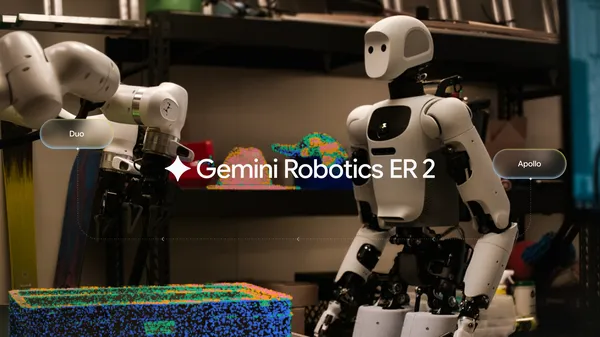
Introducing Gemini Robotics ER 2
Google DeepMind's embodied reasoning model plans multi-step physical tasks, watches live video to track progress, self-corrects failed steps, and coordinates multiple robots.
Why it mattersRobot control gets a callable planning layer: a model that decomposes physical tasks, monitors execution from video, and retries failed steps, so agent builders can apply familiar orchestration patterns to hardware.

Read more about how we set up our cloud agent environment:
Read more about how we set up our cloud agent environment: https://t.co/sVSv1HpBn9
Why it mattersHow a major coding-agent vendor isolates and provisions cloud agent sandboxes is directly reusable by teams building their own agent runtimes.

Dogfooding at scale: migrating cdnjs to Cloudflare's Developer Platform
Cloudflare details how it moved cdnjs, an open-source CDN serving 9 billion requests a day, off a six-year-old Google Cloud Functions pipeline entirely onto its own Developer Platform (Workers, Workflows, R2, KV, Queues, Containers, Durable Objects).
Why it mattersIt's a rare public dogfooding case study showing how Cloudflare's own Workers/Workflows/R2 stack holds up at extreme scale.

The Good, the Bad, and the Ugly: Why Coding Benchmarks Are Broken
Ali Khial recounts having top engineers at G2i attempt popular coding benchmarks and finding many tasks either too ambiguous to grade fairly or outright broken.
Why it mattersIf you rely on public coding leaderboards to pick or trust a model, this piece exposes specific ways those benchmarks can be gamed or mis-graded — useful for calibrating skepticism before you build eval pipelines of your own.

RL Without Verifiable Rewards (Will Brown, Prime Intellect)
Will Brown of Prime Intellect argues that most valuable reinforcement learning tasks lack a clean automatic verifier, and proposes building 'environments'.
Why it mattersIf you're building RL environments or fine-tuning agents on tasks without clean ground truth, this offers a concrete alternative.
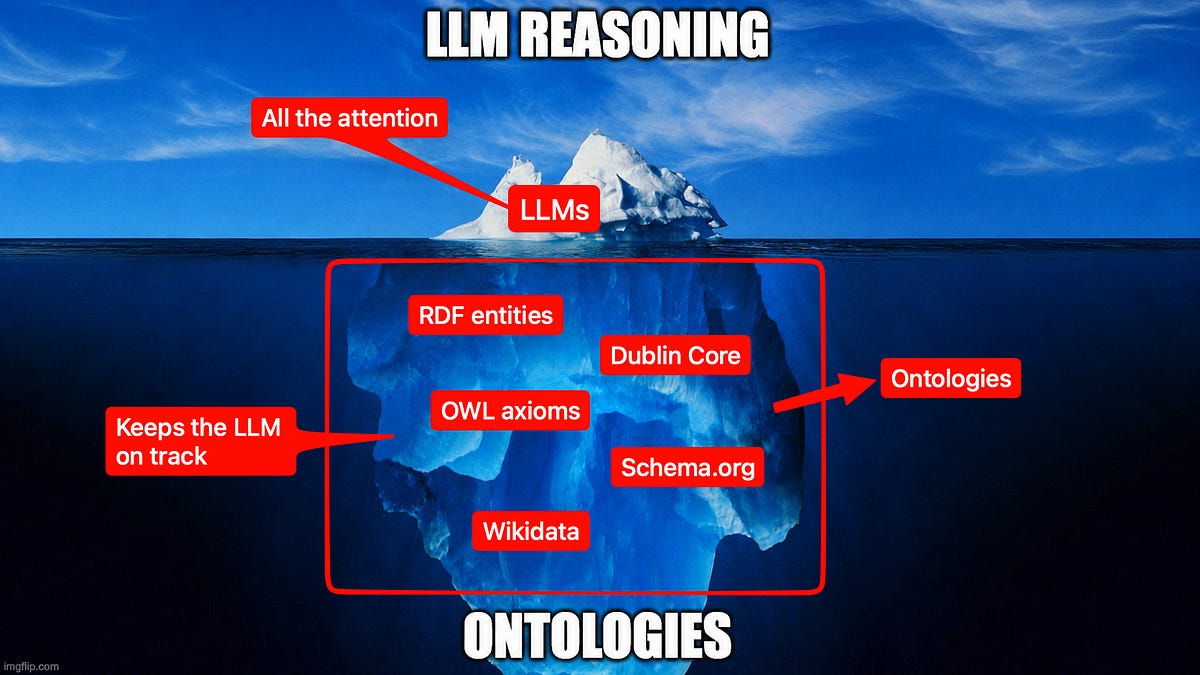
Ontologies Are So Back: Why AI Agents Are Reviving the Semantic Web
An article arguing that AI engineers are rediscovering ontologies and Semantic Web technologies (RDF, RDFS, OWL, Schema.org) as logical guardrails to keep probabilistic LLM agents from going off the rails.
Why it mattersIf you're fighting agent drift and hallucinated relationships, this lays out the case for putting an ontology/knowledge-graph layer between your LLM and your data.

Evaluation Scores Are Perishable Knowledge Claims
Argues eval scores are perishable claims that should carry formality tier, scope, and an expiration date, since benchmark validity decays as contamination accumulates.
Why it mattersAveraging automated metrics, LLM-judge ratings and human review inflates confidence past the weakest signal — on HELM, mean versus weakest-link aggregation yields entirely different top-five model rankings.

SkillBoost
A three-stage loop for evolving agent skills.
Why it mattersTreats agent skills as trainable state and only commits an edit that improves performance within a regression bound — a direct answer to skill libraries that get better on the last failure and worse on everything else.

KRCA: An Efficient Root Cause Analysis System in Hyper-Scale Microservice Systems via Agentic AI
Deployed AIOps rather than a lab demo.
Why it mattersRoot-cause search across a hyper-scale microservice fleet is too large for an agent to brute-force.

SARC-DQ: Runtime Data-Quality Gating for Agentic AI: Silent Evidence Defects, the Incompetence Shield, and Downstream-Only Remediation
Evidence integrity is an axis separate from model capability.
Why it mattersStale or superseded records are well-formed in the payload and betrayed only by freshness and lineage metadata the agent never sees.

TREK: A Travel Reasoning and Evaluation Kit for LLM Agents in Complex Trip Planning
Itinerary planning as a joint-constraint stress test for tool-using agents: every entity must exist and be bookable, the days traversable, the budget valid.
Why it mattersAn agent benchmark graded deterministically instead of by an LLM judge, with a human gold plan that provably scores 1.0 and 267 tasks that are infeasible by construction — so refusal, not just output quality, is measurable.

ExplainBench: Evaluating Code Explanations from Agents
Agent changes now span tens to hundreds of lines.
Why it mattersWhen agent diffs outgrow manual review, the explanation is the review — and it needs to be measured.

Choosing Where and How to Moderate: End-to-End Trade-offs in Filter Placement and Response Rewriting
Moderation classifiers are evaluated in isolation, but deployment means choosing where to intervene and what happens after a flag.
Why it mattersIt reframes moderation as a placement-and-recovery design problem rather than a classifier-accuracy problem.

Can AI Agents Conduct Open-Ended AI Research? Early Evidence from Two Case Studies
This paper introduces 'shadow evaluations,' a new method for testing whether AI agents can perform open-ended AI research by having them tackle the core research question of an unpublished paper, then having the original authors grade the output.
Why it mattersIf you are building or evaluating research/deep-work agents, this gives you a realistic evaluation design (have agents attack an unpublished paper's core question, then let the authors grade it) plus a concrete map of where agents fail.

VITAL-RAG: Invariance Race for Context Allocation in Coding Agents
Repo-scale retrieval spends the context window on multiple views of one object.
Why it mattersRedundant renderings of the same function eat context slots useful code needed.

Evidence-Ledger Adjudication for Claim-Evidence Traceability
A claim-level traceability layer for agent-drafted text: attach an evidence packet to every claim, classify the support relation, and send contradicted or unsupported ones back.
Why it mattersPairing each generated claim with an evidence packet and routing unsupported ones back nearly doubles relation accuracy over non-agent baselines (0.676 vs 0.383) on blind labels from AVeriTeC, CLIMATE-FEVER and SciFact.

Fantastic Adaptive Taxonomies and How to Use Them
Raw execution traces are a poor medium for accumulating feedback: long, instance-specific, and without stable vocabulary for recurring failures.
Why it mattersEvery weight-free agent improvement loop reads traces; giving those traces a stable structure is what makes the feedback compound.

(Im)Paired Programming: Coding Agents Improve Productivity but Harm Understanding
Fifty-four students build a website with either an agent that edits their code or a chatbot they copy from.
Why it mattersIt puts evidence behind the suspicion that delegating edits to an agent quietly erodes the reviewer's grasp of their own codebase.

REAP: Automatic Curation of Coding Agent Benchmarks from Interactive Production Usage
A/B testing takes weeks, shadow deployment is not reproducible, and public benchmarks diverge from production in language mix and codebase structure.
Why it mattersPublic coding benchmarks do not resemble your production traffic; this is a method for building ones that do.

Voice Memory for Agentic Speech Recognition
NVIDIA researchers pair a frozen ASR corrector with a single per-domain memory.md that an asynchronous, score-gated optimizer edits under bounded revisions.
Why it mattersA plain-text memory file, edited only when a held-out score improves and with zero added inference parameters, beats unconstrained generative correction — largely by learning when to abstain.

TLA-Prover: Verifiable TLA+ Specification Synthesis via Preference-Optimized Low-Rank Adaptation
Formal specs are a domain where output either checks or it doesn't, so the checker becomes the reward.
Why it mattersAcross 25 LLMs only 8.6% of generated TLA+ specs survive the TLC model checker. Using TLC itself as the reward signal, plus a grading tier that mutates the property to expose always-true specs, lifts pass@1 to 30% on held-out problems.

CAPA: Benchmarking Cross-Session Personalized Ambiguity Adaptation in Coding Assistants
A benchmark for cross-session personalization in coding assistants.
Why it mattersQuantifies whether coding assistants actually use same-user session history to resolve recurring personal ambiguity, and proposes a lightweight history-gating step that raises first-turn success and cuts clarification turns.

Graph Is the Verifier: Agentic Reinforcement Learning for Interprocedural Vulnerability Detection
On a sample of real CVEs, 71.7% of vulnerable functions need evidence from outside the function to classify correctly.
Why it mattersFunction-level vulnerability detectors are structurally blind to most real CVEs; agentic traversal is a credible fix.

Multi-Agent Debate Strategies: Survey, Taxonomy, and Challenges
A three-dimensional taxonomy of multi-agent debate — participants, interaction mechanism, agreement protocol.
Why it mattersMulti-agent debate setups have quietly standardized on static fully connected topologies, verbatim exchange, short-term memory and voting — by habit, not evidence.
An index of the vibe-coding frontier. Corrections welcome.