Intel
Page 49
Healthcare Life Sciences
Claude for Healthcare arrives with HIPAA-ready infrastructure, plus life-sciences connectors to the CMS coverage database, Medidata and ClinicalTrials.gov.
Why it mattersHIPAA-ready deployment plus CMS, Medidata and ClinicalTrials.gov connectors open regulated healthcare workloads to Claude-based agents.

Accelerating Scientific Research
A look inside lab-built agent systems on Claude, including Stanford's Biomni.
Why it mattersShows how research teams are structuring large tool-and-database registries behind a single planning agent, plus where those systems break down — a directly transferable pattern for anyone building domain agents over fragmented tooling.

Claude Science Ai Workbench
Claude Science ships in beta.
Why it mattersA first-party multi-agent workbench that pairs a coordinator/specialist/reviewer split with fully reproducible artifacts and on-demand compute — a concrete reference for how to make agent output auditable rather than just plausible.

The Agentic Commerce Stack — Ahnaf Prio, Best Buy
A merchant-side map of agentic checkout: MCP for tools, A2A between customer and merchant agents, ACP and UCP competing as commerce primitives, AP2 for payment mandates.
Why it mattersSorts out the overlapping agent-commerce protocols and what each actually carries — including AP2 mandates with an authorizing party, spend ceiling and revocation URL — plus why merchants must push feeds rather than answer catalog searches.
Cursor is now available in the AI SDK harness layer
Vercel's AI SDK harness layer adds an official Cursor adapter, connecting it through the Agent Client Protocol so Cursor, Claude Code, Codex, Cline, OpenCode and others all run behind the same HarnessAgent interface.
Why it mattersSwapping coding agents behind a single HarnessAgent interface means agent choice becomes a config line rather than a rewrite — and Cursor is now one of the options over ACP.

A cookbook wiring Claude Managed Agents to Vercel's Chat SDK: one typed direct-message handler fans out across 15+ chat surfaces while the agent runtime, session state and memory stay server-side, with a sandbox option for tool execution.
Why it mattersIt maps a clean split — chat transport on one side, agent runtime and memory on the other — so one agent reaches Slack, Teams, Discord and web without per-surface plumbing or client-side session juggling.
Efficient Software Factory
Uber details the Software Factory it runs internally.
Why it mattersGives a reusable way to decompose and attack agent spend — cost per 1,000 model requests down ~34% and cost per session down 52% with the model fixed — while agentic request volume grew 9.4x.

LangChain's hosted Deep Agents now build their execution environment at deploy time from a setup.sh or Dockerfile, so each new thread starts on a prepared image instead of repeating clone and install work.
Why it mattersPer-thread environment setup is a real latency and cost tax on hosted coding agents; baking the image once at deploy time removes clone-and-install from every new session.

KV Cache-Aware Routing and P/D Disaggregation on Kubernetes — Yuchen Fama & Ashish Kamra, Red Hat
Why steady-state inference benchmarks mislead for agent workloads, and the two levers that actually pay.
Why it mattersAgentic traffic runs 90%+ cache hit rates and 100:1 input-output ratios, so routing to the pod holding the cache beats buying GPUs.
Slack's Add to Slack launch makes the messaging app a one-click deploy target for agents built in LangChain, OpenAI, n8n, Lovable, Vercel and other partner tools, skipping custom bot integration work.
Why it mattersSlack becomes a one-click deploy target for agents built in the major frameworks, removing the bespoke bot-plumbing step between a working agent and the place colleagues actually use it.

DeepMind is piloting double-blind frontier evaluations: a secure environment where the evaluator's prompts stay hidden from the lab and the model weights stay hidden from the evaluator, so external safety and capability testing survives contamination concerns.
Why it mattersHeld-out eval prompts leak once you send them to a provider, and weights never leave the lab; a double-blind setup is the first structural answer to why external frontier evaluations can be trusted.

Providence Swedish ran Ai2's AutoDiscovery across The Cancer Genome Atlas, and it surfaced more immune activity in invasive lobular carcinoma than its long-standing immune cold label predicts. The pattern held in separate patient data and lab work found T cells around the tumors.
Why it mattersAn agent that generates and tests its own hypotheses over existing data produced a signal that replicated and was later confirmed in the lab, evidence that automated discovery can find real results in heavily studied datasets rather than only summarizing them.
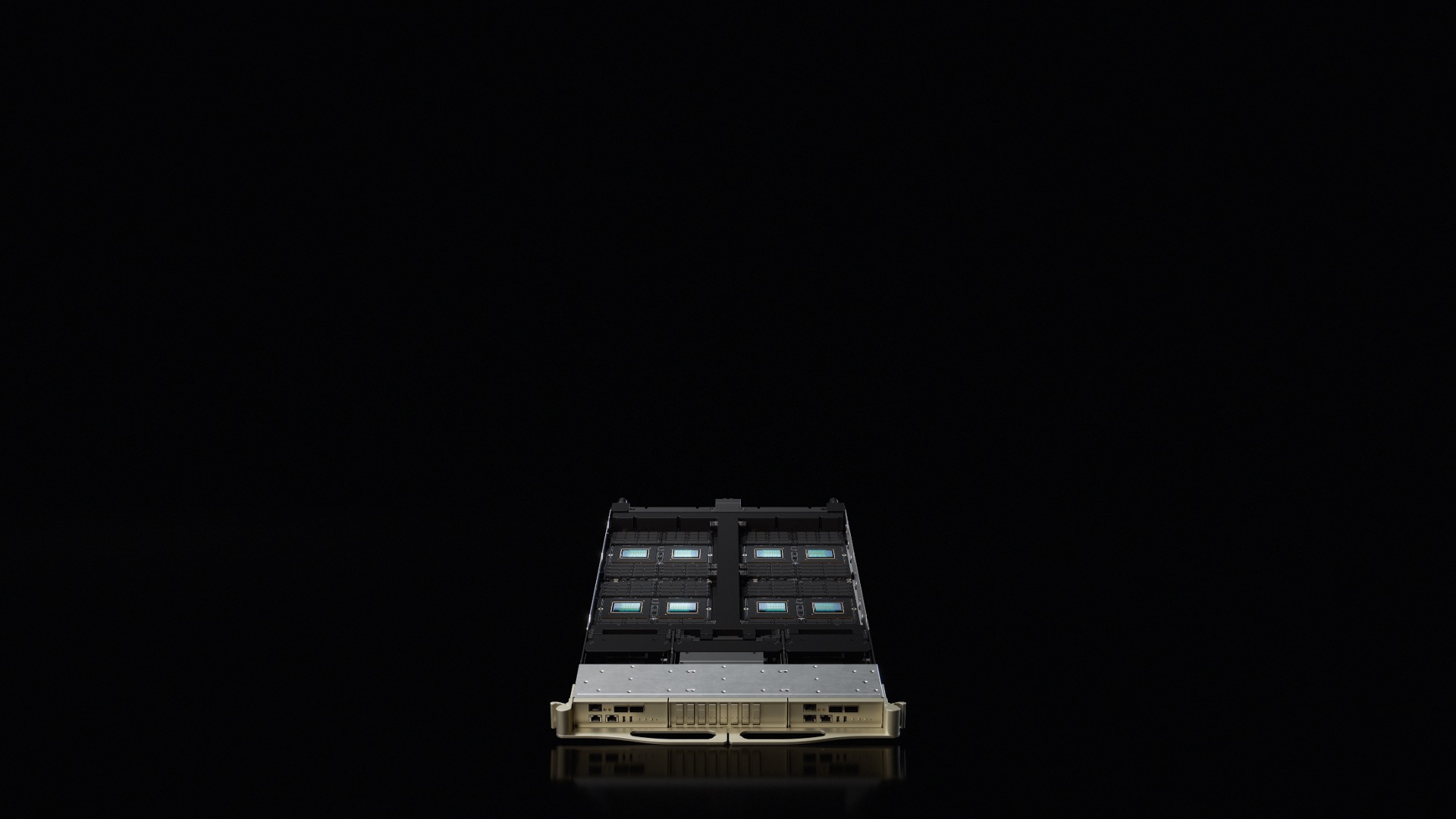
Delivering Vera: NVIDIA’s First CPU Built for Agents Is Shipping Now
NVIDIA's Vera CPU, built for agentic workloads, has moved from announcement to volume shipping.
Why it mattersVera moves from announced to shipping, with the first systems landing at Anthropic, OpenAI and Oracle Cloud — the CPU side of agentic serving infrastructure is now a platform teams can actually plan capacity against.

Piloting the world's first double-blind AI evaluations
Google DeepMind pilots double-blind evaluation of a proprietary frontier model, sealing external benchmarks inside a privacy-preserving cryptographic environment so a lab cannot optimize against questions it has seen.
Why it mattersBenchmark contamination undermines every public score.

AI Agents Are Just Distributed Systems Now — Salman Munaf, TikTok
A TikTok SRE reframes the agent as a probabilistic coordinator over real services, which means every failure mode distributed systems already named.
Why it mattersRetry-happy agents double-charge customers without idempotency keys and status lookups. Also: context that can influence an action is state, so it needs invalidation and provenance, and approvals must bind to an action, actor and expiry.

A critical remote code execution vulnerability was found in self-hosted Next.js deployments; Vercel-managed hosts are unaffected, with a full technical write-up to follow.
Why it mattersAnyone self-hosting Next.js should patch immediately; Vercel-hosted deployments are confirmed unaffected by this critical remote code execution bug.

Qwen's new Flash tier is priced for volume: $0.15 per million input tokens, $0.47 output, and $0.016 on cache hits, with 262K native context extensible to 1M. A cheap default for long-context agent loops where cache reads dominate the bill.
Why it mattersCache-hit tokens at $0.016 per million change the arithmetic for agent loops that replay long context every turn, and 262K native context sets the ceiling before you need the 1M extension.
Alibaba's Qwen3.8-Flash is now served through OpenRouter — a multimodal reasoning model positioned for coding assistants, agentic workflows, codebase and document analysis, desktop interaction, charts, and long-video understanding.
Why it mattersA new multimodal reasoning model aimed at coding and agentic workloads is now reachable through a single OpenRouter call, so it can be swapped into an existing router setup for evaluation without new billing plumbing.

Zhipu says GLM-5.3 Flash scored 57 on the Artificial Analysis index at roughly 1/100th of frontier model pricing while running on domestically made chips, and became OpenRouter's top model by weekly token share.
Why it mattersGLM-5.3 Flash reportedly scored 57 on the Artificial Analysis index at about 1/100th of frontier pricing on domestic Chinese chips, and became OpenRouter's top model by weekly token share.

SPECMINE: A Large-Scale Corpus of Spec-Driven Development Artifacts
Spec Kit, OpenSpec, Kiro and a dozen others have pushed structured natural-language specs as the interface to coding agents, with no data on what actually gets written.
Why it mattersSpec-driven development now has an evidence base instead of vendor advocacy: a census of half a million spec files across 73k repos, tool-attributed, with the pull requests that turn a spec into code captured alongside them.

Evaluating and Preventing Security Smells in AI-Generated Ansible Code
278 AI-generated Ansible roles for Tomcat and MongoDB, audited against CIS benchmarks.
Why it mattersUngated AI-generated Ansible ships CIS-noncompliant infrastructure from every model tested.

DataKernelBench: Can LLMs Optimize Database Queries on GPUs?
A benchmark that pushes LLM kernel generation past ML operators into irregular, data-movement-heavy database work.
Why it mattersLLM-generated GPU kernels for SQL operators hit 2.11x over the baseline on TPC-H/H100, and the paper isolates what drives it: kernel fusion, full-query specialization for stronger models, workload context over hardware context.

A Few Pages of Markdown: Committed AI Configuration and Lower Quality Cost after Coding-Agent Adoption
The few pages of markdown teams commit to steer coding agents turn out to be measurable.
Why it mattersCommitted AI configuration is nearly always written once and abandoned, yet the maturity level a repo reaches tracks how much quality cost comes with agent-driven speed — and agents accelerate 28-38% regardless of where a team sits.

Does Fine-Tuning Undo Activation Steering? Behavioural Recovery Without Weight-Edit Reversal
Embedding steering vectors into weights is pitched as inference-free alignment.
Why it mattersSteering embedded into weights does not survive routine post-deployment fine-tuning behaviourally, even though the edit remains in the weights — so pre-release weight-level alignment cannot be assumed to hold downstream.
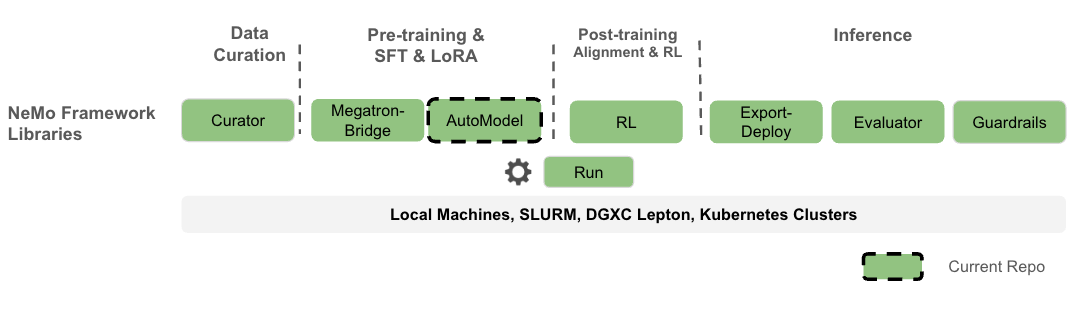
Thank you @NVIDIAAI for the day-0 support! 🙌 Developers can finetune the model…
NVIDIA's NeMo AutoModel ships day-0 fine-tuning for Qwen3.8-Flash-Next, the hybrid-attention MoE with four HyperConnection streams and an Engram n-gram embedding table.
Why it mattersYou can fine-tune Qwen's new Engram MoE checkpoint on day one with FSDP2, expert and context parallelism, instead of waiting for community trainer support to catch up to the architecture.

8/26: Ox Alpha Reveal

Ling 3.0 Flash Fin now available on AI Gateway for free
Inclusion AI's finance-tuned Ling 3.0 Flash Fin lands on Vercel's AI Gateway free until September 25, with a 256K context window, 32K output, reasoning and function calling.
Why it mattersA finance-tuned, tool-calling model with a 256K window is free through September 25 — and the -free suffix is the difference between the offer ending and your bill starting quietly.
Ai Marketing Behind Coding Kashish Gupta Hightouch
Why AI reshaped coding and support before marketing: those loops are verifiable and taste is not.
Why it mattersGenerating creative as code against a per-brand context layer, rather than one-shot image generation, is a transferable pattern anywhere model output has to obey hard constraints a grader can check.
Qwen3.8-Flash-Next
Qwen ships another open-weights model, a multimodal MoE with roughly 6B active parameters that the lab frames as an early preview of the Qwen4 architecture.
Why it mattersAn open-weights multimodal MoE previewing Qwen4's architecture, with firsthand notes on which Unsloth quantizations actually fit and run on a single DGX Spark.

Muse Image from Meta is available on OpenRouter at $0.01 per image, grounded by search. It creates and edits complex images while preserving the regions you did not ask it to change, the pattern high-volume asset work needs.
Why it mattersAt a cent per image, generation shifts from a rationed request to something you can run across a whole catalog, and edits that preserve untouched regions make iteration safe.

Cowork's desktop app gains an Anthropic-controlled browser in a side panel that navigates and fills forms, running in a session kept separate from your own browser and logins. Rolling out over the next week to all paid plans; Claude in Chrome is now generally available.
Why it mattersAgentic browsing without exposing your logged-in profile — the sandboxed in-app session is the isolation boundary, while Claude in Chrome stays available and remains default for existing users.

Qwen3.8 Flash Next Is INSANE – Testing the PREVIEW of Qwen 4!
A hands-on run at Qwen's experimental open-weight preview of the Qwen 4 architecture.
Why it mattersAn open-weight preview of the architecture behind Qwen 4 is put through real coding, 3D and browser-control tasks, including a local Q4 quant — useful signal on what the next Qwen generation will do on your own hardware.
Alibaba's Qwen3.8 Flash is now routable on OpenRouter. It is a multimodal reasoning model aimed at coding assistants and agentic workflows, with codebase and document analysis, desktop interaction, chart reading, and long video understanding.
Why it mattersAnother multimodal reasoning option routable through OpenRouter, covering desktop interaction and long video alongside code, which is the combination GUI and computer-use agents need.

#501 – DHH: Future of Programming, AI, Agentic Engineering, Vibe Coding & Linux
De-slopping design: seven rules for building UI with coding agents
An engineer's method for keeping agent-generated interfaces from collapsing into generic slop.
Why it mattersNames the specific ways agent-built interfaces go wrong — whack-a-mole spot fixes, additive clutter, prototype gravity — and gives a concrete workflow that counters each.

How Anthropic Builds: Lessons from Labs — Mike Krieger, Anthropic
Anthropic's Mike Krieger on asking agents for far more than feels reasonable — a weekend port of a few hundred thousand lines of Python to TypeScript.
Why it mattersThe review bottleneck moves from lines of code to human comprehension.

fal post-trained MiniMax H3 into H3 Max, which now leads Artificial Analysis' image-to-video-with-audio board and sits third in text-to-video. It produces 5–15 second clips with native audio up to 768p at $0.04 per second, under the base H3 endpoint, with weights promised.
Why it mattersA serving provider's post-train now beats the base model it derives from and undercuts it on price; if fal releases the weights it becomes the top open-weights video model on both boards.

Usage Policy Update
Anthropic's Usage Policy adds an explicit ban on malicious computer, network and infrastructure compromise, publishes separate guidance for agentic contexts, narrows a blanket political-content prohibition down to deception and voter targeting.
Why it mattersChanges what you may legitimately build on Claude: agentic cyber work is now explicitly bounded, while policy research and political writing move back inside the line.
Detecting And Countering Malicious Uses Of Claude March 2025
Case studies from Anthropic's misuse monitoring.
Why it mattersShows adversaries using models as orchestration layers rather than content generators — the abuse pattern agentic systems and their operators actually need to detect.
GitHub Copilot app for Beginners: Automate Dependabot pull request triage
A step-by-step recipe for a scheduled GitHub Copilot automation that sweeps open Dependabot pull requests each morning, sorts them by upgrade risk, verifies CI.
Why it mattersDependency-bump triage is repetitive but risk-bearing. A scheduled agent that clusters open Dependabot PRs by upgrade risk and CI state turns a daily manual sweep into a summary you review once.
How to Train a Cross-Embodiment Robot Navigation Policy with AI Agents
NVIDIA walks through adapting its pretrained X-Mobility policy into robot-specific residual specialists via RL, orchestrated by an agent workflow with human approval gates at each stage.
Why it mattersA worked example of an agent running a real ML pipeline behind human approval gates — scene validation, smoke tests, residual RL training, matched-seed evaluation, then packaging the policy for runtime.
codex rust-v0.150.0 — 0.150.0
Codex's CLI release adds @-mentions across tasks so agents can read, create and message one another's work, Interrupt hooks that fire commands or MCP handlers when a turn is cancelled, permission-mode keybindings.
Why it mattersCross-task references and Interrupt hooks make multi-agent Codex workflows scriptable, and untrusted projects no longer inject AGENTS.md instructions — closing a real prompt-injection surface.
Google's two new transcription APIs, measured: 2.6% word error rate non-streaming at roughly 84x realtime for about $5 per 1,000 minutes, and a Live variant at 4.0% WER with first final transcripts 0.40s after speech ends for about $9. Both cover 85+ languages.
Why it mattersAccuracy, latency and price figures for Gemini 3.5 Transcribe and its Live variant, compared against Scribe v2, Deepgram Nova-3 and MAI-Transcribe, before you commit a voice agent to a speech backend.

Cua got official Omarchy 4.0.1 (Arch Linux + Hyprland) running unmodified in an ARM64 VM on Apple Silicon via Lume and Apple's Virtualization.framework, verifying boot, input, networking, and native ARM64 Chromium, while noting real gaps like software-only graphics.
Why it mattersOpens a path to running real Linux/Hyprland desktops for computer-use agent testing directly on Mac hardware, without x86 kernel emulation.
Claude Code will now write its own feedback reports — triggered when a command fails, when Claude catches its own mistake, or when you say something went wrong — leaving you to edit and approve before anything is sent. Configurable or disableable in /config.
Why it mattersBug reports now arrive with the agent's own account of the failure and an explicit approval step in front of them; /config turns the behavior off if you'd rather it not draft anything.

OpenAI released further detail on the Hugging Face incident, with Noam Brown highlighting that next-generation Astra-based models were not the driver: the models most responsible were comparable in scale to GPT-5.6 Sol, systems already in wide deployment.
Why it mattersThe behavior came from models at roughly the scale already broadly deployed, not from unreleased frontier systems — and the next generation is more capable. A calibration point for threat models built around current models.

Recraft's V4 Styles image model is now routed through OpenRouter. Developers can supply 1 to 10 reference images per call to hold texture, color and composition steady across generations, with Styles, Vector, Pro and Pro Vector variants exposed.
Why it mattersRecraft V4 Styles is callable through OpenRouter, so you can pass 1 to 10 reference images to pin texture, color and composition across raster and SVG output from the same API surface you already use for text models.

SemiAnalysis itemizes the architecture Qwen previews in 3.8-Flash-Next ahead of Qwen4: a 51-billion-parameter n-gram embedding table cheap enough to push onto slower DRAM tiers, gated residual connections, and a lightning indexer selecting context at micro-block granularity.
Why it mattersThree composable architecture choices — offloadable n-gram embeddings, gated residuals and micro-block sparse attention — shipped together with open weights, so the design can be inspected rather than inferred.
A Thai research team retooled Ai2's Dolma curation pipeline, replacing its deduplication and quality filters with language-specific ones, to produce Mangosteen, a 47B-token corpus. Models trained on it matched or beat Thai LLMs built on larger, unfiltered web data.
Why it mattersModels trained on a filtered 47B-token Thai corpus matched or beat ones trained on larger web crawls.

Challenges In Red Teaming Ai Systems
A tour of the red-teaming methods Anthropic runs against its own systems.
Why it mattersA working taxonomy for picking a red-team method by threat model, and a path for turning one-off qualitative findings into repeatable automated evaluations.
An index of the vibe-coding frontier. Corrections welcome.