Intel
Page 48
How our agents build on-brand pages with design.md
Vercel published design.md, a single public file any coding agent can load to build pages that match its brand.
Why it mattersOne fetchable design file gives agents running in tools that cannot read your repository the same brand, layout, and component rules your in-repo skill provides.

Time Capsule of Testable Human Knowledge: 41 Years of Jeopardy! in a Single Free Local Model
A single 9 GB 4-bit Qwen2.5-14B was run against all 529,939 Jeopardy clues from 41 broadcast seasons, answering 67.0% correctly under strict grading.
Why it mattersQuantifies how much general knowledge fits in a 9 GB local model: 67% of 530,000 Jeopardy clues, a concrete reference point when deciding whether an offline open-weight model can carry a knowledge-heavy task.

Select, Don't Train: The Benefits of Modular Entity Disambiguation with LLM-Based Selection
Entity disambiguation is split back into retrieval and selection, then retrieval strategies are compared under a fixed LLM selector.
Why it mattersSuggests the trained dual-encoder can leave entity linking pipelines: with a capable LLM doing final selection, BM25 or web search candidates suffice, and nothing needs retraining as the knowledge graph changes.

PACE: Publisher-Adaptive Content Extraction via Agentic Automation
PACE has LLMs study representative pages from a publisher and emit reusable extraction patterns, which then drive a fixed deterministic extractor at inference with zero LLM calls.
Why it mattersA workable pattern for web extraction at scale: pay for LLM reasoning once per publisher to learn a config, then run deterministic parsers with no per-page model cost, avoiding both brittle generic extractors and per-page LLM spend.

SciReC: Diagnostic Evaluation of Multimodal, Multi-Turn Relational Reasoning with Adaptive Interaction
SciReC is a model-adaptive multimodal academic dialog benchmark covering analogical, structural.
Why it mattersMulti-turn relational reasoning still sits under 75% for the strongest models, and the diagnostic separates whether a failure came from perception, missing knowledge, or context dropped across turns.

Accelerating LLM Inference via Vector Index Based Output Embeddings
Instead of projecting over the full vocabulary each step, this treats output projection plus top-k selection as maximum inner product search and serves it from an HNSW index, scattering retrieved logits into a sparse tensor.
Why it mattersLarge multilingual vocabularies make the output head a memory bandwidth bottleneck on CPU.

Benchmarking General Mobile Assistants in Challenging Real-World Scenarios
GMA evaluates general mobile GUI agents on seven open-source apps and 300 tasks tiered from atomic actions to long multi-step workflows.
Why it mattersFrontier mobile agents still fail on realistic multi-step phone workflows, and the harness ablations show how much context retention choices, not just the model, drive that gap.

Rating the Raters: Rasch Measurement Theory for LLM Evaluation
A many-facet Rasch analysis of nine LLM raters on the Measuring Hate Speech corpus separates rater severity, item difficulty, and instrument effects on one scale.
Why it mattersIf you use LLMs as judges or annotators, their scores carry measurable severity and calibration biases. This gives a psychometric way to diagnose those biases instead of trusting raw agreement with humans.

XHotpotQA: A Benchmark for Cross-Lingual Knowledge Composition in Multi-Hop Question Answering
XHotpotQA models each multi-hop question as an evidence-dependency graph with per-node language assignments, so question, bridge evidence.
Why it mattersQuantifies a failure that fully translated benchmarks hide: when retrieved passages sit in a different language or script from the question, answer F1 drops by 10 to 24 points in multi-hop retrieval.

Artificial Analysis benchmarked Apodex 1.1 at 44 on its Intelligence Index: 1348 Elo on GDPval-AA v2 and 70% on TerminalBench v2.1, ahead of Kimi K2.6 on agentic work but weaker on knowledge reliability and academic reasoning, at roughly 17k output tokens per task.
Why it mattersA model can sit mid-tier on general intelligence and still lead on agentic execution. Apodex 1.1's TerminalBench and GDPval results at about $0.05 per task make it worth testing on tool-using workloads.

OpenAI's Tibo Sottiaux spells out how Codex subscription multipliers are metered: the Pro tier's 20X is a weekly quota multiple of Plus, and neither Codex Pro plan enforces a rolling five-hour cap. Relevant context if you are comparing coding-agent plans on throughput.
Why it mattersCodex Pro's 20X is measured against Plus on weekly usage, and Codex Pro plans carry no five-hour window, so long agent sessions are bounded by the week rather than by short rolling bursts.

They lied...
A skeptical read of Anthropic's Claude Code limit change, arguing the advertised 25 percent increase translates into roughly 17 percent less usable capacity in practice.
Why it mattersAnthropic announced a 25 percent increase to Claude Code limits; this argues the practical effect is about 17 percent less usable capacity. If you budget agent runs against those limits, the headline number and the observed number disagree.

Agency and Agents
An argument that the live question is no longer what AI can do but who holds the initiative to act, built around the Hugging Face Incident from July and the METR, Redwood and OpenAI accounts of it.
Why it mattersModels that act without being prompted change the risk surface of agent harnesses. The incident writeups from METR, Redwood and OpenAI are concrete material for deciding how much initiative to grant your own agents.

Vercel Sandbox now calculates snapshot storage costs daily
Vercel now charges Sandbox snapshot storage from each day's average usage rather than a single monthly average, with the daily charges visible on the team Usage page.
Why it mattersSpiky sandbox snapshot storage is now billed from each day's average instead of smoothed across the month, so short-lived agent environments cost closer to what they actually consume.

Understanding ChatGPT Work
A careful teardown of ChatGPT Work.
Why it mattersChatGPT Work ships as two separate products, a cloud task runner and a local file/shell agent descended from Codex, both limited to paid tiers. Knowing which one you are in determines what it can touch and what it can actually finish.

SemiAnalysis walks through OpenAI's Jalapeño accelerator on its podcast: performance per megawatt against Blackwell, where the benchmark comparisons break down, the programming model and CUDA lock-in, Samsung HBM4 supply, and how far AI-assisted silicon design carried the project.
Why it mattersInference cost and model availability follow from who can build competitive silicon. A first-party breakdown of Jalapeño's performance per megawatt and programming model shows how much of Nvidia's CUDA lock-in actually binds.
SemiAnalysis argues AMD's gap to NVIDIA is software, not silicon: theoretical perf-per-dollar favors AMD (more so with the rebates going to Meta and OpenAI), but engineers lack internal R&D GPU capacity and stable QA clusters. AgentX is the benchmark they are optimizing against.
Why it mattersAMD's inference disadvantage is currently a software problem, not a hardware one. Perf-per-dollar on AMD parts may improve for agentic workloads without any new chip, which is why AgentX-style realistic benchmarks are worth watching.
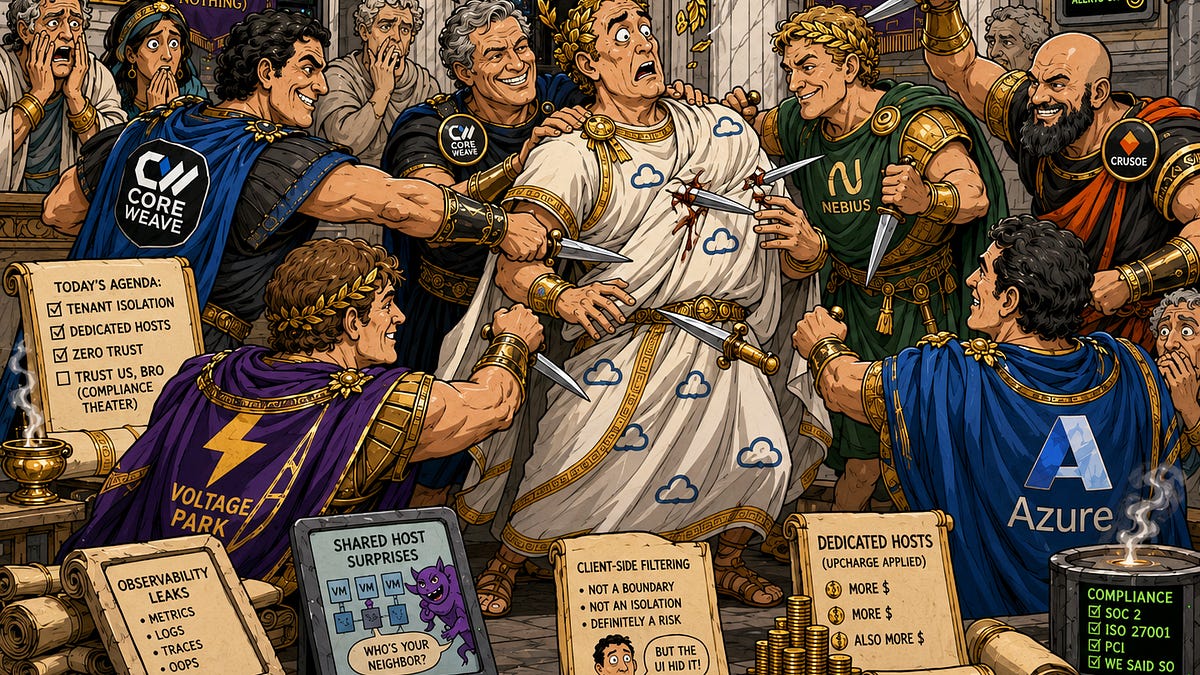
Most Neoclouds Suck At Security OpenAI vs HuggingFace, Container Escapes,…
From ClusterMAX 3.0 testing.
Why it mattersRented GPU clusters are being handed to tenants with container escapes, unrestricted east-west networking, and shared Grafana. Coding-capable models make exploiting stale software cheap.
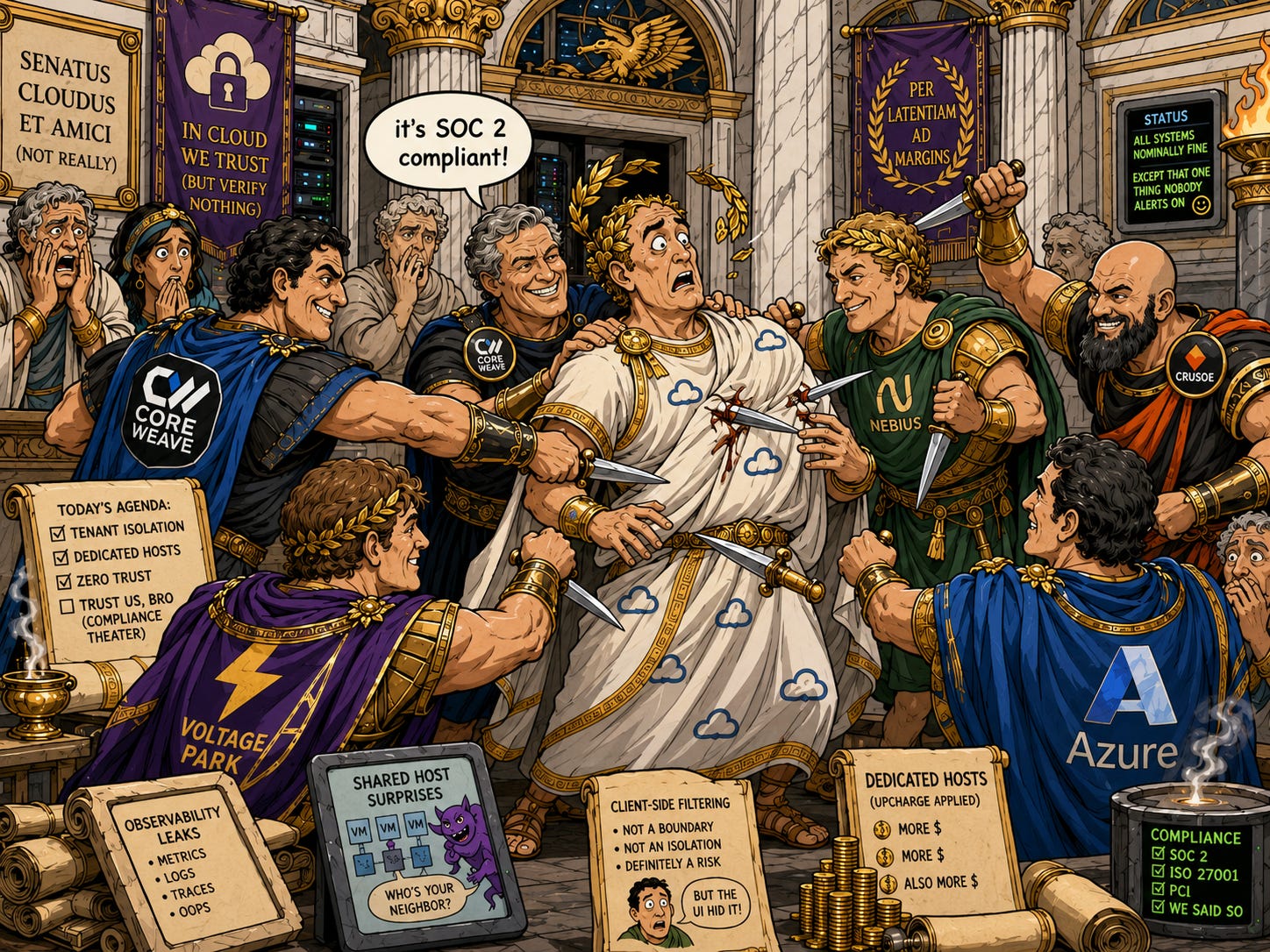
Most Neoclouds Suck At Security
Hands-on testing across GPU neoclouds for ClusterMAX 3.0 turned up five recurring security failure patterns in the providers that AI labs increasingly rent from, alongside an open CLI that audits your own cluster or standalone GPU box.
Why it mattersIf you rent GPU capacity from a neocloud, these are the recurring misconfigurations found in real clusters during testing. A CLI is available to point at your own machines to check whether you have them.

SOTA Generative Media Panel — Dumitru Erhan, Shane Gu & Nicole Brichtova, Google DeepMind
DeepMind researchers pick apart why human preference is an unreliable target for generative media.
Why it mattersHuman preference is a leaky objective for generative media. Raters reward sharpness and saturation over realism, and reward hacking shows up as artifacts nobody internally noticed, like wedding rings appearing on hands.

AI’s third era: the rise of persistent AI coworkers | Tara Seshan (OpenAI’s product lead)

MiniMax H3 and H3 Max are 50% off on AI Gateway
MiniMax H3 and H3 Max run at half price on Vercel AI Gateway from August 30 to September 13.
Why it mattersVideo generation through AI Gateway is half price until September 13 with no code change, and the entry documents the polling and webhook routes needed when a render takes minutes rather than seconds.

Introducing Hy4 Preview
Tencent releases Hy4 Preview as open weights: 770B total parameters, 49B active, a 1M-token context and 1.56TB of files, a sharp jump from July's Hy3.
Why it mattersA frontier-scale open-weight MoE with a 1M-token window is downloadable now, and its template exposes reasoning effort as binary — high or off — which constrains how you tune cost per call.

Nous Research shipped an official Box skill for Hermes. The agent acts as the user within permissions they set: bulk file and version management, document data search and extraction, and queries against the cloud file system as a governed content layer.
Why it mattersHermes agents can now act on enterprise Box content under the user's existing permissions — bulk file and version operations, document extraction and search — without hand-rolling a governed content integration.
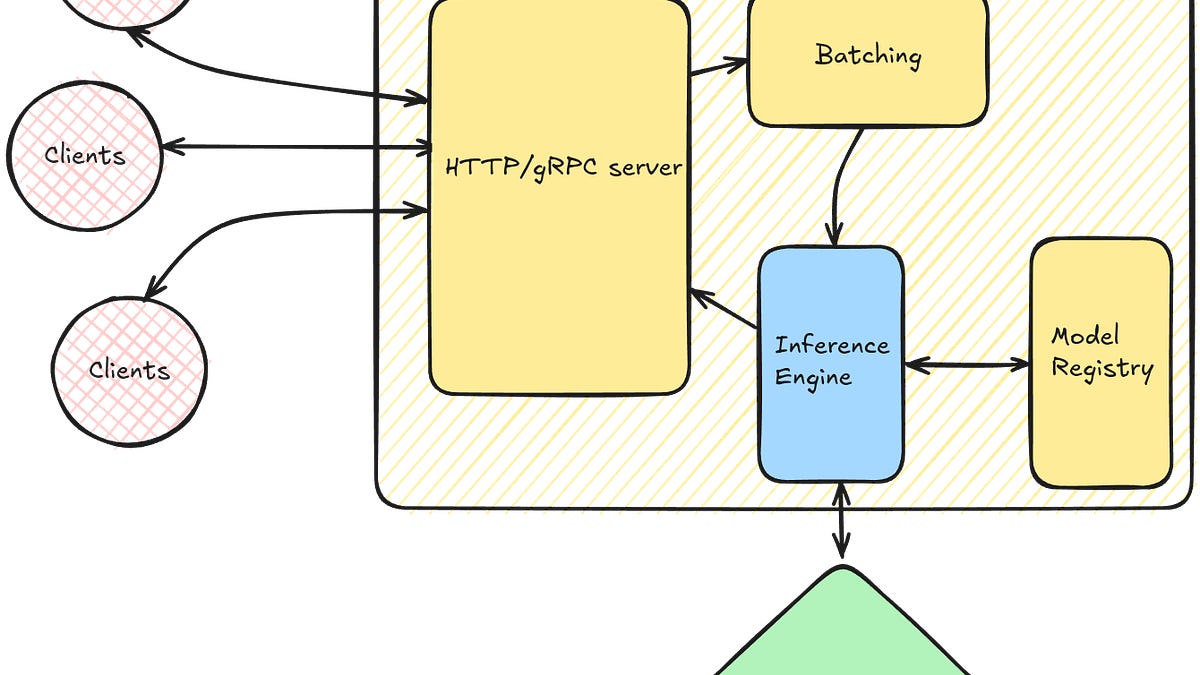
Build Your Own Inference Engine: From Scratch to "7"
Part one of a from-scratch C++ inference engine: train a small MNIST network with a non-trivial topology, export it to ONNX, then load, graph and execute it yourself.
Why it mattersServing can outcost training over a model's life, and this shows why by building the layer yourself: ONNX loading, graph construction and CPU execution in C++, with dynamic batching, memory management and quantization placed in context.
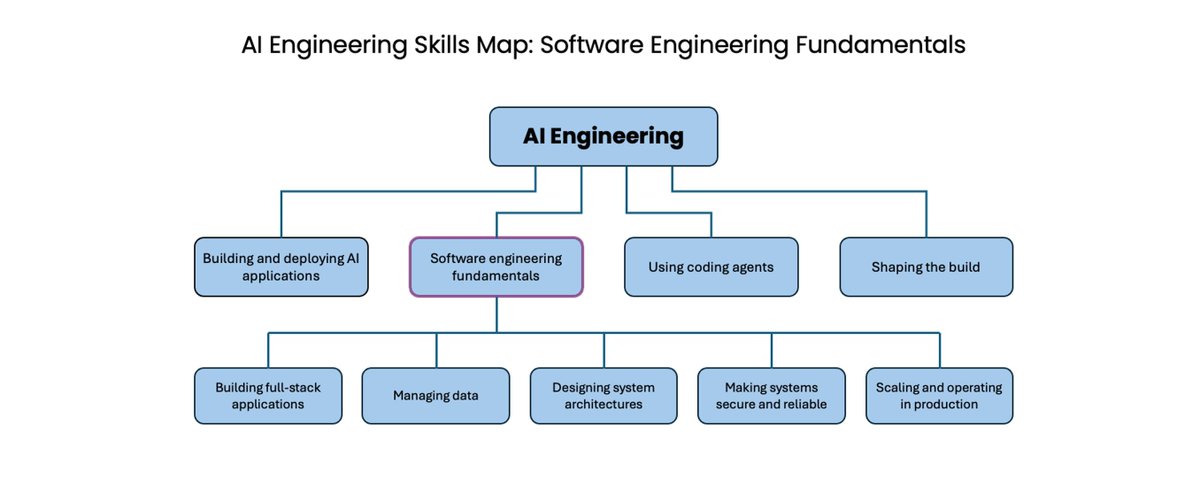
Andrew Ng on the fundamentals that let you steer a coding agent
Andrew Ng on which software engineering fundamentals still matter when an agent writes the code.
Why it mattersVibe coding without fundamentals produces agents making unexamined tradeoffs you never knew existed.
OpenAI resets paid Codex and ChatGPT Work usage and enumerates the bugs that were quietly eating allowances: images kept through compaction, Stop-hook-trapped memory workers, /goal running past its stop condition, over-frequent automations, and subagents escalating to pricier models.
Why it mattersPaid Codex usage is reset and several quota-consuming bugs are fixed, including image-heavy compaction, runaway memory workers, /goal overruns, misfiring schedules.

Tell the Robot What You Want — Sandhya Subramani, AWS
An AWS engineer puts an agent layer over a quadruped's existing movement policies.
Why it mattersShows hardware treated as just another tool call: a robot trained on a fixed task list becomes addressable in plain language, and the deployment doubles as a collection rig for the next round of training data.

The Signal Layer: What to Build When Anything Can Be Built — Lena Hall, Akamai
When the same leverage reaches every competitor on the same morning, the price of competent average work goes to zero.
Why it mattersNames the skill that agent leverage does not commoditize: choosing which problem deserves the attack you now have, and holding signal that never made it into any training set.

Tribal Dungeons of Global Shipping: AI Agents at Global Scale — Dmitry Buykin, Maersk
Maersk's SOPs were screenshots: fine for humans, useless to an agent.
Why it mattersThe agent loop is not the system; the refining loop is. Maersk's ratio — procedure corpus twenty times the runtime, accuracy earned through 100k+ corrections — reframes where engineering effort belongs on enterprise agent projects.

Agentic Sites: Building Hyper Personalized Websites — Carlos Sanchez, Adobe
Carlos Sanchez on Adobe's agentic sites.
Why it mattersConstraining generation to a few blocks grounded in a site-as-corpus keeps personalization off the hallucination path, and latency becomes a model-selection criterion — Adobe's fastest config averaged 1.1s against 4.6s for the runner-up.

Anthropic sets Claude Code's weekly limits: a permanent 25% raise for Pro, Max, Team and seat-based Enterprise from September 14, replacing the temporary 50% increase — a net 17% reduction from current headroom, with usage visibility controls promised next.
Why it mattersFrom September 14 standard weekly Claude Code limits rise 25% on Pro, Max, Team and seat-based Enterprise — but that is 17% below the current temporary boost, so plan agent workloads for less headroom than this week's.

Agents Are Where Microservices Were in 2015 — Roberto Milev & Uday Kanagala, Navan
Who bought the ticket when an agent acts two weeks later?
Why it mattersDelayed agent actions break the user-versus-service-principal identity model, and logs stop working once agents emit this much reasoning.

Day-zero vLLM support for Hy4-preview, verified on NVIDIA GPUs. The serving notes expose the architecture: 256 routed experts plus one shared, a 1M context where each query attends to just 2048 tokens, and only 21 of 78 layers computing their own sparse index.
Why it mattersYou can serve Hy4-preview on vLLM today without waiting for a port, and the disclosed layout of 2048 attended tokens per query with sparse index reuse across 57 of 78 layers explains how the 1M window stays affordable.

From Tokenmaxxing to Trusted Throughput — Mingsheng Hong, Ironclad
Mingsheng Hong on why a token-usage leaderboard backfires and what to measure instead.
Why it mattersMeasuring token cost without a value denominator produces the wrong incentives.
SemiAnalysis breaks down OpenAI's Jalapeno accelerator against Rubin and GB300 on their InferenceX benchmark, argues tokens per megawatt is the metric that matters, and covers Samsung's HBM4 recovery, AI-written RTL and kernels, and Anthropic's coming ASIC.
Why it mattersOpenAI's in-house accelerator reportedly beats Nvidia Rubin on tokens per megawatt and taped out in nine months — a signal on where inference capacity, pricing and the CUDA lock-in are heading over the next cycle.

Guardians of the State: An Air-Gapped AI Fortress for Consumer Data — Rachna Srivastava, DFPI
California's DFPI runs fraud analysis behind a fiber optic cable cut in half — receiver inside, no transmitter out.
Why it mattersMost AI data problems are data engineering problems in disguise.

The Half Life of Agent Infrastructure — Ben Kus, Box
Ben Kus opens by retracting the graph-based agent advice he gave from the same stage a year earlier, then argues agent infrastructure has a half life measured in months.
Why it mattersIf agent infrastructure decays in months, 'pick a stack and go deep' is the wrong default: build swappable abstractions, switch only when eval sets justify it, and review AI choices on a fixed clock — Box uses six months.

[AINews] OpenAI shuts off Cursor
OpenAI is cutting Cursor off from its models after the SpaceX acquisition closed, citing contract history with Musk companies.
Why it mattersOpenAI is ending Cursor's access to its models, so GPT-based workflows inside Cursor need a migration plan. Cursor pegs OpenAI at 5% of its traffic and is leaning on Grok 4.6 and Claude instead.

Ant and the SGLang community ran a full DeepSeek-V4-Pro serving project through Infer-forge, an agentic harness combining Harness, Loop and Graph. It split the work into 38 verified pieces, held a 28-hour median task lifetime traceable, lifted peak concurrent tasks from 2 to 9, and caught silent ker
Why it mattersLong-horizon agent runs usually fail on traceability and silent errors. Infer-forge reports 28-hour median task lifetimes kept traceable across 38 verified subtasks, with the harness itself catching silent kernel corruption.
Hy4 preview becomes selectable in Cline, with 770B parameters, 49B active, a 1M-token context and an Apache-2.0 license. Cline reports it leading SWE-bench Pro and calls it Tencent's largest measured generational jump; setup is npm install, /model, select.
Why it mattersAn Apache-2.0 model reported to lead SWE-bench Pro, with 49B active parameters and a 1M-token context, is now three commands away inside a coding agent, making it a real open-weights option for agentic coding work.
Tencent's newest flagship preview becomes selectable in OpenCode Go: 770B total parameters with 49B active per token and a 1M-token context window, positioned specifically for coding agents rather than chat.
Why it mattersA 770B open-weights model with 49B active parameters and a 1M-token context is now selectable inside a coding agent, giving an alternative to closed frontier models for long-context agent work.
OpenAI is ending its partnership with Cursor and cutting off model access on November 12, citing trust. Own-API-key usage and OpenAI's IDE extensions remain supported paths, and the company says it will keep working with other harnesses.
Why it mattersGPT models stop being served through Cursor on November 12; teams relying on that path must switch to their own OpenAI API key or OpenAI's IDE extensions.

The Perplexity Search API takes the top three positions on the Artificial Analysis Search Index across its low, medium and high context settings, with the medium tier scoring five points above prior leaders at about $0.091 per task.
Why it mattersRetrieval depth is a budget, not a default: the medium context setting of the Perplexity Search API tops the Artificial Analysis Search Index at roughly $0.091 per task, ahead of previous leaders on quality and cost.
This week's Claude Code shipping list: the CLI stops blocking on sandbox and MCP startup, the Linux x64 download drops ~4.5x to roughly 75 MB, /cost gains a prompt-cache line, /usage attributes tokens per /loop run, /permissions gets an editable Auto mode tab, and dropped remote sessions reconnect.
Why it mattersClaude Code now starts without waiting on sandbox and MCP servers, ships a ~75 MB Linux x64 build, breaks /loop token spend down per run in /usage, and exposes auto-mode rules in /permissions instead of settings.json. Run `claude update`.
Just a rumour of a bug is enough to find a security exploit these days
An OCaml maintainer saw traversal probes within ten minutes of a patch discussion going public.
Why it mattersThe gap between a public hint of a bug and a working exploit is now minutes, because coding agents close it. Open source embargo and release timing were designed for a window that no longer exists.
The Second Half
Shunyu Yao's argument for an inflection point: RL finally generalizes, so one recipe handles software engineering, math olympiad problems and computer use alike.
Why it mattersIf evaluation rather than training is now the bottleneck, leverage shifts to choosing the right tasks and building benchmarks that reflect real utility — closer to product judgment than to research.

OpenAI shipped appshots: a keyboard shortcut that hands ChatGPT Work and Codex the full context of whatever application is in front of you — a Slack thread, a form, an API reference, a dashboard — so the agent can read and act on it directly.
Why it mattersCodex and ChatGPT Work can now take the app you're looking at as context via a keyboard shortcut, so work sitting outside the terminal reaches an agent without copy-paste or a connector per application.

Hunyuan Hy4 enters preview with global access through OpenRouter and Tencent Cloud TokenHub alongside the vendor's own WorkBuddy and CodeBuddy products. Coding, office work, game development and scientific research are the named target workloads; comparative benchmarks are not disclosed.
Why it mattersHy4 preview is callable today through OpenRouter and Tencent Cloud TokenHub, so putting it head-to-head with your current coding model is an endpoint swap rather than a new vendor relationship.
Artificial Analysis benchmarked Perplexity's Search API at three context sizes inside a fixed harness. Medium scores 80 on its Search Index against 75 for Parallel and Brave, with the lowest inference cost per task ($0.028–$0.034) and ~$0.091 total. Quality plateaus between medium and high while sea
Why it mattersSearch is a swappable dependency in an agent stack, and this gives comparable quality, latency and per-task cost across providers — including the finding that richer search context cuts total cost by reducing the number of searches.
An index of the vibe-coding frontier. Corrections welcome.