Intel
Page 59
Vercel Connect now supports Linq
Vercel Connect adds a managed Linq connector, letting apps and eve agents send and receive over iMessage, RCS and SMS from a Vercel-provisioned or linked number.
Why it mattersAgents get a messaging channel on iMessage, RCS and SMS with a Vercel-provisioned number and no credentials in your code, including mid-conversation steering rather than one-shot replies.

The Missing Layer in Agentic AI — Giedrius Šteimantas, Oxylabs
Rebuilding a shopping agent's web layer.
Why it mattersAgents routinely burn tokens reading CAPTCHA pages that returned HTTP 200 — failing loudly on blocked fetches and using a browser only at checkout is the cheapest reliability win in agent web access.

NVIDIA's SANA team splits MiniMax H3 generation into a 4-step low-res draft and a 3-step LTX refinement with Sol-Attn kernels, replacing heavy VAE decodes with TAEH3/TAEHV. Ten seconds of 768p falls from 414s to 14.93s on a single GB200, reshaping the unit economics of video serving.
Why it mattersA draft-then-refine sampling split with Sol-Attn kernels takes 10 seconds of 768p H3 video from 414s to 14.93s on one GB200. Video generation moves out of batch rendering and into interactive latency budgets, with serving costs to match.

Round 2 of Korea's government-backed foundation-model program cut the field to three: Upstage's Solar Open 250B (Intelligence Index 37), SK Telecom's A.X K2 (35), and LG's K-EXAONE 2.0 (31). Each survivor is set to receive roughly 1,000 NVIDIA B200s for six months.
Why it mattersThree Korean labs remain in a state-funded frontier push, each with an independent index score and roughly 1,000 B200s for six months — a rare public read on where sovereign open models sit against the global frontier.

Alibaba's Wan 3.0 generates 2 to 30 second videos from text, images, or references at 480p, 720p, or 1080p, priced at $0.05, $0.10, and $0.20 per second with a limited-time 15 percent discount.
Why it mattersPer-second pricing across three resolution tiers ($0.05, $0.10, $0.20) gives video generation a predictable cost model, so a feature can be costed before it is built.

Rubin Ultra will ship 192GB of HBM4 rather than the 1TB previewed, and less than regular Rubin's 288GB. The cut came in three steps: eight cubes after the four-die part was scrapped, 8-hi stacks instead of 16-hi, and HBM4's 24Gb dies instead of HBM4E's 32Gb, with an 8-hi HBM4E upgrade possible later
Why it mattersHBM per accelerator caps model and KV-cache size. Rubin Ultra landing at 192GB — below regular Rubin's 288GB and a fifth of the previewed 1TB — changes what a single GPU will hold.
Your alt text passes automated checks. That doesn’t mean it’s any good.
GitHub built an alt-text quality plugin for its accessibility scanner and hit the classic model-in-the-loop problem.
Why it mattersModel-in-the-loop linting lives or dies on false positives — a quality rule teams disable is worth nothing. This walks the line between what a checker can prove and what it can only flag, with the tradeoffs generalized beyond accessibility.

A mobile-first agent setup: one tmux session per project across Hetzner VPSes, launched by a small `tm` script tied to the folder name and reached from Termius on a phone. Claude Code stays open in each session, so a dropped connection resumes where it left off.
Why it mattersA durable pattern for running coding agents from anywhere: persistent tmux sessions keyed to the project folder mean a dropped mobile connection never ends an in-flight agent run.
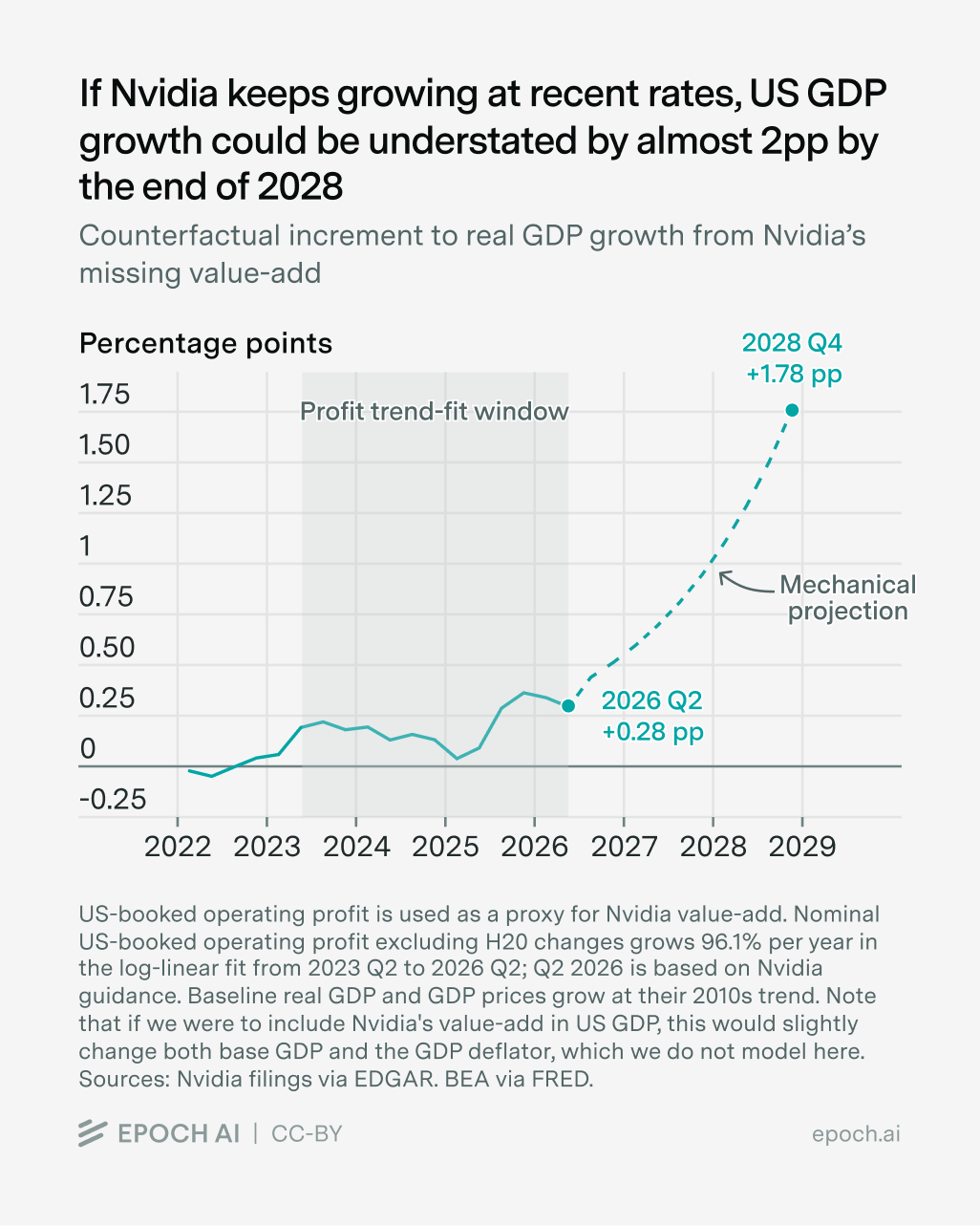
The Nvidia-sized hole in US GDP statistics
Epoch finds US statistics record no export of the value Nvidia creates designing chips made and sold abroad, understating recent GDP growth by roughly 0.3 percentage points.
Why it mattersExplains why measured GDP understates the AI hardware boom, relevant when reading economic signals about compute investment.

GPT-5.6 lands in AWS's Kiro, with OpenAI citing an ~82% cost reduction per successful task for GPT-5.6 Terra on Terminal-Bench 2.1 when run inside Kiro's spec-driven development environment.
Why it mattersAnother production surface for GPT-5.6, with a claim that spec-driven scaffolding cuts cost per solved task rather than just per token — worth verifying against your own workload.
Why one solo operator won't wire user-submitted bug reports into his coding agent: an attacker can bury a backdoor in a feature request and instruct the agent to describe the resulting PR as a pagination fix, so human review sees the wrong change.
Why it mattersHuman PR review is not a sufficient control when the agent's input is attacker-controlled — the same injected text can dictate how the resulting change is labeled and described.

Anthropic ships enterprise-managed auth for MCP connectors: Team and Enterprise admins centralize authorization through their identity provider, so tools connect without per-user OAuth. Launch partners include Linear, Notion, Slack, Figma and Supabase; third-party connectors can opt in.
Why it mattersMCP connector rollout no longer depends on every user completing an OAuth flow, and connector authors can now expose IdP-brokered auth to enterprise tenants.
MetaRoCE: A New RDMA Transport Built for AI-Scale Ethernet
Meta open-sourced MetaRoCE through the Open Compute Project.
Why it mattersMetaRoCE is a from-scratch RDMA transport for AI workloads on commodity Ethernet, published as a spec plus reference implementation and compliance suite via OCP.
MTIA 300: Meta’s First Training Chip with Built-in NICs and Communication-Offloading Engines
Meta's first in-house training chip treats interconnect as a design primitive: built-in NIC chiplets plus HCCL, a communication library co-designed with the hardware.
Why it mattersMeta's MTIA 300 puts NIC chiplets on the accelerator itself and co-designs the collective library with the silicon, attacking the AllReduce/AllToAll bottleneck that leaves general-purpose GPUs underutilized on embedding-heavy training.

LangChain's Managed Deep Agents now provision the Slack app as part of deployment. No manifest to author, no OAuth redirect configuration, no bot tokens to copy between environments — one command and the agent shows up in the workspace.
Why it mattersRemoves the Slack manifest, OAuth redirect and bot-token setup from shipping an agent into a workspace — deployment provisions the app itself.

An analysis of 8,135 agent trials finds skills mainly stabilize execution rather than supply missing knowledge: procedural anchoring explains 65.7% of successes, knowledge injection 4.5%. Distilling from success/failure-labeled runs moved one agent from 40% to 74.6%.
Why it mattersAgent skills work by anchoring procedure, not filling knowledge gaps — so distill runbooks from success/failure-labeled trajectories and route by domain before retrieving from a large catalog.
llm-anthropic 0.27
The Anthropic plugin for LLM ships 0.27, chasing anthropic-py v1.0.0 and its move from httpx to httpx2 — the same jump OpenAI's client made in v3.0.0 two weeks earlier.
Why it mattersAnthropic's Python SDK v1.0.0 switches from httpx to httpx2, following OpenAI's v3.0.0 — a transitive dependency break worth planning for if you pin either client.
Artificial Analysis and Liquid AI publish phone-scale rankings: on an iPhone 17 Pro, Nanbeige4.2-3B and LFM2.5-2.6B tie at 63 across BFCL, IFBench, GPQA Diamond, MATH-500 and AA-Omniscience, while generation time spans 30x and peak memory 19x across the field.
Why it mattersChoosing an on-device model is a three-way trade: two models can tie on score while one burns 14x the output tokens and 6.9GB of RAM. These numbers make that trade explicit per handset.
OpenRouter's New Defaults episode with Deedy Das of Menlo Ventures on inference economics: token prices down 40 percent while usage grew fourfold, why optimizing cost too early backfires, and why serious AI products end up spanning multiple models.
Why it mattersGives a working picture of where inference cost is heading, plus an argument for deferring cost optimization and designing products across several models rather than committing to one.

An open evaluation suite for on-device inference, built with Artificial Analysis. A configuration is model plus quantization plus runtime plus device, with over 10,000 verified results across 35 model classes and four devices, and Apache 2.0 clients for macOS, Windows, iOS and Android.
Why it mattersBefore shipping a local model you can check the exact quantization, runtime and device you plan to target, or run the clients on your own hardware and submit the configuration when it is missing from the dataset.
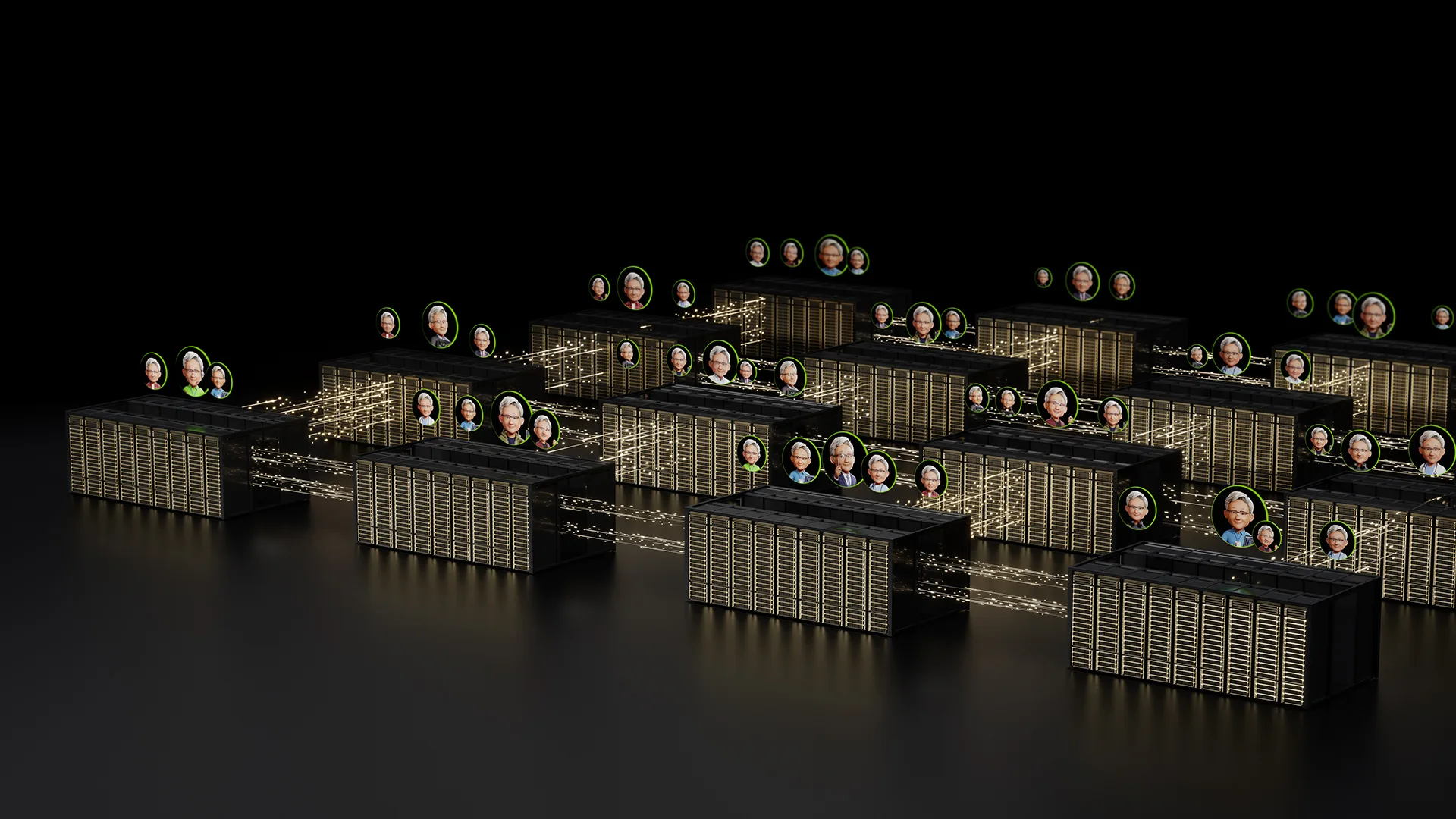
NVIDIA Vera Rubin and Blackwell Set a New Standard for Agentic AI Performance per Watt
NVIDIA benchmarks Vera Rubin NVL72 on SemiAnalysis AgentX — replayed coding-agent sessions with real context growth, tool calls and sub-agent spawning.
Why it mattersAgentX measures inference the way agents actually load it — long prefill, KV-cache reuse, bursty concurrency — making it a better proxy for real serving cost than single-turn benchmarks.
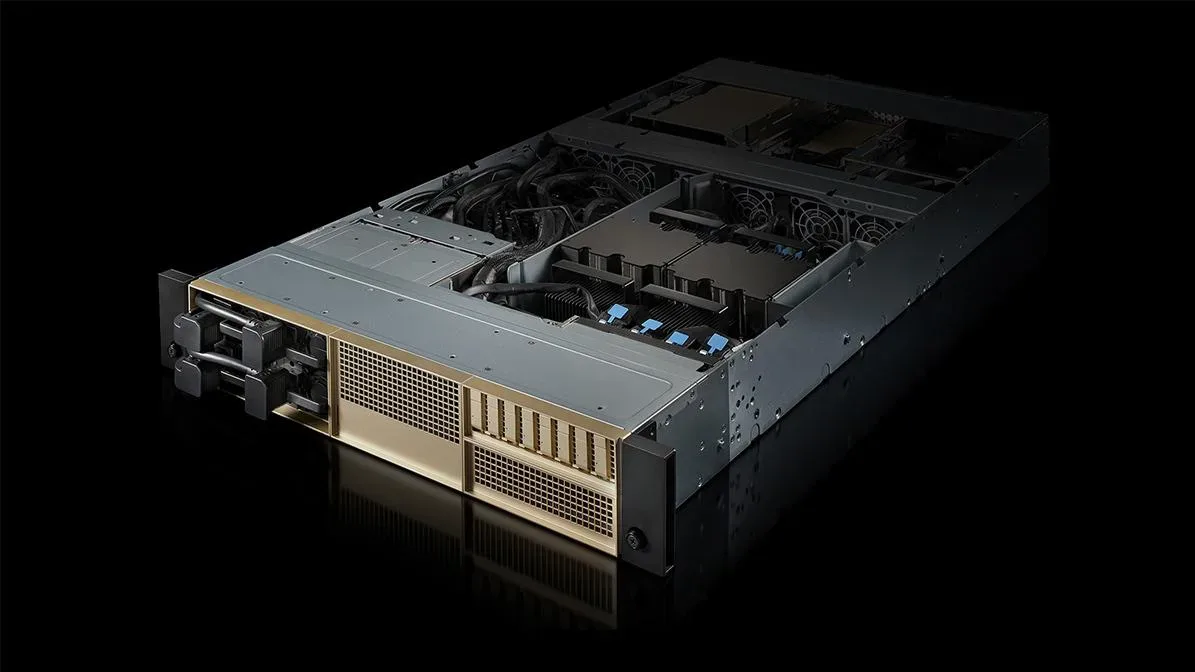
Solving Agentic AI Fleet Challenges with NVIDIA Vera CPU
NVIDIA profiled 163,000 agentic sessions and found 97% have unique execution shapes, which makes multi-design CPU fleet strategies impractical.
Why it mattersAgent orchestration and sandboxed tool execution run on CPUs, and nearly every session traces differently — so capacity planning by core count breaks. The comparative benchmark is NVIDIA's own.
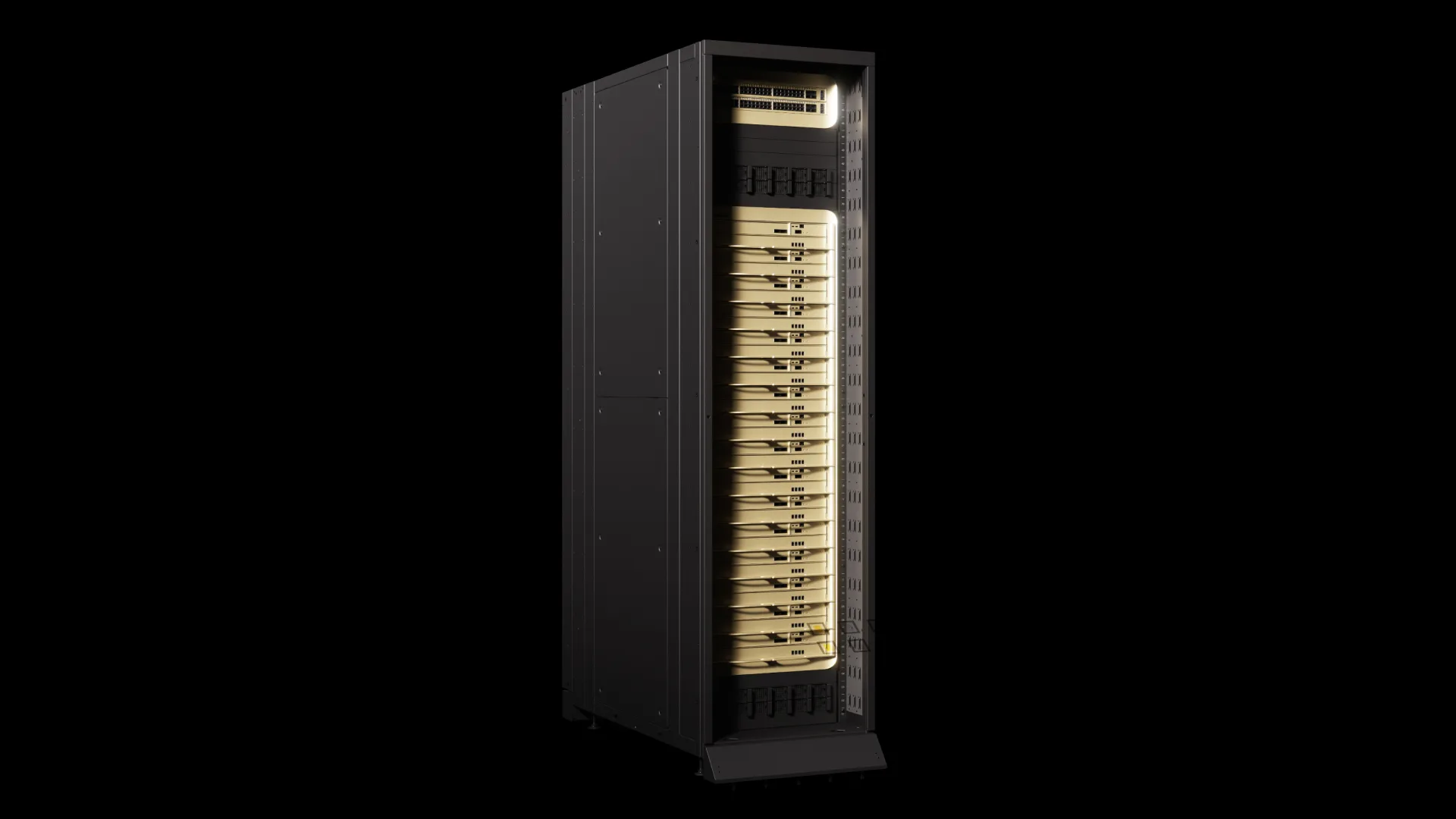
How NVIDIA Groq 3 LPX Unlocks Ultrafast Interactivity at Long Context on NVIDIA Vera Rubin
NVIDIA's Groq 3 LPX, now in production on Vera Rubin NVL72, posts 3,431 output tokens/sec at 100K context on Gemma 4 31B, using compiler-scheduled execution and preplanned chip-to-chip networking to keep tensor parallelism efficient at small batch sizes.
Why it mattersLong-context interactivity is the binding constraint on multi-turn agents; a compiler-scheduled accelerator aimed at small-batch decode changes the latency budget you can plan around.
OpenRouter published a visual benchmark grid for image models: each model's output on hard prompts such as composing several inputs into one scene, showing a specific number of fingers, or removing the second cup in a row, sortable by price and generation time.
Why it mattersImage quality is hard to read off a spec sheet. Seeing every model's output on the same hard prompts, next to price and latency, turns model selection into inspection rather than guesswork.

Hermes Agent adds HUD Mode, a transparent overlay that stays up over a running application so you can prompt and ask about what is on screen mid-session. Demoed over a game, but the pattern is general: persistent agent presence layered on the app you are already in.
Why it mattersScreen-aware overlays are where consumer agent UX is heading — the agent watches the live application rather than waiting in a separate chat window.

Hacktron's code-review agent now generates ready-for-review patches for vulnerabilities that match rules you configure, after validating exploitability against your test suite and tech stack.
Why it mattersHacktron's review agent can now auto-generate a ready-for-review fix once a finding matches rules you set, after validating exploitability against your own test suite.

DeepSeek V4 Flash Vision Is INSANE – Tested With DeepSeek Harness!
DeepSeek V4 Flash Vision put through its own harness on a browser OS build, a 3D wrestling game, Blender scene work, a Blender-plus-Godot pipeline, a C++ skate game, cinematic generation and a low-effort UI prompt.
Why it mattersShows how DeepSeek V4 Flash Vision behaves on multi-step creative and coding tool use inside DeepSeek's own harness — the setting where an open model would replace a frontier API.
Advancing price-performance for developers with GPT‑5.6 in Kiro
The GPT-5.6 family arrives in Kiro, AWS's spec-driven development agent, where requirements, design docs and team standards are fed to the model before it writes anything.
Why it mattersGPT-5.6 Sol, Terra and Luna are now selectable inside Kiro, with OpenAI and AWS reporting Terra completing Terminal-Bench 2.1 tasks at roughly 82% lower cost than before.

Ant released Ling-3.0-flash-dspark, applying the public DSpark recipe to the Ling family with distribution-aligned training data, architecture ablations, and an acceptance-aware loss. Weights are on Hugging Face and ModelScope, and the serving recipe plus engineering write-up ship alongside them.
Why it mattersLing-3.0-flash-dspark ships an open checkpoint and a serving recipe built on the public DSpark method, so teams can reproduce the acceptance-aware speculative decoding setup rather than reimplement it.
A first-hand report from travel in China: with an eSIM routing through Hong Kong, xAI was the only Western provider that worked. Anthropic and OpenAI block Hong Kong from their side, so the failure is provider geo-blocking rather than local filtering.
Why it mattersIf you travel to China or route traffic through Hong Kong, Anthropic and OpenAI endpoints are blocked at the provider side while xAI resolves — plan a fallback before you need one.

How to Train a Real-World Silicon Concierge? Internalizing Complex Business Workflow to Only OneModel
An industrial team argues the Router/Retriever/Planner/Executor pipeline degenerates into ad-hoc patches with cascading errors and high latency.
Why it mattersA production-scale argument against modular agent orchestration: internalizing workflow logic into the model removes the cascading errors and latency that come from patching a chain of components.

Testing and Evaluation of Agentic AI Systems In Military Command and Control
An assurance case needs claims, evidence, and an argument connecting them.
Why it mattersEstablished test-and-evaluation methods assume a system is specifiable, stable, composable and supervisable — agentic behavior weakens all four, so a passing evaluation does not license inferences about deployed behavior.

An Extensive Empirical Study on Code Translation Technique
A large comparison of learning-based methods, LLM-based methods and general-purpose LLMs on multilingual method-level and class-level code translation, scored on executable correctness rather than similarity.
Why it mattersIf you are migrating code with an LLM, this maps where it actually holds up — and shows that similarity scores are a bad proxy for whether the translated code runs.

BC-Bench: Evaluating Agentic Engineering in a Domain-Specific Language for ERP
Frontier coding agents are strong on general benchmarks and untested on enterprise DSLs.
Why it mattersAgentic coding gets measured somewhere other than Python: 101 real tasks in Dynamics 365's AL DSL, with multi-run scoring that separates model differences from run-to-run nondeterminism.

Beyond the Traceback: Using LLMs for Adaptive Explanations of Programming Errors
103 participants, sorted by a proficiency assessment, debugged Python against three kinds of error message.
Why it mattersLLM-rewritten error messages feel clearer and less taxing than raw interpreter output, but the measured debugging performance — fix rate, attempts, time-to-fix — does not follow the perceived improvement.
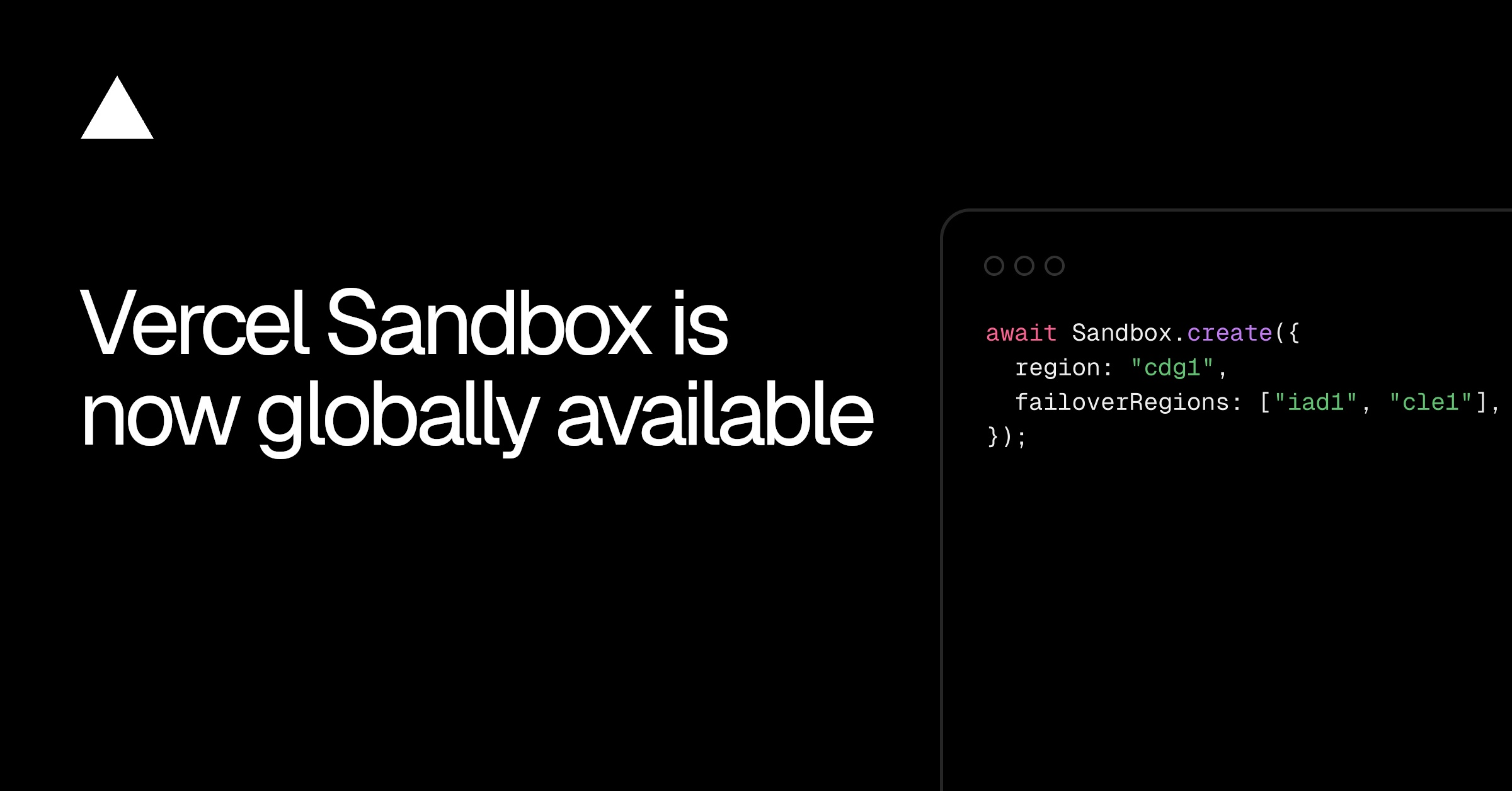
Vercel Sandbox is now globally available
Vercel Sandbox now runs in four regions — iad1, sfo1, cle1 and cdg1 — with iad1 still the default.
Why it mattersIf you run agent code execution on Vercel, you can now place sandboxes near your database and storage instead of paying a transatlantic round trip, and configure failover — but snapshots cannot move between regions.

When Vocabulary Comprehension Fails Clinical Reasoning: Evaluating Therapy Bots' Safety Risks for Generation Alpha
Two benchmarks — 64 validated Gen Alpha mental-health expressions and 75 paired multi-turn conversations.
Why it mattersDecoding slang is not safety: models that parse adolescent phrasing still miss the risk it encodes, and the paired Standard/Gen Alpha conversations give a reusable way to test that gap in your own product.

Temporal Validity on Real Software Histories: Eliminating Stale-Fact Errors in Code-Assistant Memory over GitHub Fixes
RAG has no clock. When a function is renamed or a dependency bumped, the stale and current statements retrieve at near-identical similarity and the assistant serves the old one.
Why it mattersRetrieval-based code assistants serve stale facts about a third of the time when a value changes mid-session — a renamed function, a moved endpoint — and an LLM reranker doesn't fix it; supersession-aware memory does.

When Retrieval Fails Before It Begins: Structurally Indirect Prerequisite Eviction as a Retention Failure in Agentic Memory
Agentic memory research usually tunes retrieval and assumes the needed evidence survived eviction.
Why it mattersIf your agent's memory runs under a token budget, the block it needs can be evicted before retrieval ever runs — tracking what a chunk depends on, not just how well it matches the query, recovers it.

Generation of Web Apps with Agentic IDEs: An Empirical Assessment
Three agentic IDEs — Copilot, Cursor, Windsurf — pointed at five full-stack web apps built from scratch.
Why it mattersAgentic IDEs handle established patterns like CRUD and auth reliably but produce significantly more errors on less common distributed architectures such as task queues — scope what you hand an agent accordingly.

Nexus: Depth-Adaptive KV-Cache Splicing and Retrieval-Decoupled Tool Routing for Agentic LLMs on Unified Memory
MCP agents re-send every tool schema each turn, so prefill dominates time-to-first-token as the registry grows.
Why it mattersA concrete answer to tool-registry bloat: route tools by retrieval over a compact signature instead of re-prefilling schemas, and treat KV-cache splicing as bounded by RoPE phase drift rather than by effort.

Vibe Coding: Practice, Performance, Productivity, and Risk -A State-of-the-Art Review
Seventeen months of vibe-coding evidence pulled together across software engineering, HCI, labor economics, security and governance.
Why it mattersThe productivity evidence for AI-assisted coding openly contradicts itself: +26% tasks per week in field experiments, a 19% slowdown in randomized trials, and code-review time up 441% in team telemetry.

Who Do Language Models Think Is Competent? A Mechanistic Analysis of Occupational Bias
Models that pass behavioral bias evaluations may still encode the bias.
Why it mattersClean behavioral bias scores do not mean the representation is clean — intervening on a model's internal estimate of user expertise changes its output, so output-only eval suites can miss the disparity entirely.

Representation Affects Retrieval: A Case Study of Skill Discovery and Routing in a Multimodal Agent Harness
A production multimodal video-agent harness details how it exposes skills to its planner.
Why it mattersHow a skill is represented in the system prompt, not just which skills exist, decides what the planner picks — and in-context selection is the small-N counterpart to embedding-based retrieval at scale.

Beyond Prompt Engineering: A Systematic Analysis of Prompt Lexical Sensitivity and Its Impacts on Quality
A token-level analysis of 132,000 prompt variants finds that prompts scoring higher on a task are also the ones stable under perturbation.
Why it mattersPrompt robustness is not luck: naming domain terms precisely and giving explicit action directives narrows the model's interpretive space, and the prompts that score highest also vary least across rewordings.

AgentX: an open benchmark for million-token agentic inference
SemiAnalysis open-sourced AgentX 1.0, an Apache-2.0 benchmark measuring inference on real multi-turn agentic coding traffic at 1M context rather than fixed prefill/decode.
Why it mattersHardware and serving comparisons built on single-turn 8k/1k traffic mislead for agentic workloads; this one models KV-cache reuse and sub-agent bursts, and the dataset and dashboard are open.
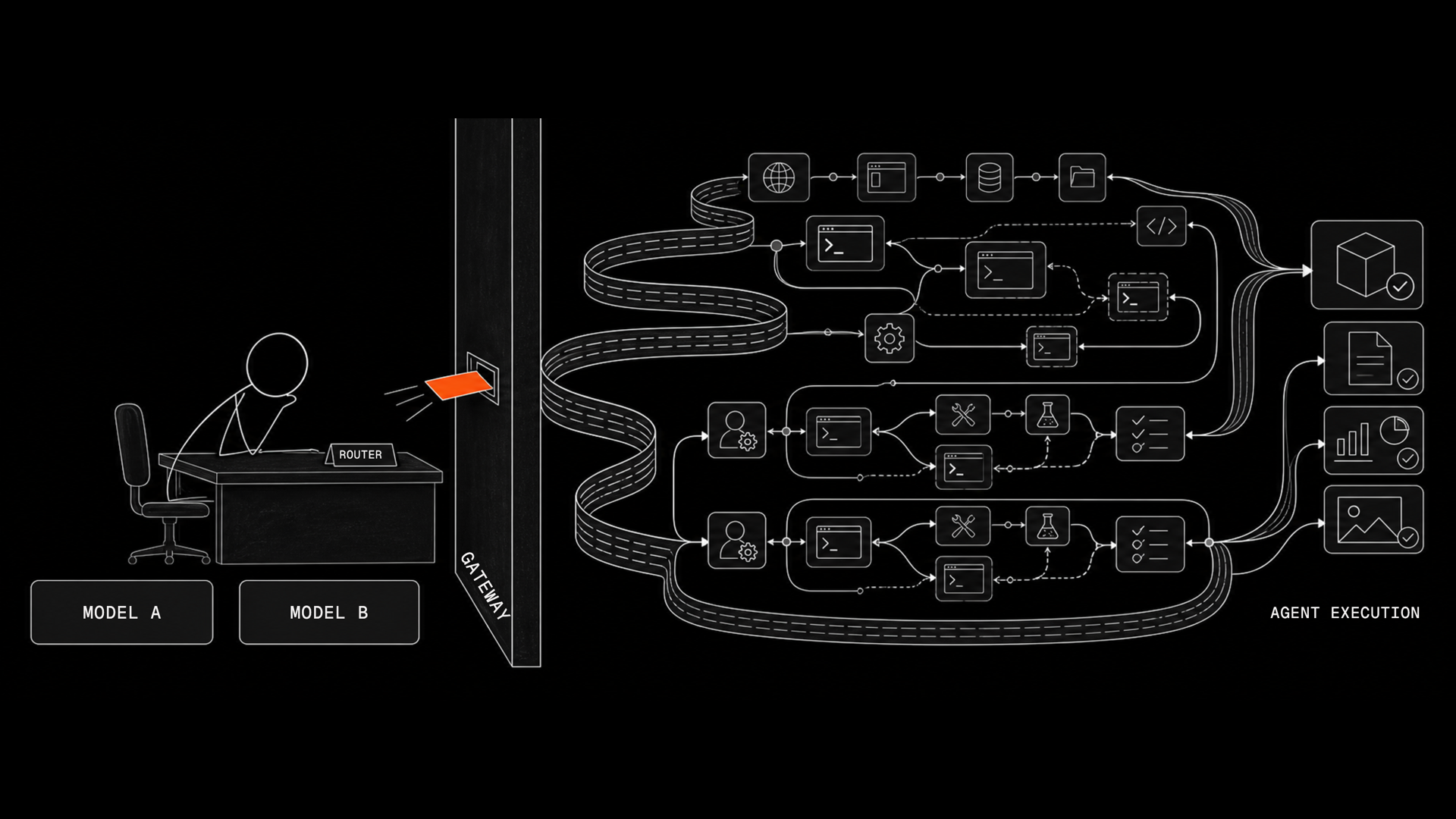
Why model routing must be in the harness
Model prices among agent-capable models span fiftyfold, and one task can burn hundreds of calls — so where the routing decision lives matters.
Why it mattersRouting models inside the agent harness instead of at the gateway cut aggregate inference cost 58% and median turn latency from 81s to 49s in production, with task-completion and failure measures holding steady.

Fences, not Sandboxes
Yegge describes running 50-60 agents on 21 Claude Max accounts, with Fable officers managing Sol and Opus fleets.
Why it mattersDetails a real large-scale agent organization: long-lived Fable officers supervising Sol and Opus fleets, with costs disclosed, and argues for governing agents with rules rather than containment.

How To Use Playwright Mcp With A Cloud Browser
A step-by-step on handing an agent a real browser over MCP.
Why it mattersGives an agent a browser it can click and fill rather than only page text, with runnable config for both the local dev path and a hosted browser that survives bot checks.
camsnap: a CLI that hands an agent live camera frames
A Go CLI that saves cameras by name, then captures snapshots and short clips from RTSP/ONVIF devices and local webcams, discovers ONVIF hosts on the network, runs health checks.
Why it mattersOne command turns an RTSP or USB camera into a JPEG an agent can read, with motion triggers that shell out — no bespoke ffmpeg plumbing to give an agent eyes on the physical world.
An index of the vibe-coding frontier. Corrections welcome.