Intel
Page 58
CUDA Python 1.0: Stable APIs, One Foundation, Full Platform Access
CUDA Python 1.0 ships with CUDA 13.3 under semantic-versioning commitments.
Why it mattersStable, NVIDIA-maintained Python APIs to the CUDA platform mean GPU-level work no longer requires a C++ extension and a hand-maintained binding layer, with predictable deprecation to build libraries against.

OpenAI Jalapeño: Better Than Nvidia Blackwell OpenAI’s self-designed ASIC…
SemiAnalysis got into OpenAI's lab to benchmark Jalapeño, the Broadcom-partnered inference chip revealed at Hot Chips.
Why it mattersA first-generation custom inference ASIC beating Blackwell on tokens per megawatt without speculative decoding or prefill-decode disaggregation changes the assumption that inference cost curves are set by NVIDIA's roadmap.
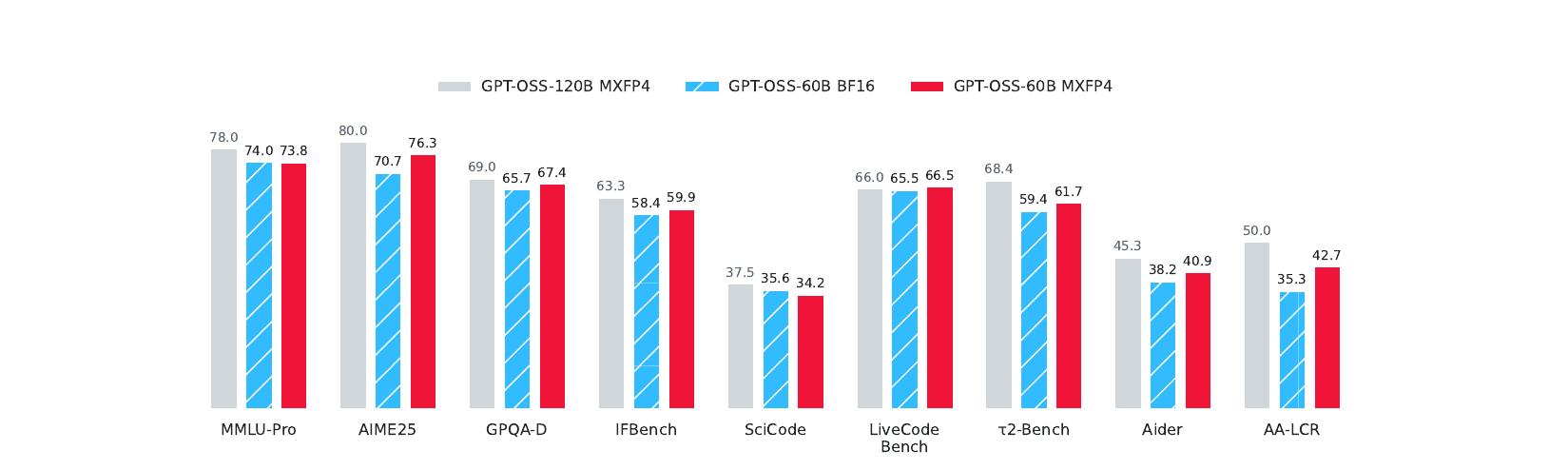
Quantization-Aware Healing: a compressed, 4-bit model that outperforms its full-precision original
Compress-then-quantize pipelines normally trade reasoning and code quality for size, so everyone bolts on a healing step.
Why it mattersShows the recovery step after compress-then-quantize matters more than the quantization, and that a 4-bit model can land more accurate than the 16-bit weights it came from — with the reasons QAT and QAD fall short.

Turn off Claude Code's Memory
An audit of the memories Claude Code silently accumulated on a working dev machine: 45 stored, 26 never read back once.
Why it mattersAuto-saved agent memory can accumulate into dozens of entries that are never recalled yet still shape context. Auditing what your coding agent has silently stored — and pruning or disabling it — is a cheap, immediate check.

Building GTM AI Agents: Lessons from Deploying to 6,000 Users — Sait Izmit, Snowflake
Snowflake's GTM assistant fields ~40,000 questions a week for 6,000 users.
Why it mattersBuild the eval set from the real workflow before wiring anything up, and trade coverage for accuracy — a user who bounces off a bad first answer costs roughly ten times more to win back.
Jalapeño’s first results show industry-leading speed and efficiency in AI inference
OpenAI publishes first performance results for Jalapeño, the inference chip it designed for its own serving stack, claiming higher throughput and lower latency per watt on current models.
Why it mattersOpenAI now has its own inference accelerator with published results, which bears on where serving capacity, latency and cost for its models are heading.

The end of credential sprawl for agents
Vercel Connect reaches GA.
Why it mattersAgents can hold no provider secret at all: credentials are requested per task at runtime, scoped and auto-expiring, which caps what a leaked token can do instead of just making it harder to steal.
Loop Engineering: Building Blocks, Adoption, and Impact
An exploratory review of the gray literature behind loop engineering.
Why it mattersNames the pattern of systems that prompt agents for you and enumerates what a sound loop contains: triggered runs, machine-checkable stop conditions, persistent state, verifier sub-agents, token budgets, escalation points.
LitReview Arena: Evaluating Literature Review Agents with Battle-Style Peer Review Platform
A battle-style platform where domain experts compare anonymized literature reviews on five review-specific criteria.
Why it mattersPuts a number on how far literature-review agents still sit behind expert drafts, and shows the agentic scaffold — not the base model — carries most of the gain.
Neuro-Formal Verification: Agentic Language-Agnostic Formal Program Reasoning
Neuro-formal verification hands translation to an AI coding agent and the decision to an established verifier.
Why it mattersFormal verification stops being reserved for specialist artifacts: an agent handles translation and specification while a real verifier decides, giving push-button proofs or counterexamples at empirical accuracy.
Agentic Scaffolding Amplifies Sycophantic Behavior in Large Language Models
Sycophancy studied under agentic scaffolding rather than single turns.
Why it mattersThe reconsideration and self-refinement loops meant to improve agent answers instead amplify sycophancy, and more capable models capitulate more — measure this before adding another refinement pass.
Architecture as Capability Equalizer for Coding Agents
Five ways of specifying the same architecture — prose, Mermaid with ADRs, OpenAPI, C4 DSL, TypeScript contracts with ArchUnit rules — run against six models over 90 agent trials.
Why it mattersOn frontier models the spec format barely matters; on weaker ones, writing it as OpenAPI or typed contracts recovers most of the capability gap — while mid-tier models can burn more tokens for worse code.
Agentic Security: A Systematization of Tools, Failure Modes, and Design Laws for LLM-Driven Penetration Testing
A practitioner-facing systematization of LLM-driven penetration testing.
Why it mattersLong-lived agent sessions shed resident evidence as phase count grows while short-lived sub-agents extend the usable horizon — a concrete argument for how to shard sessions in any tool-heavy agent.
There Is No Neutral Harness: Modern LLM Leaderboards Are Manufactured by Config-Fragile Items
Twelve instruction-tuned open-weight models answer the same 3,679 ARC, HellaSwag, MMLU and TruthfulQA items under 26 equally defensible harness configurations.
Why it mattersA model's benchmark score is a band, not a point — set partly by option order, prompt wording, and whether answers are read from text or logits. Leaderboard gaps narrower than that band are harness artifacts.
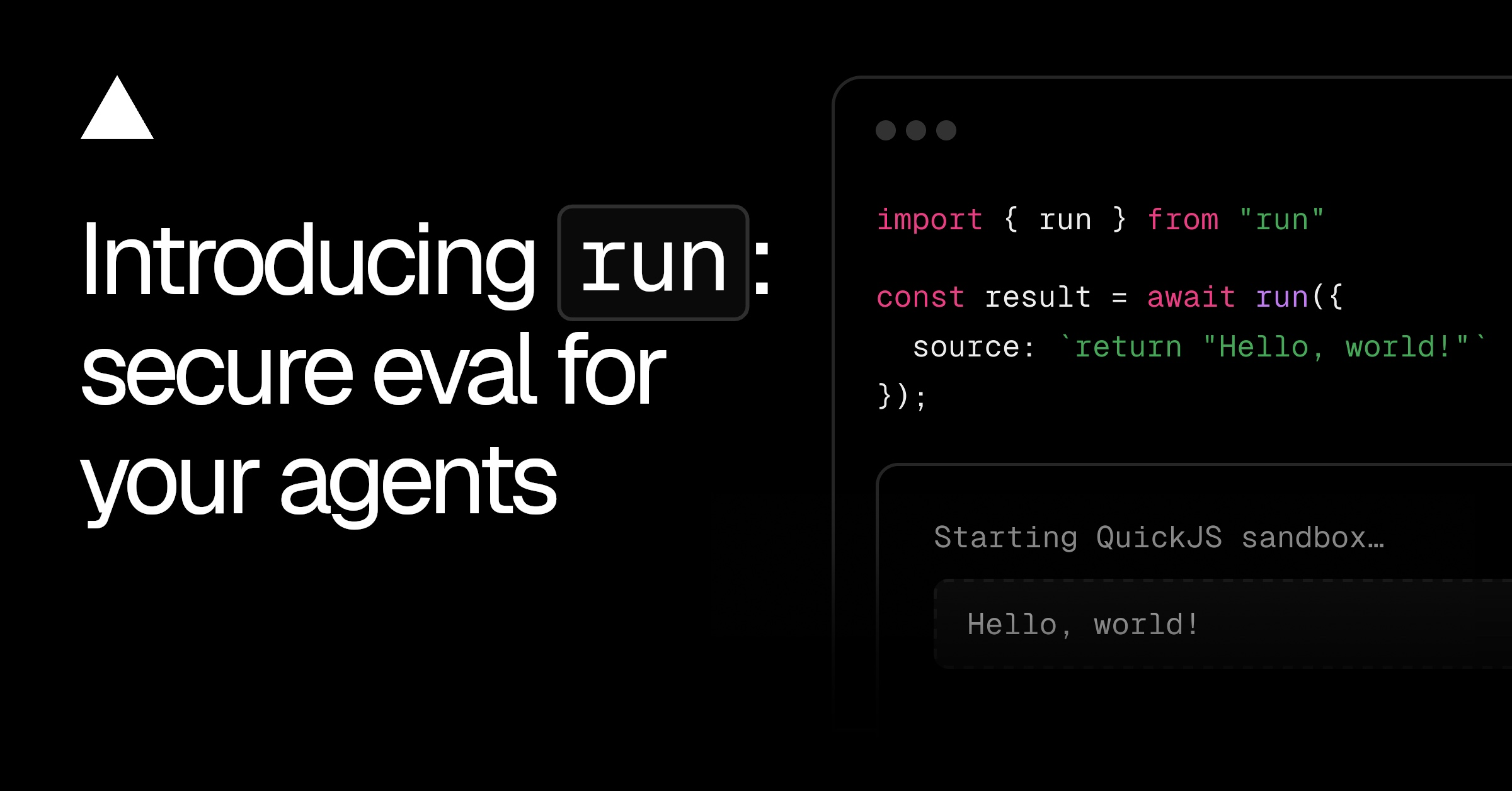
Introducing Run SDK: secure eval for your agents
Run SDK executes untrusted agent-written JavaScript and TypeScript in a fresh QuickJS context inside a worker thread, with no direct path to Node or the network.
Why it mattersA replacement for eval when agents write programs that call your systems: the sandbox has no route to your secrets or internal services, and it can pause mid-program for authentication or human approval and resume where it stopped.
Beyond Two Bytes per Letter: Tokenization Overhead in Cyrillic AI Systems
Nine production tokenizers measured across five languages and 8.37 million word forms.
Why it mattersPuts numbers on the token tax Cyrillic-script languages pay in spend and usable context across production tokenizers, and measures two fixes — prompt compression and a balanced byte-level BPE.
On the Role of Citations in Preference Data
A study of what citations actually do to preference judgments in scientific QA.
Why it mattersIf you run LLM judges or collect preference data on cited answers, citation count and diversity are quietly moving the scores — and model judges weigh them differently from humans, without seeing the sources.

Artificial Analysis clocked Gemma 4 31B at roughly 3,400 tokens/s on a private NVIDIA Groq 3 LPX endpoint, holding that speed from 10k to 100k input tokens across 50 sequential single-concurrency requests. The rack is in full-scale production and enters operation later this year.
Why it mattersLong-context output speed that holds steady from 10k to 100k input changes what interactive agent loops can afford, and the rack behind it enters service this year.

OpenAI is reinstating the 5-hour rolling window on Plus accounts for ChatGPT Work and Codex, to smooth compute load and stop newer users burning a full week of quota in a single session. Pro $100 and Pro $200 subscriptions stay exempt for the upcoming months.
Why it mattersLong Codex sessions on a Plus plan hit a 5-hour window again, so weekly quota is no longer spendable in one sitting; the two Pro tiers are exempt for the next several months.

SemiAnalysis launched AgentX, a benchmark for agentic inference performance that replays workload shapes derived from opt-in Claude Code sessions. The methodology page documents request distributions and per-conversation flamegraphs rather than reporting a single throughput figure.
Why it mattersAgent workloads look nothing like chat benchmarks; AgentX measures inference against real coding-agent traces, so serving comparisons reflect what agents actually send.

Playwright To Stagehand Migration
A step-by-step port from Playwright to Stagehand v4, which drives Chromium over CDP with no Playwright dependency.
Why it mattersA concrete porting path plus a rule for where to spend a model call: natural-language act()/extract() for the selectors that actually break, plain CSS everywhere else.
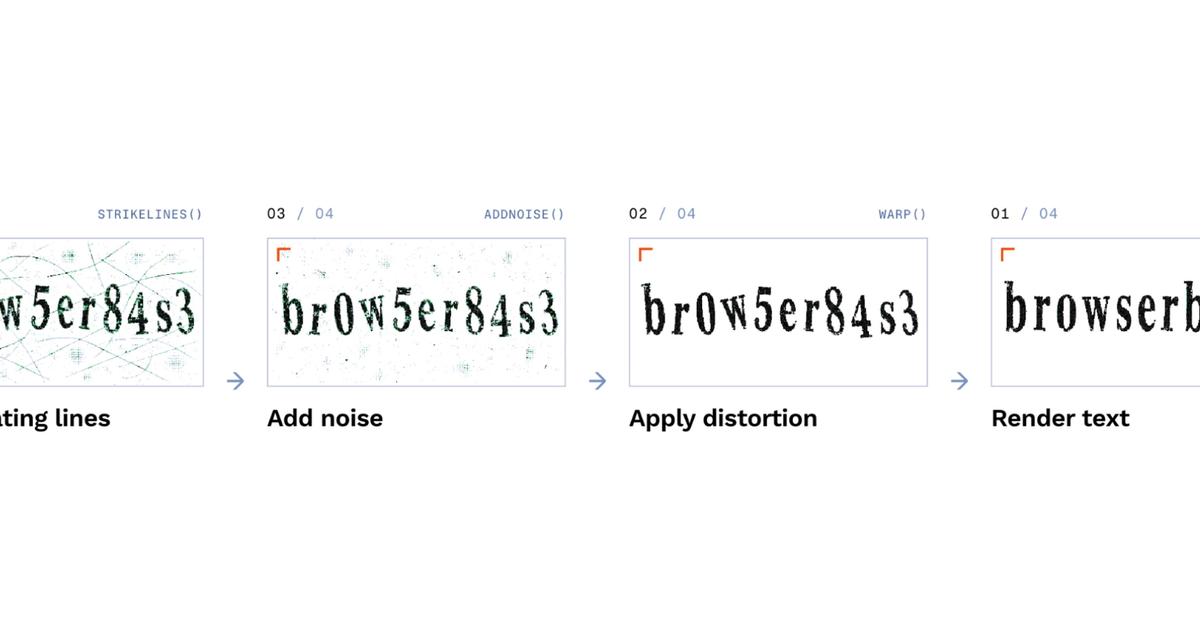
Why Captchas Are Getting Harder
Twenty years of CAPTCHA generations — distorted text, harder text, image grids — each eventually beaten by machines.
Why it mattersIf your agent touches the open web, the durable answer is attestable identity rather than better solving — Web Bot Auth is the standard to watch as detection moves from puzzles to provenance.
Introducing the Admin plugin for ChatGPT Work and Codex
OpenAI shipped an Admin plugin for ChatGPT Work and Codex.
Why it mattersSeat, permission and usage-limit administration for ChatGPT Work and Codex now runs through a plugin inside the assistant, changing how teams provision and audit Codex access.
AI Gateway now supports asynchronous video generation
AI Gateway adds asynchronous video generation: a webhook option, an SDK polling mode, and a startVideo/getVideoStatus pair that returns a job ID before rendering begins.
Why it mattersVideo renders that take minutes no longer have to hold an HTTP request open — startVideo returns a job ID immediately, so generation survives serverless timeouts, queues and parallel jobs.
Bring your agent to Notion with Chat SDK
Chat SDK's new Notion adapter lets a single agent answer comment threads on Notion pages alongside Slack, Discord and GitHub.
Why it mattersOne agent codebase can now work Notion comment threads the same way it works Slack or GitHub, with pages as channels and comment threads as threads — no separate deployment per surface.

Wan 3.0 now available on AI Gateway
Alibaba's Wan 3.0 arrives on AI Gateway as a single model spanning text-to-video, image-to-video, first/last-frame conditioning and reference-based generation, taking image, video and audio references.
Why it mattersOne Wan 3.0 endpoint now covers text-, image-, frame-conditioned and reference-based video up to 30 seconds at 1080p with audio, replacing the separate capped model IDs of Wan 2.7.
Connect Droid to the tools that run your company
Factory ships Connectors and Personas: Droid gets managed, sign-in-once access to the apps a team already runs — Linear, Slack, Sentry, PagerDuty, GitHub, Salesforce.
Why it mattersDroid can now reach Sentry, Linear, GitHub, Salesforce and others through managed connectors instead of a self-hosted MCP server, which shortens the path from a production alert to a reviewable patch.
MiniMax M3 and M2.7 are free on AI Gateway
MiniMax M3 and M2.7 run free on AI Gateway through September 6 via GMI Cloud, either through the -free model IDs or by pinning gmicloud in provider order with fallback.
Why it mattersMiniMax M3 and M2.7 are free through September 6 via the -free IDs on AI Gateway, including inside coding agents like Claude Code, Codex and Cursor — a no-cost window to evaluate them against your current model.

Gpt 5 6 Discounts Jevons Paradox
Gateway-level measurement of what a three-week frontier-model discount did to demand.
Why it mattersDiscounting frontier models produced a 5.6x-13.8x token surge that mostly displaced rival labs rather than cannibalizing the vendor's own line, and about a third of trialing accounts stayed after prices reverted.
Stagehand Caching
How Stagehand caches browser actions.
Why it mattersRepetitive web automation doesn't need to re-reason about the same page every run; caching the resolved selector takes the model call out of the hot path entirely.
Chat SDK now supports Slack Enterprise Grid
The Slack adapter for Chat SDK now handles org-wide Enterprise Grid installs.
Why it mattersIf you ship a Slack agent into a large org, org-wide installs now resolve tokens and route events correctly across workspaces, with per-tenant caches so one tenant's user data can't leak into another's.
Disrupting a new covert influence campaign from Russia
OpenAI banned a Russia-origin cluster that used ChatGPT to mass-produce English comments promoting a fake Israel-based think tank and a Russia-flattering "sovereignty" index.
Why it mattersShows how a state-linked influence operation actually uses a frontier model, and the artifacts — translation tells, VPN access patterns, prompts asking to mask origin — that exposed it.
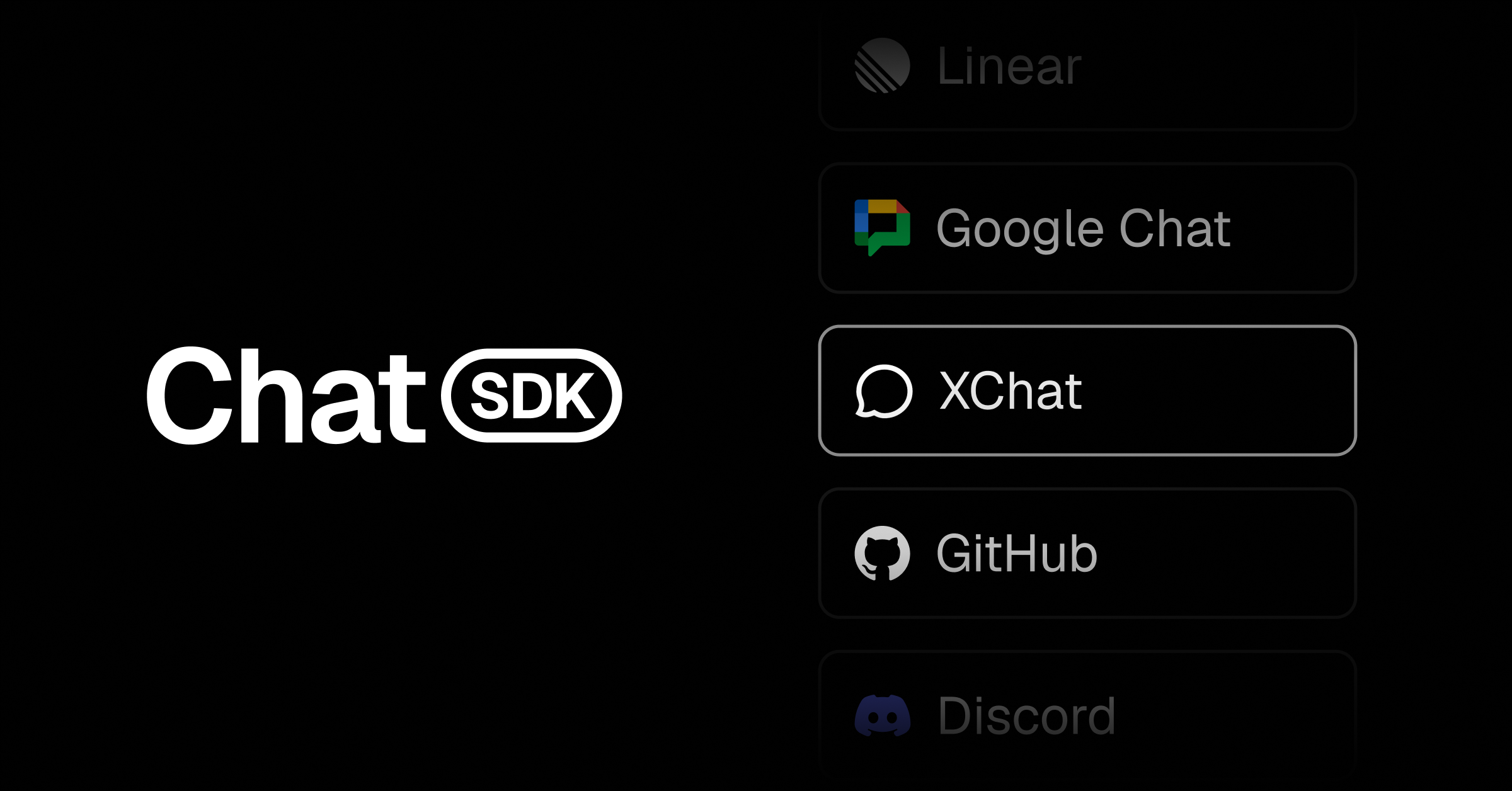
Chat SDK now supports XChat
Chat SDK picks up an XChat adapter: bots hold end-to-end encrypted direct and group conversations with encryption, keys and signature verification handled by the adapter.
Why it mattersChat bots get an encrypted messaging surface without hand-rolling crypto or key management, and can initiate conversations with followers who have encrypted chat enabled.
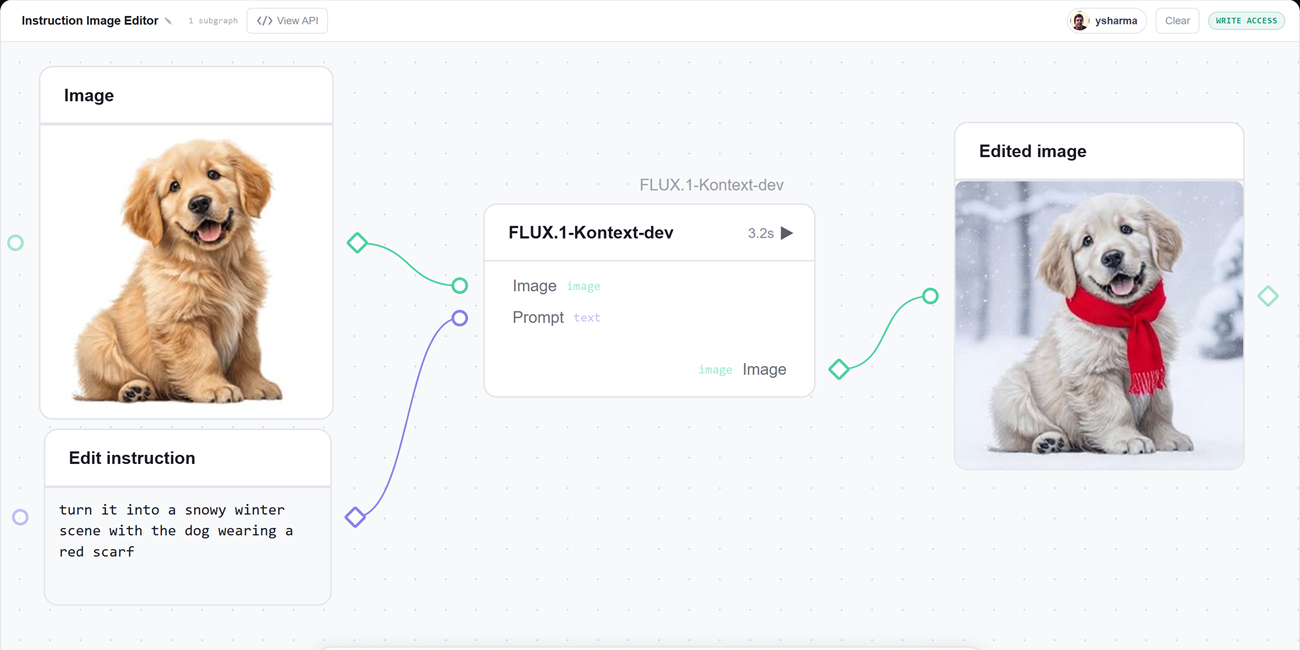
Wire It, Run It, Deploy It: AI Workflows in Gradio
Gradio's gr.Workflow turns the pipeline itself into the UI.
Why it mattersReplaces print-debugging multi-model pipelines with a graph where every intermediate value is visible, and ships the same graph as per-output REST endpoints.
Vercel Connect now supports Linq
Vercel Connect adds a managed Linq connector, letting apps and eve agents send and receive over iMessage, RCS and SMS from a Vercel-provisioned or linked number.
Why it mattersAgents get a messaging channel on iMessage, RCS and SMS with a Vercel-provisioned number and no credentials in your code, including mid-conversation steering rather than one-shot replies.

The Missing Layer in Agentic AI — Giedrius Šteimantas, Oxylabs
Rebuilding a shopping agent's web layer.
Why it mattersAgents routinely burn tokens reading CAPTCHA pages that returned HTTP 200 — failing loudly on blocked fetches and using a browser only at checkout is the cheapest reliability win in agent web access.

NVIDIA's SANA team splits MiniMax H3 generation into a 4-step low-res draft and a 3-step LTX refinement with Sol-Attn kernels, replacing heavy VAE decodes with TAEH3/TAEHV. Ten seconds of 768p falls from 414s to 14.93s on a single GB200, reshaping the unit economics of video serving.
Why it mattersA draft-then-refine sampling split with Sol-Attn kernels takes 10 seconds of 768p H3 video from 414s to 14.93s on one GB200. Video generation moves out of batch rendering and into interactive latency budgets, with serving costs to match.
Round 2 of Korea's government-backed foundation-model program cut the field to three: Upstage's Solar Open 250B (Intelligence Index 37), SK Telecom's A.X K2 (35), and LG's K-EXAONE 2.0 (31). Each survivor is set to receive roughly 1,000 NVIDIA B200s for six months.
Why it mattersThree Korean labs remain in a state-funded frontier push, each with an independent index score and roughly 1,000 B200s for six months — a rare public read on where sovereign open models sit against the global frontier.

Alibaba's Wan 3.0 generates 2 to 30 second videos from text, images, or references at 480p, 720p, or 1080p, priced at $0.05, $0.10, and $0.20 per second with a limited-time 15 percent discount.
Why it mattersPer-second pricing across three resolution tiers ($0.05, $0.10, $0.20) gives video generation a predictable cost model, so a feature can be costed before it is built.
Rubin Ultra will ship 192GB of HBM4 rather than the 1TB previewed, and less than regular Rubin's 288GB. The cut came in three steps: eight cubes after the four-die part was scrapped, 8-hi stacks instead of 16-hi, and HBM4's 24Gb dies instead of HBM4E's 32Gb, with an 8-hi HBM4E upgrade possible later
Why it mattersHBM per accelerator caps model and KV-cache size. Rubin Ultra landing at 192GB — below regular Rubin's 288GB and a fifth of the previewed 1TB — changes what a single GPU will hold.
Your alt text passes automated checks. That doesn’t mean it’s any good.
GitHub built an alt-text quality plugin for its accessibility scanner and hit the classic model-in-the-loop problem.
Why it mattersModel-in-the-loop linting lives or dies on false positives — a quality rule teams disable is worth nothing. This walks the line between what a checker can prove and what it can only flag, with the tradeoffs generalized beyond accessibility.

A mobile-first agent setup: one tmux session per project across Hetzner VPSes, launched by a small `tm` script tied to the folder name and reached from Termius on a phone. Claude Code stays open in each session, so a dropped connection resumes where it left off.
Why it mattersA durable pattern for running coding agents from anywhere: persistent tmux sessions keyed to the project folder mean a dropped mobile connection never ends an in-flight agent run.
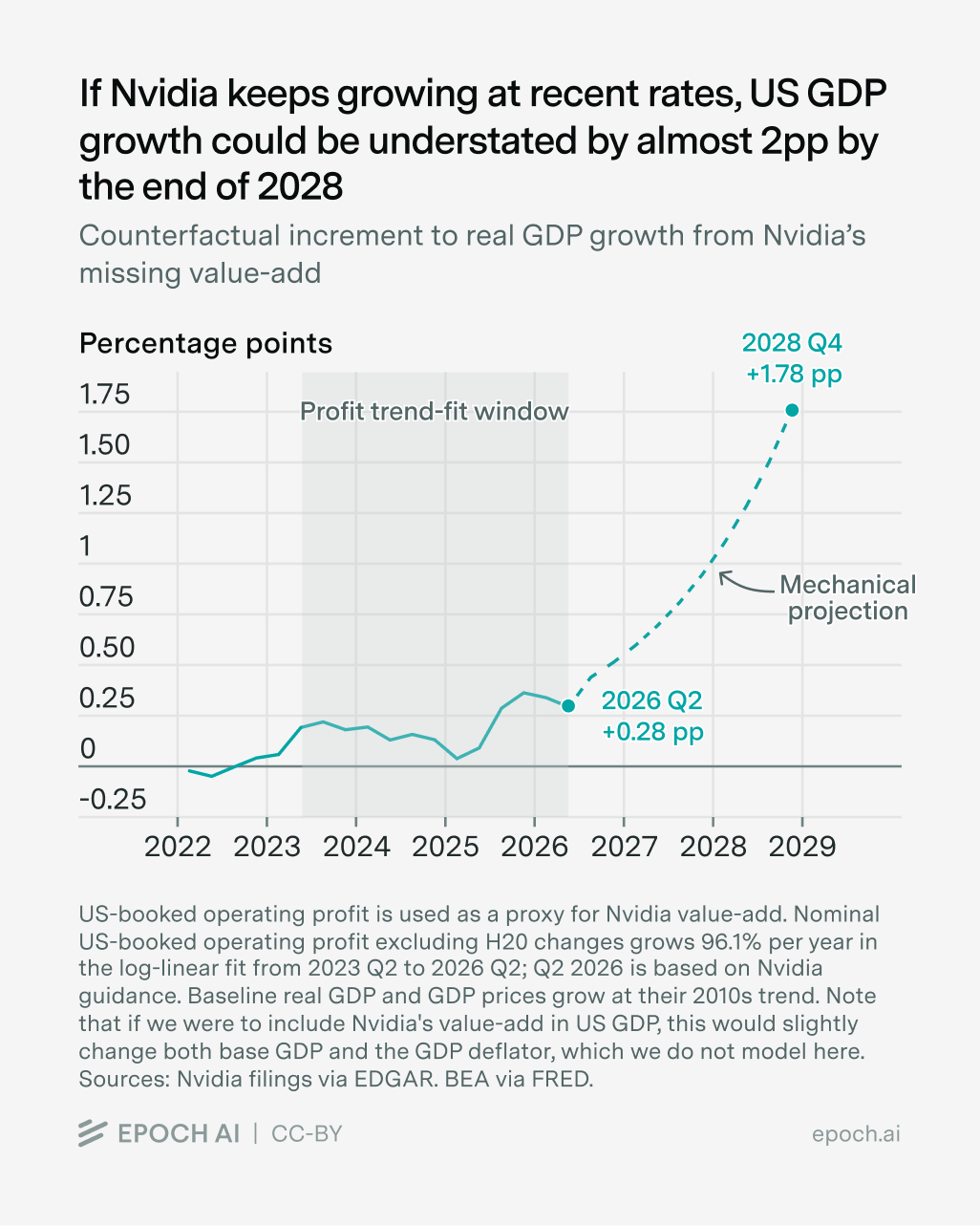
The Nvidia-sized hole in US GDP statistics
Epoch finds US statistics record no export of the value Nvidia creates designing chips made and sold abroad, understating recent GDP growth by roughly 0.3 percentage points.
Why it mattersExplains why measured GDP understates the AI hardware boom, relevant when reading economic signals about compute investment.

GPT-5.6 lands in AWS's Kiro, with OpenAI citing an ~82% cost reduction per successful task for GPT-5.6 Terra on Terminal-Bench 2.1 when run inside Kiro's spec-driven development environment.
Why it mattersAnother production surface for GPT-5.6, with a claim that spec-driven scaffolding cuts cost per solved task rather than just per token — worth verifying against your own workload.
Why one solo operator won't wire user-submitted bug reports into his coding agent: an attacker can bury a backdoor in a feature request and instruct the agent to describe the resulting PR as a pagination fix, so human review sees the wrong change.
Why it mattersHuman PR review is not a sufficient control when the agent's input is attacker-controlled — the same injected text can dictate how the resulting change is labeled and described.

Anthropic ships enterprise-managed auth for MCP connectors: Team and Enterprise admins centralize authorization through their identity provider, so tools connect without per-user OAuth. Launch partners include Linear, Notion, Slack, Figma and Supabase; third-party connectors can opt in.
Why it mattersMCP connector rollout no longer depends on every user completing an OAuth flow, and connector authors can now expose IdP-brokered auth to enterprise tenants.
MetaRoCE: A New RDMA Transport Built for AI-Scale Ethernet
Meta open-sourced MetaRoCE through the Open Compute Project.
Why it mattersMetaRoCE is a from-scratch RDMA transport for AI workloads on commodity Ethernet, published as a spec plus reference implementation and compliance suite via OCP.
MTIA 300: Meta’s First Training Chip with Built-in NICs and Communication-Offloading Engines
Meta's first in-house training chip treats interconnect as a design primitive: built-in NIC chiplets plus HCCL, a communication library co-designed with the hardware.
Why it mattersMeta's MTIA 300 puts NIC chiplets on the accelerator itself and co-designs the collective library with the silicon, attacking the AllReduce/AllToAll bottleneck that leaves general-purpose GPUs underutilized on embedding-heavy training.

LangChain's Managed Deep Agents now provision the Slack app as part of deployment. No manifest to author, no OAuth redirect configuration, no bot tokens to copy between environments — one command and the agent shows up in the workspace.
Why it mattersRemoves the Slack manifest, OAuth redirect and bot-token setup from shipping an agent into a workspace — deployment provisions the app itself.

An analysis of 8,135 agent trials finds skills mainly stabilize execution rather than supply missing knowledge: procedural anchoring explains 65.7% of successes, knowledge injection 4.5%. Distilling from success/failure-labeled runs moved one agent from 40% to 74.6%.
Why it mattersAgent skills work by anchoring procedure, not filling knowledge gaps — so distill runbooks from success/failure-labeled trajectories and route by domain before retrieving from a large catalog.
An index of the vibe-coding frontier. Corrections welcome.