Intel
Page 61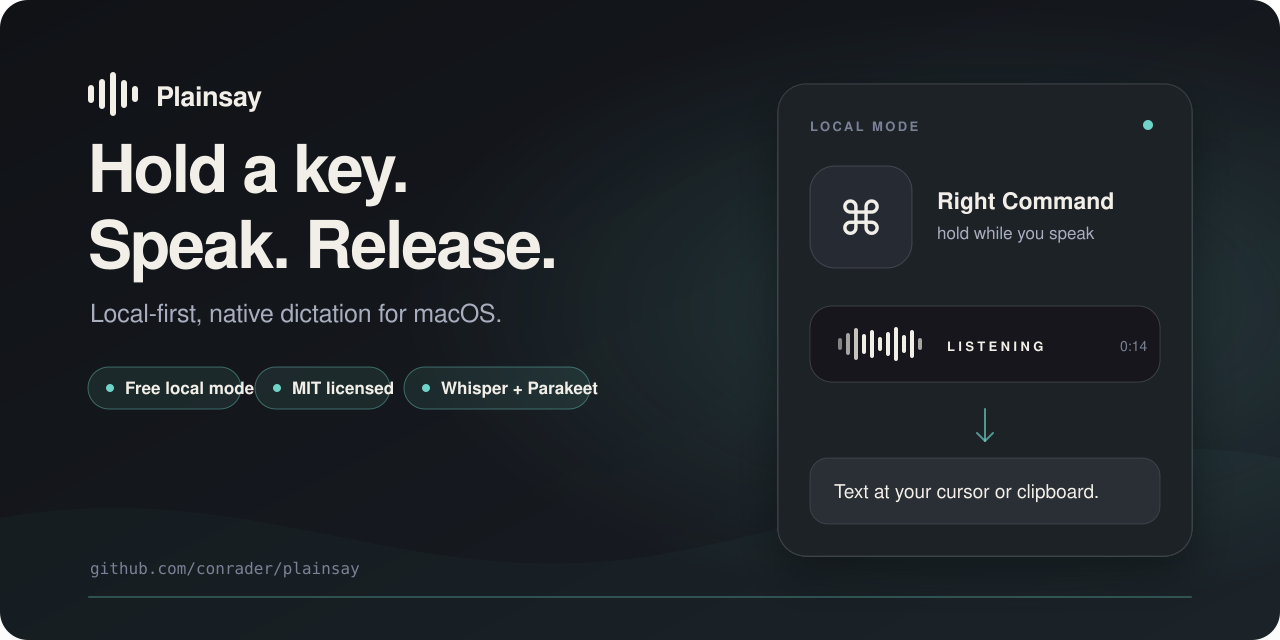
Plainsay – 12 MB Mac dictation with local Whisper and Parakeet
A free, MIT-licensed Mac dictation app in a 12 MB download that runs Whisper and Parakeet on the machine itself, placing text at the cursor with no account, no telemetry and offline recognition once the model is downloaded.
Why it mattersLocal Whisper and Parakeet in a 12 MB signed app is a practical way to dictate prompts to coding agents without sending audio anywhere.
How Claude Watermarks AI-Generated Text
A recorded lecture with transcript that walks slide by slide through the mechanism behind Anthropic's text watermarking of Claude output, expanded from a short social post into roughly 50 slides and 48 minutes of detail.
Why it mattersWatermarking changes what teams can assume about detecting and attributing model output, and this is the clearest available explanation of the underlying mechanism.

Ornith 1.5 35B is VERY Good - Full Test & Quant Comparison!
Ornith 1.5 35B run locally with Q4 and Q8 side by side across a browser OS build, an FPS, a C++ skate game, a 3D CAD model, a frontend page and a game test.
Why it mattersShows where Q4 degrades against Q8 on browser, FPS, C++, CAD and frontend builds — the practical trade-off when fitting a 35B model onto local hardware.
Agile AI Development Lifecycle
Argues AWS's open-sourced AI-DLC is waterfall in agentic clothing — 30-plus stages that mostly emit documents for humans to review.
Why it mattersIf your AI adoption plan is a stack of markdown stages gated on human review of generated documents, it won't scale past one engineer's machine.
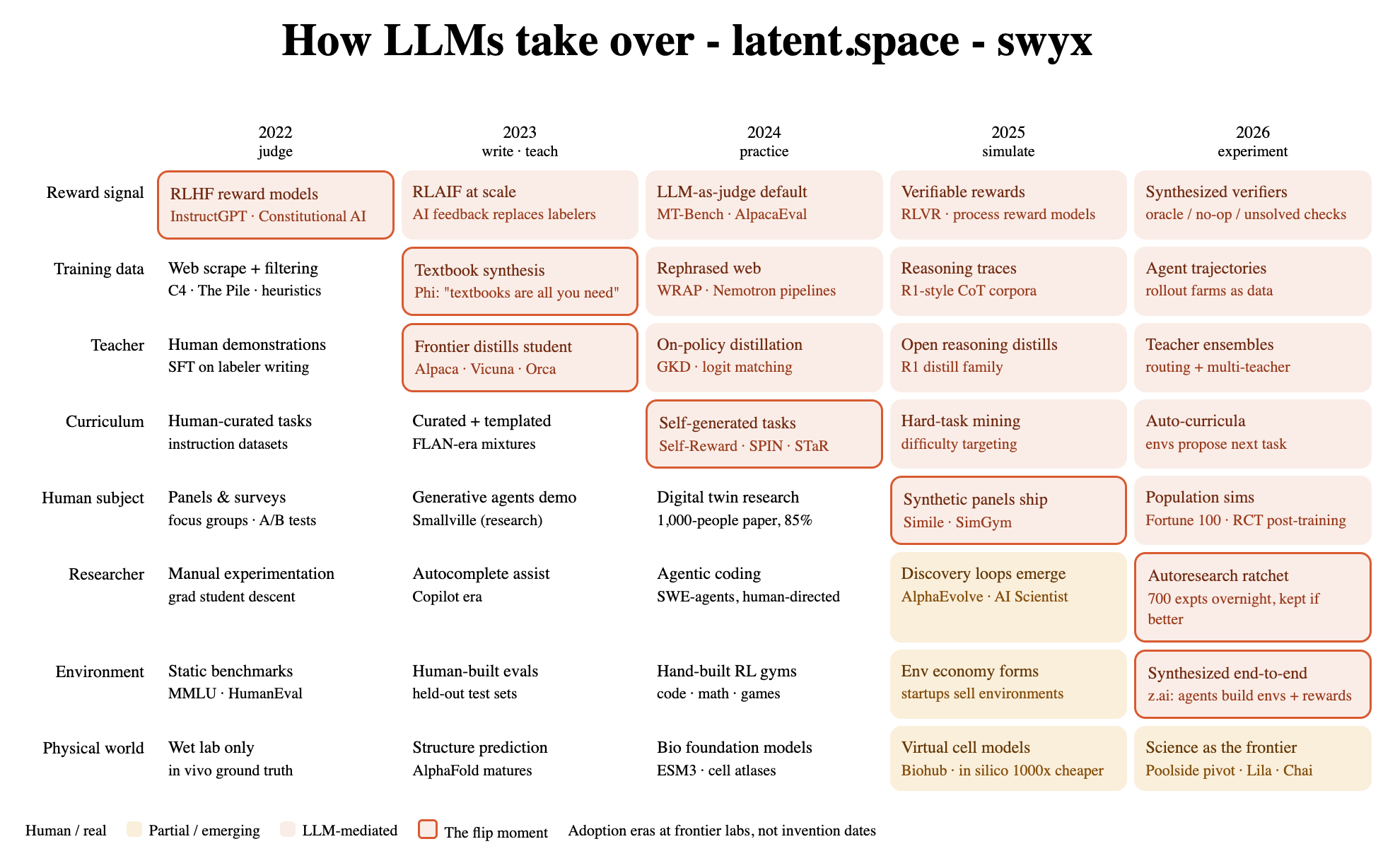
[AINews] 10% worse, 100x cheaper, 10000x faster: Why Simulation is taking over
A staged account of how each part of the pipeline producing machine intelligence went synthetic.
Why it mattersIt gives you a frame for which parts of your own pipeline are next to go synthetic, and a way to reason about accepting a somewhat worse signal when it is two orders of magnitude cheaper and four orders faster.
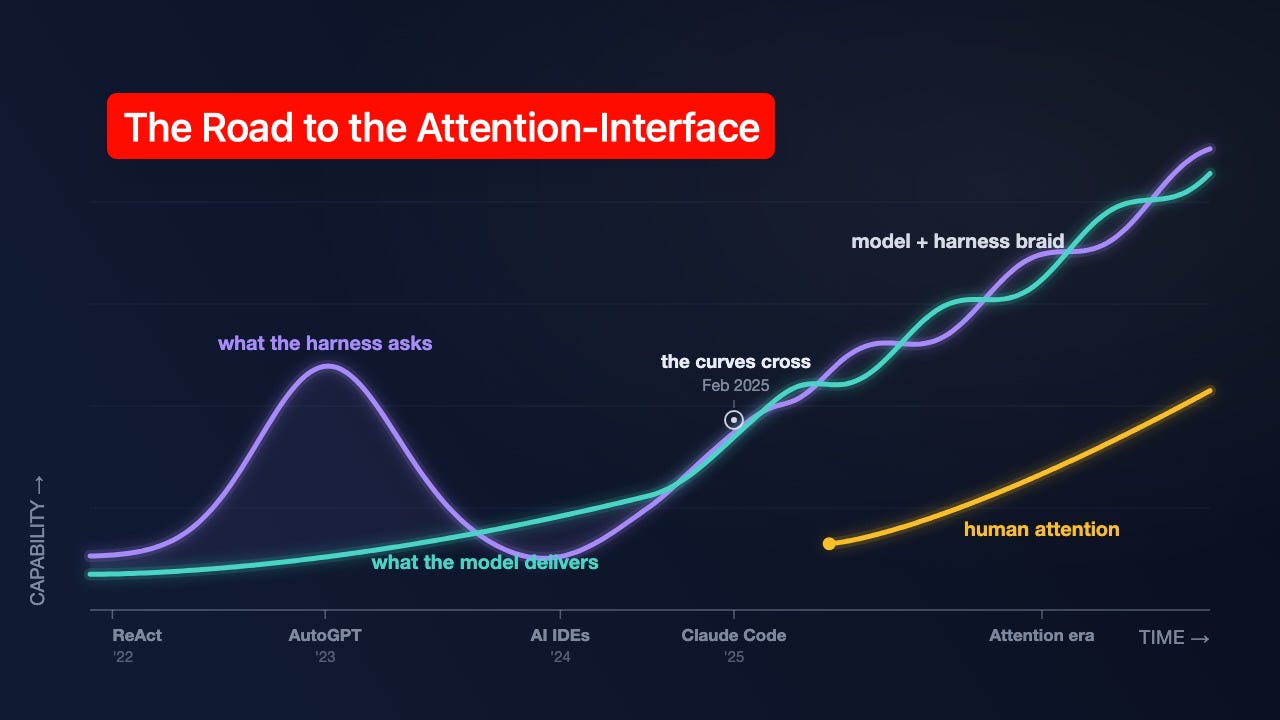
The Evolution of the Agent Harness
An argument that the agent capability jump around Christmas 2025 came from the model and the harness improving together, and that the pattern repeats.
Why it mattersIf capabilities keep migrating from the scaffold into the weights, harness code written today has a predictable expiry, and the durable part is the interface that manages human attention rather than model behaviour.
MiniMax H3 on a 16GB Mac, 5 days after open weights
Local multimodal pipelines for Apple Silicon built on custom Metal kernels with no third-party tensor runtime.
Why it mattersOpen-weight video models are usually assumed to need far more memory than a base-model laptop has. Weight streaming plus 4-bit preparation moves a 33B multimodal model onto 16GB, which changes what can be prototyped without renting a GPU.
Reachpad MCP – Share fullstack applications using MCP/CLI in minutes
An MCP server exposing persistent cloud development environments that a coding agent operates itself.
Why it mattersMost agent sandboxes forget everything between calls, so each run pays for a rebuild.
Front end skill pack for AI agents, with machine-enforced quality gates
A frontend skill pack that treats agent guidance as an enforced contract.
Why it mattersA workable pattern for anyone writing agent skills or CLAUDE.md-style rules.
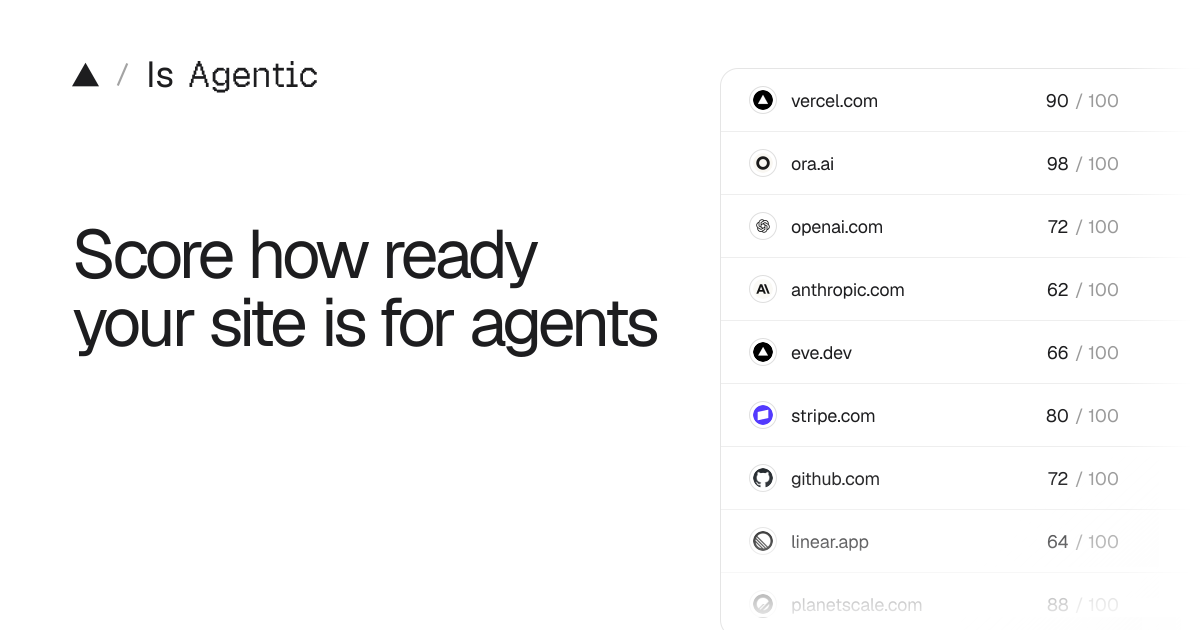
Is-agentic – Score how agentic your product and site is
A free scanner that grades a site on what agents can discover and use — server-rendered content, HTTP behaviour, document structure, recoverable errors.
Why it mattersRun it against your own product to see where agents stall, and read the rubric as a checklist: server-rendered HTML, recoverable errors, Markdown at the canonical URL behind Vary, and read-only MCP exposure are the specific moves it scores.

OpenAI traces faster Codex quota drain to specific causes: degraded prompt-cache hit rates, inefficiency with images in long sessions that compact repeatedly, high p95 Computer History usage, and a conversation-title feature burning more than intended. Fixes shipped alongside a full reset for paid p
Why it mattersCache misses and image-heavy sessions that compact repeatedly were a measured cause of quota burn in Codex; keeping sessions cache-friendly and light on images reduces consumption directly.

A persistent per-GPU daemon holds already-sharded, already-quantized weights in memory and serves CUDA IPC handles to restarting SGLang engines. Ling-2.6-1T FP8 startup falls from 8.8 minutes to about 0.53, with config validation guarding correctness and a disk fallback on mismatch.
Why it mattersCold-start weight loading for a 1T FP8 model drops from minutes to under a second by keeping transformed weights resident in GPU memory and handing engines CUDA IPC handles, which changes how cheaply large inference services can restart.
I let an subagent workflow refactor my codebase for three days
A local runtime that moves parent and subagent delegation into durable state.
Why it mattersAd-hoc subagent fan-out loses its record the moment a terminal closes or a provider session drops.
Heimdall – Trust-verified knowledge layer for AI coding agents
A local knowledge layer for coding agents that keeps a semantic memory graph in sync with disk and labels every search hit with a trust verdict.
Why it mattersAgent memory systems usually rank semantic matches and leave verification to the agent, which then acts on paths that no longer exist. Labelling each hit with a disk-verified verdict is a checkable answer to that failure mode.
Updating my wedding registry website with AI in 275 commits
A self-described AI skeptic spent two weeks and 275 commits rebuilding a side project with a coding agent, then wrote down what separated usable output from slop.
Why it mattersLong-form accounts of what actually holds code quality up across hundreds of agent-written commits are rarer than the tools themselves.

Cloudflare now generates robots.txt from the AI bot preferences already set in its dashboard, covering search, agent and training crawlers separately, so the file stops drifting from the policy it is supposed to express.
Why it mattersCrawler policy is now split by purpose, and the hand maintained file was the part most likely to be wrong.

Simulation: the new Scaling Law — Joon Sung Park, Simile AI
The author of the Generative Agents work explains how his company builds foundation models of human behavior.
Why it mattersSimulation as an evaluation substrate is becoming a real design choice for agent systems, and this lays out what the modeling actually requires.

Say it once: introducing Bot Preference SynC
Cloudflare is shipping Bot Preference Sync to every tier, reconciling the crawler preferences a site declares with the rules its edge actually enforces across search, agent and training traffic.
Why it mattersIt changes how agent and crawler traffic is admitted across a large share of the web, which is a constraint on anyone building agents that browse.
ollama v0.33.0
Ollama 0.33 adds Claude Desktop as a supported third-party gateway target and rebuilds prefill restore points so cancelled and resumed prefills stop discarding work.
Why it mattersLocal agent loops that were silently reprocessing near-full contexts on every cancel or retry now resume where they stopped, and Claude Desktop can be pointed at a local Ollama endpoint.

Anthropic shipped reliability work on Claude Code Remote Control. Machines running remote control appear as device cards so a session can start on them from a phone, and phone and CLI stay in sync on live sessions, model and effort level. Dropped connections reconnect on their own.
Why it mattersStarting and steering an agent run away from the machine it runs on is what makes long running work practical.

Meta's Muse Spark 1.2 contributor tier is on OpenRouter at $0.10 per million input and $0.20 per million output tokens. The discount is paid for in data: prompts and outputs may be used to improve Meta products, which rules it out for sensitive work.
Why it mattersA frontier-class coding model at $0.10 in and $0.20 out per million tokens is viable for experiments and evals, provided the workload can tolerate prompts and outputs being used for training.

Foundry revenue reached $54.5B in 2Q26 while supply grew only 6% — pricing and mix carried it. HPC is now 66% of TSMC revenue, N3 stays the AI cycle's bottleneck, utilization hit 90%, mature nodes are raising prices for the first time since COVID, and capex commitments are climbing steeply.
Why it mattersLeading-edge capacity, not demand, gates AI compute into 2027, and the first broad mature-node price increases since COVID feed directly into hardware costs across the stack.
How Ora benchmarks every major AI agent on Vercel
Ora points every major agent harness at live customer sites and records the cost, latency and steps each one needs to finish a signup or a purchase.
Why it mattersAnyone shipping agents against third-party web surfaces is guessing about failure rates; this describes a working measurement setup and what it found.

GitHub cut the price of automatic model selection for Copilot Max users by 30 percent, letting Copilot pick between Claude, GPT and Microsoft models per task with no opt in. The promotional rate ends at 00:00 UTC on 30 September 2026.
Why it mattersPricing is how routers get adopted, and a discount on automatic selection nudges teams away from choosing a model per request.

OpenAI added usage and spend breakdowns by API key, so an organization can see which app or workload drives its bill, and monthly spend limits at organization and project level, including hard limits that stop traffic. Both are available in the platform and through the Admin API.
Why it mattersAgent workloads spend unevenly, and attribution by key is the step that has to come before any budget can be enforced.

Nous Research is serving Ox Alpha at no cost through Nous Portal for a limited window, claiming capacity well beyond what anyone will use. No benchmarks or pricing for afterward are disclosed, so the practical move is to run your own evals while access is open.
Why it mattersOx Alpha is free to call through Nous Portal for now, so you can benchmark it against your current model without spending budget. The window is limited and no post-window pricing is stated.
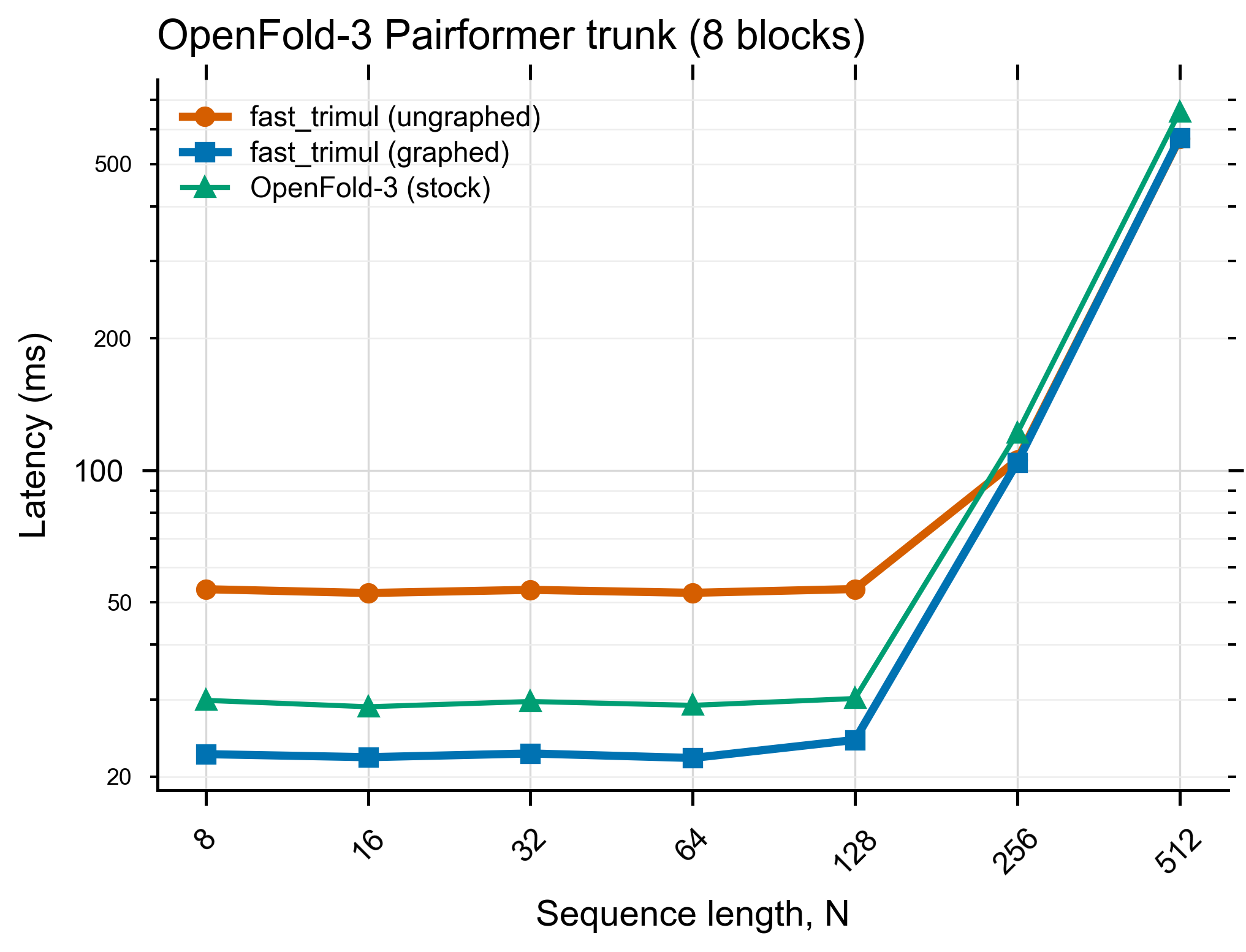
Fast_trimul – Fused Triangle Multiplicative Updates in Python
A drop-in fused triangle-multiplicative-update kernel for AlphaFold3-family models — OpenFold-3, Chai, Protenix — written in Python-level CuTe DSL instead of hand-rolled CUDA.
Why it mattersFold-model trunks are memory-bound on triangle updates.
Thinking Machines serves Inkling (975B total, 41B active) and Inkling Small (276B/12B) on OpenRouter, free inside agentic harnesses. Open weights are Apache 2.0, context runs to 1M with text, image and audio input, and prompts are logged for training.
Why it mattersFree frontier-scale reasoning inside Claude Code and Codex lowers the cost of long-horizon agent runs, with the tradeoff that Thinking Machines logs prompts and outputs to improve its models.

Thinking Machines is offering Inkling and Inkling-Small free on OpenRouter for the next few weeks, restricted to agentic harnesses, and will use the resulting traffic, disassociated from accounts, to improve agentic behavior. The free tier carries an explicit data-use condition.
Why it mattersFree access to both Inkling models through agentic harnesses on OpenRouter for a limited window, with your traffic used as training signal in exchange.

Georgia Tech researchers ran influence functions over millions of Dolma 3 files to trace which text types produced Olmo 3's abilities. Dialogue-heavy interpersonal writing mattered most for social and general reasoning, less for factual questions, an analysis a closed model would not permit.
Why it mattersAttribution over a fully public pretraining corpus shows dialogue-rich interpersonal writing drives reasoning performance more than factual recall, a concrete signal for anyone deciding what goes into a data mix.

OpenAI dropped API and credit pricing for GPT-5.6 Sol by more than 20 percent for the next three months, citing efficiency gains. The reduction covers the API and Codex credits on token based plans, while usage included in Pro, Plus and Business subscriptions is unchanged.
Why it mattersA temporary cut of this size changes the routing arithmetic for the rest of the quarter.

Thariq shared an ELI5 skill in wide use inside Anthropic: it explains a topic as an HTML artifact with large pictures and few words. It installs today from the community plugin marketplace and is aimed at explainers, an unfamiliar module, a tradeoff, or the cause of an incident.
Why it mattersExplaining unfamiliar code to yourself is the slow part of joining a codebase, and this is a copyable format for it.
Lore – build and monetize personal context
An MCP server that keeps personal agent memory on your own machine.
Why it mattersTreats agent memory as a local asset with an explicit disclosure boundary, rather than something a hosted provider accumulates by default.
Traccia - Observability, Runtime Control & Audit for agents
OpenTelemetry-native observability for AI agents that adds runtime policy enforcement, a cross-environment agent registry.
Why it mattersMoves agent governance from after-the-fact dashboards to enforcement at runtime, with cost attributed per agent rather than per API key.

Anthropic put its Mythos 5 security model behind Claude Security scans, in public beta for Enterprise customers. Point it at a GitHub repository and findings return with a CWE category, confidence and severity plus a suggested patch. Scans bill as normal token usage.
Why it mattersDefenders reach a frontier security model through a scan surface instead of direct model access, which is how this capability will reach most teams.
llm 0.32.1
The OpenAI Python library dropped its httpx dependency, which silently broke fresh installs of the llm CLI because llm only received httpx transitively.
Why it mattersIf your tooling reaches httpx through the openai package, that transitive guarantee is gone — pin it directly. Fresh installs of the llm CLI work again on 0.32.1, with a migration to httpx2 coming in 0.33.
Circuit Breaker – Score Pull Requests
A GitHub Action that scores a pull request review effort and abandonment risk at creation time, implementing a gated triage policy from research over 33,707 agent-authored pull requests.
Why it mattersNames and quantifies the review attention tax of agent-authored pull requests, and gives maintainers a way to sort them before sinking time into one.
Ant Ling open-sourced DSpark, a speculative decoding draft model for Ling-3.0-flash reaching 1,120 tok/s and 0.78 ms mean TPOT at batch 1 on four Blackwell GPUs. The thread covers the draft architecture, acceptance-aware training, and removing a FlashInfer sync that left steps 47% idle.
Why it mattersBatch-1 latency is what a single-user agent loop actually feels. Open draft weights plus the scheduling fixes described here push mean TPOT to 0.78 ms with an accept length near 10 on four Blackwell GPUs.

Building Agents Is Trivial Now, Context Is the Next Frontier — Jeff Ng, Unblocked
A conference talk arguing that standing an agent up has become the easy part, anchored in an agent that reasoned soundly from a ticket and a repository while missing the thread that made it wrong.
Why it mattersThe context an agent cannot see is the context that makes it confidently wrong, and that gap does not show up as an error.
llm-openrouter 0.7
The OpenRouter plugin for the LLM command-line tool now tracks LLM 0.32, routes through OpenRouter implementation of the Responses API, and exposes three server-side tools.
Why it mattersServer-side Shell, WebFetch and WebSearch turn a command-line LLM call into a tool-using one without local plumbing.

LangChain released Academy Tutors, a set of agent skills that teach LangChain concepts inside whichever coding agent you already use. The tutors ask questions, run quizzes and give feedback, and the teaching style can be customized. The skills are published as a public repository.
Why it mattersDocumentation shipped as installable agent skills is a distribution pattern other projects will copy.
Proliferate- open-source, self-hostable Codex for any coding agent
An open-source, self-hostable desktop app for driving Claude Code, Codex, OpenCode, Cursor and Grok from one interface.
Why it mattersA self-hostable alternative to a vendor-locked agent desktop, and a bet that the multi-agent front end is where the work moves.
OpenRouter's Activity dashboard adds movement-ranked trends across models, keys, users and apps, an Explore builder for arbitrary metric and dimension combinations, and a matching Analytics API with /analytics/meta for discovery. An internal agent-run cost review found a $6.2K/month misrouted key.
Why it mattersYou can hand a coding agent a management key and have it audit your own token spend, finding the runaway key or mispriced model, with cache hit rate and latency percentiles queryable per agent and per request.
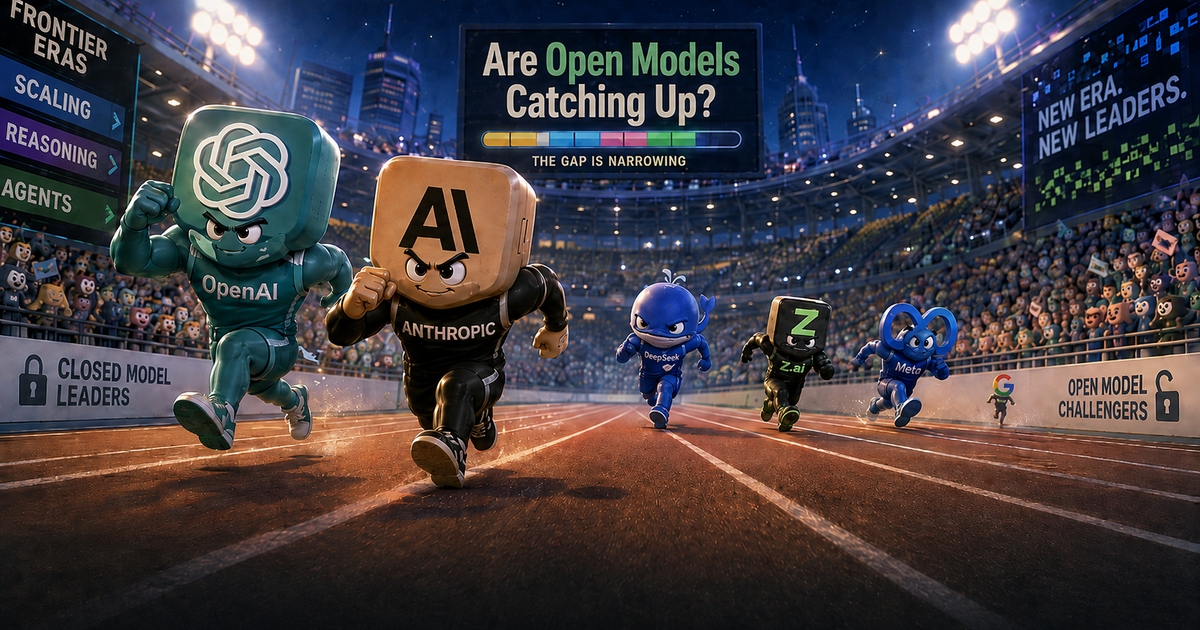
Are Open Models Catching Up?
An analysis of whether open weights have caught the closed frontier on coding and agentic work.
Why it mattersIf open weights now handle real agentic coding work, the calculus on model vendor lock-in and per-token cost changes for anyone shipping on an API.
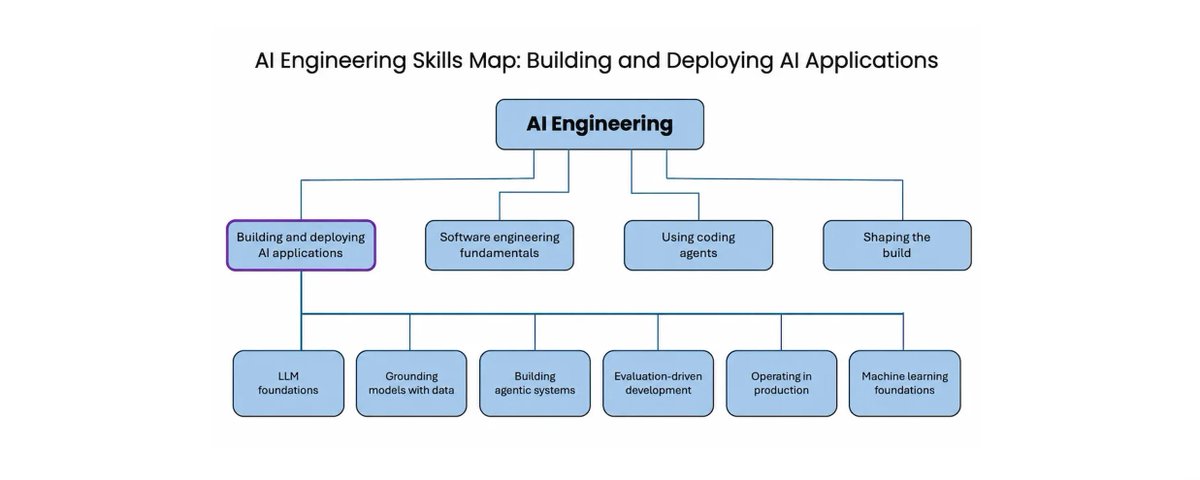
The AI application skill stack: grounding, agent loops, evals, production
Ng's breakdown of building AI applications.
Why it mattersNames the trait Ng says most separates strong AI engineers — running a disciplined evals and error-analysis loop — rather than any particular framework choice.
Steganeur – Hide secret messages in LLM-generated text (Rust)
A Rust implementation of neural linguistic steganography that hides a message inside a language model token choices, producing ordinary-looking prose a recipient decodes with the same model and settings.
Why it mattersModel output can carry a payload that reads as ordinary prose, which is worth understanding if your product publishes anything a model generated.

MLCR-AA scores the held out Expert and Compound tiers of Wisedocs' medical long context benchmark. Each question runs against a 70 to 150 page case file, graded by a three model panel on accuracy, completeness and concision. Claude Fable 5 leads at 64.4 percent.
Why it mattersIt gives a held out reference point for long context reasoning, which most public evaluations cannot supply.
Caspian – Talk to Human Tool for AI Agents
An agent communication SDK for the agent-to-human side, collapsing Slack, Discord, Telegram, email, WhatsApp and more into a single handler with declarative rules, threading and webhook verification.
Why it mattersMost agent communication is agent-to-human, and the A2A-style protocols do not cover it, so channel plumbing keeps getting rebuilt per framework.
Stop Making TUIs
Thomas Ptacek's case, relayed with commentary: coding agents have made a usable native GUI nearly free, so the terminal is no longer the sensible default for small personal tools.
Why it mattersThe cost calculus that justified TUIs for small internal tools has collapsed — an agent can produce a native window about as fast as a curses layout. Worth reconsidering before your next throwaway CLI.
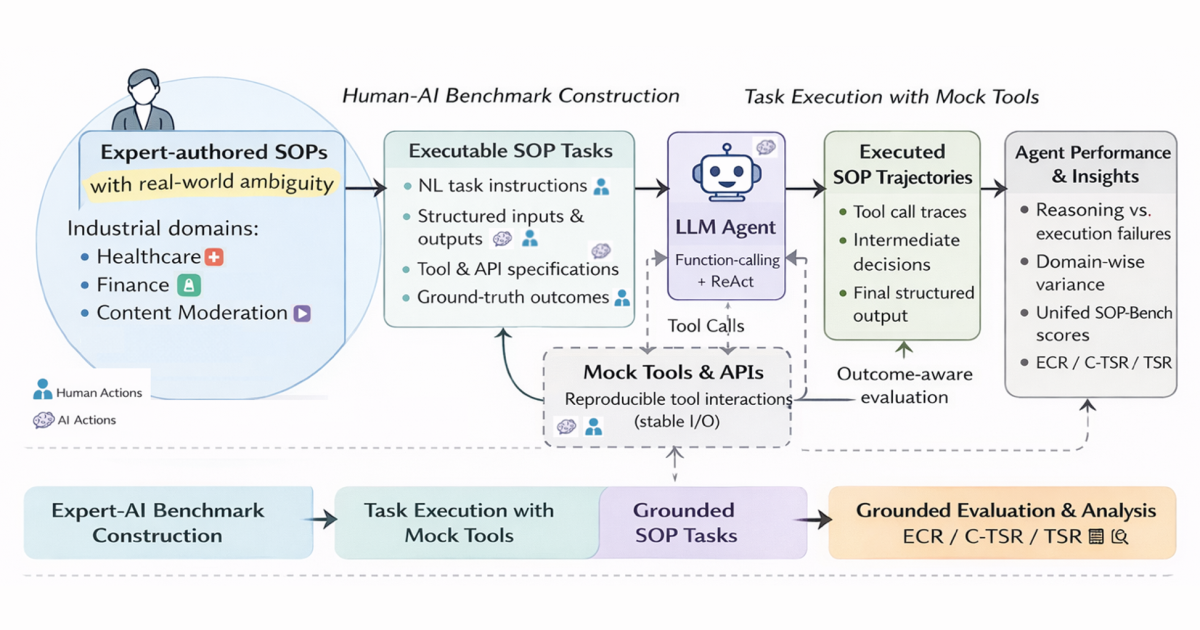
SOP-Bench: A new benchmark for evaluating AI agents on real business procedures
A benchmark built from real standard operating procedures across healthcare, logistics and finance, targeting what makes them hard for agents.
Why it mattersSOP-Bench tests agents on real operating procedures, where steps are underspecified and depend on tacit domain knowledge — the exact gap between demo-quality agents and ones that survive a compliance workflow.

An index of the vibe-coding frontier. Corrections welcome.