Intel
Page 64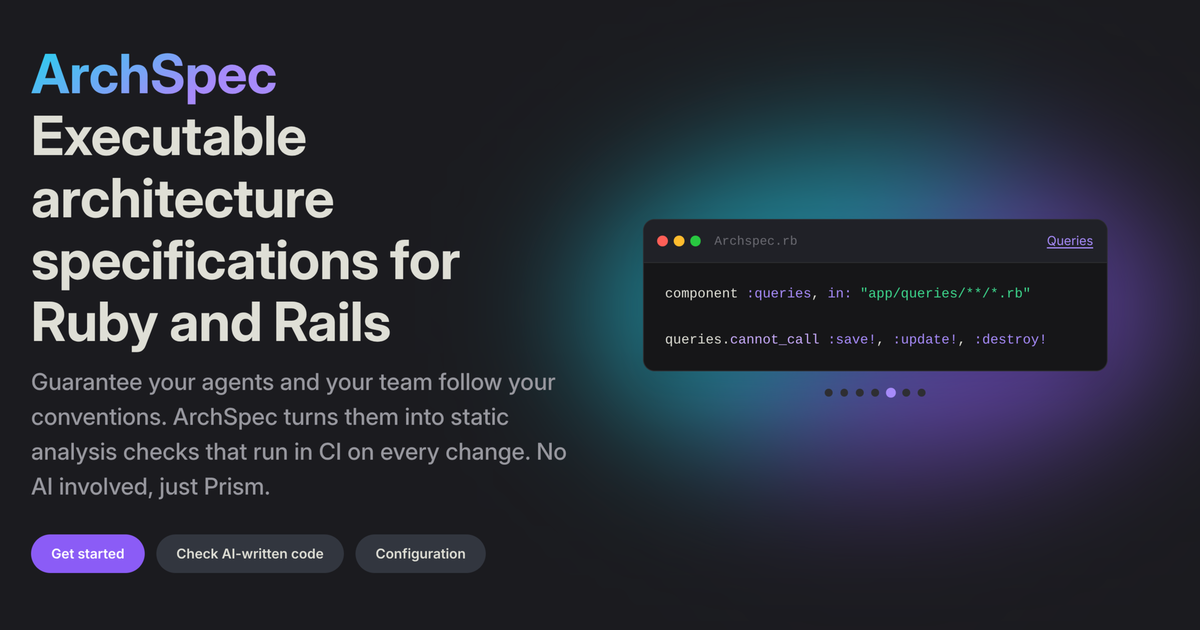
ArchSpec – Static architecture linter for Ruby
A Ruby and Rails architecture linter that makes conventions executable.
Why it mattersCoding agents drift across architectural boundaries faster than review catches it.
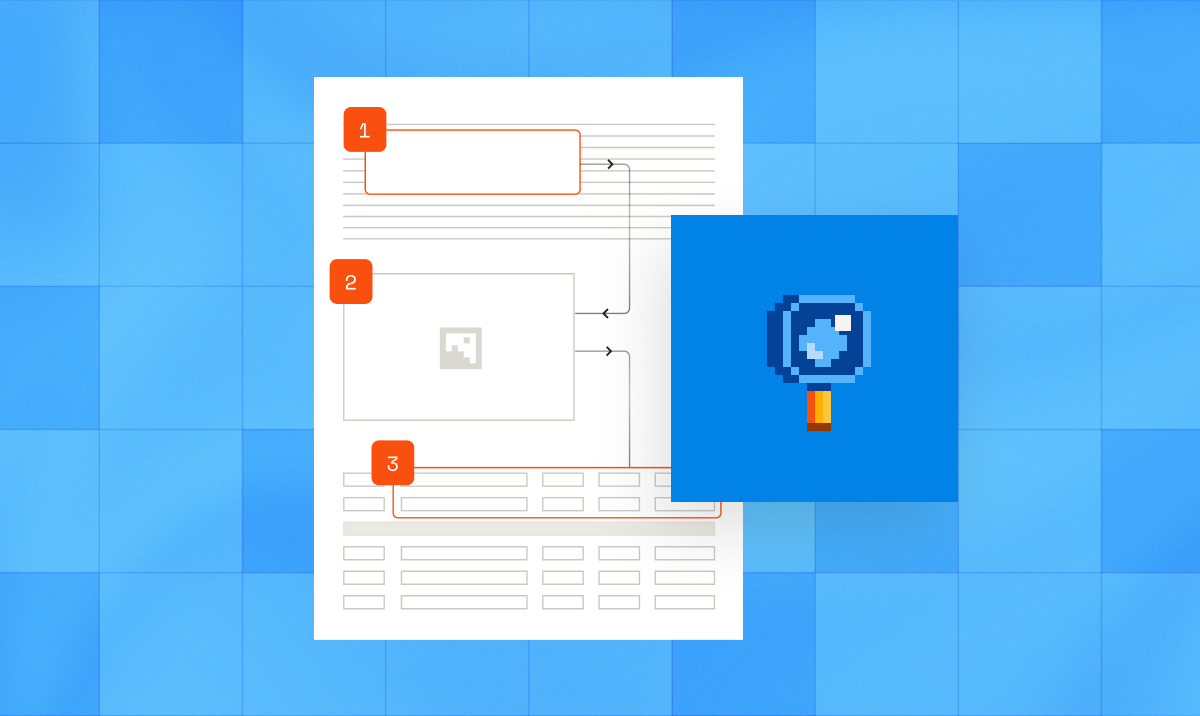
Agentic Search. More accurate and efficient results from your AI systems.
Retrieval as agent behavior rather than a single top-k call.
Why it mattersAgentic Search replaces chunk retrieval with a navigate-and-verify loop over your existing index using search, open, navigate, read and grep, reporting better accuracy at fewer turns and lower token use on FinanceBench and OfficeQA Pro.
Ollama served my 40k-context model at 4k, silently
A knowledge distillation run on consumer hardware turned up two silent measurement bugs.
Why it mattersTwo silent measurement failures that would quietly invalidate a local benchmark, one of them in configuration nobody set.
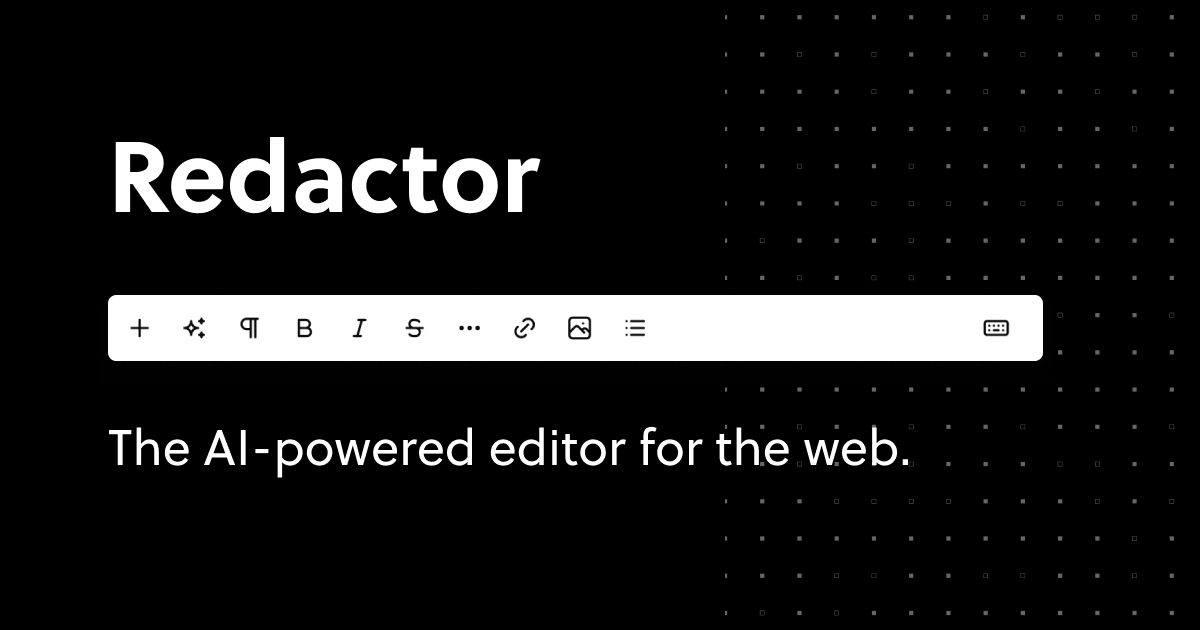
Editor UI toolkit for building AI writing workflows
Redactor's assistant plugin separates the editing surface from the model.
Why it mattersIf you are building AI writing features, this supplies the hard part — the review/accept/reject UI and structured document context — while your backend keeps the prompts, model choice, limits and logging.
OpenIndex – Organising domain knowledge into structured data for agents
A tool for turning domain knowledge into a structured context graph that agents can query and operate on.
Why it mattersRetrieval over a pile of documents keeps failing agents that need exact, current facts about a specific domain.
Do-over, undo for AI agent shell commands
Undo for the shell commands an AI agent runs.
Why it mattersCoding agents run shell commands continuously and rm -rf has no undo, a gap none of checkpoints, sandboxes, or git actually close. This names that gap precisely and hooks into the same flow Claude Code already drives.

Coding Agents Don't Scale Themselves. Neither Do Your Teams. — Patrick Debois, Tessl
Debois expects harnesses and loops to commoditize, leaving the team as the differentiator.
Why it mattersGives a concrete operating model for coding agents across a team: fix the harness rather than the agent's output, and track human touches per correct result plus how much of each fix is shared.
Rove – parallel coding agents that can fan out subtasks and report back
A terminal workspace for running several coding agents at once, each task isolated in its own git worktree and branch, with sessions that survive disconnect.
Why it mattersRunning several coding agents at once usually means hand-rolling worktrees and losing sessions when the terminal closes. Rove makes that isolation and persistence the default and keeps diffs, tests and output reviewable per task.
UI Inspector for Tauri
A Tauri plugin that turns any element in a running webview into a durable reference a coding agent can act on, carrying accessibility semantics, ranked locators, framework source mapping and a screenshot of what the compositor actually drew.
Why it mattersPointing a coding agent at a specific piece of desktop UI is normally a guessing game of selectors and screenshots. This gives the agent a stable handle that maps back to the source file and shows what the compositor actually rendered.
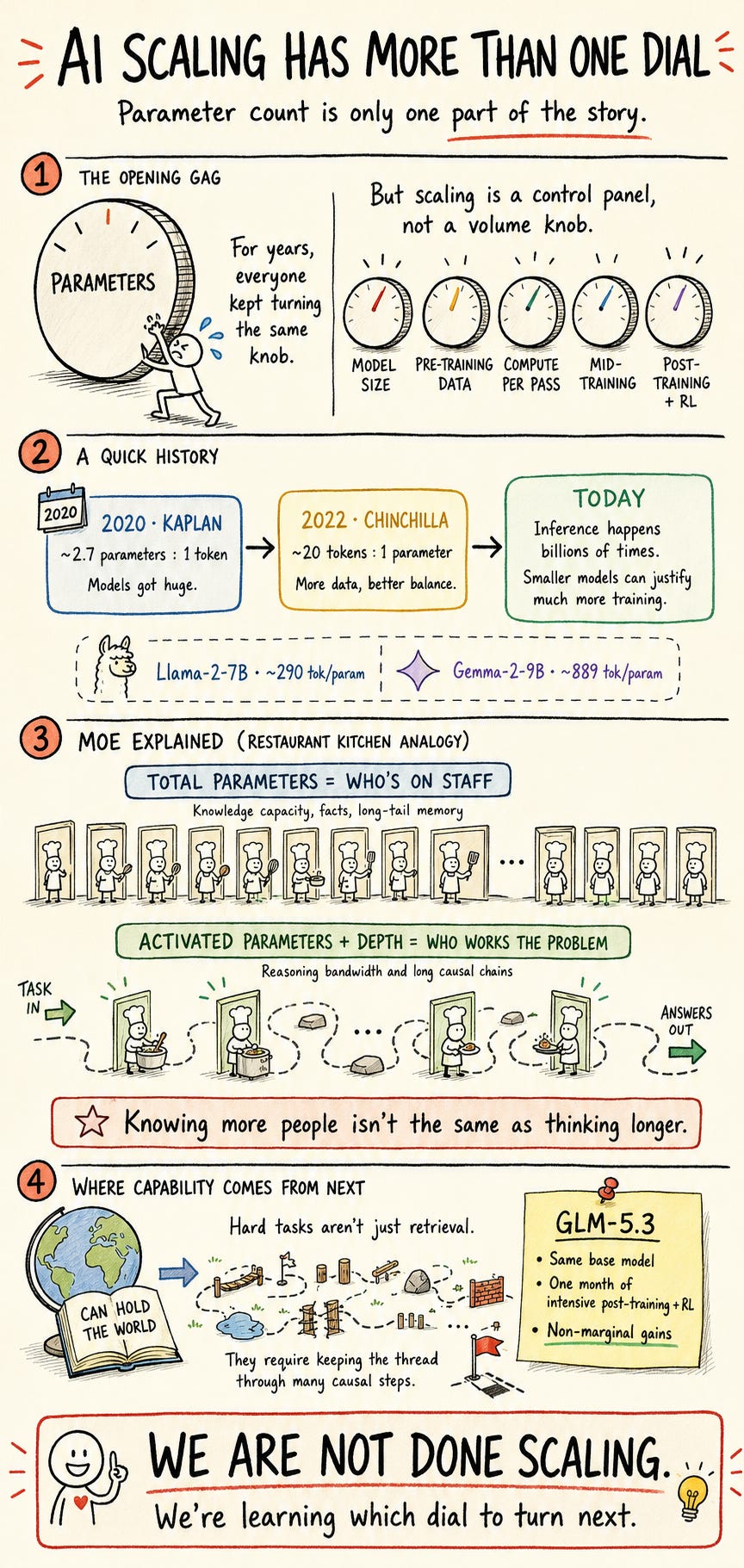
[AINews] Death of Params: Z.ai CEO Jie Tang on GLM 5.3 and the new Post-training Scaling Law
Why parameter count alone no longer describes a model: data volume, compute allocation and deployment conditions each change what a given size buys.
Why it mattersModel size is still the default shorthand for capability, and this lays out why that shorthand now misleads when picking a model to build on.

Self- and Other-Labels Induce Bidirectional Bias in LLM Judges
Self preference in LLM judges has been measured on generated text, where style and quality confound the signal.
Why it mattersAnyone running LLM as judge evaluations is exposed to a bias that standard measurements cannot separate from quality.
How v0 authenticates to Snowflake without exposing the user's OAuth token
Generated code that queries a warehouse should never hold the user's OAuth token, because prompt injection can steer it into exfiltrating whatever it can read.
Why it mattersA reusable pattern for letting model written code query a service without ever holding the credential.

LongNovel: A Multi-Scale Benchmark for Hallucination Detection in Long-Context Novel Summarization
A bilingual benchmark built from 29 Chinese novels and BookSum chapters, scaled from 16k to 100k tokens, with eight annotated hallucination types.
Why it mattersLong context windows did not solve summarization hallucination.

What Makes Software Issue Resolution Tasks Difficult for Agents?
Benchmark scores for issue resolution agents are hard to read because nobody quantifies task difficulty.
Why it mattersMakes agent benchmark numbers readable by attaching difficulty to the tasks behind them.

FinSkillBench: Evaluating AI Agents and Domain Skills for Investment Management
An investment-management benchmark that tests whether agents can actually use domain skills.
Why it mattersCurated skill packages — procedural documents paired with executable components — measurably outperform both bare models and skills the agent writes for itself, on tasks demanding point-in-time data and auditable structured output.

One Gate Is Not Enough: Composing Stateful Pre-Action Controls for Agentic AI
Stacked authority, budget, and evidence gates aren't independent: remediation by one control mutates what the next control evaluates.
Why it mattersIf your agent runs multiple pre-action gates, a fix applied by one can silently invalidate another's approval.

Position: Collusion Risks Among AI Reasoning Agents Justify Certification Requirements for Making Market Decisions
Chain of thought agents are predisposed to collude, the authors argue, and should carry behavioral certification before they make decisions that move markets.
Why it mattersMulti agent deployments that touch pricing or trading inherit a collusion risk that no current review process checks for.

Compiler-Guided Adaptive Proof Search with Cross-Model Synergy on Context-Dependent Theorem Proving
Proofs in real Lean 4 projects depend on project specific context, so repair loops need search control rather than more retries.
Why it mattersA concrete search control recipe for anyone running compile and repair loops over generated code.

Position: Multi-Agent Systems Should Prioritize Concurrency Control
A position paper reframing multi agent failures as classical concurrency control problems.
Why it mattersGives agent builders a vocabulary and a body of existing solutions for failures they are currently calling coordination problems.

Code Health in LLM-Based Test Generation: Effectiveness and Token Efficiency
LLM generated unit tests get better as the code under test gets healthier.
Why it mattersPredicts where LLM test generation pays off and what it costs in tokens, before you spend them.

Position: Behavioral Systems Require Behavioral Tests
Agentic systems get judged on outcomes, not on the behavior that produces them.
Why it mattersArgues for a class of agent evaluation that current outcome only harnesses do not cover.

AppEval: A Unified Benchmark for LLM-Based Mobile Application Repair in ArkTS, Swift, and Kotlin
Repository level agents are usually scored where tests run on the build host.
Why it mattersRepair agents that look competent on host run tests may not survive a real device build.

Entity tracking emerges in sub-billion parameter language models and exceeds human performance in naturalistic narratives
Sub billion parameter models track entities across naturalistic narratives, and in this evaluation they beat human readers.
Why it mattersSmall models may already carry discourse tracking ability that teams assume requires scale.

SemaPLC: A Project-Grounded, Verification-Gated Agent Harness for PLC Code Generation
Generating a program organization unit for a programmable logic controller is not the same as having it integrate and run inside an existing project.
Why it mattersThe pattern generalizes: ground generation in the existing project, then gate it behind a verifier before anything ships.
MatrAIx – simulate users before reality (Survey/Chat/Web/App)
Persona-driven simulation infrastructure for evaluating AI systems against heterogeneous users rather than one generic tester.
Why it mattersAnyone evaluating an agent or chat product against a generic test user now has a released, reproducible alternative that models heterogeneous populations.

Claude Code adds a Concise output style that leads with the result and keeps responses short, with full detail still available on request. It is switched on from the config menu or by setting the output style key in the settings file.
Why it mattersAnyone driving Claude Code in a terminal or a CI loop can now cut response verbosity with a single settings key. It is a small change that directly affects readability and token spend in every session.

Klo – Native Mac video editor you talk to (40 releases in 30 days)
A native macOS video editor driven by an agent.
Why it mattersA timeline exposed over MCP turns video editing into something an agent can be handed as part of a larger pipeline.
Vercel Agent is now available in Slack code channels
Vercel Agent now runs inside Slack code channels, where a whole team can follow the work, direct it, and approve each change.
Why it mattersTeam facing agent surfaces are becoming the place review and incident work happens, and this one lands with an explicit permission and approval model.
Three updates to Claude Managed Agents: work done in a self-hosted sandbox can be saved to memory, web_search and web_fetch accept allowed_domains or blocked_domains, and the console session viewer is rebuilt for multi-agent runs with per-thread and per-session cost.
Why it mattersRestricting what an agent may fetch is one of the few practical defenses against prompt injection through retrieved content, and it is now a parameter rather than a wrapper you write.
smolmachines / smolvm as a sandbox for untrusted Python & JavaScript
A hands-on evaluation of smolvm as a sandbox for untrusted Python and JavaScript, using hardware-isolated virtual machines rather than shared-kernel containers.
Why it mattersRunning untrusted generated code is now routine, and this gives measured startup costs and a checked list of which isolation guarantees actually hold.

A case for splitting inference across mismatched local hardware: prefill is compute bound and runs faster on a DGX Spark, decode is memory bandwidth bound and runs faster on an M5 Max, so run each phase where it is fastest and ship the KV cache between them.
Why it mattersDisaggregating prefill and decode across mismatched local machines is a way to get more out of hardware people already have rather than buying one bigger box.
Conceptual integrity and counting lines of code
Willison argues lines of code are not a worthless measure of agent-assisted output, because a hard human ceiling existed: a few hundred debugged lines on a very good day.
Why it mattersHow teams measure agent-assisted output shapes how they staff and review, and this puts a defensible frame on a metric usually dismissed outright.
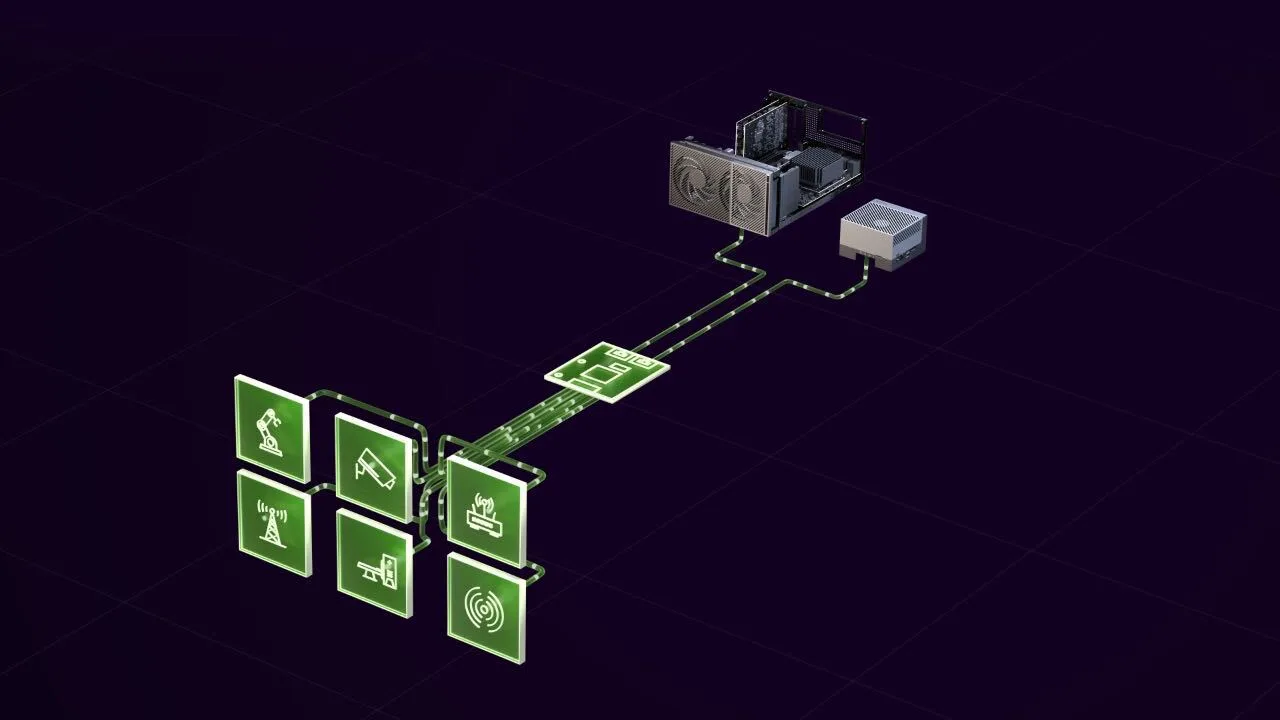
Developing NVIDIA Holoscan Applications with CLI, Skills, and AI Coding Agents
NVIDIA engineers had a coding agent build a real-time endoscopic segmentation app on Holoscan and HoloHub, iterating against engineer-defined goals and benchmarking each round.
Why it mattersIt puts numbers on something teams argue about constantly: whether giving an agent a CLI and skills alongside documentation actually changes output quality.

The open source inference optimization library Mooncake is being integrated with TPU through Mooncake Store. As with NVL72, KV cache peer-to-peer pooling will initially run over the scale-out network rather than the tighter interconnects, aiming at inference cost.
Why it mattersKV cache pooling across accelerators is one of the larger levers on inference cost, and its arrival on TPU changes the comparison between serving platforms.
Turning websites into micro CLIs for Claude Code to save on tokens
A CLI that turns web pages into a compact numbered view for agents.
Why it mattersPage markup is often tens of thousands of tokens where a numbered index is a few hundred, so how an agent reads the web is a real budget decision.
ComputeFence – preflight checks for rented GPU training jobs
A preflight checker for training runs on rented GPUs.
Why it mattersRented GPU time is billed whether or not the run was ever going to work, and these are the checks that catch the expensive silent failures.
Rust Doctor, a code health scanner for Cargo workspaces
A local Cargo workspace scanner with 62 rules across security, correctness, reliability, performance, maintainability and dependencies, ending in a score and the three fixes worth making first.
Why it mattersAgents produce Rust faster than anyone reviews it, and a local rule scanner that hands its findings straight to the agent closes that loop without a service.

OpenAI previews Private Safety Processing: for Zero Data Retention customers, safety pattern-matching runs on infrastructure the customer controls and returns only limited signals, leaving prompts and responses unexposed to OpenAI employees. A hosted option with customer-controlled keys starts rolli
Why it mattersZero Data Retention deployments can keep abuse safeguards without surfacing prompt content to the provider, which is relevant if data-handling requirements previously ruled out OpenAI's safety tooling.

Hermes now runs an evaluator over a skill at install time, checking for personal data, leaked secrets, Unicode smuggling, licensing problems and security issues before the install is confirmed. Pointed at its own bundled skills first, the check produced fixes to eleven of them.
Why it mattersSkills are executable content installed from strangers, and install-time scanning is the checkpoint most agent runtimes still do not have.
I let an AI agent brick my $2.51 ESP32 on purpose
An MCP server that gives coding agents direct control of ESP32-class hardware.
Why it mattersFirmware work has been mostly outside the reach of coding agents because the feedback loop runs through hardware, and this closes that loop.

OpenAI says zero data retention will continue to be offered for frontier models, and is previewing Private Safety Processing, which is meant to let safety systems reason across related interactions without giving OpenAI personnel access to the underlying content.
Why it mattersZero data retention is a contractual prerequisite for many deployments, so any change in how safety systems inspect traffic under it is load bearing.
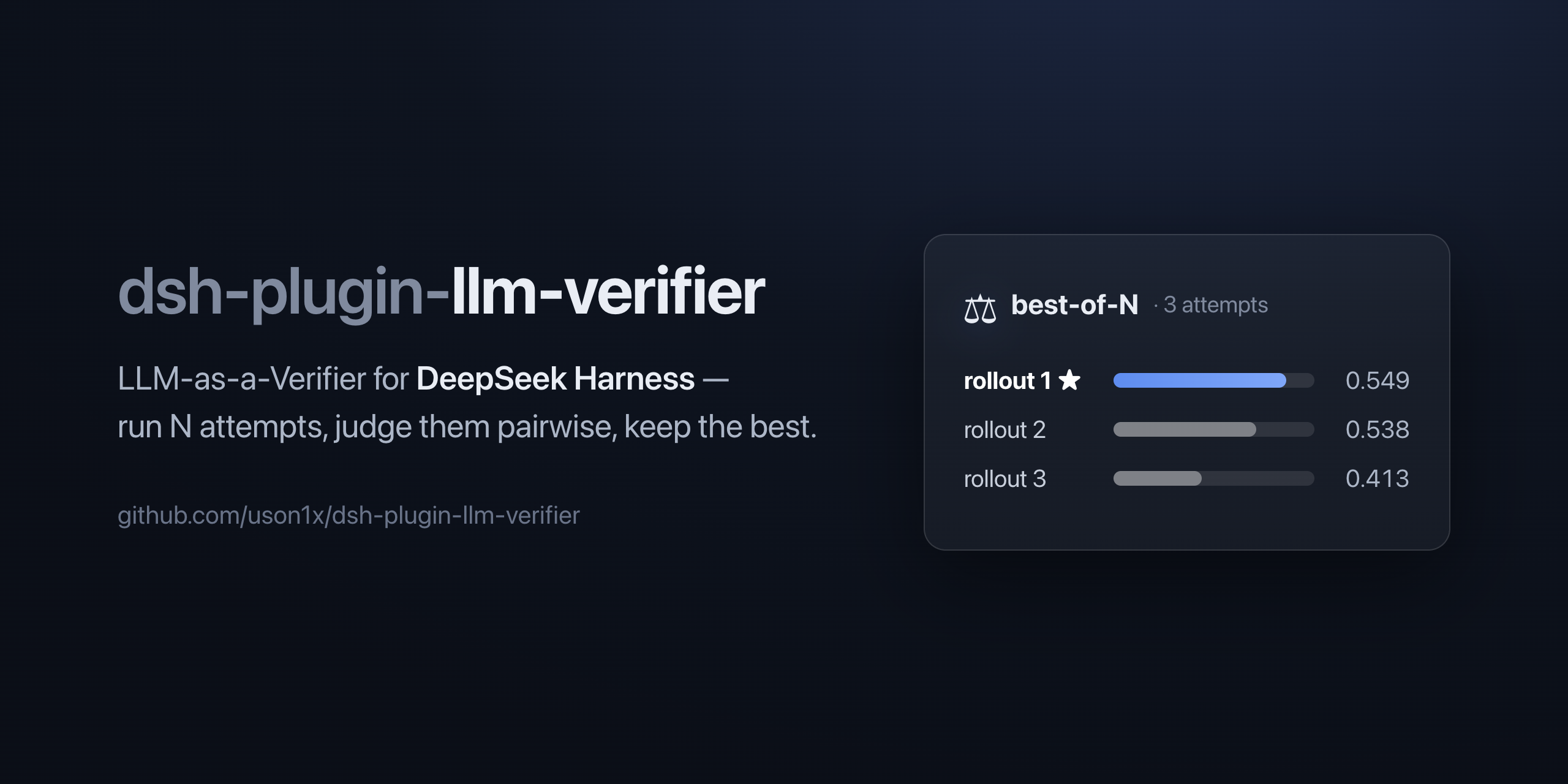
LLM-as-a-Verifier Plugin for DeepSeek Harness
A DeepSeek Harness plugin that adds LLM-as-a-verifier grading between 0 and 1, with a verify_rollout call that fans a single request into parallel agent attempts, scores them.
Why it mattersParallel rollouts scored by a verifier is one of the cheaper reliability levers available in an agent harness, and this wires it in without custom orchestration.
Offering Zero Data Retention for frontier models
A reaffirmation of zero data retention for eligible API customers, alongside a preview of a processing mode intended to run safety systems without exposing customer data.
Why it mattersData retention terms decide whether regulated teams can use an API at all, so a restated zero retention guarantee is a procurement fact as much as a technical one.

A technical fault revoked Daybreak Blue access for a limited set of users, who must re-verify to restore it; affected accounts were emailed a verification path. Separately, all users must have Advanced Account Security enabled by September 1 to keep Daybreak access.
Why it mattersAnyone building on this model needs the enrollment done before the deadline, and the fault means access may already be gone without warning.

Why Your Enterprise Tech Stack Isn’t Ready for AI Agents — Christopher Lovejoy & Saul Howard
Why enterprise agent pilots stall at compliance, and an architecture that answers it.
Why it mattersAudit trails are where most enterprise agent deployments actually die, and this is a concrete storage model that makes them a property of the system rather than an afterthought.

Cursor cloud agents can now start from events, hold a long-lived objective, monitor pull requests, watch Slack threads and run scheduled tasks. Subagents get isolated virtual machines with their own copy of the project, and skills can be pinned as always-on modes.
Why it mattersIsolated subagent environments and durable goals change what can be handed to an agent unattended, which is the direction most coding tools are converging on.

Don’t be data poor — Anuj Iravane, Anterior
Anterior cannot retain the scanned fax bundles its evals need, so it runs the inference workflow backwards.
Why it mattersReverse generation is a practical answer for any team whose contracts forbid retaining the exact data its evaluations depend on.
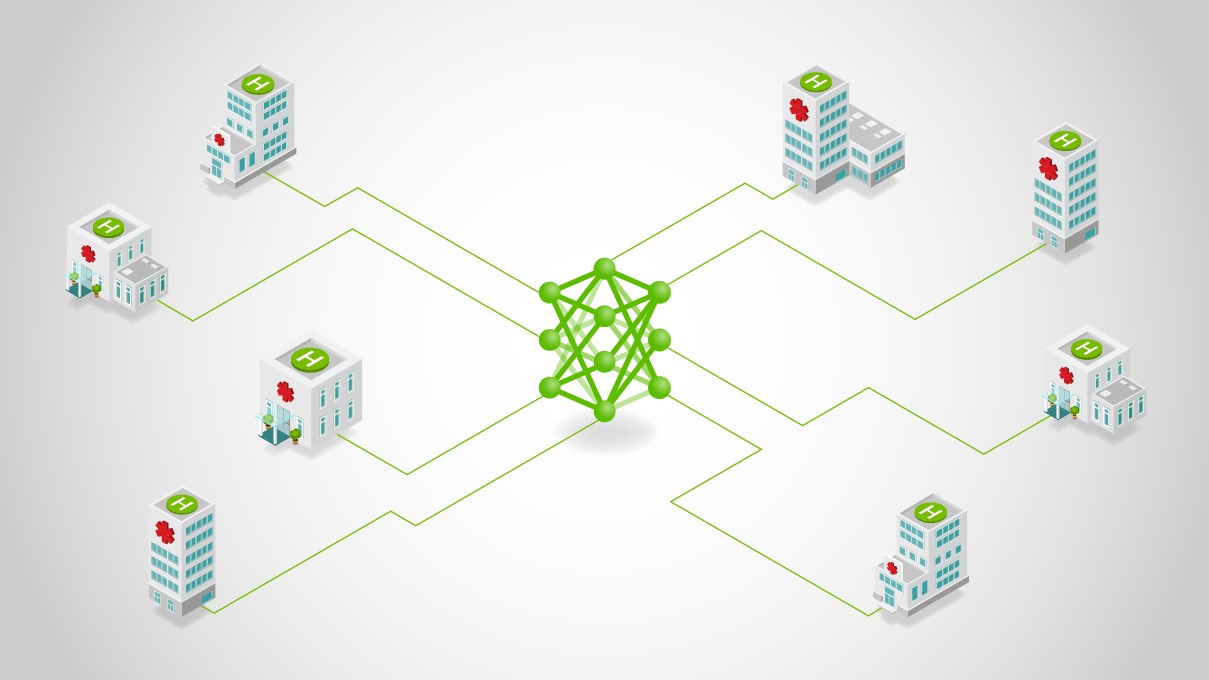
Building Federated Multimodal AI Workflows with NVIDIA FLARE
A federated training design for multimodal models that exchanges only small adapter weights over a frozen backbone, cutting per-client traffic from tens of gigabytes a round to a fraction of one.
Why it mattersFederated training usually stalls on network cost. Sending adapters instead of full models is what makes the round budget survivable.
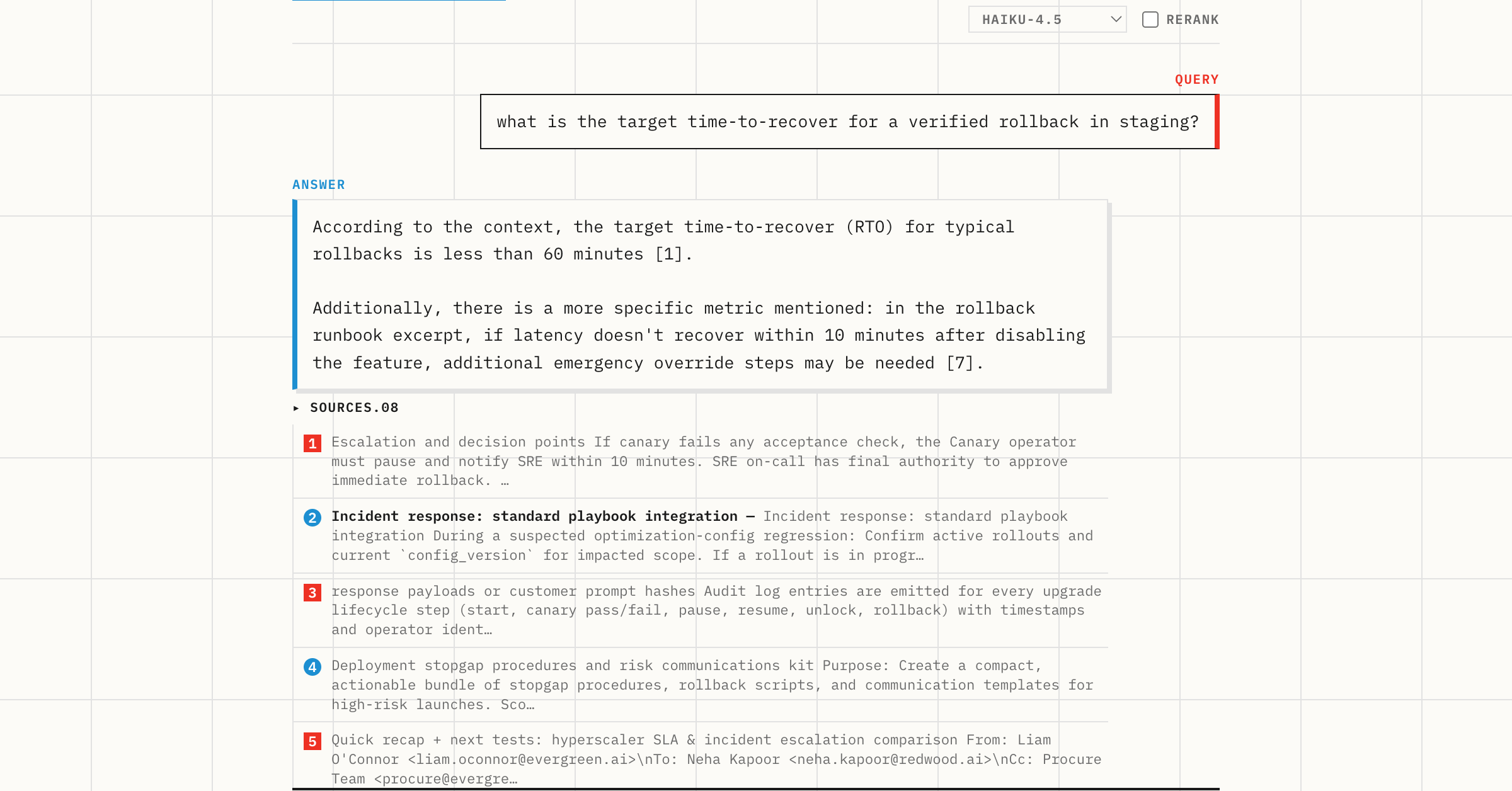
HRAG – Hybrid RAG on €116/month of Hetzner, officially benchmarked
A retrieval stack that keeps lexical search inside Postgres, fuses it with vectors at a measured weighting.
Why it mattersMost retrieval write-ups publish the accuracy win. Publishing the sixteen seconds it costs is what makes the number usable.

How to build an AI-Native Health Company — Dan Feng, Maven Clinic
Maven Clinic rebuilt planning and code review around agent-speed implementation.
Why it mattersReview and planning are the processes that break first when agents raise code output, and this names specific limits that held.
An index of the vibe-coding frontier. Corrections welcome.