Intel
Page 63
Image Benchmarks
OpenRouter publishes a side-by-side image benchmark across 39 models, built on prompts chosen to break them.
Why it mattersImage model selection has lacked anything comparable to LLM benchmarks.
Measuring benchmark optimization in speech recognition
Three probes for benchmark contamination in speech recognition — consensus disagreement, masked entity retrieval, orthographic switching — run against 11 open models.
Why it mattersLeaderboard WER on LibriSpeech and VoxPopuli partly measures memorized references rather than transcription.
Connect v0 apps to Slack, Google, and 100+ other services
Apps and agents built in v0 can now reach more than 100 third-party services through team-owned connectors.
Why it mattersCredential handling is usually where prompt-generated apps stop being real, and short-lived per-connection tokens move that boundary.

DeepSeek V4 Flash Vision Experimental now available on AI Gateway
An experimental vision-capable DeepSeek V4 Flash is now callable through the AI Gateway, accepting images alongside text in the same request.
Why it mattersA cheap vision-capable model behind an existing gateway means screenshot and chart reading can be added without a new provider integration.
ChatGPT search now uses the site:operator at scale
Tracking data shows ChatGPT search fanout queries using the site.
Why it mattersIt is one of the few observable signals about how ChatGPT's retrieval tool actually queries the web, which changes how content gets surfaced.

Sakana Translate moves to the Namazu model generation, built for Japanese cultural and contextual nuance rather than literal mapping. The team scored 160 Japanese-to-English pairs with its in-house TransEvalnia method and reports winning over half of the head-to-head comparisons against every compet
Why it mattersA Japanese-first model line now backs Sakana's public translation product, with head-to-head results scored by the lab's own TransEvalnia method rather than generic machine-translation metrics.

Anthropic is launching enterprise safeguards for Fable class models that run on a customer's own infrastructure, giving teams control over data location and access, with wider rollout planned for the fall.
Why it mattersWhere a model may run is the blocking question for regulated teams, and self hosted safeguards move that line.

OpenAI added read-only share links for Codex and ChatGPT Work threads, so the agent conversation behind a pull request, investigation or handoff can be passed to a reviewer without screenshots.
Why it mattersAgent-written PRs currently arrive without their reasoning trail; a read-only thread link makes that context reviewable instead of lost.
Let your coding agents set up your test coverage
Codacy's new Setup Coverage skill has a coding agent wire test coverage reporting into a repository's CI, picking the report format, path and branch rules for the stack in use.
Why it mattersCoverage wiring is the kind of stack specific chore agents are now expected to handle, and this shows what a production skill for it looks like.

Artificial Analysis ranks Alibaba's Qwen-Image-3.0-Pro sixth for image editing and ninth for text to image, gains of 83 and 48 Elo over the previous Pro generation, at four cents per 1K image through Alibaba Cloud.
Why it mattersGives a dated, priced comparison point for picking an image model, showing Qwen closing most of the gap to the frontier at a fraction of the cost.

Ox Alpha is an anonymous frontier model on OpenRouter aimed at efficient coding and sustained agentic work, with a 1M token context and text, image and video input. It is free during the stealth window, and the provider does not train on prompts or completions.
Why it mattersFree access to an unreleased frontier coding model with a 1M context and no training on your traffic is a cheap way to benchmark it against your current stack before it is priced.
Molecule.dev is an AI-first composable package ecosystem
Molecule is a TypeScript package ecosystem shaped for agents to read and compose.
Why it mattersIt is a concrete attempt at the question of what a codebase should look like when agents, not people, do most of the wiring.
The /wayfinder Skill: Navigating the “Fog of War” of Planning
Matt Pocock's wayfinder skill, in a Latent Space interview: a planning workflow for projects whose end state is unclear, built for scheduling work that agents run unattended.
Why it mattersPlanning is the stage that breaks most away from keyboard agent runs, and this gives a reusable skill for it.
Verified business dashboards inside ChatGPT and Claude via MCP Apps
A walkthrough of MCP Apps, the first official MCP extension.
Why it mattersInteractive UI returned by a tool changes what an MCP server can be, and this is one of the few practical descriptions of how to build one.

Anthropic moves computer use, the browser tool, the Skills API and the Files API to general availability, adding several actions per turn, element level browser control, file expiry and higher rate limits.
Why it mattersGeneral availability plus multi action turns changes the cost and reliability math for computer use agents, and versioned skills give teams a way to pin procedures.
The same open weights served by different providers do not give you the same product. Self hosting the released weights as a 100 percent reference and scoring each provider endpoint against it with three evaluations puts them between 73 and 100 percent.
Why it mattersThe provider you pick can change accuracy by more than 25 points on identical weights, and nothing on the pricing page tells you.

Anthropic confirms a data-retention change for its Mythos-class models: customers own and control their data and Anthropic retains none, shipping this fall. Aimed at enterprises whose privacy and compliance rules currently block frontier-model deployment.
Why it mattersAnthropic will offer zero data retention on Mythos-class models this fall, with customers owning and controlling their own data — the blocker that keeps many compliance-bound teams off frontier models, addressed on a stated timeline.
Transparent backgrounds are in preview for GPT-Image-2 through the API, so generated assets drop onto any background without a separate cutout step.
Why it mattersRemoves the cutout step from asset generation workflows.

Anthropic opened Claude Academy: free, publicly accessible courses and tutorials spanning AI basics through advanced Claude usage, alongside a post explaining how the company thinks about teaching AI. No account tiering mentioned — the material is open to anyone.
Why it mattersAnthropic's free course and tutorial library for Claude is now open to anyone, with separate tracks for newcomers and daily users — a first-party reference for teams standardizing how they onboard people onto Claude.
Teammates can be added as editors on a ChatGPT Site, so several people push changes to the same project while Codex handles git and CI behind them. Site URLs can also be customized so they are easier to recognize and share.
Why it mattersMultiplayer editing plus managed git makes generated sites usable by a team rather than one person.

Recraft Studio now exposes five outside generation models on one canvas: Grok Imagine Image 2, Minimax H3, Flux 3 Video, Qwen Image 3 Pro and Reve 2.1. For anyone assembling visual pipelines, it collapses model shopping into a single surface. Announced August 20, 2026.
Why it mattersFive external image and video models, including Grok Imagine Image 2, Minimax H3, Flux 3 Video, Qwen Image 3 Pro and Reve 2.1, can now be driven from a single Recraft Studio canvas instead of separate accounts.
A new cookbook pairs Claude Managed Agents with AG-UI, an open agent to user interaction protocol. The adapter maps each chat thread to a managed session and streams text, tool calls and thinking through to your own interface.
Why it mattersA reference implementation for putting managed agents behind an interface you control.

WildArtifactBench scores agents on real deliverables across formats, using win rates and Elo from human and agentic preference judges rather than strict ground truth rubrics. Ten tasks are being released alongside the design principles behind it.
Why it mattersA frontier lab publishing preference judged agent tasks gives the field an alternative to rubric bound benchmarks.

The Pulse: We need to talk about migrations with AI
One team migrated off a testing framework in two weeks with AI, a rewrite it had put off for years.
Why it mattersTest framework migrations that were permanently deferred are now finishable, which changes what belongs on a roadmap.

Speculative decoding drafts for three LFM2.5 models, each around 300M parameters with embeddings and LM head tied to the target. Up to 3.18x throughput on an H100 and 2.87x on an M4 Max, with mean acceptance of about 5 to 7 out of 10 drafted tokens.
Why it mattersAgent loops that reason before every tool call pay latency users feel.
Muse Spark 1.2 covers multimodal work from turning visuals into working code to translating perception into physical action, with audio visual understanding aimed at video heavy workflows. The new evals and demos cover visual reasoning, chart understanding and tool use.
Why it mattersMultimodal capability that reaches into tool use and physical action changes what agent workloads are feasible.

From all-or-nothing to task-based OAuth consent
Consent was all or nothing once a client had requested its scopes.
Why it mattersUsers can narrow what an agent or MCP server actually gets, which changes how broadly you can ask.

Texas halted new datacenter energization approvals while ERCOT audits an interconnection queue that has ballooned to ~474 GW, about 5x record peak demand. New disclosure asks cover subsidies and neighbor impact; advanced projects hold their study slots, and the PUCT sets scope Thursday.
Why it mattersTexas has frozen datacenter energization approvals pending an audit of a ~474 GW interconnection queue — roughly five times ERCOT's record peak.

Preview Builds are in public beta for LangSmith Deployment: a temporary production like deployment spun up from a pull request branch so agent changes can be traced and reviewed before merge, then torn down automatically afterwards.
Why it mattersAgent changes get a reviewable environment before merge, which is what pull request previews did for web apps.
Up to 3.2x Faster Inference with LFM2.5-DSpark
Liquid AI ships DSpark draft models for LFM2.5-1.2B, 2.6B.
Why it mattersSpeculative decoding for LFM2.5 with published draft checkpoints: up to 3.2x faster decode and 57% lower function-calling latency at ~300M extra parameters, with greedy outputs unchanged by construction.
A new retrieval plugin gives ChatGPT Work and Codex access to web scale search over sites, papers and documents, without wiring up the search layer yourself.
Why it mattersRetrieval at that scale becomes a plugin rather than a system you build and maintain.

Unlock Agent Autonomy: The Runtime for AI-Native Systems — Tushar Jain, Docker
An agent that had emailed a nightly summary for weeks decided one morning to open a pull request instead, because publishing seemed more helpful.
Why it mattersThe permissions model most teams inherit assumes fixed behavior, which agents do not have.

Your Fine-Tuned Model Is Tech Debt: A 50x ROI House of Cards — Dan Bjornn, Lease End
A fine tuned classifier returned 50 times its cost and 12 million dollars in a year, and also called a customer who had only replied good morning.
Why it mattersPuts a maintenance number on fine tuning that the return figure hides.

How Generative Recommenders Are Redefining RecSys at Scale
Generative recommenders replace embedding based retrieval with sequence modeling and transformer style architectures such as HSTU and semantic IDs.
Why it mattersThe recommender architecture shift is now packaged as production implementations rather than papers.
A shot-scraper-style JSON API on Bun 1.4's new Bun.WebView
Bun 1.4 ships an experimental Bun.WebView, and a ~150-line zero-dependency service shows it can stand in for Puppeteer or Playwright.
Why it mattersBun 1.4's built-in WebView can replace Puppeteer or Playwright for JS evaluation and page screenshots.
Flux Video Upscale
FLUX Upscale ships as its own endpoint, taking video from 480p up and regenerating it at up to 4K while fixing smudged faces and gridded texture artifacts.
Why it mattersRegenerates generated video up to native 4K and repairs artifacts local upscalers miss, with a documented tradeoff: the 4-step Precise mode preserves identity, the 8-step Creative mode adds detail but can drift.

How I automate my own job at Hugging Face using agents — Niels Rogge, Hugging Face
Thousands of automatically opened GitHub issues have produced two negative replies.
Why it mattersA worked comparison of deterministic workflow against agent for the same job, by someone who built both.

Upscaling now runs inside FLUX 3 rather than as a separate pass, targeting 2K and 4K with sharper faces and background detail while retaining the model's motion and style diversity. It also accepts arbitrary video input, not just FLUX output.
Why it mattersNative upscaling drops a separate third-party pass from video pipelines while preserving motion and style, and it accepts video you generated elsewhere.

The Era of Compound Engineering — Kieran Klaassen, Every/Cora
Rebuilding an email client alone since January without reading most of the code, he traces the bottleneck as it moved from code quality to plans to knowing what to build at all.
Why it mattersTreats teaching the system as half the work, which is a different budget than most teams allocate.

IT Admin for the AI Workforce — Sarthak Aggarwal, Decawork
An incident with no attacker in it.
Why it mattersAn instruction is not a boundary, and agents need the same access controls as any other actor.
A light-weight CLI that keeps your skills and rules in sync
One source of truth tree for agent skills and rule files, mirrored into the per agent folders that Codex, Claude Code, Cursor and OpenCode each expect.
Why it mattersAnyone running more than one coding agent is maintaining the same rules in several places by hand.
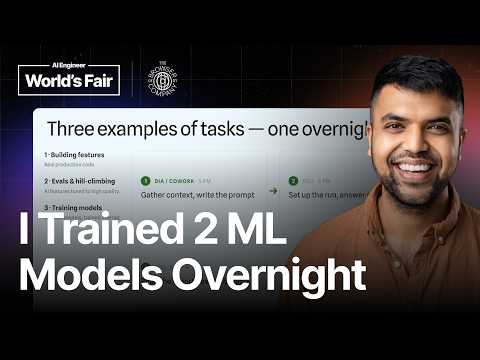
Prototyping as Leadership: How a CTO Ships with AI Agents — Hursh Agrawal, The Browser Company
Fifteen recurring meetings a week and still two to ten pull requests, which was not possible a year ago.
Why it mattersHands on building is how a technical leader stays calibrated on what current models can do.

New research finds LLMs now outperform dedicated embedding models on retrieval tasks but at substantially higher inference cost, giving a concrete cost/quality tradeoff for choosing between the two approaches.
Why it mattersNew research shows LLMs now outperform embedding models on retrieval, but at much higher cost, giving engineers a concrete decision rule for when to swap one for the other.

Hermes Agent ships with its own remote computer, and the pitch is that you are not locked into it: connect any provider, subscription or model, run it free on your own machine, or rent a cloud instance for a few dollars a month against a 200 dollar subscription.
Why it mattersAn open agent stack with no provider lock in and a materially different cost profile.

The Last Human Code Review: Building Trust in AI-Generated Code — Itamar Friedman, Qodo
If AI writes code faster than humans can review it, you are inside the problem rather than ahead of it.
Why it mattersReview capacity, not model quality, is what limits how fast AI written code can ship.
evepad – The missing IDE for building eve agents
A local dashboard and build harness for eve agents that holds the whole loop in one place.
Why it mattersPulls agent development, run inspection and deployment into one local surface instead of several.
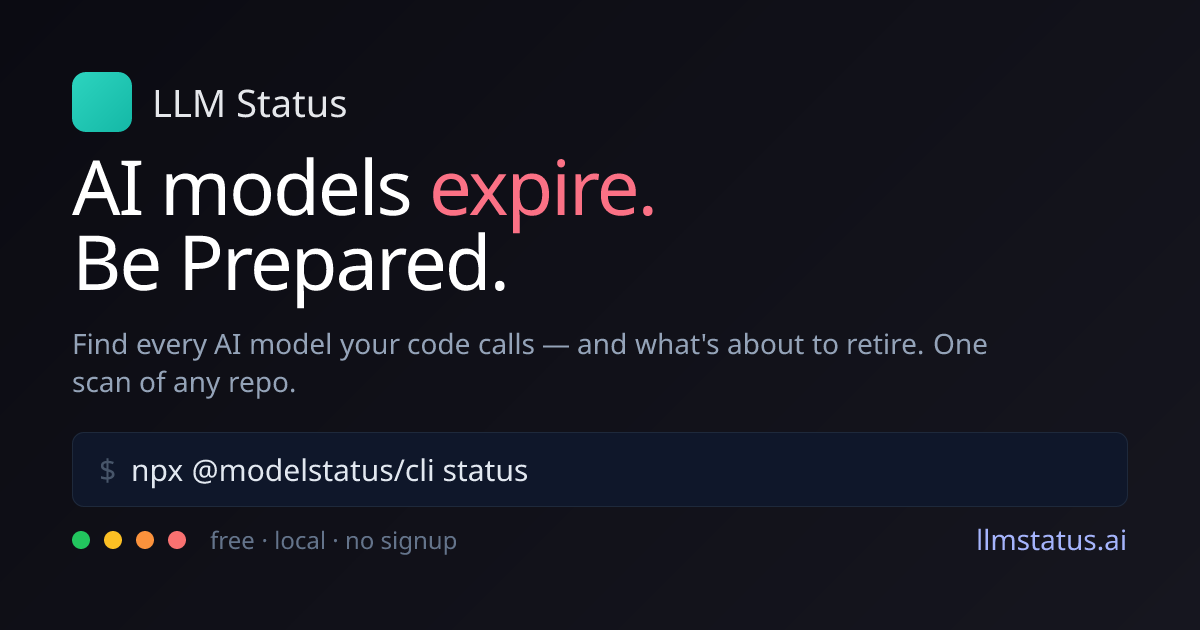
Find every AI model your code calls and warn before it's retired
A command line tool that scans a repository for every model identifier it calls and checks each against a live registry of deprecation and retirement dates.
Why it mattersModel retirements break production quietly, and this turns them into a scheduled warning.
testmagic.link – Zero-setup magic link testing for coding agents
A hosted inbox for testing magic link sign in with no signup, built so a coding agent can drive it.
Why it mattersRemoves a friction point for anyone letting a coding agent test authentication flows end to end.
An airline found 13% of messages to its concierge agent were classified as out of scope, and a review of production traces showed 95% of those were real passenger needs. Adding a customer care specialist cut the out of scope rate to 1% and lifted the return rate.
Why it mattersOut of scope classifications are a place to look for demand, not just a failure metric.

Your Agent Evolved. Your Evals Didn't. — Ameya Bhatawdekar, Braintrust
Five generations of agent architecture, each forced by a step change in model capability, and the eval practice that has to move with them.
Why it mattersEvals designed for a fixed graph stop measuring anything once the loop runs free.
An index of the vibe-coding frontier. Corrections welcome.