Intel
Page 14
StepFun's new open-source CLI runs the full coding loop, reading, editing, testing, shipping, from one interface, posting 80.9% on Terminal-Bench 2.1 and 73.3% on a 150-task long-horizon benchmark, plus one-command site publishing.
Why it mattersStep Code is a new open-source coding agent CLI with published long-horizon benchmark results, giving practitioners another MIT-licensed option to evaluate against Claude Code and Codex.
llm-typesafe 0.1a0
Simon Willison's new LLM CLI plugin wraps TypeSafe AI's Jev model to turn any prompt into a structured yes/no, multiple-choice, or scored answer.
Why it mattersllm-typesafe demonstrates getting reliable structured classification or scoring out of an LLM via the command line, useful for lightweight triage or routing pipelines.
I asked Meta’s Muse for its filesystem and it sent me 6.8GB
A researcher got Meta's Muse agent to archive and export a 6.8GB snapshot of its own runtime filesystem, including internal instruction files, memory logs, 113 subagent traces.

OpenAI is well positioned to fast-follow Jev
An analysis of TypeSafe's Jev, a classifier that reads calibrated logprob probabilities instead of generating text.
Why it mattersIt lays out concretely how logprob-based classifiers work and why a frontier lab folding that capability into its base models could undercut a standalone classifier product, a pattern worth watching for any tool built as a thin layer over model outputs.

Cloudflare now lets Cache Rules act on the Vary header directly: normalize known negotiation headers, forward exact values to origin, or bypass caching when variation is unpredictable, on every plan.
Why it mattersNew Cache Rules can normalize, pass through, or bypass caching based on the Vary header, giving finer control over cache correctness instead of debugging accidental cache fragmentation in production.
OpenAI GPT–6 Astra breaks Enigma message that has resisted solution since 2005
A researcher reports OpenAI's GPT-6 Astra autonomously broke WWII Enigma message MVUEH, unsolved since 2005, by writing its own Enigma simulator and Bombe software and finding a crib unaided.
Why it mattersAn AI model independently built Enigma-simulator and Bombe software and solved a cipher that had resisted cryptographers for two decades, a data point on autonomous long-horizon research capability.

Debating RSI, the US-China Gap, and Jaggedness with JS Denain of Epoch AI
Nathan Lambert and Epoch AI's JS Denain debate predictions for recursive self-improvement, the true size of the US-China capability gap, whether distillation explains it.
Why it mattersEpoch AI's JS Denain and Nathan Lambert debate predictions for recursive self-improvement, whether distillation explains the US-China model gap, and what current frontier post-training recipes actually involve.

The Best Models Still Reason Like Toddlers — Andrew Dai, Elorian
Elorian's Andrew Dai argues frontier multimodal models hallucinate spatial answers from memorized patterns rather than perceiving images.
Why it mattersPoints builders of vision-grounded agents to a concrete gap between model 'understanding' and true visual reasoning, and argues current benchmarks (low-res images, answerable-without-image exams) mask the problem.

Introducing Worker Previews: isolated preview environments for every change your agent makes
Cloudflare launched Worker Previews.
Why it mattersCloudflare's Worker Previews give every git branch its own production-like environment (config, state, observability, URL), letting coding agents test larger changes before they reach production without slowing them down.
Kimi's rebranded browser extension (formerly WebBridge) chats from your sidebar to navigate sites and fill forms, and lets you record repetitive tasks once as a reusable skill for the agent to replay.
Why it mattersKimi's browser extension turns one-off browsing tasks into reusable skills the agent can replay, useful for anyone automating repetitive web workflows with an LLM agent.

AI Has No Wisdom and Neither Will You
This essay argues that AI can't learn what makes code maintainable because reinforcement learning rewards are immediate while bad architecture's costs surface months or years later.
Why it mattersArgues concretely that AI models can't learn code maintainability because RL reward signals are immediate while bad architecture only shows its cost months or years later, a specific mechanism for why teams that stop reading AI-written code accumulate unmaintainable systems.
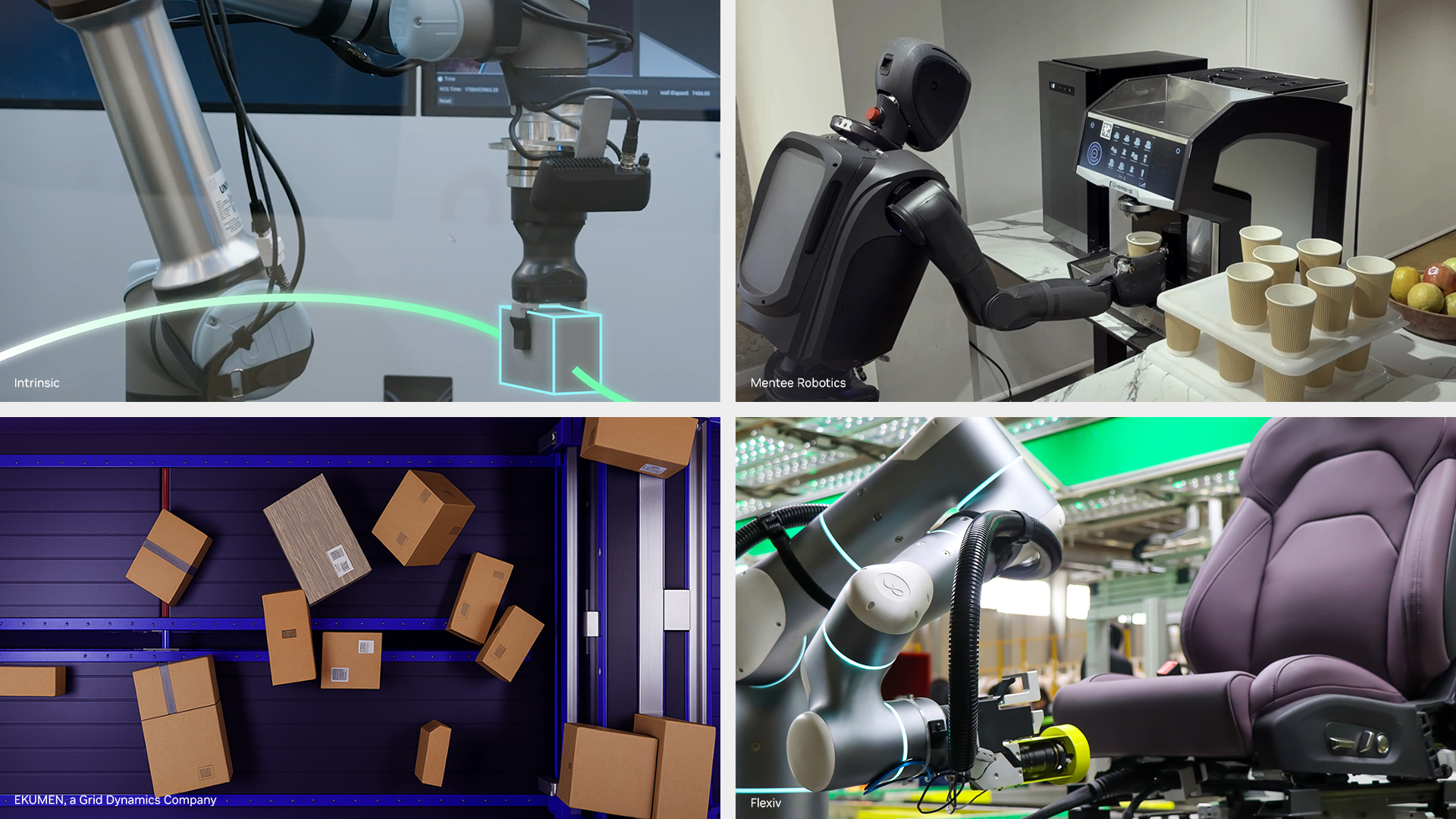
NVIDIA Isaac ROS 5.0 Advances Agentic, Open Source Robotics Development
NVIDIA's Isaac ROS 5.0, launched at ROSCon, adds agentic development workflows plus support for ROS Lyrical and Ubuntu 24.04, aiming to let AI agents and humans jointly build robotics applications.
Why it mattersIsaac ROS 5.0 adds agentic development workflows and updated platform support (ROS Lyrical, Ubuntu 24.04) for the ~1.3 million ROS developers, changing what AI-assisted robotics tooling is available today.

OpenRouter data shows a new model launch mainly cannibalized flash-tier models across labs, and nearly half of its users on the platform hadn't touched any model the week before its launch.
Why it mattersReal usage data showing a new model launch reactivated a large share of dormant OpenRouter users and displaced flash-tier competitors, useful for tracking market shifts in model choice.

Why OpenAI and Anthropic Won't Win Finance
Rogo cofounder Gabe Stengel on AI agents doing deal analysis, presentations, and transaction coordination in finance, how a vertical platform competes with OpenAI and Anthropic.
Why it mattersPresents the case that vertical agent products with deep domain context can beat general lab offerings, with details on fleets of agents and a company-wide knowledge layer.

Accelerating a ROS 2 Node with an AI Agent and NVIDIA Isaac ROS
NVIDIA walks through using an AI coding agent with a custom 'skill' to migrate a ROS 2 node to CUDA-backed zero-copy buffers, then verifies the result with Nsight Systems traces.
Why it mattersShows a coding agent performing a nontrivial, verifiable systems-level refactor (adding zero-copy GPU transport) rather than boilerplate generation, using a skill-plus-profiler verification loop worth adapting to other codebases.
Kimi's browser extension (formerly WebBridge) lets you chat from the sidebar to navigate sites and fill forms, and record a workflow once to save as a reusable skill the agent replays later. Live now on Kimi's site and the Chrome Web Store.
Why it mattersA browser agent that can record a workflow once and replay it as a skill turns repetitive browser tasks into one-time setup work, extending agent automation beyond the terminal into everyday web use.

Tencent's Hy Image 3.5 preview adds text-to-image and image-to-image generation up to 2K resolution with a reported 30% human-eval win rate over 3.0, priced at $0.024 per image via its cloud API.
Why it mattersHy Image 3.5 gives builders a cheap ($0.024/image), API-accessible text-to-image and image-to-image model with a quantified quality jump, useful when evaluating options for image-generation pipelines.
Can gzip be a language model?
This piece builds a working toy language model entirely out of gzip's DEFLATE compressor and beam search.
Why it mattersBuilding a working beam-search text generator out of gzip's DEFLATE window makes the compression-prediction equivalence behind language modeling concrete: any compressor with a good probability model can generate plausible text.
Qwen-Image-2.1, Alibaba's unified image generation and editing checkpoint, ships with day-zero OpenVINO optimization from Intel, letting developers run it efficiently on Intel CPUs and NPUs right away.
Why it mattersDay-zero OpenVINO support means Qwen-Image-2.1 runs efficiently on Intel CPUs and NPUs immediately at release, so builders can deploy an open generation-and-editing model without waiting on a separate optimization pass.

A Governance-Aware Large Language Model Orchestrated Agentic Digital Twin for Transmission System Operator Control Room Decision Support
A governance layer for LLM-orchestrated grid-control agents that restricts models to whitelisted tools, enforces step budgets, requires operator approval for side-effecting actions.
Why it mattersA concrete pattern for constraining agent tool use in a high-stakes setting: whitelisting, step budgets, human approval gates, and audited number provenance, applicable to any agent that needs guardrails beyond prompting.

When Who You Are Can Change the Code You Get: A Study of Persona-Induced Bias in LLM Code Generation
A UBC-led study of 35,000+ LLM-generated programs across 18 demographic personas finds demographic markers leak into up to 65% of responses and 70% of reasoning traces.
Why it mattersShows persona or demographic cues in a coding prompt measurably change code quality and security outcomes even when irrelevant to the task, a concrete bias risk for any coding assistant that personalizes to user identity.

Agreement Overstates Evidence: Error Dependence in LLM Judge Consensus
Measures error correlation across ten LLM judges and finds it high enough (avg pairwise correlation 0.21) that the panel carries the statistical weight of about 3.5 independent judges, flipping conclusions in up to 28% of model comparisons.
Why it mattersIf you use LLM-judge ensembles for evals, this quantifies how much less independent evidence more judges actually add, and shows shared judge errors can silently invert which model looks better.

From Code to Requirements: Agentic Reverse Engineering of Business Rules at Enterprise Scale
Seven specialized agents collaborate to reverse-engineer undocumented enterprise software into a locked Business Requirements Document, extracting user journeys and business rules from code, tests.
Why it mattersA real enterprise-scale deployment of a multi-agent reverse-engineering pipeline, showing a concrete architecture (specialized agents plus static analysis plus human escalation gates) for a genuinely hard agentic task.

TreeSpark: Calibrated, Load-Adaptive Draft Trees for Semi-Autoregressive Speculative Decoding
TreeSpark reads a parent-conditioned distribution from a speculative-decoding drafter's existing head, calibrates it into acceptance estimates.
Why it mattersA concrete speculative-decoding technique that fixes mis-ranked draft trees and adapts tree size to serving load, directly relevant to anyone running or optimizing self-hosted LLM inference for coding agents.

Identity or Prompt Noise? A Calibrated Invariance Audit of LLM Code Generation
A 30.73-million-generation audit from Los Alamos National Lab testing whether gender, country, or occupation personas change LLM-generated Python code, finding occupation is the most consistent source of measurable style and complexity differences.
Why it mattersIf your coding agent or assistant conditions on user-provided persona or profile information, occupation cues specifically and measurably shift code style and complexity, worth checking for in persona-aware coding tools.

Towards the Generalizability of Leveraging ChatGPT in APR via Self-enhancing: An Empirical Study
Tests three ChatGPT-enhanced automated program repair methods across Defects4J, HumanEval-Java.
Why it mattersA caution for anyone benchmarking coding agents: enhancement techniques that beat baselines on one popular repair benchmark can underperform on another, so single-benchmark improvement claims should be treated skeptically.

Context Poisoning as Extreme-Value Attention Interference in Long-Context Language Models
Formalizes why long-context LLMs lose track of decisive evidence as distractors accumulate, deriving that the required evidence margin scales with the square root of log distractor count.
Why it mattersGives a theoretical and empirical account of why retrieval accuracy drops as context fills with hard negatives, a concrete failure mode to budget for when stuffing tool outputs or documents into an agent's context.

The Wisdom of Artificial Deliberative Crowds
Adapts a human deliberation paradigm to LLM agents.
Why it mattersShows structured multi-agent deliberation, not just independent voting, reduces error across domains including detecting a hidden malicious AI agent, a usable design pattern for multi-agent evaluation and safety pipelines.

DeepInstructor: An Agentic AI Instructor for Experience-Driven Idea Evaluation
A ReAct-based agent framework that evaluates research ideas by retrieving dimension-specific evidence from an Experience Graph built from 58,607 peer reviews, instead of relying on an LLM's parametric judgment alone.
Why it mattersDemonstrates a concrete pattern for grounding an LLM agent's subjective judgments in structured retrieved experience rather than raw model opinion, improving alignment with human judgments by double digits.
Kimi K3 is now available through Amazon Bedrock, giving teams Bedrock's encryption, auditing, and access controls plus prompt caching for coding, document analysis, and longer agent workflows.
Why it mattersBedrock access brings Kimi K3 into AWS-native pipelines with built-in encryption, auditing, and prompt caching, letting teams run coding and long agent workflows without leaving their existing AWS compliance setup.
9/21: Grok 4.7

Tencent Hunyuan's Hy Image3.5 preview adds text-to-image and image-to-image generation up to 2K resolution with better consistency, claiming a +30% human-eval win rate over Hy Image3.0, priced at $0.024 per generated image via API.
Why it mattersA cheap, high-resolution image API from a major lab gives builders another production option, with pricing that only charges for generated outputs.
Artificial Analysis's new Pronunciation Robustness benchmark tests whether TTS models correctly voice context-dependent words, shorthand, and exact sequences like emails or codes; Gemini 3.1 Flash TTS leads at 88.1%, ahead of SpaceXAI TTS (87.6%) and ElevenLabs Eleven v3 (85.6%).
Why it mattersFor production voice agents, correctly pronouncing account numbers, abbreviations, and names matters as much as sounding natural; this benchmark gives engineers a way to pick TTS models on that specific, previously unmeasured failure mode.

Vals AI traced a jump in xAI's benchmark ranking to an SDK fix: the native xAI SDK wasn't returning encrypted_reasoning_content, which carries reasoning forward between turns, silently losing that context.
Why it mattersFlags a specific xAI SDK behavior (missing encrypted_reasoning_content) that silently degraded multi-turn reasoning quality until patched.
StepFun's 600B-parameter Step 5 Preview scores 44 on Artificial Analysis's Intelligence Index, tying Kimi K3 (max) at about 2.8x lower cost per task, with large reasoning gains on HLE and CritPt but weaker results on agentic evaluations than similarly scored peers.
Why it mattersStep 5 Preview matches Kimi K3's Intelligence Index score at about 2.8x lower cost per task and shows a big reasoning jump.
MotherDuck integrated TypeSafe's Jev model as prompt_jev(), a SQL function for text classification; MotherDuck reports 100k rows classified in 40 seconds for $0.50 versus 32 minutes and $37 using an LLM, at comparable accuracy.
Why it mattersA specialized classifier callable directly from SQL replaces LLM calls for structured classification at roughly 50x the speed and 1% of the cost, a real alternative to routing every text-labeling task through a general LLM.
What Is Krea Agent
Krea explains how its Krea Agent plans a creative brief, picks the right model from its 150+ image/video/audio catalog, runs shell tools like FFmpeg and Python to edit and assemble outputs.
Why it mattersKrea Agent chains research, generation across 150+ image/video/audio models, review, and editing in one session.

Browser Agent Identity Okta
Browserbase joined Okta's Cross App Access ecosystem, swapping static API keys for dynamic, scoped, revocable tokens issued through user identity.
Why it mattersXAA gives agent builders a standard way to authenticate browser agents through existing enterprise identity policy instead of long-lived API keys, cutting a real security gap as agent deployments scale.

How UK AISI and EvalEval Are Making Benchmark Results Reproducible
UK AI Security Institute is adopting EvalEval Coalition's shared evaluation-reporting infrastructure (the Every Eval Ever schema), aiming to make government model evaluation results reproducible and verifiable rather than siloed one-off reports.
Why it mattersThe UK AI Security Institute is now publishing evaluation results through EvalEval's shared schema, giving practitioners a structured, reproducible format for comparing model evaluations instead of one-off, hard-to-verify reports.

Claude Opus 5.5 now available on AI Gateway
Claude Opus 5.5 is now on Vercel AI Gateway, matched to Fable 5.1-level performance at roughly 30% faster and 40% cheaper than Opus 5.
Why it mattersExisting integrations that disable thinking, set fixed thinking budgets, or force a specific tool call will start returning HTTP 400 errors under Opus 5.5, so harness code needs updating before upgrading.

GPT-6 Sol and Luna now available on AI Gateway
OpenAI's GPT-6 Sol and GPT-6 Luna are now on Vercel's AI Gateway at lower cost than GPT-6 Astra.
Why it mattersGPT-6 Sol and Luna give engineers cheaper GPT-6-tier options tuned for sustained coding work and high-volume agentic tasks respectively, with improved factual reliability over GPT-5.6.
Batch Api
OpenRouter launches a Batch API spanning 70+ models that bundles asynchronous requests at roughly half the standard per-token price.
Nemotron 3 5 Lightning
OpenRouter details NVIDIA's Nemotron 3.5 Lightning, a 30B mixture-of-experts model with 3B active parameters aimed at cheap, high-volume agent steps like tool calls and validation, contrasting it with the heavier Nemotron 3 Ultra.
Why it mattersNemotron 3.5 Lightning is a 30B-A3B mixture-of-experts model built for the high-volume, low-latency steps of agent workflows (tool calls, file reads, validation), distinct from the heavier Nemotron 3 Ultra used for planning.

Canary rollouts: upgrade models in production without downtime
Together AI details its canary rollout feature for swapping production LLM checkpoints: gated traffic shifts with health checks and metric gates (e.g. p95 latency).
Why it mattersShows a concrete pattern for safely upgrading LLM checkpoints in production: staged traffic shifts with automated health/metric gates that catch regressions before they hit all users, with a real regression case study.
Transformers now runs llama.cpp quants
Hugging Face Transformers can now load and run GGUF quantized checkpoints directly through from_pretrained, reusing llama.cpp's ggml kernels for near-native performance on Apple Silicon.
Why it mattersLets engineers load community GGUF checkpoints straight into the standard transformers API instead of switching toolchains, with benchmarks against llama.cpp and clear size/precision tradeoffs across quantization levels.
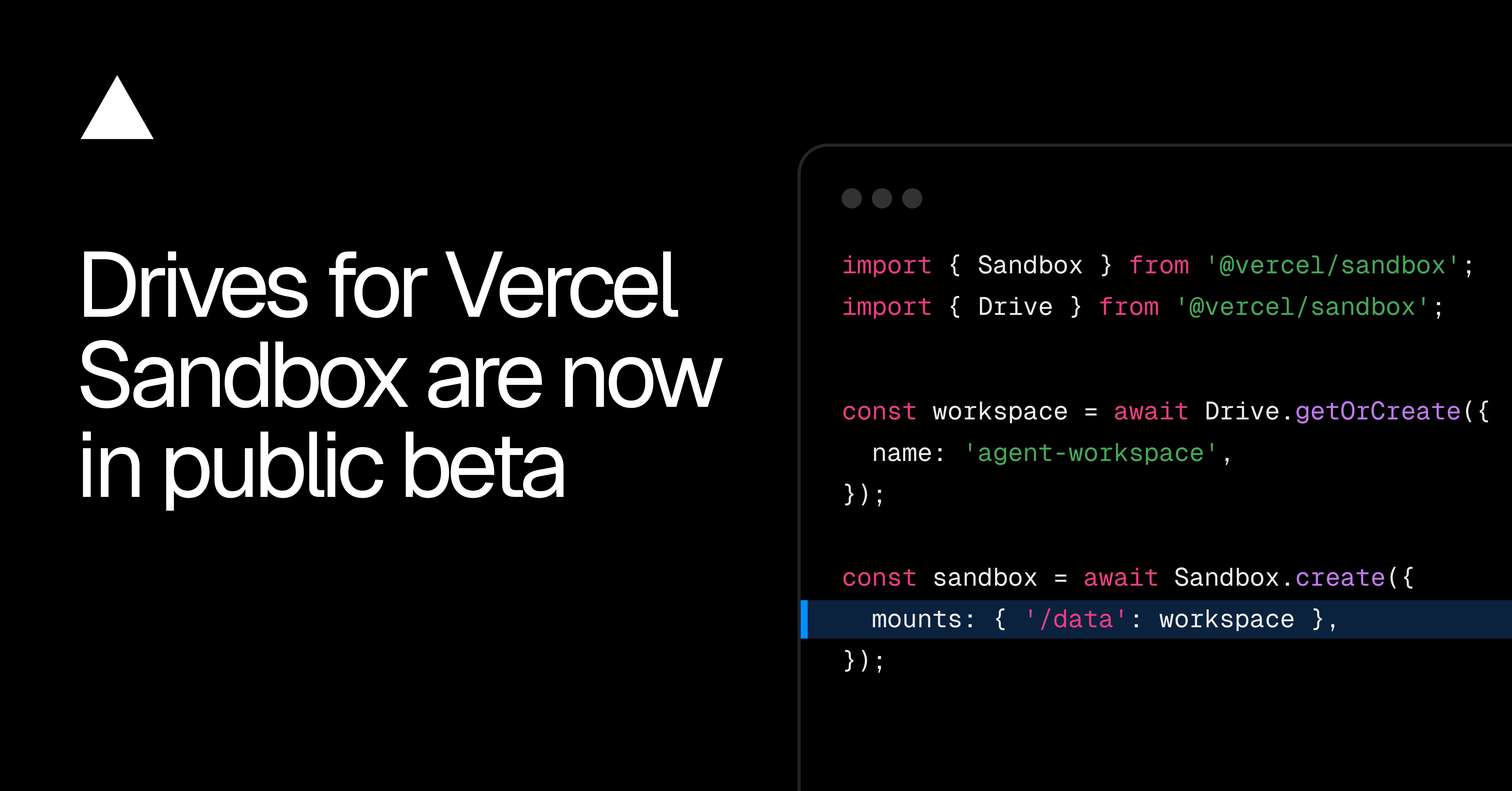
Drives for Vercel Sandbox are now in public beta
Vercel Sandbox now offers Drives, persistent storage you mount into a sandbox that survives across runs and can be shared read-only between concurrent sandboxes, with SDK examples.
Why it mattersDrives let you persist an agent's workspace, memory, or cached dependencies across separate sandbox runs instead of rebuilding state each time, cutting setup cost for repeated agent tasks.

Jev Vs Claude Opus 5 Classification
OpenRouter benchmarks TypeSafe's Jev decision model against Claude Opus 5 on 3,080 Banking77 classification utterances, finding Jev trails by 3.3 accuracy points but runs 13x faster at 1/22 the cost.

Jun Kim, oMLX creator and maintainer, joins Hugging Face to support the MLX community
Hugging Face has hired Jun Kim, oMLX's creator and maintainer, to work on it full-time, framing the move as stabilizing Apple's MLX ecosystem for local AI while keeping the project Apache 2.0 and under Jun's leadership.
Why it mattersFunding a formerly solo maintainer full-time reduces the risk of stalled development for a tool developers rely on to run local models on Apple Silicon.
Jev introduces a new shape of LLM - System One, aka Decision Models
Simon Willison breaks down Jev, TypeSafe AI's new 'decision model' that takes structured state plus yes/no, category, or rating questions and returns typed probabilistic scores instead of text, priced only on input.
Why it mattersJev returns typed probabilistic decisions (yes/no scores, ratings, category confidences) instead of text, priced only on input tokens at $0.042/M, giving agent builders a cheap, fast primitive for classification-style sub-tasks.
Spymarks, Not Watermarks
An argument that AI watermarking systems like Google's SynthID function as covert per-user tracking, citing a reported 64-bit database-ID payload per image.
Why it mattersCites SynthID's own reported payload capacity to argue AI 'watermarking' can encode identity-linkable tracking, a distinction relevant to anyone building or auditing AI content provenance systems.
An index of the vibe-coding frontier. Corrections welcome.