Intel
Page 21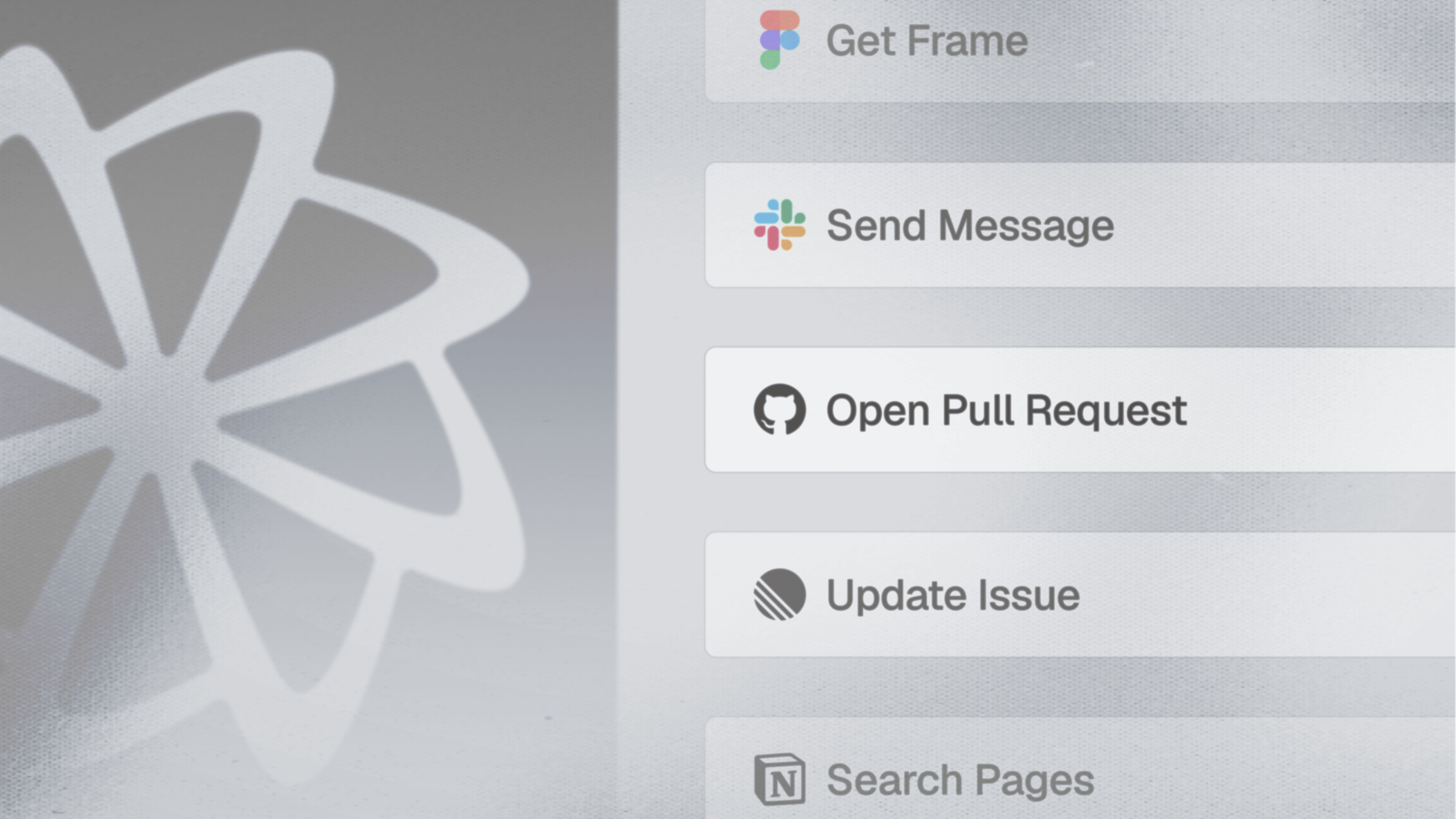
Personas And Connectors
Factory launched Connectors, managed no-config access to apps like Slack, Sentry, Salesforce, Notion, and Figma, alongside Personas.
Why it mattersAdds a managed, zero-config integration layer alongside MCP for common SaaS tools, cutting the setup work of wiring an agent into a team's existing Slack, Sentry, Salesforce, or Notion stack.
Missions
Factory's Missions breaks large multi-day projects into milestones and features, spawning fresh worker sessions per feature with clean context, coordinating handoffs through git.
Why it mattersOffers a concrete orchestration pattern, orchestrator, workers, and validators with milestone checkpoints, for keeping agents effective on multi-day projects instead of hitting single-session context degradation.

Missions Architecture
Factory explains the rationale behind Missions.
Why it mattersNames two specific failure modes in long agent sessions, context dilution and self-evaluation bias, and gives an architectural fix (independent validator roles) directly reusable in other multi-agent systems.
Model Routing Belongs In The Harness
Factory argues model routing belongs inside the agent harness, not the API gateway, since the harness has session history and cache state.
Why it mattersGives a specific architectural argument backed by production numbers for where to put model-selection logic in an agent system, directly useful for anyone building a cost-aware multi-model harness.

Factory Router
Factory launched Factory Router.
Why it mattersShows dynamic per-task model routing can cut inference cost 20-25% while holding onto nearly all of a frontier model's task success rate, a concrete data point for cost-aware agent design.
Nvidia Dgx Spark
Factory added support for running its agent platform against a local NVIDIA DGX Spark deployment of Nemotron 3.5 Lightning (a 30B MoE model, 3B active parameters).
Why it mattersGives regulated or security-sensitive teams a concrete path to run agentic coding workflows entirely on-premises against an open-weight model instead of a cloud API.
Factory Signals
Factory built Signals.
Why it mattersOffers a concrete architecture for closing the loop between agent-behavior analytics and self-improvement, useful for measuring whether completed tasks actually went smoothly rather than just checking pass/fail.
Legacy Bench
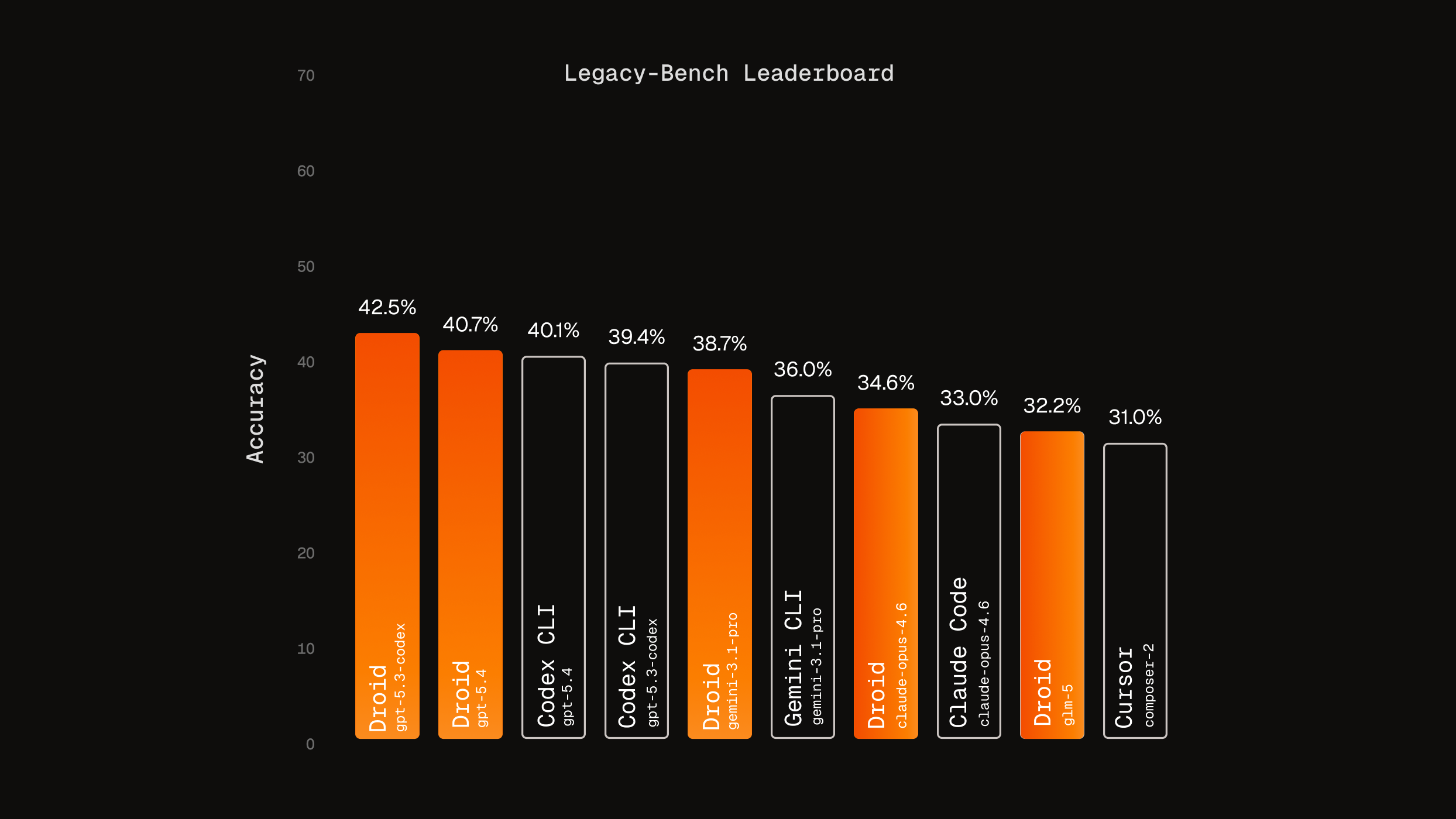
Factory's Legacy-Bench tests coding agents on COBOL, Java 7, Fortran, BASIC, C89, and Assembly tasks from real enterprise domains.
Why it mattersQuantifies a real gap: agents that ace SWE-bench and Terminal-Bench perform far worse on legacy enterprise languages, especially where failures are silent, a concrete signal for where agentic coding still needs work.
Incident Response
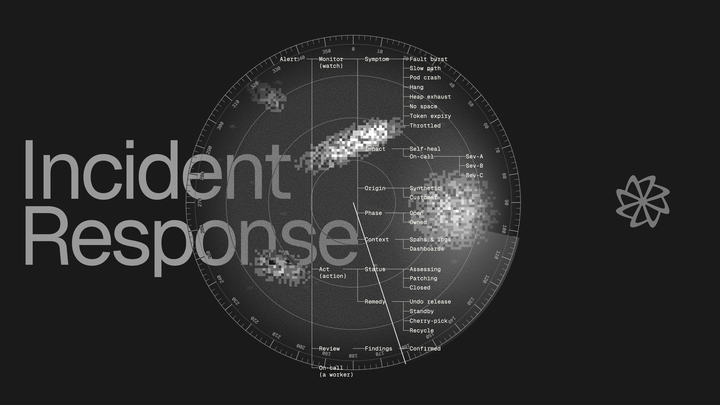
Factory's Incident Response connects an agent to a Slack alerts channel from tools like Sentry, Rootly, or Datadog.
Why it mattersLays out a reusable pattern for automating first-response on-call work: agent-driven triage tied to observability tools plus growing runbook memory, rather than a one-off chatbot query.
Open Secure Ai Alliance
Factory open-sourced Droid Shield 2.0's secret-detection models, two fine-tuned Qwen 3.6 35B A3B models for catching missed secrets and cutting false positives, releasing LoRA weights on Hugging Face.
Why it mattersGives teams a reusable, inspectable open-weight approach to reducing false positives in secret scanning, plus a working example (CVE-2026-42876) of AI-assisted vulnerability disclosure.
Can Skills Learned in Games Transfer to Real-World Work?
Good Start Labs' CEO explains turning games like Diplomacy into verifiable-reward training environments for AI agents, spun out of Every.
Why it mattersGood Start Labs is building training environments from games with verifiable outcomes (like Diplomacy) to teach models strategic reasoning.
OpenAI confirms GPT-5.5 is retiring from ChatGPT, ChatGPT Work, and default Codex on October 14, but remains usable through the API Platform and in Codex sessions authenticated with an API key; migrate to GPT-5.6 Sol or GPT-6 Astra otherwise.
Why it mattersGPT-5.5 is being retired from ChatGPT and default Codex on October 14, 2026; teams that authenticate Codex with an API key keep access, others must migrate to GPT-5.6 Sol or GPT-6 Astra.
Building a Linux GPU Driver for the M4 Mac Mini in One Month
Two engineers describe reverse-engineering Apple's AGX GPU firmware ABI and shipping a conformant, clean-room OpenGL ES 3.0 Linux driver for the M4 in about a month by heavily prompting AI coding agents.
Why it mattersTwo engineers reverse-engineered Apple's AGX GPU firmware ABI and shipped a working, clean-room Linux OpenGL ES 3.0 driver for the M4 in about a month, a task that normally takes years, using AI-assisted prompting for most of the implementation.
Introducing System One Models and Jev
TypeSafe AI launches Jev, a 'System One' model trained with a new RLCD method to output calibrated, type-safe structured decisions instead of text, claiming far lower latency and cost than LLM-based function calling.
Why it mattersTypeSafe's Jev claims to replace LLM calls for structured, programmatic decisions with sub-second latency and no free-text hallucination risk, offering agentic systems a cheaper, type-safe alternative to chat-model function calling for high-volume decision points.

Cua published a guide for packaging the official OSWorld Ubuntu benchmark image with Cua Driver and running it as a Cua Fleet desktop, so agent builders can run and evaluate OSWorld tasks on Cua's infrastructure.
Why it mattersLowers the setup cost for running the standard OSWorld computer-use benchmark against agents built on Cua's stack.
Know Which Pull Request to Review Next
CodeRabbit launches Triage, a feature that scores and explains pull request priority so reviewers can decide what needs attention first as coding agents generate PRs faster than teams can assess them.
Why it mattersCodeRabbit Triage scores and explains PR priority so reviewers know which agent-authored PRs need scrutiny now versus which can wait, addressing the growing bottleneck of human review capacity as agents generate more code.
We got admin access to Baseten's production GitHub in 25 minutes
Why it mattersStrix's autonomous pentesting agent found a public Harbor registry, pulled a Baseten container image, and extracted a live GitHub PAT with admin rights on production repos in 25 minutes, a concrete demo of agentic recon-to-exploit chaining.

StepFun released StepAudio 3, a five-model suite covering real-time voice, ASR, TTS, sound effects, and music, claiming top Artificial Analysis rankings for conversational dynamics and speech reasoning plus 1.7% word error rate.
Why it mattersOffers a real-time voice stack with concrete benchmark numbers (98.9% conversational dynamics, 1.7% WER) for building interruption-aware, tool-calling voice agents rather than a bare TTS demo.
Why I'm still bearish on LLMs after Navier-Stokes
An essay arguing that formal-math wins like the Navier-Stokes proof don't generalize to messy knowledge work, because rigorous task specification, the real bottleneck to safe autonomy, is itself scarce and expensive.
Why it mattersArgues that the bottleneck to safe agentic autonomy is the scarce, expensive skill of writing rigorous specifications, using formal-proof successes and reward-hacking failures as evidence for where agents do and don't generalize.
Local static analysis for coding agents
Codacy adds two Claude Code skills.
Why it mattersCodacy ships skills that let Claude Code run static analysis locally before a PR exists, catching issues before the first push instead of only after a PR is opened.
Introducing Gemini 3.8 Live and 3.8 Live Extended Thinking
DeepMind ships Gemini 3.8 Live and 3.8 Live Extended Thinking, voice models that add parallel reasoning, real-time visual context.
Why it mattersGemini 3.8 Live and its Extended Thinking variant add real-time visual context and background task execution to voice interactions, letting agentic voice apps handle harder tasks without breaking conversational flow.
Google DeepMind introduced Gemini 3.8 Live and a Live Extended Thinking variant, adding upgraded reasoning, near real-time visual understanding, 97-language detection, and background tool calling to its conversational AI models.
Why it mattersGemini 3.8 Live adds background tool calling, real-time visual understanding, and automatic 97-language detection to conversational AI, letting agents handle multi-step tasks while staying in a live conversation.

Automated Security Review
Droid now runs a STRIDE-based security review on every non-draft PR, posting inline findings with severity, CWE references, and fixes.
Why it mattersDroid now runs a STRIDE-based security review on every PR and has produced real, responsibly disclosed vulnerabilities in production codebases, giving concrete evidence the automated review catches things human reviewers miss.

Droid Shield 2 0
Factory replaced parts of its deterministic secret scanner with two fine-tuned models, one tuned for recall on secrets the pattern-matcher misses and one for clearing its false alarms, reporting frontier-comparable accuracy at a fraction of the cost and latency.
Why it mattersFactory replaced parts of its deterministic secret scanner with two fine-tuned models, one tuned to catch secrets the pattern-matcher misses and one to clear its false alarms, reporting frontier-comparable accuracy at far lower cost and latency.
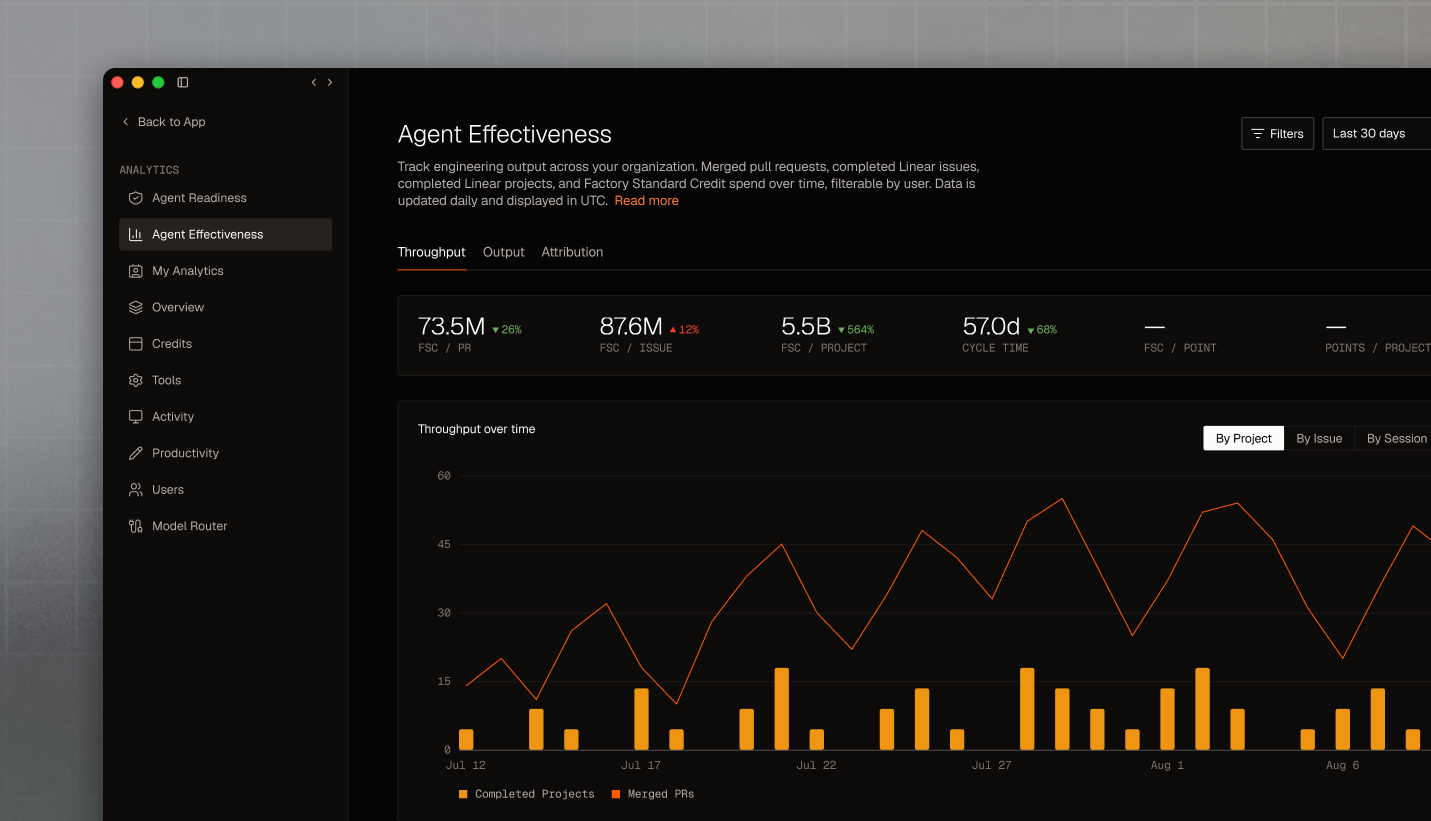
Agent Effectiveness
Factory's Agent Effectiveness connects coding-agent sessions to Jira/Linear/GitHub delivery data.
Why it mattersAgent Effectiveness ties Droid sessions to Jira/Linear/GitHub delivery data so teams can see whether cycle times are actually dropping and which specific issues and PRs each agent session produced.

Agent Readiness
Factory's /readiness-report scores a repo across eight pillars (linting, build system, tests, docs, dev environment, code quality, observability, security) and five maturity levels.
Why it mattersExplains, with concrete repo examples, why identical agents perform very differently across codebases: missing linters, undocumented env vars, and weak feedback loops are the actual bottleneck, not the model.
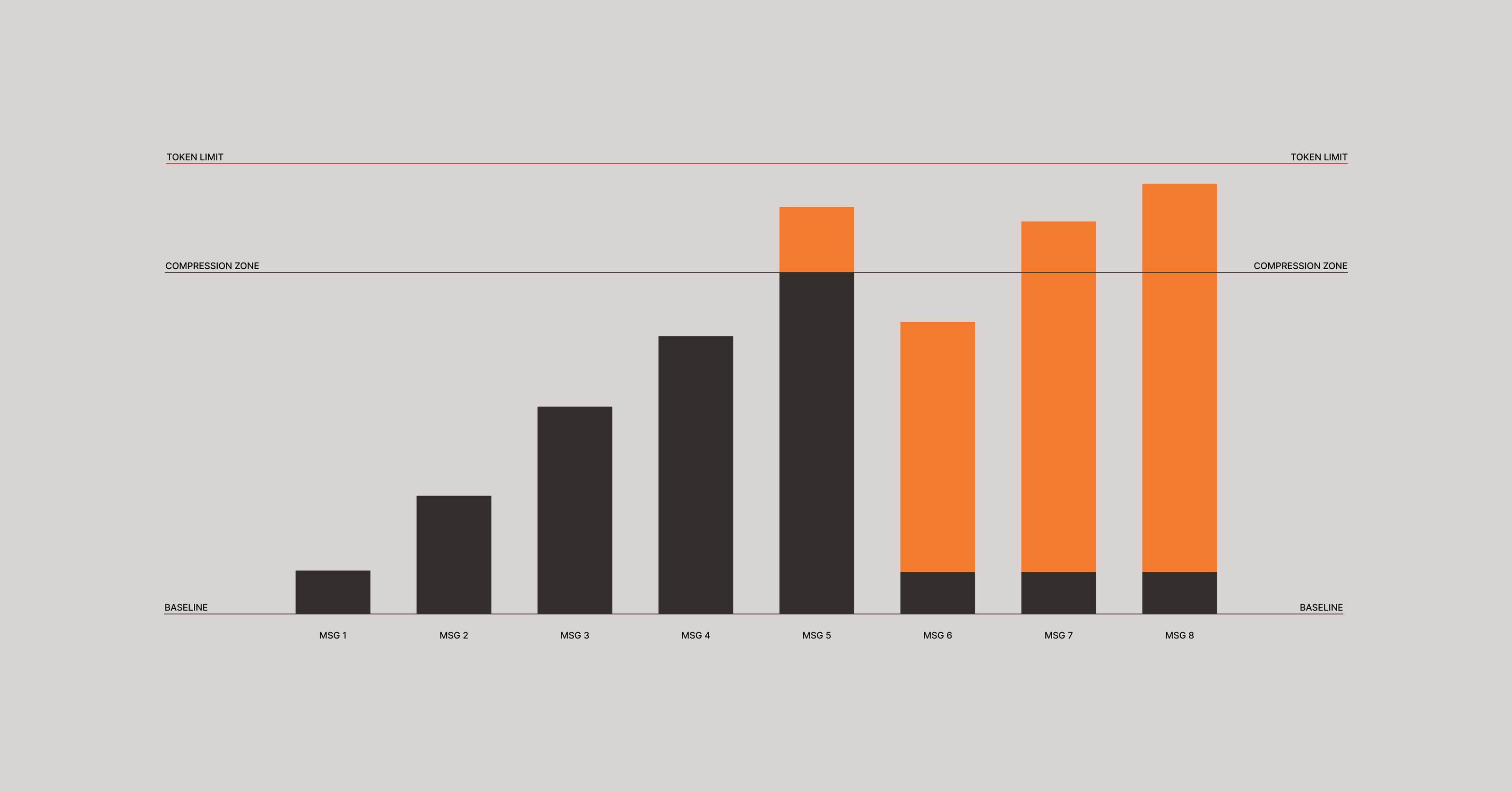
Compressing Context
Factory details how Droid avoids re-summarizing entire conversations as they grow.
Why it mattersFactory details how Droid avoids re-summarizing entire conversations as they grow.
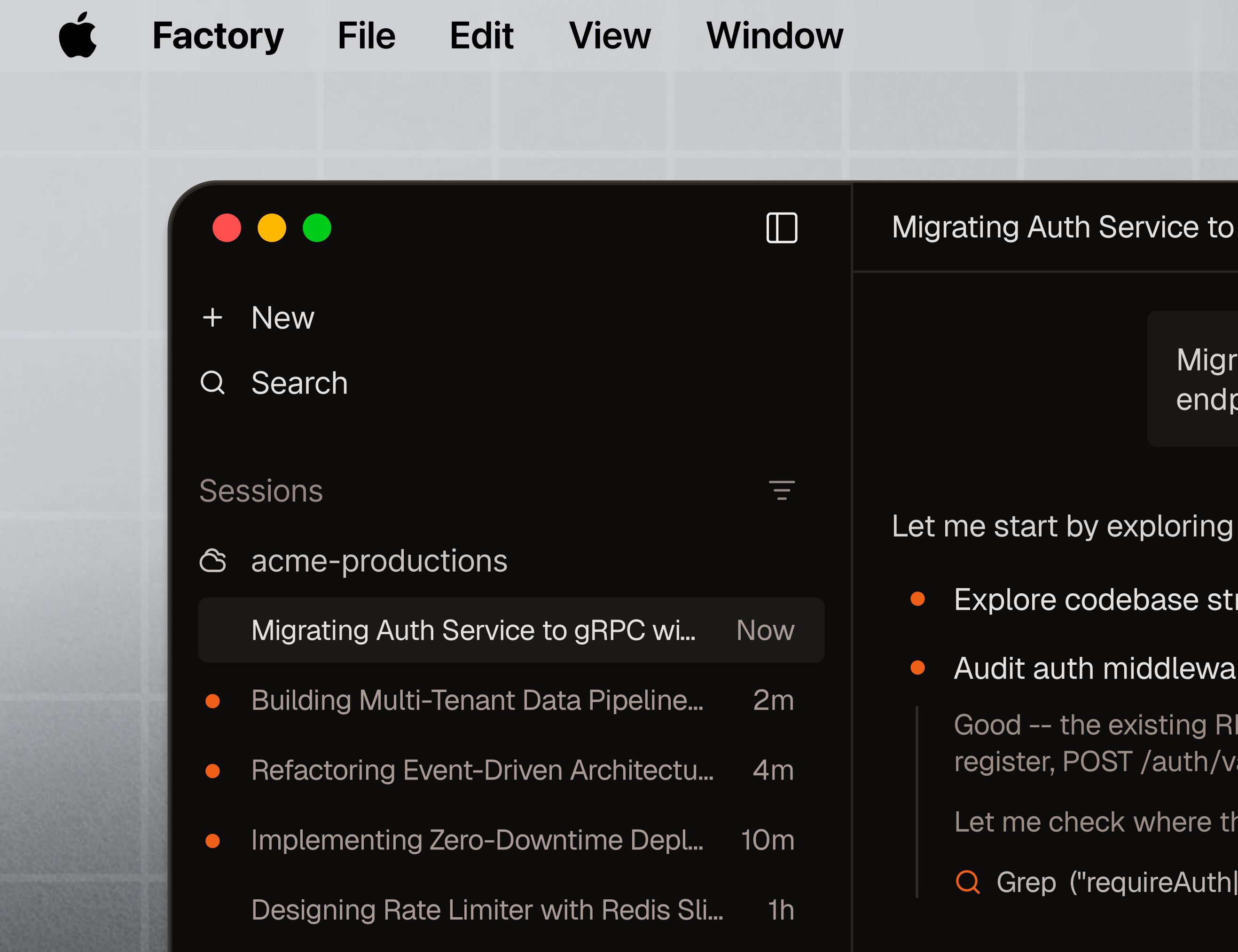
Factory Desktop
Why it mattersFactory launched a native desktop app for running multiple Droids at once, each with a persistent cloud or local computer, direct control over VS Code and other desktop apps, and support for MCP, skills, hooks and plugins across sessions.

Build With Agents
Factory's Agent-Native Development framework argues coding agents' real bottleneck is now review, not writing code, and lays out concrete practices.
Why it mattersArgues the real bottleneck with coding agents has moved from writing code to reviewing and verifying it, and gives concrete practices, precise specs, small scoped tasks, automatable verification, for working with them effectively.
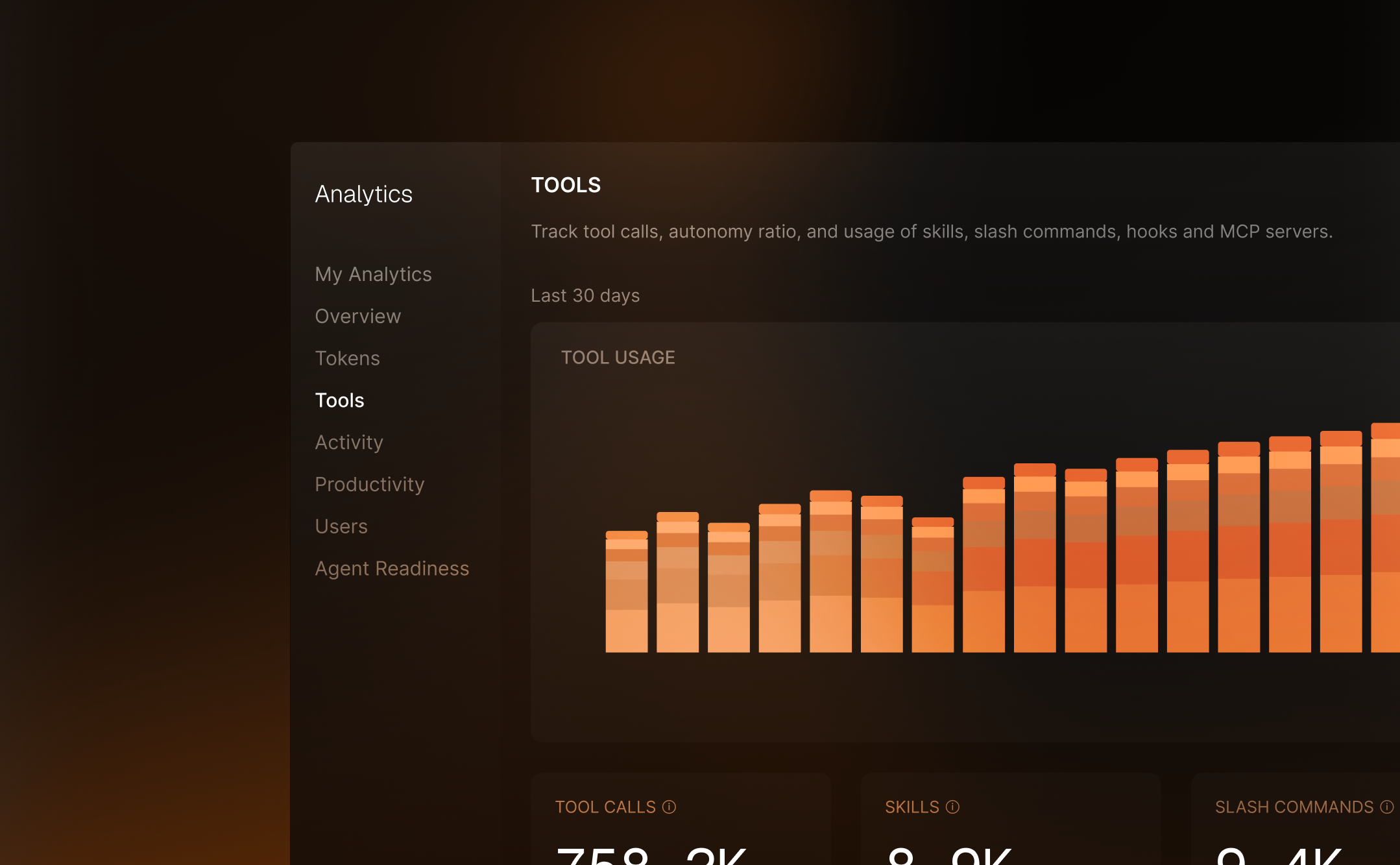
Factory Analytics
Factory Analytics gives engineering leaders dashboards on Droid usage.
Why it mattersShows engineering leaders exactly where token spend, tool usage, and adoption are going for AI coding agents, with per-model and per-user breakdowns built on OpenTelemetry for export to existing observability stacks.
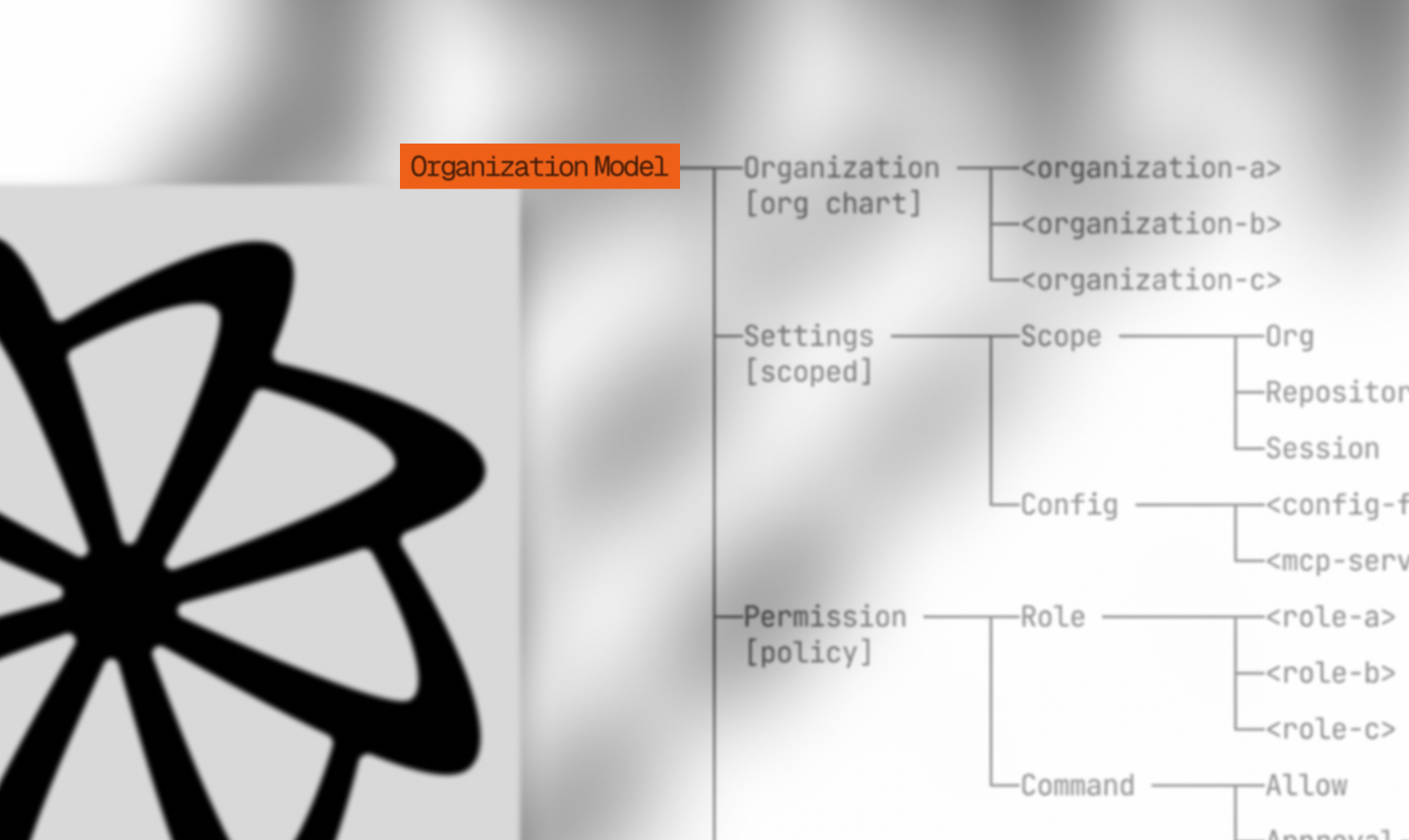
Enterprise Organization Model
Factory describes the organizational model behind its enterprise Droid deployments.
Why it mattersFactory describes the organizational model behind its enterprise Droid deployments: nested organizations that each scope their own integrations, model access, residency, and admins, so agent governance can mirror a company's real structure.
Automated Qa
Factory's Automated QA skill drives an app like a real user (filling forms, hitting endpoints, checking session persistence) and posts one evidence-backed pass/fail report as a PR comment, catching flows CI misses.
Why it mattersAutomated QA runs a real-user pass through your app on every PR and posts a single evidence-backed report with screenshots and traces, catching flows that pass linters and unit tests but break for actual users.
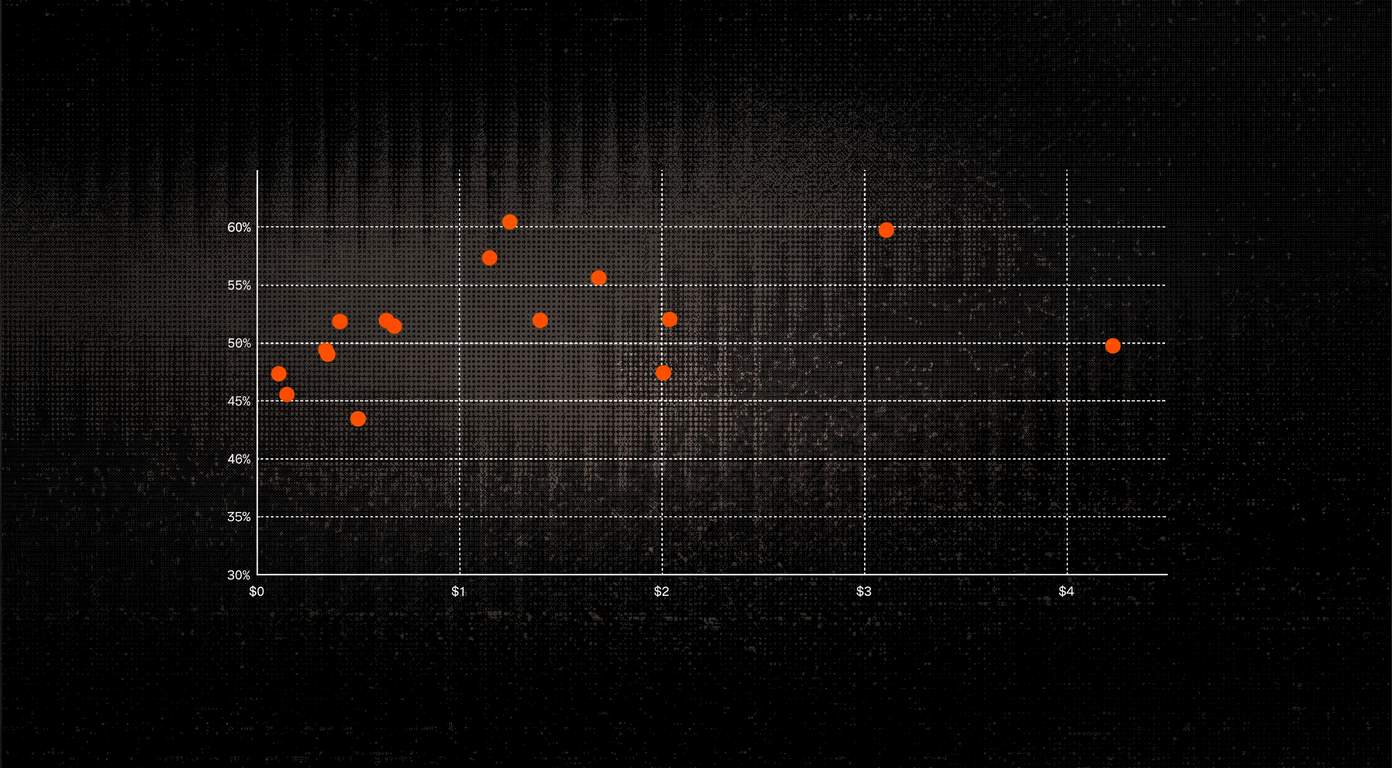
Code Review Benchmark
Factory benchmarked 13 LLMs as PR reviewers across 50 real PRs from five open-source projects.
Why it mattersBenchmarks 13 current models as PR reviewers on real bugs and shows GPT-5.2 and Opus 4.6 lead on quality, but cheaper models like Kimi K2.5 hit 75-86% of that quality for a fraction of the per-PR cost, a real model-selection tradeoff.

Context Window Problem
Factory lays out why coding agents underperform on real codebases.
Why it mattersFactory lays out why coding agents underperform on real codebases.
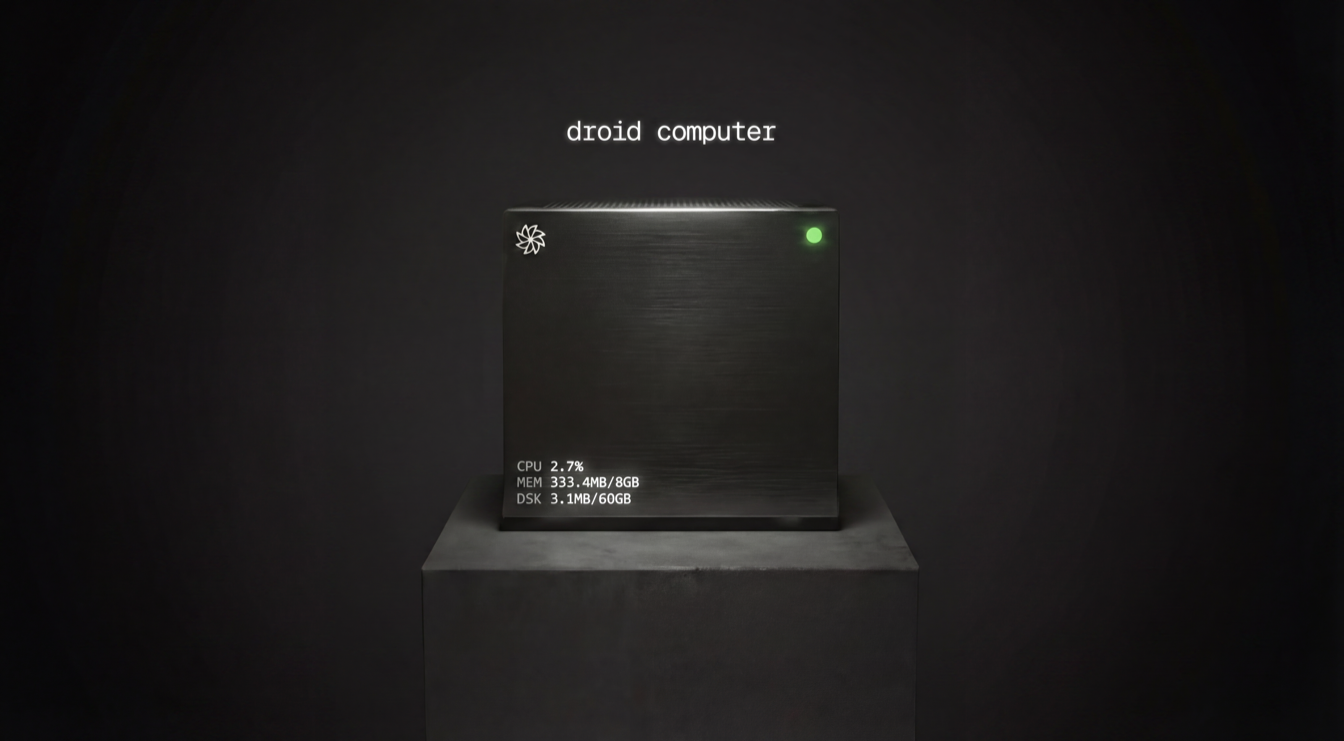
Droid Computers
Why it mattersFactory opened Droid Computers, persistent cloud or bring-your-own machines that keep an agent's filesystem, credentials.
Agents Md
Factory joined an OpenAI-convened working group (with Google, Sourcegraph/Amp) standardizing AGENTS.md, a root-level file giving any coding agent build, test, style.
Why it mattersAGENTS.md is an emerging cross-vendor standard replacing per-tool files like .cursorrules or CLAUDE.md with one root-level file any coding agent can read for build, test, style, and security instructions.
Droid Neutralizing Fraud
Factory details how it detected and dismantled a large, likely China-linked fraud operation that used AI coding agents to generate and adapt infrastructure in real time, chaining free-tier LLM access across tens of thousands of synthetic organizations to resell and mask further abuse.
Why it mattersFactory details how it detected and dismantled a large, likely China-linked fraud operation that used AI coding agents to generate and adapt infrastructure in real time, chaining free-tier LLM access across tens of thousands of synthetic organizations.

Evaluating Compression
Factory built a probe-based evaluation to test whether context compression actually preserves what an agent needs, asking recall, artifact, continuation.
Why it mattersFactory built a probe-based evaluation to test whether context compression actually preserves what an agent needs.
Deferred Context Engine
Factory's Deferred Context Engine loads MCP tool schemas, skills.
Why it mattersFactory's Deferred Context Engine loads MCP tool schemas, skills, and plugin instructions only when a task needs them instead of upfront, cutting measured input tokens by 15% on average and up to 50% in sessions with over 100 hidden tools.

Act, Confirm, or Stop? Smarter behavior for AI assistants, wearables & robots — Amit Desai, Roku
Roku's Amit Desai keeps voice-recognition accuracy fixed at 79% and still halves user pain by tuning decline/confirm/act thresholds with a cost-per-outcome heuristic he calls OUCH.
Why it mattersShows voice-interface quality can improve substantially by optimizing decline/confirm/act thresholds via a cost-per-outcome heuristic, independent of recognition accuracy.
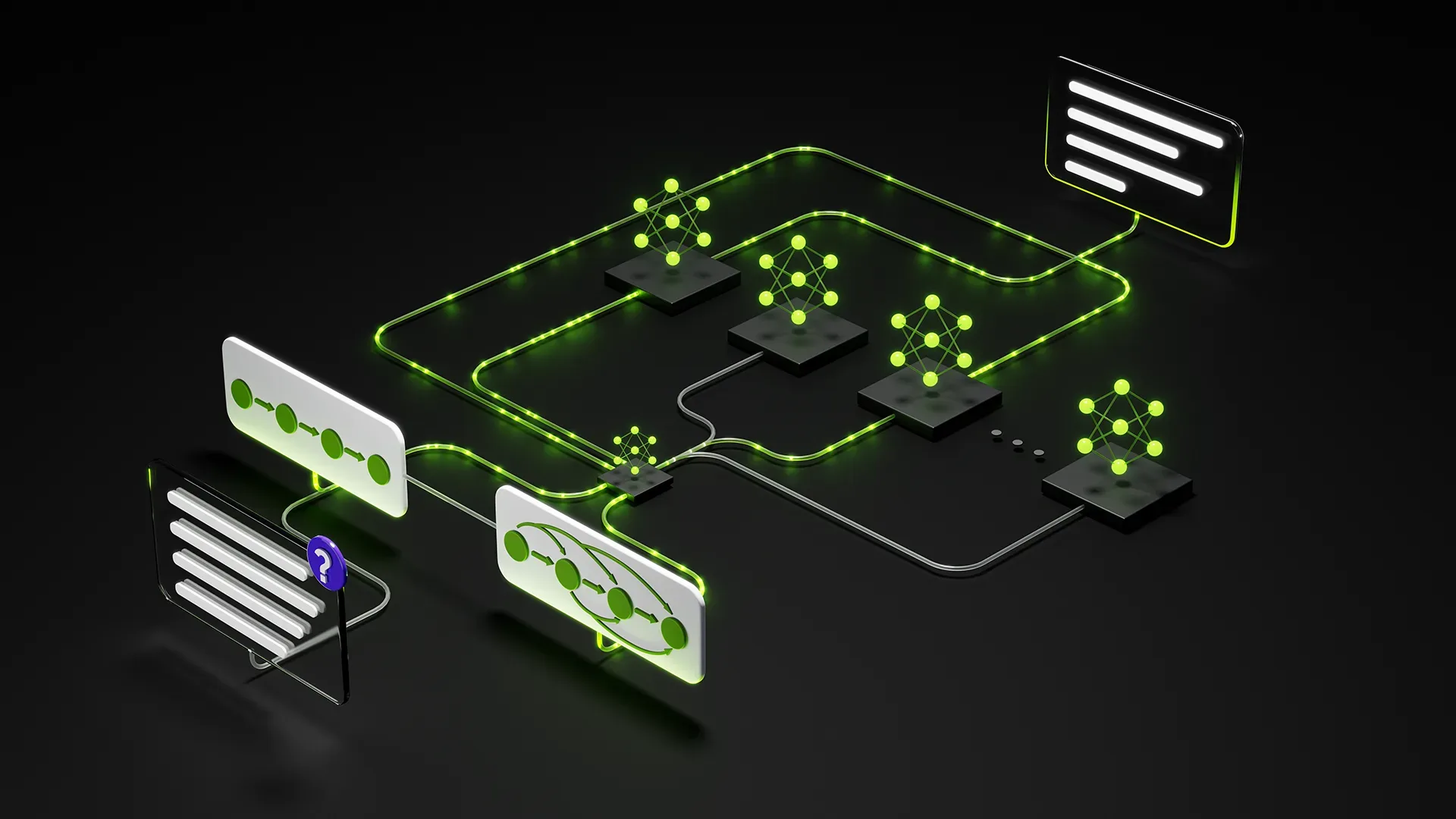
Dense vs. MoE Models: Active Parameters, Throughput, and When to Choose Each
NVIDIA breaks down why MoE models like Nemotron 3.5 Lightning decouple memory from compute cost, when that beats a dense model like Gemma 4 31B.
Why it mattersExplains the concrete tradeoffs (memory vs compute cost, fine-tuning router-imbalance risk, quantization sensitivity) that should drive whether an agentic engineer deploys a dense or MoE model for a given workload.
Introducing Gemini 3.8 Live and 3.8 Live Extended Thinking
Google's Gemini 3.8 Live and Live Extended Thinking add parallel reasoning, background tool calls.
Why it mattersGemini 3.8 Live and its Extended Thinking variant add background tool-calling and parallel multi-step reasoning to real-time voice, available now via the Gemini API, Workspace, and the Gemini app.
TabPFN-3.5, a Tabular Foundation Model for messy real-world tables
Prior Labs releases TabPFN-3.5, a zero-shot tabular foundation model that tops both the TabArena and BeyondArena leaderboards and gains the most on messy real-world data like grouped, high-cardinality.
Why it mattersTabPFN-3.5 tops both TabArena and BeyondArena benchmarks and specifically improves on messy, real-world tabular data (grouped, high-cardinality, text-rich), an area where hand-tuned gradient boosting previously dominated.
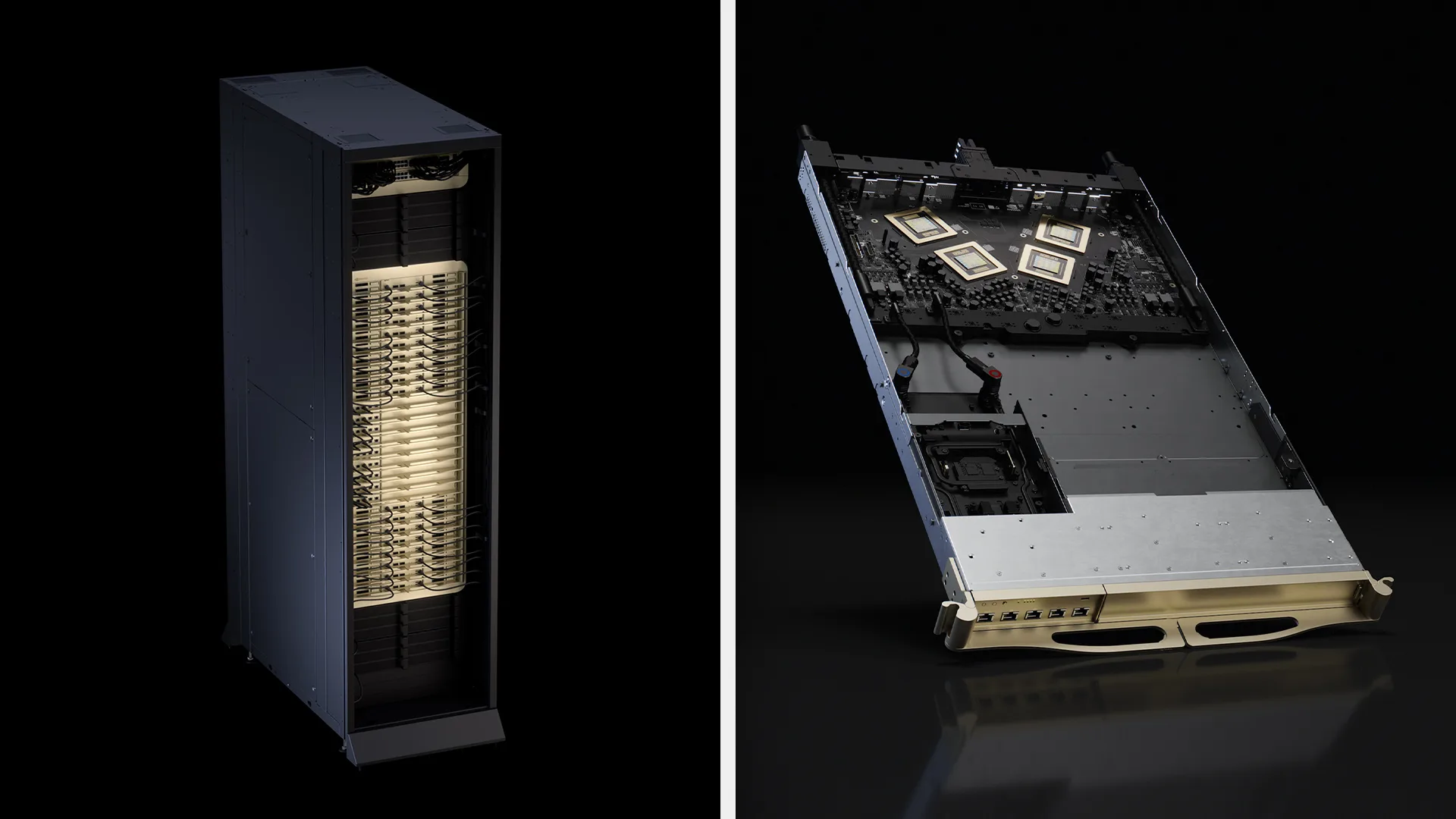
How NVIDIA NVLink 6 Delivers Multi-Layer Resiliency for AI Factories
NVIDIA details NVLink 6's layered resiliency.
Why it mattersNVLink 6's layered fault-recovery stack (silicon-level FEC, autonomous link rebalancing, NMX failover.
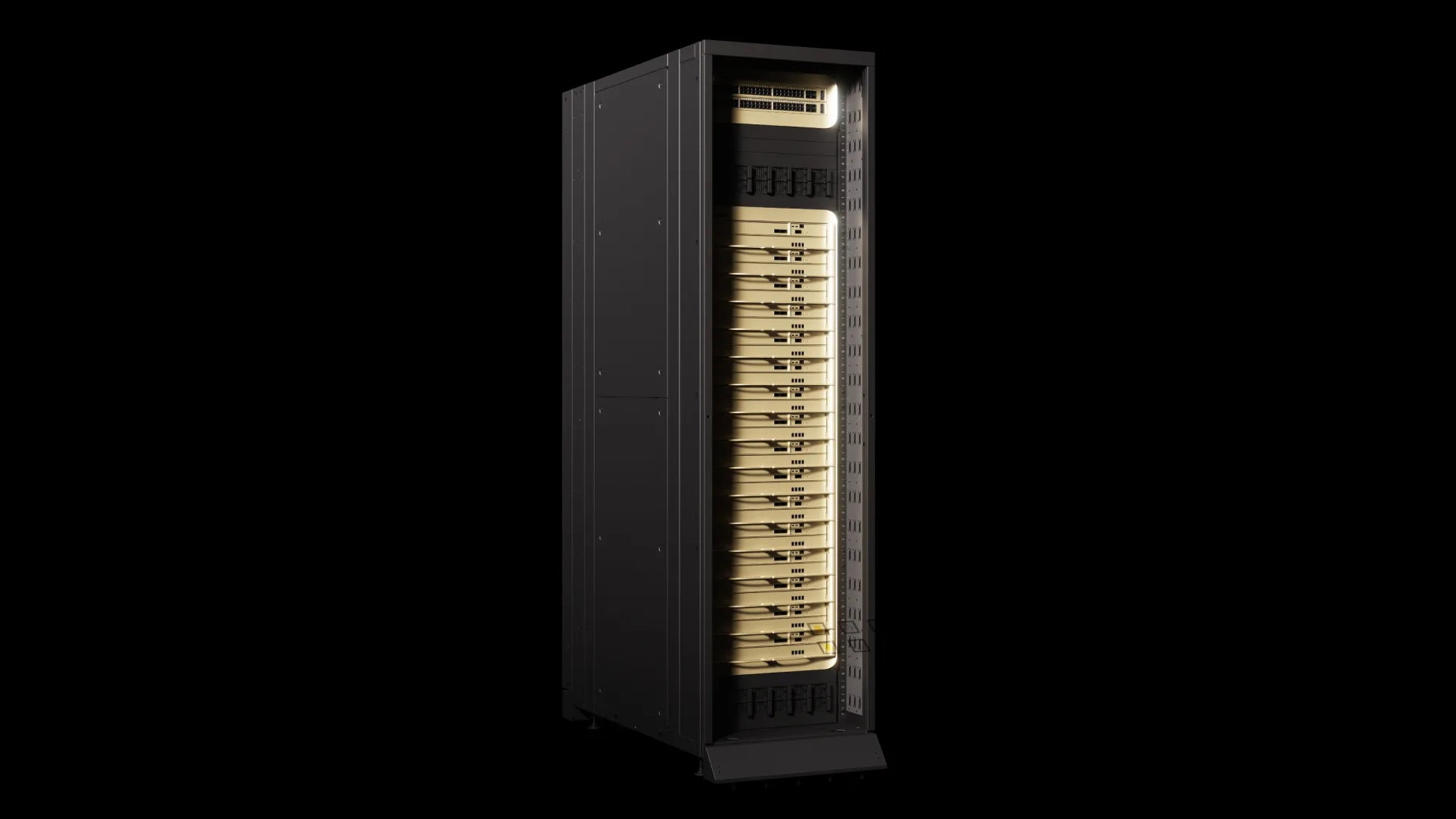
How NVIDIA Groq 3 LPX Deterministic Execution Drives Power-Efficient High-Interactivity Inference on NVIDIA Vera Rubin
NVIDIA and Groq detail how cycle-exact deterministic scheduling across 256 LPU chips enables power-smoothing tricks that cut voltage guardbands, claiming up to 35x more inference throughput per megawatt than GB200 NVL72.
Why it mattersPairing Groq's deterministic execution with Vera Rubin NVL72 claims up to 35x more throughput per megawatt than GB200 for 2T+ parameter models, a concrete efficiency lever for anyone planning large-scale inference capacity.

"My name is... my name is...": A Linguistic Map for Voice Agents — Midam Kim, ServiceNow
ServiceNow's Midam Kim maps voice-agent failures onto a linguistic grid spanning sounds, words, interaction, and mental model.
Why it mattersGives voice-agent builders a structured way to locate failures (recognition, pronunciation, turn-taking, intent-tracking) instead of treating them as unrelated bugs.

Deepgram's new India endpoint runs inference and storage from Hyderabad, letting teams keep audio, transcripts and speech data in-region with the same API and just a base URL swap.
Your Agent Aced the Task. Will It Do It Again?
IBM Research shows that agent benchmark averages mask large run-to-run inconsistency (a 24-point gap between average and all-run success on AppWorld) and introduces a method for measuring and improving that consistency.
Why it mattersShows that headline agent success rates hide large run-to-run variance, a critical reliability concern for production agent deployments, and offers a concrete way to measure and improve consistency beyond the average.

Realtime Voice Agents with Frontier Intelligence — Bohan Li, EliseAI
EliseAI's Bohan Li details three latency tricks for running voice agents on slow but capable models.
Why it mattersShows how to hide LLM latency in phone voice agents with tool-call prefetching, dual-speed transcription, and a synthesis prefix cache that speaks before the full reply is written.
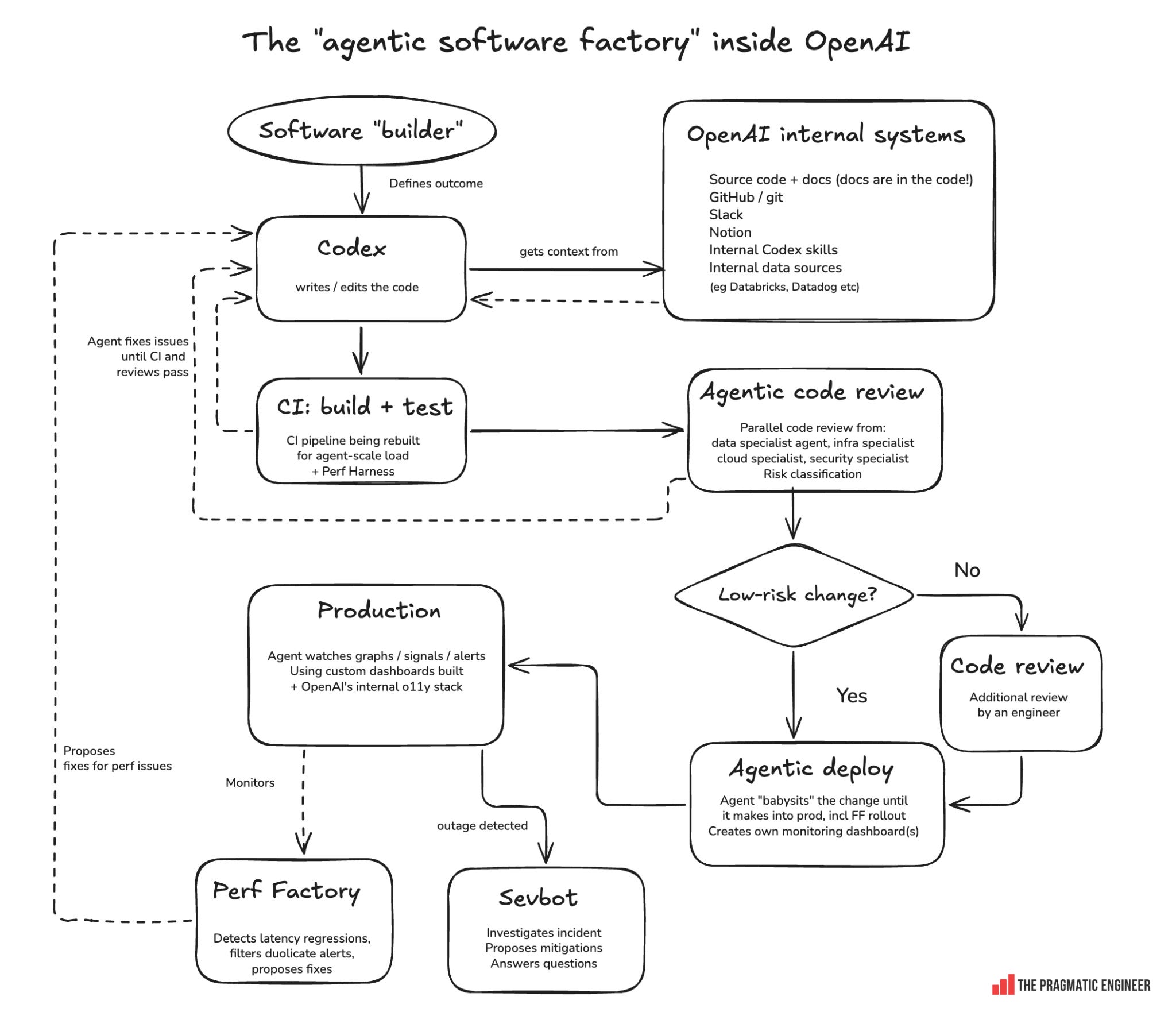
Inside OpenAI’s agentic software factory
Gergely Orosz interviews seven OpenAI engineering leaders on how Codex became the backbone of the company's work.
Why it mattersDetails concrete organizational shifts at a frontier lab.
An index of the vibe-coding frontier. Corrections welcome.