
together ai
Together AI (@togethercompute) is a San Francisco-based AI infrastructure company, not an individual, founded in 2022 by Vipul Ved Prakash (CEO), Ce Zhang, Chris Ré, Tri Dao, and Percy Liang. It operates an "AI Native Cloud" platform for training, fine-tuning, and running generative AI models, and is known for research contributions and advocacy for open-source AI, including datasets like RedPajama. The company has raised over $1 billion in funding from investors including Nvidia and General Catalyst, reaching a multi-billion-dollar valuation, and counts enterprise customers such as Zoom and Salesforce.
 GitHub / togethercomputer
 X / togethercompute
Notable people
People map
Current peopleNotable public-facing people we cover. Grouped by public roles, not reporting lines; this is not a complete staff directory.
Leadership
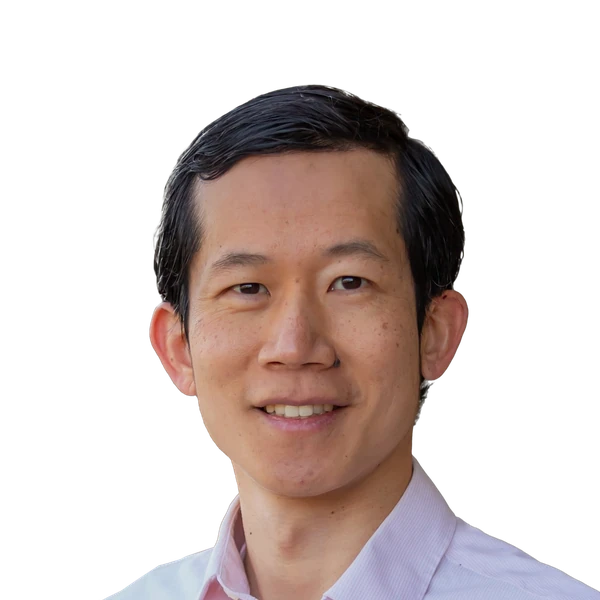
- Percy Liang
Founder
Research
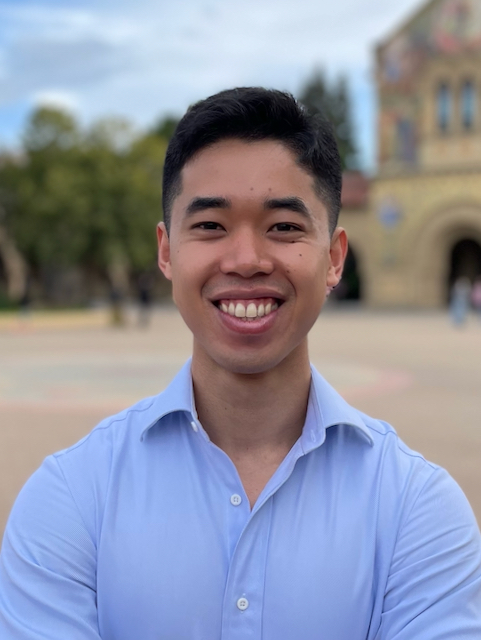
- Simran Arora
SVP of Research
- Tri Dao
Co-founder and Chief Scientist · Jul 2023 – Present

Other public roles
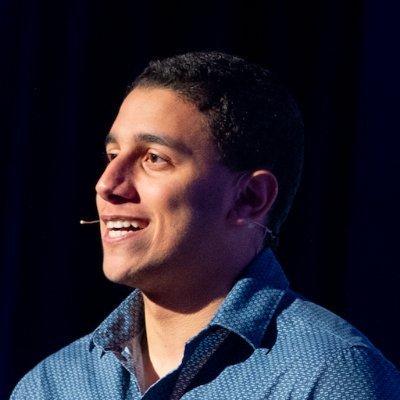
- Hassan El Mghari
Developer Experience lead
Writing, research & talks
Together AI added MiniMax M3.1 Flash to its post-training service for SFT and RL. You write the loop, rewards and environments in Python, and Together runs the trainer, rollout engines and weight sync, with per-GPU-minute billing and multi-LoRA experiments on one reservation.
Together AI lists MiniMax M3.1 Flash on serverless and dedicated endpoints: a 428B MoE with 23B active parameters, 1M context, sparse attention, quantization-aware training and a speculative decoding head, priced at $0.15 and $0.60 per million tokens. Benchmarks are vendor-reported.
Together launches a post-training service covering RL and SFT on open-weight models, with a user-defined training loop, dedicated GPU Model Resources, multi-LoRA sessions, async RL, custom losses and multi-LoRA serving. Launch pricing is $9 per B200 GPU-hour, and there is a one-line Tinker migration
Reflection's first open-weight model, Beam, is a 501B-parameter MoE with 23B active and a 1M-token context under Apache 2.0, built for coding and long-horizon agent work. Together AI serves it. Benchmark results were not provided.
Together AI launches Together Link, which connects your existing coding harness to open models on its platform. An Auto router assigns each session to a cheaper or more capable model, and a dashboard shows spend and savings. Installs in one command; savings claims are unbenchmarked.
Together AI's Link connects Claude Code, Claude Desktop, Codex, OpenCode and Pi to open models hosted on Together via a one-line install. It claims over 50% lower spend and easy reversion to native closed models.
- How to train your own Jev for $17together.ai
Together AI shows how to fine-tune your own Jev-style decision model, releasing together/Tev1-4B-experimental on Qwen3.5 4B and walking through training a classifier for tasks like support-intent detection for about $17.
Together AI details its canary rollout feature for swapping production LLM checkpoints: gated traffic shifts with health checks and metric gates (e.g. p95 latency). A real Qwen2.5→Qwen3.5 rollout caught a 137% latency regression at 10% traffic and reversed automatically.
- Together AI expands fine-tuning service with more models, live metrics, and finer controlstogether.ai
Together AI's fine-tuning platform adds support for new open-weight models (GLM-5.3, Kimi K2.7, Qwen and Gemma variants), live experiment tracking, dataset validation before training, and lower prices on select models.
- Thunderagenttogether.ai
Together AI's ThunderAgent targets inference for agentic workloads in synthetic data generation, claiming roughly 2x faster throughput. It addresses serving multi-step tool-using rollouts at scale rather than single-shot completions.
- Together Rerank Api And Salesforce Llamaranktogether.ai
Together AI launches a Rerank API and exclusive hosted access to Salesforce's LlamaRank model, aimed at improving enterprise search and retrieval pipelines by reordering candidate documents by relevance.
Together AI's kernels team details porting ThunderKittens to NVIDIA's new Vera Rubin NVL72 platform, adding NVFP4 and FP8 GEMM support and explaining how the tensor-core programming model changed from Blackwell's tcgen05 instruction.
Together AI launched public preview of preemptible GPU compute for its Kubernetes clusters, billed sub-hourly at a flat 50% discount versus on-demand, with a 5-minute SIGTERM drain window before nodes are reclaimed.
- The Open Source AI Stacktogether.ai
Together AI maps the practical stack for running open models in agentic coding workflows, breaking it into model, inference, gateway/router, harness, and tools layers, and argues it's nearly identical to what Claude Code users already operate.
Together AI benchmarked GLM-5.3 against its Flash distillation on DeepSWE. The pass@1 gap of 5.6 points narrows to 2.6 by pass@4, because what distillation removed was consistency, not capability — which is exactly what retries buy back, at a 17x lower price per rollout.
GLM-5.3 and GPT-5.6 Sol across all 113 DeepSWE tasks, four trials each. Sol leads pass@1 at 72.7 against 69.0 but costs 2.1x more; GLM-5.3 wins the retries. Running GLM first and escalating to Sol on test failure solves 85.9% at $6.61 per task, cheaper and thirteen points better than Sol alone.
A head-to-head of GLM-5.3 and Claude Fable 5 on the DeepSWE software engineering benchmark. Pass@1 is level at 69.0 against 69.7, GLM-5.3 leads every multi-attempt metric, and it costs roughly a fifth as much per task. Per-task correlation of 0.65 makes the two near-substitutes.
A DeepSWE head-to-head putting DeepSeek V4 Pro 0813 against GPT-5.6 Sol on accuracy, cost per rollout and failure modes, and measuring a cheap-first escalation cascade that beats either model alone.
A DeepSWE comparison of DeepSeek V4 Pro 0813 and Claude Fable 5 that measures a 90x cost gap and an unusually low per-task correlation, the property that makes escalation routing between them worthwhile.
- A/B test models in productiontogether.ai
Together's endpoints can now split live traffic across a control and up to 20 model variants, ramp a winner via blue-green rollout, and revert to 100% control on deletion with no client-side change. The post walks a 95/5 to 80/20 to 50/50 run and argues shadow traffic can't measure quality.
We ran 900 DeepSWE rollouts on DeepSeek-V4 Flash and GPT-5.6 Luna. Luna leads pass@1 by 14 points; DeepSeek delivers 4.8x the solves per dollar.
- Autoscaling Endpoints for LLM Inferencetogether.ai
An article on the pitfalls of autoscaling LLM inference workloads, explaining why GPU utilization is a misleading scaling signal when request queues back up and new replicas take minutes to warm up. It covers choosing better autoscaling metrics, tuning scale-up and scale-down windows, and budgeting for cold-start latency on dedicated inference deployments.
Moonshot's open-weight models, starting with the 2.8T-parameter Kimi K3 MoE, get a day-one US-hosted serving path on Together with zero data retention and fine-tuning on your own data — relevant if data residency has kept Kimi out of your stack.
We ran 904 DeepSWE rollouts on Kimi K3 and GPT-5.6 Sol. Sol leads pass@1; Kimi K3 wins pass@4 at 2.8x the solves per dollar, and routing between them reaches ~85.6%.