Intel
Page 17Quoting Thariq Shihipar
Claude Code now falls back to reading AGENTS.md when a project has no CLAUDE.md, starting in version 2.1.277, implemented as a built-in 'Claude Code mod,' with a customization system for building your own mods coming soon.
Why it mattersRemoves the need to duplicate or rename instruction files across projects that already use the emerging AGENTS.md convention when working with Claude Code.
Benchmarking LLM Inference at Scale with AIPerf
NVIDIA's AIPerf replaces GenAI-Perf with a multiprocess client architecture so the benchmarking tool itself doesn't bottleneck high-concurrency LLM load tests, supporting 15+ endpoint types and configurable, realistic arrival patterns.
Why it mattersGives engineers a way to benchmark LLM inference under production-like bursty traffic without the benchmarking client becoming the limiting factor, with percentile latency and GPU telemetry built in.

Stanford's Context-Sharded Block Parallelism (CSBP) is a distributed training strategy for diffusion LLMs delivering up to 7.59x faster speculative-decoding drafter training and 1.61x faster block-diffusion fine-tuning, with gains scaling with context length.
Why it mattersCSBP speeds up diffusion LLM training tasks by up to 7.59x, with gains that grow with context length, a concrete efficiency gain for teams training diffusion-based language models.

Vals AI's new CUA-Bench tests whether models can control a keyboard and mouse across six real-time games, arguing current agents still lag on continuous, video-driven action compared to text-based tasks.
Why it mattersA new benchmark measuring real-time keyboard/mouse control across games highlights that agents still can't act continuously from video, a concrete capability gap for anyone building computer-use agents.

Cua open-sourced CUA-S1-FORMS, a specialist model that fills out forms in a single pass by selecting from a fixed action set (FILL, CHECK, CLICK, SKIP), with the full MIT-licensed pipeline for synthetic data, training, and evaluation released alongside it.
Why it mattersA reusable open-source recipe for training small task-specific action models for bounded, high-volume computer-use workflows, rather than relying on a general-purpose agent for every repetitive task.
Cua open-sources CUA-S1, a family of small specialist computer-use models
Cua open-sourced CUA-S1, a family of small specialist computer-use models including a ~855K-parameter option-attention classifier and LoRA fine-tunes on Qwen3.5-4B, scoped narrowly to form-oriented UI tasks rather than general-purpose agent use.
Why it mattersCua open-sourced CUA-S1-FORMS and related checkpoints, small specialist models (down to ~706K-855K parameters) purpose-built for form-oriented UI tasks rather than general computer use, a lighter-weight alternative to large multimodal computer-use agents.

WebMCP support now available in mcp-handler
Vercel's mcp-handler now supports WebMCP, the proposed standard for browser-native agent tools.
Why it mattersmcp-handler 2.2.0 lets developers expose their MCP server's tools to in-browser agents with one script tag, proxying calls back as the signed-in user without a separate OAuth flow.
Google's weekly recap: Gemini 3.8 Live and Extended Thinking audio models ship, Dreambeans personalized story feed reaches GA, CC expands into a shared household agent, Google Pics image co-creation goes GA, and DeepMind's AlphaGenome Atlas launches for genomics.
Why it mattersFive concrete Google product moves land at once: new live-dialogue audio models, a household-coordination agent, and a genomics discovery platform, each shipping now rather than teased.

The Overhang
Mollick argues today's models like GPT-6 Astra and Fable 5.1 are already capable of weeks of guided human-equivalent work, pointing to a demo where GPT-6 Astra rebuilt the text adventure Zork as a playable 3D game by inferring visuals and mechanics from prose alone.
Why it mattersMollick argues the practical gap isn't waiting for future models but harnessing current ones, illustrated by having GPT-6 Astra convert the text-only 1977 game Zork into a full 3D action-adventure, including inventing visuals and combat mechanics from prose alone.
US Military had close call after using AI for hallucinated intelligence report
CNN reports a U.S. military unit nearly escalated based on an AI system's hallucinated intelligence about a Chinese ship, an incident surfaced through internal review, according to current and former officials.
Why it mattersA concrete, high-stakes example of an AI hallucination almost triggering real-world military action underscores why verification layers matter anywhere AI output feeds consequential decisions.

Saving another 100TB of RAM with math (and Rust)
Cloudflare details how tuning the consistent-hashing algorithm behind its Pingora load-balancing service cut memory usage enough to reclaim over 100TB of RAM globally, on top of a prior 100TB reduction by the DNS team.
Why it mattersA concrete algorithmic case study in squeezing memory waste out of infrastructure at scale, with lessons applicable to anyone running consistent-hashing based routing or load balancing.
v0 now reads npm credentials from shared environment variables
Vercel's v0 can now install private npm packages using credentials stored as shared environment variables.
Why it mattersRemoves a blocker for using AI app builders like v0 inside companies with private package registries, and keeps credentials out of the model context and sandbox filesystem.

Working Smarter With Runway Unified Pricing
Runway unifies pricing so purchased credits work across both its web app and Runway Dev API, replacing separate credit pools and contracts with one pool.
Why it mattersTeams building on Runway's video/image API no longer need separate contracts for prototyping versus scaling through the API, simplifying budgeting for production AI media pipelines.
OpenAI Developers announced multi-account support across most ChatGPT plugins, letting a single conversation pull context from personal, work, and side-project accounts at once, with no extra work required from plugin developers.
Why it mattersChatGPT plugin integrations can now pull context from a user's multiple connected accounts (personal, work, side projects) in one conversation, without extra developer work to support it.

AssemblyAI shared pricing and performance specs for its Dictation API through Blurt, a push-to-talk demo: Universal-3.5 Pro, 19 languages, sub-second turnaround on short clips, and $0.62/hr.
Why it mattersGives engineers the actual cost and latency numbers needed to decide whether the Dictation API fits a production voice-input feature.

Should you read the code, is RAG dead, and did Skills kill MCP?
GitHub's podcast tackles three live AI-coding debates with real arguments.
Why it mattersGitHub's podcast argues you still must review AI-generated code but calibrate depth to risk, and works through the RAG-vs-fine-tuning and Skills-vs-MCP debates with concrete reasoning instead of slogans.

Runway merged its credit system so purchases work across both the web app and Runway Dev, paired with new bundled offers, cutting the friction of managing separate balances for API and app usage.
Why it mattersUnified credits mean teams building on Runway's API and Runway Dev no longer juggle separate balances, simplifying cost planning for generative video and image workflows.

I vibed a proof of Conway's conjecture
Dan Abramov spent a month using Claude to search for and formally verify in Lean a proof of Conway's decades-old refinement conjecture on omnific integers.
Why it mattersDocuments a concrete, reusable workflow for pairing an LLM with the Lean proof assistant to search for and mechanically verify a real open conjecture, including how the problem was chosen and formalized.
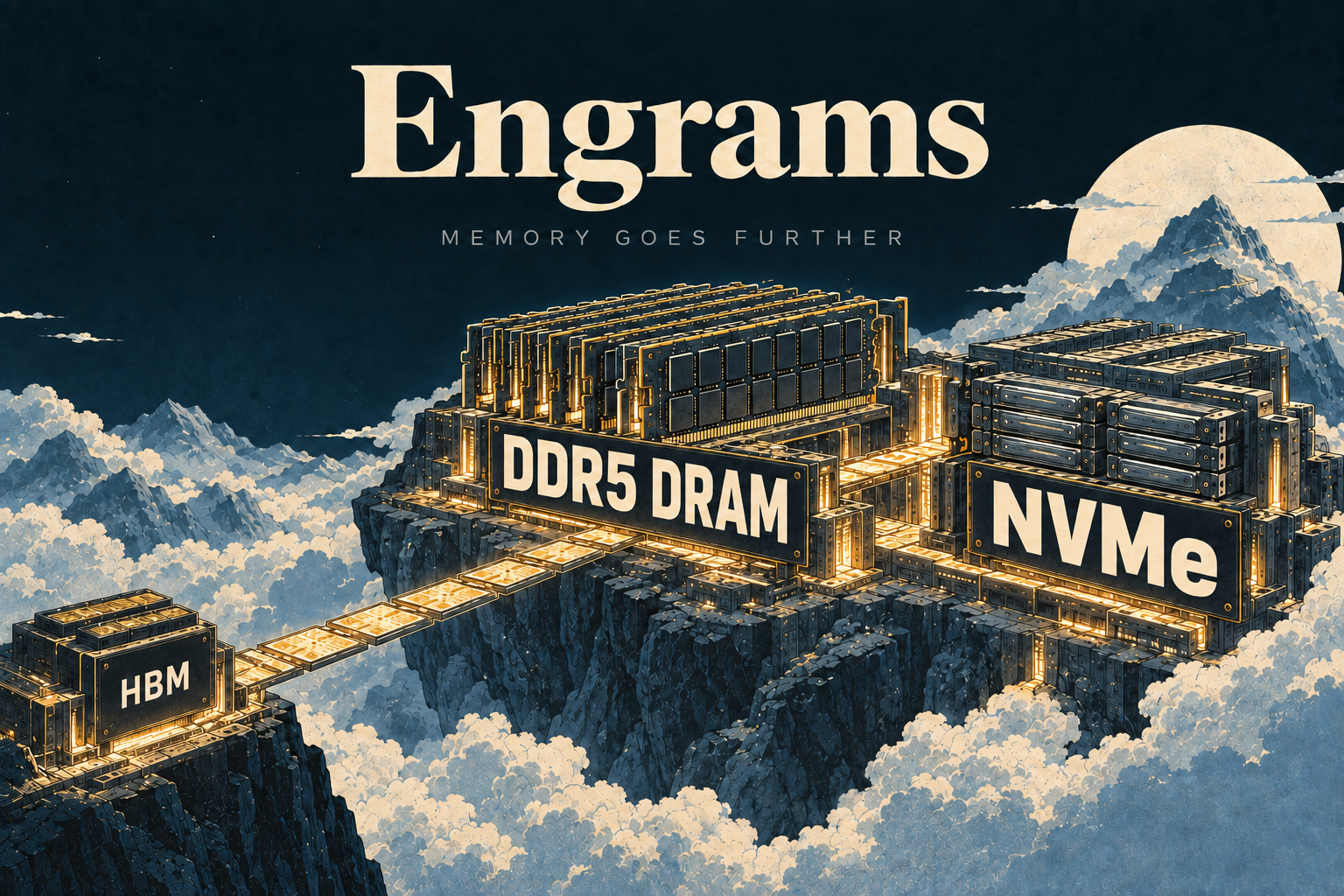
Engrams Embedding Entendre: Codesign for Efficient DRAM/SSD Offloading
SemiAnalysis explains Engram, a model architecture that extends token embeddings with learned multi-token lookups addressable by token ID.
Why it mattersAs HBM supply gets tighter, architecture-level tricks like Engram show one concrete way model designers are offloading memory pressure onto cheaper DRAM/NVMe tiers without sacrificing quality.

Using Jev to generate game levels in real time
A developer builds a runner-game demo that feeds live game state to a fast structured-decision model instead of a chat LLM, generating platformer terrain in real time at sub-400ms latency and near-zero per-request cost.
Why it mattersThis case study shows an alternative to chat-model prompting for real-time game AI: feed game state to a low-latency structured-choice model and get terrain decisions back in roughly 300ms for a fraction of a cent.
MiniMax released v0.4.12 of its Code CLI as open source under MIT, claiming a state-of-the-art pass rate on FrontierHarness Eval and inviting developers to inspect or extend the harness.
Why it mattersMiniMax open-sourced its Code CLI under MIT and reports state-of-the-art results on FrontierHarness Eval, giving engineers another free, modifiable coding-agent harness to inspect or extend.
Bend 2 and the Vibe-Coding Trap
This critique dissects Bend, a language pitched for AI-written proofs.
Why it mattersThis piece shows.
ZCode, the GLM coding agent, silently uploads your Git history
Article URL: https://tokenstead.ai/guides/zcode-silent-git-history-upload Comments URL: https://news.ycombinator.com/item?id=49752422 Points: 212 # Comments: 44
Why it mattersIf you run ZCode, it silently packages your entire git history and uploads it encrypted to Z.ai's cloud using a key only Z.ai holds.

Hacktron's research team publishes HEIF Heist, a months-long audit of libheif that found memory-corruption, info-disclosure, and RCE bugs reachable through OpenAI, Slack, Meta, GitHub Enterprise, Rails, Next.js, and ImageMagick.
Why it mattersBecause libheif is pulled in indirectly through common image-processing libraries and container images, teams may be exposed to these bugs without ever directly depending on libheif themselves.
LFM2.5 VL 3B DSpark released
Liquid AI released DSpark, a speculative-decoding draft model for LFM2.5-VL-3B that delivers up to 2.66x decode speedup on H100 GPUs and over 3x on Apple silicon.
Why it mattersPairing LFM2.5-VL-3B with this small 280M-parameter draft model cuts decode latency substantially on both H100 and Apple silicon, a practical lever for anyone serving vision-language models without touching output quality.
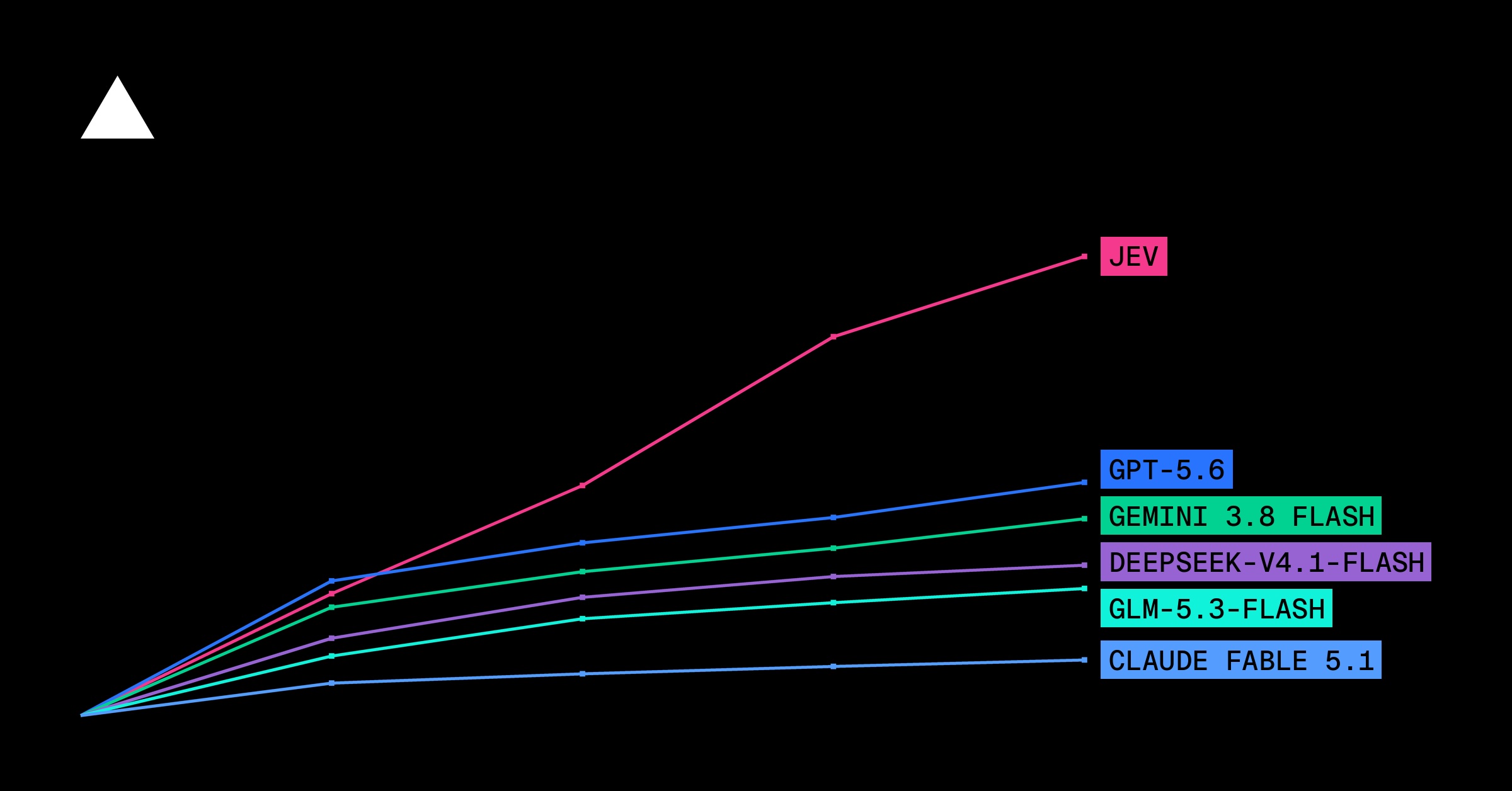
Jev is the fastest-adopted model in AI Gateway history
TypeSafe AI's Jev, a probabilistic decision model that returns typed choices and scores for use in agent tool-routing and guardrails, became the fastest-adopted model in Vercel AI Gateway history within 24 hours.
Why it mattersJev is a decision-specific model that returns typed choices and probabilities instead of prose, aimed at agent tool-routing, workflow control, and guardrail checks.
Inside ZCode: Silently uploading your Git history to the cloud
Article URL: https://blog.ferstar.org/en/posts/zcode-silent-workspace-snapshot-upload/ Comments URL: https://news.ycombinator.com/item?id=49750694 Points: 201 # Comments: 84
Why it mattersA widely used AI coding IDE was found exfiltrating entire private Git repositories including full history, with UI privacy toggles that don't actually stop the upload: a concrete reason to audit what coding tools transmit.

Bonsai 2 27B First Test – Is THIS the BEST Single-GPU AI Model?
A hands-on review puts Bonsai 2 27B through browser-OS, website, C++ game, Blender scene, FPS.
Why it mattersThis hands-on test runs Bonsai 2 27B through website, game, and 3D-scene generation tasks on a single GPU, giving practitioners concrete evidence of what a locally hosted model can handle for coding work.

What Do Current Systematic Generalization Tasks Miss? A Reasoning-Centered Analysis
TranSGrid unifies deductive, inductive and abductive reasoning in one testbed.
Why it mattersShows current benchmarks overstate systematic generalization: reasoning-combined tasks crater model performance even within the training length range, a concrete caution when trusting generalization claims.

Towards a Characterization of Microservice Architectures Generated by Large Language Models
Controlled study of GPT-based and DeepSeek models turning modular monolith descriptions into microservice architectures, measuring granularity, communication density and isolation to reveal systematic structural differences.
Why it mattersGives engineers using LLMs for architecture design concrete metrics on where generated microservice decompositions become inconsistent, useful before trusting a model's design output.

Code-as-Auditor: Executable Compliance Reasoning via Regulation-to-Code
Code-as-Auditor translates regulations into executable checklists and decision trees, then expands each item into factual and counterfactual questions the LLM answers against case evidence.
Why it mattersGrounds LLM compliance reasoning in executable, auditable logic rather than free-text judgment, improving traceability for automated regulatory review.

CodeTransBenchmark: Evaluating LLM-based Code Translation and Repair Across Programming Languages
CodeTransBenchmark evaluates eight LLMs across 12 language pairs on code translation and repair, finding multi-lingual-tuned models like Codestral outperform general-purpose models.
Why it mattersGeneral-purpose LLMs frequently fail on target-language syntax during code translation, so purpose-tuned coding models are the safer default for cross-language migration work.

EviRCA: Decoupling Evidence Extraction from Reasoning for Microservice Root-Cause Analysis
EviRCA decouples deterministic evidence extraction from LLM reasoning in microservice root-cause analysis, converting raw metrics, traces and logs into structured evidence cards before the LLM reasons over them.
Why it mattersAddresses instability and cost of agents exploring raw telemetry directly, offering a more reliable split between deterministic extraction and LLM reasoning for SRE-style diagnostic agents.

Closed-World Resolution Against Tool Hallucination in LLM Agents
Introduces a five-class taxonomy of LLM tool hallucination and a training-free closed-world resolver that must run before any permission gate.
Why it mattersHallucinated tool calls bypass selection and permission gating by construction, so agent security needs a dedicated resolution step before any causal gate, not just better gating logic.

MAGS: Multi-agent Auto-formalization Guarantees Safety for Agentic Outputs
MAGS translates agent-generated code into Dafny to mechanically verify safety properties, repairs violations via verifier feedback, then compiles back to executable code.
Why it mattersOffers a path to formally verified safety guarantees on agent-written code without full manual proof engineering, addressing the review bottleneck as coding agents outpace human audit capacity.

Evaluating Package-Level Scoping Strategies for Repository-Level Code Completion in Pharo
Evaluates three package-aware ranking heuristics for repository-level code completion in Pharo across 219 packages and 35,972 methods, testing whether dependency structure improves ranking without a new learning model.
Why it mattersShows a lightweight, non-ML structural signal (package dependencies) measurably improves completion ranking, applicable to any completion engine currently ignoring repository structure.

AdaRepair-Mem: Adaptive Experience Orchestration for Repository-Level Program Repair
AdaRepair-Mem is an adaptive memory framework for repository-level repair agents.
Why it mattersMore historical repair experience doesn't reliably improve agent success; retrieval quality and coverage matter more than volume, a concrete lesson for memory-augmented repair systems.

Characterizing Web Search by Conversational LLM Agents: From Search Decisions and Strategies to Results and Responses
First cross-platform study of agentic web search across ChatGPT, Claude, Grok and DeepSeek, combining real user logs with controlled API experiments on when and how each platform searches and grounds answers.
Why it mattersSearch behavior varies widely across platforms, and searching more often doesn't reliably improve answer quality, a useful data point for tuning when to enable web search in an agent.

DeltaSelect: Affordable A/B Testing for Coding Agents
DeltaSelect picks a small, budget-capped subset of benchmark tasks whose single-run results reliably track full-benchmark performance, built after finding only 19.5% of DeepSWE tasks correlate well with full-suite scores.
Why it mattersMakes iterative A/B testing of coding-agent changes affordable; a case study cut evaluation cost 58% while raising the calibrated score, useful for teams who can't rerun full benchmarks constantly.

A Closed-Loop Control Architecture for Reliable Constraint Satisfaction in LLM Text Generation
A five-stage closed-loop architecture (generate, evaluate, adjust, archive, analyze) uses deterministic code, not the LLM, to check numeric constraints like word count and reject edits that drop key content.
Why it mattersOffers a pattern for reliably hitting numeric output constraints from LLMs by keeping the accept/reject decision in deterministic code, tested across 240 closed-loop runs on four commercial models.

What Users Think of Generative AI: A Cross-Platform NLP Analysis of Trust and Friction in App Store Reviews
Analysis of 17,012 app store reviews across ChatGPT, Gemini, Copilot, Claude, DeepSeek and Perplexity finds negative sentiment concentrates in advertising, authentication, server reliability and subscription pricing.
Why it mattersPinpoints the specific friction points, like auth and reliability, driving complaints across major GenAI apps, giving builders of similar products a concrete priority list.

Do AI Agents Understand Computer Architecture?
AutoTuring gives an agent the same 15-dimensional accelerator space twice.
Why it mattersShows giving an agent semantic context, not just more search budget, measurably improves technical design outcomes, a transferable lesson for scaffolding agents in specialized domains.
Researchers chained a libheif heap overflow from a HEIF upload into RCE, then an OpenAI SSO flaw, to take over employee ChatGPT and Codex accounts and push a proof-of-concept PR into OpenAI's internal monorepo.
Why it mattersIt demonstrates a full attack chain, from an image-upload overflow to internal source-code access at a frontier lab, showing how fast AI-assisted offensive research can compress what once took far longer.
MiniMax details three approaches to speeding up video-model attention (denser compute, sparser compute, smarter mixing) and highlights VC-Attention, a training-free low-bit method built with Nunchaku AI that beats SageAttention2 on B200 hardware for MiniMax-H3.
Why it mattersTraining-free low-bit attention acceleration cuts inference cost for video generation models without retraining, a technique engineers running video models can adopt directly.
Alibaba's Qwen team ships an omni-modal model pairing native audio-video understanding with agentic tool use, cutting video input costs ~89% versus the prior Omni model and adding a 1M-token context with agentic video search.
Why it mattersQwen3.8-Omni-Flash lets agents jointly parse audio and video and drive tool calls across long workflows, with a steep cost cut making long-form video agents commercially viable.
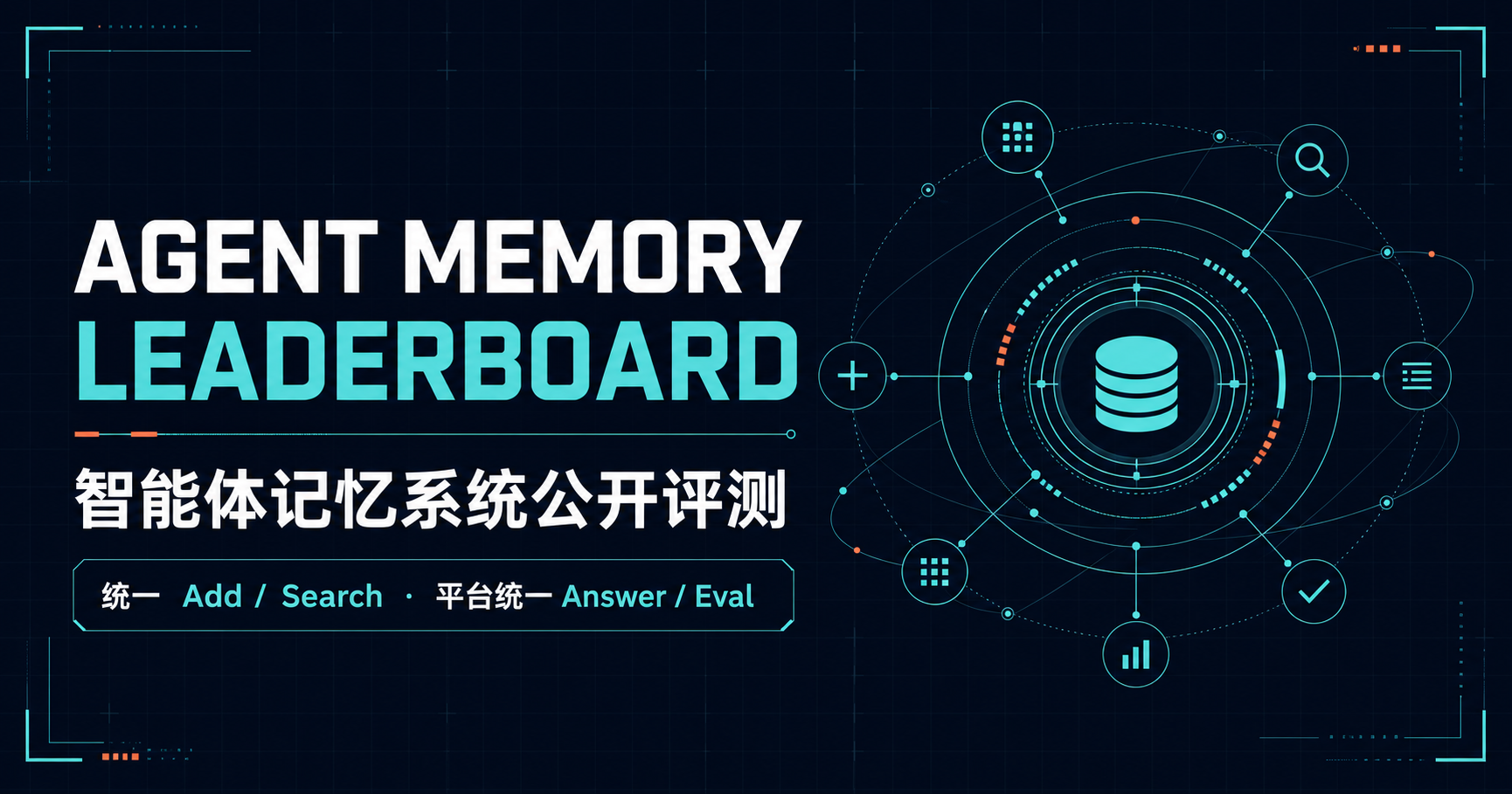
An open Add/Search evaluation framework for agent memory
A new open benchmark evaluates agent memory systems through a shared Add/Search API contract across textual, multimodal.
Why it mattersIt gives a standardized Add/Search evaluation contract for comparing agent memory systems (textual, multimodal, coding) instead of relying on each vendor's own benchmark and answer model.

Hacking OpenAI
Researchers chained a libheif heap overflow reachable via OpenAI's help forum with an SSO flaw to hijack employee ChatGPT/Codex accounts, proving internal repo access with a harmless PR before responsible disclosure and a $6,500 bounty.
Why it mattersDocuments a real exploit chain (image-decoder bug plus SSO flaw) that compromised OpenAI's internal tooling access via ChatGPT/Codex connectors, a concrete lesson in connector-account attack surface.

A directory of 164 Asian AI companies, ranked by disclosed scale
This directory ranks 164 Asian AI companies by disclosed scale across supply-chain layers (equipment, foundry, hardware, power, cloud, models).
Why it mattersIt maps the AI compute supply chain by layer instead of by country, showing the highest-ranked disclosed-scale players sit in memory, foundry.

Factory Private
Why it mattersEnterprises with strict data-residency or air-gap requirements can now run Factory's autonomous coding agents entirely inside their own VPC or on-prem infrastructure, removing a real blocker to adopting agentic coding tools at scale.
Cactus Needle 3: 8-29MB automation models can match DeepSeek V4 Flash
Cactus's Needle 3 ships 25-121M parameter, 2-bit tool-calling models as 8-29MB binaries, using a Monarch Hadamard MLP to cut FFN cost, and beats LFM2.5, Qwen3.5.
Why it mattersNeedle 3 packs tool-calling and JSON structured output into 8-29MB binaries that run at thousands of tokens/sec on a Raspberry Pi 5, beating larger on-device models like Apple's on a mobile-action benchmark, a real option for edge agent automation.
An index of the vibe-coding frontier. Corrections welcome.