Intel
Page 47
Guardians of the State: An Air-Gapped AI Fortress for Consumer Data — Rachna Srivastava, DFPI
California's DFPI runs fraud analysis behind a fiber optic cable cut in half — receiver inside, no transmitter out.
Why it mattersMost AI data problems are data engineering problems in disguise.

The Half Life of Agent Infrastructure — Ben Kus, Box
Ben Kus opens by retracting the graph-based agent advice he gave from the same stage a year earlier, then argues agent infrastructure has a half life measured in months.
Why it mattersIf agent infrastructure decays in months, 'pick a stack and go deep' is the wrong default: build swappable abstractions, switch only when eval sets justify it, and review AI choices on a fixed clock — Box uses six months.

[AINews] OpenAI shuts off Cursor
OpenAI is cutting Cursor off from its models after the SpaceX acquisition closed, citing contract history with Musk companies.
Why it mattersOpenAI is ending Cursor's access to its models, so GPT-based workflows inside Cursor need a migration plan. Cursor pegs OpenAI at 5% of its traffic and is leaning on Grok 4.6 and Claude instead.

Ant and the SGLang community ran a full DeepSeek-V4-Pro serving project through Infer-forge, an agentic harness combining Harness, Loop and Graph. It split the work into 38 verified pieces, held a 28-hour median task lifetime traceable, lifted peak concurrent tasks from 2 to 9, and caught silent ker
Why it mattersLong-horizon agent runs usually fail on traceability and silent errors. Infer-forge reports 28-hour median task lifetimes kept traceable across 38 verified subtasks, with the harness itself catching silent kernel corruption.

Hy4 preview becomes selectable in Cline, with 770B parameters, 49B active, a 1M-token context and an Apache-2.0 license. Cline reports it leading SWE-bench Pro and calls it Tencent's largest measured generational jump; setup is npm install, /model, select.
Why it mattersAn Apache-2.0 model reported to lead SWE-bench Pro, with 49B active parameters and a 1M-token context, is now three commands away inside a coding agent, making it a real open-weights option for agentic coding work.
Tencent's newest flagship preview becomes selectable in OpenCode Go: 770B total parameters with 49B active per token and a 1M-token context window, positioned specifically for coding agents rather than chat.
Why it mattersA 770B open-weights model with 49B active parameters and a 1M-token context is now selectable inside a coding agent, giving an alternative to closed frontier models for long-context agent work.

OpenAI is ending its partnership with Cursor and cutting off model access on November 12, citing trust. Own-API-key usage and OpenAI's IDE extensions remain supported paths, and the company says it will keep working with other harnesses.
Why it mattersGPT models stop being served through Cursor on November 12; teams relying on that path must switch to their own OpenAI API key or OpenAI's IDE extensions.

The Perplexity Search API takes the top three positions on the Artificial Analysis Search Index across its low, medium and high context settings, with the medium tier scoring five points above prior leaders at about $0.091 per task.
Why it mattersRetrieval depth is a budget, not a default: the medium context setting of the Perplexity Search API tops the Artificial Analysis Search Index at roughly $0.091 per task, ahead of previous leaders on quality and cost.

This week's Claude Code shipping list: the CLI stops blocking on sandbox and MCP startup, the Linux x64 download drops ~4.5x to roughly 75 MB, /cost gains a prompt-cache line, /usage attributes tokens per /loop run, /permissions gets an editable Auto mode tab, and dropped remote sessions reconnect.
Why it mattersClaude Code now starts without waiting on sandbox and MCP servers, ships a ~75 MB Linux x64 build, breaks /loop token spend down per run in /usage, and exposes auto-mode rules in /permissions instead of settings.json. Run `claude update`.
Just a rumour of a bug is enough to find a security exploit these days
An OCaml maintainer saw traversal probes within ten minutes of a patch discussion going public.
Why it mattersThe gap between a public hint of a bug and a working exploit is now minutes, because coding agents close it. Open source embargo and release timing were designed for a window that no longer exists.
The Second Half
Shunyu Yao's argument for an inflection point: RL finally generalizes, so one recipe handles software engineering, math olympiad problems and computer use alike.
Why it mattersIf evaluation rather than training is now the bottleneck, leverage shifts to choosing the right tasks and building benchmarks that reflect real utility — closer to product judgment than to research.

OpenAI shipped appshots: a keyboard shortcut that hands ChatGPT Work and Codex the full context of whatever application is in front of you — a Slack thread, a form, an API reference, a dashboard — so the agent can read and act on it directly.
Why it mattersCodex and ChatGPT Work can now take the app you're looking at as context via a keyboard shortcut, so work sitting outside the terminal reaches an agent without copy-paste or a connector per application.

Hunyuan Hy4 enters preview with global access through OpenRouter and Tencent Cloud TokenHub alongside the vendor's own WorkBuddy and CodeBuddy products. Coding, office work, game development and scientific research are the named target workloads; comparative benchmarks are not disclosed.
Why it mattersHy4 preview is callable today through OpenRouter and Tencent Cloud TokenHub, so putting it head-to-head with your current coding model is an endpoint swap rather than a new vendor relationship.

Artificial Analysis benchmarked Perplexity's Search API at three context sizes inside a fixed harness. Medium scores 80 on its Search Index against 75 for Parallel and Brave, with the lowest inference cost per task ($0.028–$0.034) and ~$0.091 total. Quality plateaus between medium and high while sea
Why it mattersSearch is a swappable dependency in an agent stack, and this gives comparable quality, latency and per-task cost across providers — including the finding that richer search context cuts total cost by reducing the number of searches.

AI-Native Organisations Run on Skills: How to Structure and Scale Them — Imad Touil, QuantumBlack
A QuantumBlack lead argues skills, not hooks or MCP servers, are where organizational know-how ends up living in agent workflows.
Why it mattersPulling a public skill means executing someone else's scripts, and a skill that passed on one model can quietly rot on the next — both argue for a catalog, versions and named owners before an organization scales agent workflows.

A notebook wiring Mercury to ElevenLabs for a support voice agent: live database tool calls plus streaming speech in one walkthrough. Useful as a reference for keeping response latency inside the window where voice interaction still feels natural.
Why it mattersA concrete pattern for voice agents: tool calls against a live database with streaming speech, in one notebook, on a model fast enough to stay inside conversational latency.

Your Code Has Bugs. Lean4 Has Proofs: Formal Verification for Engineers — Varun Pant, AWS
An AWS engineer on formal verification as the check that scales to agent throughput.
Why it mattersNeither tests, model review, nor human review can certify agent output for every input. This is a working alternative in production: humans write and validate the spec, a proof kernel does the checking.

Cua Cloud Fleets now offers a managed Omarchy (Arch Linux + Hyprland) cloud desktop, booted as a full KubeVirt VM rather than a themed container, controllable via the Cua Sandbox SDK or Cua Driver MCP.
Why it mattersGives agent builders a real Linux/Hyprland desktop environment on demand for Codex, Claude Code, Hermes, or OpenClaw workflows, rather than approximating one in a container.

How do you diffuse AI into the real world? — Varun Shenoy, Long Lake
Long Lake buys the services business rather than selling it software, across 35 companies and a $6.3B take-private, so a failing agent has no customer to blame.
Why it mattersTasks that never appear on the internet still have checkable outcomes, so eval design rather than model choice is the binding constraint — and the async agent UX engineers take for granted has no equivalent in other work.
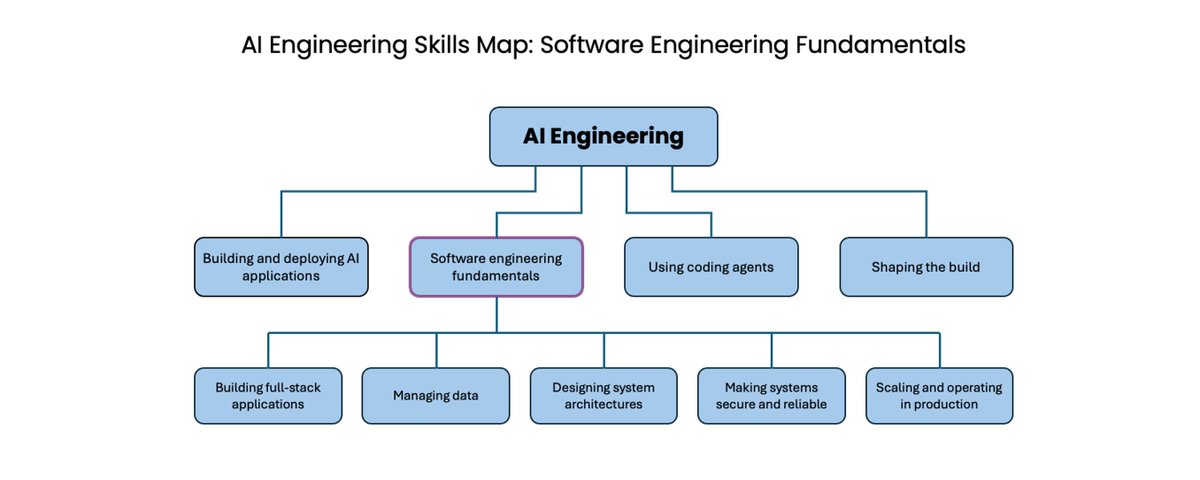
What software fundamentals still buy you when the agent writes the code
Ng's skills map on the engineering half.
Why it mattersVibe coding without fundamentals means the agent silently picks your latency, consistency and cost tradeoffs. This names where human context still has to steer the decision.

Anthropic Fellows gave Claude 48 hours and one GPU to research, train and test alignment methods on small models across 10 failure modes like deception and sycophancy, with capabilities held constant. Gains held on held-out benchmarks and models 4.7x larger, and Sonnet 5 post-trained an early Opus 4
Why it mattersAutomated alignment work transfers to unseen benchmarks and larger models — but only for failures someone has a measure for, which puts the whole burden on eval design. The research setup is being released to build on.

Deploy an Open Model from Checkpoint to Inference in Two Commands with NVIDIA TensorRT Model Connect
NVIDIA released TensorRT Model Connect, reference implementations that turn a Hugging Face checkpoint into a deployment bundle with a Python CLI, then load and run it from C++ with no Python at inference time.
Why it mattersOpen-model inference inside native C++ applications without a Python runtime, from checkpoint to serving in two commands — relevant wherever a Python dependency in the serving path is unacceptable.

SemiAnalysis puts GB300 NVL72 at 7x the performance per dollar of H200 for long-context agentic inference, crediting disaggregated prefill and wide expert parallelism that the NVL72 copper backplane makes possible — serving architecture rather than silicon doing the work.
Why it mattersIf your cost model for long-context agents assumes H200-class economics, the claimed gain now comes from rack-scale interconnect and serving topology, not from the chip.

How to Get Your Org to Adopt Coding Agents (Without Shipping Garbage) — Eyal Blum, Figma
Figma's slowest agent adopters are its best engineers — the ones holding the codebase together with undocumented context, who therefore see every failure mode first.
Why it mattersA usable adoption sequence: build verification before running a persuasion campaign, and mark the human-written line at the top of an AI-generated PR description so reviewers know where to spend attention.

Copilot's recent shipping, in one place: agentic work from Slack and Teams by mentioning @GitHub, a Customize tab unifying MCP servers, plugins and skills, GA for Gemini 3.7 Flash, MAI-Code-1.1-Flash and Kimi K3, a multi-session sidebar in Copilot CLI, and on-device multilingual dictation in VS Code
Why it mattersNew model options inside Copilot change how you route coding work, the CLI Sessions sidebar makes parallel agent runs practical, and Slack/Teams handoffs move agentic tasks into the channels teams already use.

From AI-Assisted to AI-Native: Building a Frontier Development Team — Clare Liguori, AWS
Amazon watched 50 ordinary teams for most of a year. Same assistant, wildly split outcomes: under 3x for half, a 4.5x median for the rest.
Why it mattersEvidence that agent gains come from restructuring how a team works — pruned written context, agents fed rather than babysat, fast deterministic local feedback — not from adopting a better assistant.

An open benchmark for conversational timing: does a voice system know when a turn actually ended, and can it tell an agreeing "mm-hmm" from an interruption. It ships with a public leaderboard, an interactive conversation viewer, and self-serve scoring on the dev set.
Why it mattersTurnBench gives voice agent builders a shared way to score endpointing and backchannel handling, with a public leaderboard and self-serve scoring on the dev set.
MAPS: Netflix’s Multimodal Asset Personalization at Scale
Netflix's asset recommenders used to treat every image and video preview as an opaque ID, forcing exploration and popularity fallbacks at launch.
Why it mattersA production answer to cold start: represent items by multimodal content embeddings instead of IDs, so member taste transfers to assets with zero interaction history from day one.

How to avoid disaster when vibe-coding a billing engine — Andrew Garvin, Stripe
One sentence produces a working metered billing sandbox with credit pools, auto-recharge and overage — the exact areas where hand-rolled billing breaks.
Why it mattersA billing vendor's own limit line: let agents accelerate you into a test environment, not into production money. Plus the practical guardrails — portable skills files and errors verbose enough for an agent to correct itself.
The Claude Code desktop app now supports /resume, which lists any session started from the CLI and picks it up in the app with the full conversation and context carried over. Terminal and desktop share one session history.
Why it mattersStart a run in the terminal and finish it in the desktop app with conversation and context intact, removing the main friction in moving between Claude Code's two interfaces.

Productionizing LLM Gateways: Architecture, Tradeoffs and Hard Lessons — Kanish Manuja, Twilio
An LLM gateway is a standing fight between availability, latency, guardrails and cost, and degradation forces you to surrender one.
Why it mattersMissing timeouts are his top cause of silent LLM outages, and gateway-wide latency metrics hide reasoning models entirely. Streaming also trades away the fallback you built, precisely when you need it.
GLM-5.3 goes open weight, with every gain coming from post-training
GLM-5.3 is downloadable as open weights in FP8, with serving recipes for vLLM, SGLang, Docker Model Runner, and quantized llama.cpp builds.
Why it mattersZ.ai's strongest coding model can now be self hosted. It reuses the GLM-5.2 base, so the coding and long-horizon gains come from post-training rather than a new pre-train.

AI Evals for Cross-Functional Teams — Nachiket Paranjape & Swaroop Chitlur Haridas, DoorDash
DoorDash's eval annotators are operations and strategy staff who build their own tools against the platform's APIs.
Why it mattersA working division of labor for evals beyond engineering, and the reason it scales: ship stable eval APIs instead of trying to anticipate every annotation UI.

OpenRouter measured what a heavy discount did to GPT-5.6 demand: Luna volume up 13.8x, Terra 5.6x, Sol 1.1x. Some traffic came from older OpenAI models, but most was net new usage plus share taken from competitors, and daily volume stayed higher once the discount ended.
Why it mattersInference demand is steeply price elastic and the usage sticks: a temporary cut moved Luna volume 13.8x and left daily averages higher after prices returned, which matters for anyone forecasting token spend or capacity.

Building uReview, Uber’s Multi-Agent Code Review Engine — Will Bond & Ameya Ketkar, Uber
Uber built its own multi-agent reviewer for six monorepos on Phabricator, holding agents to the same rules as human reviewers.
Why it mattersThe metrics that made an AI reviewer trustworthy: reply sentiment, whether a comment actually got addressed, and the agent's trajectory — because a model never signals that its review is wrong.

Google DeepMind is rolling out Gemini Omni 1.1 Flash, positioned for production video work: tighter control over generated shots, faster iteration loops, and more polished output. Available to try through Flow and Google's other video surfaces.
Why it mattersVideo generation picks up a Flash-tier model tuned for control and fast iteration, which changes the cost and turnaround of generated-shot workflows for anyone wiring Google's video models into a product.

Building the Engine While Flying the Plane: Launching the Figma MCP Server — Jesse Lumarie, Figma
Figma's first MCP server started as one day a week and shipped in three months, mid-spec-change.
Why it mattersConcrete choices for handing a complex app to a model: pick the representation models have seen most, keep images out of context, and reference real components rather than generating markup.
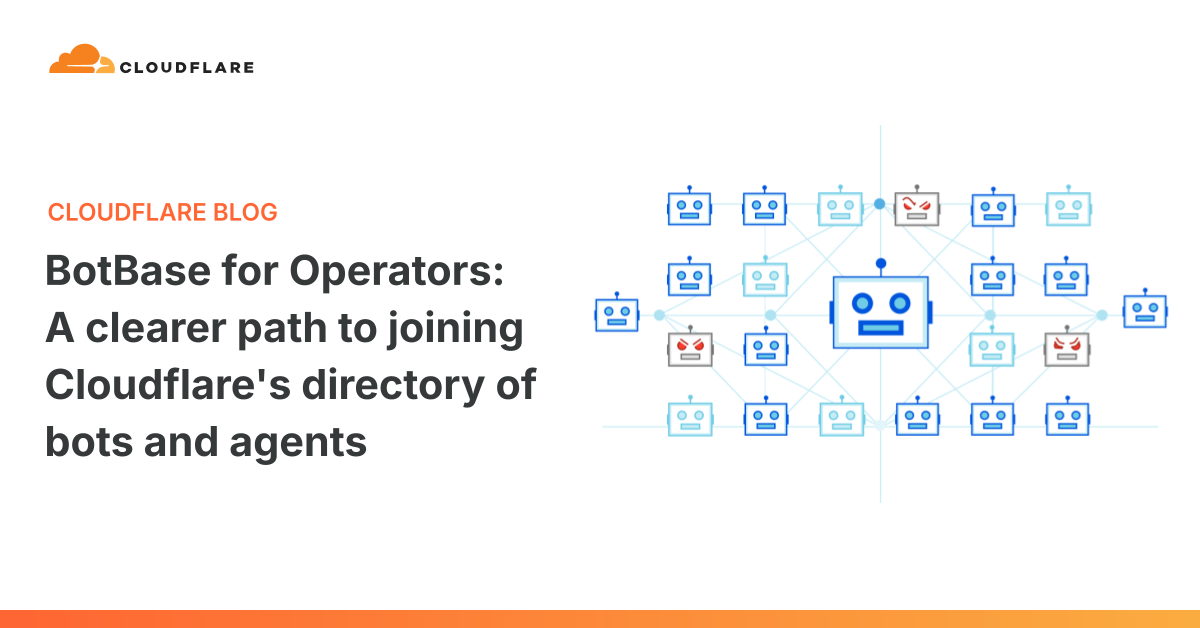
Cloudflare opens a dashboard for bot and agent operators to get verified
Cloudflare's bot and agent directory now has an operator-facing dashboard.
Why it mattersIf you run a crawler or agent that hits Cloudflare-fronted sites, this is the path to declaring your bot's behavior and getting into the verified directory rather than being caught by blanket bot blocking.

BotBase for Operators: A clearer path to joining Cloudflare's directory of bots and agents
Cloudflare opens the operator side of BotBase.
Why it mattersIf you operate a crawler or a web-fetching agent, Cloudflare now exposes submission status, rejection reasons, and updates for your BotBase entry.

Hacktron AI is flagging a live, actively circulating vulnerability in Astro servers below version 7.2.8. No public PoC yet, but Astro operators should patch now.
Why it mattersHacktron is flagging a live, unpatched vulnerability in Astro servers below version 7.2.8; teams running Astro should upgrade immediately even without a public writeup.
Tencent Releases And Open Sources Tencent Hy4 Preview
An open-weights MoE at 770B total / 49B active with a 1M-token window, aimed squarely at production work: long-horizon coding, document and spreadsheet workflows, game prototypes.
Why it mattersAn open-weights 770B/49B-active model with a 1M-token context, priced at ¥6/M input and ¥18/M output and callable today via OpenRouter and Tencent Cloud TokenHub. It is a new long-context option for coding and document agents.
Hy4 preview lands as an open-weights model at 770B total parameters with a context window past one million tokens, reachable immediately via OpenRouter and Tencent Cloud TokenHub as well as Tencent's own WorkBuddy and CodeBuddy assistants.
Why it mattersAn open-weights 770B model with a million-token context window is now callable through OpenRouter and Tencent Cloud, widening the set of long-context options you can self-host or route to without a proprietary vendor.
Tencent Hy3 Now Available Globally Extending Practical Ai Across Products Workflows And Cloud Services
Hy3 goes international.
Why it mattersHy3 is now available outside China under Apache 2.0, with OpenRouter pricing from $0.1288/M input and $0.5336/M output. It is a cheap 256K-context option for agent workloads, already wired into Cline, Kilo, and Cherry Studio.

Alibaba's Qwen3.8-Flash is now available as a model option in OpenCode Go: 125B total parameters with 6B active, a 1M-token context window, and multimodal input. Sparse activation at that size is the pitch — long-context agent runs at small-model inference cost.
Why it mattersA 125B-total / 6B-active model with a 1M-token window and multimodal input is now selectable inside OpenCode Go, giving coding-agent users a cheap long-context option without changing tooling.

Minimax Music 3 0 Next Generation Open Weights Production Ready Versatile Music Model
MiniMax releases Music 3.0 with open weights: full-song generation up to five minutes from a concept and optional lyrics.
Why it mattersAn open-weights model that generates a complete five-minute song with vocals in one pass, and documents the hierarchical RVQ plus global/local LM design that makes long-horizon audio structure hold together.
An open-weight 770B MoE with 49B active parameters and a 1M-token window, shipped alongside mixed-bit GGUFs that compress 1.5TB to roughly 200GiB by letting calibration data pick each layer's bit-width, reaching 1.31-bit in places and 2.06-bit elsewhere.
Why it mattersAn open-weight 770B/49B-active MoE with a 1M context, the MIX-STQ1_0 GGUF fits in roughly 200GiB with SWE-Bench multi falling only from 82.9 to 81.3, putting frontier-scale weights on hardware you can actually rent.
Our decision on Cursor following its acquisition by SpaceX
OpenAI is terminating the arrangement that gives Cursor direct access to its models, following Cursor's acquisition by SpaceX.
Why it mattersDevelopers using OpenAI models inside Cursor lose that direct access when the contract winds down, forcing a switch to another model provider in the editor or another editor entirely.
Solar Pro 4
Upstage ships Solar Pro 4, aimed at multi-step work rather than single answers.
Why it mattersA new agentic model with a 512K window and published terminal-task and long-document scores, trained to abstain when evidence is missing. It is a concrete alternative for long-running tool-use work.

Recipes for Steering and Scaling LLMs via Sampling
A sampling framework for steering autoregressive LLMs toward powered, product or tilted versions of their own distribution.
Why it mattersA principled alternative to Best-of-N for raising output quality at inference time — steer toward a reshaped model distribution with no reward model or external supervision, and better scaling behavior than MCMC baselines.

Can a Model Catch Its Own Hallucinations for Free?: Label-Free Doubt Signals Hold Their Own Against a Labelled Dataset for Abstention
Can a model learn to say 'I'm not sure' without labels?
Why it mattersAbstention tuning may not require a labelled right/wrong dataset — a model's own token confidence is a free supervision signal that held its own against labelled baselines at matched coverage on short-form factual QA.
An index of the vibe-coding frontier. Corrections welcome.