Intel
Page 106Generalizing an LLM from 8k to 1M Context using Qwen-Agent
Qwen builds an agent from 8k-context Qwen2 models that understands million-token documents, beating both RAG and native long-context models, then uses it to generate training data for new long-context Qwen models.
Why it mattersShows how to make a small-context model comprehend million-token documents by building a chunking-and-reasoning agent rather than relying on RAG or expensive long-context models.

Netflix PRS 2024 - Applying LLMs to Recommendation Experiences
Challenges and lessons from deploying LLM experiences: evals, scalability, guardrails.
Why it mattersA real-world postmortem from Netflix on shipping LLMs into recommendation experiences at scale, with practical guidance on building evals, handling scalability, and designing guardrails that most tutorials skip.
Prompting Fundamentals and How to Apply them Effectively
Structured input/output, prefilling, n-shots prompting, chain-of-thought, reducing hallucinations, etc.
Why it mattersThe prompting techniques that survive contact with production: structured I/O, prefilling, n-shot selection and chain-of-thought, with when-to-use guidance.

What We've Learned From A Year of Building with LLMs
From the tactical nuts & bolts to the operational day-to-day to the long-term business strategy.
Why it mattersA dense, practitioner-written distillation of what actually works when shipping LLM apps — covering prompting patterns, RAG, evaluation strategy, and the operational/organizational realities most tutorials skip.

Picture This: Open Source AI for Image Description
A blind Fly engineer builds image description on open-source vision models, using everyday accessibility problems — find the coffee cup, find the light switch.
Why it mattersA worked example of assembling open-source vision-language models into an accessibility tool, showing what self-hosted image description can do versus commercial apps like Be My AI or Seeing AI.

Voyage AI's instruction-tuned embedding model took the top MTEB position with a 1024-dimension output, four times smaller than any other non-Voyage model in the top five, and a 16K context window, double OpenAI's v3 large.
Why it mattersSmaller vectors at comparable retrieval accuracy cut vector database cost directly, and 16K context lets you embed longer chunks without splitting them.
Vibe Eval
Vibe-Eval opens 269 expert-written image-text prompts with ground-truth answers, built hard enough that frontier models miss half the hard split.
Why it mattersAn open, deliberately hard multimodal eval with ground-truth responses rather than multiple choice, plus a documented finding that hard prompts increase human rater disagreement and complicate partial credit.
Musings On Building A Generative Ai Product
LinkedIn's engineering account of shipping a generative AI feature.
Why it mattersA candid build log for retrieval-grounded agent products, including how queries get routed to specialist agents and which parts of quality proved hardest to reach.
Reka Core Our Frontier Class Multimodal Language Model
Reka's flagship multimodal model, trained from scratch, lands with 128K context and native image, video and audio understanding.
Why it mattersA frontier-class multimodal model with 128K context and image, video, and audio input ships via API, on-prem, or on-device, offering a rare deployment-flexible alternative when data cannot leave your infrastructure.

Debugging AI With Adversarial Validation
Adversarial validation as a simple way to detect drift.
Why it mattersA cheap, infrastructure-free way to catch the silent killer of eval validity — your eval set no longer matching what production actually sends your model.

Diffusion Models for Video Generation
Diffusion models moved from image synthesis to video, a strictly harder problem because temporal consistency across frames demands world knowledge a single image never needed.
Why it mattersA structured survey of how diffusion models extend from image to video generation, unpacking the temporal-consistency and data-scarcity problems that define the current research frontier.

Task-Specific LLM Evals that Do & Don't Work
Evals for classification, summarization, translation, copyright regurgitation, and toxicity.
Why it mattersIt breaks down which eval approaches actually work for specific tasks like summarization, translation, and toxicity detection.
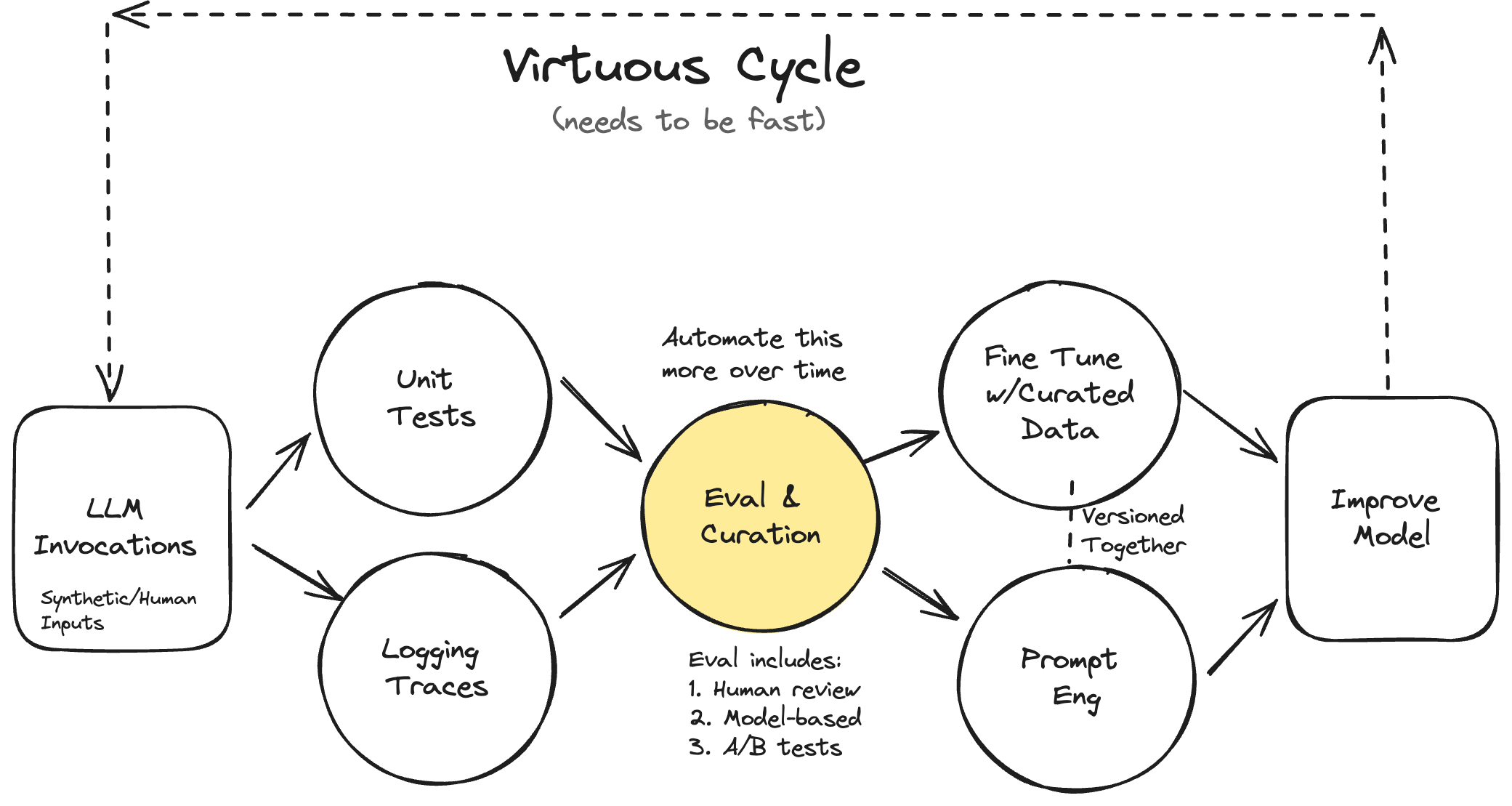
Your AI Product Needs Evals
Hamel Husain's argument that unsuccessful LLM products almost always share one root cause, the absence of a robust evaluation system, drawn from five years of building and consulting on them.
Why it mattersThis is the reference playbook for eval systems — the single highest-leverage practice separating LLM products that improve past the demo stage from ones that stall.
Qwen1.5-MoE: Matching 7B Model Performance with 1/3 Activated Parameters
Qwen1.5-MoE-A2.7B is a small mixture-of-experts model that matches 7B performance with about a third of the parameters activated, part of the wave of MoE work that followed Mixtral.
Why it mattersQwen1.5-MoE-A2.7B delivers roughly 7B-class quality while only activating 2.7B parameters, meaning cheaper and faster inference for anyone self-hosting or running cost-sensitive LLM workloads.
Is Fine-Tuning Still Valuable?
Hamel Husain's answer to growing disillusionment with fine-tuning: it remains valuable in specific situations, and the case against it usually generalises from the wrong ones.
Why it mattersGives a clear decision framework for whether to invest in fine-tuning.
Finding Ai Generated Deepfake Faces In The Wild
LinkedIn and Hany Farid describe a detector for AI-generated faces that aims to generalize across generator families, not just the one it was trained on, extending earlier work that caught 99.6 percent of StyleGAN profile photos under a strict false positive budget.
Why it mattersSynthetic profile photos are cheap to produce, and this documents a detection approach that holds up across different image generators while keeping false positives low at platform scale.
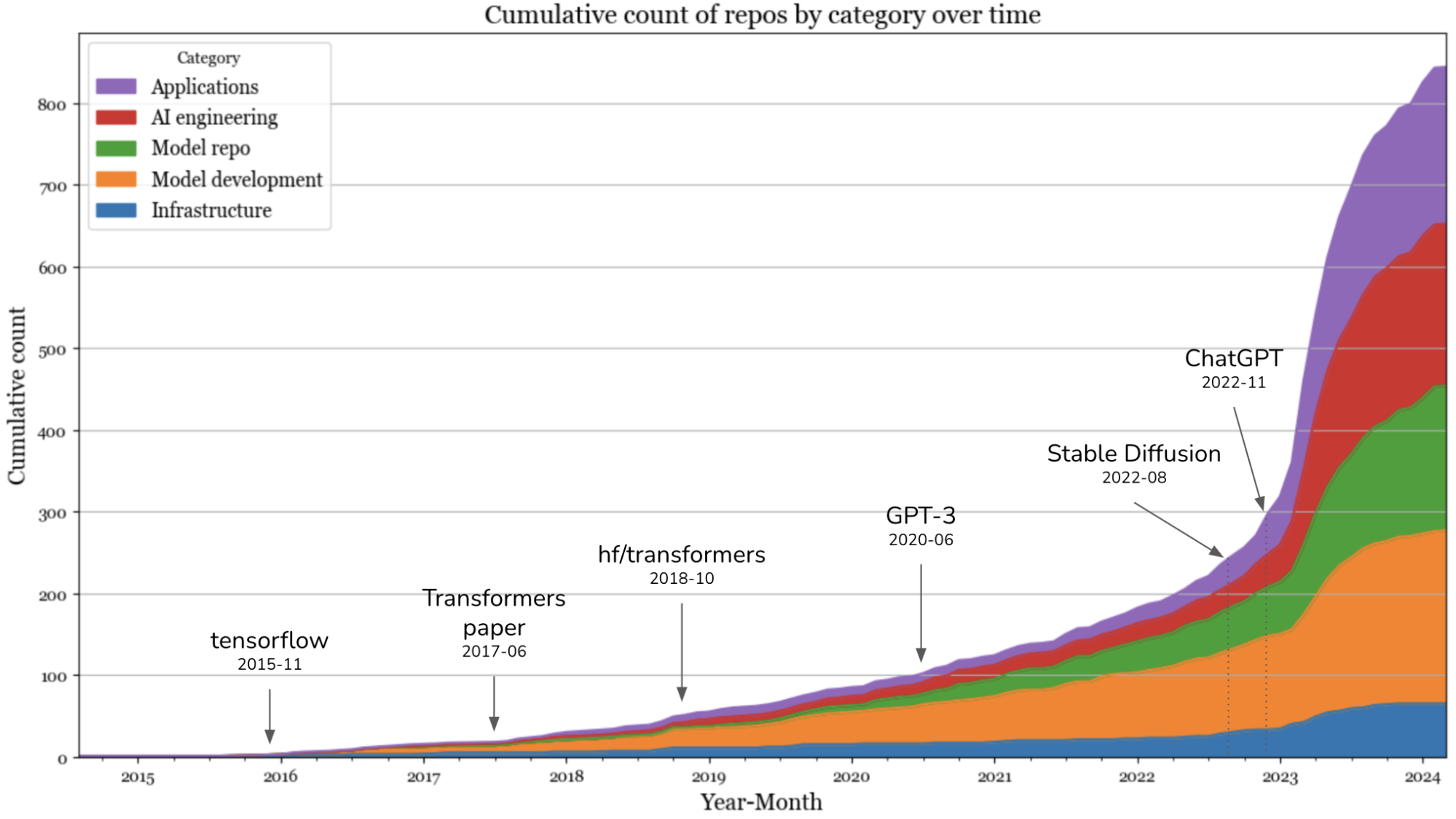
What I learned from looking at 900 most popular open source AI tools
What a survey of the 900 most popular open-source AI repositories shows about how the ecosystem has changed, four years after the same exercise on the open ML landscape.
Why it mattersA structured, data-driven map of the open source AI tooling landscape — organized into infrastructure, model development, and application layers.
Evaluating Success Of Consumer Generative Ai Products
LinkedIn lays out how it measures whether shipped generative AI features are working.
Why it mattersGives a concrete three-layer scheme for judging an LLM feature in production, separating output quality, perceived quality, and whether the feature actually gets used, so launch decisions do not rest on a single ambiguous metric.
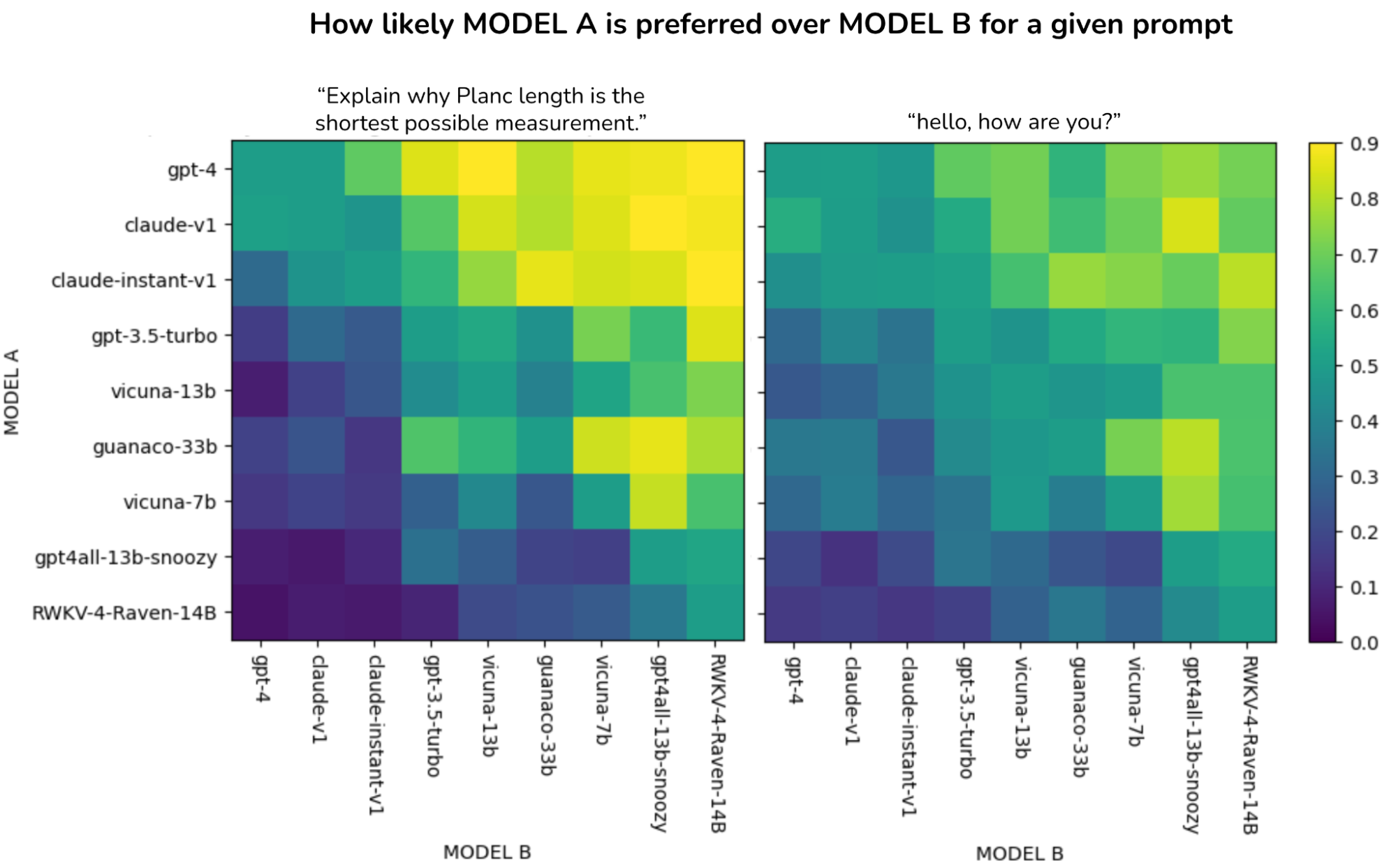
Predictive Human Preference: From Model Ranking to Model Routing
Instead of ranking models and picking one, predict which model a user would prefer for a specific prompt, turning human preference data from a leaderboard into a routing signal.
Why it mattersIf you're deciding which LLM to call for each prompt, this lays out how to predict which model a user will prefer per-query and route accordingly.

Don't Mock Machine Learning Models In Unit Tests
How unit testing machine learning code differs from typical software practices
Why it mattersIf you write tests for ML pipelines, this explains why mocking models hides real failures and what to validate instead — practical guidance for keeping AI code reliable as it evolves.
Open Sourcing Flyteinteractive
LinkedIn open-sourced FlyteInteractive, a layer over Flyte that gives engineers a live environment inside the Kubernetes pod running their training job.
Why it mattersDebugging ML jobs against small mock datasets hides failures that only appear on real data at scale. Attaching an interactive session to the production-like pod closes that gap and shortens the debug loop sharply.
Reka Flash Efficient And Capable Multimodal Language Models
Reka Flash is a 21B multimodal model trained from scratch, benchmarked against Gemini Pro and GPT-3.5 on MMLU, GPQA, HumanEval and vision/video suites.
Why it mattersA 21B model competitive with Gemini Pro and GPT-3.5 across language and vision benchmarks, plus a 7B variant for on-device use, offering a size/quality point worth considering when picking a multimodal backbone.

How to Generate and Use Synthetic Data for Finetuning
Overcoming the bottleneck of human annotations in instruction-tuning, preference-tuning, and pretraining.
Why it mattersIf you're finetuning models and blocked by the cost of human annotation, this walks through concrete synthetic data generation strategies for instruction-tuning, preference-tuning, and pretraining.
Building A Large Scale Recommendation System People You May Know
LinkedIn walks through the multi-stage funnel behind People You May Know, scoring hundreds of billions of candidate pairs daily under latency budgets.
Why it mattersA working blueprint for serving retrieval over billion-item inventories: cheap candidate generation first, expensive models only on a narrowed funnel, and scoring rather than training treated as the real scaling limit.

Thinking about High-Quality Human Data
Most task-specific labelled data comes from human annotation, which makes annotator disagreement, expertise and incentives a modelling problem rather than an operational detail.
Why it mattersA deep dive into the mechanics of high-quality human annotation and RLHF labeling — covering rater agreement, aggregation, and quality-control techniques that directly affect the data your alignment and fine-tuning pipelines depend on.
Pensieve
LinkedIn's Pensieve platform pre-computes entity embeddings offline and nearline, then publishes them as features for ranking models that cannot afford forward-pass latency.
Why it mattersShows how to keep embedding-based ranking inside tight latency budgets by moving inference to nearline pre-computation and publishing embeddings as features, instead of running the model on the request path.
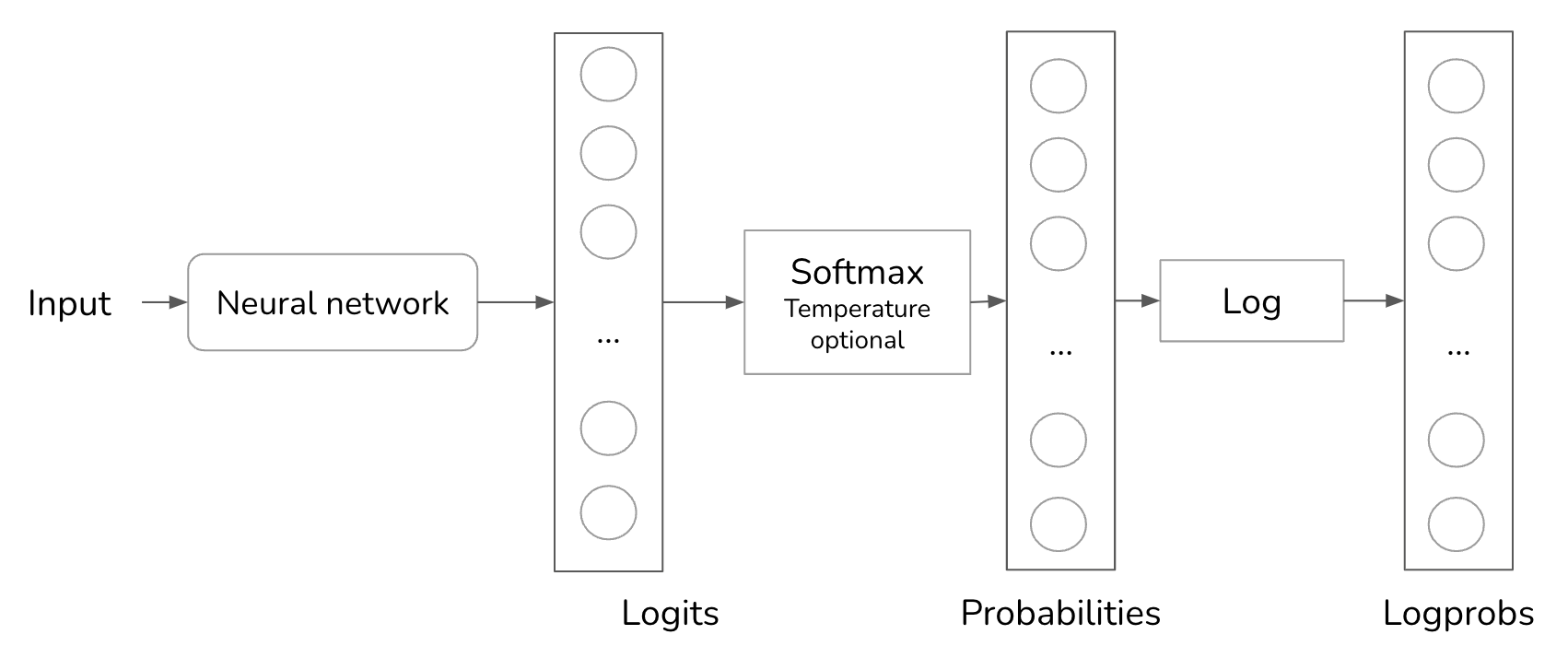
Generation configurations: temperature, top-k, top-p, and test time compute
How generation is actually configured.
Why it mattersIt demystifies why LLM outputs are inconsistent and how sampling knobs (temperature, top-k, top-p) plus test-time compute actually shape responses.

Out-of-Domain Finetuning to Bootstrap Hallucination Detection
How to use open-source, permissive-use data and collect less labeled samples for our tasks.
Why it mattersIf you're building hallucination detection or other classifiers with limited labeled data, this shows how to bootstrap from out-of-domain, permissively-licensed datasets to cut annotation costs while still hitting task performance.

Adversarial Attacks on LLMs
A survey of adversarial attacks and jailbreak prompts against language models.
Why it mattersA rigorous, research-grounded map of how jailbreaks and adversarial prompts actually work against aligned LLMs, giving engineers the vocabulary and threat models needed to red-team and harden their own AI products.

Mitigating Stereotypical Biases In Text To Image Generative Systems
Runway's diversity fine-tuning approach attacks text-to-image skew at the data level.
Why it mattersThe approach offers a concrete recipe for debiasing text-to-image models using synthetic data built from combinatorial prompt attributes, with released prompts and code and measured group fairness gains on both SD1.5 and SDXL.
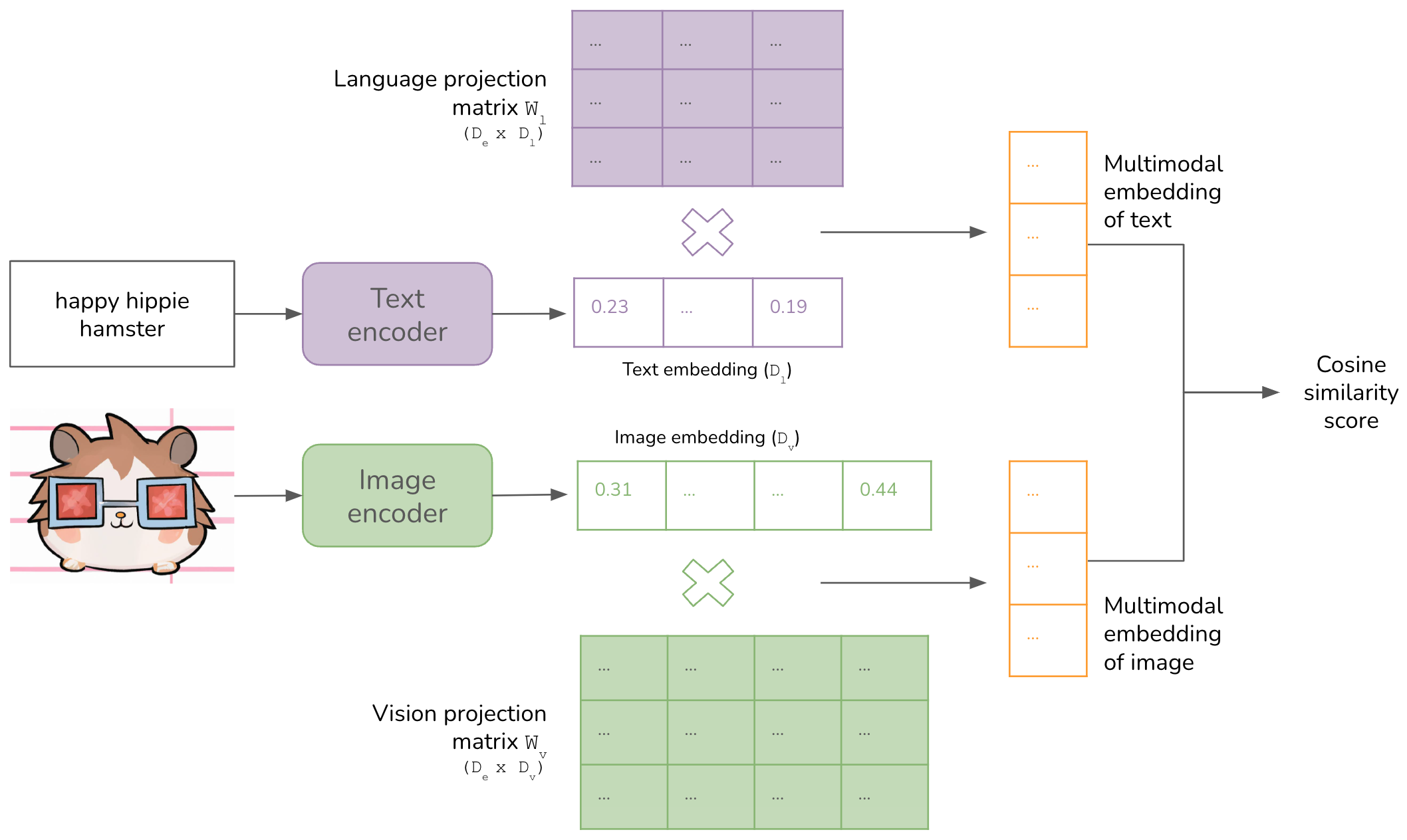
Multimodality and Large Multimodal Models (LMMs)
A primer on multimodality and large multimodal models.
Why it mattersA clear, foundational-to-frontier walkthrough of how multimodal models actually work — from CLIP and Flamingo to modern adapter-based LMMs — giving engineers the conceptual grounding to reason about and build with vision-language systems.

Scale Speed And Stepping Stones The Path To Gen 2
Runway's CTO walks through the sequencing behind the Gen models.
Why it mattersThis explains why video generation was staged, with structure-conditioned Gen-1 coming before open text-to-video, and frames next-frame prediction as the video analogue of next-token prediction for learning world structure.

Efficient Memory Management for Large Language Model Serving with PagedAttention
Applies operating-system paging to the KV cache so serving stops wasting most of its memory on fragmentation, raising throughput several-fold.
Why it mattersThe reason an inference server can hold many concurrent requests: treating the KV cache like virtual memory pages instead of one contiguous block removes the fragmentation that was wasting most of the GPU.

Evaluation & Hallucination Detection for Abstractive Summaries
Reference, context, and preference-based metrics, self-consistency, and catching hallucinations.
Why it mattersIf you're shipping summarization features, this lays out concrete metrics — reference-based, context-based, preference-based, and self-consistency checks.
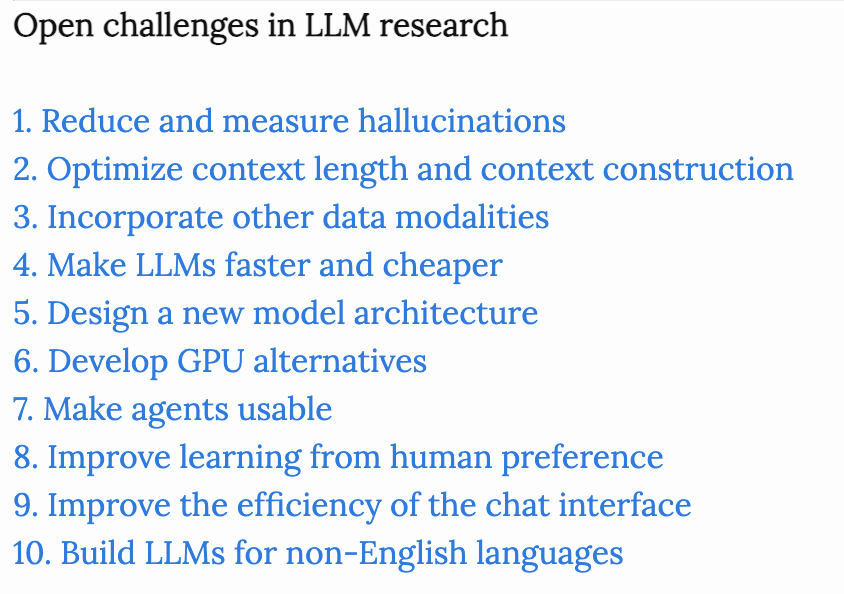
Open challenges in LLM research
Ten major open research directions in language models, drawn from conversations across industry and academia.
Why it mattersA structured tour of the 10 hardest open problems in LLM research — from measuring hallucination to non-GPU compute — with curated primary papers for each, giving engineers a map of where the field is heading and what to watch.

Sidekicks Improved Streaming
Shopify's Sidekick team details two fixes for streaming chat UX.
Why it mattersStreaming LLM output re-renders half-formed Markdown as raw text and stalls behind multi-hop tool calls; selective buffering plus a multiplexed event stream fixes both without waiting for the full response.


Patterns for Building LLM-based Systems & Products
Evals, RAG, fine-tuning, caching, guardrails, defensive UX, and collecting user feedback.
Why it mattersA comprehensive field guide to the seven practical patterns behind production LLM systems—covering how to structure evals, RAG, caching, and guardrails—so you can build reliable AI products instead of stitching together demos.

LLM Powered Autonomous Agents
A survey of LLM-powered autonomous agents built around planning, memory and tool use, drawing on AutoGPT, GPT-Engineer and BabyAGI as early proofs of concept.
Why it mattersA clear, canonical breakdown of the core components of LLM agents — planning with subgoal decomposition and reflection, short/long-term memory via vector stores, and tool use.

Direct Preference Optimization: Your Language Model is Secretly a Reward Model
Derives preference training as a simple classification loss on the policy itself, removing the reward model and the reinforcement-learning loop from RLHF.
Why it mattersIt stripped most of the machinery out of preference training: no separate reward model, no RL loop, just a classification loss that reaches comparable quality and is stable enough to run without a research team.

QLoRA: Efficient Finetuning of Quantized LLMs
Backpropagates through a frozen 4-bit quantized model into LoRA adapters, putting 65B-parameter finetuning on a single GPU without measurable quality loss.
Why it mattersIt collapsed the hardware bar for fine-tuning a large model from a cluster to one GPU, by backpropagating through 4-bit frozen weights into low-rank adapters.

GQA: Training Generalized Multi-Query Transformer Models from Multi-Head Checkpoints
Interpolates between multi-head and multi-query attention using grouped key-value heads, recovering multi-query speed while keeping most of multi-head quality.
Why it mattersThe compromise nearly every current model ships: grouped key-value heads give you multi-query's small cache without the quality drop, and the paper shows you can convert an existing multi-head checkpoint rather than retrain from scratch.

Some Intuition on Attention and the Transformer
What's the big deal, intuition on query-key-value vectors, multiple heads, multiple layers, and more.
Why it mattersA clear, intuition-first walkthrough of query-key-value attention, multi-head, and multi-layer mechanics — useful if you want to actually understand why the Transformer works rather than just memorize the diagram.

Minimal Chat
An argument that chat became the default LLM interface by inertia rather than fit.
Why it mattersChallenges the reflexive choice of a chat box as the LLM interface, arguing better interaction patterns exist — a design decision that shapes every AI product before a single model call is made.

More Design Patterns For Machine Learning Systems
9 patterns including HITL, hard mining, reframing, cascade, data flywheel, business rules layer, and more.
Why it mattersA compact catalog of production ML design patterns — like cascade models, hard negative mining, data flywheels, and business-rules layers.

Prompt Engineering
A survey of prompt engineering as in-context steering of an autoregressive model without touching its weights, treated as an empirical science whose methods vary sharply between models.
Why it mattersA rigorous, practitioner-oriented survey of in-context prompting methods — few-shot, chain-of-thought, self-consistency, and more.

Gen 2
Runway's second-generation video model dropped the requirement for structure conditioning: text alone, or a single driving image, produces a clip.
Why it mattersGen-2 was the point at which text-to-video became usable without a driving video, establishing the mode vocabulary covering text, image, stylization, mask, and render that later video models inherited.

Shopifys Machine Learning Platform Real Time Predictions
How Shopify extended its Ray-based ML platform from batch to real-time prediction.
Why it mattersShows how a general-purpose model-serving layer is built on Ray with a Feast-backed offline/online feature store, and where the latency and generalization tradeoffs land when many teams deploy to one platform.

The Transformer Family Version 2.0
A rewritten and roughly doubled survey of transformer architecture variants, restructured and brought up to date with the improvements proposed since the original 2020 version.
Why it mattersA thorough, notation-consistent reference on transformer architecture variants — from attention mechanisms to positional encodings and efficiency tricks.

Large Transformer Model Inference Optimization
Why inference on large transformers is hard and what actually helps.
Why it mattersA rigorous survey of how to cut transformer inference cost in time and memory — quantization, pruning, sparsity, and distillation — giving engineers a practical map for deploying large models affordably at scale.
OFASys: Enabling Multitask Learning with One Line of Code!
Qwen's OFASys tackles the practical pain of multimodal multitask learning, the batching and stability problems the team hit building OFA, aiming to make multitask setups a one-line affair.
Why it mattersIf you're wrangling multitask, multimodal training pipelines, OFASys reduces the boilerplate of setting up heterogeneous tasks and modalities into a declarative interface, tackling the batchification and training-stability headaches that usually derail generalist-model experiments.
An index of the vibe-coding frontier. Corrections welcome.