Intel
Page 04
Stop Renting Your AI's Memory — Dylan Couzon, Qdrant
A Qdrant engineer breaks agent memory into write, retrieve and forget, argues retrieval beats large prompt files.
Why it mattersGives a concrete model of agent memory (write, retrieve, forget) and shows embedded on-device vector memory with sub-millisecond queries in 15 MB, relevant to building local, owned agent memory.
DeepSeek released packaged desktop builds of DeepSeek Harness (v0.2 preview) for macOS and Windows, with Linux users installing via the dsh npm package. It is the lab's first-party coding and agent harness.
Why it mattersDeepSeek now ships its own agent harness as a desktop app (macOS, Windows) and an npm package for Linux. Engineers building on DeepSeek models get a first-party environment to try alongside third-party harnesses.
Jev for Python engineers
Vercel's AI SDK for Python adds an experimental evaluate() API for Jev, a model that answers multiple-choice questions with confidence.
Why it mattersThe Python AI SDK now has an experimental evaluate() call for narrow multiple-choice decisions with confidence, with a working example via AI Gateway.
[AINews] Pi 1.0, Pi Durable, and AIE NYC
Latent Space's roundup of Pi 1.0 (codemode, deferred tool loading, Anthropic cache warming, mid-conversation system messages) and Pi Durable, a TypeScript port that checkpoints agent state for crash recovery and portable execution.
Why it mattersPi 1.0 adds deferred tool loading and cache warming, and Pi Durable checkpoints every agent step so agents and subagents resume after crashes. Relevant if you run long-lived agents and need durability across runtimes.
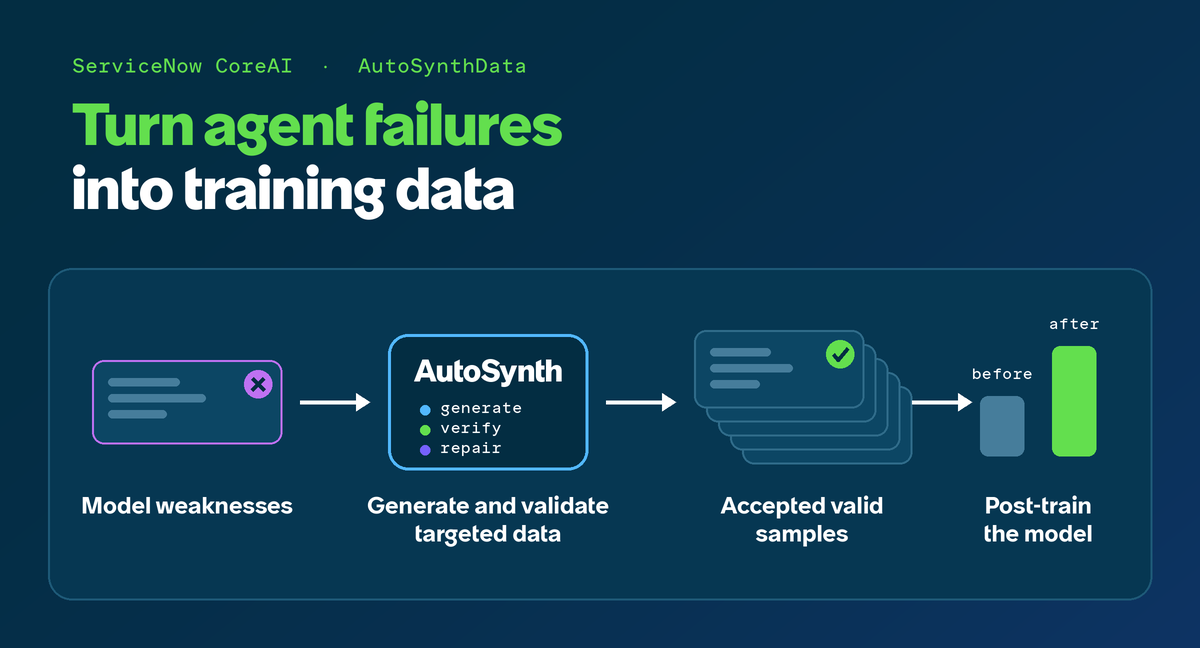
AutoSynthData: Generating Training Data for Enterprise Agents
ServiceNow describes AutoSynthData, which turns a target model's failures and a teacher model's successes into new agentic tasks with verifiers.
Why it mattersShows a pipeline for turning an agent's observed failures into new, verifiable training tasks.

Localizing Post-Wire Semantic Changes in MCP Agent Frameworks
A differential testing method follows MCP tool results through four Python agent frameworks and finds 13 divergences in structured values, declared errors and rich content.
Why it mattersValid MCP messages can still lose structured values, declared errors or rich content inside agent frameworks. The paper gives a reproducible way to test your own integration.

Scientific Agents: Evaluating Profession-Specific System Prompts on Scientific Tasks
Tests 503 profession-specific agent profiles against minimal and control prompts on nine science benchmarks.
Why it mattersLong persona-style system prompts did not improve accuracy on science benchmarks but cost 2.2 to 4.5 times more per call, so verify that a profile earns its tokens before shipping it.

Measuring the Microtask Eligibility Gap: When Is an Off-the-Shelf SLM Enough for an Agent Harness?
A benchmark of four agent-harness microtasks tests Qwen3 0.6B to 8B small models against pre-specified thresholds.
Why it mattersBefore delegating harness microtasks like shell auto-approval to small local models, this shows none of the tested Qwen3 sizes met cheap-baseline thresholds, and which failures are fixable by thresholding.

The First Token Is Not the Verdict: Hidden Costs of Reading LLM Judges Without Generating
A study of logit-readout LLM judging finds forced first-token reads overstate position bias in every tested condition, because many judges don't open with a verdict token.
Why it mattersIf your eval harness scores judges from first-token logits, measured position bias is inflated by about 42 points. Generate the verdict before auditing a judge.

Groundability, Not Scale Alone: When Weak Reviewers Can Audit Strong Coding Agents
An evaluation of reviewer models auditing coding-agent patches across 411 traces.
Why it mattersReviewing agent patches with a cheaper model works when it is grounded in executable evidence, such as tests that fail on the unpatched repo, not when it relies on model size or confident summaries.

Code That Works, Environments That Don't: Measuring Environment Reproducibility in AI-Generated Software
Measures how coding agents specify dependencies, comparing declared, runtime-installed and necessary-and-sufficient sets across three agents, four languages and 50 tasks.
Why it mattersGenerated code that runs can still ship wrong dependency declarations. The study shows coding agents systematically misspecify environments, so verify manifests in a clean environment.
A thread summarizing the Etalon framework for evaluating LLM inference: how chunked prefill and speculative decoding shape token timing, why averages mask pauses, and how to set first-token deadlines.
Why it mattersExplains why average TPOT and TBT percentiles hide generation stalls and how per-request token arrival traces expose them. Useful when tuning batching, chunked prefill or speculative decoding.

Academia is for Ambition — Alex Zhang, MIT
Latent Space interviews MIT's Alex Zhang on Recursive Language Models, context offloading, subagent swarms, KernelBench and GPU Mode.
Why it mattersExplains RLMs and why harness design may leave large capability untapped, with concrete ideas like context offloading and programmatic subagent calls you can apply in agent systems.

Giving Opus 5.5 a simulated paint canvas
A long-running experiment where several frontier models paint in a simulated oil-paint studio by writing brushstrokes.
Why it mattersShows how frontier models behave as agents with a stateful, irreversible tool: they converge on the same subjects across independent runs, and they rank other models' work above their own. Useful evidence on model priors and eval design.
Artificial Analysis ranks new coding agents on its Coding Agent Index. Claude Sonnet 5.5 in Claude Code leads at 68 but costs $14.19 per task, while GPT-6.1 Sol in Codex scores 63 at $1.04.
Why it mattersShows the score/cost tradeoff across Claude Code, Antigravity CLI and Codex: 68 at $14.19 per task versus 63 at $1.04. Helps you pick an agent by cost per task, not just rank.

Recursive Language Models — Alex Zhang, MIT PhD
Alex Zhang, the MIT researcher behind Recursive Language Models, discusses harnesses as compositional generalizers, programmatic subagent calling, agent swarms, AI-written GPU kernels and capability overhang in current models.
Why it mattersArgues that harness design, not just model capability, limits coding agents, and explains RLM techniques like context offloading and persistent subagents you can apply when orchestrating agents.
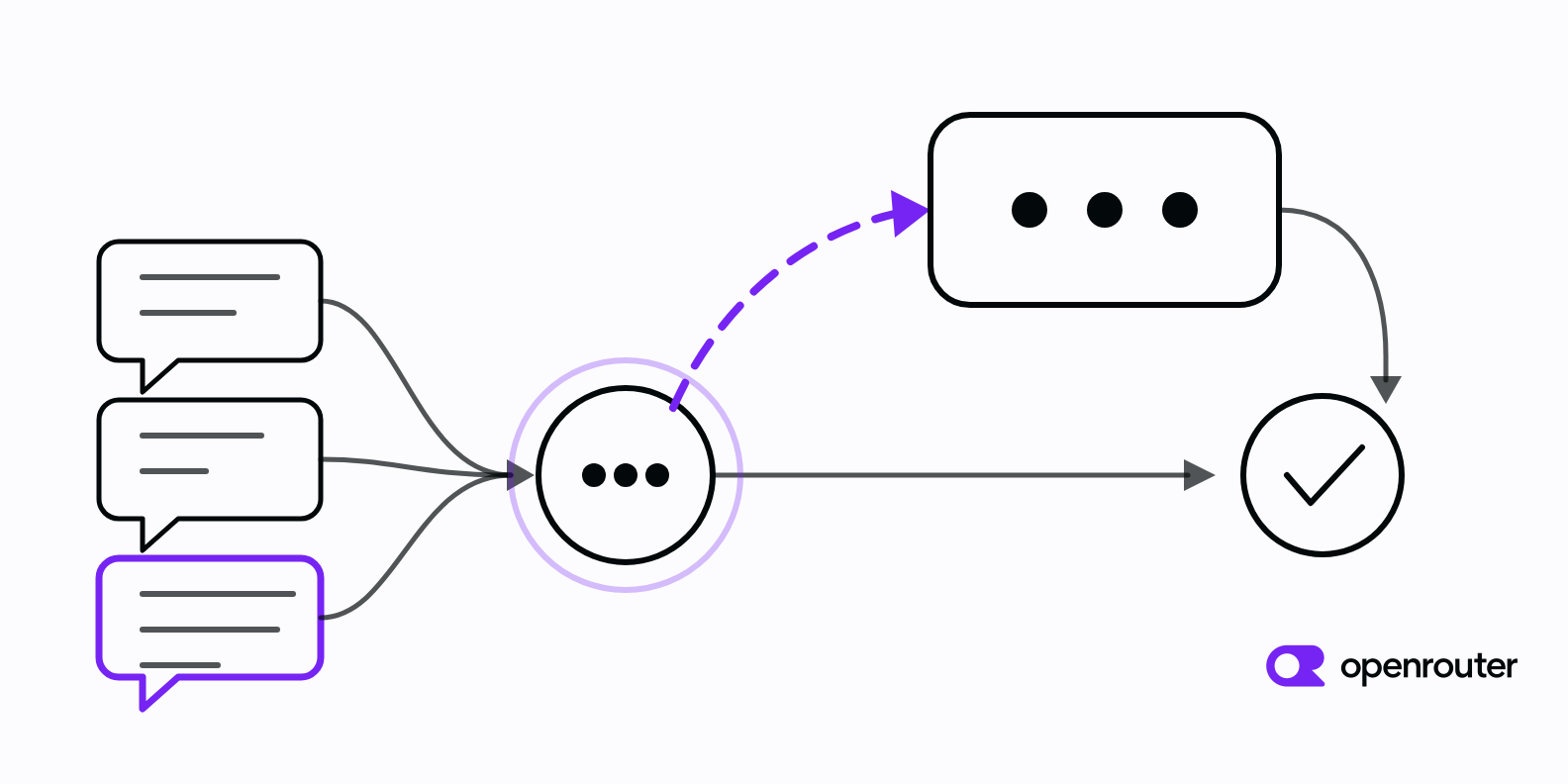
Model Routing For Support Bots Cheap First Faq Handling
A tutorial on cheap-first model routing for support bots.
Why it mattersShows when to send routine support questions to a cheap model and escalate only some. It separates request-error fallbacks from answer-acceptance checks and says to measure cost per resolved ticket and escalation rate.
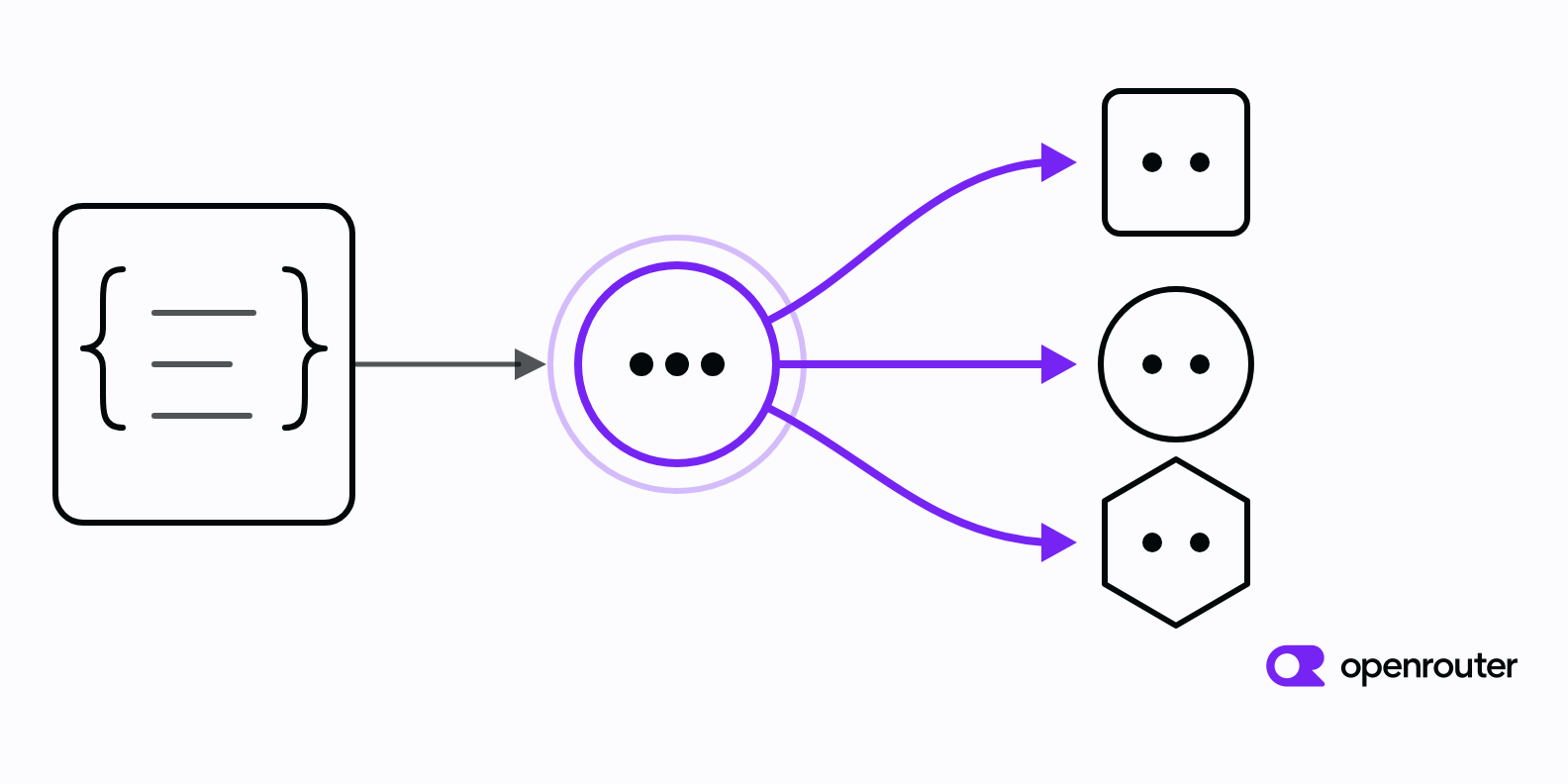
Agent Frameworks Compared Tool Calling Schema Handling
Compares how LangChain, CrewAI, the OpenAI and Claude agent SDKs, Microsoft Agent Framework and Google ADK handle tool schemas across providers.
Why it mattersExplains why tool calls break when you swap models: each provider uses a different tool definition and response format.
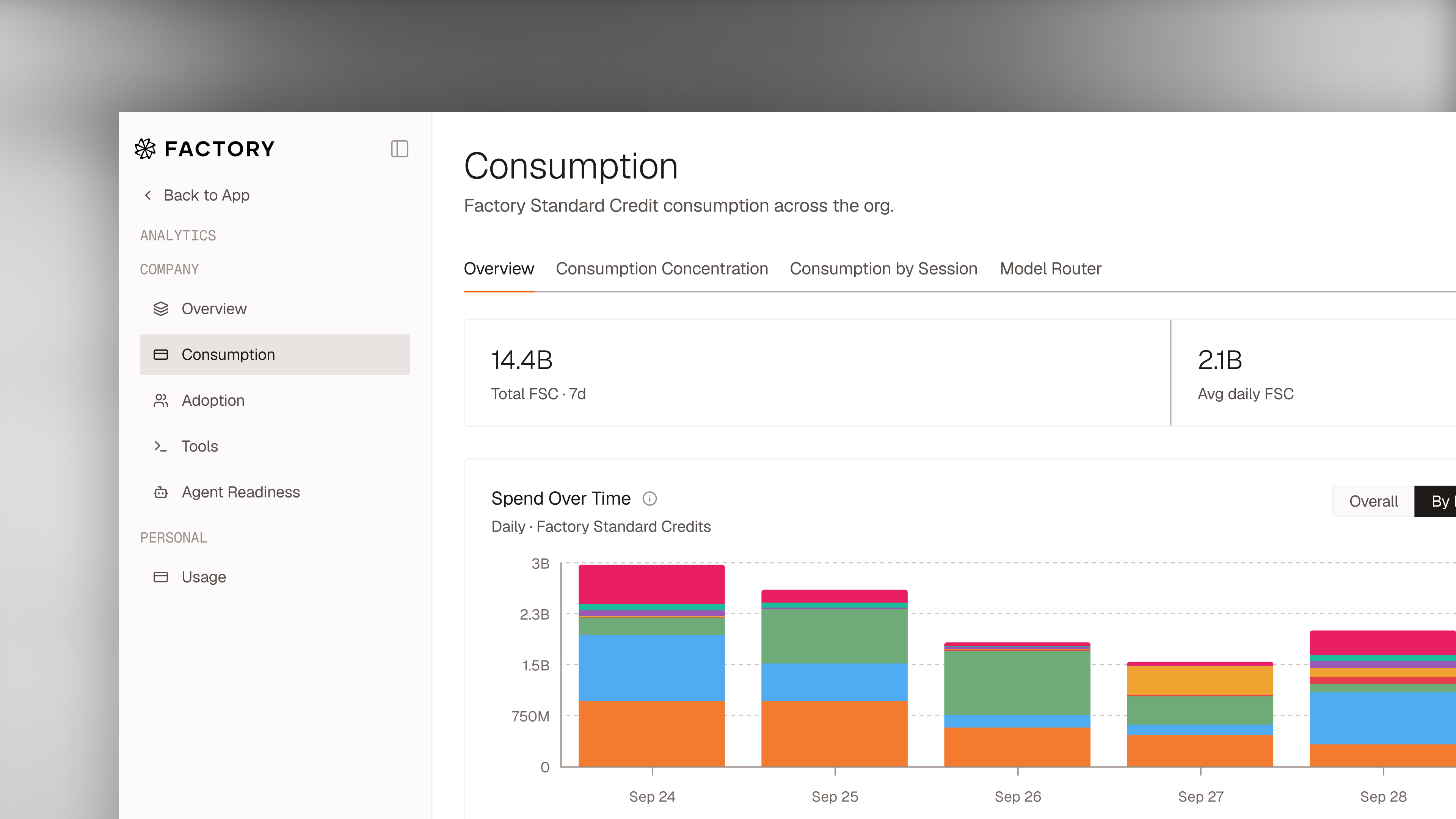
Factory Analytics brings transparency to every session
Factory ships redesigned Analytics for its agent platform, reporting consumption, model mix, cost concentration and adoption by user.
Why it mattersTeams running coding agents can now see credit consumption by model and user and pull it through an API. Factory also claims its router lowers aggregate cost 63% in production versus frontier-model rates.

Model Router Benchmarks
OpenRouter launches a benchmark page scoring model routers on quality, speed and cost across six benchmarks, with a blended Router Index.
Why it mattersShows whether model routers beat a single model once cache loss, routing latency and task misclassification are counted. Engineers choosing between routing and a fixed model get cost and quality data.
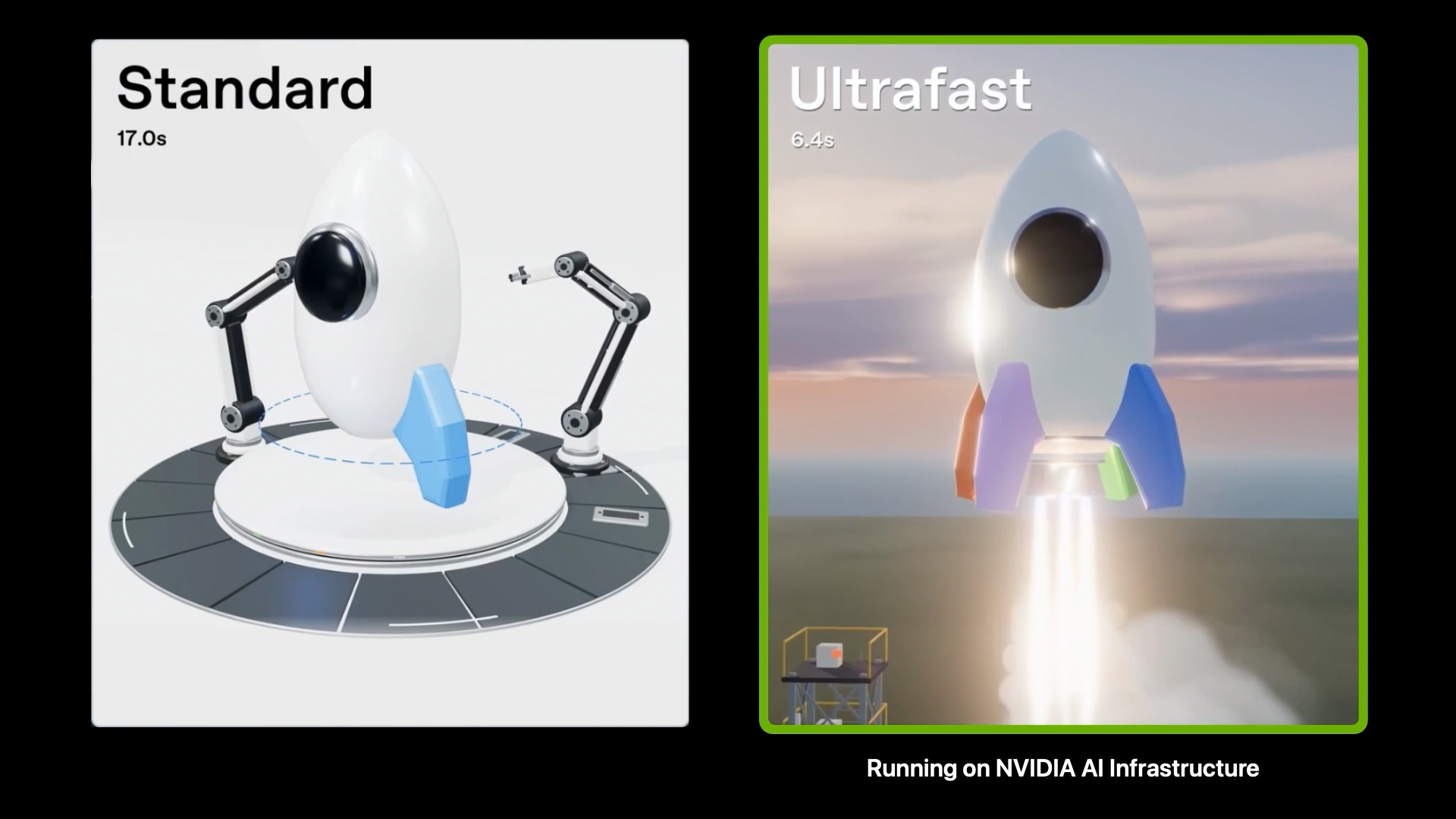
How NVIDIA GPUs Help Accelerate OpenAI’s GPT-6 Astra Ultrafast
NVIDIA reports GPT-6 Astra Ultrafast, served on Blackwell GPUs, is live in the OpenAI API and for eligible Codex and ChatGPT Work users.
Why it mattersA mode with up to 8x faster token generation shortens each edit-test-debug and tool-call cycle in coding agents. Latency-bound agent loops can run faster without switching models.
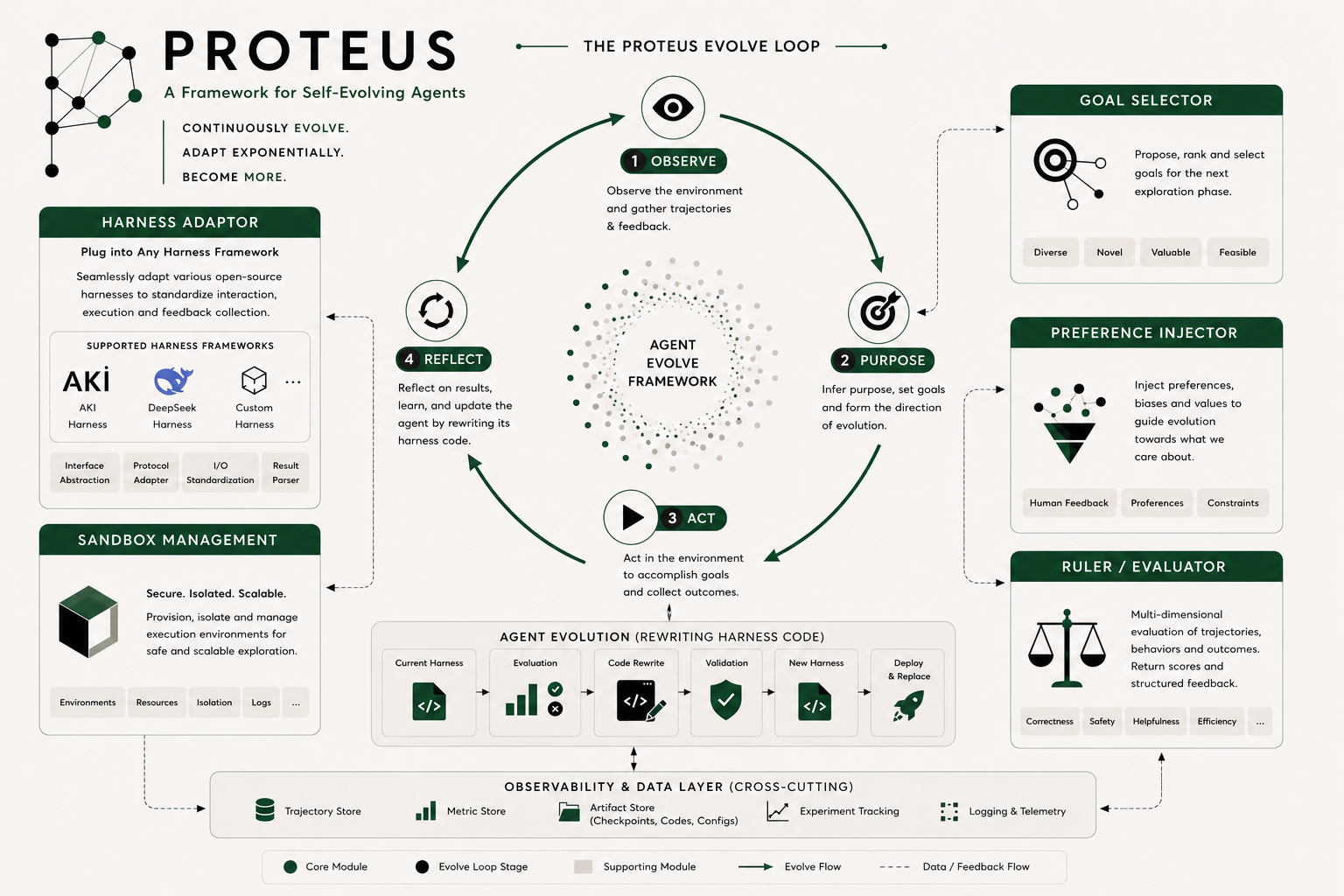
Proteus – Can DeepSeek Harness evolve itself to handle audio?
Proteus's report on DeepSeek Harness evolving audio transcription over 30 episodes behind a staged-change gate, with 27 accepted snapshots, 3 repaired failures and a public trace.
Why it mattersShows what harness self-modification looks like in practice: a staged boundary gate, failed candidates repaired, and a perfect external score judged insufficient evidence.
d1 is now available on @vercel AI gateway!We worked with the amazing vercel…
Liquid AI's d1 decision model is available on Vercel AI Gateway for classification, routing and scoring, priced at $0.04 per million input tokens with 66K context and typed structured outputs.
Why it mattersA cheap model for routing and yes/no decisions in agent pipelines, callable through the AI SDK with typed answers and calibrated probabilities.

Cursor adds GLM 5.3 and GLM 5.3 Flash, and reports GLM 5.3 Max as the best-scoring open-weight model on its CursorBench 4.0.
Why it mattersAdds open-weight GLM 5.3 and Flash options to Cursor, so you can pick a cheaper open model for coding tasks inside your existing editor.

Epoch AI releases a ChatGPT usage explorer built from metadata of 5,000 US panel users from 2022 to 2025, showing rising frequency and volume, with opt-in and weighting caveats.
Why it mattersGives measured data on how heavily people use ChatGPT over time, with stated sampling caveats, to ground assumptions about real-world AI demand.
We are introducing Clef and Clef-flash, open-source decision models hosted on…
Cloudflare introduces open-source Clef and Clef-flash decision models on Workers AI for high-speed classification and agentic workflows.
Why it mattersOffers fast open models for routing and classification in agent pipelines, and a way to fine-tune them with reinforcement learning on your own data.
Pi 1.0
Earendil shipped Pi 1.0, a minimal, extensible agent harness.
Why it mattersPi 1.0 adds Codemode with native MCP, deferred tool loading, Anthropic cache warming and extension-defined virtual models. The experimental Pi Durable package targets long-running agent applications.

FLUX 3 Image
Black Forest Labs releases FLUX 3 Image, an image model built around layout control.
Why it mattersFLUX 3 Image lets you place elements on a canvas and edit one region at a time while leaving the rest of the image unchanged, which gives more deterministic control for image pipelines.
Pi Durable
Earendil releases Pi Durable alongside Pi 1.0, an experimental framework for long-running, failure-tolerant agents.
Why it mattersPi Durable offers a harness for agents that survive crashes, run anywhere with a JavaScript runtime, and let several people steer one agent.

Black Forest Labs releases FLUX 3 Image with edits that leave other pixels untouched, bounding-box layout control, 4K output and up to 10 reference images. Open weights are promised in coming weeks.
Why it mattersGives product builders layout-controlled image generation and non-destructive iterative edits, with commercial weights available now and an open-weights version announced.

Physicist Matthew Schwartz argues AI and science suffer an impedance mismatch. His toolkit for exact quantitative calculations let Claude find links across ecology, population genetics and other fields.
Why it mattersArgues that treating an LLM like a human collaborator underuses it in science, and that a purpose-built calculation toolkit surfaced connections across ecology and population genetics.
Build Applications on NVIDIA BlueField Faster with NVIDIA DOCA Agent Skills
NVIDIA published agent skills for the DOCA SDK (Flow, GPUNetIO, PCC, RDMA) that supply verified signatures and hardware checks.
Why it mattersShows that packaging verified API signatures, hardware constraints and preflight checks as agent skills lifted checklist pass rate from 19% to 100% on specialized infrastructure code.

Benchmarking Multilingual Conversational ASR
David AI released DAI-ASR-I18N, a conversational speech benchmark with 147 hours across 21 languages.
Why it mattersCompares eight commercial and six open-weight speech systems on real conversational audio in 21 languages, including diarization. Teams picking an ASR model for non-English voice agents get per-language results and an open harness.

Anthropic's Claude Code team introduces mods: TypeScript extensions shipped in plugins that alter behavior, customize the UI and add features. Examples include a context-window forecast, a risky-command guard and a diff replay pane.
Why it mattersClaude Code can now be extended with TypeScript mods distributed via plugins, covering behavior, UI and new features. Mods run with the same machine access as Claude Code, so only install ones from trusted sources.
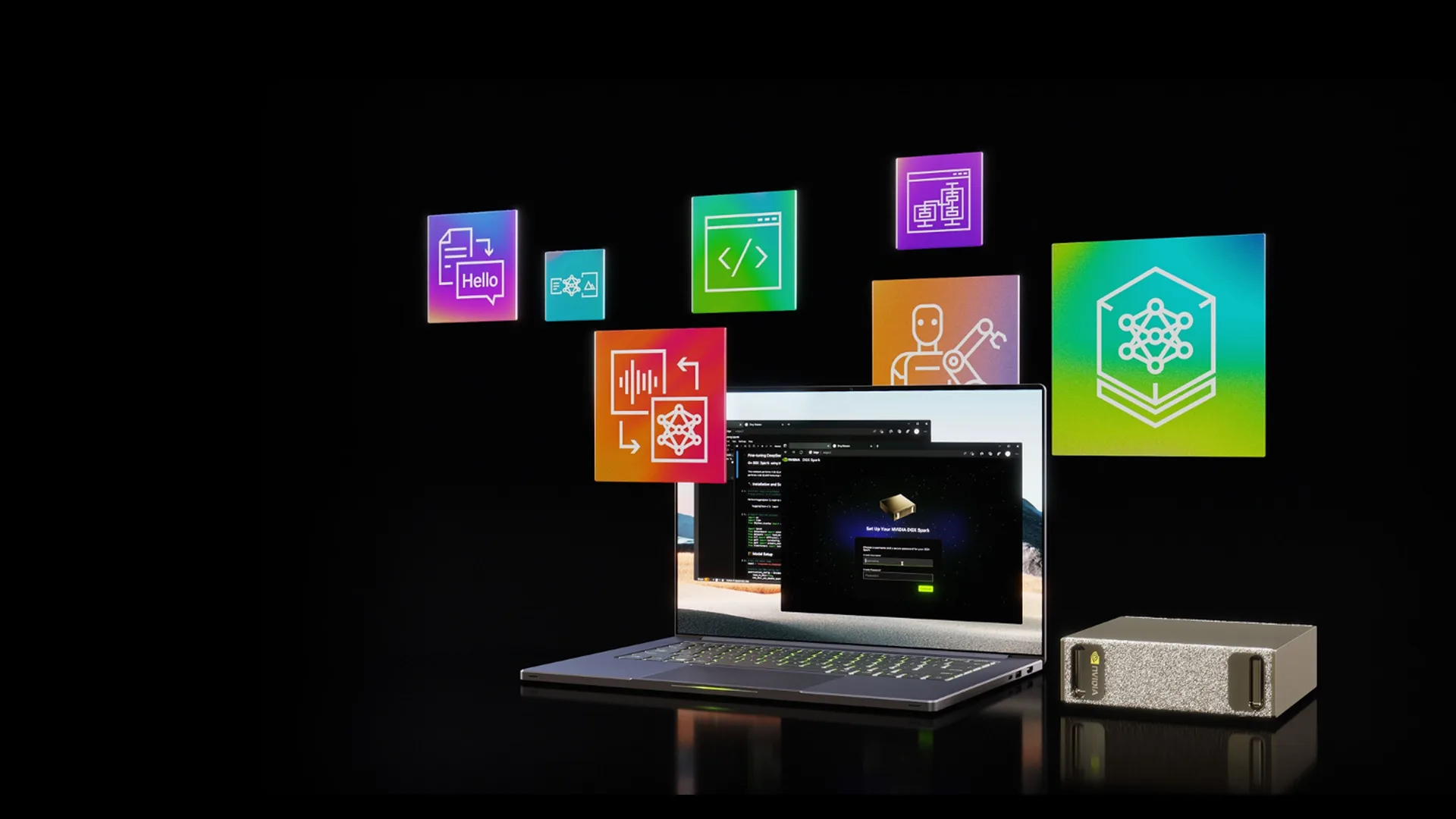
Build Local AI Apps with C++ and NVIDIA TensorRT RTX Samples
NVIDIA walks through open C++ samples that pair ONNX Runtime with the TensorRT RTX provider for local inference.
Why it mattersShows how to ship local speech, segmentation and image-generation models from native C++ with GPU acceleration, with measured speedups (SAM 2.1 at 38.3 FPS on GPU vs 0.5 on CPU).
Designing Mcp Gateway
Uber details its MCP Gateway.
Why it mattersShows how to expose existing HTTP, gRPC and TChannel services as MCP tools through one gateway with shared discovery, security and observability. Uber reports 800+ MCP servers and 5,000+ tools running on it.
RIP, vector database
turbopuffer's engineer walks through the v1 vector-only layout on object storage and why the vector-primary design hit limits.
Why it mattersDescribes why a vector-first index limits query plans such as aggregations, and how turbopuffer v3 makes ANN a secondary index. Anyone designing retrieval over object storage gets a concrete architecture trade-off.

OpenRouter adds a Security Center that groups API keys by risk, filters by owner and inactivity, bulk-disables or caps up to 500 keys, and supports IP allowlists. Available on all plans.
Why it mattersKey sprawl is a real risk for teams using LLM APIs. You can now see unlimited, non-expiring and 90-day-idle keys across workspaces and disable or cap them in bulk.

Benchmark: AI doesn't find bugs unless you tell it what's wrong
SWE-sweep tests 100 repos across 22 languages with about 4k real bugs, asking models to find and fix issues with no ticket.
Why it mattersModels fix reported bugs well but proactive bug discovery is still near 5% at best, at high cost. This sets realistic expectations for autonomous code-review and bug-hunting agents.

Introducing Clef: our open-source decision models, and new RL fine-tuning platform
Cloudflare releases Clef and Clef-flash, open-weight decision models for bounded structured outputs, hosted on Workers AI and compatible with the Jev API.
Why it mattersClef gives workflows a cheap, bounded-output decision step with open Apache 2.0 weights and a Jev-compatible API. Cloudflare's RL fine-tuning lets you adapt it to your own categories instead of prompting a general LLM.

LangChain launches LangSmith Fine-Tuning and the smithtune CLI, which convert an agent's own traces into training data and a fine-tuned model without a custom training pipeline.
Why it mattersLets you turn successful production trajectories into a fine-tuned model without hand-building a training pipeline, closing the loop between tracing and model improvement.
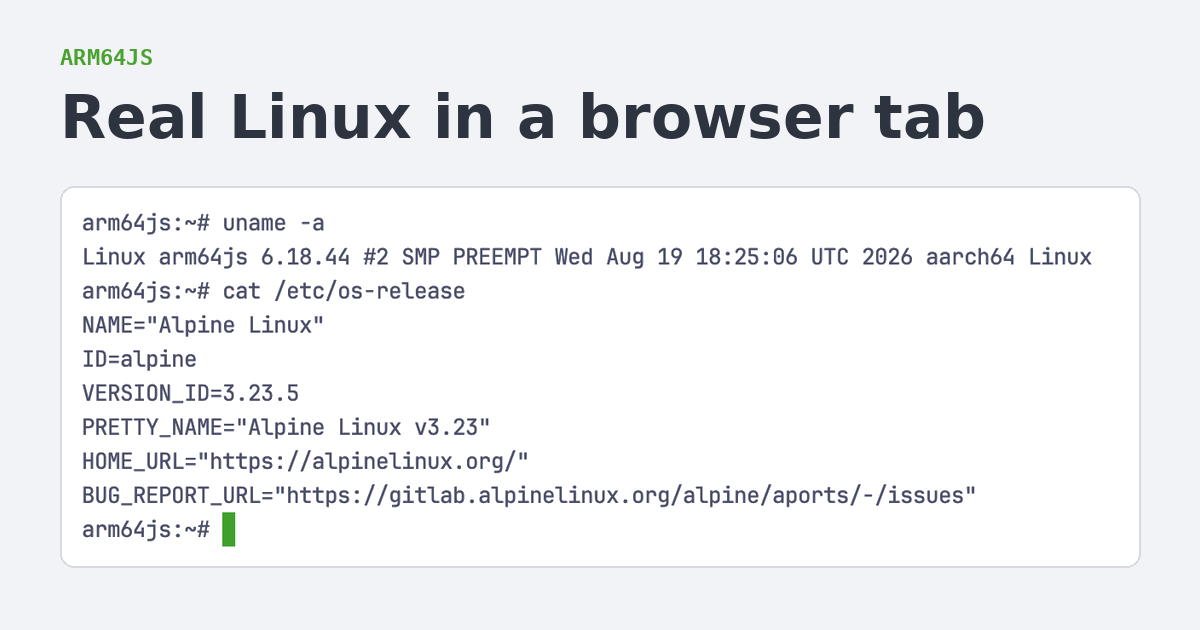
ARM64js – ARM64 emulator that runs Alpine Linux in a web browser
Walkthrough of building an ARM64 emulator in Rust compiled to WebAssembly that boots Alpine Linux in a tab.
Why it mattersA browser-hosted Alpine VM with an SDK lets you try or demo CLI and TUI tools without installing them. The post gives measured boot and typing latency and explains the proxy workarounds for CORS and TCP.

Cloudflare's AI Search reaches general availability with image-pixel embeddings for visual search, OCR for scanned PDFs, 10 MiB file support and compatibility with any chat model.
Why it mattersA managed RAG option that handles scanned PDFs and image search without your own pipeline. Check the pricing, as commenters report it can cost more than self-built search.

One year later: Sovereign AI and the fight for choice
Cloudflare is bringing EuroLLM (all 24 EU languages) and Apertus (Switzerland's fully open model, 1,500+ languages) to Workers AI, with access requests open.

We want you to build the next Git platform on Cloudflare
Cloudflare asks what source control looks like when hundreds of agents edit one codebase, covering conflicts, review, and change rationale.

Cloudflare OS: your company’s agent workspace, managed for you
Cloudflare opened a waitlist for fully managed Cloudflare OS, an open-source agent workspace.

AI Search is now generally available
Cloudflare's managed AI Search is now generally available. It adds native image embeddings using Matryoshka representations, OCR for PDFs, and larger file support.

The Dot and the Swarm
Ethan Mollick revises his view that managing agents requires careful organizational design, arguing the Bitter Lesson applies.
Why it mattersArgues that hand-built agent orchestration, like elaborate prompt chains and context pipelines, tends to be overtaken by stronger models, which should change how much structure you invest in.

claude.dev Blog / technical writing for people building with Claude
Anthropic's new developer blog collects engineering deep dives, Claude Code and API playbooks, skills guidance.
Why it mattersAnthropic's developers now publish Claude Code guides, eval-design playbooks, context engineering advice for Claude 5 models and task cost breakdowns in one place. It is a first-party source for how to build with Claude.

Our Latest research paper(preprint) on loops and graph is live on ArXiv
A paper defining bounded loops for agent harnesses: a worker, a gate it cannot write to, and a declared budget.
Why it mattersIt shows that agent completion checks often pass vacuously: 47 of 69 loops had such gates. It also gives a design (independent gate, global repair budget, pre-run spend ceiling) that guarantees termination and bounded cost.
An index of the vibe-coding frontier. Corrections welcome.