Intel
Page 51
SemiAnalysis on Cerebras CS-4: off-wafer I/O doubles to 2.4Tb/s and a field-upgradeable FPGA NIC translates the proprietary link to standard Ethernet. The real unlock is disaggregation — wafers do decode while HBM-based AMD or Trainium parts absorb prefill and the KV cache SRAM can't hold.
Why it mattersWafer-scale inference has been bottlenecked by off-chip I/O and a 44GB SRAM ceiling. Pairing wafers with HBM accelerators for split prefill/decode changes what long-context serving on Cerebras can cost and hold.
Build and deploy eve agents from the Vercel dashboard
Vercel's dashboard now builds and deploys eve agents directly.
Why it mattersGoing from prompt to a deployed, chattable agent is now a dashboard flow — and it leaves real code in a private repo you own, rather than a locked no-code artifact.

Hy4 Preview now available on AI Gateway
Tencent's Hy4 Preview arrives on Vercel's AI Gateway.
Why it mattersA 1M-context open-weight MoE aimed at long-horizon coding is now one model string away in the AI SDK, and selectable inside Claude Code, Codex, Cursor and others via the gateway, at provider pricing with no markup.
The Open ASR Leaderboard Adds Its First Global South Language
The Open ASR Leaderboard gains its first Indic language.
Why it mattersHindi and Indian English now have held-out ASR splits with speaker metadata attached, so you can test how a speech model fails by region, age, device and accent instead of trusting one averaged error rate.
GLM-5.3 vs. GLM-5.3 Flash on DeepSWE: Cost, Coding, and Routing
Together AI benchmarked GLM-5.3 against its Flash distillation on DeepSWE.
Why it mattersA measured case for cascade routing in coding agents: run the cheap model first and escalate only when tests fail, for 80.9% solved at $1.70 against 69.0% at $3.99 — with a regression run to catch Flash breaking already-passing tests.

A guest post from UIUC and Bridgewater researchers training on Tinker. Rather than adding scaffolding, they cleaned the training labels and folded expert judgment into every stage of the RLVR reward, producing what they report as the first text-to-SQL model to beat the human mark.
Why it mattersFixing labels and aligning the verifier, not adding scaffolding or a better optimizer, is what carried a text-to-SQL model past the human baseline on a task where LLMs had lagged.
Breaking Claude Code Opus 5 Auto Mode
Johann Rehberger reports an attack on Claude Code auto mode that lands ~80% of the time: a downloaded archive plants a local struct.py that executes when the agent imports base64.
Why it mattersAuto mode is the default prompt-injection defense for Claude Code, and it can be bypassed — and can block remediation after detection. Treat sandboxing, not the classifier, as the real boundary when agents touch untrusted archives.

nac v0.1.4 is out.
NAC v0.1.4 adds conversation forks.
Why it mattersForking a finished session lets you branch experiments off a good prefix without replaying it, and the stricter Stop means a cancelled run no longer leaves processes alive behind a session that looks busy.
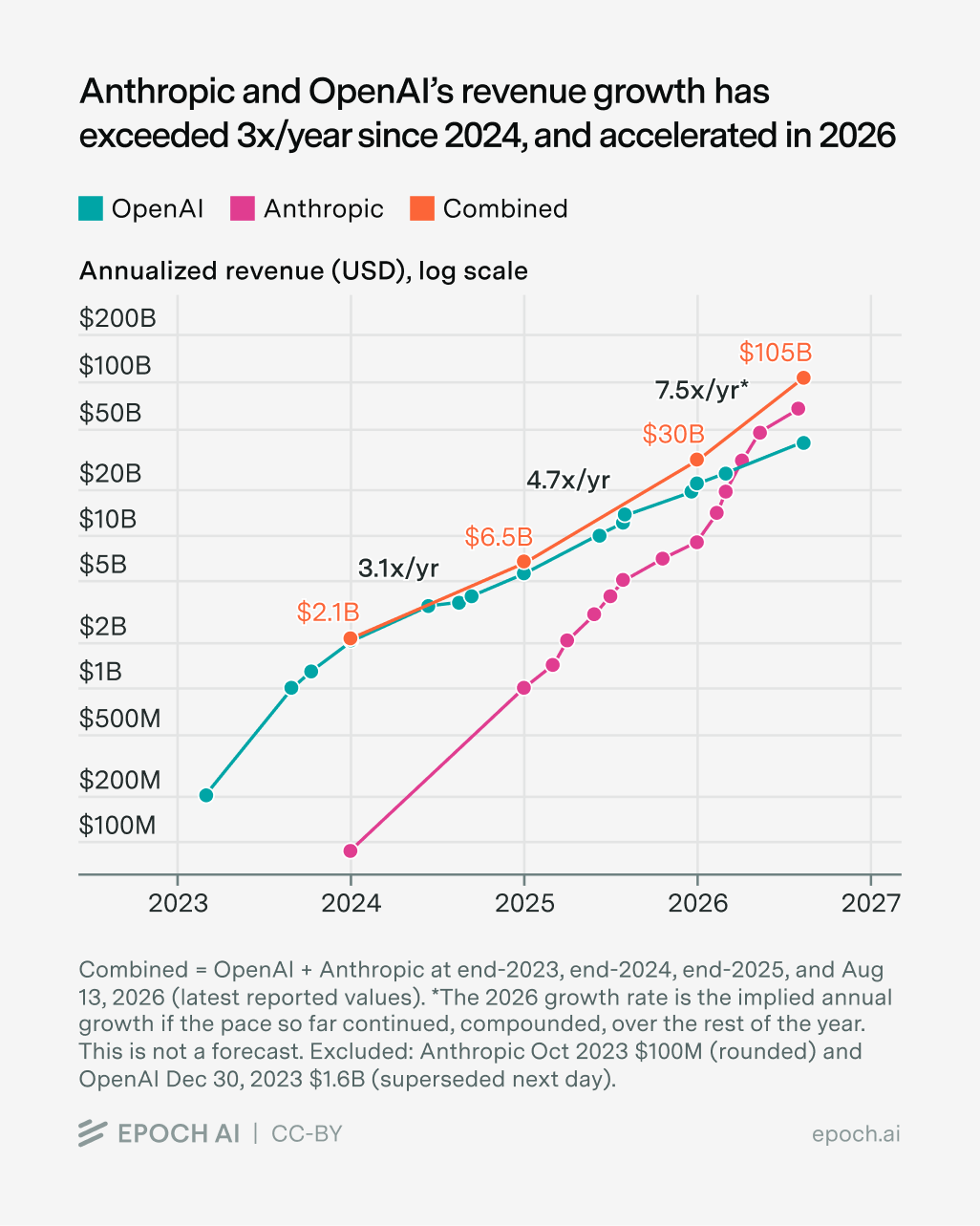
An update on AI’s most important number
Epoch tracks OpenAI and Anthropic run-rate revenue, showing combined growth from $30B to $105B in 2026, and weighs whether such growth is sustainable.
Why it mattersCombined lab revenue growth tells engineers whether compute funding for future models is likely to keep scaling.

GLM 5.3 Flash Is HERE – Is THIS Better Than the FULL GLM 5.3?
A hands-on pass over GLM-5.3 Flash across browser-OS control, C++ replication, game generation, a model-training task and a combined Blender/Godot build.
Why it mattersIndependent task-by-task runs indicate where GLM-5.3 Flash holds up against the full GLM-5.3 on agentic and coding work, instead of relying on the vendor's own benchmark numbers.

Cursor adds a greenfield path: scaffold a web app in the editor with no repository, store the code through Origin, and deploy straight to Vercel. Removes the repo-first setup step that previously sat between a prompt and a live URL.
Why it mattersCursor no longer requires an existing repo to start a project — create, store, and deploy now happen in one flow, putting it directly against prompt-to-deploy tools for greenfield web work.

Which AI startups actually land enterprise contracts? — Brian Lewis, Millennium
A hedge fund buyer walks his own funnel — 10 to 15 vendors, two or three demos, one contract per four pilots, about 5% of demos signing — and catalogs where the rest die.
Why it mattersWhat an enterprise buyer actually checks before signing: retention terms hiding in beta agreements, integration scope, breach answers. He puts roughly 60% of becoming AI-native on entitlements, integration and change management.

Nous Research ships real-profile browsing for Hermes Agent: it operates a managed copy of your existing Chrome profile, inheriting cookies and logins rather than starting from a blank browser. Solves agentic auth — and hands the agent your session blast radius.
Why it mattersBrowser agents usually stall at login walls; Hermes now acts inside a copy of your authenticated Chrome profile. That unlocks real workflows and means any injected page runs against your live sessions.

Anthropic extends Claude Team to academic and nonprofit labs: standard seats free, premium seats with 5x usage limits at $15/month for one year. Principal investigators enroll and add their groups. Initially capped at 10,000 seats, with expansion signalled over the coming months.
Why it mattersAcademic and nonprofit research groups can now get Claude Team seats free, or premium seats with 5x usage limits at $15/month for a year — a concrete access and cost change with a 10,000-seat cap.

Stanford released Terminal-Bench-Science, a new benchmark for evaluating AI agents on real research workflows across scientific domains, built by the Terminal-Bench team with input from domain experts.
Why it mattersTerminal-Bench-Science gives engineers a concrete way to measure whether agents can actually carry out scientific research workflows, not just toy coding tasks, across multiple science domains.
Expanding Support For Scientists
Anthropic opens 10,000 free and discounted Claude seats to verified research labs and widens its credits program past biology.
Why it mattersIf you build on Claude for life sciences, the model tier matters: Fable-class models refuse professional biology and drug-development work, and Opus-class access plus per-project credits is the current path.
goose v1.48.0
goose 1.48.0 adds a batch of declarative OpenAI-compatible providers and gateways, routes GPT-5.6 variants through Bedrock, swaps GLM-5.2 for GLM-5.3, wires cost tracking to custom provider fields.
Why it mattersNew model routing (GPT-5.6 via Bedrock, GLM-5.3 replacing 5.2) plus hook changes — on_failure handling and a stable tool_call_id across the tool lifecycle — directly affect anyone scripting goose's tool gates.

Cua Cloud Fleet added declarative configuration for sandbox pools through its SDK and a public trycua/fleets Terraform provider, covering static warm pools and claim-driven autoscaling for reusable Linux and Windows environments.
Why it mattersLets infrastructure teams manage agent sandbox pools as versioned Terraform config instead of one-off provisioning scripts.

OpenHands v1.16.0
OpenHands 1.16.0 replaces the all-on skill catalog with an explicit allow-list, surfaces supported LLM providers and an LLM-switching toggle in agent settings, adds a Linux desktop installer, live phase display for automation runs.
Why it mattersSkills now require an explicit allow-list instead of defaulting on, and provider selection plus LLM switching moved into agent settings — both change how an OpenHands deployment is configured.

crewAI 1.15.18
crewAI 1.15.18 marks conversational flows stable, letting a declaration define its own state shape, router response format and crew-style LLM config.
Why it mattersConversational flows leave beta with declarative state shapes and router response formats, and the release fixes Anthropic defaults — Sonnet 4.6's 1M context mapping and a higher max_tokens for large tool calls.

How to Generate Mergeable Code with a Context Engine — Peter Werry, Unblocked
Peter Werry argues coding agents fail like a radiologist who stops at the first finding: they retrieve something plausible and quit.
Why it mattersAgents rediscover your build, test, and deploy conventions on every task and often discover them wrong; a persistent context layer changes the cost curve on multi-step work, not just the first prompt.
Modular Manifolds
A geometric framing for optimizer design: keep weight matrices on submanifolds instead of letting their norms drift, then build the optimizer around that constraint.
Why it mattersConstraining weight matrices to a manifold makes update sizes interpretable, prevents norm blowup, bounds condition number, and supports Lipschitz guarantees. Muon can be co-designed with that constraint rather than bolted on.
Defeating Nondeterminism In Llm Inference
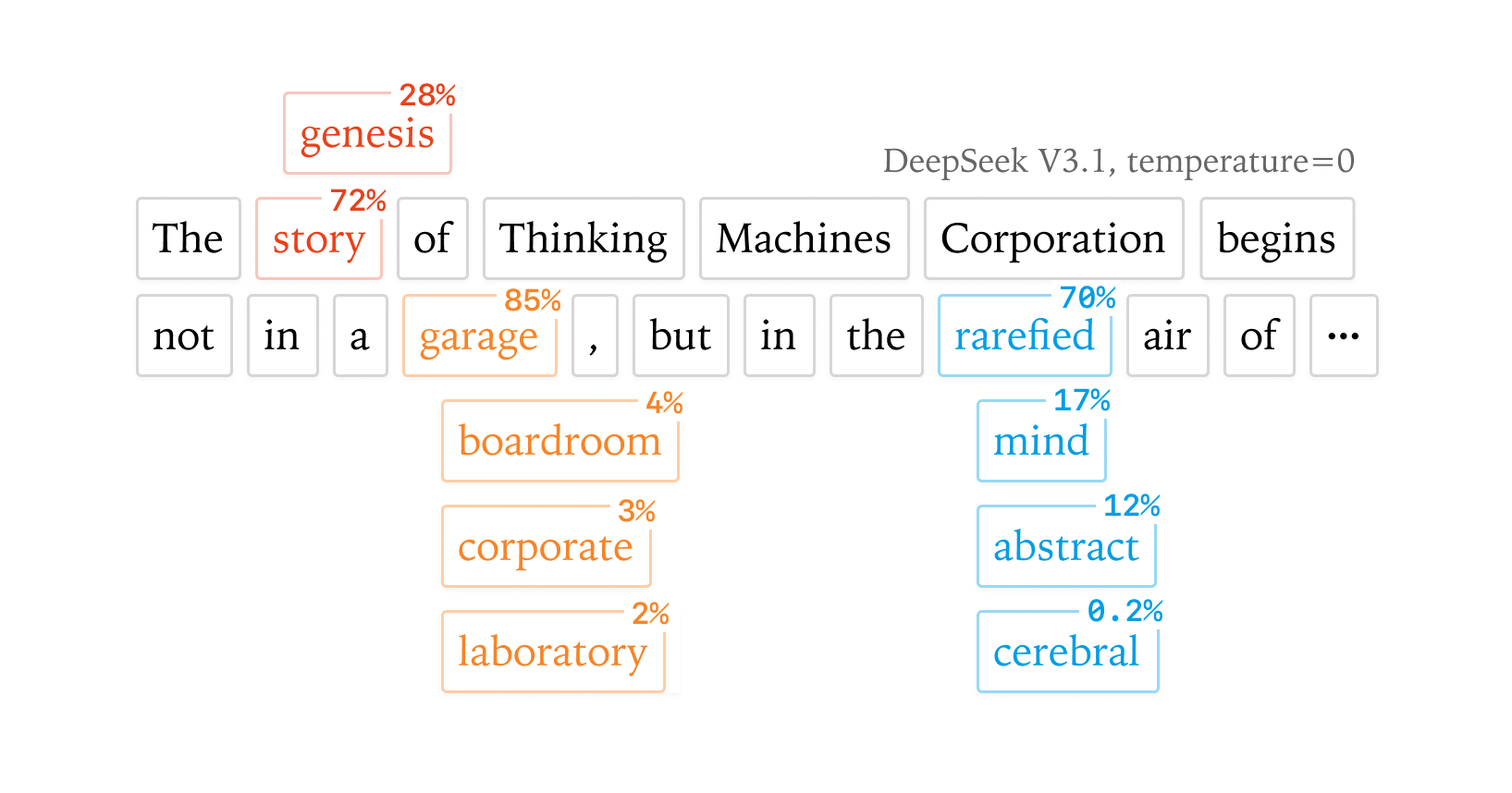
The real source of LLM nondeterminism is batch invariance: server-side batching changes reduction order, so your request's output depends on who else is in the batch.
Why it mattersTemperature 0 is not deterministic because kernels change reduction strategy with batch size, not because GPUs are parallel. Batch-invariant kernels make inference bitwise reproducible and collapse the train/inference gap in on-policy RL.
Tinker General Availability
Tinker drops its waitlist and picks up trillion-parameter Kimi K2 Thinking, an OpenAI-compatible sampling endpoint that addresses training checkpoints by URI.
Why it mattersTinker opens to everyone and becomes a drop-in for OpenAI-compatible clients, including sampling from a checkpoint mid-training. Qwen3-VL adds image input for SFT and RL fine-tuning.

Inkling Small
Inkling-Small ships at a quarter of Inkling's size with comparable results.
Why it mattersAn open-weights MoE with 12B active parameters that tracks its 41B-active sibling, published with compute- and cost-normalized benchmark curves rather than raw scores, and a variable effort dial to trade accuracy against spend.
Training Llms To Predict World Events
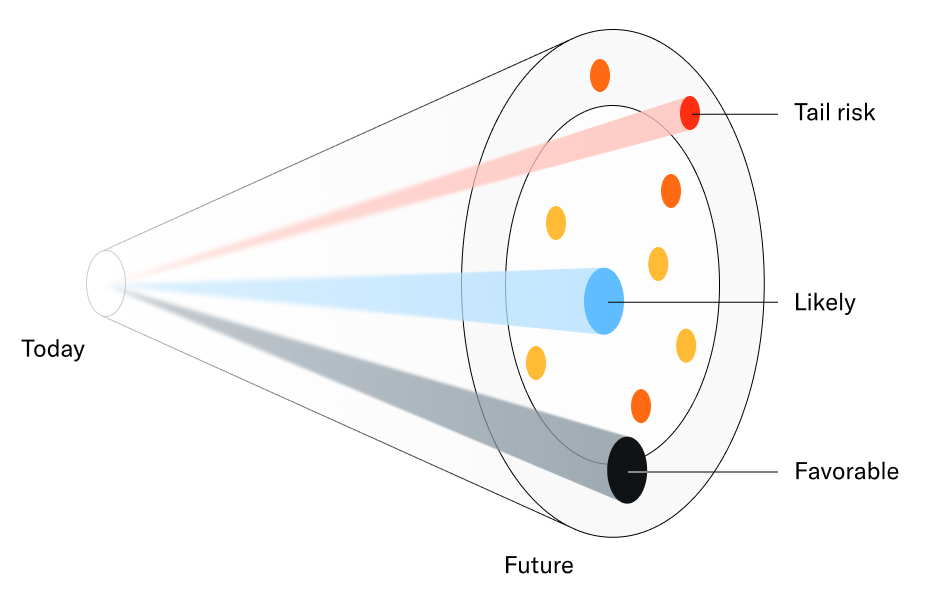
Mantic fine-tuned an open 120B model on roughly 10,000 resolved binary questions, rewarding probability mass on the correct outcome.
Why it mattersRL fine-tuning lifted gpt-oss-120b from 38.6 to 45.8 on the Metaculus AI benchmark, matching frontier models while staying decorrelated from them, which is what makes it valuable inside an ensemble.
On Policy Distillation
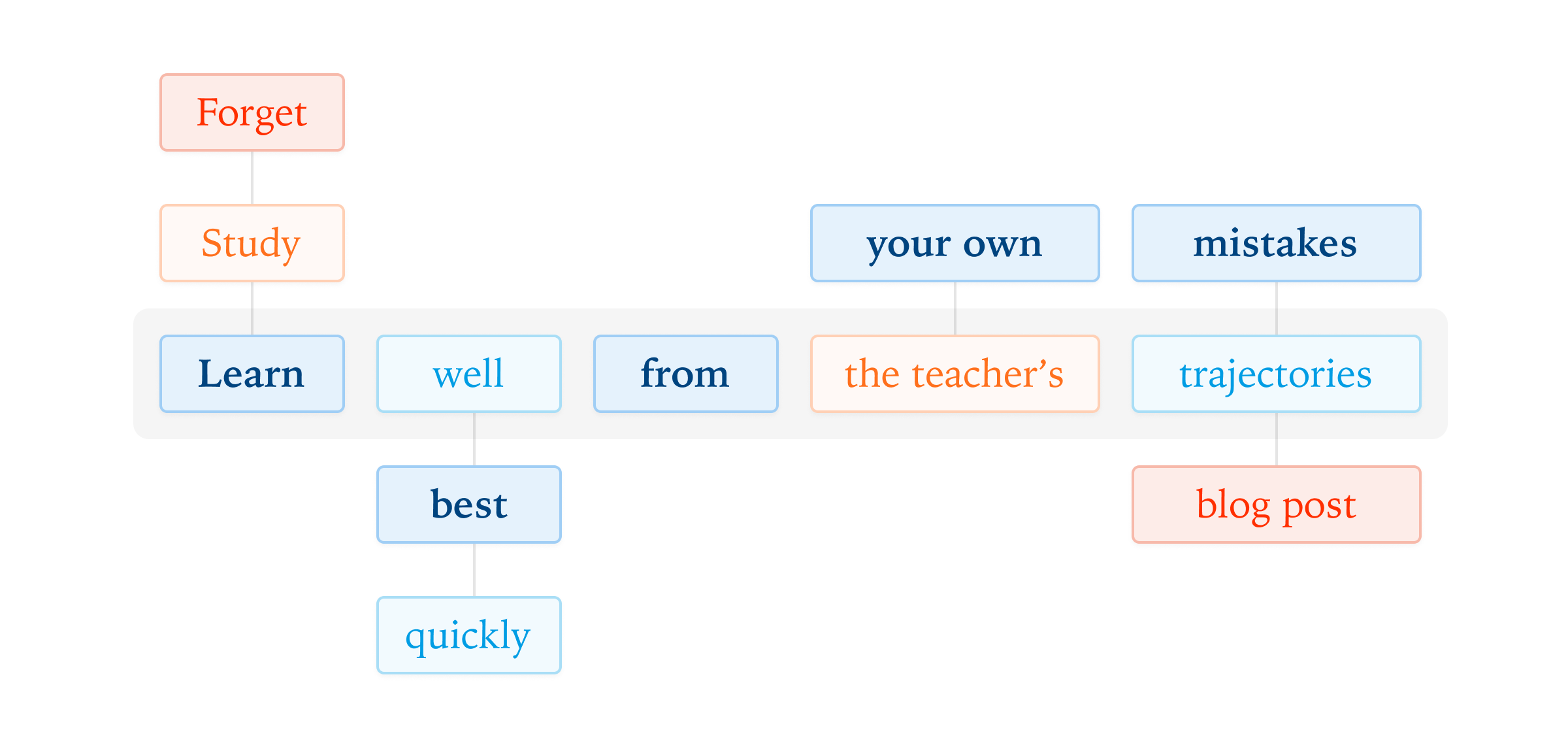
Grading student rollouts token by token against a teacher fixes RL's sparse-feedback problem without inheriting SFT's distribution mismatch.
Why it mattersCombines on-policy sampling with per-token teacher supervision, so a small model learns where its reasoning went wrong rather than only that the answer was wrong. It also recovers instruction-following degraded by domain mid-training.

Putting Task Expertise Into Rl
Instead of stacking schema-linking, generation, repair.
Why it mattersShows a fine-tuned small model beating scaffolded frontier models on text-to-SQL, and names the reward bugs that quietly corrupt RLVR runs: execution match mistaken for semantic equivalence, and knowledge-blind outcome rewards.
A Safe Path To Open Weights
Thinking Machines explains the reasoning behind shipping Inkling's weights.
Why it mattersLays out the criteria a lab applies before publishing weights, covering irreversible release, dual-use cyber capability, and ecosystem readiness. This is the framework determining what open models practitioners get access to next.
Announcing Tinker
Thinking Machines opens a fine-tuning API built on forward_backward and sample rather than a train() button.
Why it mattersResearchers get post-training primitives against large open-weight models, where switching model size is a string change. The provider handles scheduling and failure recovery, and the Cookbook ships reference implementations.
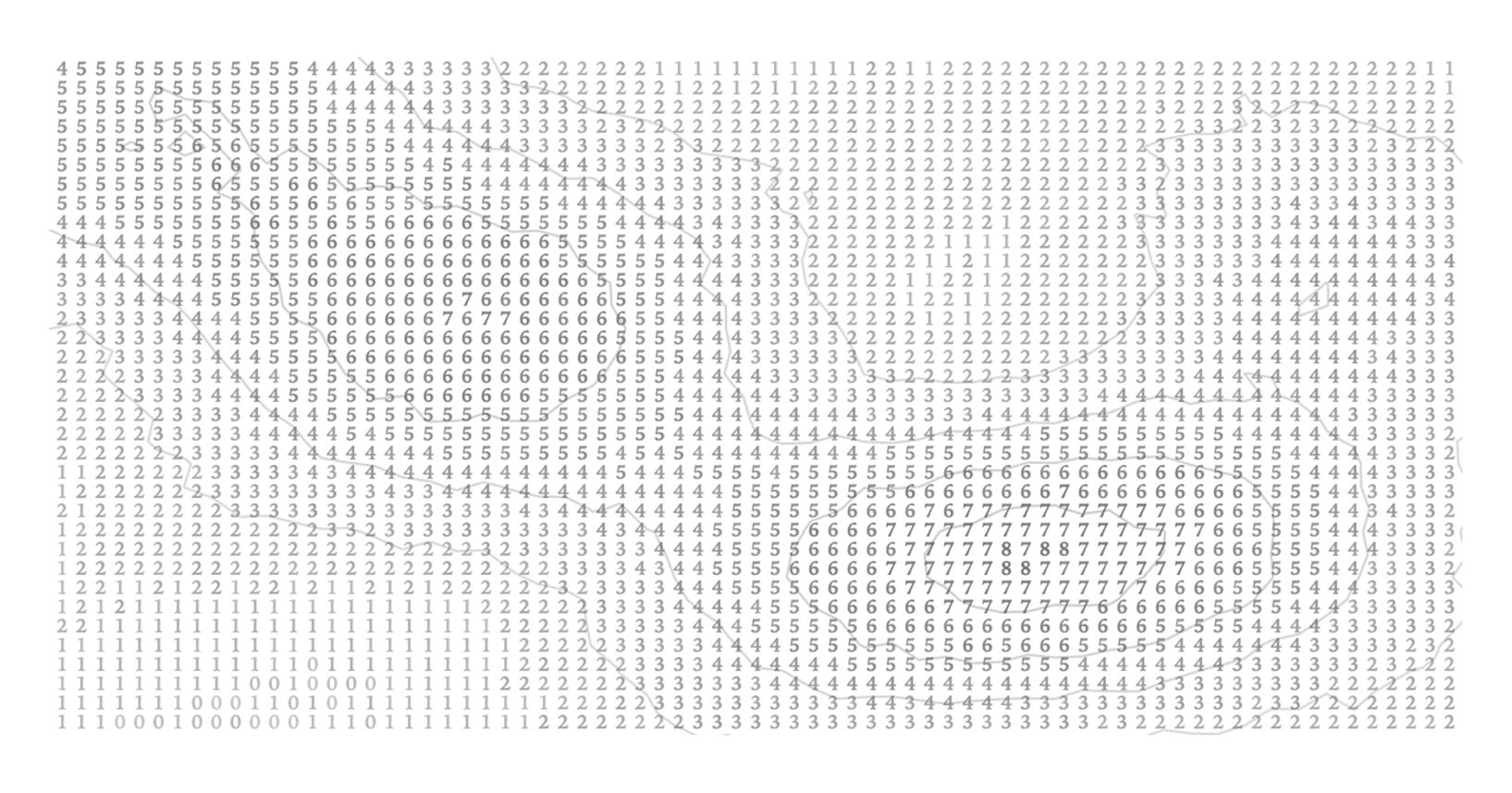
Learning To Replicate Expert Judgment In Financial Tasks
When a task depends on tacit taste rather than knowledge, frontier models underperform.
Why it mattersA concrete recipe for encoding expert judgment into a small model.
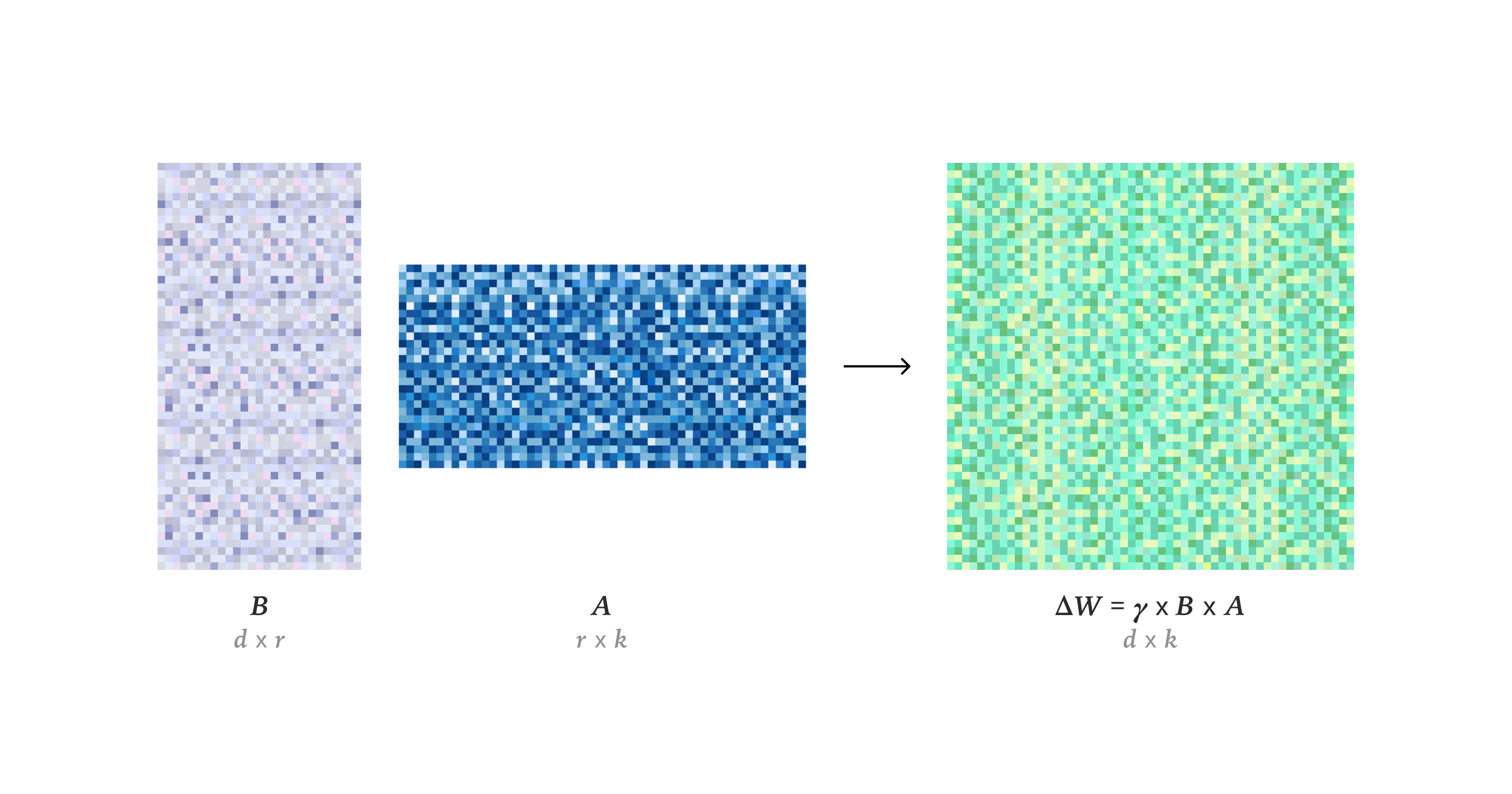
Lora
Thinking Machines maps the regimes where LoRA gives up nothing against full fine-tuning.
Why it mattersEstablishes that LoRA matches full fine-tuning far more broadly than the literature suggested, provided it is applied to all layers and the learning rate is set relative to FullFT, with capacity rather than rank alone as the limit.
Interaction Models
Thinking Machines trains interaction natively rather than bolting scaffolding onto a turn-based model.
Why it mattersTurn-based interfaces freeze the model's perception while it generates.
Model Hardware Standard Research Preview
Anthropic previews the Model Hardware Standard.
Why it mattersA common driver interface turns weeks of bespoke instrument integration into hours, and the natural-language tags are how an agent learns the physical facts about a device that its API never exposes.

Ant introduces Ling-3.0-flash-Fin, a 124B/5.1B-active finance variant of Ling-3.0-flash built with financial institutions. Demos run 20 to 55 tool calls across filings and multi-sheet workbooks with traceable evidence, and its general index score rose from 38 to 41. Weights open next week.
Why it mattersA domain-tuned open-weight model that runs long tool-call chains over filings and spreadsheets while keeping an auditable source trail, showing that finance specialization did not cost general capability.

Can LLMs Write Fast Multi-GPU Kernels? — Simran Arora, Together AI
Interconnect scaling has fallen far behind tensor-core throughput, leaving PyTorch plus NCCL under half its communication-aware roofline.
Why it mattersPuts a measured ceiling on model-written multi-GPU kernels and names where they break — collective ordering, data partitioning, choosing between copy engine, TMA and register transfers.

DeepMind's Zoubin Ghahramani on why probabilistic reasoning belongs inside AI systems: the gap between a model being confident and being right, what Bayesian methods actually buy you, and where uncertainty bites in deployed decision-making.
Why it mattersConfidence and correctness are different quantities, and systems that cannot represent their own uncertainty fail silently; this is the research view on how to make that representation real.

The updated video generation and editing model carries over Veo's creative controls and adds 4K upscaling, first and last frame control and fast 360p drafting. Scene extension now conditions on 10 seconds of the original video instead of one second. Available in Flow, the Gemini app and AI Studio.
Why it mattersExtending a scene from 10 seconds of context rather than one changes what is feasible for longer generated sequences, and cheap 360p drafting lets you iterate before paying for final quality.

Gemini Omni 1.1 Flash lets you build with more control
DeepMind ships a production update to its generative video model aimed at developers.
Why it mattersGemini Omni 1.1 Flash adds scene extension to 40 seconds, first/last-frame control, cheap 360p preview passes and 4K upscaling through AI Studio — concrete controls if you are wiring generative video into a product.

OpenWiki 0.4.0 adds OKF v0.2 support and a claims runtime that keeps a persistent source of truth behind generated pages, surfacing which sources built a page, whether it is fully verified, and what produced it.
Why it mattersAgent-generated documentation is unusable without provenance; per-page source attribution and verification state make it possible to tell which parts of a generated wiki you can trust.

Ox Alpha is INSANE
The stealth Ox Alpha endpoint turns out to be GLM 5.3 Flash.
Why it mattersA cheap model landing near Opus-class quality on code review changes what you can afford to run on every PR; the identity reveal also tells you whose model you are actually calling.

WRITER adds cost and governance controls to AI Studio: spend alerts plus hard limits, consumption and adoption tracking filterable by team, playbook and workflow, and the ability to scale, reassign or disable Playbooks across an org.
Why it mattersWRITER's AI Studio now enforces hard token-spend ceilings rather than alerts alone, and reports consumption by team, playbook and workflow, so agent budgets can be capped before the bill arrives.
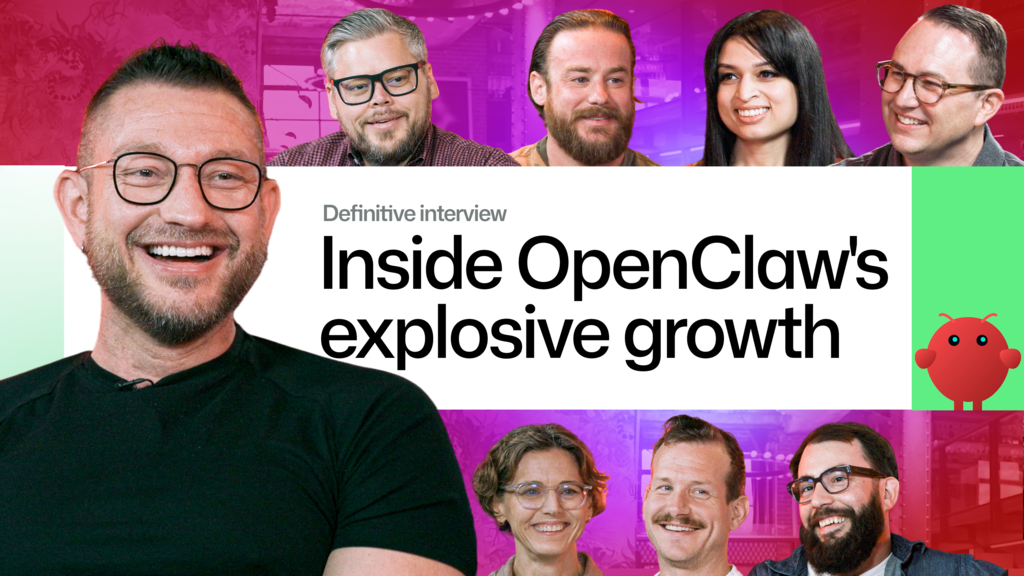
OpenClaw went viral. Meet the maintainers building and securing it.
OpenClaw's creator and maintainers walk through what broke as the project scaled.
Why it mattersRunning an agent project that executes on user devices turns code review and contributor trust into a security control.

Gemini Omni 1.1 Flash lets you build with more control
Google's video model gains production controls.
Why it mattersVideo generation becomes plannable work rather than a slot machine: fixed start and end frames, longer continuous scenes, and cheap 360p drafts before paying for 4K output.
A new technique called Prefix Sliding lets LLMs selectively forget earlier parts of long reasoning traces, avoiding the memory cost of full attention and the accuracy loss of compaction, without any retraining.
Why it mattersPrefix Sliding lets models drop earlier reasoning context selectively during long inference chains, avoiding both the memory blowup of full attention and the accuracy loss of compaction, without retraining.

Claude For Life Sciences
Anthropic wires Claude into scientific platforms with connectors for Benchling, PubMed, BioRender, Synapse and 10x Genomics.
Why it mattersAdds a concrete integration surface — scientific-platform connectors plus Agent Skills for repeatable protocols — and publishes Protocol QA and BixBench numbers you can compare against when scoping domain agents.

Healthcare Life Sciences
Claude for Healthcare arrives with HIPAA-ready infrastructure, plus life-sciences connectors to the CMS coverage database, Medidata and ClinicalTrials.gov.
Why it mattersHIPAA-ready deployment plus CMS, Medidata and ClinicalTrials.gov connectors open regulated healthcare workloads to Claude-based agents.

Accelerating Scientific Research
A look inside lab-built agent systems on Claude, including Stanford's Biomni.
Why it mattersShows how research teams are structuring large tool-and-database registries behind a single planning agent, plus where those systems break down — a directly transferable pattern for anyone building domain agents over fragmented tooling.
Claude Science Ai Workbench
Claude Science ships in beta.
Why it mattersA first-party multi-agent workbench that pairs a coordinator/specialist/reviewer split with fully reproducible artifacts and on-demand compute — a concrete reference for how to make agent output auditable rather than just plausible.

The Agentic Commerce Stack — Ahnaf Prio, Best Buy
A merchant-side map of agentic checkout: MCP for tools, A2A between customer and merchant agents, ACP and UCP competing as commerce primitives, AP2 for payment mandates.
Why it mattersSorts out the overlapping agent-commerce protocols and what each actually carries — including AP2 mandates with an authorizing party, spend ceiling and revocation URL — plus why merchants must push feeds rather than answer catalog searches.
An index of the vibe-coding frontier. Corrections welcome.