Intel
Page 92
MiniMax releases open-weights Music3 for full-length songs
MiniMax released Music3, an open-weights model that generates songs up to five minutes from lyrics and structured captions.
Why it mattersOpen weights for a 5-minute full-song music model with a speech-style HTTP API and a 24GB (or offloaded 8GB) VRAM path let you self-host music generation instead of depending on a vendor API.
AReno brings agentic RL post-training to a single DGX Spark
Ant's inclusionAI team released AReno, a self-contained single-node toolkit for RL post-training, serving and agentic RL.
Why it mattersAReno lets you run agentic RL (tool-call rollouts, reward functions, LoRA/QLoRA) on one machine such as a DGX Spark or Apple Silicon, without a cluster. That makes it practical to adapt a small model to your own agent task locally.

On ReactBench, the open-source frontend coding benchmark, Grok 4.6 ranks second at fixing React code and fifth across writing and fixing combined. The clearest improvement over 4.5 is effort separation, which now traces a usable cost-quality curve.
Why it mattersIf your agent workload is React repair, Grok 4.6 now sits second on an open-source frontend benchmark, and its effort levels trade cost against quality along a cleaner curve than 4.5.

Build and run your own benchmark today:
Artificial Analysis launched Optima, a GA platform for building custom benchmarks from your own files, traces or coding-agent context.
Why it mattersLets you test models on your own workload and see score, cost and time per task together, so you can find a cheaper model that holds quality. Supports importing traces and benchmarking your own agent over HTTP.

Palmyra X6 targets eight-hour unattended agent runs
WRITER released Palmyra X6 with an updated agent harness, claiming eight-hour unattended runs and about $0.12 per average task.
Why it mattersShows what a vendor ships for long-horizon agent runs: a new model paired with a harness built around cache-stable prompts and cheap compaction. It claims 40%+ cost cuts at quality parity. Results come from the vendor's own evals.
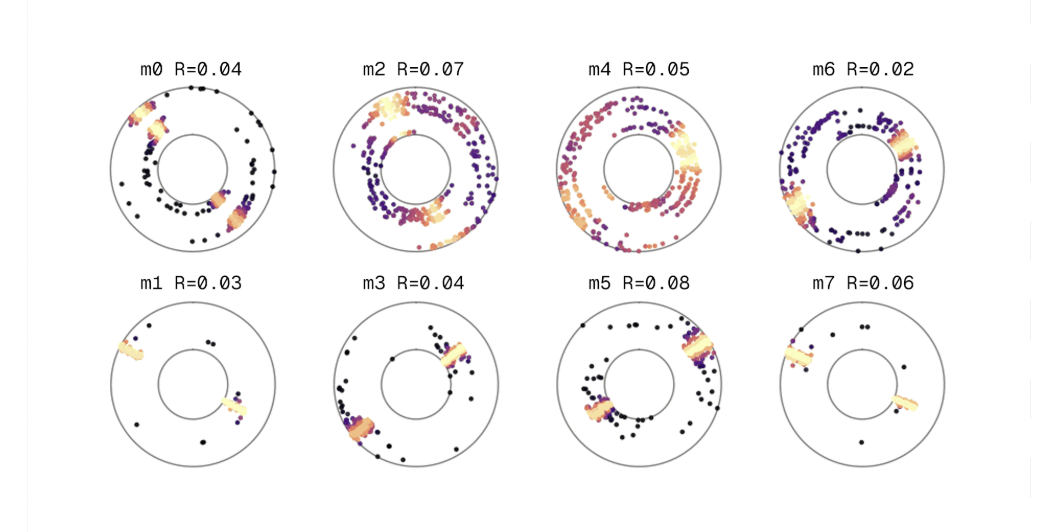
Less is More: Scaling Dynamics with Sparsity
Shows that sparsifying oscillator interactions in Unconventional AI's Un-0 model both solves a quadratic scaling problem and improves image-generation quality over the dense baseline.

A 90-minute SF challenge put roughly 130 engineers on one task: an agent that orders a real pizza with real money, no pre-written code. Checkout stopped nearly everyone; the winner used DoorDash's month-old CLI, second and third pushed orders through Brave's API.
Why it mattersIn a live autonomous-commerce test the wall wasn't reasoning or tool use but completing a real paid checkout — and merchant-supplied CLIs or Brave's API were what actually cleared it.

🧩 DeepSeek Harness v0.1 is now available in Developer Preview! 🔹 We’re opening
DeepSeek Harness v0.1 opens in developer preview under MIT, built on the Cordis meta-framework around one idea.
Why it mattersAn open-source, fully pluggable agent harness from a frontier lab gives builders another swappable foundation to compare against existing frameworks.
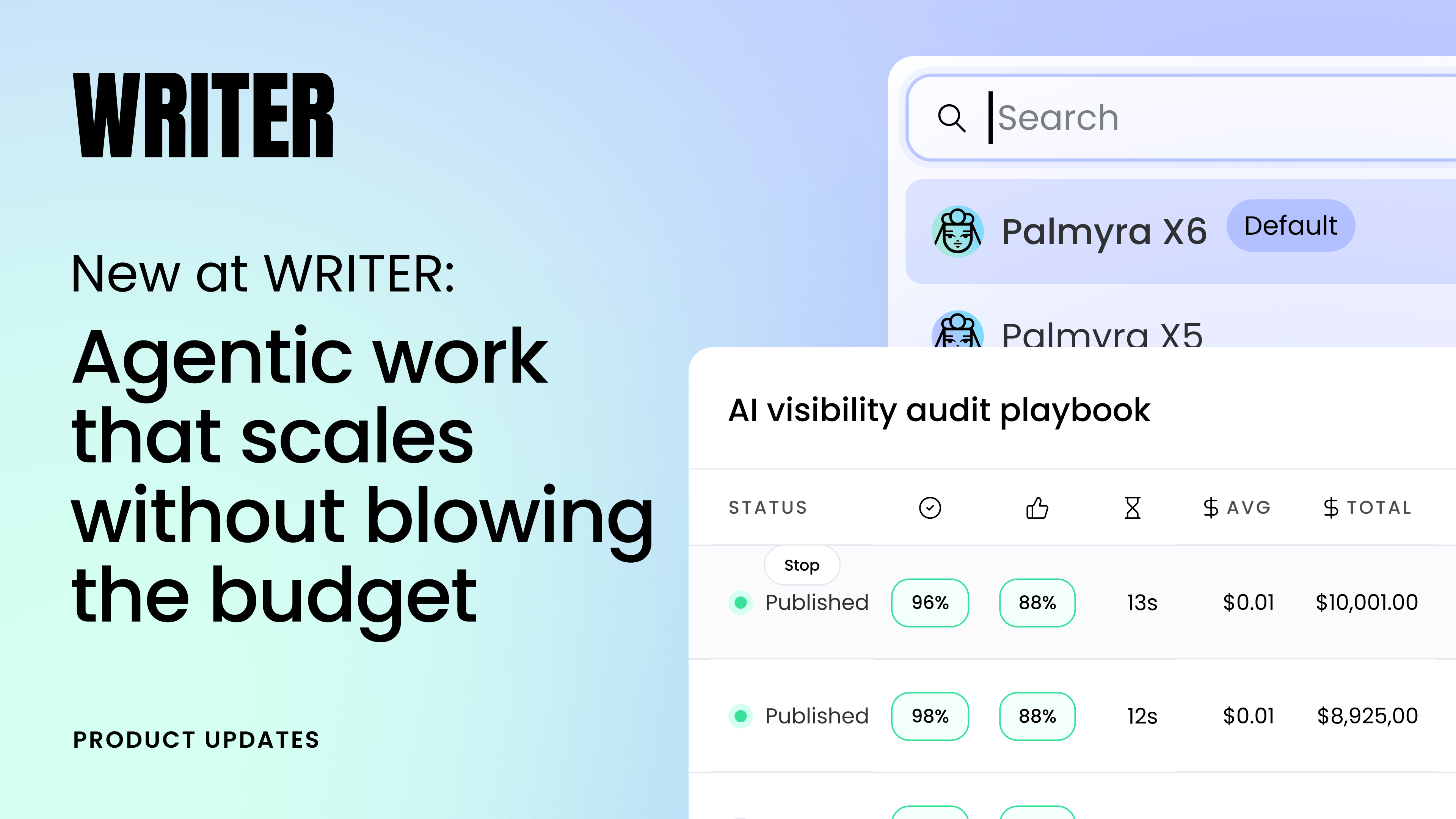
New at WRITER: Agentic work that scales without blowing the budget
WRITER ships Palmyra X6 for agentic workflows at lower cost.
Why it mattersA new flagship model shipped alongside per-model spend governance and usage reporting covers the operational half of running agents in production that most platforms still leave to the caller.

Grok 4.6 Is INSANE – Is THIS a Frontier Model?
A hands-on test of Grok 4.6 across browser workflows, C++ game development, 3D CAD modelling, frontend design and FPS generation, asking whether it reaches frontier level.
Why it mattersLets engineers see whether Grok 4.6 is competitive on agentic coding tasks against a consistent benchmark set.

xAI just caught up (Grok 4.6 is here)
Grok 4.6 gains five points on the Artificial Analysis Intelligence Index to reach 61, but burns 30% more tokens per run and nearly doubles in price.
Why it mattersHeadline benchmark gains can be paid for in tokens, and this puts numbers on that tradeoff for Grok 4.6. Model selection for agent loops is a cost decision as much as a capability one.

DeepSeek introduces peak and off-peak API pricing with the V4 lineup. Off-peak rates are 50% lower than peak, taking effect at 16:00 UTC on Aug 16, 2026, which rewards deferrable workloads.
Why it mattersDeepSeek V4 API pricing now has peak and off-peak tiers, with off-peak 50% cheaper from 16:00 UTC Aug 16, 2026. Batch and background agent workloads can cut cost by scheduling into off-peak windows.
DeepSeek launches V4-Pro with agent-focused upgrades, tunable reasoning effort across V4-Pro and V4-Flash, and native OpenAI Responses API support tuned for Codex. Available in the app and via API under unchanged model names.
Why it mattersDeepSeek V4-Pro adds low/high/max reasoning effort and native OpenAI Responses API support with Codex setup, so existing Responses-based agent harnesses can target it with less glue code.
The builder’s guide to GPT‑5.6
OpenAI's builder's guide to GPT-5.6: how startups use it for faster, more cost-efficient agents through smarter model selection and new Responses API capabilities.
Why it mattersModel selection and Responses API mechanics are the levers that decide what an agent costs to run, and this is the vendor's own account of them.
Previewing Ultrafast mode: GPT-5.6 Sol at up to 14X the speed
OpenAI previews Ultrafast, an API service tier running GPT-5.6 Sol up to 14 times faster, powered by Cerebras hardware and delivering up to 750 output tokens per second.
Why it mattersA frontier model at 750 tokens per second changes which agent loops and real-time flows are viable, and the tier is the access path to it.

The Devil Is in the Interface: Evaluating How Tool Architecture Shapes Coding Agent Behavior
A controlled study of tool architecture in coding agents.
Why it mattersSeparates what an agent can do from how its tools are shaped, and shows the shape itself changes behavior, which is the part most agent harnesses tune blind.

Better, Faster, Stronger: Programmatic Skill Learning Best Reduces Agent Cost
An argument that skills learned as programs cut agent cost most, because deterministic action sequences achieve cheaply what would otherwise take trial and error and risk degenerate behaviour over long horizons.
Why it mattersSkill design is usually argued on capability; this puts a cost frame on it and gives a concrete reason to prefer program-shaped skills over prose ones in long-horizon agents.

AutoWorldModel-Bench: A State-Centric Benchmark for Automated World-Model Research
A closed-loop benchmark where coding agents autonomously improve a world-model starter under a fixed compute budget across eight game environments, testing open-ended research rather than engineering to a spec.
Why it mattersMost coding-agent benchmarks score work against a known spec; this one measures whether an agent can make progress when the improvement direction is not given, which is closer to how research and open-ended engineering actually run.

RealisticTritonBench: A Benchmark for Triton-Kernel Generation in Real-World AI Frameworks
A benchmark for LLM-generated Triton GPU kernels that moves past PyTorch-to-Triton translation, scoring end-to-end framework performance rather than individual kernels and replacing hand-written evaluation scripts models could exploit.
Why it mattersKernel generation results reported on translation-style benchmarks overstate what models do on real framework code, and this gives a harder target measured on end-to-end performance.

MaSRead: Content-Addressed Reading of Replicated Latent Stores
Agents sharing KV-cache fragments instead of text hit a read problem: merged fragments interfere, so colocation isn't addressability.
Why it mattersFor agents that share latent state instead of text, colocating KV fragments isn't enough to read them back — content-addressed routing with masked decoding recovers the right fragments as the store grows.

Backtrader-Bench: Benchmarking LLM Agents on Algorithmic Trading with Self-Generated MCQs
Backtrader-Bench scores coding agents on algorithmic trading by generating questions from real backtest configurations and throwing out any a no-tool model can already answer.
Why it mattersThe filtering rule — discard every benchmark question a model can answer without running code — is reusable for any agent eval meant to measure execution rather than memorized recall.

Do Influence Tactics Matter? Investigating Prompt Framing Effects in LLM Code Generation
Eight of Yukl and Falbe's influence tactics — rational persuasion, ingratiation, exchange and the rest.
Why it mattersIt puts measurement behind a widely repeated folk belief about prompt framing, scoring persuasion-style templates on real coding benchmarks across correctness, maintainability and security.

Testing Deep Learning Library APIs via Cross-Framework Differential Fuzzing
Xamt fuzzes deep-learning library APIs across seven frameworks at once, building execution-validated groups of operations that should behave identically, then driving them with ordinary, boundary and non-finite inputs to flag crashes and cross-framework output disagreements.
Why it mattersDefects that behave the same on CPU and GPU slip past the usual differential oracle; comparing equivalent operations across seven DL libraries catches APIs that quietly disagree on boundary and non-finite inputs.

Harnessing LLMs for Document-Guided Fuzzing of Python Libraries
VistaFuzz uses a locally served open model to read API documentation and generate fuzzing inputs satisfying both per-parameter constraints and dependencies between parameters, evaluated across 7,718 APIs in twelve Python libraries.
Why it mattersShows a local model reading docs well enough to drive fuzzing at scale, and quantifies how much of an API surface has cross-parameter constraints that naive generators break on.

Lost in Compaction: Evaluating Side-Constraint Loss under Context Compaction
Session constraints such as do not delete any emails until I confirm are silently dropped when context is compacted.
Why it mattersAny long-running agent that compacts context can quietly discard the safety instruction a user gave it earlier in the session, and this quantifies how often that happens rather than leaving it as folklore.

Measure, Don't Optimize: Forecasting Recovery in LLM Unlearning
J-Access projects a model's intermediate representations into vocabulary space to measure how reachable supposedly-unlearned concepts still are.
Why it mattersIf you rely on unlearning for safety or compliance, clean outputs aren't enough — residual internal accessibility predicts how quickly removed knowledge comes back under further fine-tuning.

GraphAlignCoder: Aligning Program and Proof Graphs for Code Generation
GraphAlignCoder supervises structure rather than just pass/fail.
Why it mattersExecution feedback only says a program failed; aligning code structure with proof structure supervises how a correct solution should be organized, worth 12 extra solves on LiveCodeBench v6 over CodeRL.

Self-Evolving Embodied Agents via Skill-Harness Evolution
SHAPER adapts embodied agents to new environments without training.
Why it mattersArgues that most of the adaptable surface of an agent lives in its skills and harness rather than its weights, and shows a train-free loop that improves that surface using the same frozen model.

Sakana Chat now runs on Fugu plus the Namazu Japanese model and gains code execution, so a prompt in Japanese produces a working web app, tool, or game in the browser. Drop in an Excel file and it runs Python for the analysis, charts, and report. Free, no login required.
Why it mattersA free, no-login vibe-coding surface aimed at Japanese-language prompting, with in-browser code execution and Python-backed analysis of uploaded spreadsheets.

DeepSeek V4 Pro Is HERE – Is THIS the BEST Open Model Yet?
A hands-on test of DeepSeek V4 Pro at official release across browser workflows, C++ game development, FPS generation, 3D CAD modelling and cinematic game creation.
Why it mattersGives practitioners independent evidence of how DeepSeek V4 Pro handles real coding workloads before they route production traffic to it.

Keep Browser Sessions Logged In
Why an automated browser lands back on the login page every run — the profile on disk is the only reason your everyday browser remembers you — and how to fix it.
Why it mattersSession persistence is the wall browser agents hit the moment they leave a laptop; persisting the whole profile rather than just cookies is what keeps logins alive and reduces anti-bot friction.

Grok Build is now available in the AI SDK harness layer
Grok Build joins Vercel's AI SDK harness layer through the same HarnessAgent interface as Claude Code, Codex, Deep Agents, OpenCode and Pi.
Why it mattersTeams already running HarnessAgent can swap in Grok Build without touching application code. The supported-runtime list is the practical menu for anyone abstracting over coding agents.

What We Learned by Reproducing 2,200 papers from ICML
Hugging Face's account of reproducing 2,200 ICML papers, with per-project logs, code and traces published in an interactive logbook.
Why it mattersLarge-scale reproduction data tells practitioners which published results actually hold up before they build on them.

Introducing Agent Effectiveness
Factory introduces Agent Effectiveness, a view of how Factory usage maps to delivery speed, work priorities and shipped artifacts across an engineering organization.
Why it mattersTeams running coding agents at scale have had no principled way to connect agent spend to shipped work, and this is a first-party attempt at it.

Gemini 3.7 Flash now available on AI Gateway for 50% off
Gemini 3.7 Flash is on Vercel's AI Gateway at half price until the end of 2026, with better issue resolution, less time stuck in failed agent loops.
Why it mattersIt is the cheapest immediate path to the new Flash model inside an existing coding agent, with a dated discount attached.
Gemini 3 7 Time Frontier
Artificial Analysis benchmarks Gemini 3.7 Flash: index 56, Pareto frontier on time per task, discounted pricing, and top pass^5 on AA-AnalystAgent.
Why it mattersGemini 3.7 Flash (high) scores 56 at about 340 tokens/s and 1.7 minutes per task, and costs 30% less per task at Google's discounted pricing through year end.
High Signal Ai Code Review That Adapts To Your Codebase At Scale
LinkedIn's multi-agent code reviewer covers ~10,000 repos and ~79,000 weekly reviews, posting most comments before the first human reviewer opens the PR.
Why it mattersGenerating AI review comments is easy; the hard parts are factual grounding in the diff, codebase-specific conventions, and latency.

Use ACP-compatible harnesses with the AI SDK harness layer
Vercel's AI SDK harness layer now wraps the Agent Client Protocol itself rather than individual runtimes.
Why it mattersAnyone building on top of coding agents can now target a protocol instead of maintaining one adapter per runtime. That collapses the integration cost of supporting a new harness to a small config block.

GLM 5.2 free for eve agents through August 27 via Blackbox on AI Gateway
GLM 5.2, Z.ai's open-weights coding model with a 1M-token context window, is free for eve agents through 27 August via Blackbox on Vercel's AI Gateway.
Why it mattersA dated, free window on a 1M-context open-weights coding model is a concrete access change with the migration path spelled out.
DeepSeek V4 Pro 0813 (on OpenRouter)
DeepSeek's V4 Pro 0813 arrives via API with no announcement page of its own, and Simon Willison notes its three reasoning levels produce visibly different output.
Why it mattersA new frontier-adjacent model is reachable today through OpenRouter, but its benchmark claims have no verifiable source, so treat the numbers as unconfirmed.

SemiAnalysis argues SpaceX reaches ~10GW of datacenter capacity by end-2027, resting on inference economics of roughly $100B/GW/year in API revenue against ~$12B/GW/year of rental cost — and names Microsoft, with OpenAI model access and no training costs, as the other winner.
Why it mattersIf inference clears ~$100B/GW/year against ~$12B/GW/year of rental cost, the 2027 capacity picture — and who supplies it — shifts materially for anyone pricing long-run inference.
SemiAnalysis argues the 2027 datacenter buildout is plausible: its inference model shows over $100B per GW-year in API revenue against about $12B in rental cost on GB300. It projects SpaceX near 10GW by end of 2027. Only the first two posts of the five-post thread were read.
Why it mattersSemiAnalysis estimates GB300 inference can earn roughly 8x its rental cost per GW-year, which explains why very large datacenter buildouts can be rational. This bears on future compute availability and API pricing.

Factory announced that Grok 4.6 from SpaceX AI is now available in Droid, its coding agent. The post gives no pricing, rate limits or benchmark results, so the practical impact is model choice inside the tool.
Why it mattersDroid users can now pick Grok 4.6 as the model behind their coding agent, which lets them compare it against other models on their own tasks without changing tools. Pricing and limits were not disclosed.
Browser agents can be tricked by instructions hidden in a page. We build defense
Anthropic's guidance on running Claude in Chrome safely.
Why it mattersBrowser agents can be steered by hidden page text.

Anthropic says Claude in Chrome sessions now carry over to desktop, web and mobile, saving conversations and making skills and connectors usable in the browser. Rolling out to Max and Team immediately, and to Pro over the coming weeks.
Why it mattersClaude in Chrome conversations now persist across desktop, web and mobile, and your skills and connectors work in the browser. It is on Max and Team today, with Pro following in coming weeks.

Liquid AI published WebGPU demos of its 3B vision-language model running entirely in the browser: full-page document layout and OCR in one pass, bounding-box grounding from a natural-language request, a tool call triggered by an image, and step-by-step UI navigation by locating the next click.
Why it mattersA 3B vision model handling OCR, grounding and screen navigation on-device means computer-use and document workflows can run client-side, with no image leaving the browser.

OpenRouter launched Ori Pi, which runs the Pi coding agent on OpenRouter with one install and OAuth sign-in. The model picker honors workspace guardrails, /fast routes for speed by provider, and /zdr limits a session to zero-retention endpoints. Both settings are saved with the session.
Why it mattersOri Pi runs the Pi coding agent on OpenRouter with org guardrails applied to the model picker. /fast and /zdr toggles control speed routing and zero-retention endpoints per session, and both persist on resume.
alchemy-utils 0.1a0
Simon Willison tasks Codex with prototyping a database-agnostic version of sqlite-utils backed by SQLAlchemy, keeping the same insert, upsert and introspection API while working against PostgreSQL, SQLite and DuckDB.
Why it mattersShows the exact shape of prompt that turns a coding agent into a same-morning library prototype, including the reference-repo and TDD scaffolding that made it converge in few follow-ups.

Improving Agents is a Data Mining Problem — Vivek Trivedy, LangChain
LangChain's Vivek Trivedy on pointing agents at other agents' traces to answer questions nobody can read their way to.
Why it mattersIt gives a decision rule for the prompt-tuning versus finetuning question and shows traces are the substrate that makes agent improvement measurable rather than anecdotal.
SemiAnalysis on DeepSeek V4 Pro 0813 massively beating Nemotron3 Ultra on agentic tasks, and the argument that committee-based frontier model development fundamentally does not work.
Why it mattersA new open-lineage frontier model claiming a lead on agentic tasks at a much lower active parameter count is worth evaluating before committing to a proprietary default.
An index of the vibe-coding frontier. Corrections welcome.