Intel
Page 112
Anthropic added an advisor option to Claude Managed Agents. A working agent can consult a stronger model mid-session for a second opinion, enabled by a single added roster entry. Announced by ClaudeDevs; details beyond the post are not covered.
Why it mattersA cheaper working agent can now escalate hard decisions to a stronger model mid-session, configured with one roster line. This lets you control cost without giving up a second opinion on difficult steps.
Claude Managed Agents gained session budgets that pause on a budget_reached event and can be raised to resume. Sessions also load skills from .claude/skills/ in attached repositories. Only two of the four weekly updates were readable, and the video was not extracted.
Why it mattersManaged Agents sessions can now be capped with a budget that pauses at a budget_reached event, and they reuse skills already in .claude/skills/. You can port Claude Code skills to hosted agents without rewriting them.
Claude Managed Agents sessions can now carry a spend budget. On hitting the limit, a session pauses and emits a budget_reached event, and raising the budget resumes it. Gives operators a predictable cost ceiling for long-running agents. Based on the ClaudeDevs announcement thread.
Why it mattersYou can cap spend per Managed Agent session. At the limit the session pauses and emits budget_reached, and raising the budget resumes it. That makes long autonomous runs cost-bounded without losing progress.
Claude Managed Agents now accept a model.inference_geo setting. Global uses available capacity at standard pricing, while us keeps inference in-region at 1.1x. Gives teams with residency requirements an explicit control and a known price premium. Sourced from the ClaudeDevs thread.
Why it mattersIf you need inference to stay in the US, set model.inference_geo to us and budget 1.1x pricing. Global runs wherever there is capacity at the standard rate. The choice trades residency against cost.

SpaceX 10GW in 2027 – Why It’s Real, Will Drive $300B ARR for SpaceX, and Why Microsoft Will Be the Largest Offtaker
SemiAnalysis argues SpaceX's 6-10GW datacenter target for 2027 is achievable, walking the suitable sites and gas-generation equipment that make it possible, then prices scarce near-term capacity at up to $50B per GW per year against the $100B-plus per GW that labs can earn selling API inference.
Why it mattersNear-term compute scarcity, not model quality, drives what inference costs — this lays out the supply pipeline and the per-GW revenue math sitting behind API pricing.

Alex Cheema previews Qwen 3.8 27B's weight release: close to GLM-5.2-level intelligence running locally on a $4k 36GB MacBook at roughly 25 tokens per second.
Why it mattersIf the claim holds, frontier-adjacent capability moves onto consumer hardware, which changes what engineers can run locally instead of via an API.
Claude Code sessions can now message one another. You instruct Claude to send a summary, not history or files, and the receiving session absorbs it mid-task, removing manual context handoff across parallel sessions. Based on the ClaudeDevs announcement; the demo video was not readable.
Why it mattersWhen you run several Claude Code sessions, one can now hand context to another as a summary instead of you re-explaining it.
The Leaderboard Illusion
This research paper documents systematic distortions in Chatbot Arena's leaderboard, showing that major providers like Meta, Google.
Why it mattersChatbot Arena rankings, often cited as ground truth for model quality, can be inflated up to 112% through private variant testing and disproportionate battle-data access.
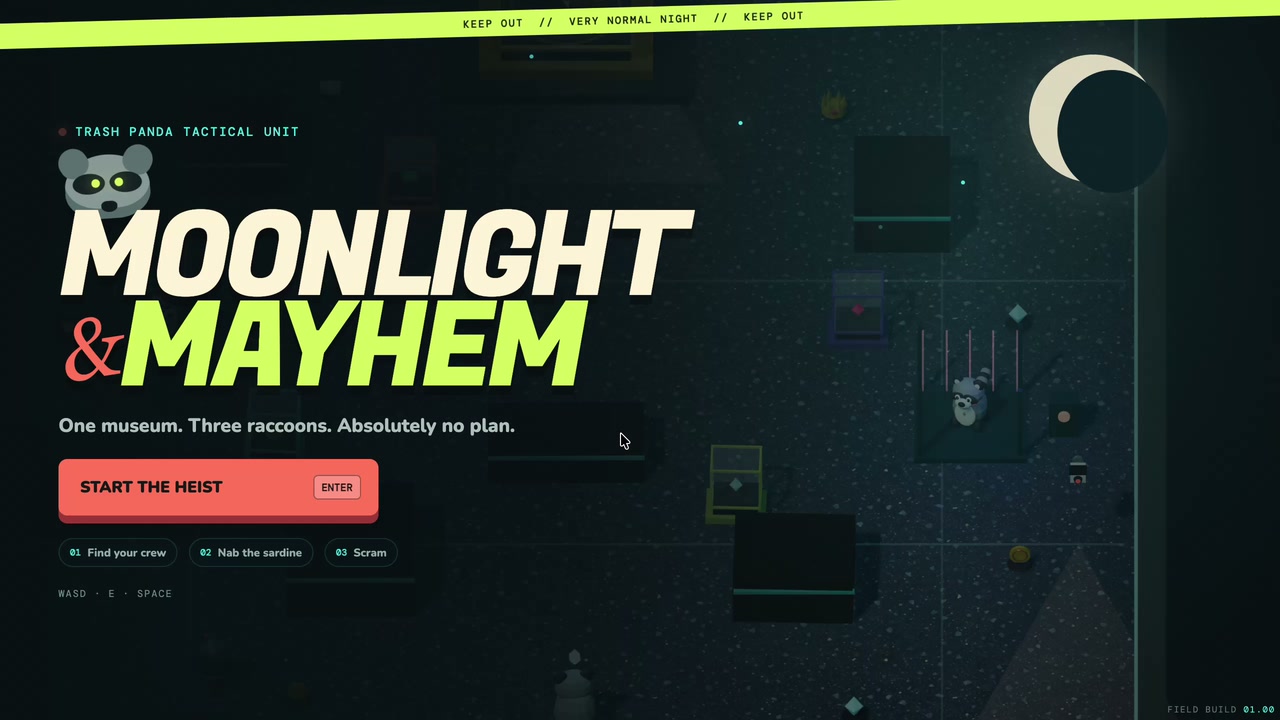
Moonlight & Mayhem (Raccoon Heist by Codex + GPT-5.6 Sol Ultra)
The same four-year-old raccoon-heist premise handed to Codex running GPT-5.6 Sol Ultra with aggressive sub-agent use, producing what Simon Willison judges a considerably better game than the Claude Fable 5 attempt.
Why it mattersA rare like-for-like comparison of two frontier coding agents on an identical one-shot build, including a concrete failure mode in agent self-review that practitioners hit in their own loops.

A larger context window can keep the rule available. It cannot guarantee the rul
A larger context window can keep the rule available. It cannot guarantee the rule controls the action.
Why it mattersNames the specific mechanisms — gates, checkpoints, post-hoc diff verification — that engineers need beyond bigger context windows to keep long-horizon agents inside policy.

AlphaSignal summarizes HANDBOOK.md, a 65-task benchmark with policies up to 124 pages where agents find the rule, reach the right call, then reason past it. Best configuration passes 36.2%; the thread names four failure mechanisms and notes this summary does not cover the paper's methods.
Why it mattersAgents can retrieve and correctly interpret a policy, then override it in later reasoning. Per-decision accuracy compounds, so 99% across 100 decisions gives about 37% end-to-end success.

Claude Code's auto mode, a classifier-based permission system, is rolling out to all users by default. The announcement says there is no added cost for running the classifier and claims it is safer than manual review. Linked details were not available, so the safety claim is unverified.
Why it mattersClaude Code's permission handling changes for all users: a classifier now decides which actions need approval by default, instead of you reviewing each prompt. Engineers should check how this alters their agent's autonomy and risk profile.

OpenAI says its upcoming model Astra is its first 'critical' cybersecurity model under the Preparedness Framework. Additional controls will govern development, while OpenAI aims for broad availability so defenders can use its cyber capabilities. The linked full post was not readable.
Why it mattersOpenAI is classifying an upcoming model as critical for cyber risk, which signals extra controls that may shape its release timing and access. Engineers building security tooling should expect gated availability.
Anthropic makes auto mode the default Claude Code permission mode from August 14 for Pro, Max and Team. A 1,053-person study found testers caught a dangerous command 13.6% of the time, near 5% after 50 prompts, versus 89% for the classifier.
Why it mattersClaude Code's default permission mode changes on August 14 for Pro, Max and Team users. The study shows manual approval degrades with prompt fatigue, while the classifier held at 89% regardless of session length.
Claude Code will make auto mode the default permission mode for Pro, Max, and Team users starting August 14. A separate classifier reviews shell commands and actions. Anthropic reports it caught 89% of dangerous commands in testing versus 14% for manual approval. Methodology was not published in the
Why it mattersClaude Code's default will shift from manual approval to a classifier that reviews shell commands, changing how often you are prompted. Anthropic reports it caught 89% of dangerous commands versus 14% for manual approval.
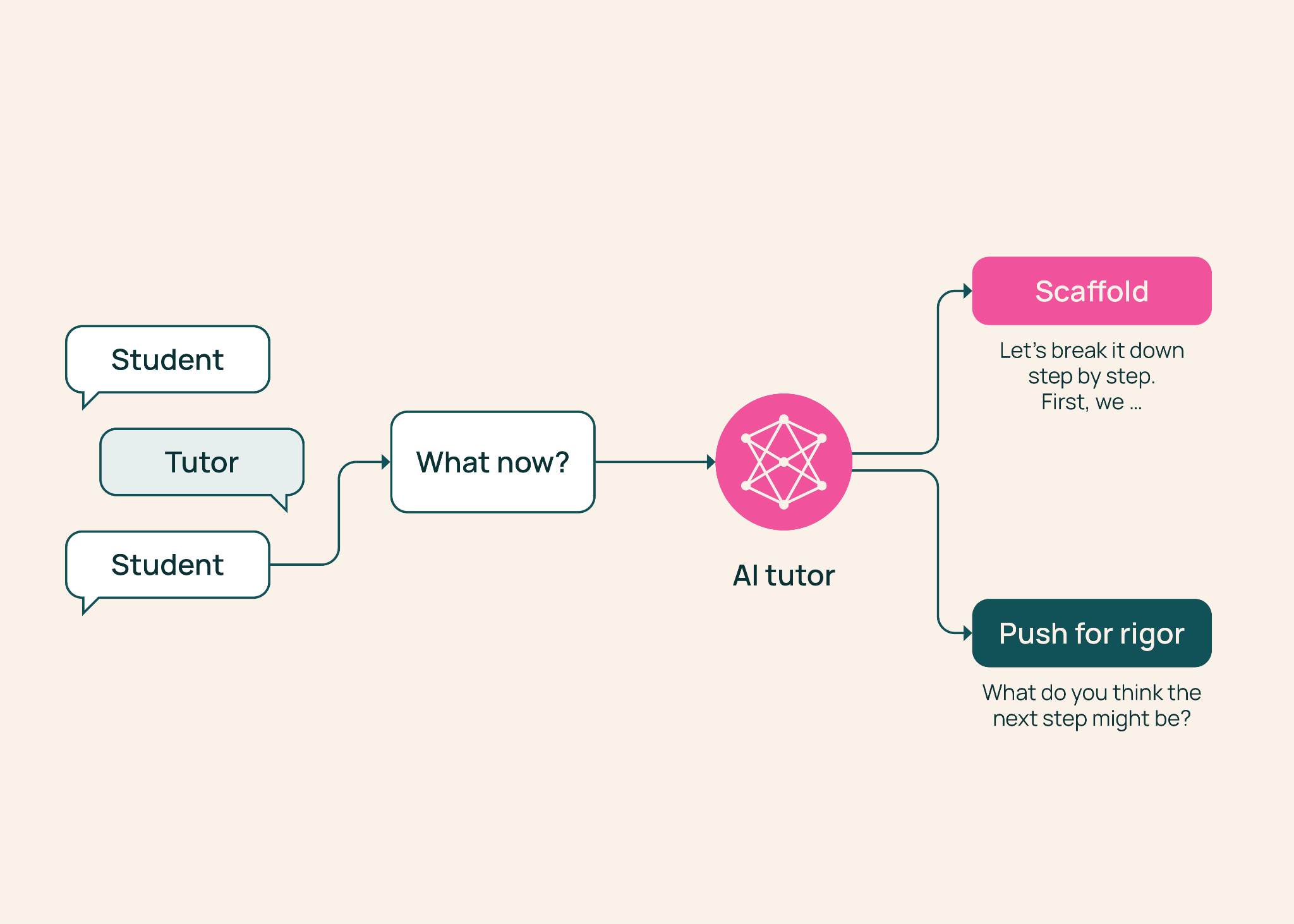
TutorMoments: Do AI tutors know when to help and when to hold back?
Ai2's TutorMoments replays real math tutoring transcripts up to the moment a tutor must choose between helping and holding back, then hands the session to a model with a simulated student.
Why it mattersAn eval design worth stealing: freeze a real trajectory at the decision point and measure what the model actually does next, rather than scoring a behavior you told it to exhibit.

Managed Deep Agents is now in public beta. Go from prototype to production scale
LangChain opened Managed Deep Agents in public beta.
Why it mattersYou can deploy a code-first Deep Agent to a hosted LangSmith runtime with one command, getting persistence, sandboxes, memory and Harbor eval packaging without building that infrastructure. The beta is US-region and CLI-only.
8 Predictions for the Era of Continual Learning

8 Predictions for the Era of Continual Learning

Artificial Analysis rebuilds its Text to Image Arena around 10 real-world use cases and 9 capabilities, from UI mockups to live-action film, with monthly-refreshed human-curated prompts. GPT Image 2 leads everywhere, with Nano Banana 2 the value pick.
Why it mattersBuilders picking an image model for a specific job — UI mockups, text rendering, photoreal stills — get per-use-case rankings instead of a single overall leaderboard.

Ai2 previews TutorMoments, which pauses real tutoring transcripts at teacher-flagged decision points, hands the tutor turn to a model, and scores whether it supported or over-helped. Models told only to tutor well give away the answer; naming the tradeoff helps, but only so far.
Why it mattersDefault helpfulness training makes models poor tutors: they do the reasoning for the student. TutorMoments scores that tradeoff at teacher-marked decision points and shows prompting alone improves every model but does not close the gap.
Responding to the next frontier of critical cyber capabilities
OpenAI shares preliminary cybersecurity evaluations for Astra, the first model it treats as critical for cyber capability, along with the safeguards and security controls being strengthened around it.
Why it mattersSets the primary-source record on why a frontier model's release is being gated on cyber capability, which shapes what engineers can expect to build on and when.

LangSmith usage data shows open-weight models going mainstream: one in three active teams ran one in July, up from one in five, with daily open-weight usage growing 9x year over year against 4.8x for closed models.
Why it mattersGives engineers real deployment-share numbers for open-weight vs closed models in production, which is otherwise mostly anecdote.

Unveiling good and bad behaviors on the Agentic Internet
Cloudflare on why the old rule that bots are bad and humans are good no longer works, as the line between the two blurs and site owners increasingly want some automated traffic to reach them.
Why it mattersAnyone shipping browsing or checkout agents is being judged by continuous behavioral trust signals, not a one-time bot check. This explains the criteria your agent's traffic is now scored against.

Unifying Workers AI and AI Gateway into a single AI control plane
Cloudflare merges AI Gateway and Workers AI into one control plane, after finding that proxying to external providers and serving models on its own GPUs looked different architecturally but the same to users.
Why it mattersIf you run inference through Workers AI or AI Gateway, your bindings, routing, and billing surface are consolidating into one control plane. Knowing the direction now shapes how you wire provider fallback and observability today.

Why can't ChatGPT Voice set a timer? | Voice AI expert explains
ChatGPT Voice is fluent and generally capable yet fails at trivial things like counting letters or tracking time.
Why it mattersBuilders shipping voice interfaces get a mechanistic account of why fluent audio models still fail at trivial deterministic tasks, and where the pipeline (not the model) is at fault.
Why friction might actually be a thing we need:
Emil Kowalski argues that the cost of writing code was quietly doing a second job — filtering which ideas deserved to exist.
Why it mattersNames the tradeoff behind cheap generation: prototyping is only thinking if you validate. With no cost to shipping both A and B, nothing forces the judgment call — a usable frame for reviewing your own AI-assisted output.

Meta's Claude Code clone is INSANELY cheap
Theo drives Meta's new Muse Code agent, running Muse Spark 1.2, and lands on cost as the headline: a Claude Code-shaped tool undercutting the incumbents.
Why it mattersMeta now ships its own coding agent on Muse Spark 1.2 at a price well under comparable tools — a new option to weigh when picking a daily-driver agent.
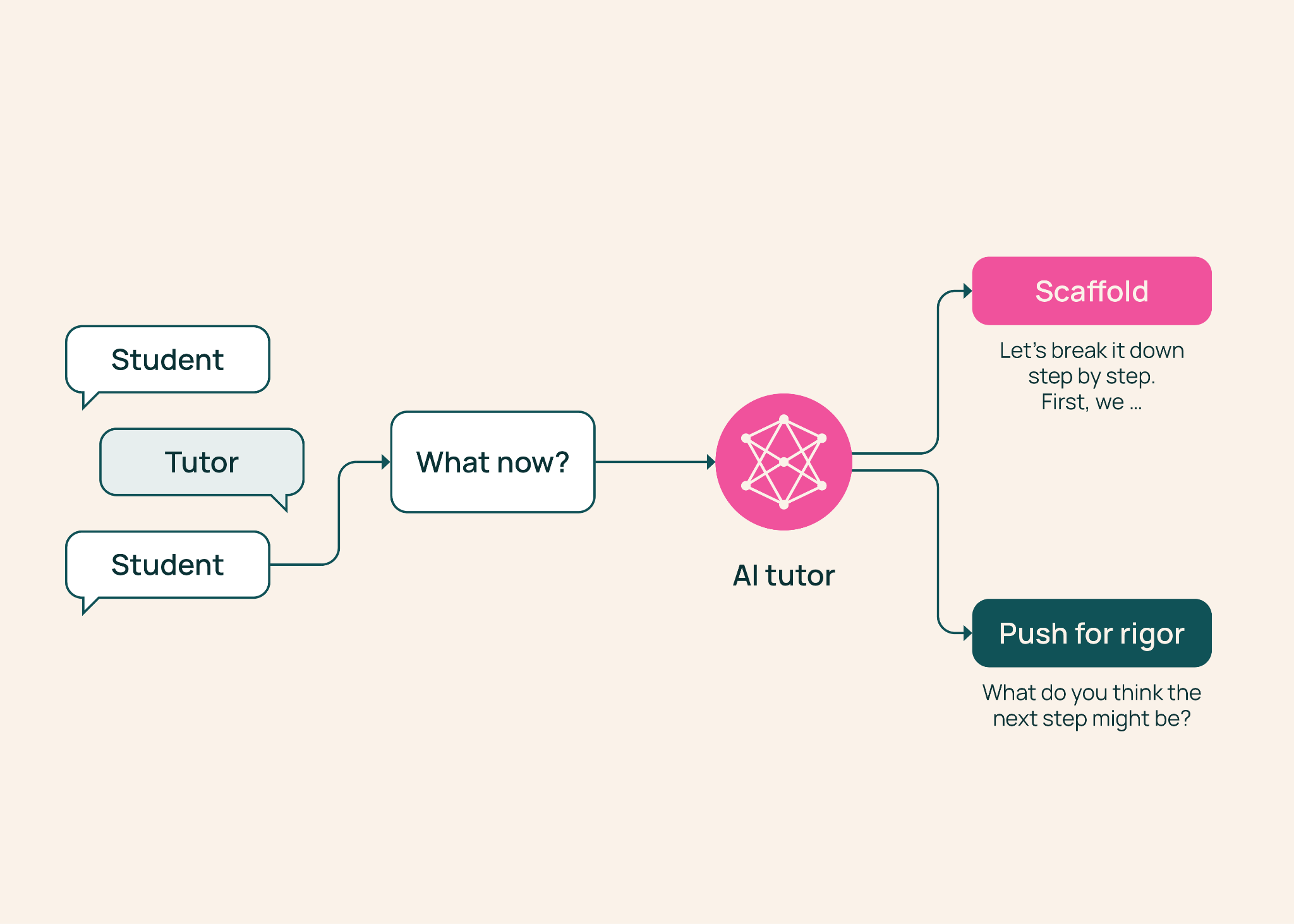
TutorMoments: Do AI tutors know when to help and when to hold back?
A replay-based eval that drops a model into real tutoring transcripts at the moment a human tutor had to choose between giving help and holding back.
Why it mattersTold only to 'tutor well', models systematically over-scaffold and rarely push the student to reason; naming the help/hold-back trade-off in the prompt narrows but never closes the gap, and models differ widely.
One Take Creation Flexible Referencing Introducing Seedance 2 5
Seedance 2.5 doubles single-pass generation to 30 seconds with multi-round extension and shot-transition continuity, widens multimodal referencing to 30 images and 10 video and audio clips.
Why it mattersThirty seconds of coherent multi-shot audio-video in one pass, with up to fifty reference assets and timestamp-level edits. The reference budget and edit precision are what make it usable in a production pipeline.

Eu Ai Act Product Image Labels
A working read of EU AI Act Article 50 for anyone shipping generative image features.
Why it mattersArticle 50 applies as of 2 August 2026 and sets no pixel threshold. Machine-readable provenance marking is a provider obligation, while visible labelling turns on whether the output misleads about a real person, product, or event.

Anthropic's CCA Exam as a Field-Guide for Agentic Engineering — Frank Coyle, UC Berkeley
The Claude Certified Architect exam gives six production scenarios and picks four at random.
Why it mattersContext discipline is where most production agent systems quietly fail, and this names the specific moves that cause it. The critic-without-reasoning trick is a genuinely useful defense against agents converging on one idea.

Realtime multiplayer, automation, and you! — Idan Gazit, GitHub
Idan Gazit wrote an agentic workflow in about three lines of plain English, the kind of message you would send a teammate.
Why it mattersIt draws a clean line between instructions and enforced guardrails that most agent automation blurs. The declarative-permissions pattern is directly copyable by anyone wiring agents into a repo.

Always-on agents run production without the on-call tax — Justin Smith, Resolve AI
An agent notices a release tag dropped into Slack, reads what actually changed, works out which telemetry would expose trouble for that specific change.
Why it mattersCoding agents raised the volume of change reaching production without raising the monitoring that follows it. This lays out how to close that gap with agents that plan their own checks rather than fire fixed alerts.

Codex, Behind the Harness — Dominik Kundel, OpenAI
Once Codex Spark served a thousand tokens per second, inference stopped being the bottleneck and the network became it.
Why it mattersIt is a rare first-party look at the engineering decisions inside a production coding harness, from transport to context budgeting to approval design. Anyone building an agent harness can lift these tradeoffs directly.
Large Language Models Threaten Double-blind Review
Double-blind review assumes an anonymised manuscript does not reveal its authors.
Why it mattersIf author identity leaks from problem framing alone, anonymized review as currently practiced is already compromised — directly relevant to anyone submitting to or reviewing for ML venues.
CodeGrep: An RL-Trained Retrieval Agent for LLM Coding Agents
Coding agents spend much of their budget finding the file to patch rather than patching it: a 30B OpenHands agent averages 23 rounds and 631K tokens per resolved SWE-Bench issue.
Why it mattersQuantifies how much of a coding agent's budget goes to finding the file rather than fixing it, and shows retrieval quality has a threshold below which adding retrieval hurts — directly applicable to anyone tuning a coding-agent harness.
Reasoning from Traces: Divergence-Guided Agentic Repair of WebAssembly Discrepancies
Cross-compiling C/C++ to WebAssembly quietly changes behavior, and repair agents flail because the cause sits below the source.
Why it mattersLocalizing where execution first diverges before invoking the agent lifted the repair rate from 50.2% to 70.0% — evidence that narrowing an agent's search space beats handing it more tools or instrumentation.
SearchAuditor: Auditing and Attributing Failures in Long-Horizon Search Agents
Deep search agents fail through small reasoning errors propagating into fluent but wrong answers across traces too long to inspect by hand.
Why it mattersFailure attribution in long agent traces is a core unsolved operations problem; a labeled benchmark plus taxonomy gives agent builders a way to evaluate their own debugging tooling.
Towards a Risk Assessment of Malicious Skill Files in Coding Agents
Agent skills are folders of instructions and scripts loaded dynamically, which also lets malicious shell commands hide inside natural-language files.
Why it mattersAgent skill files are shell-capable payloads that most teams install with the same casualness as a README; this quantifies how well anything currently catches a hostile one.
Safe Evolution with Circuit Anchors
Self-evolution loops optimize capability and assume safety survives. The authors show models can misevolve — more capable, less safe.
Why it mattersIf you run self-improving model loops, capability gains can quietly erode safety behavior; constraining a small mechanistically identified circuit preserved it more cheaply than reward-based penalties.
SkillTrace: Multi-Trace Provenance Auditing for LLM-Agent Skill Reuse
Agent skills are becoming marketplace artifacts, and reuse hides across prose, code and workflow structure rather than copied source.
Why it mattersCode-clone detectors miss agent-skill reuse that preserves only the instructions or only the workflow structure.
Universal Pathologies, Conditional Consequences: A Triple-Robustness Analysis of RAG for Multi-Hop Traceability
GraphRAG underperforms vector RAG on citation precision in many reports, but never in a way that separates cause from corpus.
Why it mattersAnyone choosing between GraphRAG and vector RAG is usually generalizing from one corpus; this shows which failure travels and which does not, with the experimental scale to back it.

We’re updating Claude Fable 5’s biology safeguards to reduce false positives. In
We’re updating Claude Fable 5’s biology safeguards to reduce false positives.
Why it mattersFewer silent downgrades from Fable 5 to Opus 5 on biology-adjacent prompts, but total fallbacks drop only about 17% in Claude Code and 7% on the API.

Improving Fable 5 S Biology Safeguards
Anthropic retuned Fable 5's biology classifiers, cutting fallbacks to a weaker model by roughly 85% across product surfaces.
Why it mattersBiology prompts that used to silently downgrade Fable 5 to a weaker model now mostly go through, though virology, toxicology and molecular-design requests still fall back to Opus 5.

Gemini is Cooked but GCP is Cooking
SemiAnalysis reads Google's DeepMind overhaul — Hassabis out of day-to-day operations, Jeff Dean and several Google Fellows departing to a new lab.
Why it mattersIf Gemini is losing internal compute allocation to Google Cloud after a leadership exodus, that shapes the model roadmap anyone building on Gemini is relying on — with SemiAnalysis's read on where that capacity goes instead.

Local Models: Trust, Control, Optimization — Carter Abdallah, NVIDIA
When frontier access stopped looking guaranteed, enterprises moved to Chinese open models on availability rather than scores.
Why it mattersFrames the open-vs-closed decision in operational terms — availability, ToS limits on training from outputs, and specialization economics — that anyone choosing a model backend has to reason about.

We have resumed rolling out Kimi K3 in GitHub Copilot. This model is billed at p
We have resumed rolling out Kimi K3 in GitHub Copilot. This model is billed at provider list pricing under usage-based billing.
Why it mattersModel availability and billing terms in Copilot are exactly the kind of change that alters what a team can rely on and what it costs.

Compression at the Edge — Chris Alexiuk, NVIDIA
Quantize a single number in a model and it gets 20% dumber, which is why compressing GLM 5.2 from 1.5TB to 250GB does not make it 86% dumber.
Why it mattersPractical rules for shrinking models for local or edge serving, including a non-obvious long-context failure mode that only shows up after deployment.
8/6: Cyber Risk and Bio Risk
An index of the vibe-coding frontier. Corrections welcome.