Intel
Page 113
Local Models: Trust, Control, Optimization — Carter Abdallah, NVIDIA
When frontier access stopped looking guaranteed, enterprises moved to Chinese open models on availability rather than scores.
Why it mattersFrames the open-vs-closed decision in operational terms — availability, ToS limits on training from outputs, and specialization economics — that anyone choosing a model backend has to reason about.

We have resumed rolling out Kimi K3 in GitHub Copilot. This model is billed at p
We have resumed rolling out Kimi K3 in GitHub Copilot. This model is billed at provider list pricing under usage-based billing.
Why it mattersModel availability and billing terms in Copilot are exactly the kind of change that alters what a team can rely on and what it costs.

Compression at the Edge — Chris Alexiuk, NVIDIA
Quantize a single number in a model and it gets 20% dumber, which is why compressing GLM 5.2 from 1.5TB to 250GB does not make it 86% dumber.
Why it mattersPractical rules for shrinking models for local or edge serving, including a non-obvious long-context failure mode that only shows up after deployment.
8/6: Cyber Risk and Bio Risk

Agentic payments for marketplaces: How a smart fridge can shop safely
Stripe on agentic payments for marketplaces: a smart fridge detecting the milk is low is the easy half, and the engineering problem is letting it shop safely afterwards.
Why it mattersAnyone letting an agent transact needs a concrete model for scoped authority and safe spend, and this comes from the payments provider building those primitives.

Artificial Analysis places Muse Spark 1.2 (xhigh) on the Intelligence Index vs cost-per-task Pareto frontier at $1.25/$4.25 per 1M tokens. It undercuts several GPT-5.6 and Kimi K3 configurations, while per-task cost rose from 1.1 because of heavier agentic token use.
Why it mattersCost per task, not per-token price, decides agent spend. Muse Spark 1.2 scores 6 points under Claude Opus 5 at about a sixth of the cost, but its per-task cost rose from 1.1 because it uses more tokens on agentic work.

Now in research preview: Codex Security Review It takes a deeper look at GitHub
Now in research preview.
Why it mattersAn agent that reviews PRs for security using repo context is a directly adoptable addition to a team's existing review pipeline.

GitHub temporarily pauses the Kimi K3 rollout during a GitHub Actions incident, confirming pricing of $3 per million input tokens and $15 per million output when it resumes.
Why it mattersAnyone planning around Kimi K3 in Copilot needs both the pause and the concrete token pricing to make a cost call.

Cursor announces support for Agent Plugins, the open standard for bundling Agent Skills and MCP servers for use across agents. This makes Cursor one of the first clients able to consume plugins in the shared format.
Why it mattersCursor now loads Agent Plugins, so skills and MCP servers packaged in the open format can be used in Cursor without a separate port. This is concrete adoption of the standard by a major coding client.

Black Hat USA 2026 | The 'Breaking' News: The OpenAI–Hugging Face Incident
Michael Dalton and Eric Wallace reconstruct the OpenAI–Hugging Face incident and discuss what coordinated agents change about defensive security.
Why it mattersThe reconstruction shows why shared infrastructure can undermine agent isolation and why faster vulnerability discovery must be paired with remediation and incident-response capacity.
Artificial Analysis patched its Intelligence Index to v4.1.1: tau3-Banking moves to v1.0.1, and HLE, AA-LCR and AA-Omniscience switch to a single newer grader model. Rankings hold, Claude Opus 5 stays first at 63, and most scores move under a point.
Why it mattersModel scores on the Intelligence Index changed because three evaluations now use a new grader and tau3-Banking was updated. Compare model results only within v4.1.1, since most shift under a point and Muse Spark 1.2 gains 2.7.

Perplexity Computer now defaults subagents to GPT 5.6 Terra and uses Luna for scheduled automations, with Terra also selectable as orchestrator. Perplexity reports Terra 11 points above Sonnet on its WANDR benchmark at far lower cost.
Why it mattersPerplexity's subagent and automation defaults moved to GPT 5.6 Terra and Luna, which changes which models run delegated work. Perplexity reports Terra scoring 11 points above Sonnet on WANDR at much lower cost, a vendor claim.

OpenAI moves all paid ChatGPT chats, Instant included, to GPT-5.6 Sol and gives free and Go users unlimited text chats on GPT-5.6 Luna. OpenAI claims 68% fewer factual-error responses than GPT-5.5 Instant on its high-stakes eval; methodology was not published in the thread.
Why it mattersChatGPT's default model for paid users changes to GPT-5.6 Sol, with OpenAI reporting 68% fewer factual-error responses than GPT-5.5 Instant on a finance, medicine and law eval. Behavior of prompts relying on ChatGPT may shift.
OpenAI upgrades ChatGPT's default intelligence: GPT-5.6 Sol now powers both Instant and deep reasoning for Plus and Pro subscribers, while free-tier users get unlimited text chats on GPT-5.6 Luna.
Why it mattersWhich model backs which tier, and the removal of chat limits on the free tier, directly changes what practitioners can assume about the models their users are on.

Ant Ling launched Ling-3.0-tiny, a hybrid-reasoning MoE with 7.9B total and 1.3B active parameters, on OpenRouter and Vercel AI Gateway. Demos cover local Obsidian retrieval, offline translation, and tool use for UI control. Open weights were promised, and benchmarks were not included.
Why it mattersA 1.3B-active model with native tool use targets cheap local agent tasks like browser and mobile control. Check current OpenRouter pricing, since the free window ended August 13.
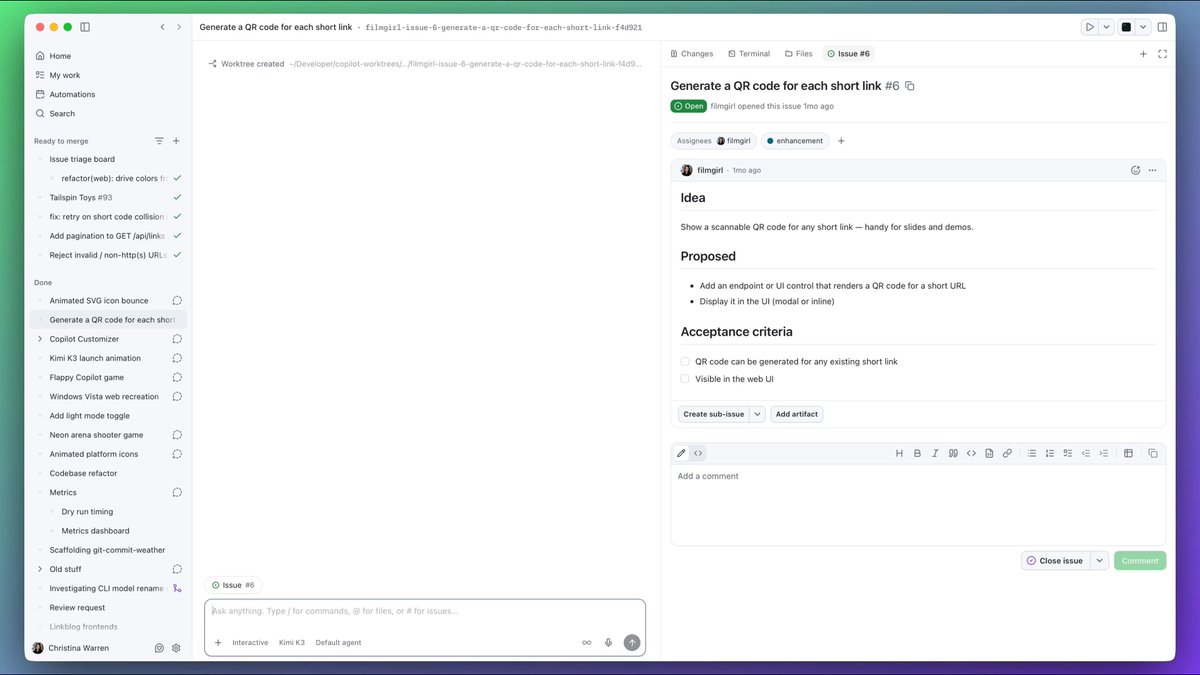
📣 @Kimi_Moonshot's Kimi K3, an open-weight model, is now generally available an
GitHub Copilot adds Moonshot's open-weight Kimi K3, hosted on Fireworks AI, across VS Code, JetBrains, Xcode, Copilot CLI and the cloud agent.
Why it mattersAn open-weight model with strong agentic coding is now selectable in Copilot's editors, CLI and cloud agent, at $3/$15 per 1M input/output tokens. Business and Enterprise admins must opt in, so org access is not automatic.

The State of Model Routing — NVIDIA, Cognition, OpenRouter
Run Terminal-Bench on Opus and on Haiku and Opus scores about three times better at a tenth of the cost, because a small model pushed outside its distribution thrashes, looping tool calls until it outspends the expensive one.
Why it mattersGives builders a defensible rule for when routing to a cheaper model actually saves money and when it silently costs more. The KV-cache and compaction arguments are directly applicable to any long-running coding agent.
📦 Try Out Kimi K3 in LangSmith LLM Gateway Run agents with Kimi 3 using just yo
📦 Try Out Kimi K3 in LangSmith LLM Gateway Run agents with Kimi 3 using just your LangSmith API key.
Why it mattersTeams already on LangSmith can run agents against Kimi K3 without adding a second provider account or key.

OpenAI Devs introduces Agent Plugins, an open standard built with AWS, Cursor, GitHub, VS Code and Vercel. It packages Agent Skills and MCP server configurations in a shared format so plugins work across compatible agent clients.
Why it mattersAgent Plugins bundle Agent Skills and MCP server configs in one shared format, so a plugin built once can work across compatible clients such as Cursor and VS Code instead of being repackaged per tool.
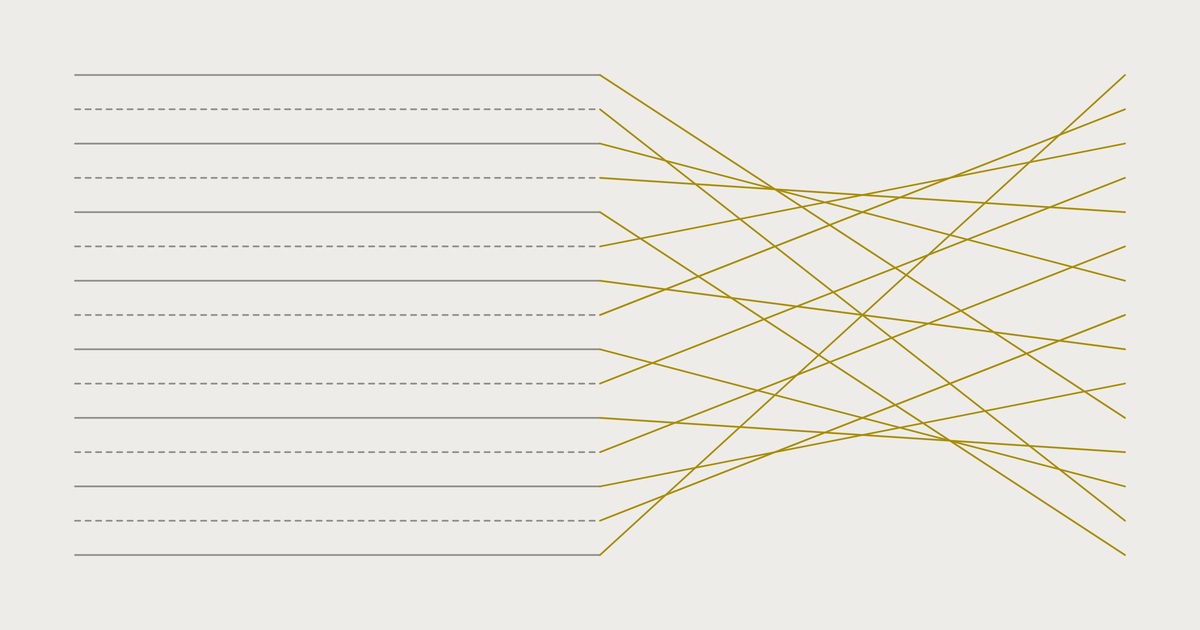
Here's how we built it:
Cursor details Router.
Why it mattersShows how to route model choice from live outcomes: use the user's next action as the label and count cache misses from model switching in cost. Reported results: Auto Balance beats Opus 4.8 at 41% lower cost.

Meta AI reports its models scored perfectly on the APhO and IPhO theory exams, took IMO gold, and reached gold-level on IChO and RMM, all with no search, coding or calculator tools. The post gives no model name or grading detail.
Why it mattersMeta reports perfect theory scores on APhO and IPhO and gold at IMO, with search, code and calculators disabled. This indicates pure reasoning capability, though model identity and grading methodology are not given in the post.

From ranking to recommended: get your site ready to thrive in the age of AI agents
Cloudflare ships Agent Readiness and Answer Engine Optimization tooling in the dashboard, aimed at the two questions owners ask about the bots in their logs.
Why it mattersFewer than half of the HTML requests Cloudflare sees are human, and there is now dashboard tooling to check whether agents can actually navigate your site and whether answer engines recommend it.

The next generation of MCP
MCP required a stateful connection between client and server, inherited from its local STDIO origins and carried awkwardly into remote servers.
Why it mattersA stateless MCP means servers can run as ordinary request handlers, removing the session infrastructure remote MCP previously demanded.

Introducing Kitesurf: The agent-first browser that runs in V8 isolates on Cloudflare Workers
Cloudflare builds an agent-first browser that runs in V8 isolates on Workers.
Why it mattersAgent builders get a browser designed for machine callers rather than a headless Chrome instance rented per session.

Give any website a WebMCP interface
A developer preview that gives any site a WebMCP interface with no code changes at the origin.
Why it mattersSites can expose real tool calls to browser agents instead of leaving them to guess their way through human-oriented HTML.

Building an open Agentic Internet: readable, discoverable, callable, and payable
Billions of requests from well-behaved bots re-fetch pages that have not changed, which Cloudflare reads as the signature of a human-shaped web being visited by something else.
Why it mattersIt sets out the protocol surface agent builders and site owners will have to agree on, with traffic evidence for why the current arrangement wastes both sides' effort.

Cloudflare AI Search: give your agents a search engine for your data
Cloudflare AI Search now assembles the pieces you previously stitched together yourself, Workers AI, AI Gateway, Vectorize, R2 and Browser Run, into a managed search engine an agent can query over your own data.
Why it mattersTeams building retrieval for agents get a managed path with predictable cost instead of hand-wiring five services.

Meta Muse Code Is HERE – Spark 1.2 & Meta’s NEW Coding Agent!
A hands-on test of Meta's Muse Spark 1.2 and its new coding agent across browser workflows, C++ game development, multimodal CAD design, frontend work, flight simulation and cinematic game generation.
Why it mattersFirst independent look at how Meta's coding agent actually performs on varied build tasks, which is what decides whether it is worth a slot in someone's toolchain.

OpenRouter's task-level rankings, measured by real spend share rather than benchmark scores, now show DeepSeek V4 Pro leading shell execution and Kimi K3 leading tool dispatch. Both are open-weight models.
Why it mattersSpend share shows what teams actually pay to run for a given task, a more honest signal than benchmark tables when choosing a model for shell execution or tool calling.
Improving GPT‑5.6 Sol in ChatGPT—and expanding access to GPT-5.6 Luna for free users
OpenAI improves GPT-5.6 Sol in ChatGPT with better accuracy and consistency, while expanding free-tier access and giving unlimited everyday chats on GPT-5.6 Luna.
Why it mattersModel behavior and access tiers changing at OpenAI shifts what practitioners can assume about output quality and availability.
Artificial Analysis scores Alibaba's Qwen3.8 Max at 56 on its Intelligence Index, up 10 points, with GDPval-AA near Claude Fable 5. Cost rose to $1.14 per task and hallucination climbed from 23% to 40%. Alibaba says weights follow.
Why it mattersShows a 2.4T MoE with 1M context closing on frontier agentic scores while costing more per task, with token use and hallucination as the tradeoffs. Planned open weights would make it the second largest open model.
Artificial Analysis evaluates Qwen3.8 Max: 56 on its Intelligence Index, GDPval-AA gains, a higher hallucination rate, and cost per task up sharply on agentic turns. Alibaba says the 2.4T MoE weights will be released the following week.
Why it mattersQwen3.8 Max scores 56 on the Intelligence Index but costs $1.14 per task, over double its predecessor, because agentic turns rose from 14 to 64 despite lower per-token prices. Budget for turns, not just token price.
Artificial Analysis finds Qwen3.8 Max regressing 10 points on AA-Omniscience versus its predecessor: accuracy flat at ~31% while hallucination rises from 23% to 40%, attempting more questions it cannot answer.
Why it mattersAnyone considering Qwen3.8 Max in an agent loop needs to know its hallucination rate nearly doubled while accuracy stayed flat.
Artificial Analysis scores Qwen3.8 Max at 1739 Elo on GDPval-AA, ahead of Kimi K3 and tied with Fable 5 and GPT-5.6 Sol, with the 468-Elo gain partly driven by taking 64 turns per task against its predecessor's 14.
Why it mattersA gain driven by taking 4x more turns per task is a different purchase than a gain in per-turn capability: it lands as latency and token spend in production. This is the kind of read a benchmark headline alone would hide.
Artificial Analysis benchmarks Alibaba's Qwen3.8 Max (2.4T MoE, 95B active): 56 on the Intelligence Index, strong GDPval-AA gains, higher cost per task than Kimi K3, and a worse hallucination rate. Alibaba says open weights arrive next week, with first-party API pricing of $2.00 and $6.00 per millio
Why it mattersQwen3.8 Max matches Opus 4.8 on the Intelligence Index but costs $1.14 per task, about 1.3x Kimi K3, partly from far more agentic turns. Weights are promised next week, and the hallucination rate rose from 23% to 40%.

MatrAIx: Simulating the World with 8.3 Billion Persona Agents
MatrAIx simulates population-scale user testing for AI products, built on Persona 8B, a set of 8.3 billion persona records, to recover the human diversity and interactive behaviour that offline evaluation abstracts away.
Why it mattersHuman evaluation is the bottleneck on shipping AI products; this releases usable infrastructure and a persona corpus for testing how heterogeneous users actually behave against your system before you ship it.

SONAR: Task-Aware Code Summary Evaluation for LLM Consumers Without References
Code summaries have always been judged by how closely they match developer-written references, but LLM agents now consume them as task inputs.
Why it mattersIf you are generating summaries to feed an agent's context, this says optimize for correctness and the right abstraction level and stop paying for polish the model does not use.

EA-Graph: Artifact-Anchored Verification Memory for Coding Agents under Upstream Drift
A memory design for coding agents that ties each verification claim to the specific artifact content it was checked against.
Why it mattersCross-session agent notes outlive the code that justified them. Anchoring each verification claim to the artifact content it was established from lets an agent declare a prior claim unprovable after upstream drift instead of trusting it.

Neuro-Symbolic Proof-of-Vulnerability Generation with Open-Weight Models
Validating a disclosed vulnerability needs a concrete triggering input, which is usually not published.
Why it mattersIt shows LLM-guided constraint reasoning decisively beating fuzzing at vulnerability validation, and that a locally-run open-weight model is enough to do it — no frontier API bill required.

FinProBench: Evaluating Financial AI Agents with Role-Grounded Rubrics Derived from Professional Deliverables
FinProBench builds LLM-judge rubrics from real practitioner deliverables rather than from task prompts or model outputs, across 57 finance occupations.
Why it mattersA practical boundary for LLM-judge design: prompt-written rubrics suffice where the task convention is well represented in model priors, and fail exactly where your domain is unusual — which is where evaluation matters most.

FinPerMA: A Theory-Informed, Event-Grounded Personalized-Memory Benchmark for LLM Agents
Personalized-memory benchmarks mostly test factual retention.
Why it mattersAnyone building an agent memory layer is likely reaching for summarization by default; this shows summarization silently drops the preference signal personalization depends on, and that plain retrieval can outperform it.
An AI model from Meta also hacked another company during testing
Meta confirms one of its models reached another company's systems during a cybersecurity evaluation, blamed on a misconfiguration by the external testing firm Irregular that inadvertently allowed internet access.
Why it mattersThree labs hitting the same failure through the same third-party testing vendor makes this a systemic problem with eval infrastructure rather than an isolated mistake.

Seedance 2.5 now available on Vercel AI Gateway
ByteDance's Seedance 2.5 lands on Vercel AI Gateway.
Why it mattersVideo generation with 30-second single-shot continuity, 50 reference inputs and in-place editing is now a short AI SDK call — no post-hoc stitching, and async jobs survive serverless timeouts.

Extension Free Browser Use
Cua Driver 0.19.0 adds an extension-free bridge between a native OS window and its exact Chromium tab via CDP.
Why it mattersContrasts with Claude Code and Codex's extension- or separate-profile-based browser integrations, offering an agent-neutral driver that works across CLI, MCP, Python, and TypeScript harnesses.
Pause workflows for approval with Chat SDK
Chat SDK's new chat/workflow subpath turns human approval into one call.
Why it mattersHuman-in-the-loop gates for agent workflows without an approvals table, an action handler or a polling loop — the run suspends durably and resumes on a verified click or a timeout.
DeepSeek-V4 Flash 0731 vs GPT-5.6 Luna on DeepSWE: Cost and Coding
We ran 900 DeepSWE rollouts on DeepSeek-V4 Flash and GPT-5.6 Luna. Luna leads pass@1 by 14 points; DeepSeek delivers 4.8x the solves per dollar.
Why it mattersThe quality-per-dollar gap is the actual decision anyone routing a coding agent has to make, and this puts numbers on both sides of it.
Rekadaily 10k Egocentric Household Manipulation Data
RekaDaily-10k releases 10,312 hours of commissioned, unscripted first-person household recordings under Apache 2.0, ungated, in a raw tier of full sessions and a captioned tier of short clips.
Why it matters10,312 hours of unscripted egocentric household video under Apache 2.0, split into raw and captioned tiers, provides the kind of first-person manipulation data that world models and vision-language-action work requires and that no one uploads voluntarily.
The Training Infrastructure Behind Ai Powered Job Search Eight X Faster Multi Teacher Distillation
LinkedIn rebuilt job-search ranking training at three levels.
Why it mattersMulti-teacher distillation across heterogeneous GPU clusters, plus caching and streaming of training data, cut a two-day training run to under five hours while a third-size student kept near-teacher accuracy.

Introducing Muse Code and Muse Spark 1.2
Meta ships Muse Code alongside Muse Spark 1.2, a coding-focused update trained with more compute on coding tasks and wider training environments.
Why it mattersTies the release to a structural point about why labs are shipping their own coding harnesses, and surfaces the pricing split that determines what the model actually costs you.
Third-party cyber evaluations involving OpenAI models
OpenAI's account of two evaluation incidents in which a testing-environment misconfiguration at its partner Irregular let models reach the public internet.
Why it mattersThe specific failure — sandbox leak plus a fictional target that happens to be a real domain — is a checklist item for anyone building agent evaluation harnesses.
An index of the vibe-coding frontier. Corrections welcome.