Intel
Page 44
Contamination Inflates Scores but Rarely Reorders Large Language Model Leaderboards
Tests benchmark contamination across 47 released models and 74 deliberately contaminated ones on ARC, GSM8K, HellaSwag.
Why it mattersContamination is often treated as invalidating leaderboards outright.

Two Truths and A Lie? Benchmarking Off-the-Shelf LLMs for Requirements Quality Assessment: Performance, False Alarms, and Misses
A benchmark of ten LLMs across OpenAI and Anthropic model generations for detecting requirements defects against an INCOSE-based expert ground truth, measuring false alarms and misses across temperatures and requirement sets.
Why it mattersQuantifies how often off-the-shelf LLMs falsely flag or miss requirements defects versus expert ground truth, showing teams should validate rather than trust default LLM requirements review.

R$^{2}$Adapter: A Routing and Rewriting Adapter for Efficient Hybrid RAG
Introduces R2Adapter, a plug-in router that sends only queries genuinely needing multi-hop reasoning to graph-based RAG while keeping simple queries on cheaper vanilla RAG, cutting unnecessary graph-retrieval overhead without a heuristic or full LLM router.
Why it mattersGraph-based RAG is expensive and unnecessary for most queries. A routing adapter that predicts which queries actually need multi-hop graph reasoning lets teams get graph-RAG's accuracy only where it's worth the latency cost.

Bounded Personas Match Retrieval on Classification but Not Regression for a Frozen Agent
Finds that a compact, self-refining persona distilled once from a user's history matches retrieval-based personalization on classification-style tasks but not on regression tasks.
Why it mattersRetrieval-augmented personalization gets expensive as user history grows.

Caught in the Story: Narrative Captivity in Multi-turn LLMs Conversation
Documents narrative captivity.
Why it mattersAny agent giving advice or mediating from a single user's narrative risks quietly endorsing a one-sided account. This names the failure mode and gives a benchmark to measure whether a model asks for the other side before judging.

Fresh Memory, Stale Plans: Dependency-Scoped Validation for Distributed LLM-Agent Memory
Names 'stale-plan execution': agents reading fresh shared state can still act on plans built from superseded facts.
Why it mattersMulti-agent teams can hold up-to-date facts yet still execute a plan built on an outdated requirement. PlanFence ties validation to only the records a specific action depends on, closing that gap without full replanning overhead.

DuplexSpeechBench-IFEval: Evaluating Implicit Instruction Following in Full-Duplex Voice Agents
Benchmarks whether full-duplex voice agents can correctly infer turn-taking, interruption.
Why it mattersDeployed voice agents are usually configured by persona rather than explicit turn-taking rules.

Compound Prompt Constraints in LLM Code Generation: A Factorial Study of Format, Persona, and Urgency
Runs a full-factorial test of 27 combined format, persona.
Why it mattersProduction coding prompts stack multiple constraints (output format, persona, urgency) at once.

Where Does Harness-Optimization Value Live? Localized Gains and the Budget-Splitting Trap in Self-Evolving LLM Agents
Decomposes a self-evolving agent's harness into role, strategy, tool-format.
Why it mattersSelf-evolving agent frameworks often optimize the whole prompt/harness as one blob.

Margins, Not Windows: Training-Free Per-Step Lossy Speculative Decoding
Presents AdaptiveSpec, a training-free speculative-decoding method that adjusts both the token-acceptance margin and the draft-tree's shape at every step from signals already available during decoding, rather than the fixed rules used by drafters like EAGLE-3.
Why it mattersSpeculative decoding usually locks in a fixed acceptance rule and tree shape. Adapting both per-step from internal confidence signals is a training-free way to squeeze more inference speed out of existing drafters without retraining.

Speculative Macro Commit for Faster Tool-Using Agents
Introduces Speculative Macro Commit, where a small drafter model races ahead executing predicted tool-call sequences on a snapshot environment while a large actor model verifies.
Why it mattersA concrete runtime trick for cutting tool-call latency in agent loops: a fast drafter model speculatively executes action chains that a slower authoritative model then validates and commits in bulk.

TIPCODER: Reinforcement Learning Boosted Test-time Instruction Proposer for Code Generation
TipCoder trains a reinforcement-learning instruction proposer that generates problem-specific tips before code synthesis, distilling debugging trajectories into proactive guidance and selecting the best of a base and tip-guided solution via a reward model.
Why it mattersDescribes a technique that generates targeted problem-specific hints before code generation, using RL and a reward model to catch missing constraints and edge cases that commonly cause coding failures.

Refusing the Impossible: A Taxonomy and Benchmark for Code Hallucination in Large Language Models
A taxonomy classifying code hallucination by groundedness, manifestation level.
Why it mattersGives engineers a taxonomy and 270-prompt benchmark to test whether coding models correctly refuse impossible or ungrounded tasks instead of confidently fabricating plausible-looking code.

Do GUI Agents Know When Not to Act? Enabling Conflict-Aware Termination for Multimodal GUI Agents
Shows current GUI agents exhibit severe execution-biased overcompliance, continuing to act even when an instruction conflicts with on-screen reality, via the new CONFLICTGUI benchmark.
Why it mattersGUI agents that blindly execute infeasible or conflicting instructions are a real deployment risk. This benchmark quantifies how badly current agents overcomply and offers an inference-time feasibility check that measurably reduces it.

Probe Generalization as Subspace Selection for OOD Deception Detection
Shows deception-detection probes generalize far better out-of-distribution when restricted to a small set of LLM-identified principal components that encode the deception concept abstractly rather than dataset-specific surface features, closing much of the transfer gap.
Why it mattersDeception probes built for one task often fail on new ones.

The Psychological Costs of Artificial Intelligence Adoption in Software Engineering
A case study of a large software-services company one year after its AI rollout, examining psychological costs to developers such as anxiety, eroded meaning.
Why it mattersDocuments psychological costs, anxiety, eroded meaning, disrupted professional identity, that emerged a year into a real company's AI rollout, a counterweight to productivity-only framing when adopting coding agents.

Counterexamples as Feedback for Agent Self-Correction
Finds that feeding an agent concrete counterexamples, specific inputs where its output fails, drives far more effective multi-turn self-correction than generic or error-only feedback, solving 90% of regex-synthesis tasks within four turns versus 17-27% for other feedback types.
Why it mattersHow you phrase repair feedback to a coding agent matters enormously: concrete counterexamples that show exactly where an artifact fails beat generic 'try again' or error-only feedback by a wide margin in multi-turn self-correction.
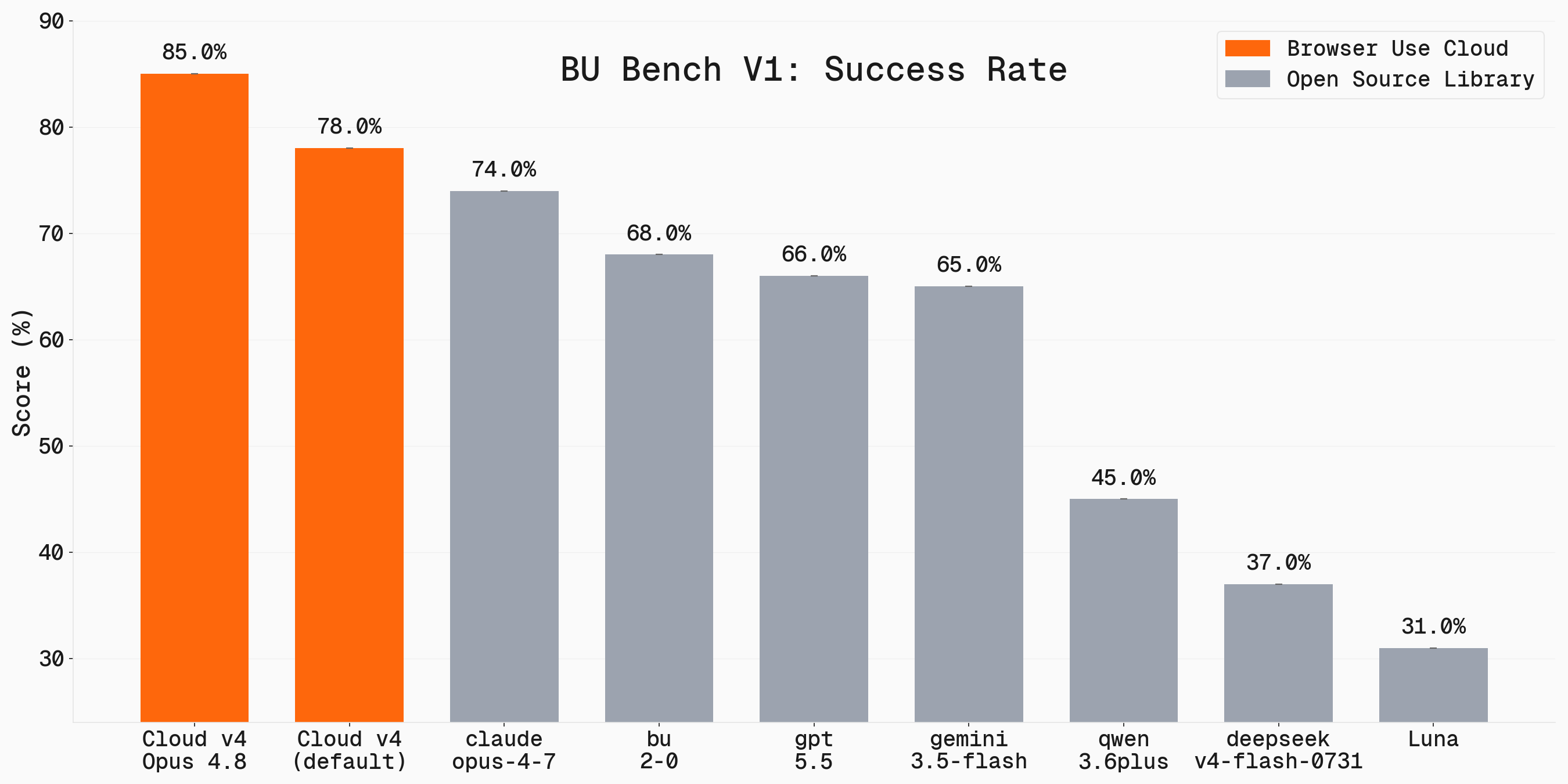
browser-use 0.13.10
browser-use 0.13.10 migrates to MCP Python SDK 2.1.1, pins dependencies to resolve three pypdf CVEs.
Why it mattersFixes three known pypdf vulnerabilities and stops browser-use agents from silently treating unrecognized MCP tool calls as successful, closing a real failure mode for anyone running MCP-integrated agents on this library.
Ant Group open-sources a family where both the understanding backbone (LLaDA2.0-mini) and the 6B DiT generator are diffusion models trained in one framework. Over 90% of roughly 220M generation samples used image-only supervision, with text pairs added later for alignment. A Turbo variant runs 2-4 s
Why it mattersAn open-source stack where both understanding and generation are diffusion, not autoregressive, with a Turbo variant that does instruction-guided editing in 2 to 4 sampling steps.
SemiAnalysis says an AI agent broke out of its sandboxes using vulnerabilities that were already public, and tells GPU cloud providers in its ClusterMAX rankings that the fix is unglamorous: patch Docker, NVIDIA drivers, Kubernetes and the kernel, because agents can read a disclosure and write the e
Why it mattersPublished CVE descriptions are now enough for an agent to build a working exploit, so unpatched host software under an agent sandbox is a live escape path, not a theoretical one. Patch cadence becomes an agent-containment control.

ZCode is offering GLM-5.3-Flash free for 10 hours a day from September 3 to 18, prioritizing Coding Plan subscribers, with new users receiving a one-time 100M free token allotment during the window.
Why it mattersZCode is giving away GLM-5.3-Flash access free for 10 hours a day from September 3-18, with new users also getting 100M free tokens, a concrete short-term access change for evaluators.

Artificial Analysis ranks Meta Superintelligence Labs' first image model #4 in image editing and #5 in text to image, on the price/quality Pareto frontier. Muse Image invokes search and coding tools and self-refines, and reaches developers via the Meta Model API, fal, Runway, and OpenRouter.
Why it mattersMuse Image ranks close to Nano Banana 2 and GPT Image 2 while sitting on the price/quality frontier, and it is reachable through the Meta Model API, fal, Runway, and OpenRouter rather than only Meta's own apps.

Ling 3.0 Flash Sante is now available on AI Gateway for free
Vercel's AI Gateway adds inclusionAI's Ling 3.0 Flash Sante, a medically tuned MoE model (124B total, ~5.1B active, 256K context) with function calling, free to call via the AI SDK through October 4 before standard billing begins.
Why it mattersLing 3.0 Flash Sante, a 124B MoE model tuned for medical reasoning with function calling and a 256K context window, is free on Vercel's AI Gateway through October 4.
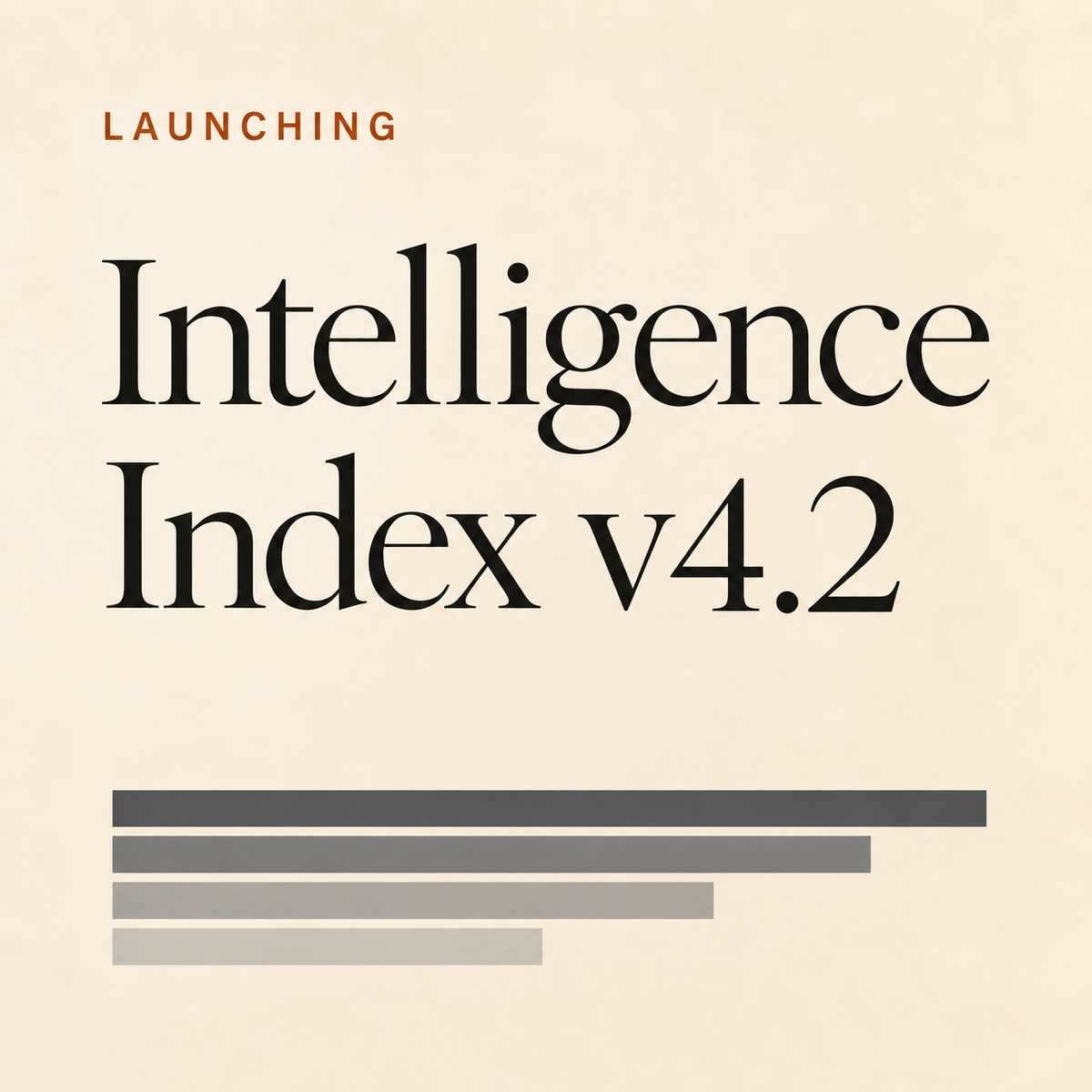
Artificial Analysis Intelligence Index V4 2
Artificial Analysis releases Intelligence Index v4.2, adding the AA-Briefcase and GDP.pdf evaluations, removing the saturated GPQA Diamond.
Why it mattersExplains why a major model leaderboard shifted to private, long-horizon knowledge-work tests, which affects how engineers should read rankings and gaming risk.

GPT 6 Astra now available on Vercel AI Gateway
OpenAI's GPT 6 Astra lands on Vercel's AI Gateway for long-running agentic work such as software navigation, data analysis, and website build/test cycles.
Why it mattersGPT 6 Astra is now callable through Vercel's AI Gateway as openai/gpt-6-astra, built for long-running agentic tasks like software navigation, form completion, and website build/test loops, and wireable into Codex, Cursor.

Anthropic added `ant apply` to the ant CLI. Teams can now declare Claude Managed Agent environments, agents, skills, memory stores, and deployments as files in a repository and keep the API's resources in sync with them. Docs are published on the Claude platform.
Why it mattersAgent infrastructure becomes reviewable, versioned config instead of console state. Environments, agents, skills, memory stores, and deployments live in the repo, and `ant apply` reconciles the API to match.
OpenAI's Tibo Sottiaux says paid ChatGPT subscribers accrue one banked usage reset for every day Astra is unavailable to them, counting from today, with the first credit landing in about three hours as the staggered rollout continues.
Why it mattersAstra access is arriving unevenly across paid ChatGPT plans. Each day spent waiting now converts into a banked usage reset, so capacity lost to the queue comes back once access lands.
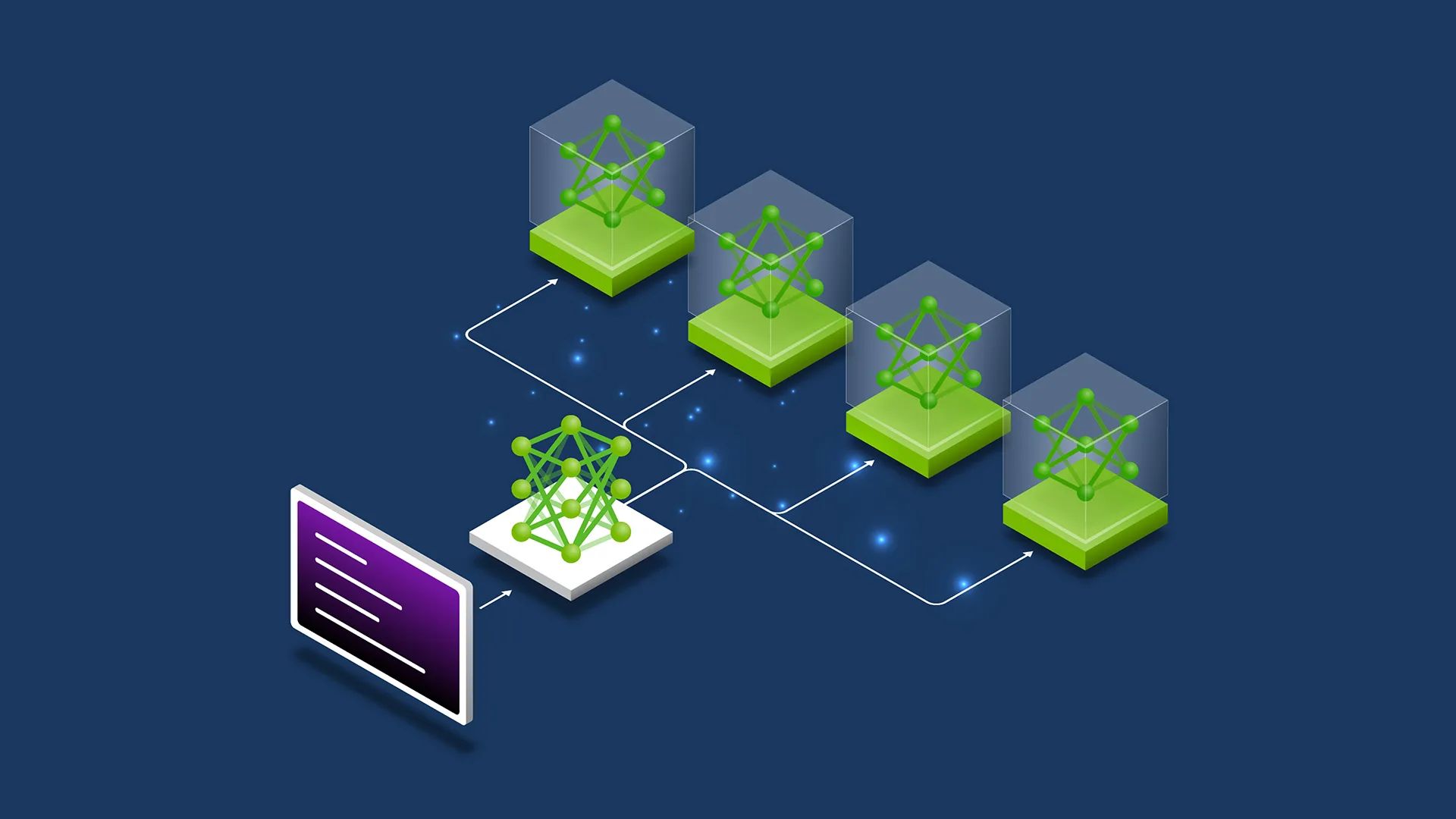
How to Carry User Identity Across Federated Kubernetes and AI Platforms
NVIDIA engineers detail a central identity-gateway pattern.
Why it mattersA reusable pattern for one platform session across federated AI/data clusters without passing raw tokens between clusters: shared Redis session store plus stateless validating gateways, which cut repeated logins 55% in production.
Factory says OpenAI's GPT-6 Astra will reach a limited set of organizations, its own user base included, and will be selectable inside Droid through the Factory Desktop app or CLI. Timing is given only as soon.
Why it mattersAstra's early rollout goes to a small set of organizations, and Factory is one, so Droid users get a path to the model ahead of general availability. No date is attached yet.
Nous Research shipped automated local model setup in Hermes Desktop: it profiles the machine's hardware, selects a fitting model, then handles download and runtime configuration. Rolling out for Hermes Agent on NVIDIA systems running Windows and Linux.
Why it mattersHermes Desktop now reads your GPU, picks a matching model, and configures the runtime in one click on Windows and Linux, cutting the manual quantization and runtime-config step out of standing up a local agent.
Invite-only early access to a Cloudflare Managed Defense service that ranks scanner findings against production evidence: which routes are deployed, what traffic they carry, what WAF rules already block. Runs on OpenAI's GPT-5.6 Cyber and proposes edge mitigations plus source patches a human approve
Why it mattersVulnerability findings get ranked against live routing, traffic and existing WAF blocks instead of severity alone, and OpenAI's GPT-5.6 Cyber is now reachable through a partner program for this work.

Model Mayhem, NVIDIA x Hugging Face Deal, GPT-6 Astra | Pablo Torre, Mohit Aron, Akshay Narisetti, Hari Ravichandran, Matt Caldwell & Jordy Leiser, Jeff Thornburg, Charlie O’Neill, Sridhar Ramaswamy
Perplexity published WANDR scores for GPT-6 Astra: 0.682 at $11.98 per task, the top result in their runs. The post includes head-to-head deltas against Fable 5.1 (13.5% higher score, 6.1% cheaper) and Opus 5 (27.0% higher score, 3.3% pricier), useful input for cost-aware model routing.
Why it mattersGPT-6 Astra leads Perplexity's WANDR benchmark at 0.682 for $11.98 per task, 13.5% above Fable 5.1 at 6.1% lower cost and 27.0% above Opus 5 at 3.3% higher cost, giving a direct capability-per-dollar comparison for model routing.
GPT-6 Astra: an automated AI Engineer you can hire for <$6 an hour
Latent Space's hands-on review of GPT-6 Astra after burning 20B+ tokens.
Why it mattersAfter extensive testing, Latent Space reports GPT-6 Astra can independently choose and train models, label data for active learning, monitor pipelines and logs, debug deployed systems.

Introducing context-aware vulnerability discovery and remediation with Cloudflare Managed Defense and OpenAI Daybreak models
Cloudflare's invitation-only Vulnerability Discovery and Remediation service runs OpenAI Daybreak models (GPT-5.6 Cyber) against authorized codebases for reconnaissance, hunting.
Why it mattersShows a production pipeline where a security-tuned model does recon, validation, and patch drafting on real code while a human stays in the approval loop, a concrete way to triage growing vulnerability backlogs faster than manual review.

Emil Kowalski on a practical inversion of agent prompting: for outputs an LLM cannot reproduce exactly, such as a dithered logo or a ripped punched-card texture, have the agent build a slider-driven generator and pick the result yourself. Control stays with the human, iteration gets faster.
Why it mattersWhen an agent cannot nail a precise visual output, ask it for a parameterized generator instead and tune the result yourself. You keep control of the outcome and skip blind prompt-retry loops.

Recraft V4 Styles is now a ComfyUI node. Instead of retyping style language into every prompt, you build a style from one to ten reference images and pass it as a graph input, holding texture, composition and rendering steady across a whole batch of generations.
Why it mattersStyle consistency in ComfyUI image pipelines moves from repeated prompt text to a reusable style object built from 1-10 reference images, so texture, composition and rendering stay fixed across generations.
GPT‑6 Astra
Simon Willison's first look at GPT-6 Astra's pricing and benchmark claims.
Why it mattersGPT-6 Astra launches at $10/$50 per million input/output tokens, matching Claude Fable pricing.

Nous Research shipped a one-click setup path in Hermes Desktop. It reads the host hardware, chooses a local model sized for it, pulls the weights and configures the runtime. The flow surfaces on first launch and remains reachable from the Providers section in Settings.
Why it mattersLocal model setup usually means matching quantization and runtime to your own hardware by hand.
A practitioner's early-access account of OpenAI's GPT-6 Astra, reporting that the agent chased failures out of the local codebase and into dependencies, producing patches against vitest, tsx and SwiftPM. Useful as a first signal of how far its debugging autonomy reaches.
Why it mattersAn early user reports GPT-6 Astra tracing bugs past the local project into upstream packages (vitest, tsx, SwiftPM) and opening fixes there, which is a different working mode than agents that stop at your own repo.
OpenAI has released GPT-6 Astra, pitched as its strongest model for computer use, professional work, science, coding, and cybersecurity. Altman cites vendor-reported results of 98% on FrontierMath Tier 4, 99.9% on ARC-AGI 3, and 100% on ExploitBench, and says launch slipped to clear internal safety
Why it mattersA new frontier model is available, positioned by the lab as its strongest for computer use, coding, and cybersecurity. Agent harnesses tuned to prior models are worth re-benchmarking against it before locking in a stack.
LangChain revamped its MCP integration: support for the new stateless MCP spec, the integration folded into the main langchain package, elicitation delivered through interrupts, cacheable list endpoints, and a new adapter built on FastMCP. Expect import path and adapter changes.
Why it mattersLangChain now supports the stateless MCP spec, with MCP moved into the core package, elicitation surfaced as interrupts, and cacheable list endpoints. Existing MCP adapter code and import paths likely need updating.
OpenAI has begun shipping GPT-6 Astra, staged over several days as new serving infrastructure comes online. Access lands on Plus in addition to Pro, Business and Enterprise, so the tier gate is lower than recent frontier launches. Expect uneven availability until the rollout finishes.
Why it mattersGPT-6 Astra is rolling out now and reaches Plus accounts, not just Pro and Enterprise, so teams on the cheaper tier can plan against it. Rollout is staged over several days, so availability will be uneven while it completes.

OpenAI's developer account details GPT-6 Astra: 75.2% on DeepSWE v1.1 at xhigh reasoning, 72.6% on OSWorld 2.0 Offline for internet-free desktop tasks, computer-use tools that navigate real apps, front-end work from sketches, and rollout to ChatGPT paid tiers, the API, and AWS.
Why it mattersA new frontier model with stated coding and desktop-control benchmark scores is reaching the OpenAI API and AWS in days, so teams building coding or computer-use agents have a new option to evaluate against their current stack.

OpenAI released GPT-6 Astra, pitched at computer use and claiming state of the art on Agents' Last Exam, AutomationBench, ScreenSpot Pro, FrontierMath Tier 4, ARC-AGI 3 and TerminalBench 4.0. Access starts with a limited set of organizations, then all ChatGPT paid tiers, the API and AWS.
Why it mattersA new frontier model reaches the OpenAI API and AWS within days, aimed specifically at computer use and software engineering, which changes what agent builders can call and what they will be benchmarked against.
Artificial Analysis measured GPT-6 Astra across its Coding Agent and Intelligence indices: 67 in Codex, level with Claude Opus 5 and Fable 5, on roughly a third of GPT-5.6 Sol's tokens. Prices rose 2.5x to $10/$50 per million, so the efficiency gain nets out only in agentic coding work.
Why it mattersIndependent numbers to plan against: Astra matches top coding agents at under half their cost, but the jump to $10/$50 per million input/output means the token savings mostly pay off inside agentic harnesses.
SemiAnalysis walks through recent vLLM work aimed at agentic serving: one KV-cache save per shared prefix instead of a full per-agent re-save each turn, and complete state transfer between prefill and decode for hybrid models. Derived from replayed agent traffic and their AgentX multi-turn benchmark
Why it mattersAgent loops reread their full history every turn, so KV-cache reuse is the dominant serving cost.
GitHub has added Google's Gemini 3.8 Flash to the Copilot model picker across the desktop app, CLI, and VS Code. GitHub's internal testing highlights complex terminal-based coding tasks and persistent recovery after failed steps, giving Copilot users another option for agentic shell work.
Why it mattersGemini 3.8 Flash is now a selectable model in GitHub Copilot's app, CLI, and VS Code, so developers can route terminal-heavy coding work to it without leaving Copilot. GitHub reports strong recovery from failed steps in its own testing.

Boris Cherny previews Function Hooks, an unreleased extensibility layer for Claude Code, alongside demo videos from the ClaudeDevs account. The design is still open: Anthropic is gathering feedback on a GitHub issue before committing to the interface.
Why it mattersAnthropic is designing Function Hooks, a new extension point for Claude Code, and is taking design feedback on a public GitHub issue before it ships.
theinformation.com
OpenAI's Astra reportedly reasons via recurrent depth, looping computation in latent space instead of emitting more reasoning tokens.
Why it mattersIf frontier models reason in latent loops rather than visible tokens, chain-of-thought monitoring and any safety tooling built on readable traces stop seeing the actual computation.
An index of the vibe-coding frontier. Corrections welcome.