Intel
Page 115
Knowing the Form, Not the Function: Automatically Auditing Answer–Authority Decoupling in Legal Benchmarks
This paper finds that LLMs answering Taiwan bar-exam questions often get the correct answer while citing the wrong (or no) governing statute, and vice versa.
Why it mattersThe paper shows answer-only scoring on legal benchmarks masks a real failure mode — correct outputs with fabricated or missing statutory grounding.

BBOWP-Bench: Evaluating LLMs on Black-Box Optimization Word Problems
This paper introduces a benchmark for testing whether LLMs can infer both a search space and an optimization algorithm from natural-language descriptions of black-box optimization problems, where only objective values (not explicit mathematical formulas) are observable.
Why it mattersIf you're building agents that reason about black-box optimization tasks (e.g. hyperparameter tuning or experiment design from natural language), current LLMs reliably pick decent algorithms but often mis-infer which variables matter and their valid ranges.

MemArena
A benchmark for evaluating on-device personal memory assistants, simulating 50 agents over 15 days with an ego-centric conversational world and ground truth across six recall, reasoning, and trustworthiness dimensions.
Why it mattersIf you're building on-device personal memory assistants, backend design choices matter more than swapping in a bigger model, and current permission-aware privacy access mechanisms are broken across the board.

Speculative Correction: Draft-then-Refine Decoding for Diffusion Language Models
This research paper proposes a training-free decoding strategy for diffusion language models where a full draft is generated first and then refined bidirectionally, either by the same model (Flash-Flash) or a smaller-then-larger model cascade (Mini-Flash).
Why it mattersDraft-then-refine decoding (Flash-Flash / Mini-Flash) offers a way to speed up diffusion language model inference while improving accuracy without retraining.

Verified Tool Calls Improve LLM Agent Reliability Under Non-Atomic Failures
Tool calls are not atomic in the real world: a call can time out after dispatch, land with delayed visibility, or update state partially.
Why it mattersAgents that retry on timeout duplicate real-world actions when the first call actually succeeded. Verifying the postcondition before retrying, plus idempotency keys, cuts duplicates without touching the model.

Rethinking Self-Evolving Agent Skills: Feedback Dynamics over Multiple Rounds
This paper presents a controlled study of self-evolving agent skill systems across five benchmarks and three models, finding that skill improvement is sparse (only 55 of 388 candidates beat their validation baseline) and depends critically on including failed trajectories as feedback, not just successes.
Why it mattersIf you're building self-evolving agent skill systems, this shows gains are sparse and depend on including failed trajectories as feedback.
TabletCraft: Bridging a 4,000-Year Cultural Gap with Bidirectional Akkadian NMT and Cuneiform Rendering
An open-source toolkit that enables two-way translation between Akkadian and English plus rendering of composed English text as cuneiform clay tablets, using a ByT5 model trained on 116K bidirectional samples and a sign converter covering 95.3% of known cuneiform signs.
Why it mattersTabletCraft lets non-specialists compose English into cuneiform and translate Akkadian both ways via a ByT5 model, opening ancient-language work to builders outside Assyriology.

Evaluating OpenAI's Privacy Filter: Cross-Lingual, Cross-Domain PII Detection Across 42 Benchmarks
An independent evaluation of OpenAI's 1.5B-parameter Privacy Filter (OPF) across 42 synthetic benchmarks spanning 22 languages and 5 domains finds it outperforms Presidio and XLM-RoBERTa on structured PII but collapses on narrative prose and non-Latin scripts (e.g. Arabic F1=0.04).
Why it mattersOpenAI's Privacy Filter beats existing tools on structured PII like emails and phone numbers but fails badly on non-Latin scripts and narrative prose, while GPT-4o still leads on medical/legal/financial PII.

When Policies Change Probabilities: Modular Decision-Making for LLM Code Review
An empirical study of four LLM code-reviewer systems shows that embedding cost-sensitive approval policies directly in the risk-estimation prompt distorts the reported failure probabilities themselves, degrading decisions under high-cost settings to worse than rejecting every patch.
Why it mattersEmbedding cost-sensitive approval policies directly in a risk-estimation prompt can corrupt the reported probabilities themselves, sometimes making decisions worse than a blanket rejection under high-cost settings.

IR2Solve: Structured Intermediate Representations for Cost-Efficient Optimization Autoformulation
This paper proposes IR2Solve, a pipeline that uses one LLM call to convert natural-language optimization problems into a schema-constrained intermediate representation (ModelIR), then applies deterministic verification and compilation to solver code instead of iterative repair or multi-agent search.
Why it mattersShows that replacing iterative multi-agent repair loops with a single structured intermediate representation plus deterministic verification can match or beat prior systems while cutting token cost by over 20x.

CUADebug
A research framework for diagnosing and repairing failures in computer-use agents, including an error taxonomy, a human-annotated OSWorld failure benchmark (CUAErrorBench).
Why it mattersIt gives builders of computer-use agents a concrete error taxonomy, a benchmark to measure failure modes, and a debugging approach that roughly doubles task success versus naive retries.
JudgeArena: A Unified Framework for Reproducible LLM-Judge Evaluation
JudgeArena is an open-source framework that unifies major LLM-as-judge benchmarks (AlpacaEval, Arena-Hard, MT-Bench, m-Arena-Hard) under one interface with swappable judge models and full metadata logging, letting researchers test any model via vLLM, llama.cpp, or OpenRouter as candidate or judge.
Why it mattersResearchers get a judge-agnostic, reproducible way to benchmark models and approximate LMArena Elo scores without expensive human annotation.

Stuck on "A": Diagnosing and Repairing Interface Injury in Attention-to-KDA Linearization of a 0.6B Language Model
This paper converts most attention layers of Qwen3-0.6B-Base into linear KDA attention and finds that standard distillation hides a hidden failure.
Why it mattersConverting attention layers to linear KDA attention can silently break a model's ability to answer content-dependent questions even while perplexity looks fine.

An Empirical Analysis of the Glob Ecosystem
This paper presents the first large-scale empirical study of glob pattern matching, analyzing 1,966 open source projects, 1,355 GitHub issues, 444 CVE reports.
Why it mattersGlob pattern inconsistencies across ecosystems are tied to 444 real CVEs; the paper's GlobSpec proposal offers a path to safer, more portable file-matching behavior in build tools, agents, and MCP servers that rely on globs.

Preferred, Not Safer: Pairwise Preference Is a Poor Proxy for Clinical Safety
A large-scale study of 26,804 clinician pairwise judgments across 13 LLMs finds that models preferred in head-to-head comparisons still show substantial clinically unsafe or inaccurate outputs, with failures concentrated in specific medical specialties invisible on aggregate leaderboards.
Why it mattersThe study shows that pairwise 'preferred' model outputs still contain clinically unsafe content invisible to standard leaderboards, and proposes a safety-adjusted ranking method.

Instruction Stacking Collapse: A Benchmark and the Capability-Dependent Value of Prompt Compilation
This paper introduces a benchmark stacking 24 verifier-checked instructions to show that LLM instruction-following collapses non-linearly.
Why it mattersStacking many instructions in a single prompt causes non-linear, reproducible failure (e.g., JSON output conflicting with other constraints).
Seedrealtime Audio Visual Full Duplex Llm Released Toward Omni Modal Natural Interaction
ByteDance Seed launches SeedRealtime, a unified model fusing audio, video and text for real-time interaction over continuous streams.
Why it mattersFull-duplex audio-visual interaction without an external VAD or a cascaded ASR/VLM/TTS chain: the model decides when to speak from joint audio and video context, halving pacing failures like false triggers and cut-offs.

Agent Papers
A curated registry tracking 71 companies building 'personhood infrastructure' for AI agents.
Why it mattersTracks which companies actually offer identity, banking, legal-entity, and insurance infrastructure for AI agents, with claims checked against sources and queryable directly by agents via MCP.

Tencent opened Hy3 globally through WorkBuddy, Design Miora and the TokenHub API gateway, which also hosts Hy4 preview, DeepSeek, GLM and Kimi models. Performance claims are unverified, and the pricing page was not readable in the collected sources.
Why it mattersTencent's Hy3 model is now reachable globally through WorkBuddy, Miora and the TokenHub API gateway, which also lists third-party models.

Qwen-Image-3.0-Pro
Alibaba's Qwen Cloud launched Qwen-Image-3.0-Pro, an image model for dense layouts such as newspapers, menus and storyboards in one pass.
Why it mattersQwen-Image-3.0-Pro is available by API at $0.04 per 1K image and $0.075 per 2K image. It targets dense layouts like menus and newspapers with small-text rendering, which suits document-style generation. Rate limit is 5 RPM.
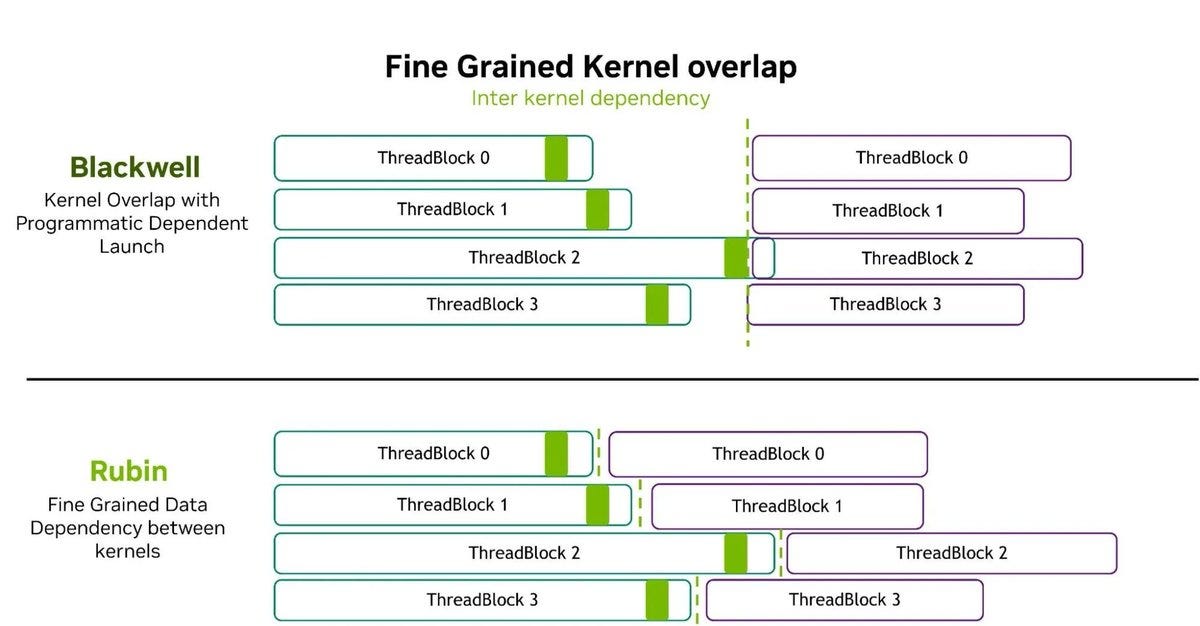
AINews: Megakernels are so dead and so back
A daily AI-industry digest recapping a podcast debate on why hand-fused 'megakernel' inference designs are losing favor as NVIDIA's Rubin architecture addresses the launch-overhead problems they were built to solve, alongside Cursor's open-sourcing of its MoK training megakernel and a broad roundup of new model releases, agent-tooling launches.
Why it mattersExplains why hand-fused megakernel inference designs are losing favor as new hardware (NVIDIA Rubin) solves the overhead problem they targeted, and flags Cursor's open-sourcing of its MoK training megakernel.

8/4: Big News Day

Sidekicks Continual Learning Loop
Shopify's GraphQL agent retrains daily on its own production failures.
Why it mattersPrompt edits and retrieval tweaks accumulate around a frozen model; this shows the alternative running in production.


iMessage support for eve agents
An agent framework adds an iMessage channel.
Why it mattersMid-turn steering and one-session-per-thread are the hard parts of conversational agents, and this ships them as a supported channel.

New release of LLM adds support for reasoning traces, OpenAI Responses, server-side tools, and smarter logging
LLM 0.32 adds visible reasoning traces, server-side provider tools through the OpenAI Responses API, redesigned content-addressable SQLite logs and new models, in what its author calls the most significant release since launch.
Why it mattersServer-side tools and MCP become one-flag operations from the terminal, and reasoning traces are separated from piped output so existing shell pipelines keep working.
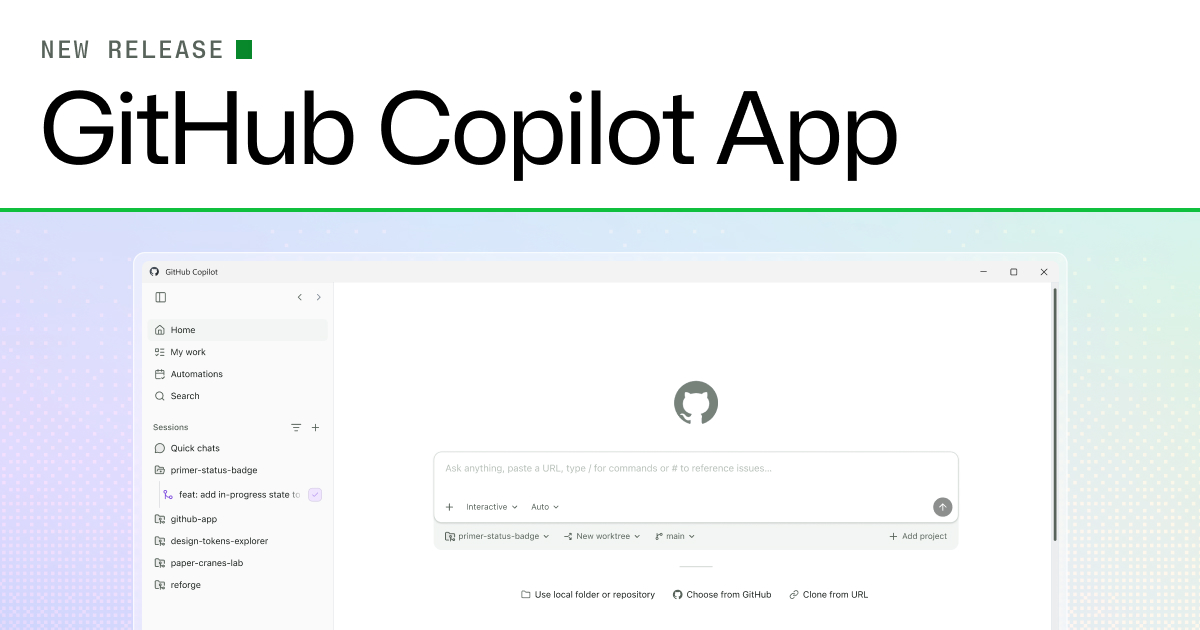
GitHub Copilot app
A native desktop application (macOS, Windows, Linux) that lets developers delegate coding work to AI agents directly from GitHub issues, PRs, or prompts, managing multiple parallel agent sessions with built-in diff review, terminal validation, and merge tools.
Why it mattersIt lets developers orchestrate multiple AI coding agents against real GitHub issues/PRs from one native app, with built-in diff review and merge tooling — reducing context-switching for agentic dev workflows at scale.
llm-anthropic 0.26
Release notes for llm-anthropic 0.26.
Why it mattersServer-side tools and MCP calls become one-flag operations from the CLI, and the removed thinking options are a breaking change for anyone scripting against the old interface.

AI Cloud TCO Model
SemiAnalysis's institutional financial model analyzes the ownership economics of AI clouds ('NeoClouds') that buy GPUs and resell compute.
Why it mattersGives investors and operators a rigorous, quantitative framework for GPU rental economics and long-term cluster ROI, an area with little serious public modeling despite huge capital flows into AI infrastructure.

PipeNetwork/minimax-h3-mlx
An MLX port of MiniMax-H3, the omni-modal model that takes text, images, audio and video and generates 15-second clips with sound, run here on an M5 Max MacBook Pro.
Why it mattersConcrete numbers on what running a frontier omni-modal model locally actually costs in disk and wall-clock, before anyone commits to the attempt.

OpenAI on Third-Party Cybersecurity Evaluation Incidents
OpenAI addresses recent incidents involving third-party cybersecurity evaluations of its models and describes new safeguards intended to strengthen how AI models are tested and evaluated going forward.
Why it mattersOpenAI details incidents from third-party cybersecurity evaluations of its models and outlines new safeguards for how such testing will be conducted going forward, affecting how security researchers and evaluators interact with its models.

OpenRouter released Ori Harness, which configures Codex, Claude Code, OpenCode and Hermes to run through OpenRouter with per-harness tuning. It routes Opus across eight endpoints for failover and sets a Claude Code option that OpenRouter says nearly halves the system prompt. The linked blog was not
Why it mattersOri sets up Claude Code, Codex, OpenCode and Hermes against OpenRouter with per-harness settings. It also fixes a Claude Code gateway default that inflates the system prompt, which can cut task length and cost.

Customer Experience (CX) Agents in Production: Lessons from Lyft, Vodafone, and LATAM Airlines
A LangChain guide examining how Lyft, Fastweb+Vodafone, and LATAM Airlines run customer-service AI agents in production.
Why it mattersShows how Lyft, Vodafone, and LATAM Airlines structure customer-facing agent systems in production, including self-serve agent platforms, frontline copilots, and using evals to align engineers with domain experts on agent behavior.
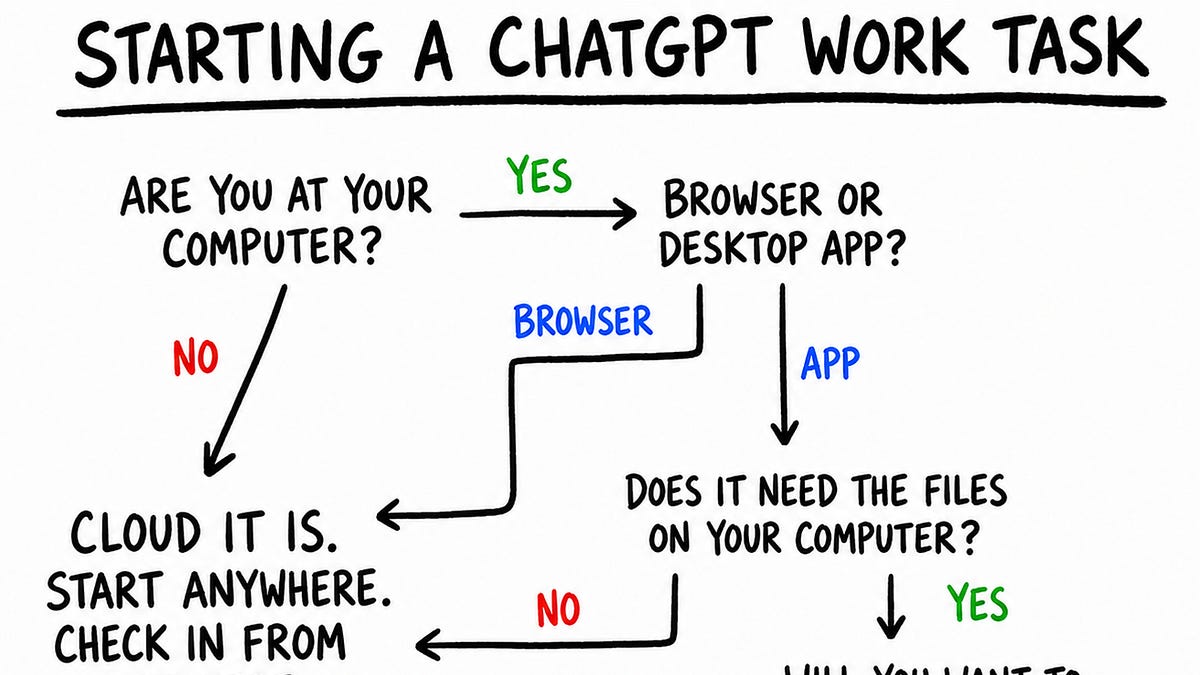
Unpacking ChatGPT Work: the Agent for a Billion Users
A reverse-engineered deep dive into OpenAI's ChatGPT Work, explaining how its cloud-based Codex-derived agent handles memory (via Personal Context and Library rather than a shared filesystem), proactive task suggestions, scheduled 'heartbeat' automations, a separately hosted browser service with persistent login profiles.
Why it mattersIt explains concretely how ChatGPT Work implements persistent memory (Personal Context/Library), heartbeat-style scheduled automations, a separately hosted browser service with persistent login, and an MCP-based Plugin Directory.
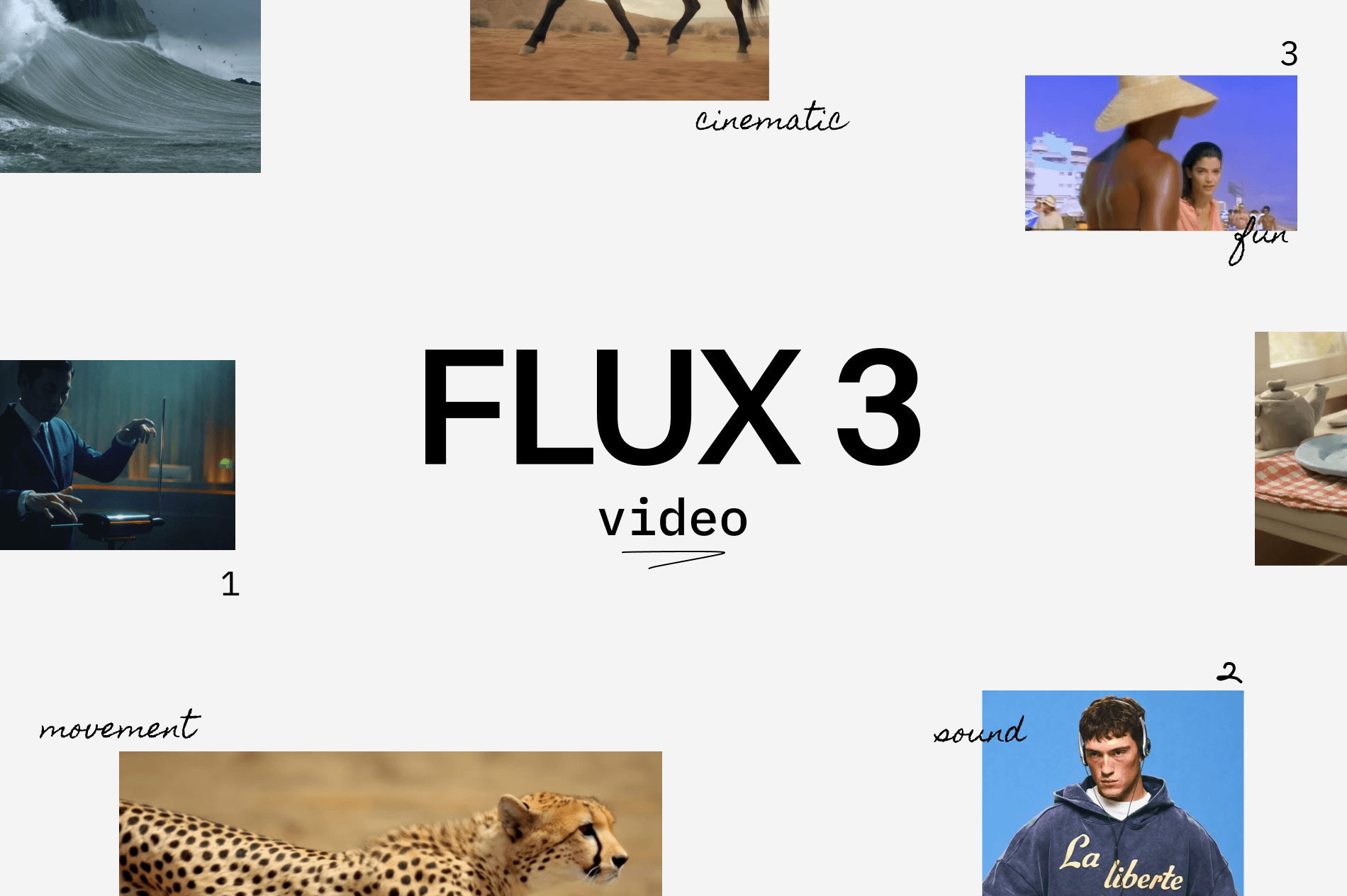
Flux 3 Video
BFL's multimodal FLUX 3 opens up its video generation path to general API access.
Why it mattersFLUX 3 Video is generally available through the BFL API: up to 20-second HD clips with native audio, multi-language lip-synced dialogue, keyframe and four-second continuation inputs, plus a low-cost draft mode for iteration.

Artificial Analysis introduces an index that benchmarks serverless endpoints of open-weights models against a self-hosted reference on tool calling, reasoning and long context. Early results show output limits, tool-call handling and reduced reasoning tokens driving large gaps.
Why it mattersThe same open-weights model can score very differently by provider.
GLM-5.2 (max) API Provider Benchmarking & Price Analysis
A performance and pricing comparison of 15 API providers serving the GLM-5.2 (max) model, measuring output speed, time-to-first-token latency, and blended token pricing.
Why it mattersDatabricks leads on speed (394.6 t/s) and latency (6.08s) while DeepInfra/CoreWeave undercut on price ($0.49/M tokens), a 757% speed gap and 5.2x price gap that should shape which provider you pick for GLM-5.2 workloads.
Artificial Analysis introduces the Endpoint Accuracy Index, comparing serverless endpoints to a self-hosted reference on tool calling, scientific reasoning and long-context recall. Early results show output limits, tool-call parsing and context caps cause large accuracy gaps.
Why it mattersThe same open-weights model can score very differently by provider because of tool-call parsing, output limits and context truncation. This lets you pick an endpoint on measured accuracy, not just price and speed.
Black Forest Labs' FLUX 3 is live on OpenRouter's video API: one jointly trained family spanning video, audio, image, and action prediction, with text-to-video, multi-keyframe image-to-video, video continuation, and native audio including lipsync and ambience.
Why it mattersVideo generation with native synced audio becomes reachable through the same OpenRouter key and billing already used for text models, including continuation that carries framing and motion forward.

Using Local Sandboxing (GitHub Copilot CLI)
GitHub's guide to Copilot CLI local sandboxing.
Why it mattersCopilot CLI can run agent commands inside an OS sandbox that limits writes to the working directory and replaces Git and API credentials with placeholders, so a runaway agent cannot read secrets. Approved bypasses skip that masking.

Black Forest Labs released FLUX 3 Video with native audio, text-to-video, multi-keyframe image-to-video, continuation and multilingual dialogue, up to 20 seconds at 1080p. A draft mode previews at $0.06 per second before a full render. 2K, 4K and open weights are listed as coming.
Why it mattersA draft-then-final pricing model ($0.06 per second preview, from $0.17 per second final) lets you iterate on prompts cheaply before paying for full-quality renders through the API.

SemiAnalysis measured tool-call rates across 2.27M collected Claude responses. Opus models trend downward from 4.6 to 4.8, while Fable 5 averages 1.00 calls per response versus 0.76 for Opus 4.8 and 0.79 for Opus 5. Sampling method is not described in the collected text.
Why it mattersTool-call frequency differs measurably between Claude models: Fable 5 averages 1.00 calls per response against 0.76 for Opus 4.8. Agent builders can use this to anticipate cost, latency, and behavior when switching models.

Introducing Shieldstral
Shieldstral is a 3B-parameter open-weights multimodal safety classifier from Mistral AI that frames content moderation as policy-adaptive question answering, accepting plain-language policies at inference time instead of requiring retraining for new harm taxonomies.
Why it mattersIt lets engineers moderate text and images with a single small model by simply writing new policies in plain language at inference time, instead of retraining or maintaining separate classifiers for each harm taxonomy.
Shieldstral
Shieldstral is a 3-billion-parameter policy-adaptive multimodal safety classifier that matches or beats models nearly 7x larger on text safety benchmarks and sets a new state of the art on multimodal moderation.
Why it mattersShieldstral lets trust & safety teams run a small, fast classifier that adapts to different moderation policies at inference time instead of retraining or deploying a much larger model, cutting compute cost while matching SOTA multimodal moderation accuracy.

Why Kimi K3's Architecture Is a Masterclass in AI Efficiency
An analysis of Moonshot AI's Kimi K3, a 2.8-trillion-parameter multimodal MoE model with only ~104B active parameters per token and a 1M-token context window.
Why it mattersExplains how Moonshot AI keeps a 2.8T-parameter model deployable via LatentMoE compression, a KV-cache-capping hybrid attention scheme, and aggressive quantization down to community 1-2 bit GGUF.

Our hope is that this lowers the barrier to AI research, so more labs can train
Our hope is that this lowers the barrier to AI research, so more labs can train models efficiently. Here's how we built it: https://t.co/EaC2z7Mw3a
Why it mattersAn open, deterministic MoE training kernel with published speedups lowers the cost floor for teams training their own models rather than only consuming APIs.
OpenWiki: a CLI that writes and maintains agent documentation for your codebase
OpenWiki is a CLI tool that uses a Deep Agents documentation agent to read a codebase or personal knowledge sources and generate a self-updating, linked Markdown wiki.
Why it mattersIt turns stale docs into a living, auto-updating wiki pulled from your codebase, Notion, Slack, or Gmail, with support across twelve model providers and a node-graph explorer for navigating the result.
OpenRouter's Agent SDK added lifecycle hooks in the callModel loop to block destructive commands, redact secrets, track cost, or rewrite tool arguments. Async tools add background and deferred modes, so a webhook or human review can resume a run later, with a task tool for status and cancel.
Why it mattersHooks let you enforce guardrails such as blocking destructive commands or redacting secrets at fixed points in the agent loop. Deferred async tools let a run pause for human review or a webhook and resume hours later in another process.

Model Fallbacks with LangSmith LLM Gateway
LangSmith LLM Gateway enters public beta as a governance layer between agents and model providers.
Why it mattersFallback rules, spend caps and rate limits are defined once at the gateway instead of coded into each agent, so a provider outage or retry loop is handled across all agents. Works with Claude Code and Codex by changing base_url.

Ant Ling released open weights for Ling-3.0-flash in official BF16 and FP8-quantized versions on Hugging Face and ModelScope, with SGLang and vLLM deployment support acknowledged. The thread invites self-hosted evaluation and use in agentic workflows but gives no benchmark data.
Why it mattersOpen BF16 and FP8 weights let you run your own evals and self-host the model in agent pipelines instead of depending on a hosted endpoint. Hardware needs and quality are not covered in the thread, so test before relying on it.

NVIDIA Alpamayo 2 Super, the Frontier Open Model for Robotaxis and Autonomous Vehicles, Now Available for Commercial Use
An open, commercially licensed foundation model for autonomous vehicles that produces trajectories, chain-of-causation reasoning traces, meta-actions.
Why it mattersIt offers AV developers a 30B-parameter open model with visible reasoning traces for each driving decision, useful both for building autonomous systems and for auto-labeling fleet footage to speed up training data pipelines.
An index of the vibe-coding frontier. Corrections welcome.